Context: PCPNDT Act 1994
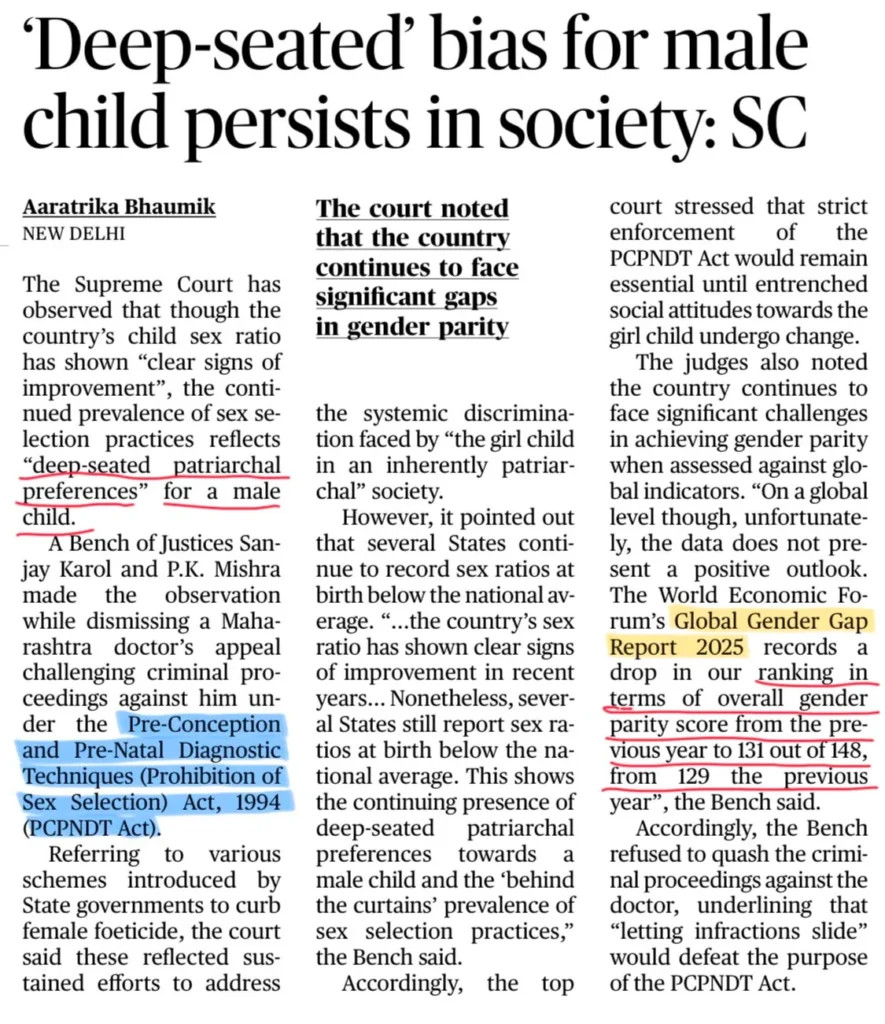
The Supreme Court, while refusing to quash proceedings under the Pre-Conception and Pre-Natal Diagnostic Techniques Act, 1994, observed that despite improvements in the child sex ratio, deep-rooted patriarchal preference for a male child continues to drive sex-selection practices in society.
PCPNDT Act, 1994
Full Form
- Pre-Conception and Pre-Natal Diagnostic Techniques Act, 1994.
Objective
- Prohibits sex selection before and after conception.
- Regulates prenatal diagnostic techniques.
- Prevents misuse of medical technology for sex determination.
- Helps curb female foeticide.
Supreme Court’s Observation
- Deep-rooted patriarchal preference for male child still persists.
- Strict enforcement of the PCPNDT Act remains necessary.
- Legal change alone is not enough unless social attitudes towards the girl child change.
Mains Value Addition Facts
NFHS-5, 2019–21
- Sex Ratio at Birth: 929 females per 1,000 males.
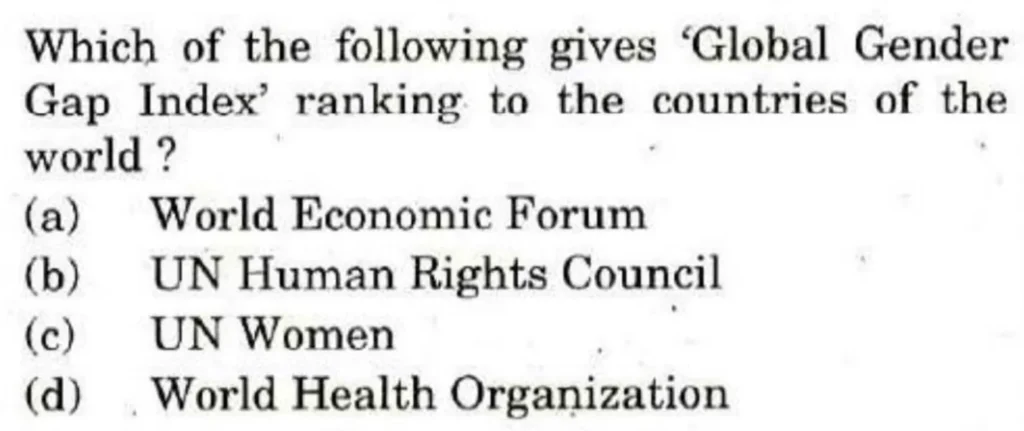
- Published by World Economic Forum.
- India ranked 131st out of 148 countries.
- India ranked 129th in 2024.
Key Issue
This highlights the gap between:
- Legal equality
- Social reality
Mains Keywords
- Deep-rooted patriarchal preference
- Gender-sensitive governance
- Substantive equality
- Constitutional morality
- Dignity of the girl child
- Behavioural and social transformation
Mains Usage
This topic can be used in answers on:
- Women’s rights
- Gender justice
- Social justice
- Female foeticide
- Patriarchy
- Behavioural change
- Constitutional morality
- State responsibility in social reform