Context
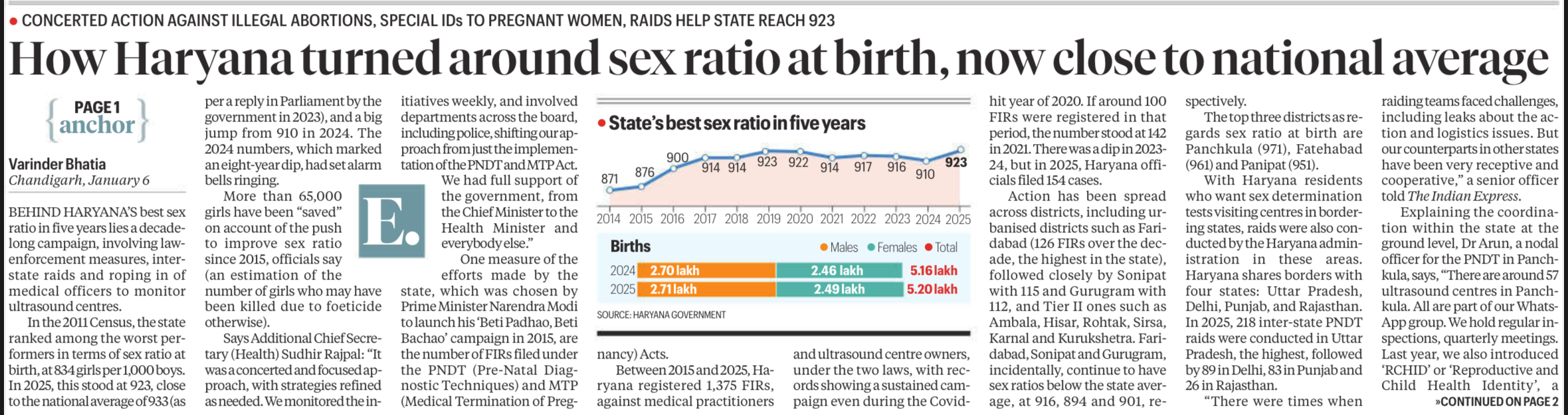
Haryana, once among the worst-performing States on sex ratio at birth due to female foeticide, has shown sustained improvement. Its sex ratio at birth has risen close to the national average, reflecting the impact of long-term enforcement and social interventions.
What is Sex Ratio at Birth (SRB)?
- Definition: Number of girls born per 1,000 boys.
- Importance: Indicates gender bias before birth, especially sex-selective abortions.
Key Points
- Haryana’s SRB improved from 834 in 2011 to about 923 in 2025, nearing the national average of around 933.
- The improvement is credited to strict enforcement of the Pre-Conception and Pre-Natal Diagnostic Techniques (Prohibition of Sex Selection) Act, 1994.
- Measures included regular raids on ultrasound centres, monitoring of doctors and special IDs for pregnant women.
- Inter-departmental coordination among health, police and administrative departments was crucial.
- Campaigns such as Beti Bachao, Beti Padhao supported behavioural change alongside enforcement.
- Several districts recorded SRB above 900 consistently, reflecting district-level performance gains.