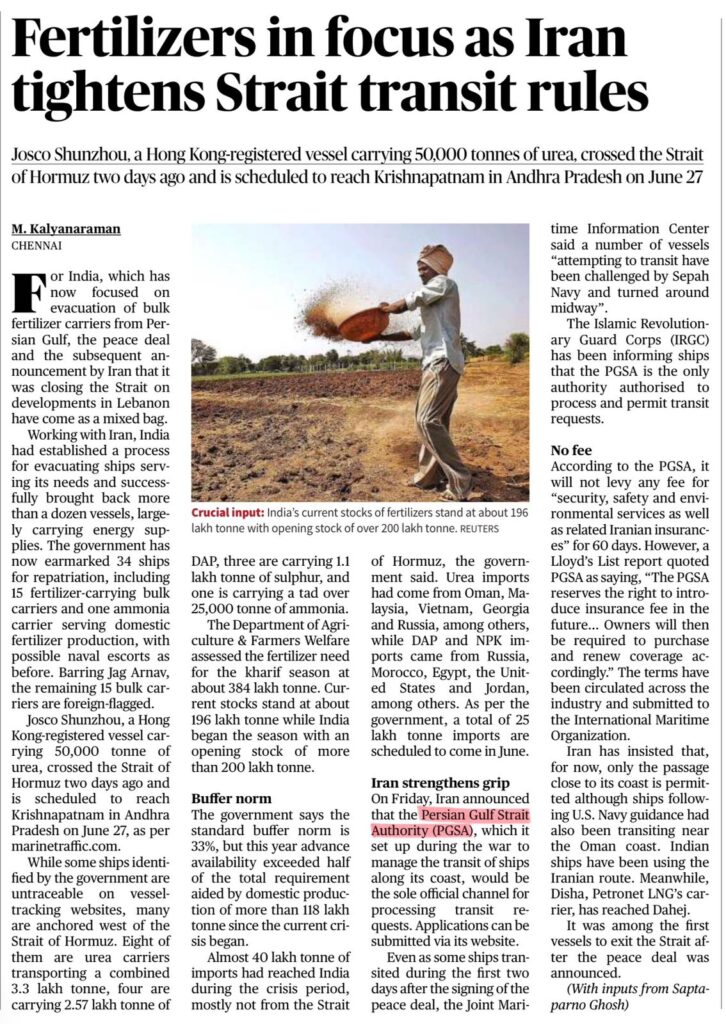
Context: Strait of Hormuz Transit Rules
Iran tightened transit rules through the Strait of Hormuz by setting up a maritime authority to regulate vessel movement. This comes amid rising West Asia tensions and has implications for global energy security, shipping and India’s fertiliser imports.
Strait of Hormuz
Location
- Between Iran and Oman’s Musandam Peninsula
Connects
- Persian Gulf with Gulf of Oman and Arabian Sea
Importance
The Strait of Hormuz is one of the world’s most important strategic chokepoints.
It is crucial for:
- Global crude oil movement
- LNG movement
- Gulf trade routes
- India’s energy security
- Fertiliser imports
- Maritime security
Persian Gulf Strait Authority
Meaning
A maritime authority designated by Iran to regulate and approve vessel transit through the Strait of Hormuz.
Constituted By
- Government of Iran / Iranian maritime authorities
Why Was It Constituted?
- To act as a single-window authority for transit clearances.
- To strengthen monitoring of ship movements.
- To enhance maritime security and surveillance.
- To ensure vessels follow designated routes.
- To ensure reporting procedures.
- To regulate movement amid rising West Asia tensions.
India’s Concern
India depends heavily on the Gulf region for:
- Crude oil
- LNG
- Fertilisers
- Trade routes
- Indian diaspora employment
- Remittance flows
Fertiliser Angle
The article highlights concerns over fertiliser shipments because India imports key fertilisers and raw materials through West Asian sea routes.
Disruption in Strait of Hormuz transit may affect:
Strategic Implications
- Higher crude oil prices.
- Higher Current Account Deficit.
- Imported inflation.
- Higher fertiliser subsidy burden.
- Shipping delays.
- Maritime security risks.
- Pressure on India’s West Asia diplomacy.
Way Forward for India
- Diversify energy sources.
- Maintain strategic petroleum reserves.
- Secure fertiliser supply chains.
- Strengthen maritime domain awareness.
- Continue diplomatic balancing with Iran, GCC, Israel and the U.S.
- Promote alternative trade and energy corridors.
- Enhance naval presence in the Indian Ocean Region.