10 July 2026 | Daily Current Affairs

Gujarat Data Centre Policy 2026: Key Features for UPSC

Context: Gujarat Data Centre Policy 2026

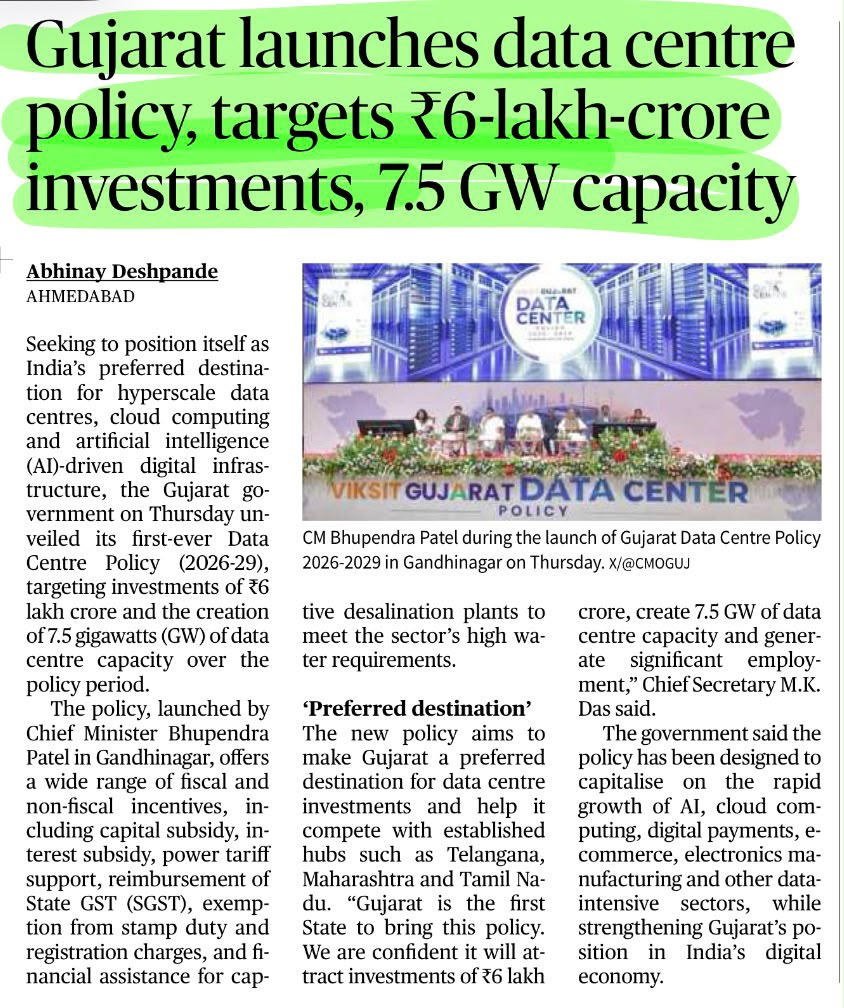
Gujarat has launched its first Data Centre Policy (2026–29) to establish itself as a major hub for:

The policy targets:

  • ₹6 lakh crore investment
  • 7.5 GW installed data centre capacity

Data Centre

A data centre is a secure physical facility where digital data is stored, processed and transmitted using servers, storage systems and networking infrastructure.

Key Components

1. Servers

  • Process and manage digital information.

2. Storage Systems

  • Store large volumes of data.

3. Networking Equipment

  • Enables data transfer and connectivity.

4. Cooling Systems

  • Maintain optimal temperature for equipment.

5. Power Backup

Includes:

  • UPS systems
  • Diesel generators

6. Cybersecurity Infrastructure

Protects data from:

  • Cyber attacks
  • Data breaches
  • Unauthorised access

Why Are Data Centres Important?

1. Backbone of Cloud Computing

Data centres provide infrastructure for cloud services.

2. Supports Artificial Intelligence

AI models require:

  • High computing power
  • Large datasets
  • Advanced processing infrastructure

3. Enables Digital Economy

Supports:

  • UPI
  • Digital payments
  • E-commerce
  • Online services

4. Government Digital Platforms

Hosts platforms such as:

  • DigiLocker
  • CoWIN
  • Other digital governance services

5. Data Localisation

Helps store and process data within national boundaries.

Location Requirements

A successful data centre requires:

1. Reliable Power Supply

Data centres require uninterrupted electricity.

2. High-Speed Fibre Connectivity

Ensures fast data transmission.

3. Water and Cooling Infrastructure

Cooling systems require efficient resource management.

4. Low Disaster Risk

Locations should have:

  • Physical security
  • Disaster resilience
  • Stable infrastructure

Significance of Gujarat Data Centre Policy

  • Attracts large-scale digital infrastructure investment.
  • Strengthens India’s AI ecosystem.
  • Creates employment opportunities.
  • Supports cloud computing growth.
  • Improves Gujarat’s position in the digital economy.
  • Encourages private investment in technology infrastructure.
National Food Security Act Revision Explained for UPSC

Context: National Food Security Act revision

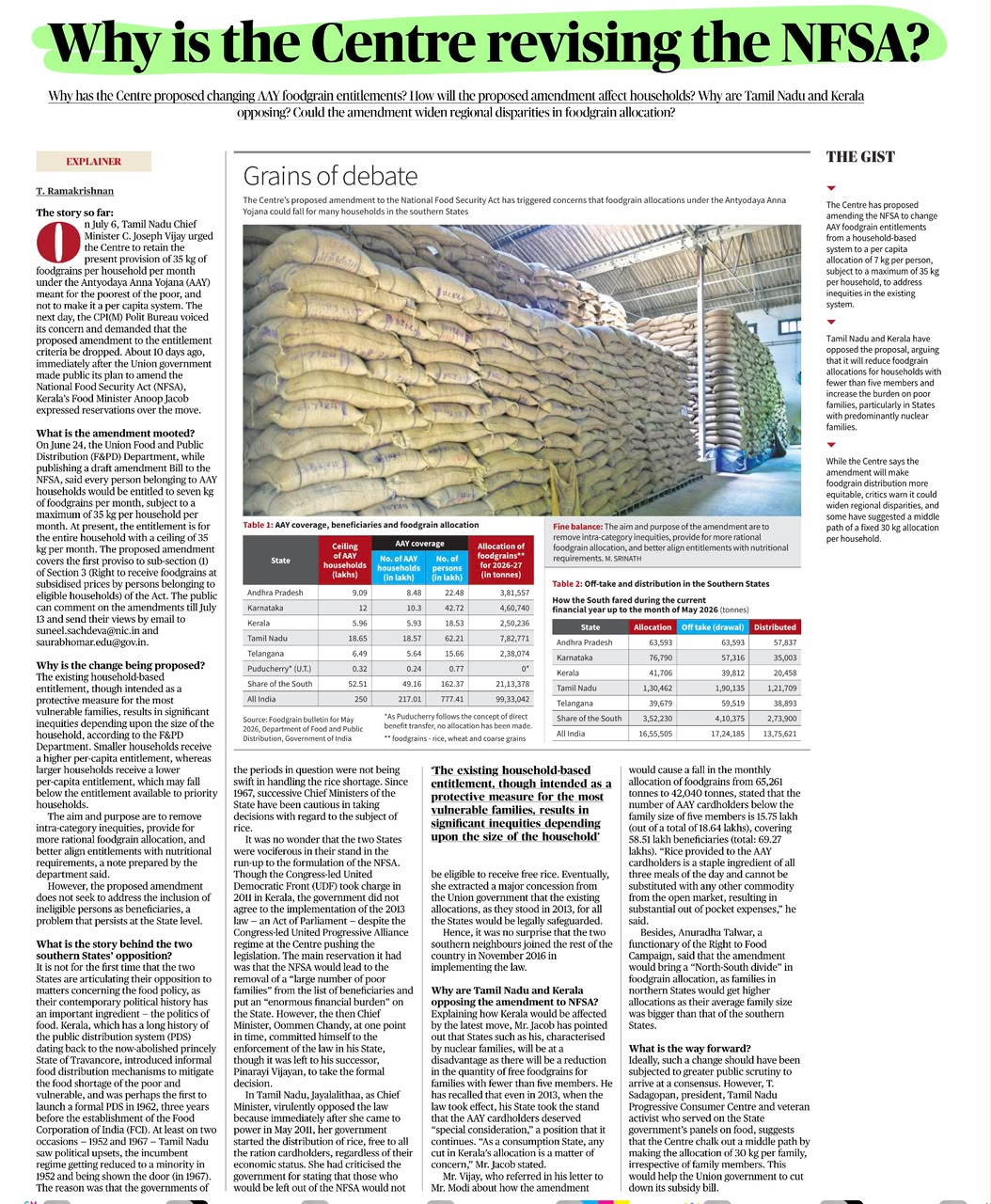
The Union Government has proposed amendments to the National Food Security Act (NFSA), 2013, especially regarding foodgrain entitlement under the Antyodaya Anna Yojana (AAY).

The proposal aims to shift from a household-based allocation system to a per-person entitlement model.

National Food Security Act (NFSA), 2013

Objective

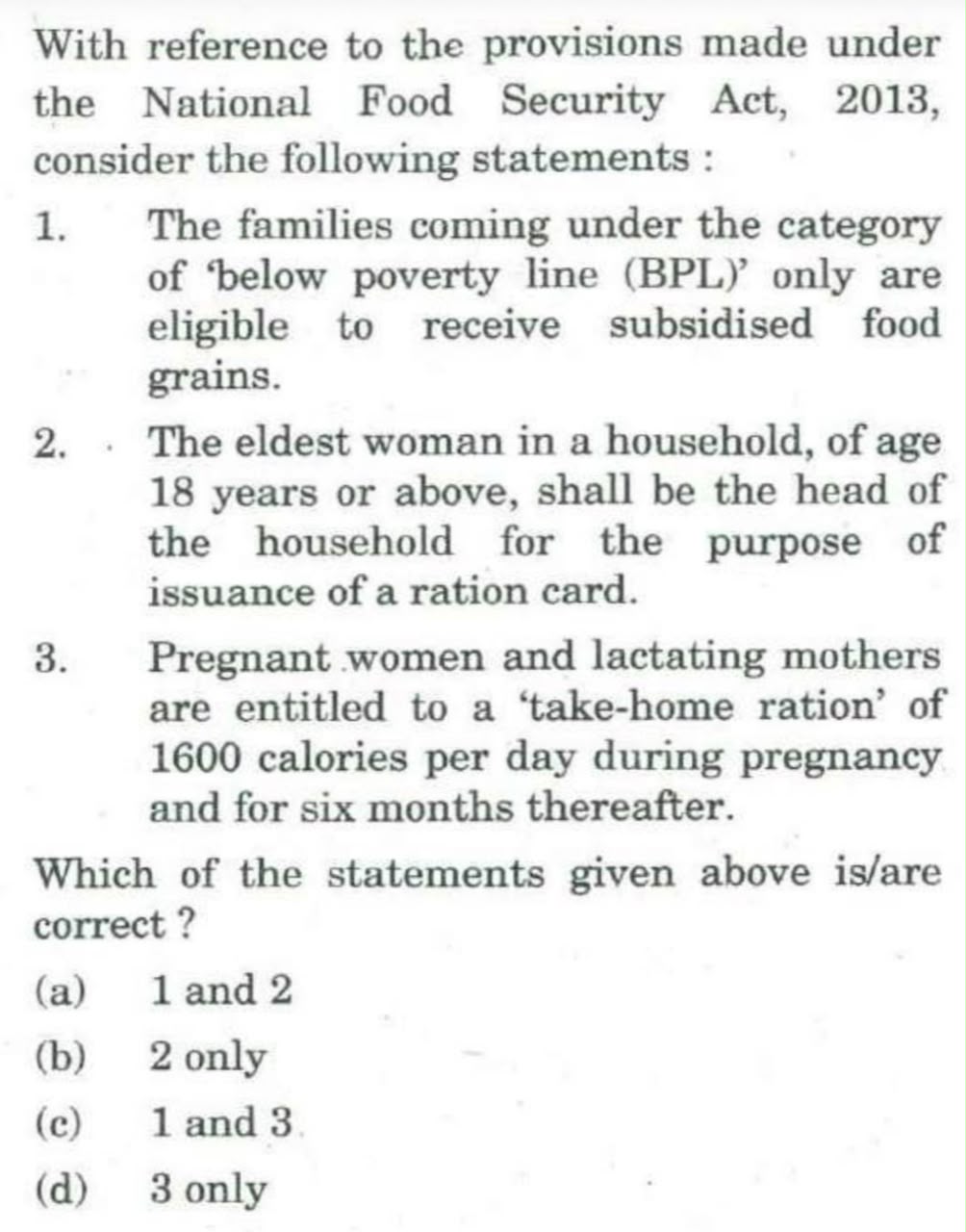
To provide legal entitlement to subsidised foodgrains and strengthen food and nutritional security through the Targeted Public Distribution System (TPDS).

Coverage

Rural Areas

  • Up to 75% population

Urban Areas

  • Up to 50% population

Beneficiary Categories

1. Priority Households (PHH)

Eligible members receive:

  • 5 kg foodgrains/person/month at subsidised prices.

2. Antyodaya Anna Yojana (AAY)

Covers:

  • Poorest and most vulnerable households.

Current entitlement:

  • 35 kg foodgrains per household per month.

The proposed amendment concerns only AAY households.


Proposed Amendment

Present System

  • Every AAY household receives 35 kg/month.
  • Allocation depends on household, not number of members.

Proposed System

  • 7 kg/person/month.
  • Maximum entitlement remains 35 kg per household.
  • Allocation will depend on the number of eligible members.

Why Does the Centre Want This Change?

1. Reduce Inequity

Under the existing system:

  • Small households and large households receive the same quantity.

2. Person-Centric Allocation

The proposed system links entitlement with actual beneficiaries.

3. Better Nutritional Targeting

Helps align food support with household size.

4. Rationalisation of Food Subsidy

Improves efficiency in foodgrain allocation.


Why Are Tamil Nadu and Kerala Opposing It?

1. Smaller Household Size

Southern States have a higher proportion of nuclear families.

2. Reduced Entitlement

Many AAY households with fewer than five members may receive less than 35 kg.

3. State-Level Food Security Concerns

States argue that it may reduce foodgrain allocation.

4. Universal PDS Model

Tamil Nadu highlights its long-standing Universal Public Distribution System.


Centre’s Position

  • No beneficiary will lose eligibility under NFSA.
  • Only the method of calculating entitlement is changing.
  • The reform aims to make allocation more equitable and person-centric.

Significance

  • Balances equity with food security.
  • Impacts food subsidy management.
  • Has implications for Centre-State relations.
  • Highlights challenges in designing uniform welfare policies while considering demographic differences.

High Seas Fisheries India and Blue Economy for UPSC

Context: High Seas Fisheries India

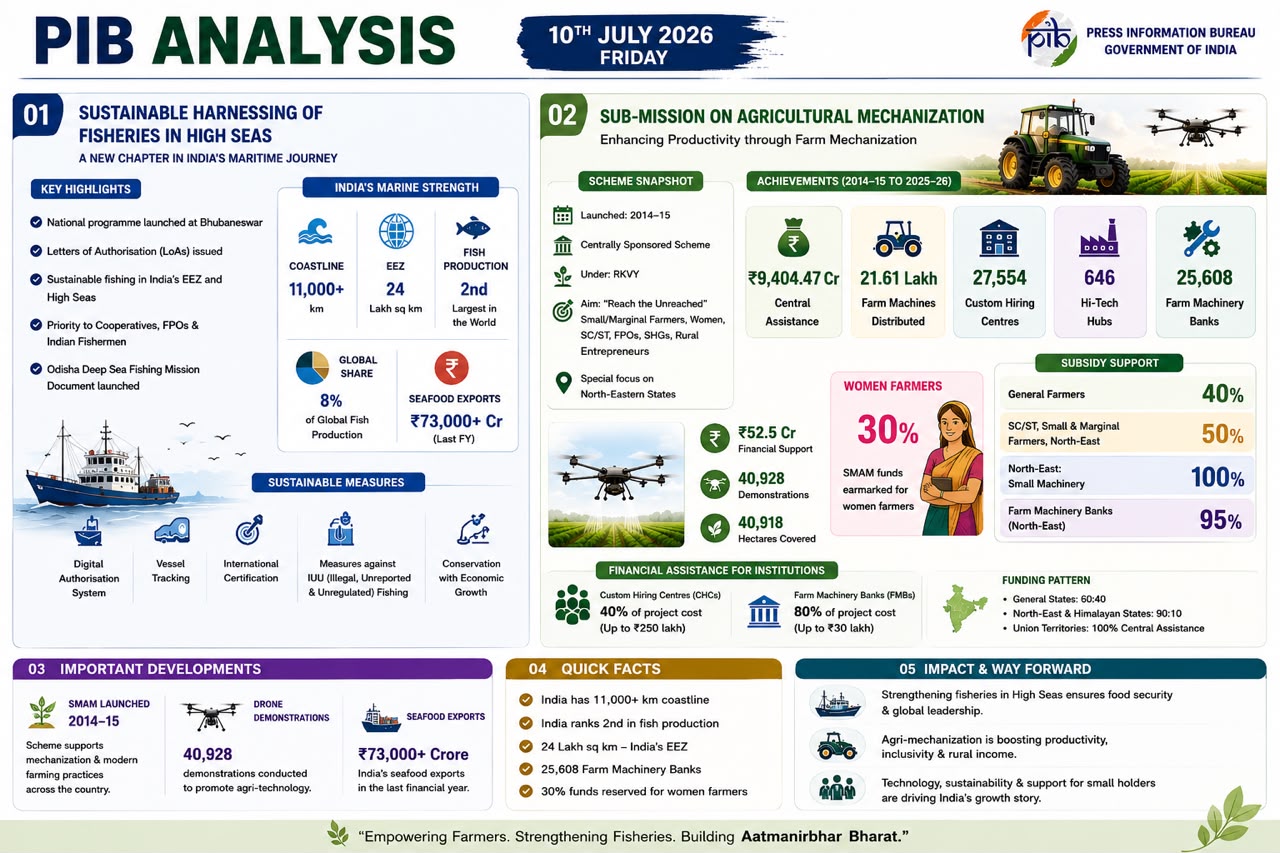
India is focusing on sustainable exploitation of fisheries resources in the high seas to strengthen its maritime economy and blue economy potential.

High Seas Fisheries

High seas refer to ocean areas beyond national jurisdiction.

They are governed under international maritime laws.

Importance of High Seas Fisheries

  • Enhances food security.
  • Supports livelihoods.
  • Strengthens marine economy.
  • Expands India’s fishing potential.
  • Supports blue economy growth.

India’s Marine Fisheries Sector

India has:

  • Over 11,000 km coastline.
  • Significant Exclusive Economic Zone (EEZ).
  • Large fishing communities.

Sustainable Fisheries Approach

Focuses on:

1. Scientific Fishing Practices

  • Prevent overfishing.
  • Maintain fish stocks.

2. Conservation Measures

Includes:

  • Sustainable harvesting
  • Protection of marine ecosystems
  • Responsible fishing practices

3. Technology-Based Monitoring

Use of:

  • Digital systems
  • Vessel tracking
  • Data-based fisheries management

4. International Cooperation

High seas fisheries require cooperation through:

  • Regional Fisheries Management Organisations
  • Global maritime agreements

Blue Economy

Blue economy refers to sustainable use of ocean resources for:

  • Economic growth
  • Livelihoods
  • Environmental conservation

Significance for India

  • Strengthens maritime capabilities.
  • Supports coastal communities.
  • Enhances seafood exports.
  • Promotes sustainable resource utilisation.
  • Improves India’s role in global fisheries governance.

Challenges

  • Overfishing
  • Illegal fishing
  • Climate change impacts
  • Marine pollution
  • Lack of advanced fishing technology
  • Conservation challenges

Way Forward

  • Promote sustainable fishing practices.
  • Strengthen marine research.
  • Improve fishermen training.
  • Use technology for monitoring.
  • Ensure ecosystem conservation.
  • Develop responsible blue economy policies.

Sub-Mission on Agricultural Mechanization for UPSC

Context: Sub-Mission on Agricultural Mechanization

The Sub-Mission on Agricultural Mechanization aims to promote farm mechanisation, improve productivity and make modern agricultural equipment accessible to farmers.

Objective

To increase the reach of farm machinery among farmers, especially:

  • Small farmers
  • Marginal farmers
  • Women farmers
  • Rural communities

Key Features

1. Financial Assistance

Provides subsidies for:

  • Agricultural machinery
  • Equipment purchase
  • Custom Hiring Centres

2. Custom Hiring Centres (CHCs)

Provide machinery services to farmers who cannot afford expensive equipment.

3. Support for Farm Machinery Banks

Helps create shared access to equipment.

4. Promotion of Modern Technology

Encourages:

  • Drones
  • Precision farming tools
  • Advanced agricultural machinery

Benefits

1. Increased Productivity

Mechanisation improves:

  • Timeliness of farming operations
  • Efficiency
  • Crop output

2. Reduced Labour Dependence

Helps address labour shortages during peak agricultural seasons.

3. Lower Cost of Cultivation

Efficient machinery reduces operational costs.

4. Women Empowerment

Improves access to suitable tools for women farmers.

Challenges

  • High cost of machinery.
  • Small land holdings.
  • Lack of awareness.
  • Maintenance issues.
  • Limited access in remote areas.

Way Forward

  • Expand Custom Hiring Centres.
  • Promote affordable machinery.
  • Encourage drone-based agriculture.
  • Improve farmer training.
  • Support indigenous agricultural machinery manufacturing.

Significance

SMAM supports:

  • Agricultural productivity
  • Rural income growth
  • Modernisation of Indian agriculture
  • Sustainable farming practices
  • Inclusive agricultural development
About the UPSC Civil Services Examination (UPSC CSE)

The UPSC Civil Services Examination (CSE) is one of the most competitive and esteemed examinations in India, conducted by the Union Public Service Commission to recruit officers for services such as the Indian Administrative Service (IAS), Indian Police Service (IPS), Indian Foreign Service (IFS), and others. The exam comprises three stages — Prelims, Mains, and the Personality Test (Interview) — designed to test a candidate’s knowledge, aptitude, decision-making, and leadership skills.


How to Prepare Effectively for UPSC CSE

Cracking the UPSC CSE requires a deep understanding of the syllabus, consistent revision, structured answer writing, and smart test-taking strategies. The Prelims test analytical and conceptual clarity, the Mains focuses on critical thinking, articulation, and subject mastery, while the Interview assesses presence of mind, ethical judgment, and personality traits relevant to public service.

At UnderStand UPSC, we empower aspirants with a personalized and focused approach to each stage of the exam.


Why Choose UnderStand UPSC?

UnderStand UPSC is a mentorship-driven platform offering a clear, clutter-free strategy to tackle the Civil Services Examination. Our programs like Transform (for beginners and intermediate learners) and Conquer (for advanced mains preparation) provide structured study plans, syllabus-wise video content, interactive live sessions, and answer writing support.

We emphasize:

  • Concept clarity through topic-wise lectures

  • Test series designed around real UPSC standards

  • Personalized mentorship in small groups

  • Regular performance tracking and peer benchmarking

  • Doubt-clearing sessions, current affairs analysis, and monthly magazines


Join the UnderStand UPSC Learning Community

Our mission is to make UPSC preparation less overwhelming and more strategic. We combine mentorship, discipline, and academic rigor to help you clear CSE with confidence. Whether you’re preparing from Delhi, Mumbai, Bangalore, or a remote village — our online-first model ensures quality guidance reaches every corner of India.

Join the thousands of aspirants who trust UnderStand UPSC to guide their journey toward becoming civil servants.

Stay connected with us through our Telegram, YouTube, and Instagram channels for daily tips, strategies, and updates.

Copyright © 2026 USARAMBHA EDUCATION (UnderStand UPSC). All Rights Reserved.

UpSurge Mains Test Series 2027

Fill out the form

Fill out the form for

Downloading the free Agriculture Short Notes