13 March 2026 | Daily Current Affairs

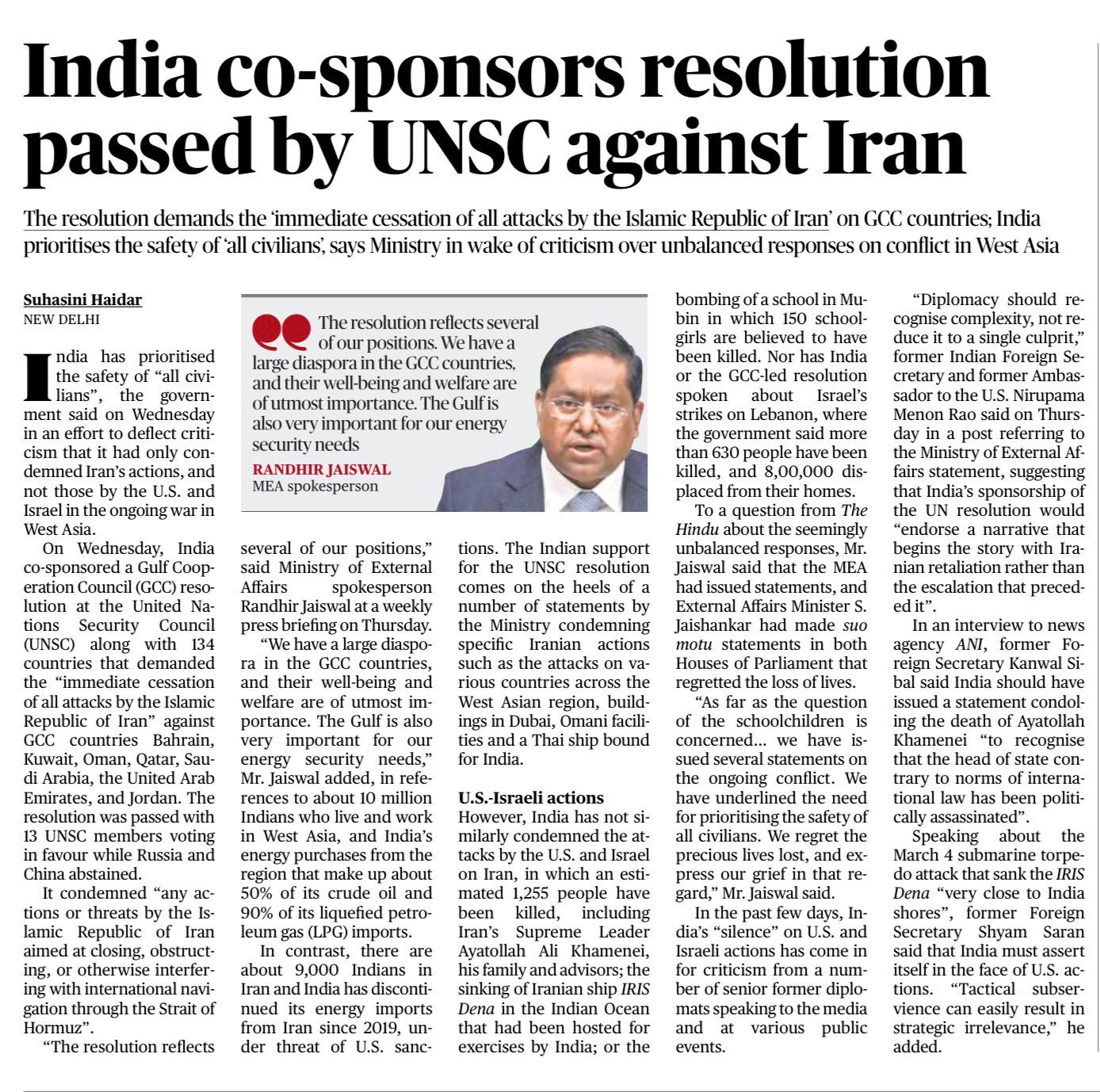
United Nations Security Council: India Backs Resolution Against Iran

Context

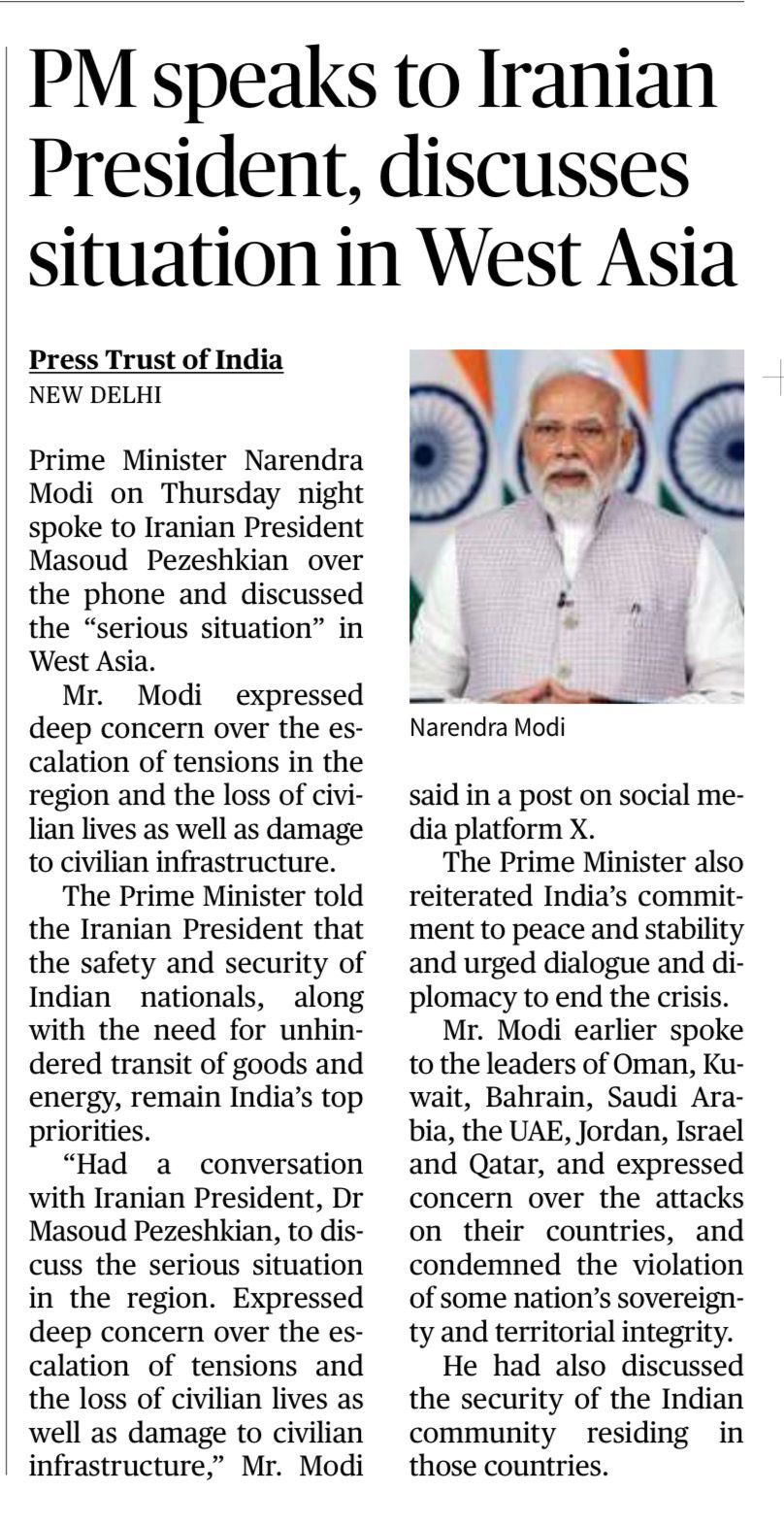
Amid escalating tensions in West Asia, India co-sponsored a resolution at the United Nations Security Council (UNSC) against Iran while simultaneously engaging Iran diplomatically through Prime Minister-level talks

What Exactly Happened

Voting Outcome

  • 13 countries voted in favour
  • Russia and China abstained

Why India Supported It

  • Civilian safety priority during conflict.
  • Diaspora factor:
    Around 10 million Indians live and work in West Asia.
  • Energy security concerns:
    • Region supplies about 50% of India’s crude oil
    • Around 90% of liquefied petroleum gas (LPG) imports

Parallel Diplomacy (India’s Balancing)

  • Prime Minister held talks with Iran’s President.
  • Emphasised:
    • dialogue
    • de-escalation
    • regional stability
  • Highlighted safety of Indian nationals and protection of energy and trade transit routes.
WhatsApp Image 2026 03 13 at 2.18.27 PM 2
WhatsApp Image 2026 03 13 at 2.18.28 PM

Creamy Layer: Supreme Court Clarifies OBC Criteria in Reservation

Context

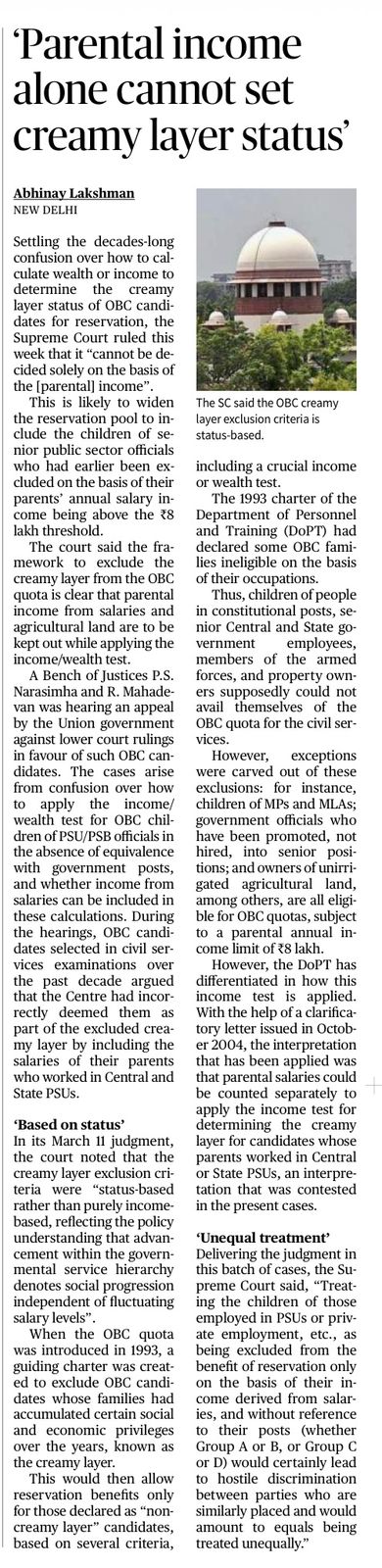
The Supreme Court clarified that OBC creamy layer exclusion must be based on social status, not parental income alone, reaffirming the Indra Sawhney principle.

Indra Sawhney v. Union of India (1992)

  • Upheld 27% OBC reservation.
  • Introduced the creamy layer exclusion principle.
  • Focused on social advancement as the key determinant.

93rd Constitutional Amendment (2005)

  • Inserted Article 15(5).
  • Enabled OBC reservation in educational institutions
    (except minority institutions).

Ashoka Kumar Thakur Case (2008) + Present Ruling

  • Reaffirmed creamy layer exclusion.
  • Latest ruling clarified that salary or agricultural income alone cannot determine creamy layer status.

NCL (Non-Creamy Layer)

  • OBC families not socially advanced and with parental income ≤ ₹8 lakh.
  • Eligible for reservation.
  • NCL certificate required for benefits.
WhatsApp Image 2026 03 13 at 2.18.27 PM 1

Section 301: US Probes India’s Trade Policies Under Trade Act 1974

Context

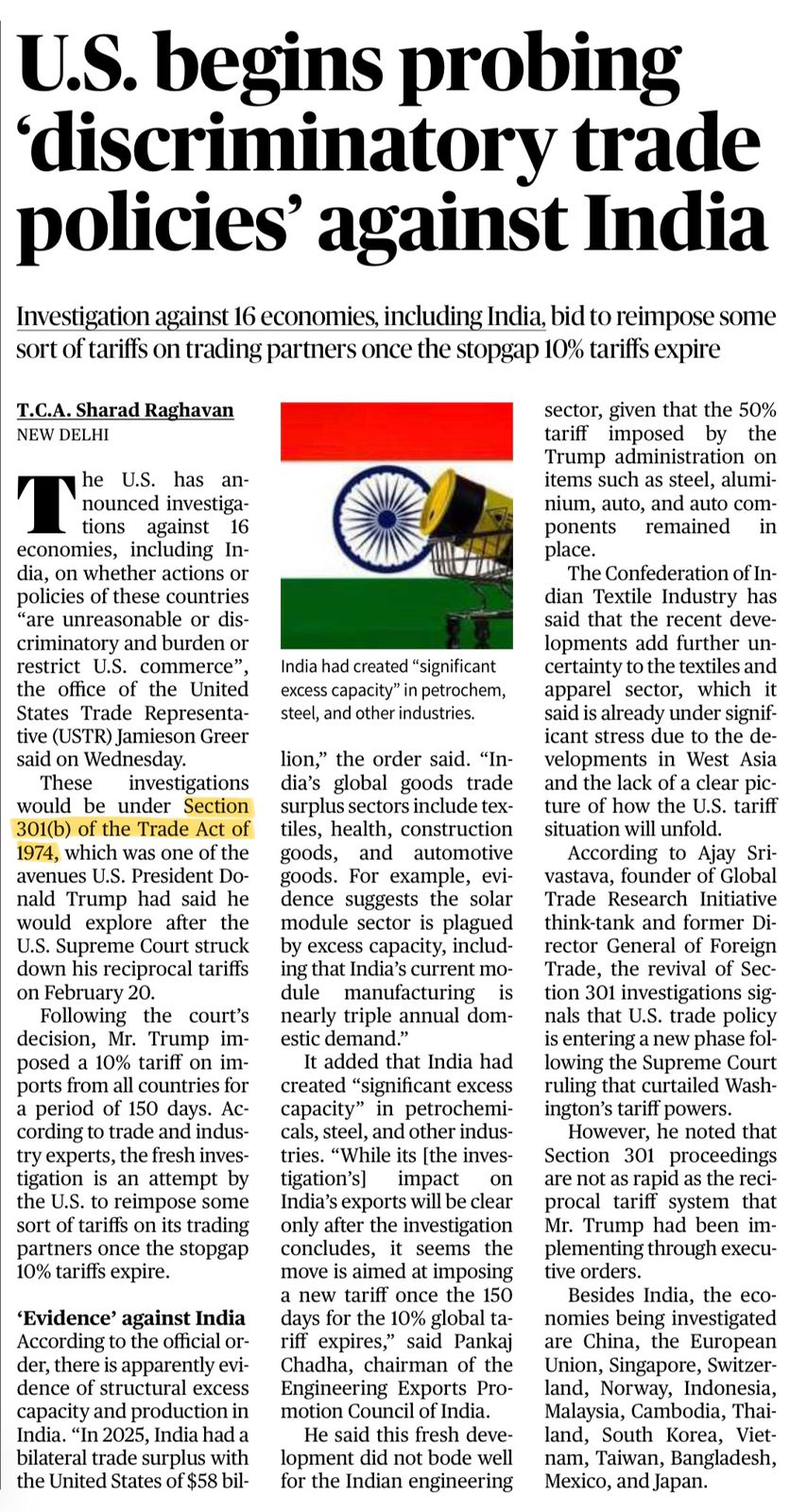
The U.S. has initiated investigations against 16 economies including India under Section 301(b) of the U.S. Trade Act, 1974, examining practices considered to burden U.S. commerce and potentially paving the ground for tariffs once temporary duties lapse.

Why India is Included

  • Alleged excess production capacity in sectors such as:
    • petrochemicals
    • steel
    • solar modules
  • Concerns over surplus-driven exports affecting U.S. industries.
  • India’s goods trade surplus with the U.S.
    Approximately $58 billion (recent estimate).

Section 301

  • A unilateral U.S. trade law tool under the Trade Act, 1974.
  • Targets foreign practices considered:
    • unreasonable
    • discriminatory
    • restrictive
  • Authorises the U.S. Trade Representative (USTR) to investigate.
  • Allows retaliatory steps such as tariffs or restrictions after investigation.

Countries Covered

  • China
  • European Union
  • Singapore
  • Switzerland
  • Norway
  • Indonesia
  • Malaysia
  • Cambodia
  • Thailand
  • South Korea
  • Vietnam
  • Taiwan
  • Bangladesh
  • Mexico
  • Japan
WhatsApp Image 2026 03 13 at 2.18.27 PM

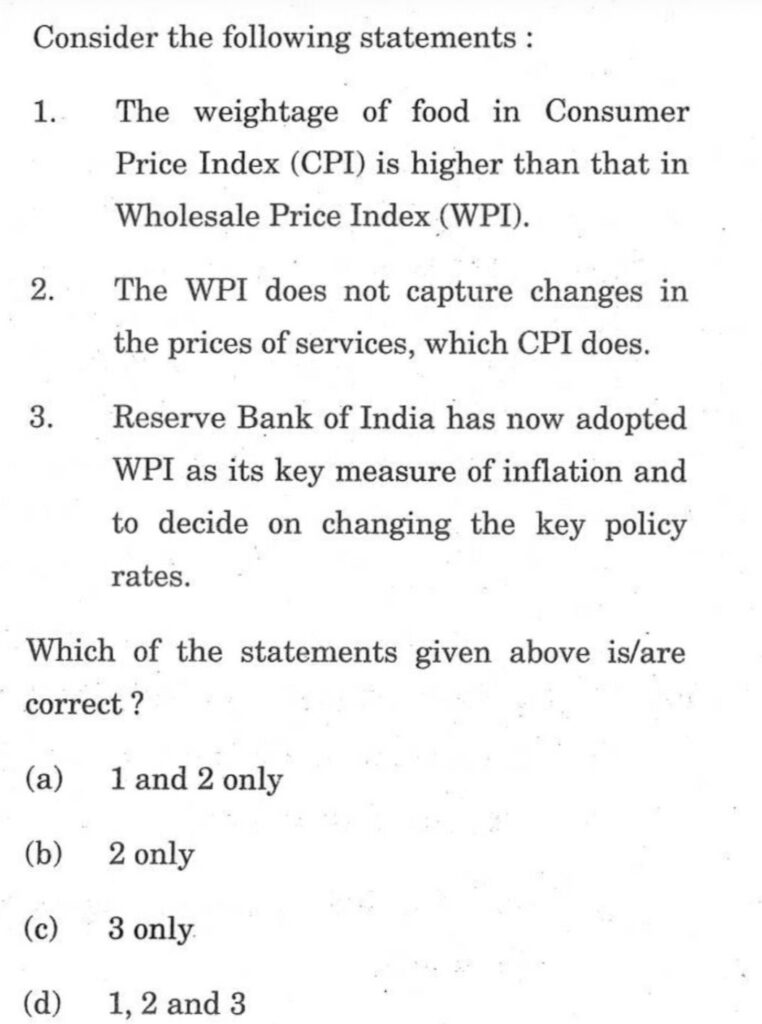
Consumer Price Index: CPI Inflation Rises to 3.2% in February

Context

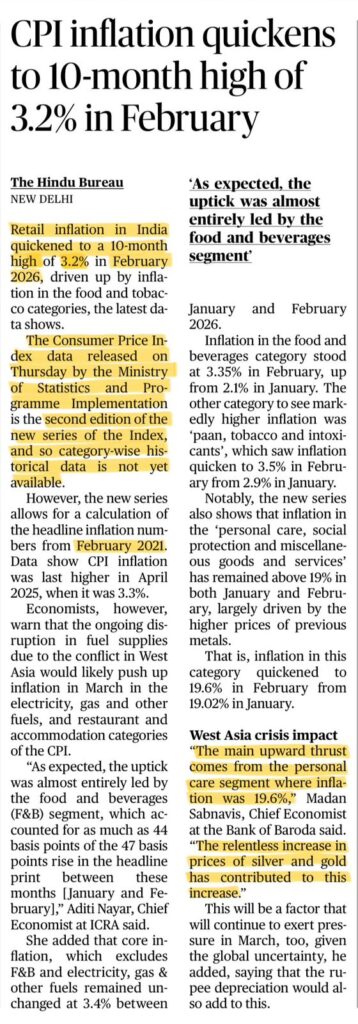
Retail inflation rose to a 10-month high of 3.2% (Feb 2026) mainly driven by food and beverages. Pressures are also visible in tobacco and personal care segments, with risks from fuel disruptions in West Asia, rupee weakness, and rising gold and silver prices.

CPI (Consumer Price Index)

February 2026 Inflation Drivers

  • Food and beverages led the rise.
  • Pan, tobacco and intoxicants increased.
  • Personal care and miscellaneous inflation around 19.6% (linked to gold and silver prices).
  • Core inflation broadly stable around 3.4%.

CPI vs WPI

CPI (Consumer Price Index)

  • Retail-level prices
  • Includes services
  • Reflects consumer inflation
  • Used as RBI policy anchor

WPI (Wholesale Price Index)

  • Wholesale prices
  • Excludes services
  • Reflects producer-side inflation trends
WhatsApp Image 2026 03 13 at 2.18.26 PM
WhatsApp Image 2026 03 13 at 2.18.29 PM
PYQ – 2020, Ans – A

Indian Tea Industry: Production, Varieties, States & Exports

Context

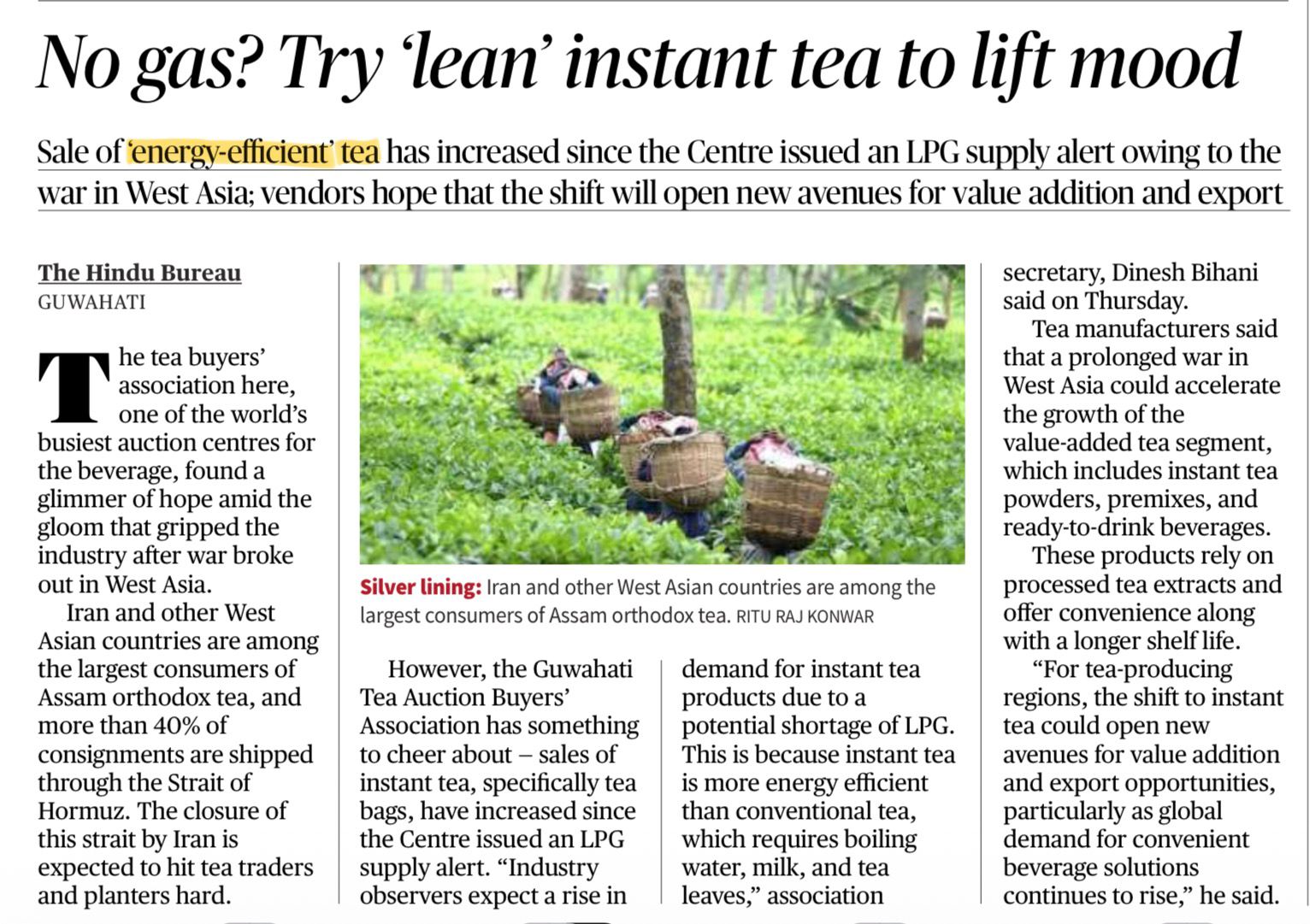
LPG supply concerns after the West Asia conflict have increased demand for instant tea (less fuel use), highlighting India’s tea sector, especially Assam trade, and boosting prospects for value-added products and West Asian exports.

Key Points

Global Position

  • India is the second-largest producer after China and among the largest consumers globally.

Historical Base

  • Commercial cultivation began in the 19th century under British rule.
  • First in Assam, later expanding to other hill regions.

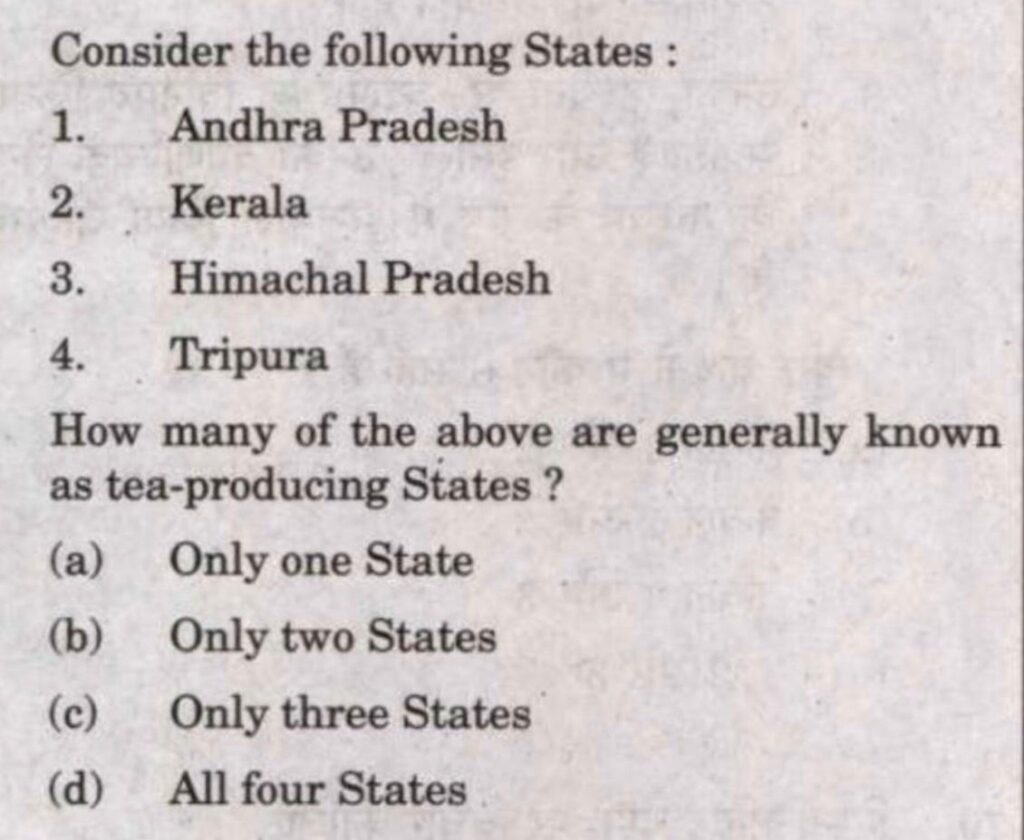
Major Producing States

  • Assam
  • West Bengal (Darjeeling, Dooars)
  • Tamil Nadu (Nilgiris)
  • Kerala
  • Karnataka
  • Tripura

Key Varieties

  • Assam – Strong, brisk; widely used in blends.
  • Darjeeling – Premium GI (first tea); called “Champagne of teas.”
  • Nilgiri – Fragrant, aromatic.

Agro-Climatic Needs

  • Tropical–subtropical climate
  • 150–300 cm rainfall
  • Acidic, well-drained soil
  • Cool humid hill slopes

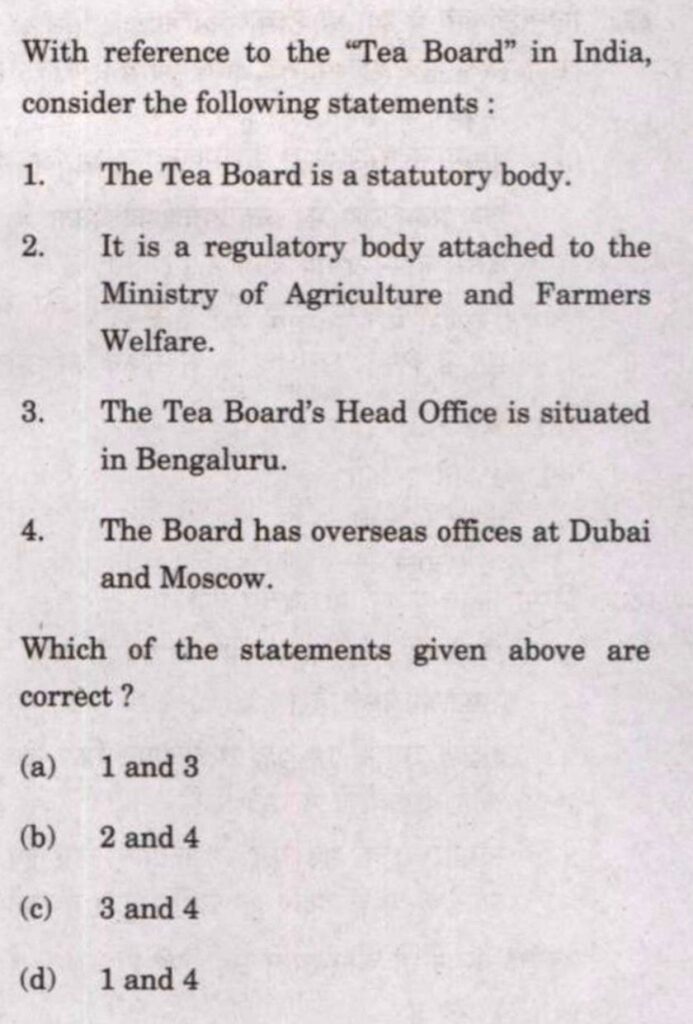
Regulation

  • Overseen by the Tea Board of India (Ministry of Commerce & Industry).

Exports Major markets include:

  • Russia
  • Iran
  • UAE
  • UK

West Asia is a key market for Assam orthodox tea.

WhatsApp Image 2026 03 13 at 2.18.25 PM
WhatsApp Image 2026 03 13 at 2.18.28 PM 1
PYQ – 2022, Ans – D
WhatsApp Image 2026 03 13 at 2.18.28 PM 2
PYQ – 2022, Ans – D

Copyright © 2026 USARAMBHA EDUCATION (UnderStand UPSC). All Rights Reserved.