15 May 2026 | Daily Current Affairs

Raniganj Coalfield Landslide: Mine Safety and Coal Types in India

Context: Raniganj Coalfield
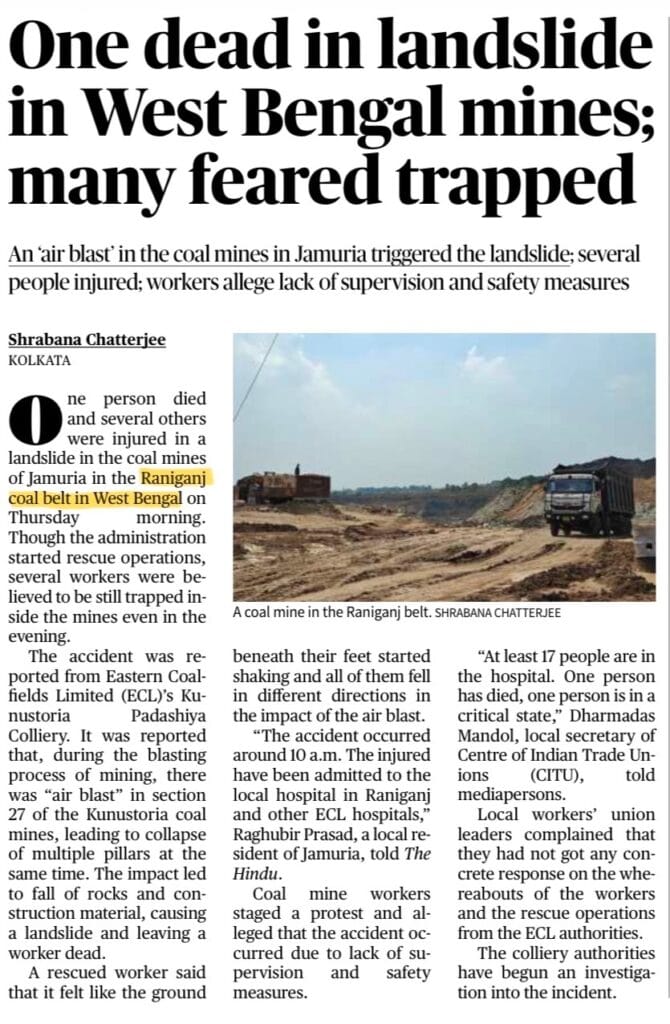
A landslide at ECL’s Kunustoria Colliery in the Raniganj coal belt during blasting operations caused deaths and injuries, highlighting mine safety concerns.

Raniganj Coalfield

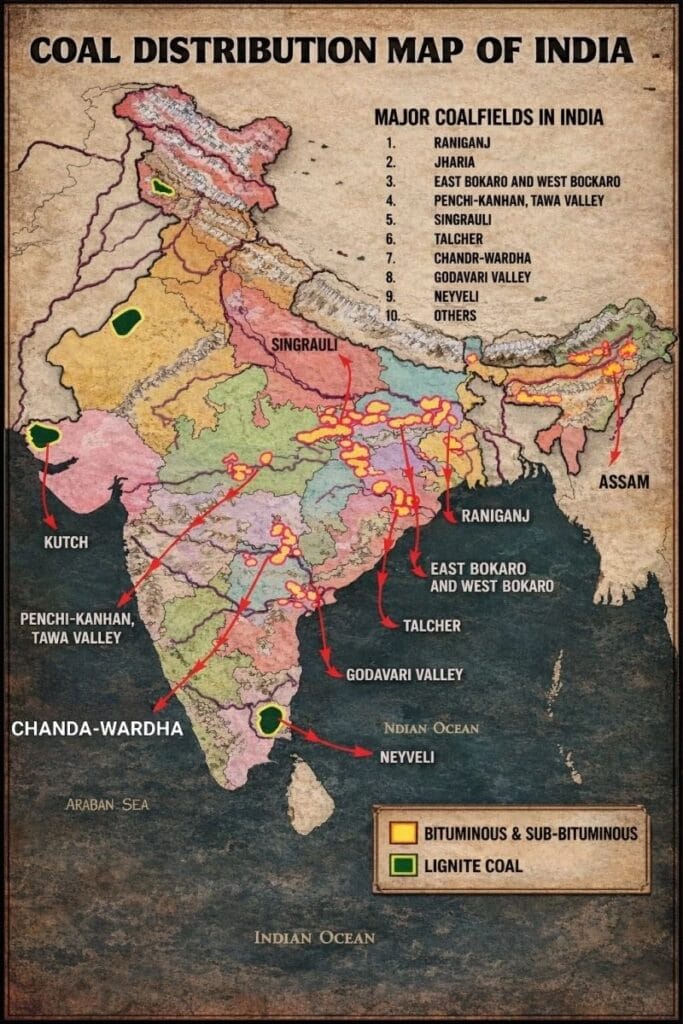
  • Located in West Bengal–Jharkhand, in the Damodar Valley.
  • India’s oldest coalfield, discovered in 1774.
  • Important for thermal power and industries.

Coal in India — Types & Characteristics

  1. Anthracite
    Highest carbon, hard, smokeless, highest heat value.
  2. Bituminous
    Medium–high carbon, most used in power and steel plants.
  3. Lignite
    Brown coal, high moisture, low heat value.
  4. Peat
    Lowest carbon, very high moisture, least efficient.

Coal by Geological Age

Gondwana Coal

  • Old coal; around 98% of India’s reserves.
  • Higher ash content.
  • Found in Damodar, Mahanadi and Godavari valleys.
  • Raniganj belongs to this type.

Tertiary Coal

  • Younger coal with more moisture.
  • Found mainly in Northeast India, Rajasthan and Tamil Nadu.
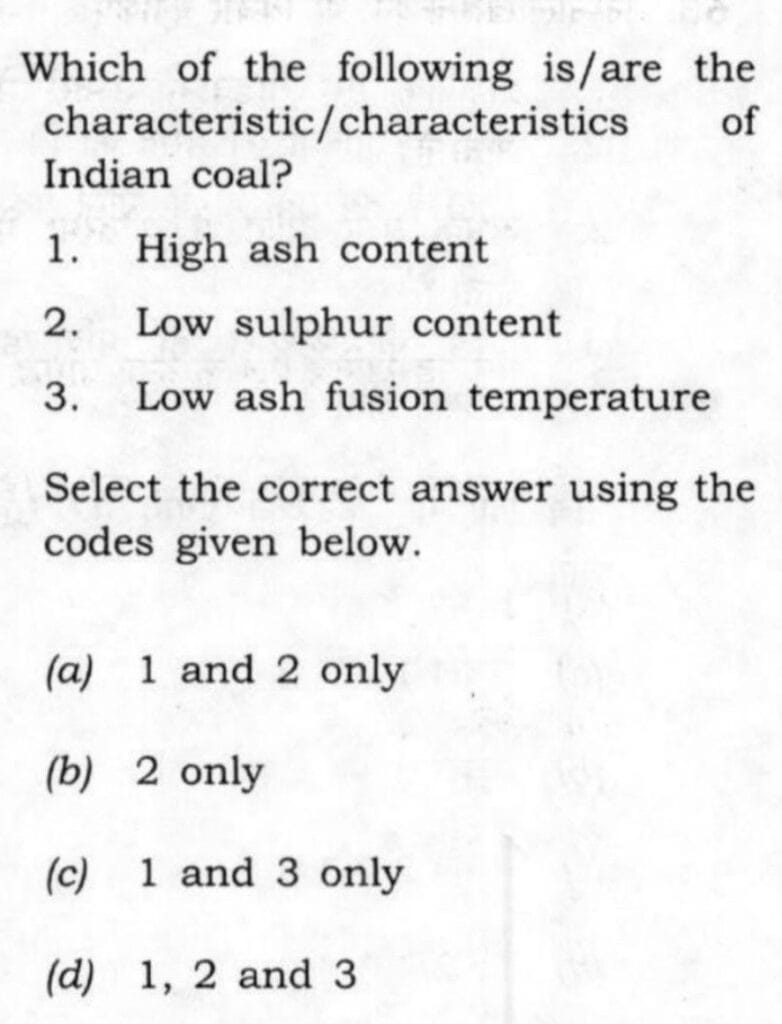
PYQ – 2013, Ans – A

Unseasonal Storms in Uttar Pradesh: Extreme Weather and Disaster Management

Context: Unseasonal Storms
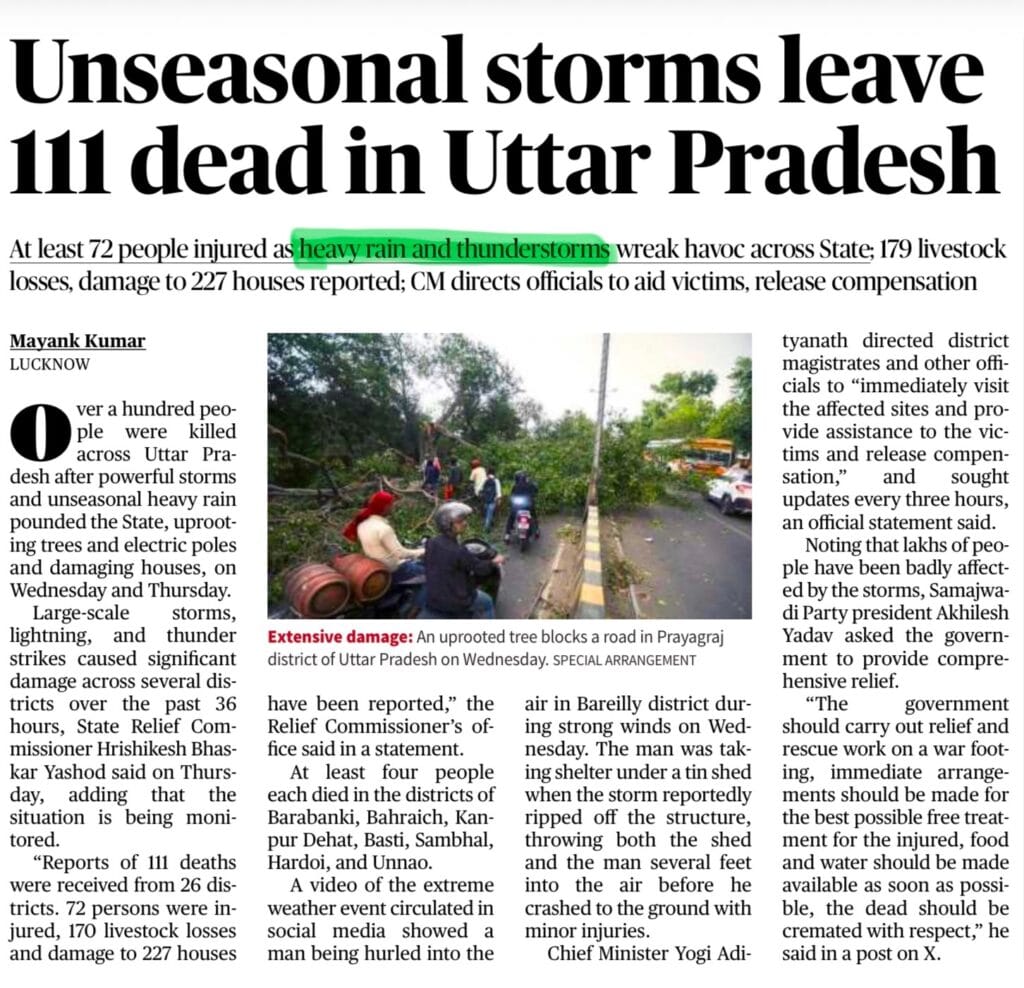
Unseasonal storms and heavy rain in Uttar Pradesh caused major loss of life and damage, highlighting the rising risks of extreme weather events, disaster preparedness gaps, and climate-linked vulnerability.

Key Issues

  • Unseasonal storms can cause sudden deaths, crop loss, infrastructure damage and displacement.
  • Such events show the increasing frequency of extreme weather conditions.
  • They also highlight the need for early warning systems and local-level disaster preparedness.

UPSC Relevance

  • GS1: Climatology and Indian monsoon variability.
  • GS3: Disaster management and climate change adaptation.
  • Governance angle: Preparedness, response, compensation and resilient infrastructure.

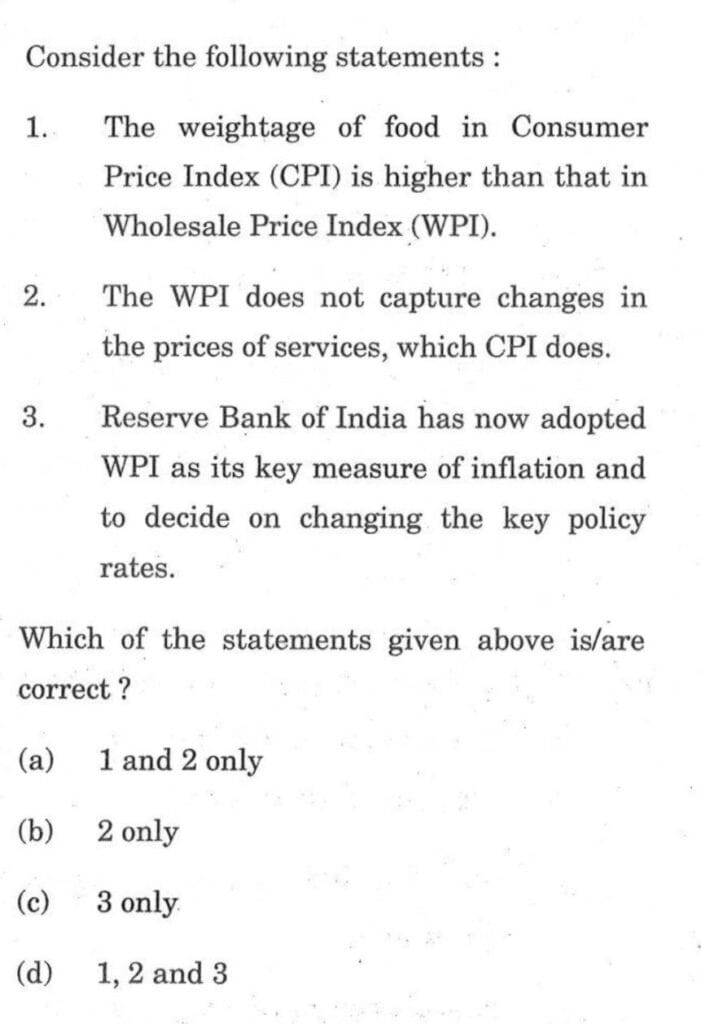
Wholesale Price Index Rises to 8.3%: WPI vs CPI Explained for UPSC

Context: Wholesale Price Index
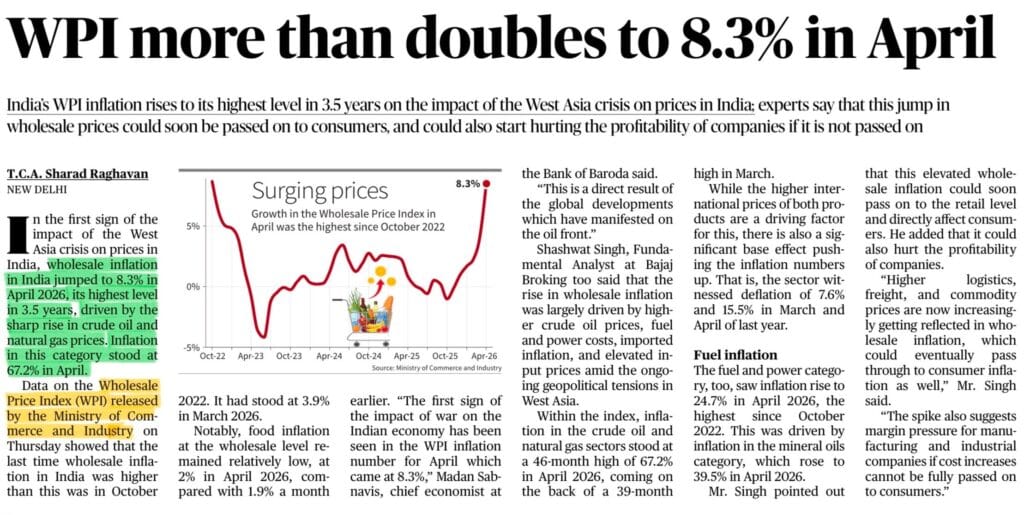
India’s WPI inflation rose to 8.3% in April 2026 due to rising crude oil, fuel and natural gas prices linked to the West Asia crisis.

Wholesale Price Index

Consumer Price Index

WPI vs CPI

  • WPI tracks wholesale prices; CPI tracks retail prices.
  • WPI covers only goods; CPI includes goods and services.
  • WPI reflects producer inflation; CPI reflects consumer cost of living.
  • CPI has higher food weightage; WPI has higher fuel and manufacturing weightage.
  • RBI mainly uses CPI for monetary policy decisions.
PYQ – 2020, Ans – A

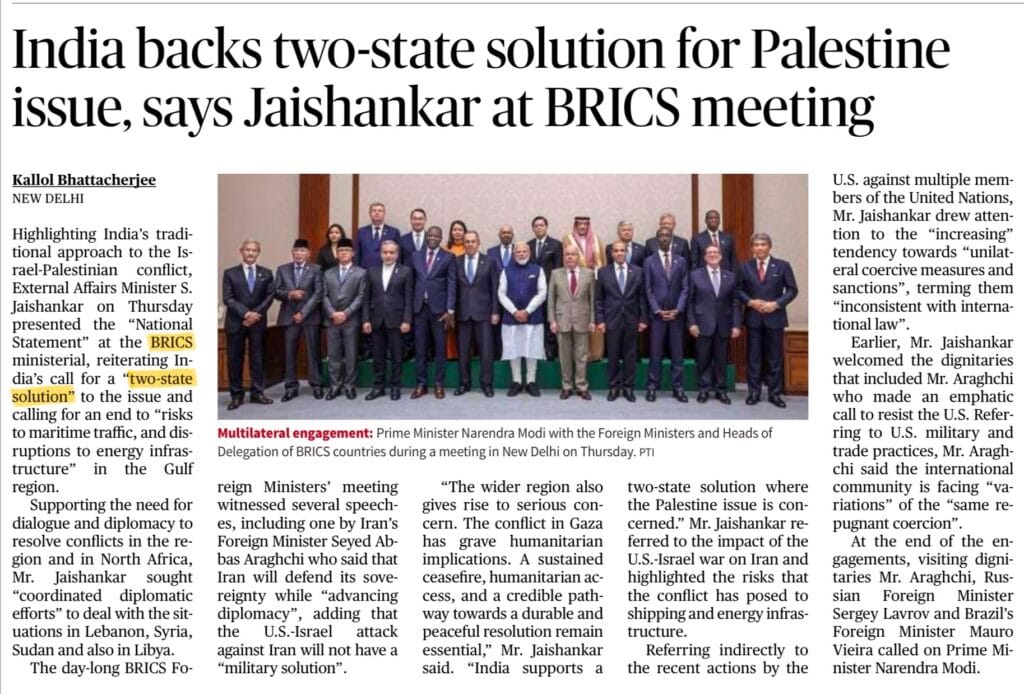
Two-State Solution: India’s Stand on Palestine and West Asia Crisis

Context: Two-State Solution
At the BRICS Foreign Ministers’ meeting, External Affairs Minister S. Jaishankar reiterated India’s support for a two-state solution on Palestine, raised concerns over the West Asia crisis and criticised unilateral sanctions outside the UN framework.

Key Takeaways

Two-State Solution

  • Supports an independent Palestine coexisting peacefully with Israel within secure, internationally recognised borders.
  • East Jerusalem is often proposed as the Palestinian capital.
  • India backed dialogue-based resolution of the conflict.

Gaza & West Asia Crisis

  • BRICS expressed concern over the humanitarian crisis in Gaza and instability in West Asia.
  • It called for ceasefire and humanitarian access.

Opposition to Unilateral Sanctions

  • India criticised non-UN sanctions.
  • Such sanctions were described as inconsistent with the UN Charter and harmful for developing countries and global trade.

Related UN Charter Provisions

  • Article 2(1): Sovereign equality of states
  • Article 2(4): Non-use of coercion
  • Article 41: UNSC authorises sanctions

Energy & Maritime Security

  • India highlighted risks to Strait of Hormuz shipping, oil supply chains and energy infrastructure due to the conflict.

Russian Oil & Multilateralism

  • India defended Russian oil imports on energy-security grounds.
  • It stressed diplomacy, dialogue and multipolar global governance.

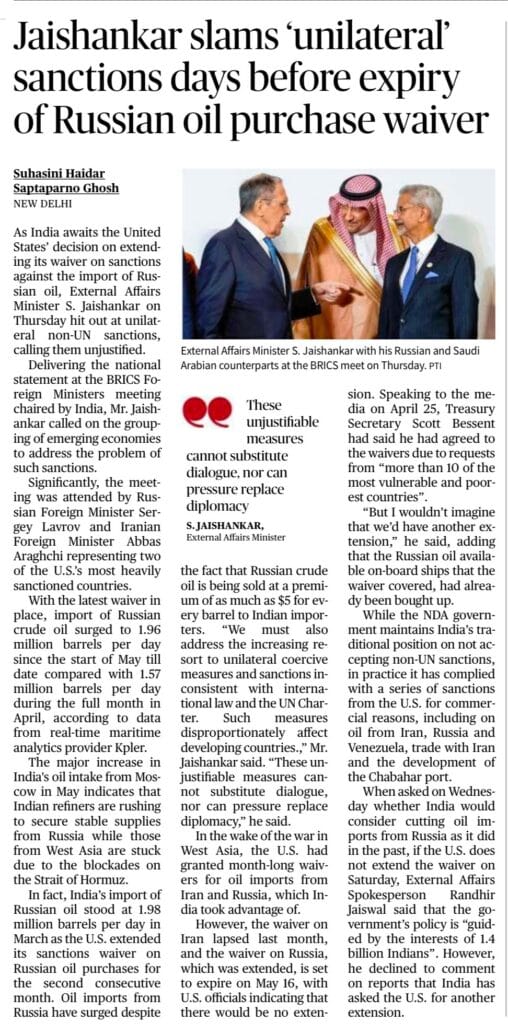
Unilateral Sanctions and India’s Energy Security Concerns

Context: Unilateral Sanctions
External Affairs Minister S. Jaishankar criticised unilateral sanctions days before the expiry of the Russian oil purchase waiver, linking the issue to energy security, sovereign decision-making and global trade fairness.

Key Points

  • India opposed sanctions imposed outside the UN framework.
  • Such sanctions affect developing countries by disrupting energy access and trade flows.
  • India defended its right to purchase energy based on national interest.
  • The issue is closely linked to India’s strategic autonomy and energy security.

Strategic Autonomy: Iran Conflict and India’s Foreign Policy Challenges

Context: Strategic Autonomy
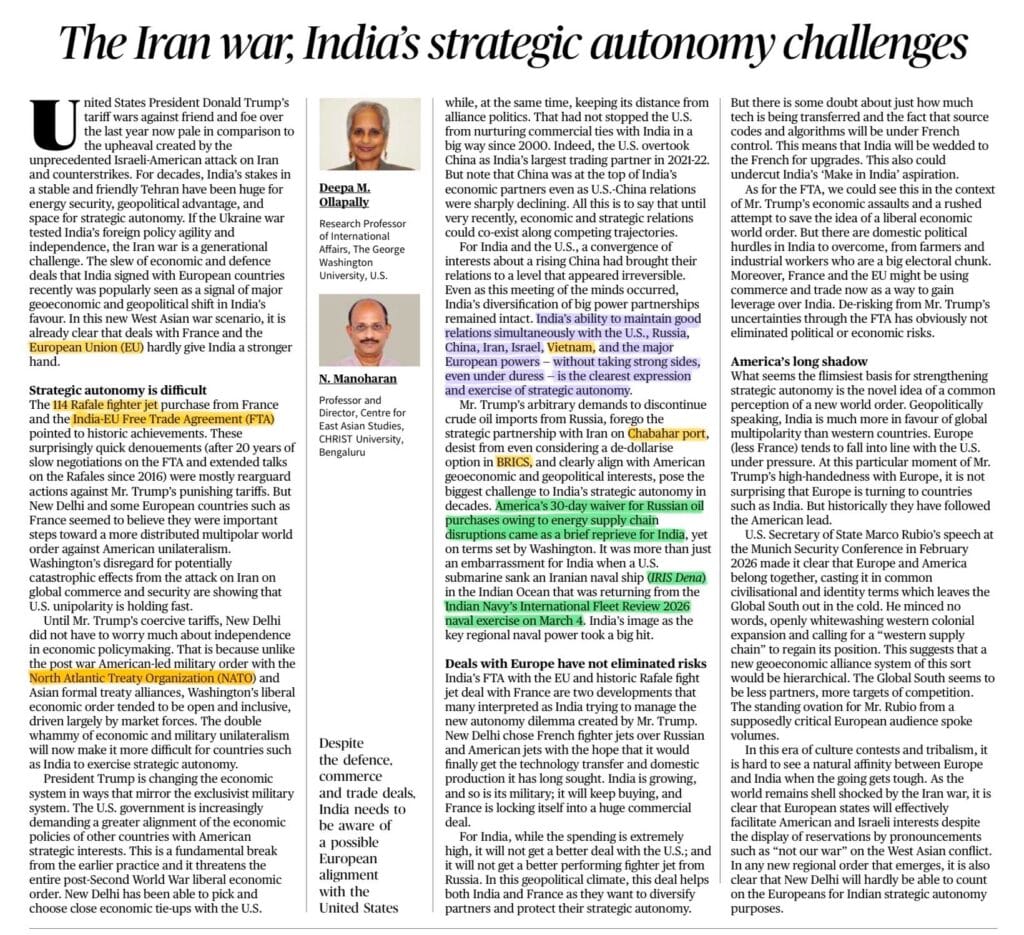
The editorial discusses how the Iran–Israel–U.S. conflict, sanctions politics and energy disruptions are testing India’s strategic autonomy and its policy of balancing relations with multiple global powers simultaneously.

Core Discussion — How Is India’s Strategic Autonomy Under Stress?

Pressure Over Russian Oil Imports

  • India continues importing discounted Russian crude for energy security.
  • However, U.S. sanctions and waiver politics are limiting India’s independent choices.

West Asia Conflict & Energy Dependence

  • India depends heavily on West Asia for crude oil and trade routes.
  • Conflict near the Strait of Hormuz threatens shipping lanes, energy supplies and supply chains.

Difficulty in Balancing Competing Powers

  • India is simultaneously engaging with the U.S., Russia, Iran, Europe, BRICS and Indo-Pacific partners like Vietnam.
  • Growing geopolitical polarisation is making this balancing strategy harder.

Limits of Europe as a Strategic Alternative

  • Despite Rafale deals and India–EU FTA negotiations, Europe may still align with U.S. strategic interests during crises.
  • Therefore, economic and defence partnerships may not always translate into geopolitical support.

Challenge to Multipolarity

  • Sanctions, bloc politics and geopolitical conflicts are shrinking the strategic space available to middle powers like India.

Risk to Maritime & Trade Security

  • Disruptions in the Indian Ocean and West Asian region can affect India’s trade, freight costs and economic stability.

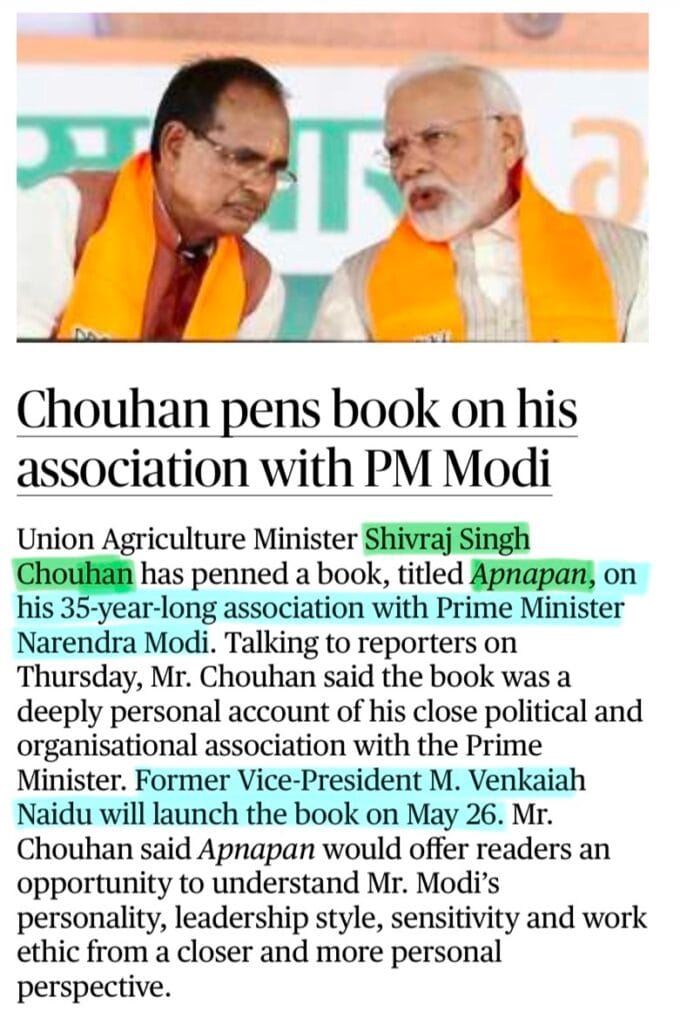
Apnapan Book by Shivraj Singh Chouhan on PM Modi Association

Context: Apnapan
Union Agriculture Minister Shivraj Singh Chouhan has written a book titled Apnapan, based on his 35-year-long political and organisational association with Prime Minister Narendra Modi.

Key Details

  • The book is titled Apnapan.
  • It is based on Shivraj Singh Chouhan’s long association with Prime Minister Narendra Modi.
  • The book is scheduled to be launched by former Vice-President M. Venkaiah Naidu on May 26.
About the UPSC Civil Services Examination (UPSC CSE)

The UPSC Civil Services Examination (CSE) is one of the most competitive and esteemed examinations in India, conducted by the Union Public Service Commission to recruit officers for services such as the Indian Administrative Service (IAS), Indian Police Service (IPS), Indian Foreign Service (IFS), and others. The exam comprises three stages — Prelims, Mains, and the Personality Test (Interview) — designed to test a candidate’s knowledge, aptitude, decision-making, and leadership skills.


How to Prepare Effectively for UPSC CSE

Cracking the UPSC CSE requires a deep understanding of the syllabus, consistent revision, structured answer writing, and smart test-taking strategies. The Prelims test analytical and conceptual clarity, the Mains focuses on critical thinking, articulation, and subject mastery, while the Interview assesses presence of mind, ethical judgment, and personality traits relevant to public service.

At UnderStand UPSC, we empower aspirants with a personalized and focused approach to each stage of the exam.


Why Choose UnderStand UPSC?

UnderStand UPSC is a mentorship-driven platform offering a clear, clutter-free strategy to tackle the Civil Services Examination. Our programs like Transform (for beginners and intermediate learners) and Conquer (for advanced mains preparation) provide structured study plans, syllabus-wise video content, interactive live sessions, and answer writing support.

We emphasize:

  • Concept clarity through topic-wise lectures

  • Test series designed around real UPSC standards

  • Personalized mentorship in small groups

  • Regular performance tracking and peer benchmarking

  • Doubt-clearing sessions, current affairs analysis, and monthly magazines


Join the UnderStand UPSC Learning Community

Our mission is to make UPSC preparation less overwhelming and more strategic. We combine mentorship, discipline, and academic rigor to help you clear CSE with confidence. Whether you’re preparing from Delhi, Mumbai, Bangalore, or a remote village — our online-first model ensures quality guidance reaches every corner of India.

Join the thousands of aspirants who trust UnderStand UPSC to guide their journey toward becoming civil servants.

Stay connected with us through our Telegram, YouTube, and Instagram channels for daily tips, strategies, and updates.

Copyright © 2026 USARAMBHA EDUCATION (UnderStand UPSC). All Rights Reserved.

Fill the form & our team will reach out to you soon