Children Social Media Regulation: Rules and Digital Safety
Source: The Indian Express (Explained) | 17 June | Tags: 18 June 2026, Family & Children, GS1, Socialization, Society
Context: Children social media regulation
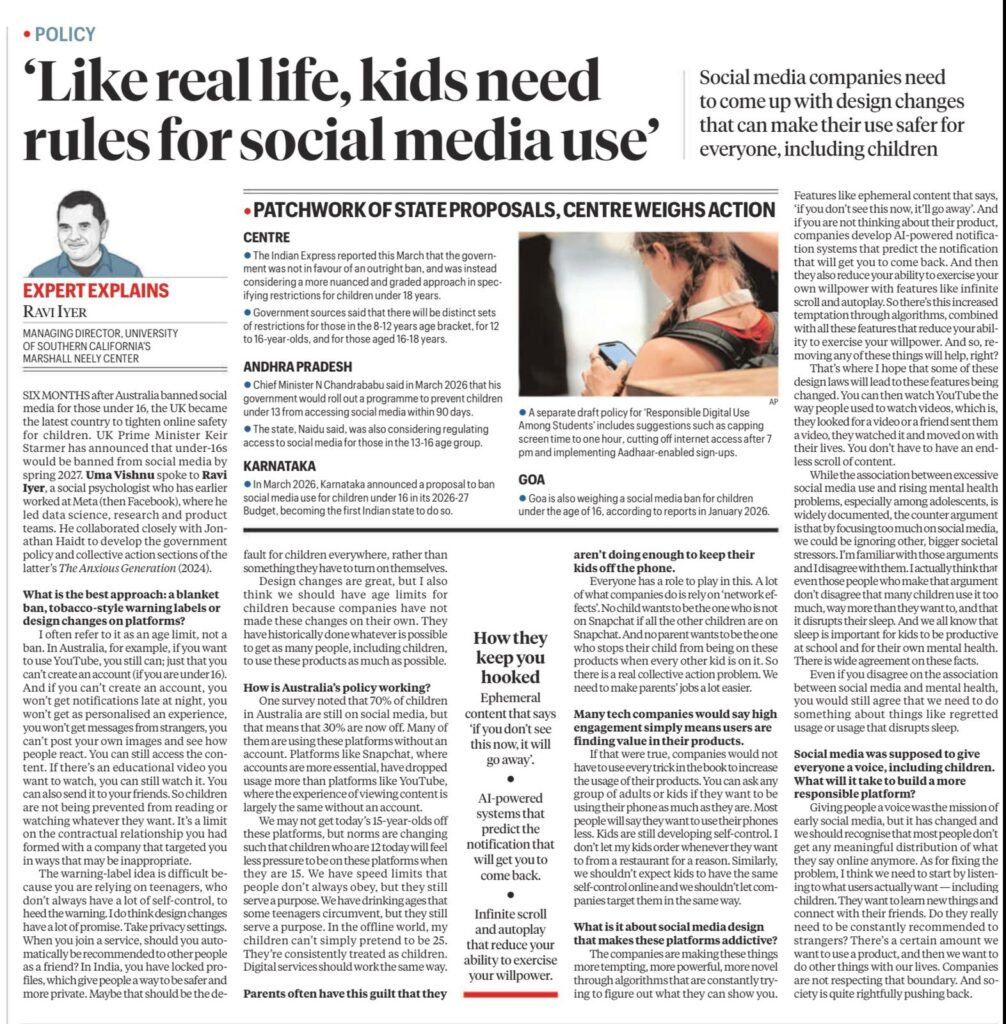
The article discusses the growing debate around children’s social media use and argues that, just like real life, children need clear rules, supervision and safeguards in the digital world.
Why This Issue Matters
Children today are exposed to social media at an early age. This affects:
- Socialisation
- Attention span
- Mental health
- Family relationships
- Peer pressure
- Digital safety
- Exposure to harmful content
Key Concern
The main concern is not only screen time but the nature of online engagement.
Children may face:
- Addictive platform design
- Cyberbullying
- Body-image pressure
- Online predators
- Misinformation
- Privacy risks
- Algorithm-driven harmful content
Blanket Ban vs Regulation
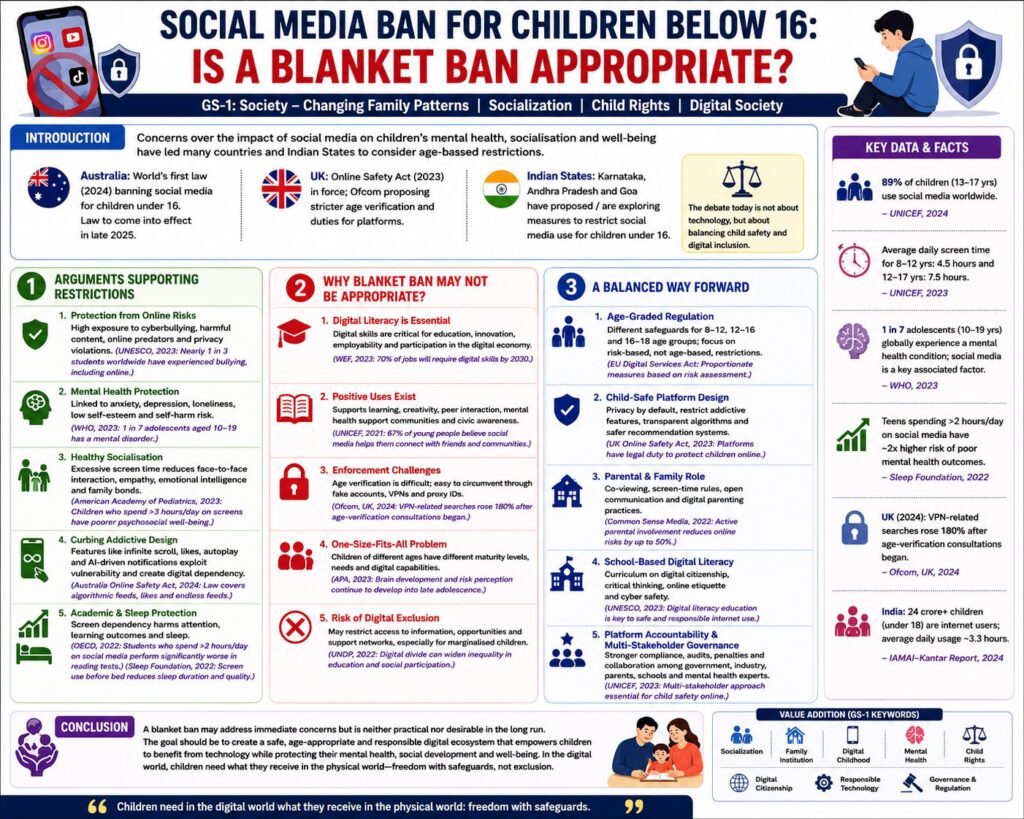
Argument for Restrictions
- Protects children from online harm.
- Reduces excessive screen dependence.
- Limits exposure to harmful content.
- Helps parents enforce discipline.
- Recognises that children may not have full emotional maturity to handle social media pressure.
Concern with Blanket Ban
- May restrict digital literacy.
- May push children to hidden or fake accounts.
- May reduce access to educational and creative opportunities.
- Enforcement is difficult.
- Social media is also a space for peer learning, expression and community.
Balanced Way Forward
1. Age-Graded Regulation
Different rules can apply for different age groups, such as:
- Below 12 years
- 12–16 years
- 16–18 years
2. Parental Supervision
Parents should guide children’s social media use through:
- Time limits
- Content rules
- Open conversations
- Digital boundaries
3. Platform Accountability
Social media platforms should ensure:
- Strong age verification
- Child-safe default settings
- Transparent algorithms
- Easy reporting mechanisms
- Limits on addictive design
4. Digital Literacy
Children should be taught:
- Online safety
- Privacy protection
- Fact-checking
- Responsible posting
- How to handle cyberbullying
5. School and Community Role
Schools can include digital citizenship as part of education.
This can help children understand:
- Healthy online behaviour
- Digital footprints
- Emotional impact of social media
- Responsible technology use
Mains Keywords
- Digital childhood
- Child rights
- Socialisation
- Platform accountability
- Digital literacy
- Online safety
- Mental health
- Family as first regulator