21 July 2026 | UPSC Daily Current Affairs

21 July 2026 | UPSC Daily Current Affairs

Odessa Port attack UPSC: Indian Seafarers Killed

Context: Odessa Port attack UPSC
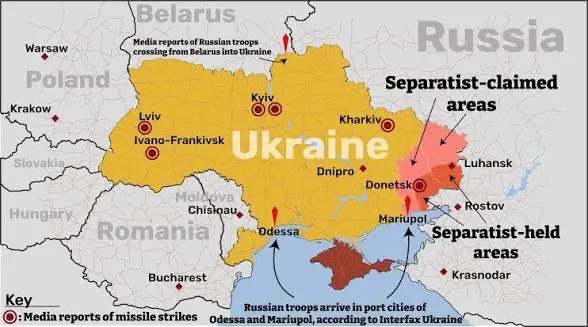
Four Indian seafarers were killed and one was critically injured after the merchant vessel MV Golden Leo was attacked near Odessa Port on Ukraine’s Black Sea coast.

India condemned the attack and stated that attacks on merchant vessels violate the freedom of navigation.

Odessa Port

Location

Odessa Port is located on the northwestern coast of the Black Sea in southern Ukraine.

Importance

Odessa is Ukraine’s largest seaport and the country’s principal maritime trade gateway.

It is a major export hub for:

  • Grain
  • Sunflower oil
  • Metals
  • Other commodities

Strategic Significance

Odessa Port has been strategically significant in the Russia–Ukraine war.

It was also central to the Black Sea Grain Initiative, 2022–23, which helped facilitate foodgrain exports from Ukraine during the war.

Why This Matters

1. Freedom of Navigation

Attacks on merchant vessels affect the principle of free and safe movement of ships in international waters and maritime zones.

2. Global Trade Impact

The Black Sea is important for grain and commodity exports. Any disruption can affect global food and supply chains.

3. Indian Citizens Abroad

The death of Indian seafarers highlights risks faced by Indian workers in conflict zones.

4. India’s Diplomatic Position

India’s condemnation reflects its concern for civilian shipping, seafarer safety and uninterrupted maritime trade.

Key Takeaway

The Odessa attack shows how regional wars can directly affect global shipping, food security and the safety of Indian citizens working abroad.
India first dengue vaccine UPSC: QDENGA Approved

Context: India first dengue vaccine UPSC
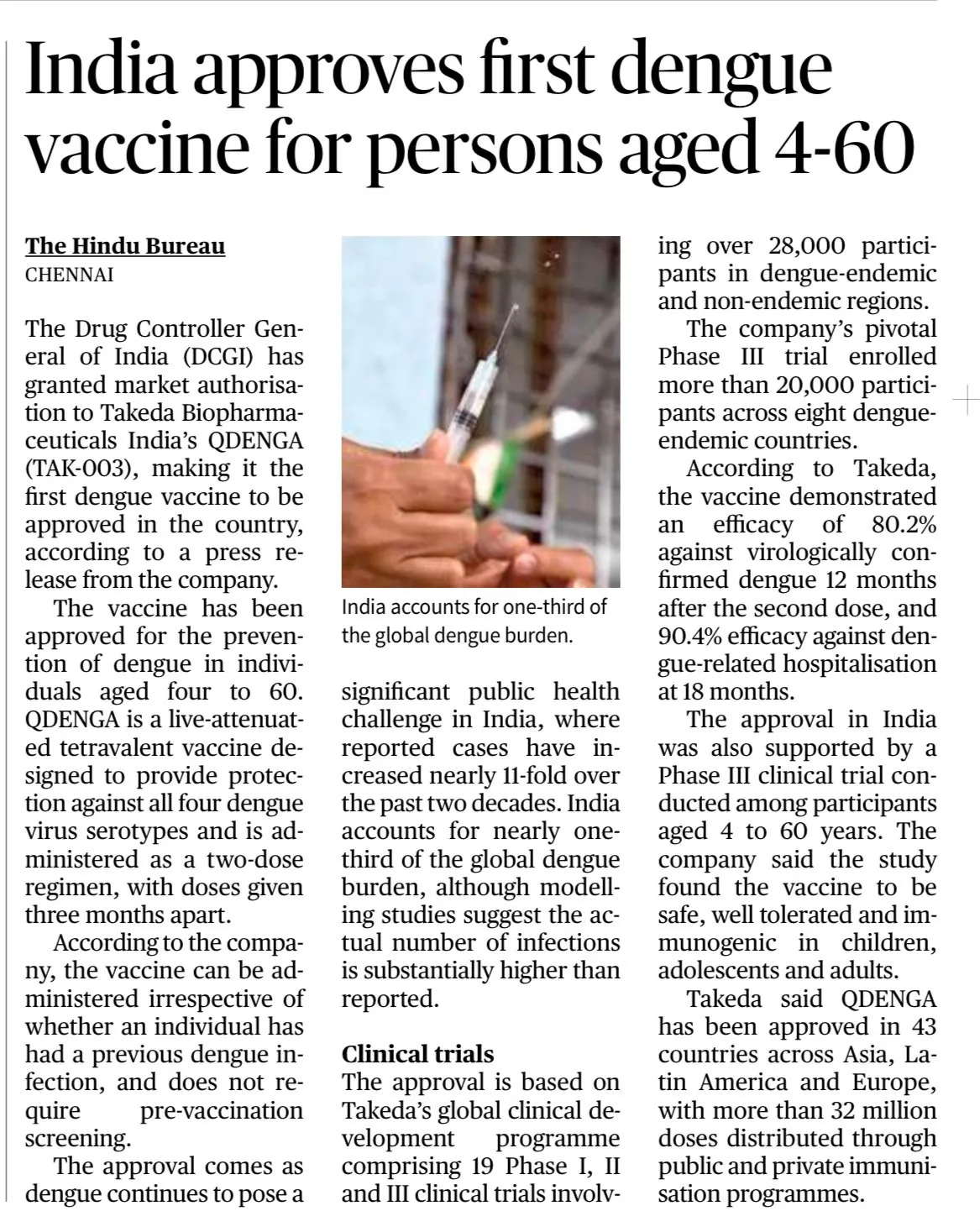
The Drug Controller General of India has granted market authorisation to QDENGA (TAK-003), making it India’s first approved dengue vaccine for individuals aged 4–60 years.

The vaccine can be administered irrespective of prior dengue infection and does not require pre-vaccination screening.

QDENGA Vaccine

Developed By

Takeda Biopharmaceuticals.

Type

QDENGA is a live-attenuated tetravalent vaccine.

Protection

It provides protection against all four dengue virus serotypes:

  • DENV-1
  • DENV-2
  • DENV-3
  • DENV-4

Dose Schedule

It is administered as a two-dose regimen.

The two doses are given three months apart.

Approval Status

The vaccine has been approved for use in 43 countries and is supported by Phase III clinical trial data.

Dengue

Dengue is a viral disease caused by the dengue virus.

It is mainly transmitted by the female Aedes aegypti mosquito.

It can also be transmitted by Aedes albopictus.

Symptoms

Common symptoms include:

  • High fever
  • Severe headache
  • Muscle pain
  • Joint pain
  • Skin rash

Severe dengue may cause:

  • Dengue haemorrhagic fever
  • Dengue shock syndrome

Treatment and Prevention

There is no specific antiviral treatment for dengue.

Management is mainly supportive and includes:

  • Early diagnosis
  • Adequate fluid therapy
  • Monitoring of warning signs

Prevention focuses on:

  • Vector control
  • Elimination of mosquito breeding sites
  • Protection against mosquito bites

Significance

1. Public Health Milestone

India now has its first approved dengue vaccine for a wide age group.

2. Supports Disease Prevention

Vaccination can reduce severe disease burden if implemented effectively.

3. Important for Dengue-Endemic Areas

Dengue remains a major public health issue in India, especially during and after the monsoon season.

4. Reduces Pressure on Health Systems

Preventing dengue infections and severe cases can reduce hospitalisation burden.

Key Takeaway

QDENGA’s approval is a major step in dengue prevention, but vector control, surveillance and public awareness will remain essential.

Long-duration energy storage UPSC for Green Transition

Context: Long-duration energy storage UPSC
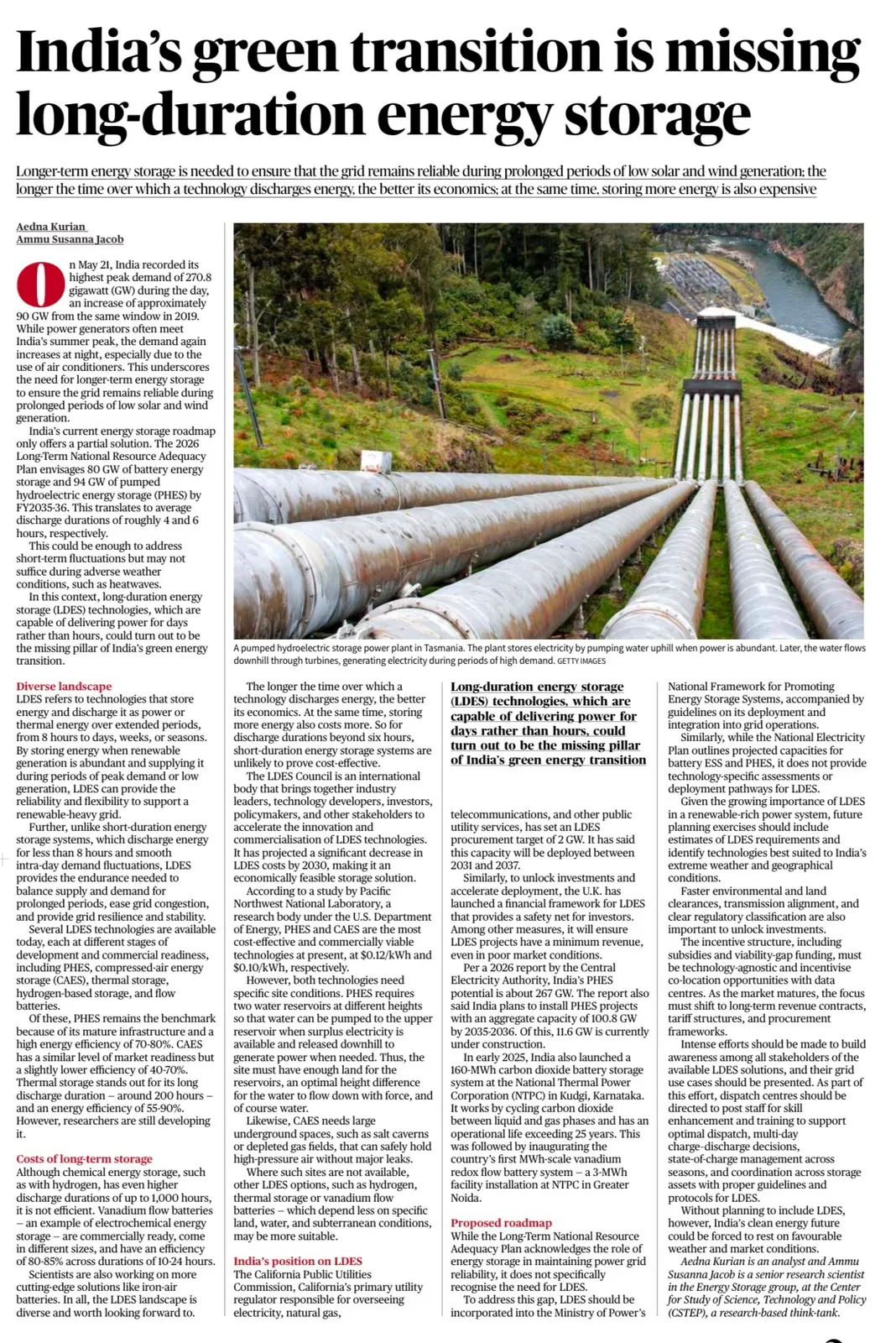
India’s electricity demand is rising rapidly, with peak demand reaching a record 270.8 GW in May 2026.

At the same time, the growing share of renewable energy requires reliable storage to ensure uninterrupted power supply.

India’s current storage roadmap envisages:

  • 80 GW of Battery Energy Storage Systems
  • 94 GW of Pumped Hydro Energy Storage

by 2035–36, but much of this capacity is designed for short-duration storage.

Core Issue

Renewable energy sources such as solar and wind are intermittent.

They depend on:

  • Sunlight
  • Wind speed
  • Weather conditions
  • Seasonal patterns

This creates a need for reliable energy storage.

Long-Duration Energy Storage

Long-Duration Energy Storage refers to technologies that can supply electricity for days rather than hours.

This is important when solar and wind generation remain low for extended periods.

Why Short-Duration Storage Is Not Enough

Short-duration storage can help manage daily fluctuations, but it may be inadequate during:

  • Seasonal variation
  • Extreme weather events
  • Long periods of low solar generation
  • Long periods of low wind generation
  • Peak demand stress

Storage Technologies Needed

India needs a diversified portfolio of storage technologies, including:

1. Pumped Hydro Energy Storage

Uses water reservoirs at different heights to store and generate electricity.

2. Compressed Air Energy Storage

Stores energy by compressing air and releasing it later to generate power.

3. Thermal Energy Storage

Stores energy in the form of heat for later use.

4. Hydrogen Storage

Uses electricity to produce hydrogen, which can later be used as fuel.

5. Flow Batteries

Use liquid electrolytes to store and release electricity over longer durations.

Core Arguments

1. Grid Reliability

LDES is essential to ensure grid reliability during prolonged low renewable generation.

2. Renewable Integration

India’s clean energy transition requires storage that can balance supply and demand.

3. Climate Resilience

Extreme weather events may disrupt generation, making long-duration backup important.

4. Policy Gap

Absence of dedicated policy, incentives and deployment roadmap for LDES can become a bottleneck.

Way Forward

  • Integrate LDES into national energy planning.
  • Set clear deployment targets.
  • Provide regulatory support.
  • Promote research and innovation.
  • Support pilot projects.
  • Encourage domestic manufacturing.
  • Develop market mechanisms and investment incentives.
  • Use viability gap funding to attract private participation.
  • Strengthen grid planning with LDES.

Key Takeaway

India’s green transition cannot depend only on short-duration batteries. Long-duration storage is essential for a reliable renewable energy grid.

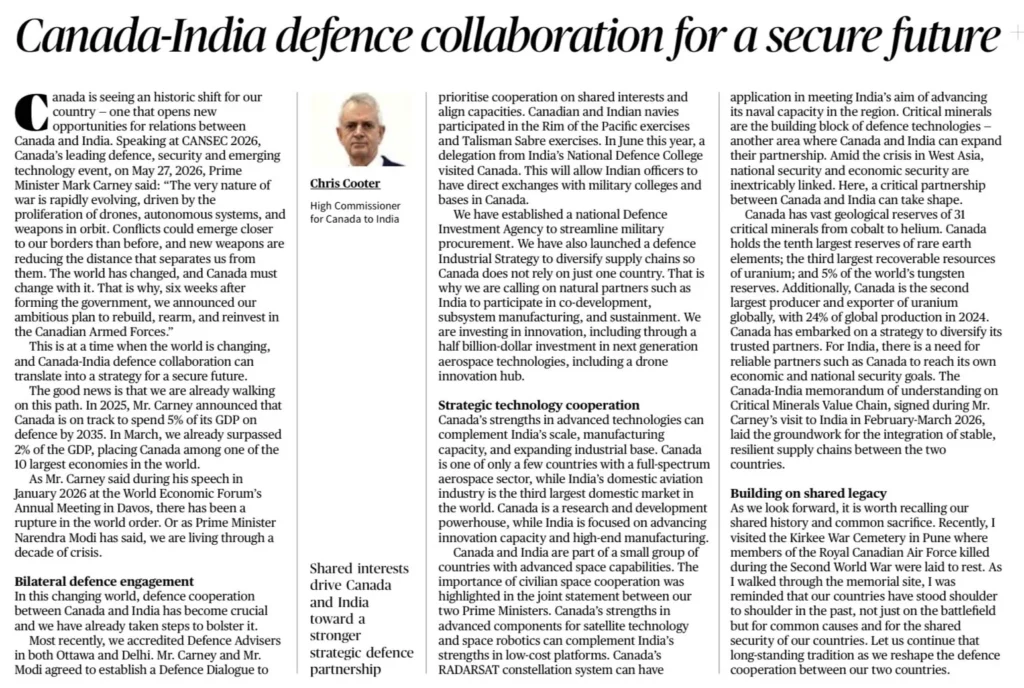
India Canada defence cooperation UPSC Explained

Context: India Canada defence cooperation UPSC
India and Canada are witnessing renewed momentum in bilateral relations.

Both countries are expanding cooperation in:

This is happening amid a changing global security landscape.

Recent Initiatives

1. India–Canada Defence Dialogue

An institutional mechanism for regular consultations on defence and strategic cooperation.

2. Critical Minerals Value Chain MoU, 2026

Aims to strengthen cooperation in:

  • Exploration
  • Processing
  • Resilient supply chains of critical minerals

3. Maritime, Aerospace and Space Cooperation

Focuses on:

  • Joint research
  • Technology collaboration
  • Industrial partnerships
  • Capacity building

Core Arguments

1. Move Beyond Traditional Defence Engagement

India and Canada should move towards:

  • Co-development
  • Co-production
  • Technology transfer
  • Defence industrial collaboration

2. Complementary Strengths

Canada’s strengths in advanced research, aerospace and critical minerals can complement India’s manufacturing capabilities and Aatmanirbhar Bharat initiative.

3. Strategic Technologies

Cooperation in emerging areas can strengthen strategic resilience.

Important areas include:

4. Critical Minerals

Trusted supply chains for critical minerals are essential for:

  • Defence manufacturing
  • Clean energy technologies
  • Economic security
  • Technology industries

Significance for India

1. Defence Modernisation

Collaboration can support India’s defence manufacturing and technology ecosystem.

2. Indo-Pacific Security

Maritime and security cooperation can support a stable Indo-Pacific.

3. Clean Energy Transition

Critical minerals are needed for batteries, clean energy technologies and advanced manufacturing.

4. Strategic Diversification

India benefits from diversified partnerships beyond a few traditional defence suppliers.

Key Takeaway

India–Canada defence cooperation can become meaningful if it moves from dialogue to actual industrial collaboration, technology transfer and trusted critical mineral supply chains.

Index of Core Industries UPSC: Growth Hits 5%

Context: Index of Core Industries UPSC
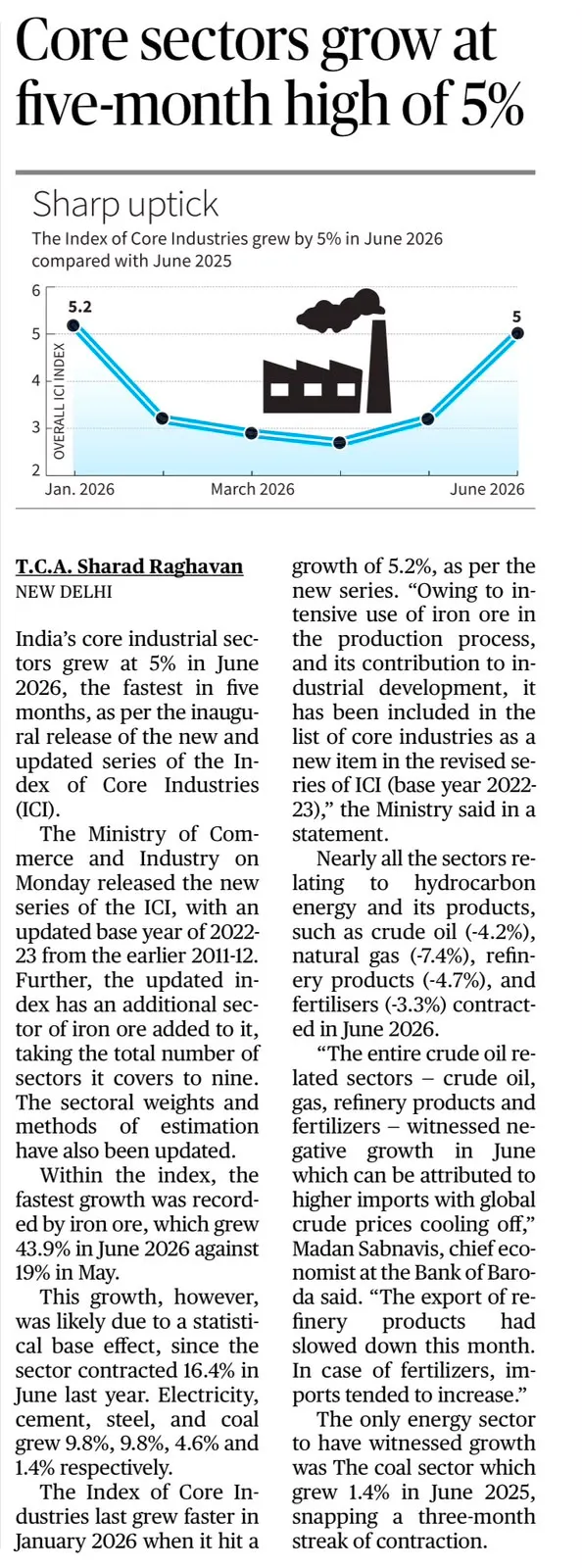
India’s Index of Core Industries grew 5% year-on-year in June 2026, the highest growth in five months.

The revised ICI series has updated its base year to 2022–23 and added Iron Ore as the ninth core industry.

Index of Core Industries

The Index of Core Industries measures the performance of India’s core industrial sectors.

These sectors form the backbone of industrial production.

Released By

Office of the Economic Adviser, Department for Promotion of Industry and Internal Trade, Ministry of Commerce and Industry.

Core Industries

The revised list includes:

  • Coal
  • Crude Oil
  • Natural Gas
  • Refinery Products
  • Fertilisers
  • Steel
  • Cement
  • Electricity
  • Iron Ore

Earlier, there were eight core industries. Iron Ore has been added in the revised series.

Base Year

The base year has been revised from 2011–12 to 2022–23.

The revised series includes updated:

  • Sectoral weights
  • Methodology
  • Industrial coverage

ICI and IIP

ICI

ICI is a leading indicator of industrial activity.

It constitutes about 40% of the weight of the Index of Industrial Production.

IIP

The Index of Industrial Production is released by the National Statistics Office under the Ministry of Statistics and Programme Implementation.

It measures the performance of:

  • Mining
  • Manufacturing
  • Electricity sectors

Significance

1. Industrial Momentum

Growth in core sectors indicates improved industrial activity.

2. Policy Indicator

ICI helps policymakers track early trends in industrial production.

3. Infrastructure Link

Core sectors such as steel, cement, electricity and coal are closely linked to infrastructure growth.

4. Economic Health

A rise in core sector output supports manufacturing, construction and broader economic activity.

Key Takeaway

The 5% core sector growth shows stronger industrial activity, while the inclusion of Iron Ore makes the index more aligned with India’s current industrial structure.

India US Civil Space Joint Working Group Explained

Context: India US Civil Space Joint Working Group
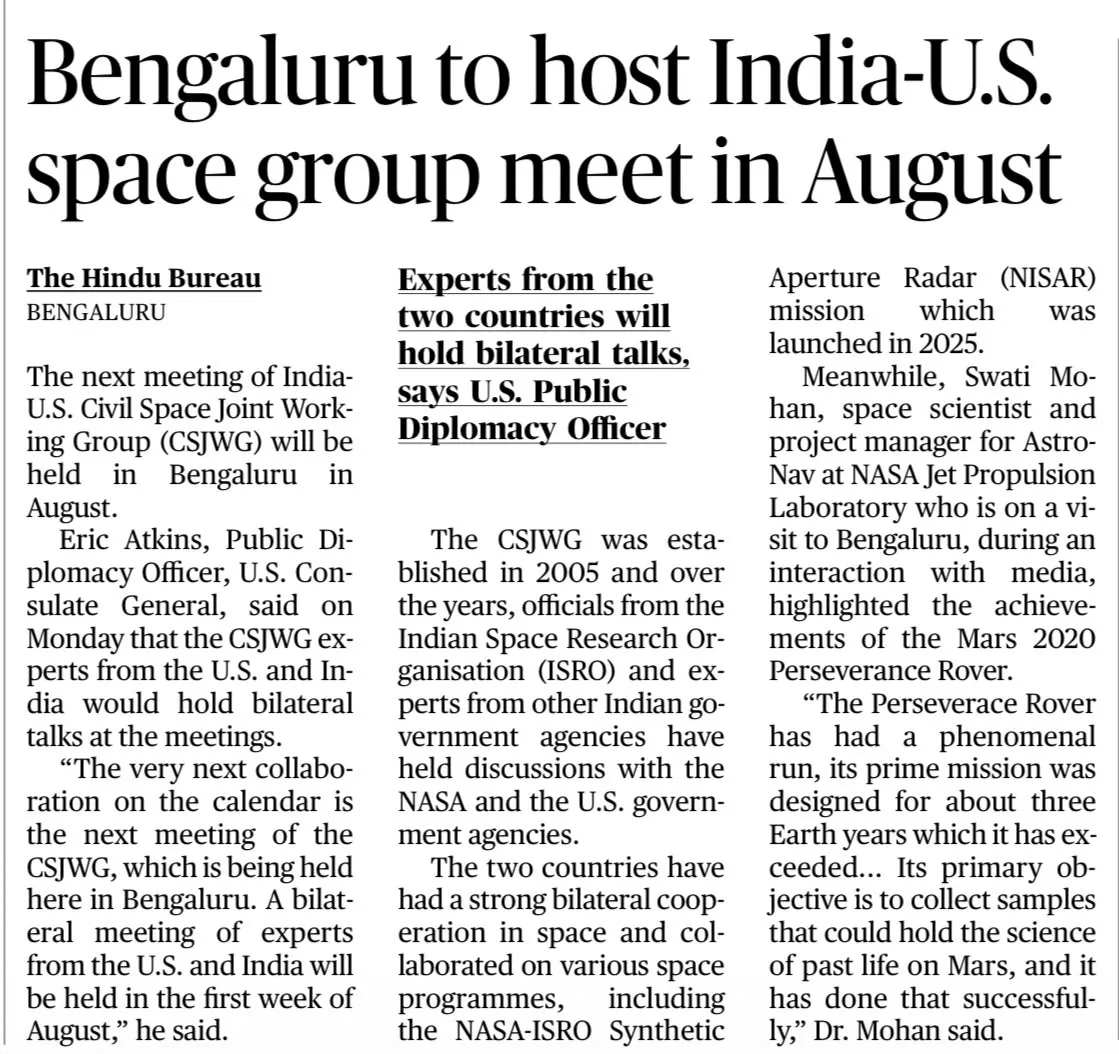
Bengaluru will host the next meeting of the India–U.S. Civil Space Joint Working Group in August 2026.

Experts from ISRO, NASA and other government agencies will discuss bilateral cooperation in civil space activities.

The meeting aims to deepen collaboration in:

  • Space exploration
  • Earth observation
  • Satellite applications
  • Emerging space technologies

India–U.S. Civil Space Joint Working Group

Established

Nature

It is the institutional mechanism for civil space cooperation between India and the United States.

Participants

The group is led by:

  • ISRO
  • NASA
  • Other government agencies from both countries

Objective

The CSJWG promotes cooperation in:

  • Space science
  • Earth observation
  • Satellite navigation
  • Planetary exploration
  • Human spaceflight
  • Capacity building

Key Outcome

The working group has facilitated several joint initiatives, including the NASA–ISRO Synthetic Aperture Radar mission.

NISAR Mission

NISAR stands for NASA–ISRO Synthetic Aperture Radar.

It was launched in 2025 for advanced Earth observation and disaster management.

Significance

1. India–U.S. Strategic Partnership

The CSJWG strengthens the India–U.S. Comprehensive Global Strategic Partnership in the space sector.

2. Earth Observation

Cooperation improves climate monitoring, disaster management and environmental observation.

3. Space Technology

It supports technology exchange, research and space applications.

4. India’s Space Ecosystem

Such cooperation supports India’s expanding space ecosystem, including public and private sector participation.

Key Takeaway

The Bengaluru meeting will further deepen India–U.S. civil space cooperation, especially in Earth observation, space science, satellite applications and emerging technologies.

About the UPSC Civil Services Examination (UPSC CSE)

The UPSC Civil Services Examination (CSE) is one of the most competitive and esteemed examinations in India, conducted by the Union Public Service Commission to recruit officers for services such as the Indian Administrative Service (IAS), Indian Police Service (IPS), Indian Foreign Service (IFS), and others. The exam comprises three stages — Prelims, Mains, and the Personality Test (Interview) — designed to test a candidate’s knowledge, aptitude, decision-making, and leadership skills.


How to Prepare Effectively for UPSC CSE

Cracking the UPSC CSE requires a deep understanding of the syllabus, consistent revision, structured answer writing, and smart test-taking strategies. The Prelims test analytical and conceptual clarity, the Mains focuses on critical thinking, articulation, and subject mastery, while the Interview assesses presence of mind, ethical judgment, and personality traits relevant to public service.

At UnderStand UPSC, we empower aspirants with a personalized and focused approach to each stage of the exam.


Why Choose UnderStand UPSC?

UnderStand UPSC is a mentorship-driven platform offering a clear, clutter-free strategy to tackle the Civil Services Examination. Our programs like Transform (for beginners and intermediate learners) and Conquer (for advanced mains preparation) provide structured study plans, syllabus-wise video content, interactive live sessions, and answer writing support.

We emphasize:

  • Concept clarity through topic-wise lectures

  • Test series designed around real UPSC standards

  • Personalized mentorship in small groups

  • Regular performance tracking and peer benchmarking

  • Doubt-clearing sessions, current affairs analysis, and monthly magazines


Join the UnderStand UPSC Learning Community

Our mission is to make UPSC preparation less overwhelming and more strategic. We combine mentorship, discipline, and academic rigor to help you clear CSE with confidence. Whether you’re preparing from Delhi, Mumbai, Bangalore, or a remote village — our online-first model ensures quality guidance reaches every corner of India.

Join the thousands of aspirants who trust UnderStand UPSC to guide their journey toward becoming civil servants.

Stay connected with us through our Telegram, YouTube, and Instagram channels for daily tips, strategies, and updates.

Copyright © 2026 USARAMBHA EDUCATION (UnderStand UPSC). All Rights Reserved.

Fill out the form

Fill out the form for

Downloading the free Agriculture Short Notes