6 March 2026 | Daily Current Affairs

Governor Appointment in India: Constitutional Provisions, Articles 155 & 156 Explained for UPSC

Context:
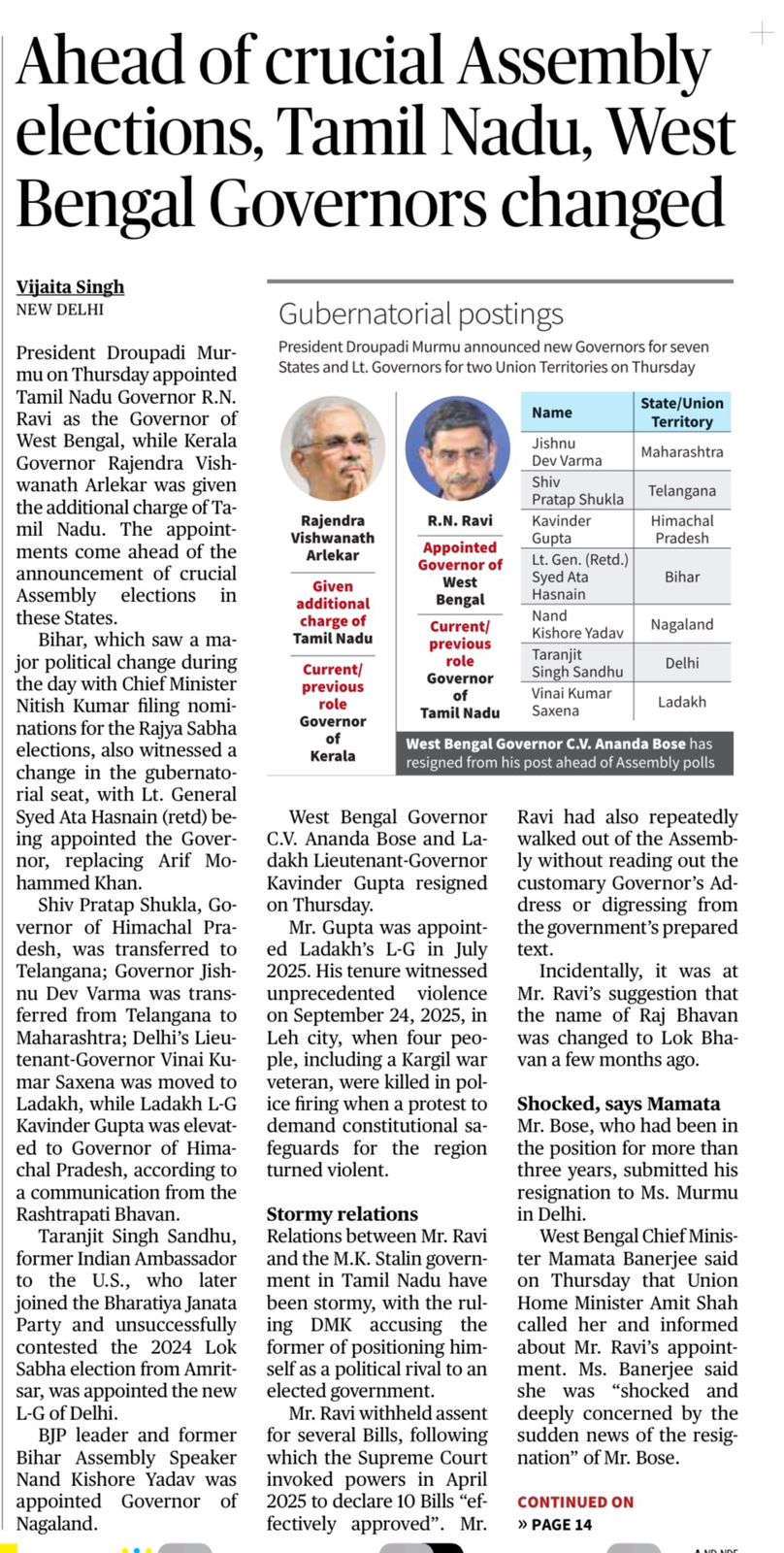
Ahead of crucial Assembly elections, Governors in 7 States and Lt. Governors in 2 UTs were changed, with President Droupadi Murmu making fresh appointments/transfers.

Governor (State)

Article 155 — Appointment

• Governor appointed by President (warrant under hand & seal).
• Done on aid & advice of Union Council of Ministers (Art. 74).

Article 156 — Tenure, Removal, Transfer

• Art. 156(1): Holds office during pleasure of President → removal/change anytime.
• Art. 156(3): Nominal tenure 5 years (not guaranteed).
• Transfer: Not expressly written; flows from Art. 156(1) → treated as removal + fresh appointment under Art. 155.

Lt. Governor / Administrator (UTs)

Article 239 — Basic Rule

• UTs administered by President through Administrator/LG.

Article 239AA — Delhi (Special Case)

• Provides LG + elected Assembly framework.

Article 239A — Puducherry Framework

• Allows Legislature/Council of Ministers for certain UTs.

• Appointment/Change: By President on Union Cabinet advice.
• Tenure: No fixed tenure; serves during President’s pleasure.
Governor Appointment in India
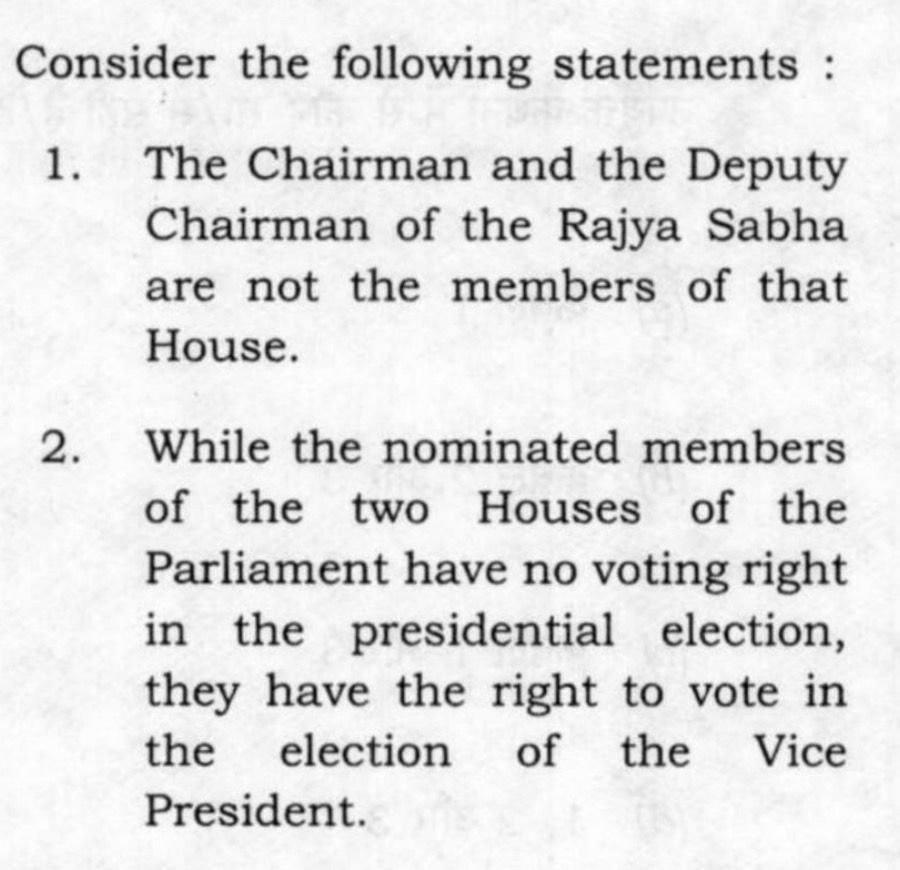
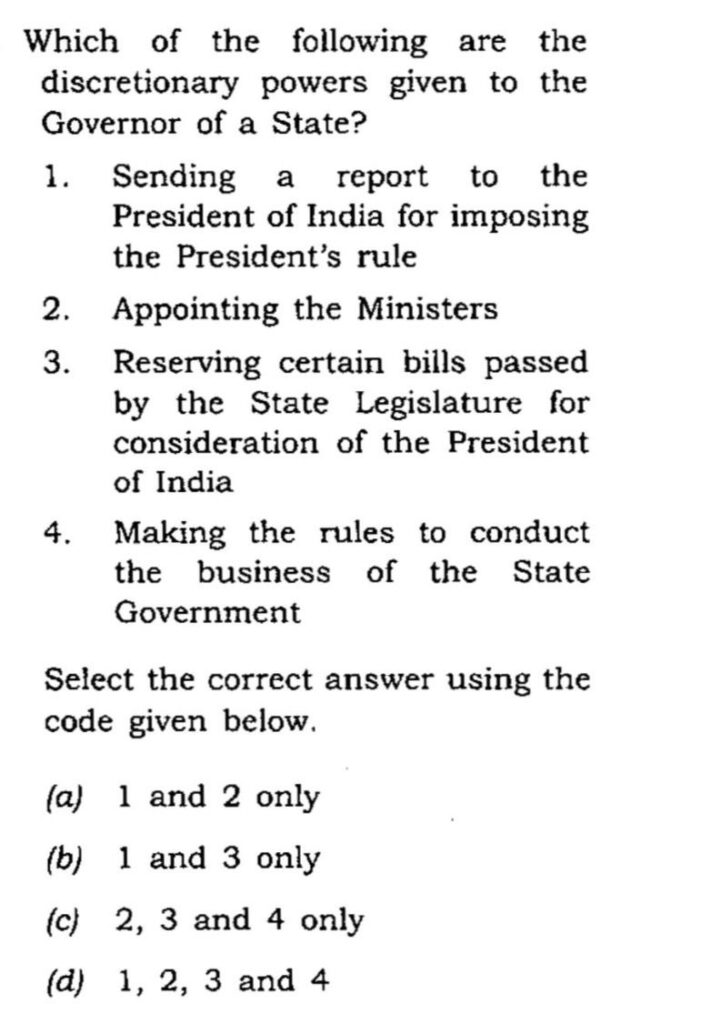
PYQ – 2014, Ans – B

Deputy Chairman of Rajya Sabha: Article 89, Election, Powers and Vacancy Explained for UPSC

Context:
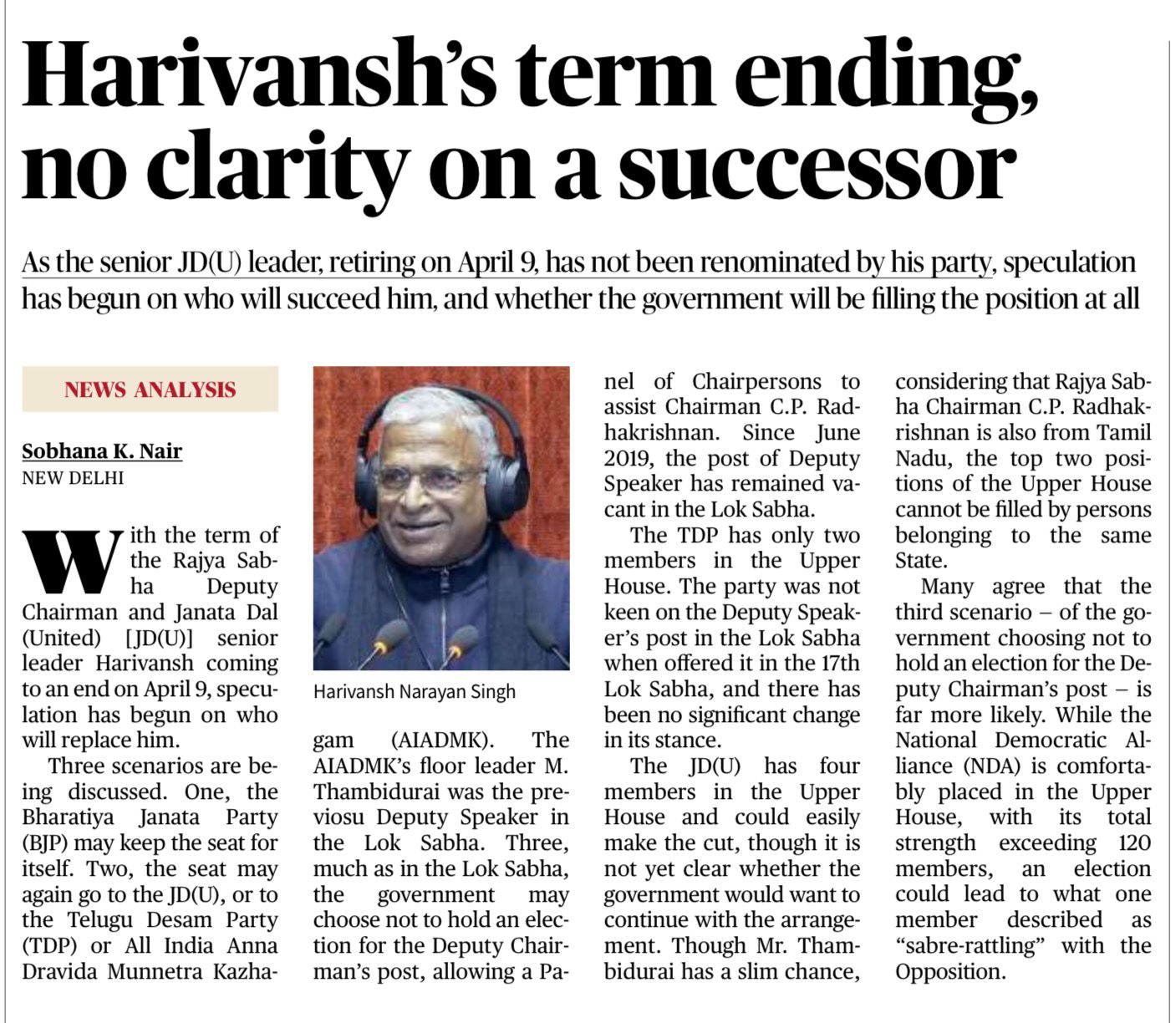
With the term of Rajya Sabha Deputy Chairman Harivansh Narayan Singh ending, uncertainty remains over the successor and whether the post will be filled.

1. Constitutional Basis — Article 89

• Rajya Sabha shall have Chairman (Vice-President) + Deputy Chairman (from among members).

2. Appointment — Article 89

• Elected by Rajya Sabha from among its members (Rules of Procedure; majority of members present & voting).

3. Tenure / Resignation / Removal — Article 90

• Tenure: till ceases to be RS member.
• Resignation: to Chairman.
• Removal: RS resolution (majority of all then members; 14-day notice).

4. Functions — Article 91

• Acts as Chairman when VP’s office vacant or Chairman absent.

5. Is Office Mandatory?

• RS “shall choose” Deputy Chairman (Art. 89) → constitutionally envisaged.
• No time-limit for election → vacancy can exist temporarily (unlike President/VP).

Deputy Chairman of Rajya Sabha
PYQ – 2013, Ans – B

Basmati Rice Exports from India Disrupted by West Asia Conflict: Trade Impact Explained for UPSC

Context:
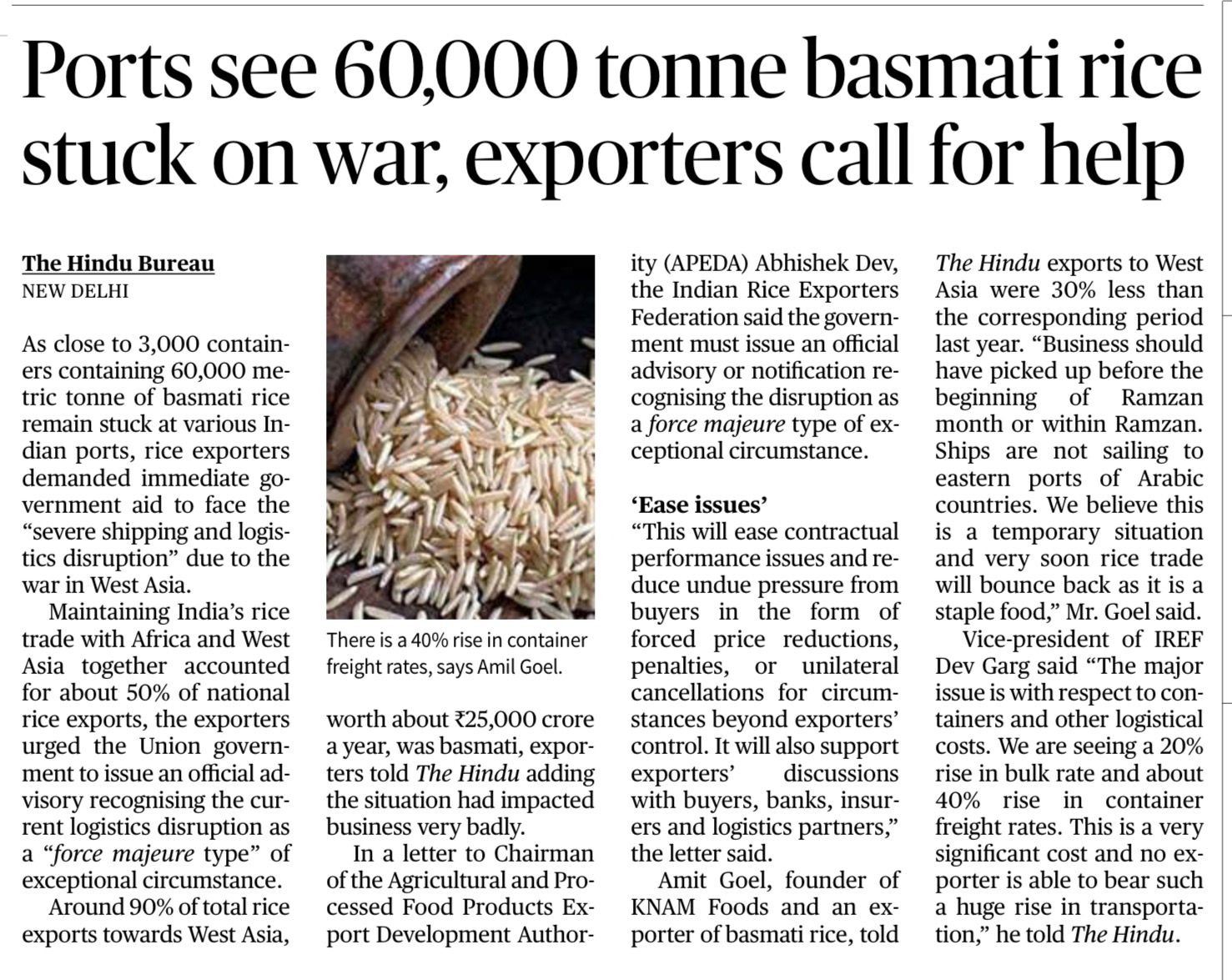
Due to the West Asia conflict, about 60,000 tonnes of basmati rice are stuck at Indian ports amid shipping disruptions; exporters seek government support.

1. World’s Top Rice Producers

India | China | Bangladesh 

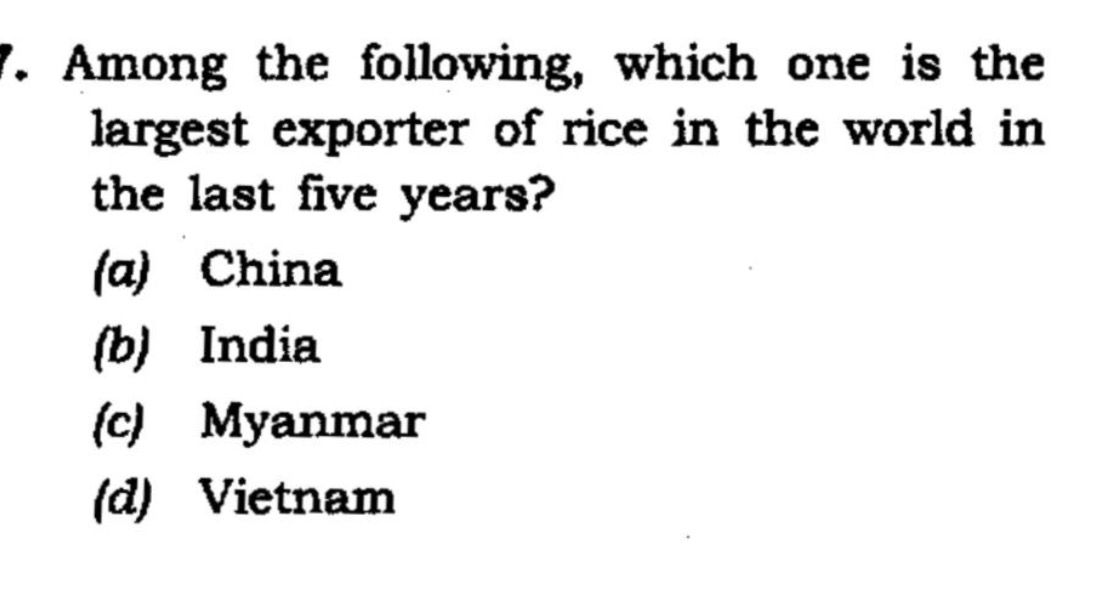
2. World’s Top Rice Exporters

India | Thailand | Vietnam

Top Rice-Producing States (India):
Uttar Pradesh | Telangana | West Bengal

3. India’s Rice Exports — Destinations

Basmati (Premium):

• West Asia/Gulf: Iran, Saudi Arabia, UAE, Iraq
• Others: U.S., U.K., EU (smaller share)

Non-Basmati (Bulk):

Africa: Benin, Senegal, Côte d’Ivoire, Togo
• Asia: Bangladesh, Nepal
• Others: Malaysia, Philippines

4. Basmati — GI Status (India)

• GI name: Basmati (under Geographical Indications of Goods (Registration and Protection) Act, 1999)
• Registered by: APEDA
• GI belt: Punjab, Haryana, Himachal Pradesh, Delhi, Uttarakhand, W. UP, Jammu region

5. Rice

• Season: Mainly Kharif (sown Jun–Jul; harvested Oct–Nov); also Rabi/Summer rice in some regions with irrigation.
• Temperature: ~20–35°C (high during growth; cooler during ripening).
• Rainfall/Water: ~100–200 cm or assured irrigation; thrives in standing water fields.
• Soil: Fertile alluvial/clayey loams with good water retention; lowland plains ideal.

Basmati Rice Exports from India
PYQ – 2019, Ans – B

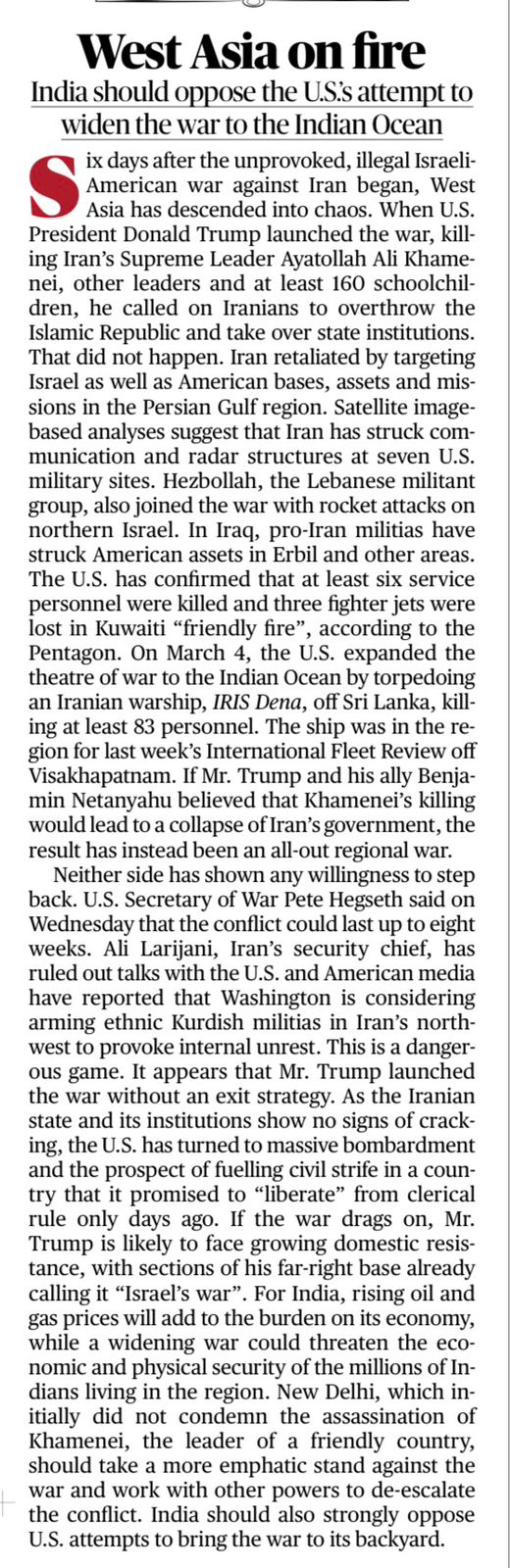
West Asia Conflict: Economic, Security and Energy Risks for India Explained for UPSC

Context:
The widening U.S.–Israel–Iran conflict across West Asia and into the Indian Ocean raises economic and security risks for India, stressing the need for restraint and de-escalation.

Core Idea

• Economic risk: Possible surge in oil & gas prices, higher freight/insurance costs, pressure on inflation and current account.
• Trade risk: Disruptions in sea lanes (Persian Gulf–Arabian Sea routes) affecting energy imports and exports.
• Diaspora risk: Safety concerns for millions of Indians working in Gulf countries.
• Security risk: Wider war near Indian Ocean can threaten maritime security and regional stability.

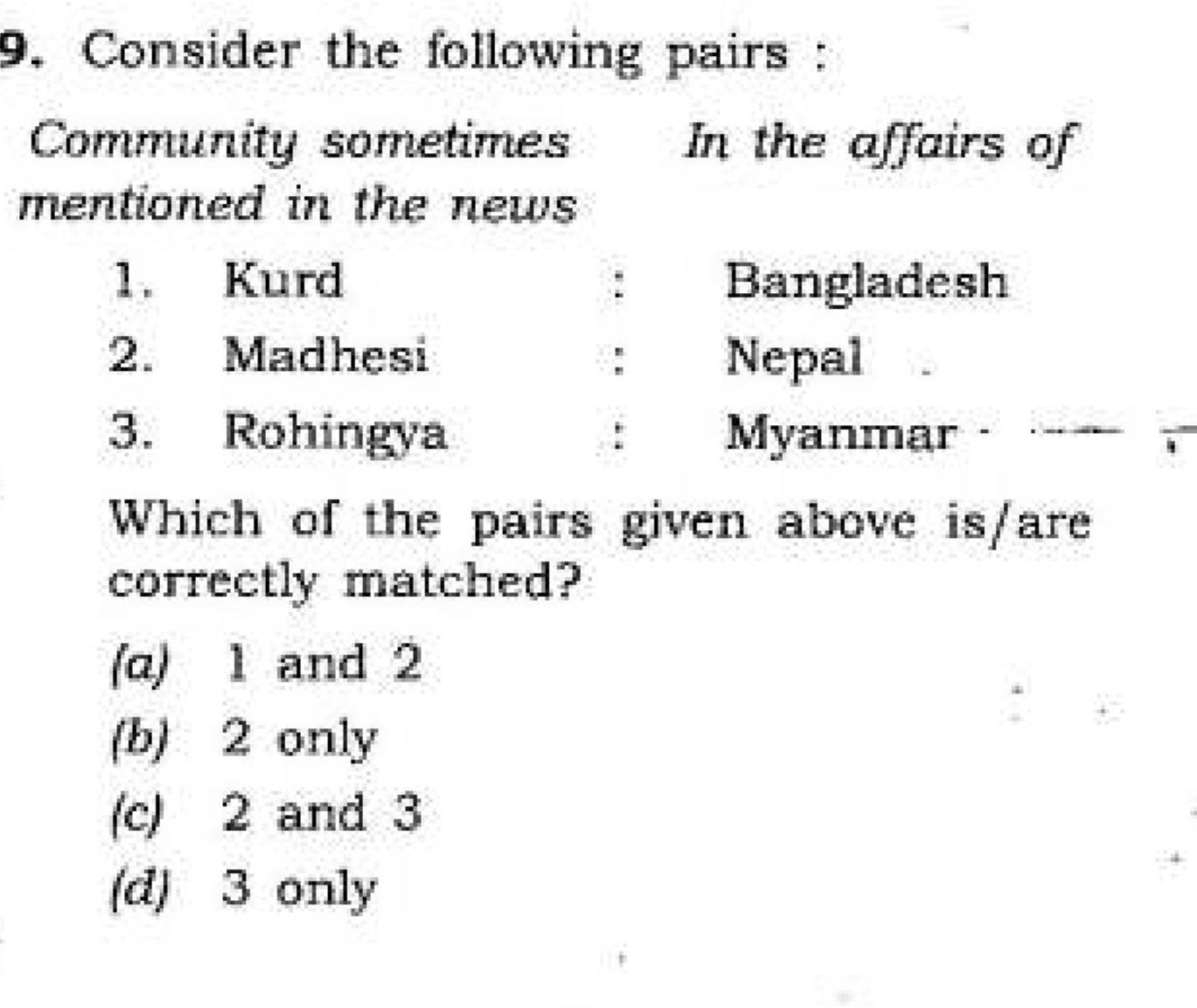
Kurds — Statelessness

• Among the largest stateless ethnic groups (~30–35 million).
• Post–World War I arrangements did not create a Kurdish state; homeland divided.

Where Kurds Live

• Turkey (largest population; southeast)
• Iran (northwest)
• Iraq (autonomous Kurdistan Region)
• Syria (north)

West Asia Conflict
West Asia Conflict
PYQ – 2016, Ans – C

India Iran Relations: Diplomacy, Strait of Hormuz Concerns and West Asia Tensions for UPSC

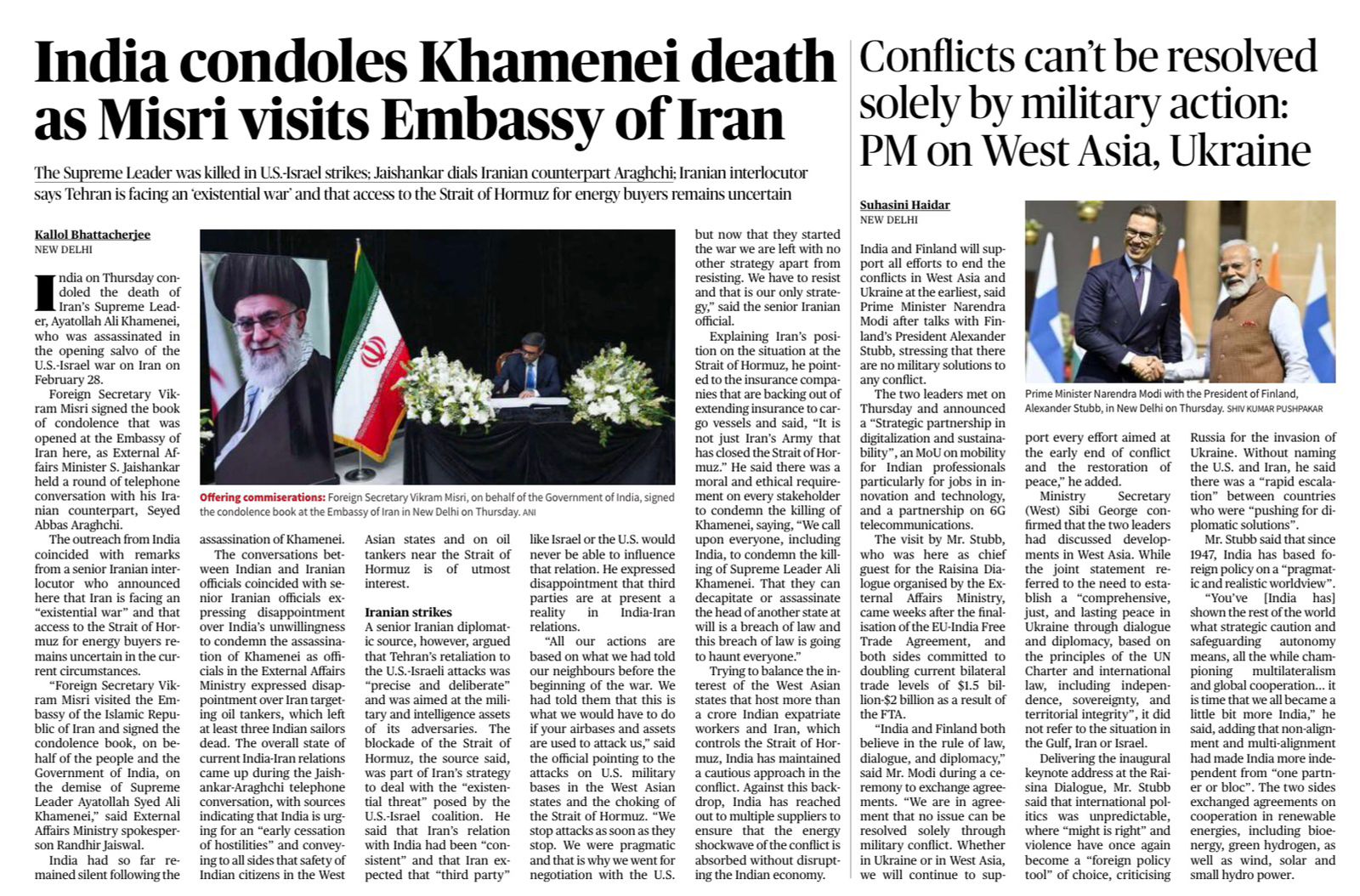
1. PM on West Asia & Ukraine

• Narendra Modi stressed no military solution to conflicts; called for dialogue, diplomacy and international law-based peace.
• Supported early end of wars in West Asia and Ukraine; backed multilateral efforts for lasting stability.
• Highlighted India’s pragmatic, independent foreign policy, strategic autonomy and balanced engagement.
• India–Finland talks: push for cooperation in technology, mobility, clean energy and trade expansion.

2. India–Iran Developments

• India condoled killing of Iran’s Supreme Leader Ayatollah Ali Khamenei; Vikram Misri visited Iran Embassy to sign condolence book.
• S. Jaishankar spoke with Iranian FM Abbas Araghchi; focus on de-escalation and safety of Indians.
• Iran termed the situation an “existential war”; warned disruptions at the Strait of Hormuz affecting global energy flows.
• India maintained cautious stance, balancing ties with West Asia states while monitoring oil, shipping and diaspora risks.

India Iran Relations

Total Fertility Rate in India: Andhra Pradesh Draft Population Policy and Demographic Trends for UPSC

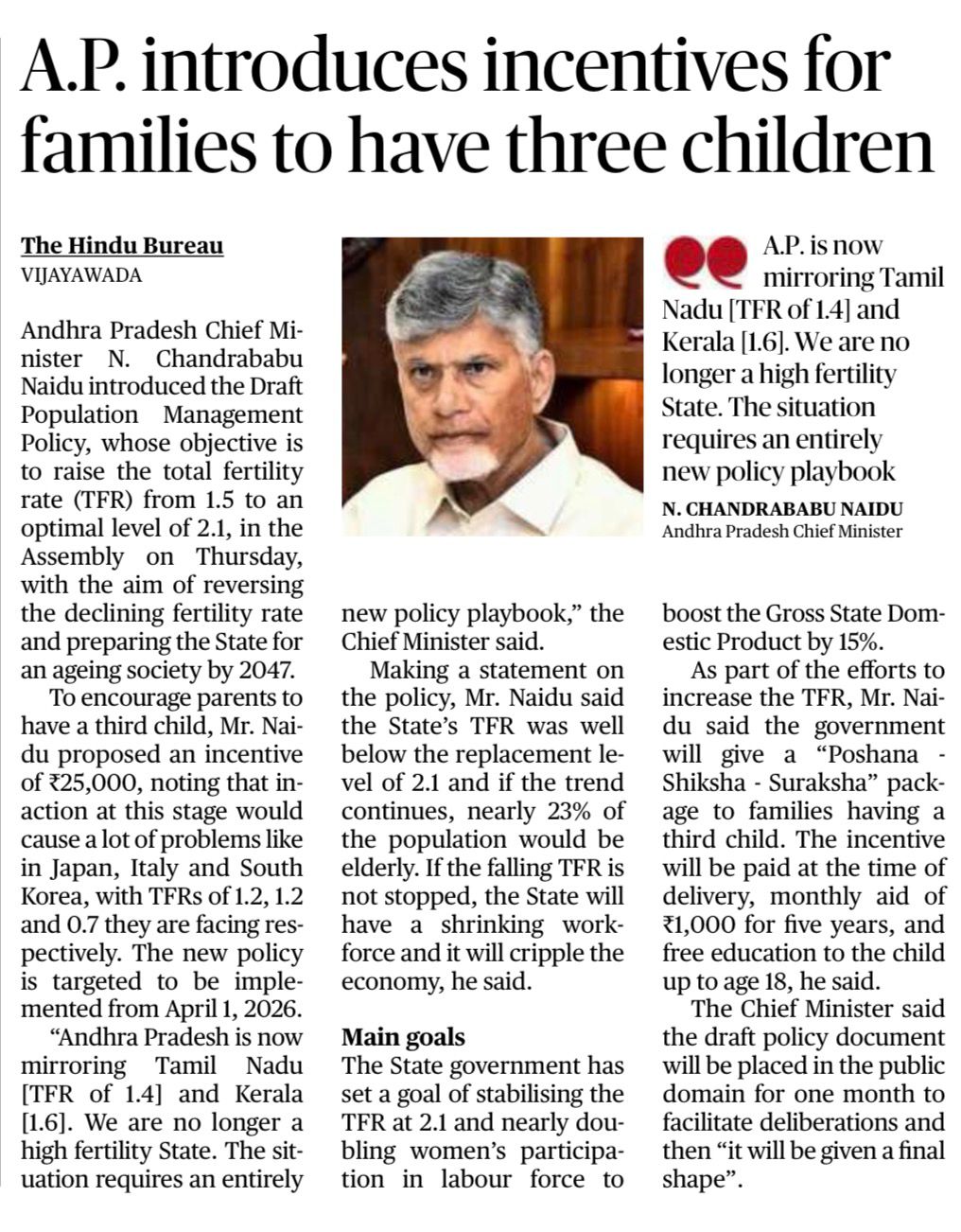
Context:
N. Chandrababu Naidu proposed incentives for a third child under A.P.’s draft population policy amid falling fertility and ageing concerns.

1. Trigger

• Low fertility (~1.5 in A.P.), ageing trend, shrinking workforce risk.

2. TFR (Total Fertility Rate) — Basics

Average children per woman | Replacement ≈ 2.1

3. TFR — NFHS-5

India: 2.0
A.P.: 1.7
Telangana: 1.8
Karnataka: 1.7
Tamil Nadu: 1.4
Kerala: 1.8

4. Incentives (Draft Policy)

• ₹25,000 at third-child birth
• ₹1,000/month for 5 yrs
• Free education till 18

Total Fertility Rate in India

Copyright © 2026 USARAMBHA EDUCATION (UnderStand UPSC). All Rights Reserved.

Inquiry form for
Takshila Residential Program