18 March 2026 | Daily Current Affairs

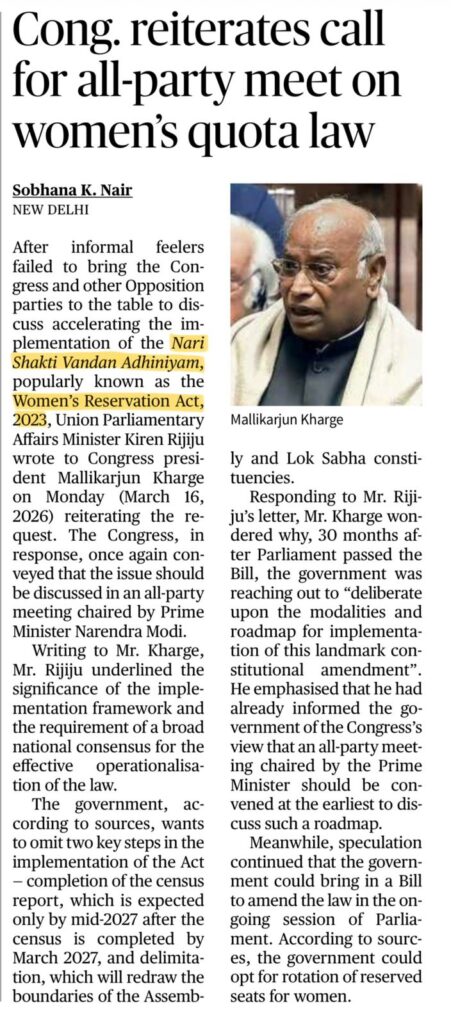
Nari Shakti Vandan Adhiniyam Implementation Delay and Key Issues for UPSC

Context

The implementation of the Nari Shakti Vandan Adhiniyam, 2023 (106th Constitutional Amendment) is delayed, with Congress demanding an all-party meeting over lack of clarity on its rollout.

1. Basics of the Act

• Provides 33% reservation for women in Lok Sabha and State Assemblies
• Includes sub-reservation for SC/ST women
• No provision for OBC women reservation

2. Implementation Condition

• To be implemented after:
• Next Census (first Census after the Act – expected 2027)
• Delimitation exercise based on that Census
• Seats will be rotated after delimitation

3. Issues Raised by Congress

• Delay in implementation despite law being passed
• Demand for all-party meeting
• Lack of clear timeline/roadmap
• Concerns over changes in implementation (like rotation method)
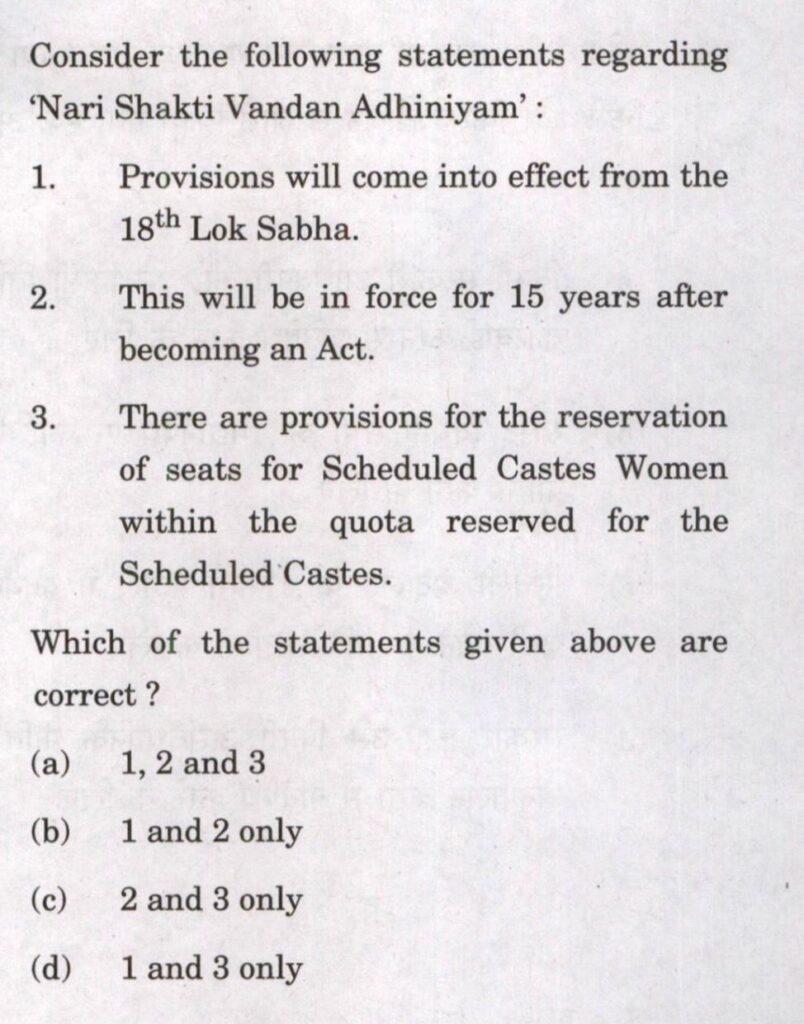
PYQ – 2024, Ans – C

Ladakh Sixth Schedule Demand and Statehood Issue Explained for UPSC

Context

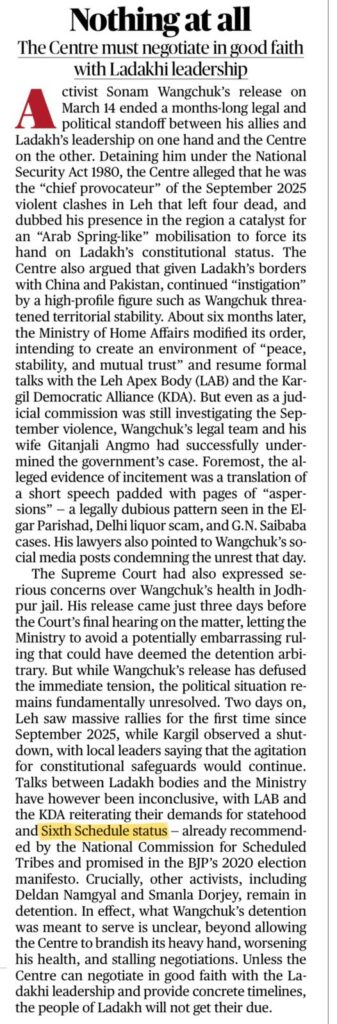
Despite the release of Sonam Wangchuk, Ladakh continues to witness unrest over unresolved demands related to statehood, Sixth Schedule status, and greater autonomy, with talks between the Centre and local bodies remaining inconclusive.

Key Points

• Temporary relief, core issue persists → detention-release did not resolve political demands
• Trust deficit → local groups question Centre’s approach
• Continued protests → Leh (rallies), Kargil (shutdowns); talks with Leh Apex Body and Kargil Democratic Alliance inconclusive
• Core demands → (i) Statehood (representation) (ii) Sixth Schedule (tribal, land, cultural safeguards)
• Strategic angle → border region (China-Pakistan) makes stability crucial

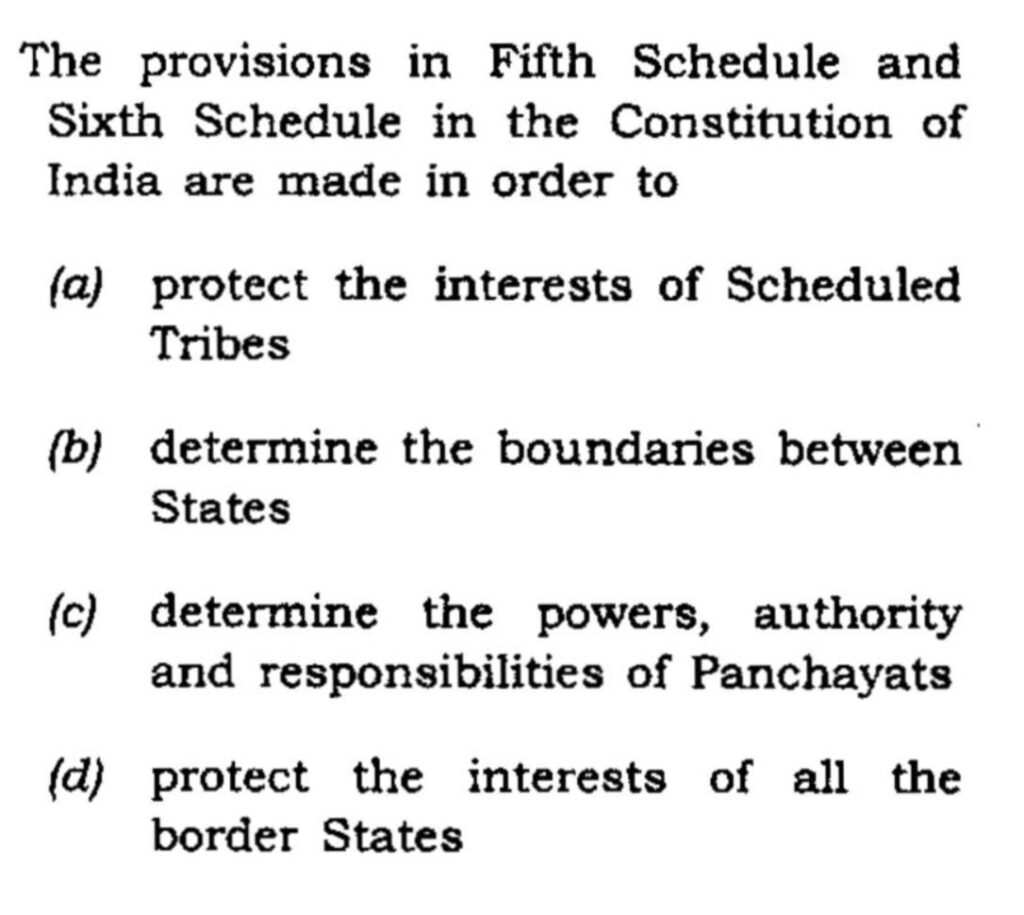
Sixth Schedule

Under Articles 244(2) & 275(1), provides Autonomous District Councils with powers over land, forests, governance and culture; applicable in Assam, Meghalaya, Tripura, Mizoram; demand in Ladakh aims at protecting tribal identity post-UT status.

PYQ – 2015, Ans – A

BRICS Science and Technology Cooperation Challenges and Way Forward for UPSC

Context

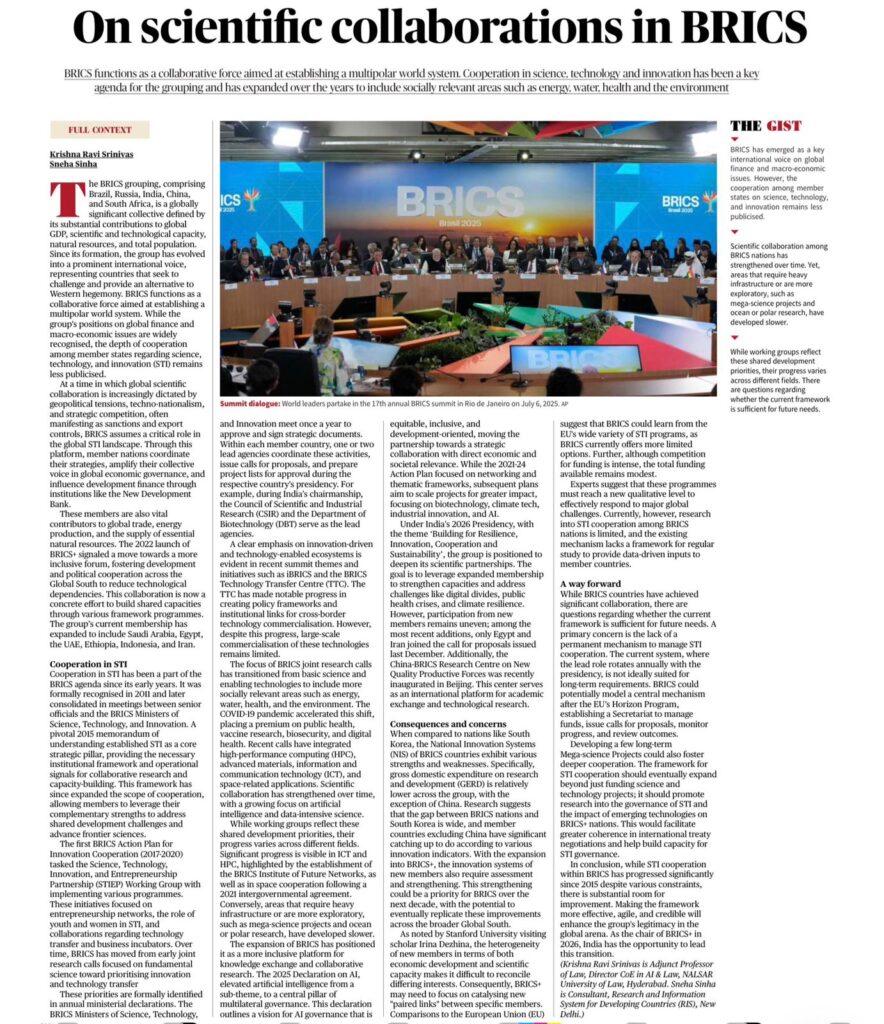
While BRICS has made visible progress in macroeconomic and financial cooperation, its collaboration in science, technology and innovation (STI) remains comparatively limited and uneven, highlighting the need for deeper institutional coordination.

Key Points

• Broad agenda → cooperation in energy, health, environment, digital technologies
• Mechanisms → ministerial meetings, working groups, STI Action Plan, Technology Transfer Centre
• Uneven outcomes → faster gains in AI & biotechnology; slow progress in mega-science collaboration
• Constraints → funding gaps, absence of permanent institutional structure, unequal capacities, weak data-sharing
• Way forward → institutional strengthening, higher funding, inclusive partnerships, focus on global challenges

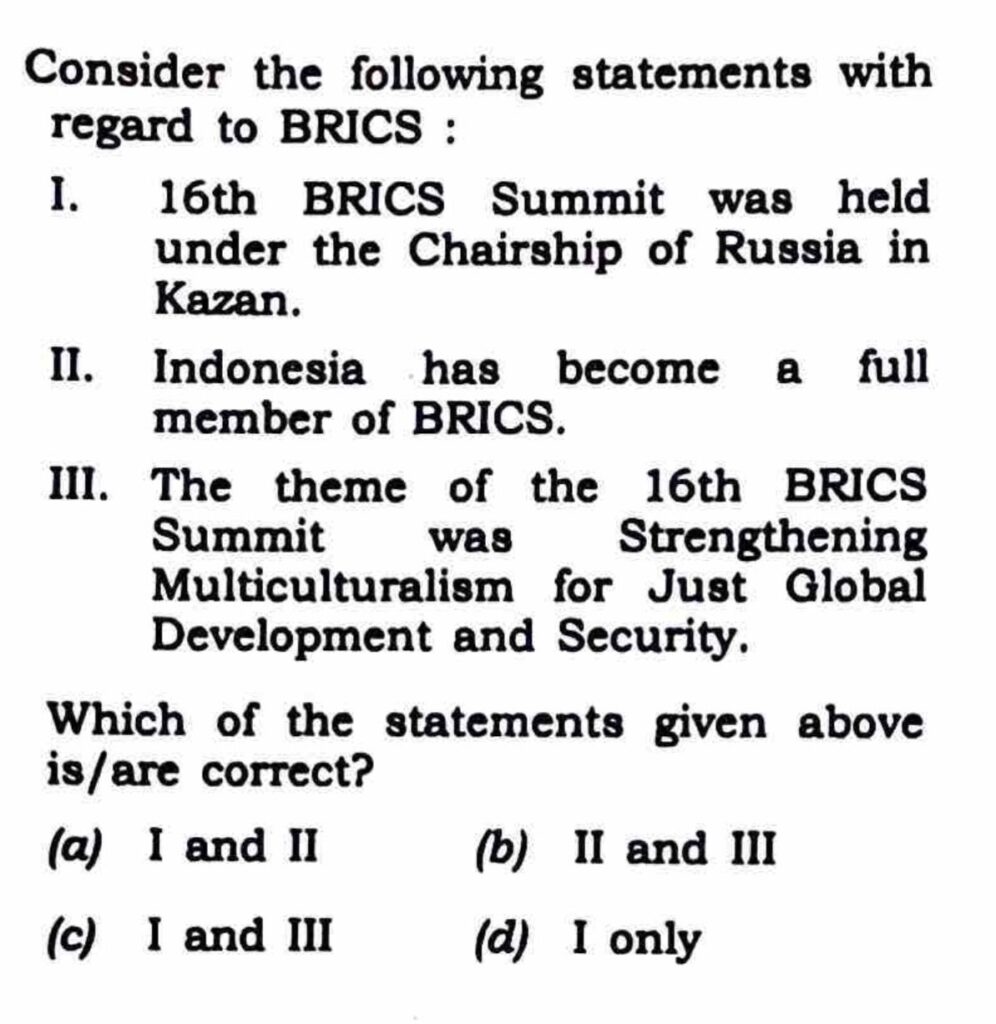
BRICS

• Intergovernmental grouping of major emerging economies for economic, political and development cooperation
• Members → Brazil, Russia, India, China, South Africa + Egypt, Ethiopia, Iran, UAE & Indonesia.
• Focus areas → macroeconomy, finance, development, security, technology, climate, health
• Key mechanisms → New Development Bank (NDB), Contingent Reserve Arrangement (CRA)
• Purpose → strengthen South-South cooperation and push for reforms in global governance institutions (IMF, World Bank)

PYQ – 2025, Ans – A

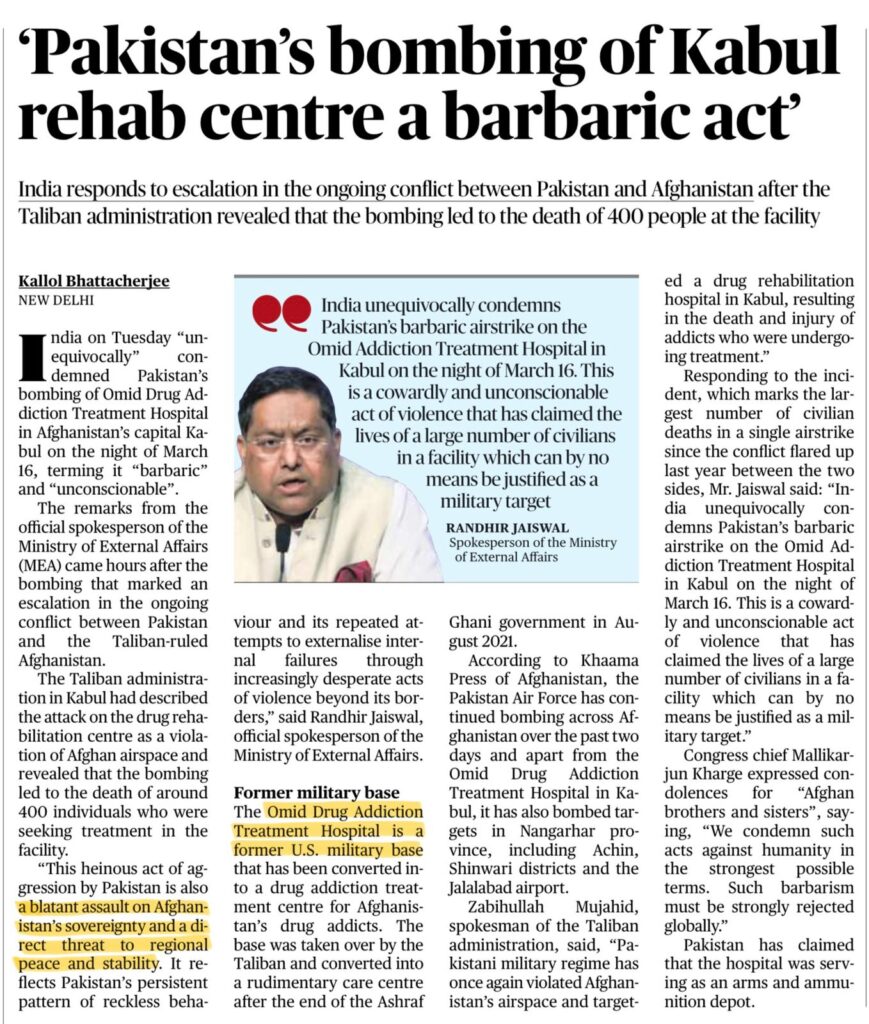
India Pakistan Kabul Airstrike Issue and Rising Tensions Explained for UPSC

Context

India condemned Pakistan’s airstrike on a drug rehabilitation centre in Kabul (Omid Drug Addiction Treatment Hospital), which reportedly killed around 400 civilians and escalated tensions between Pakistan and Afghanistan.

Key Points

• Civilian target → rehab centre hit, large-scale casualties
• India’s position → termed act unjustified, against humanity
• Afghanistan’s view → violation of sovereignty and airspace
• Escalation → rising Pakistan-Afghanistan tensions
• Background → facility earlier a U.S. military base, now rehab centre

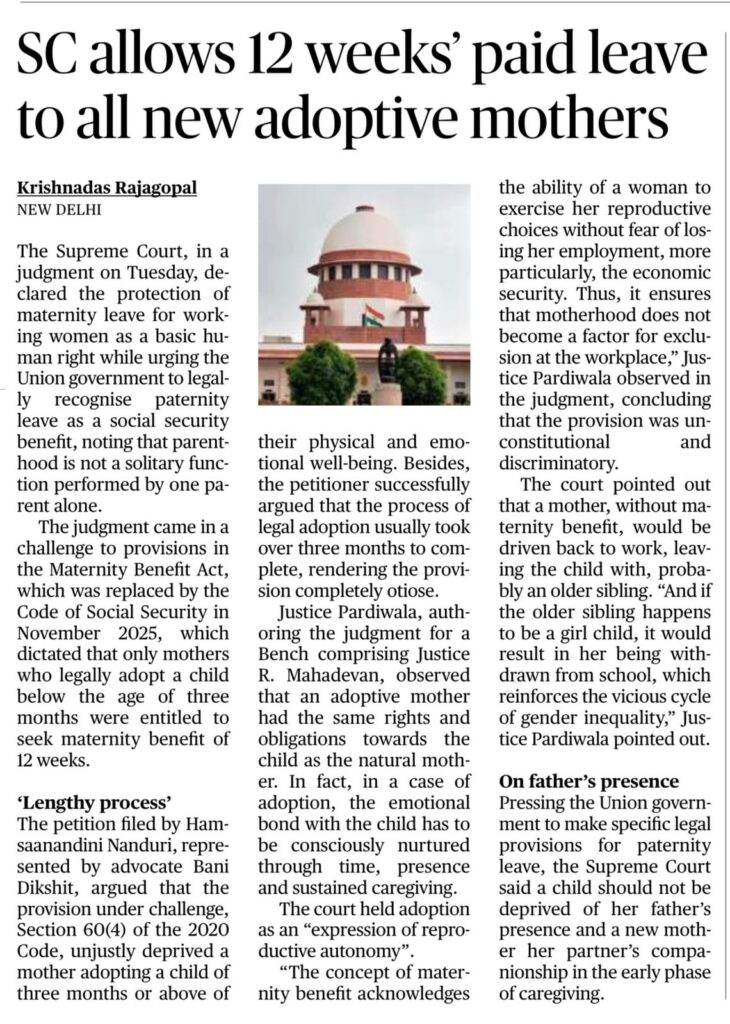
Adoptive Mothers Maternity Leave Supreme Court Judgment Explained for UPSC

Context

The Supreme Court removed restrictive conditions in maternity laws and held that adoptive mothers are entitled to 12 weeks paid leave.

Key Points

• Two laws exist → Maternity Benefit Act, 1961 (in force) and Code on Social Security, 2020 (not fully implemented)
• Earlier provision (in both laws) →
Adoptive mother gets 12 weeks leave only if child < 3 months
• Issue → adoption process delay → many mothers denied leave
• Supreme Court ruling →
• Removed 3-month condition
• All adoptive mothers eligible for 12 weeks leave
• Principle → maternity benefit based on caregiving and bonding, not technical conditions

About the UPSC Civil Services Examination (UPSC CSE)

The UPSC Civil Services Examination (CSE) is one of the most competitive and esteemed examinations in India, conducted by the Union Public Service Commission to recruit officers for services such as the Indian Administrative Service (IAS), Indian Police Service (IPS), Indian Foreign Service (IFS), and others. The exam comprises three stages — Prelims, Mains, and the Personality Test (Interview) — designed to test a candidate’s knowledge, aptitude, decision-making, and leadership skills.


How to Prepare Effectively for UPSC CSE

Cracking the UPSC CSE requires a deep understanding of the syllabus, consistent revision, structured answer writing, and smart test-taking strategies. The Prelims test analytical and conceptual clarity, the Mains focuses on critical thinking, articulation, and subject mastery, while the Interview assesses presence of mind, ethical judgment, and personality traits relevant to public service.

At UnderStand UPSC, we empower aspirants with a personalized and focused approach to each stage of the exam.


Why Choose UnderStand UPSC?

UnderStand UPSC is a mentorship-driven platform offering a clear, clutter-free strategy to tackle the Civil Services Examination. Our programs like Transform (for beginners and intermediate learners) and Conquer (for advanced mains preparation) provide structured study plans, syllabus-wise video content, interactive live sessions, and answer writing support.

We emphasize:

  • Concept clarity through topic-wise lectures

  • Test series designed around real UPSC standards

  • Personalized mentorship in small groups

  • Regular performance tracking and peer benchmarking

  • Doubt-clearing sessions, current affairs analysis, and monthly magazines


Join the UnderStand UPSC Learning Community

Our mission is to make UPSC preparation less overwhelming and more strategic. We combine mentorship, discipline, and academic rigor to help you clear CSE with confidence. Whether you’re preparing from Delhi, Mumbai, Bangalore, or a remote village — our online-first model ensures quality guidance reaches every corner of India.

Join the thousands of aspirants who trust UnderStand UPSC to guide their journey toward becoming civil servants.

Stay connected with us through our Telegram, YouTube, and Instagram channels for daily tips, strategies, and updates.

Copyright © 2026 USARAMBHA EDUCATION (UnderStand UPSC). All Rights Reserved.

Join the Success Journey!