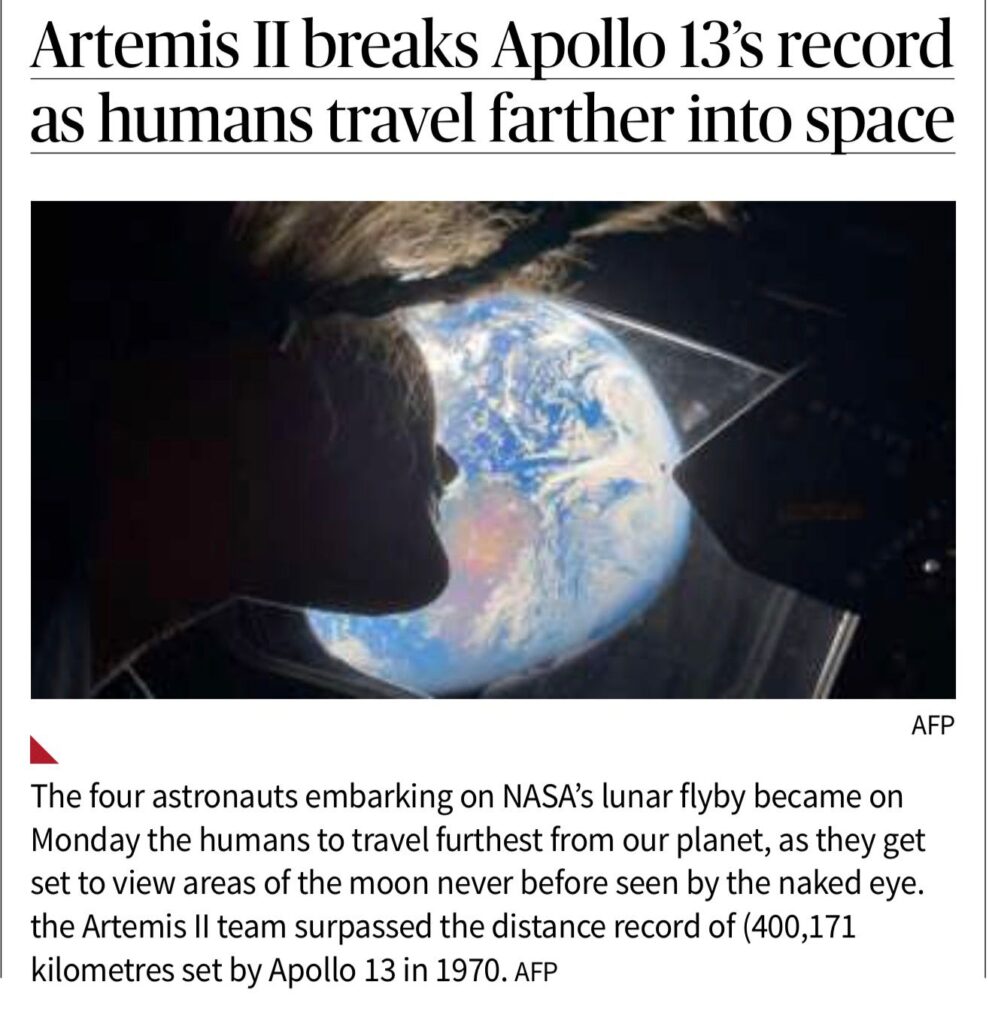
Artemis II is a crewed lunar flyby mission that has surpassed the distance record of Apollo 13 (400,171 km), making it the farthest humans have travelled from Earth.
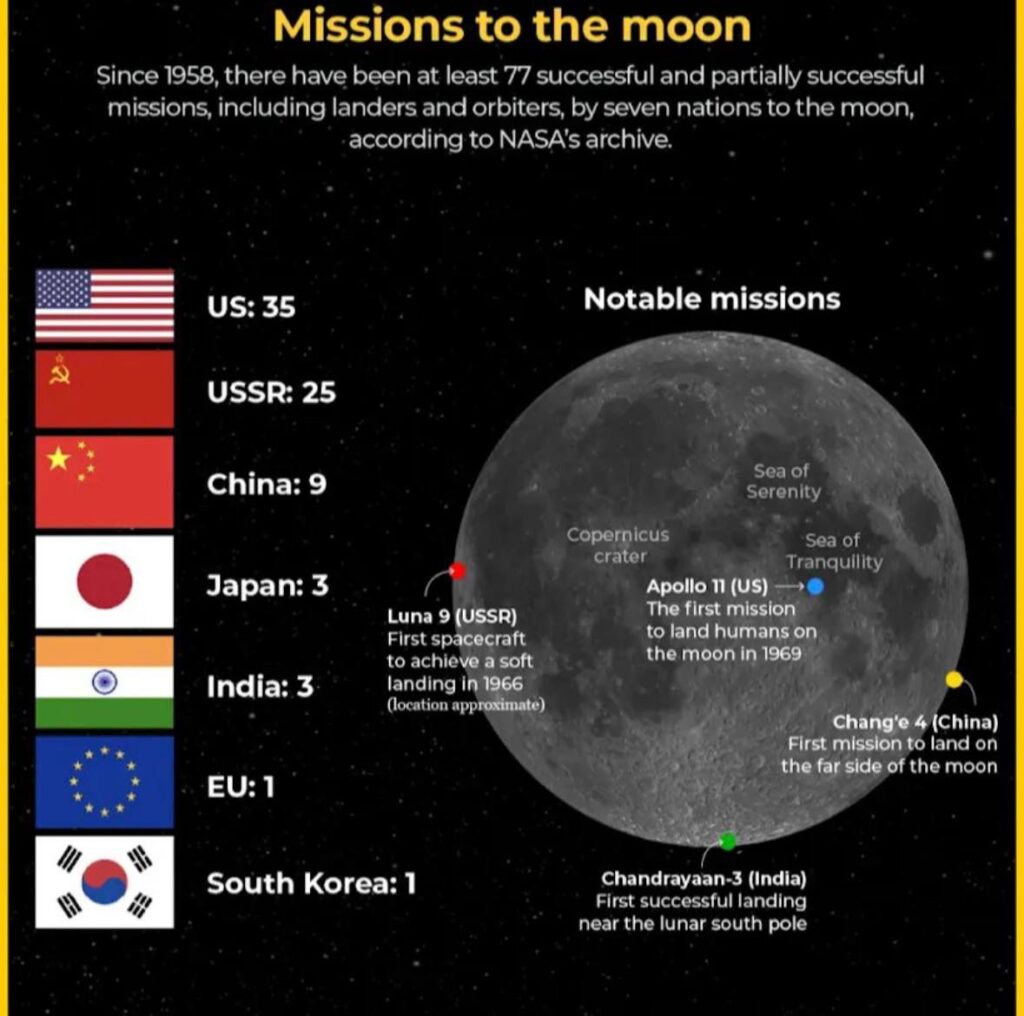
Summary (with lunar missions evolution): • Since 1958: 77+ Moon missions by multiple countries.
Key milestones: • Luna 9 → first soft landing • Apollo 11 → first human landing • Chang’e 4 → far side landing • Chandrayaan-3 → south pole landingWhat Artemis II shows: • Return of humans to deep space (after ~50 years) • Step towards future Moon landing (Artemis III)
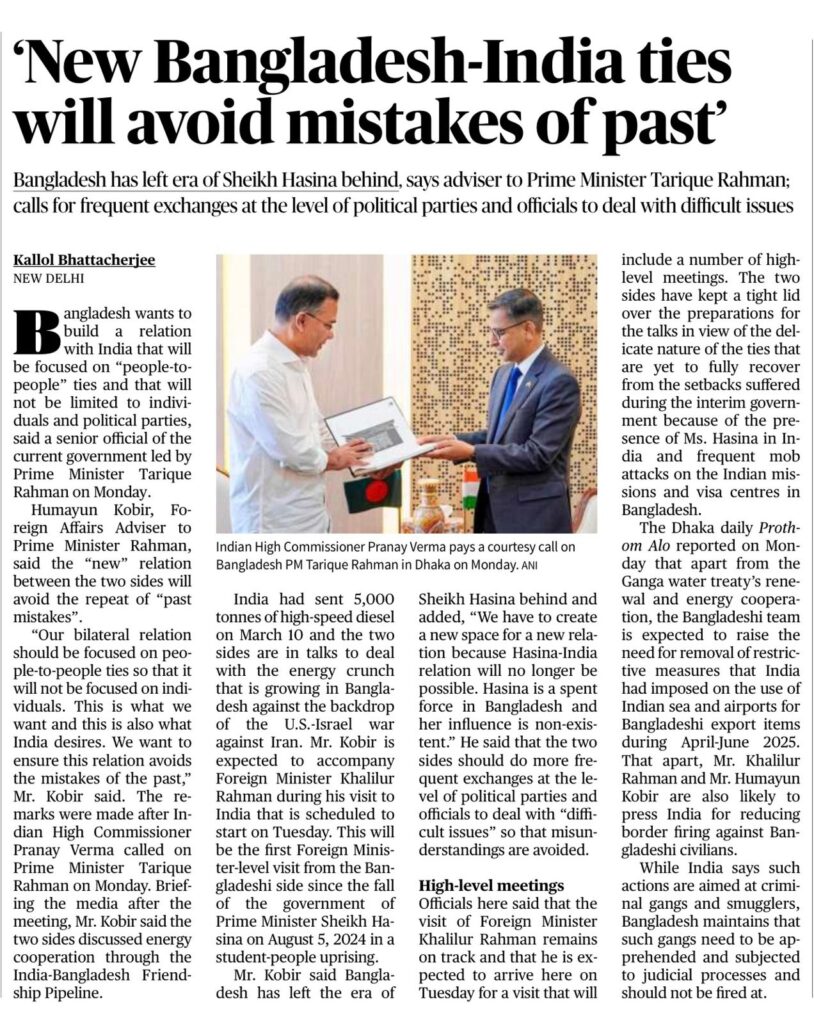
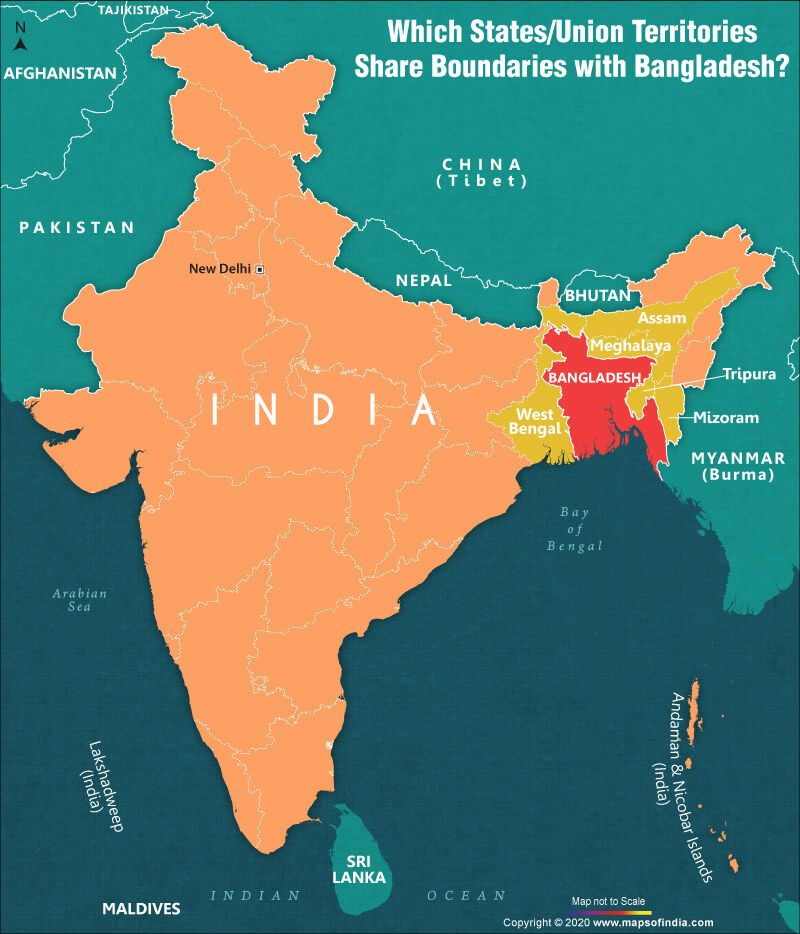
After political transition in Bangladesh, ties with India are being reset through high-level engagement, moving from leader-centric to institutional relations.
Key Issues
2.1 Political Trust • Post-Hasina phase → trust deficit + demand for neutrality
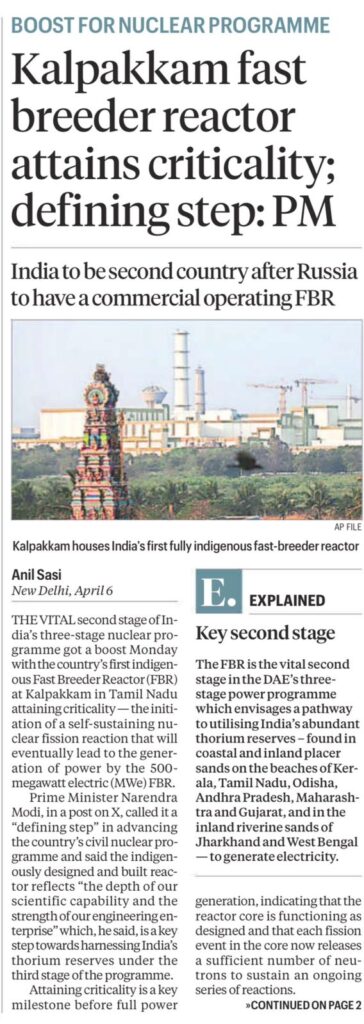
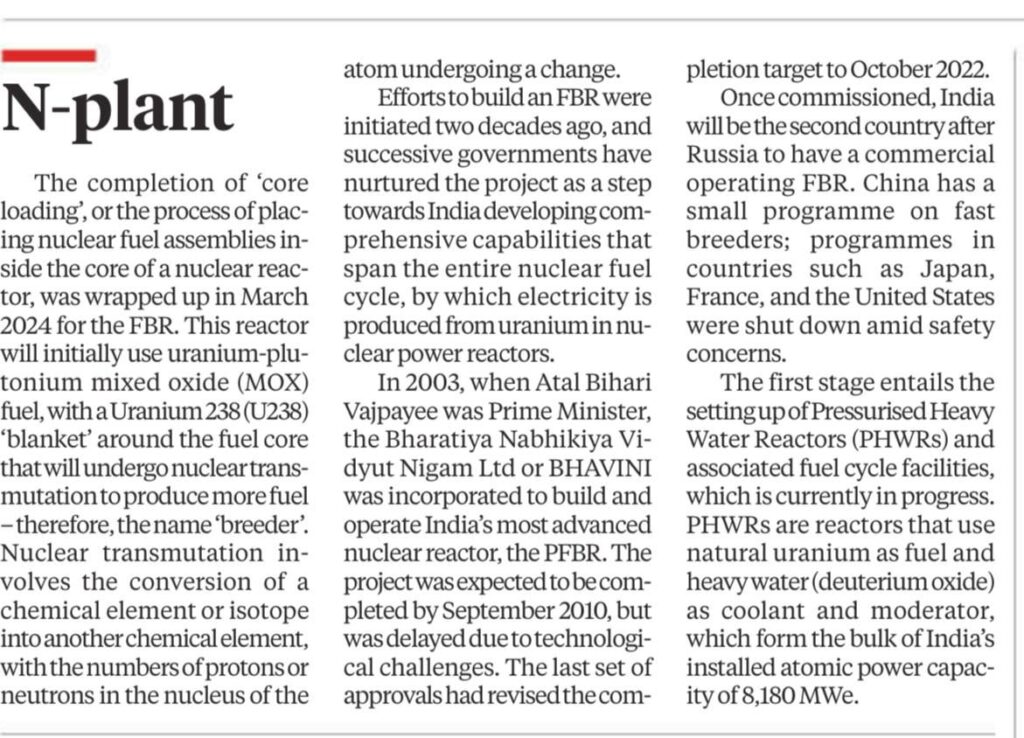
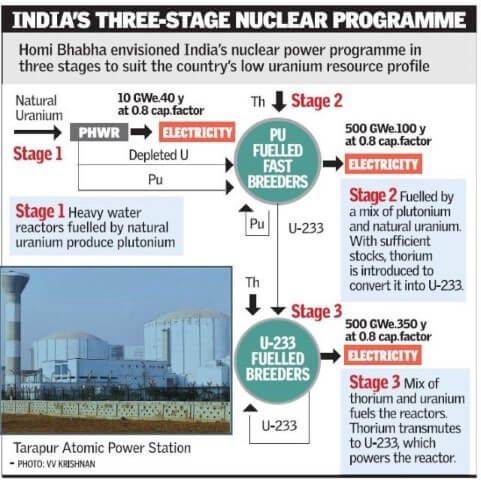
India’s Kalpakkam Fast Breeder Reactor (PFBR) attaining criticality marks the operationalisation of Stage 2 of India’s nuclear programme. This is important because it connects India’s present uranium-based reactors with its long-term goal of thorium-based energy.
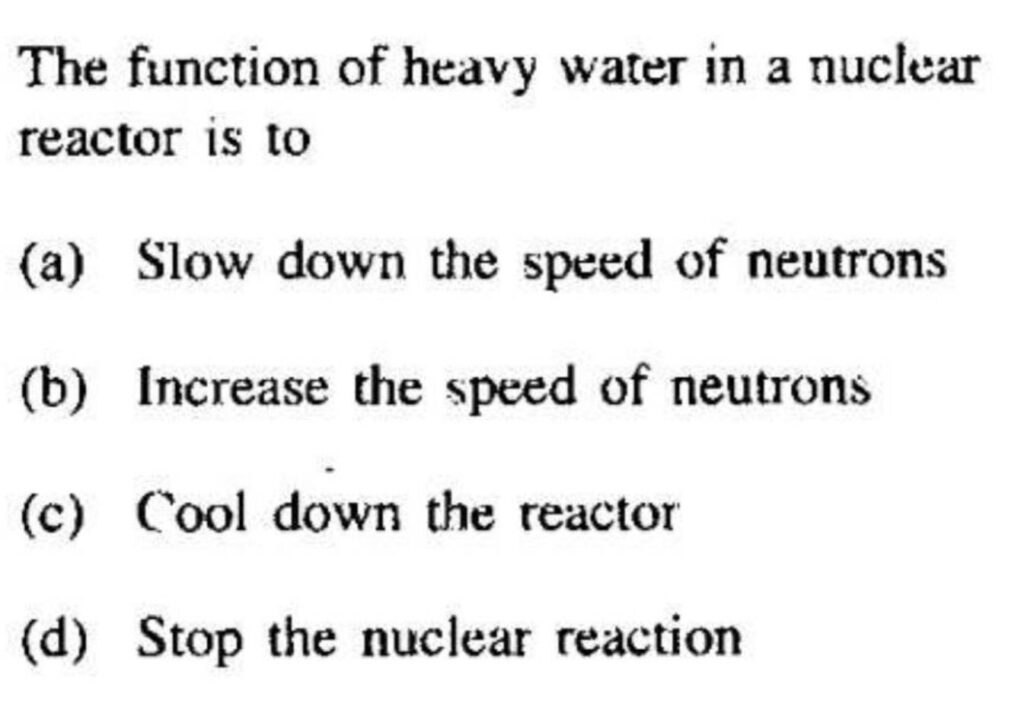
India’s Nuclear Programme
India’s programme is designed around its resource reality: • Limited uranium • Large thorium reserves
So, the strategy is sequential: Use uranium → generate plutonium → use plutonium to activate thorium
What happens: • Plutonium produces energy • At the same time, it converts unused material (Uranium-238) into more plutonium • Also produces excess neutrons
Understanding: This stage does two critical things:
Multiplies nuclear fuel (breeding)
Generates the neutron environment required to use thorium
What happens: • Thorium itself cannot produce energy directly • It absorbs neutrons (from Stage 2 system) • Converts into Uranium-233, which is a usable fuel
Then: • Uranium-233 undergoes fission → produces electricity • Can sustain further reactions
Understanding: Thorium becomes useful only after conversion, and that conversion depends on plutonium-driven reactions of Stage 2.
Why PFBR is crucial
• Without Stage 2: • Thorium cannot be effectively utilised
• PFBR enables: • Transition from fuel-consuming system → fuel-generating system
• Makes India: • Capable of long-term, resource-based nuclear energy independence
• Piprahwa relics (1898, UP) returned to Leh (Ladakh) after ~127 years • Event = civilisational recovery of Buddha-linked heritage
Piprahwa Relics (Basics)
• Contents → Bone fragments | reliquary caskets | ritual objects • Association → Buddha / Shakya clan • Importance → One of the earliest major Buddhist relic discoveries in India
Ladakh’s Historical Role
• Buddhist corridor (not a peripheral region) • Connectivity → India → Central Asia → China (Khotan) • Function → Spread of monks | texts | art | ideas
Evidence in Region
• Locations → Suru | Dras | Khaltse | Mulbekh • Remains → Stupas | inscriptions | rock carvings | Maitreya statue • Link → Kashmir–Gandhara Buddhist tradition
Core Argument
• Ladakh = Civilisational + heritage zone • Not only = Strategic/military frontier
Diplomacy Angle
• Buddhism → India’s soft power tool • Ladakh → Gateway for Buddhist diplomacy (Central & East Asia)