6 May 2026 | Daily Current Affairs

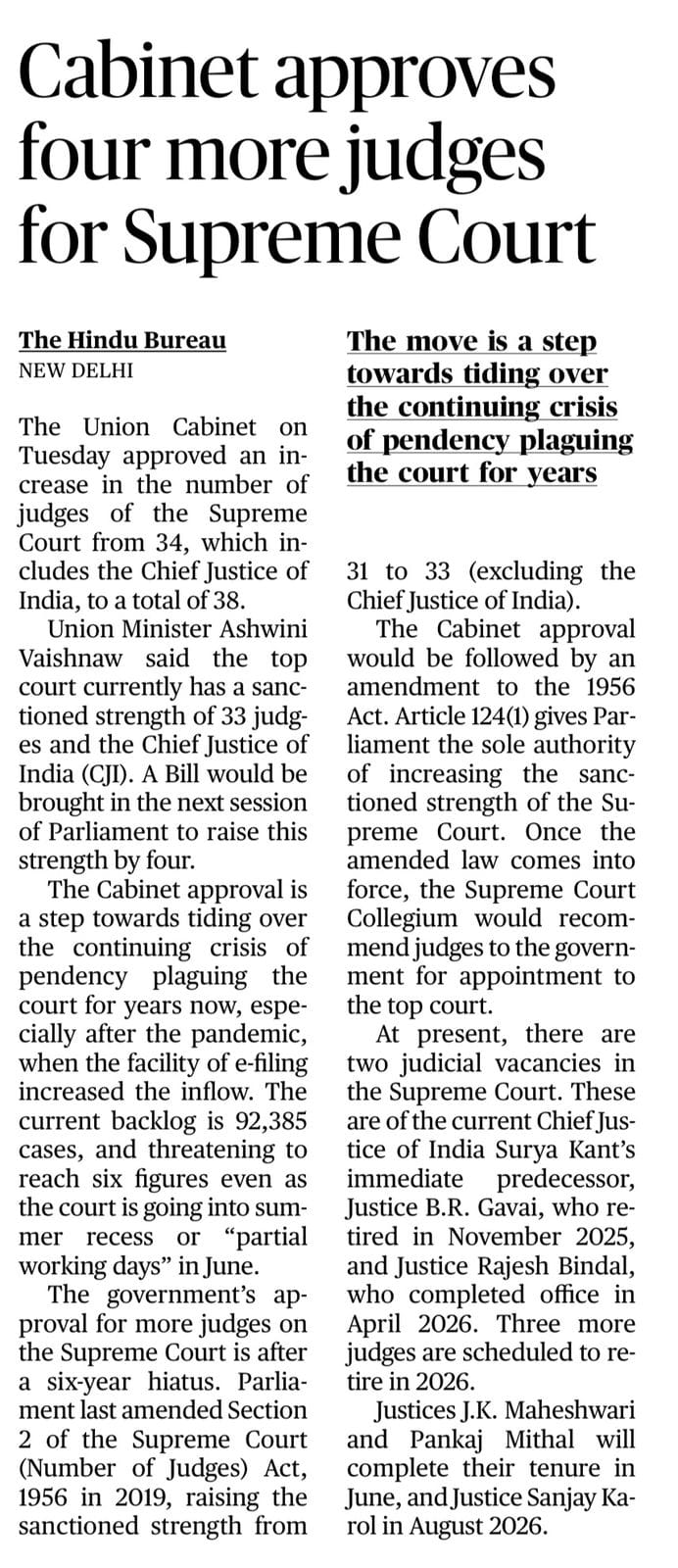
Supreme Court judge strength to rise from 34 to 38 judges

Context: Supreme Court judge strength

Union Cabinet approved increasing the sanctioned strength of the Supreme Court from 34 to 38 judges (including CJI) to reduce pendency and vacancies.

Constitutional Basis

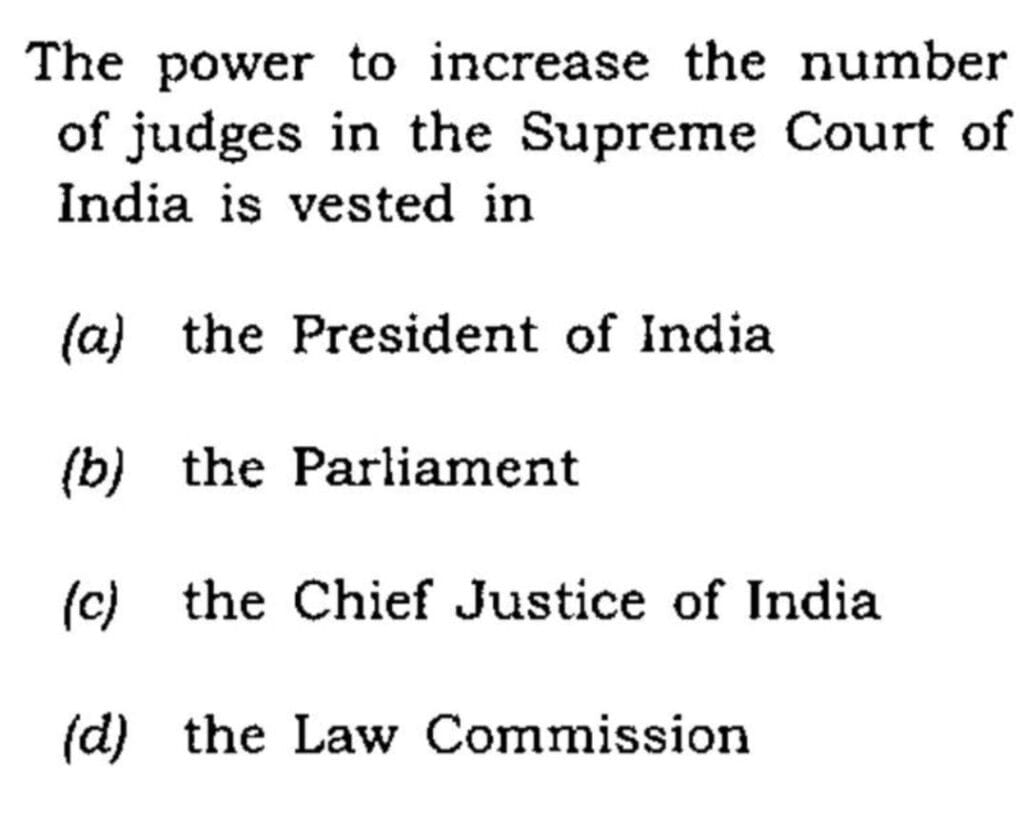
Article 124(1) → Parliament can increase the number of Supreme Court judges by law.

Law involved → Supreme Court (Number of Judges) Act, 1956

Procedure

Cabinet approval → Amendment in Supreme Court (Number of Judges) Act, 1956 → Parliament passes Bill → President’s assent → New vacancies created → Collegium recommends names → President appoints judges under Article 124(2)

Timeline of Increase in Supreme Court Strength

1950: 8 | 1956: 11 | 1960: 14 | 1977: 18 | 1986: 26 | 2009: 31 | 2019: 34 | 2026 (proposed): 38
PYQ – 2014, Ans – B

Government revises Foreign Direct Investment approval SOP

Context: Foreign Direct Investment approval

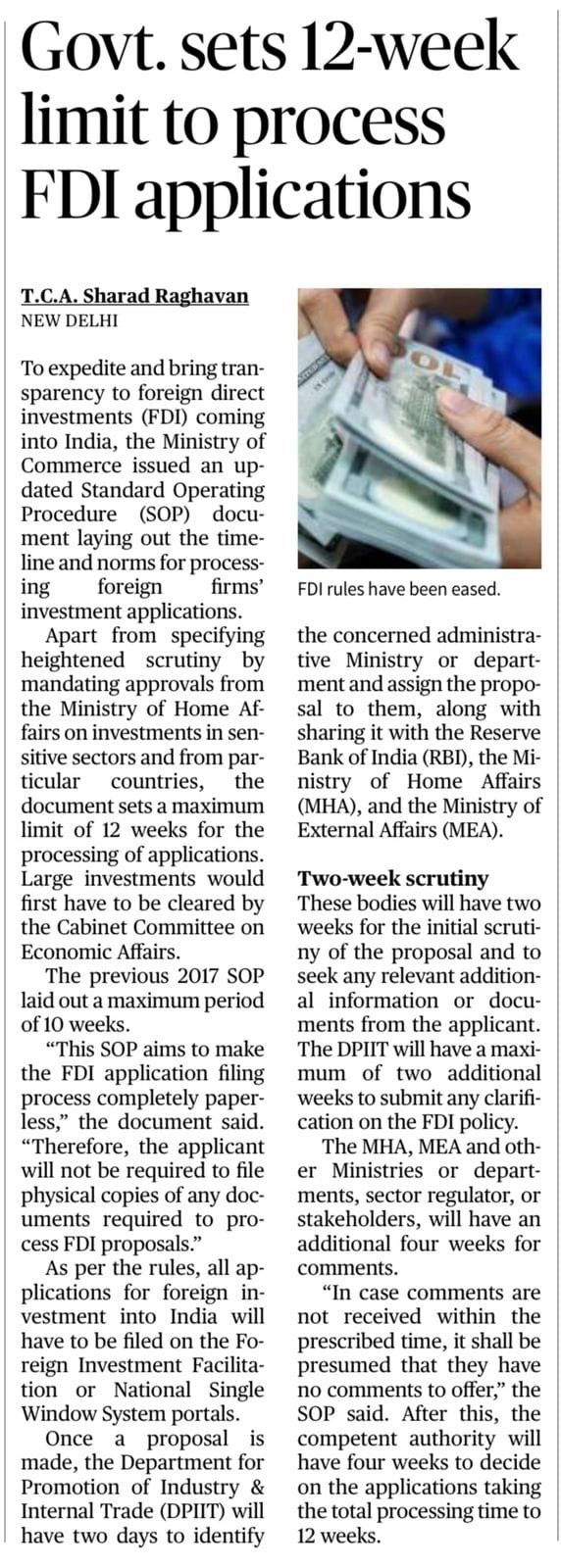
Government revised the Standard Operating Procedure (SOP) for Foreign Direct Investment (FDI) approvals, increasing the maximum processing timeline from 10 to 12 weeks.

Why Timeline Increased?

Additional time provided for:

  • Security scrutiny in sensitive sectors
  • Consultation with:
  • Examination of investments from neighbouring/sensitive countries

Objective: better scrutiny, coordination and transparency, not delay.

Core Changes

  • Entire FDI approval process made paperless
  • Applications through:
    • Foreign Investment Facilitation Portal (FIFP)
    • National Single Window System (NSWS)
  • Fixed timelines for ministries/departments
  • No response within deadline → treated as “no comments”
  • Large investments require Cabinet Committee on Economic Affairs (CCEA) approval

Importance

  • Improves Ease of Doing Business
  • Predictable and transparent approvals
  • Reduces procedural delays
  • Balances investment facilitation with national security concerns

India energy vulnerability rises amid West Asia tensions

Context: India energy vulnerability

West Asia conflict highlighted India’s vulnerability to global energy shocks due to heavy crude oil import dependence, while also underlining the importance of diversification and energy transition.

Key Data & Facts

Energy Dependence

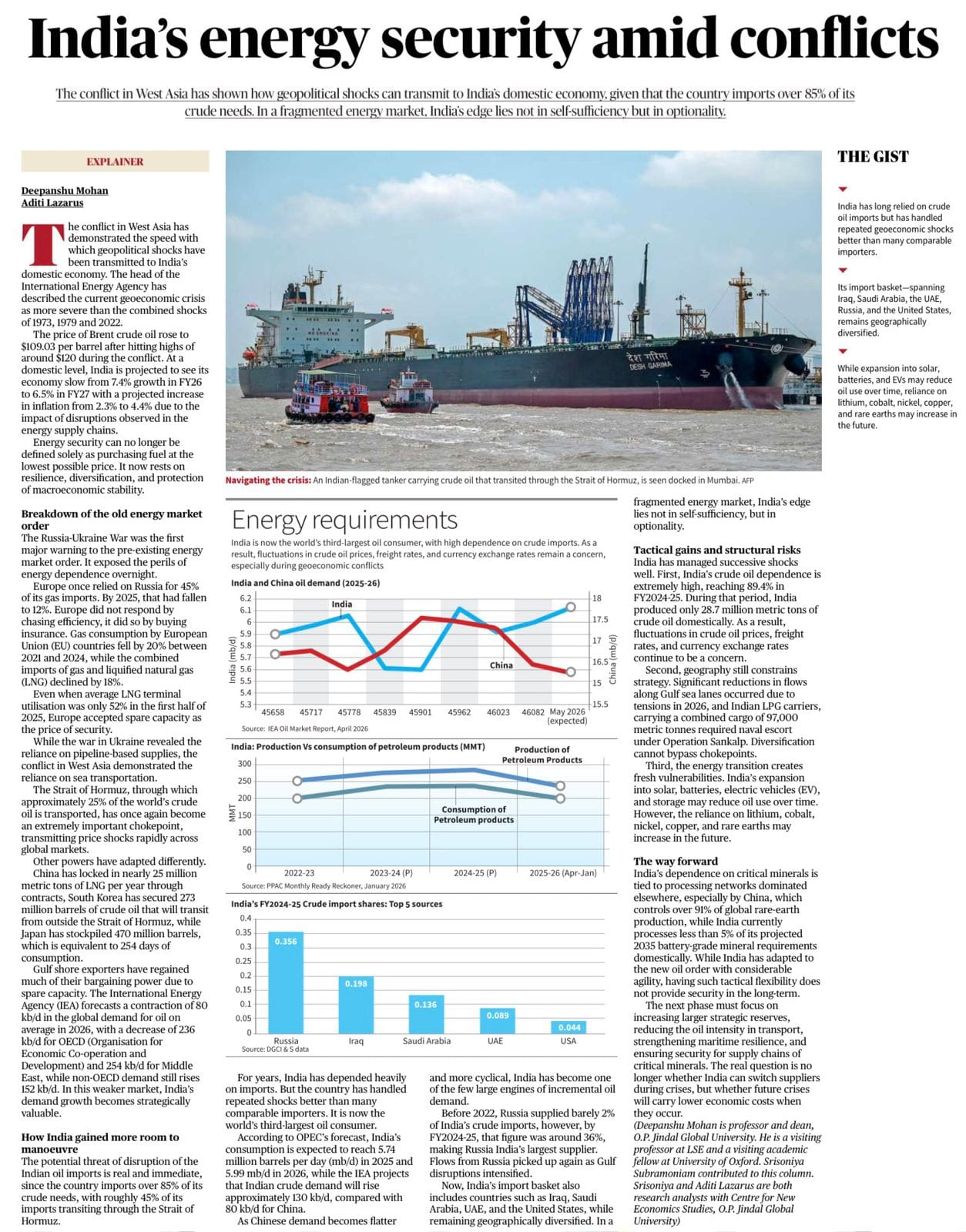
  • India imports 85%+ of crude oil needs
  • Import dependence reached 89.4% in FY2024-25
  • Domestic crude production: ~28.7 MMT

Economic Impact

  • Brent crude crossed $109/barrel, touched nearly $120

GDP growth projection:

  • FY26: 7.4% → FY27: 6.5%

Inflation projection:

  • 2.3% → 4.4%

India’s Diversification Strategy

Top Crude Import Sources (FY2024-25)
Russia (35.6%) → Iraq (19.8%) → Saudi Arabia (13.6%) → UAE (8.9%) → USA (4.4%)

  • Russia emerged as India’s largest supplier after Ukraine war
  • Diversified sourcing reduced dependence on a single supplier/region

Energy Transition & Emerging Risks

  • Solar, EVs and batteries may reduce long-term oil dependence
  • However, dependence may shift towards:
    • Lithium
    • Cobalt
    • Nickel
    • Copper
    • Rare earth minerals

China’s Dominance

  • China controls around 91% of global rare-earth processing
  • India processes <5% of projected battery-grade mineral requirements domestically

Way Forward

  • Expand strategic petroleum reserves
  • Diversify supply chains
  • Strengthen maritime and energy security
  • Develop domestic critical mineral processing capacity
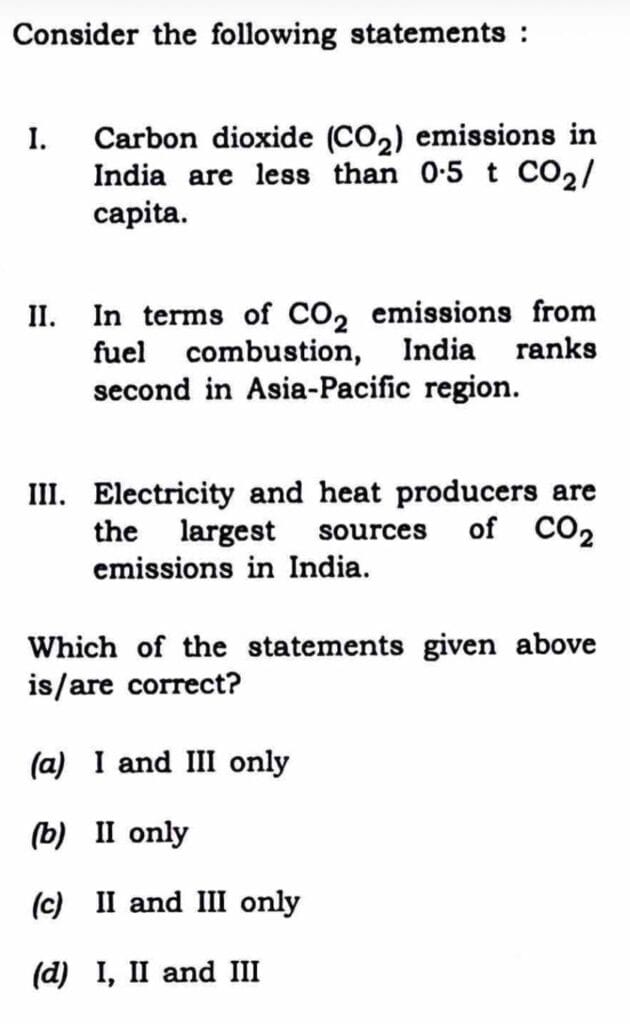
PYQ – 2025, Ans – C

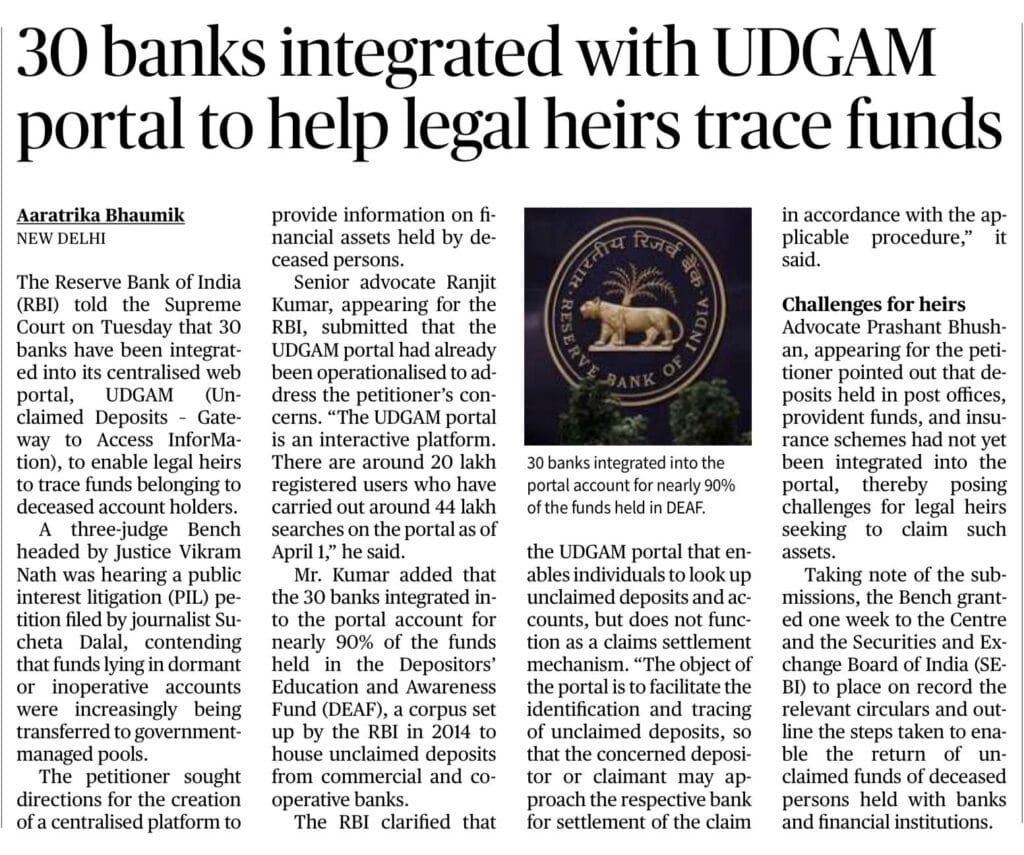
UDGAM portal integrated with 30 banks, RBI tells Supreme Court

Context: UDGAM portal

RBI informed the Supreme Court that 30 banks have been integrated with the UDGAM portal, covering nearly 90% of unclaimed deposits in DEAF, to help depositors and legal heirs trace dormant accounts and unclaimed funds.

UDGAM — Unclaimed Deposits Gateway to Access Information

Launched by: Reserve Bank of India (RBI)

Year: 2023

Objective

  • Centralised platform to search unclaimed deposits across banks
  • Helps legal heirs identify funds of deceased account holders
  • Reduces delays and fragmentation in recovery process

Key Features

  • Single-window search facility
  • Covers multiple public/private sector banks
  • Only facilitates tracing; final settlement done by respective bank

Depositor Education and Awareness Fund (DEAF) — created by RBI in 2014

What happens?

  • Deposits unclaimed for 10 years or more are transferred by banks to DEAF
  • Depositors/legal heirs can still reclaim money through prescribed procedure

Issues Highlighted Before Supreme Court

  • Post office deposits, provident funds and insurance-related unclaimed assets are not fully integrated
  • Legal heirs still face documentation and procedural hurdles in claiming assets

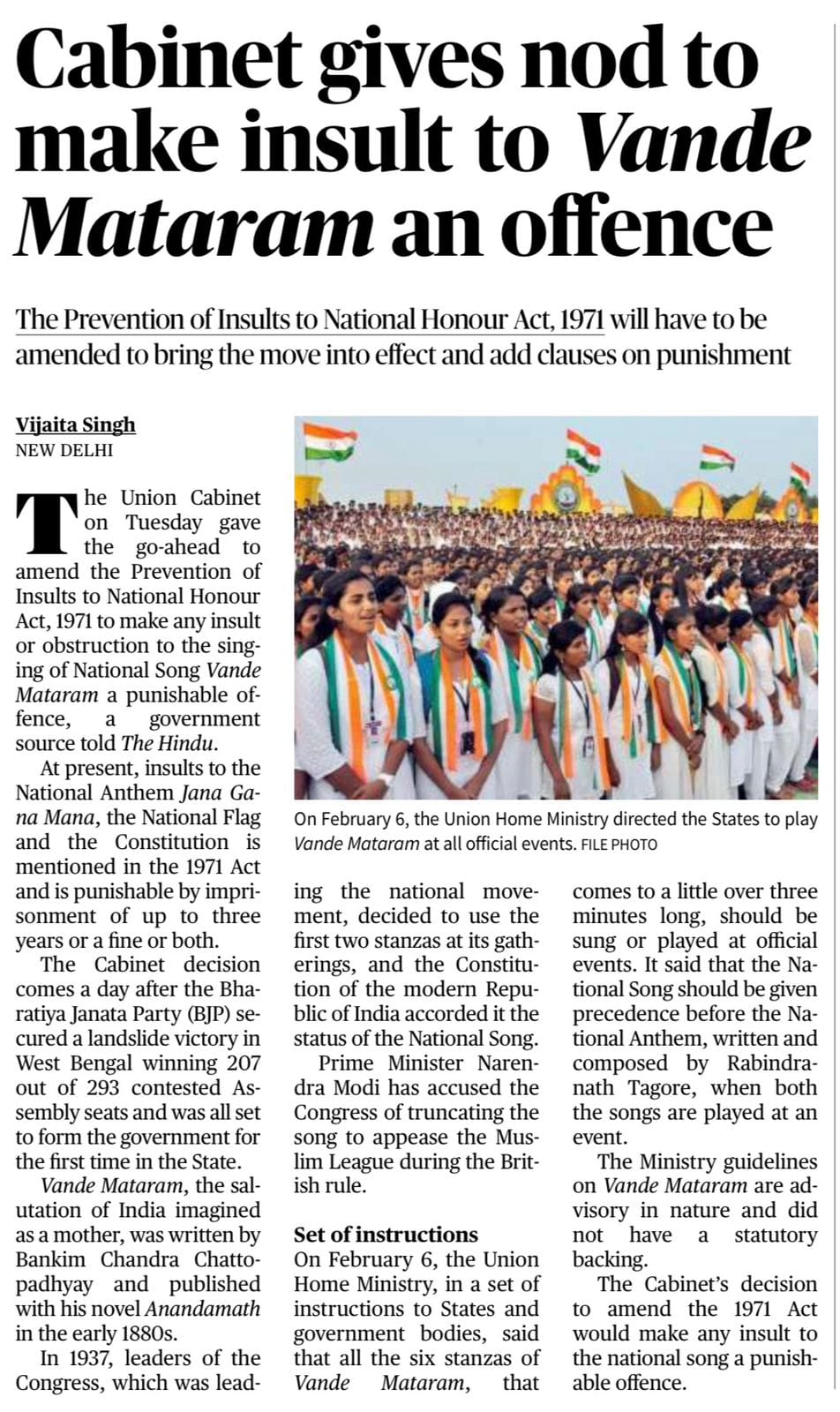
Vande Mataram to get legal protection under National Honour law

Context: Vande Mataram

Union Cabinet approved amendment to the Prevention of Insults to National Honour Act, 1971 to make insult or obstruction during the singing of Vande Mataram punishable.

Vande Mataram: Basics & Freedom Movement

Author: Bankim Chandra Chattopadhyay | Source: Anandamath (1882) | Language: Sanskritised Bengali

  • Became a major slogan during the Swadeshi Movement (1905)
  • First sung at the 1896 INC Session by Rabindranath Tagore

Stanzas & Current Status

  • Original composition has 6 stanzas
  • Since 1937, only the first two stanzas were officially used at public events
  • Remaining stanzas were generally avoided due to religious imagery
  • In 2026, Union Home Ministry guidelines stated that the official version will include all six stanzas at designated government and school events

Whenever both are played:

  • Vande Mataram will precede Jana Gana Mana

Full rendition duration:

  • Around 3 minutes 10 seconds

National Song Status

24 January 1950: Constituent Assembly adopted:

  • Jana Gana Mana → National Anthem
  • Vande Mataram → National Song

Impact of Proposed Amendment

At present, the 1971 Act protects:

  • National Anthem
  • National Flag
  • Constitution of India

After amendment:

  • Vande Mataram will also get statutory legal protection
  • Insult/disruption during singing may become punishable
  • Expands legal protection to National Song as a national symbol
About the UPSC Civil Services Examination (UPSC CSE)

The UPSC Civil Services Examination (CSE) is one of the most competitive and esteemed examinations in India, conducted by the Union Public Service Commission to recruit officers for services such as the Indian Administrative Service (IAS), Indian Police Service (IPS), Indian Foreign Service (IFS), and others. The exam comprises three stages — Prelims, Mains, and the Personality Test (Interview) — designed to test a candidate’s knowledge, aptitude, decision-making, and leadership skills.


How to Prepare Effectively for UPSC CSE

Cracking the UPSC CSE requires a deep understanding of the syllabus, consistent revision, structured answer writing, and smart test-taking strategies. The Prelims test analytical and conceptual clarity, the Mains focuses on critical thinking, articulation, and subject mastery, while the Interview assesses presence of mind, ethical judgment, and personality traits relevant to public service.

At UnderStand UPSC, we empower aspirants with a personalized and focused approach to each stage of the exam.


Why Choose UnderStand UPSC?

UnderStand UPSC is a mentorship-driven platform offering a clear, clutter-free strategy to tackle the Civil Services Examination. Our programs like Transform (for beginners and intermediate learners) and Conquer (for advanced mains preparation) provide structured study plans, syllabus-wise video content, interactive live sessions, and answer writing support.

We emphasize:

  • Concept clarity through topic-wise lectures

  • Test series designed around real UPSC standards

  • Personalized mentorship in small groups

  • Regular performance tracking and peer benchmarking

  • Doubt-clearing sessions, current affairs analysis, and monthly magazines


Join the UnderStand UPSC Learning Community

Our mission is to make UPSC preparation less overwhelming and more strategic. We combine mentorship, discipline, and academic rigor to help you clear CSE with confidence. Whether you’re preparing from Delhi, Mumbai, Bangalore, or a remote village — our online-first model ensures quality guidance reaches every corner of India.

Join the thousands of aspirants who trust UnderStand UPSC to guide their journey toward becoming civil servants.

Stay connected with us through our Telegram, YouTube, and Instagram channels for daily tips, strategies, and updates.

Copyright © 2026 USARAMBHA EDUCATION (UnderStand UPSC). All Rights Reserved.

Join the Success Journey!


Talk to Our Mentor
Fill the form & we’ll get back to you


Talk to Our Mentor
Fill the form & we’ll get back to you