12 June 2026 | Daily Current Affairs

Strait of Hormuz: France Proposes India’s Role in Maritime Security Initiative

Context: Strait of Hormuz
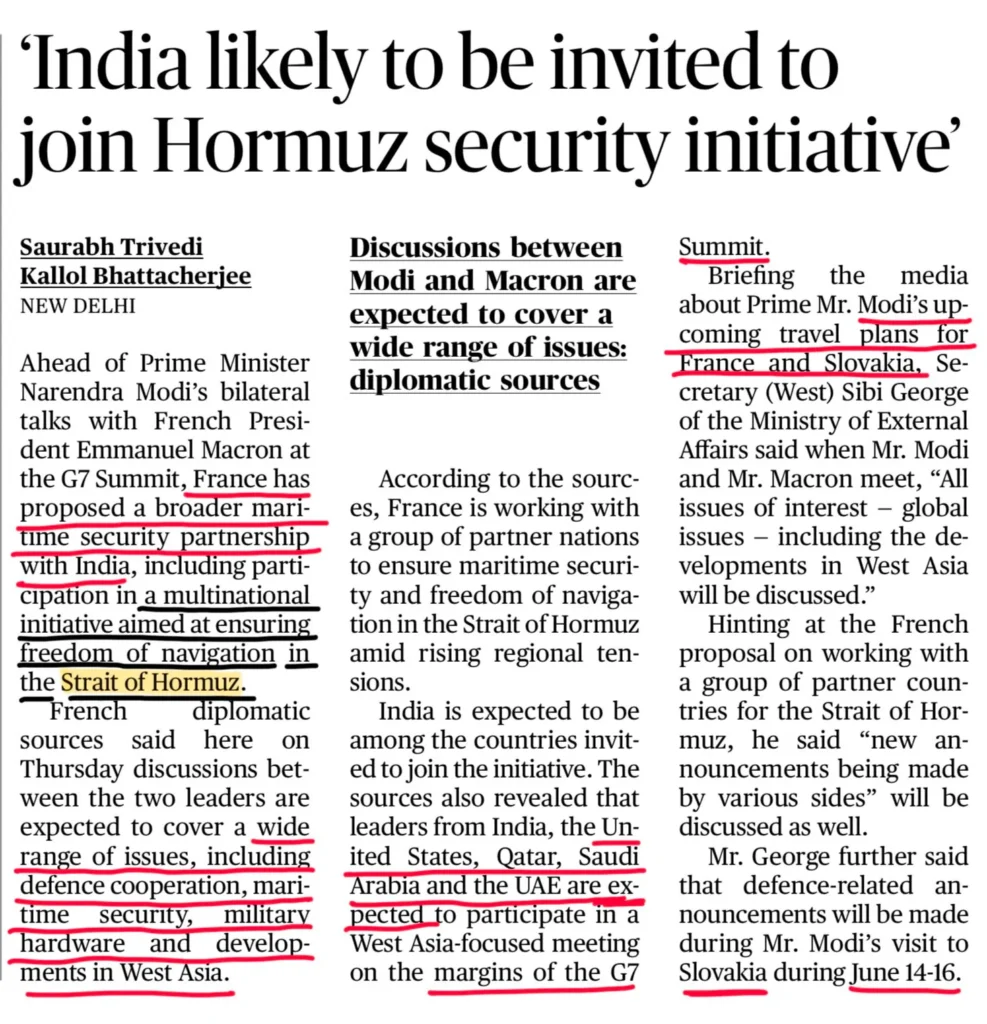
France has proposed India’s participation in a maritime security framework for protecting commercial shipping and freedom of navigation in the Strait of Hormuz.

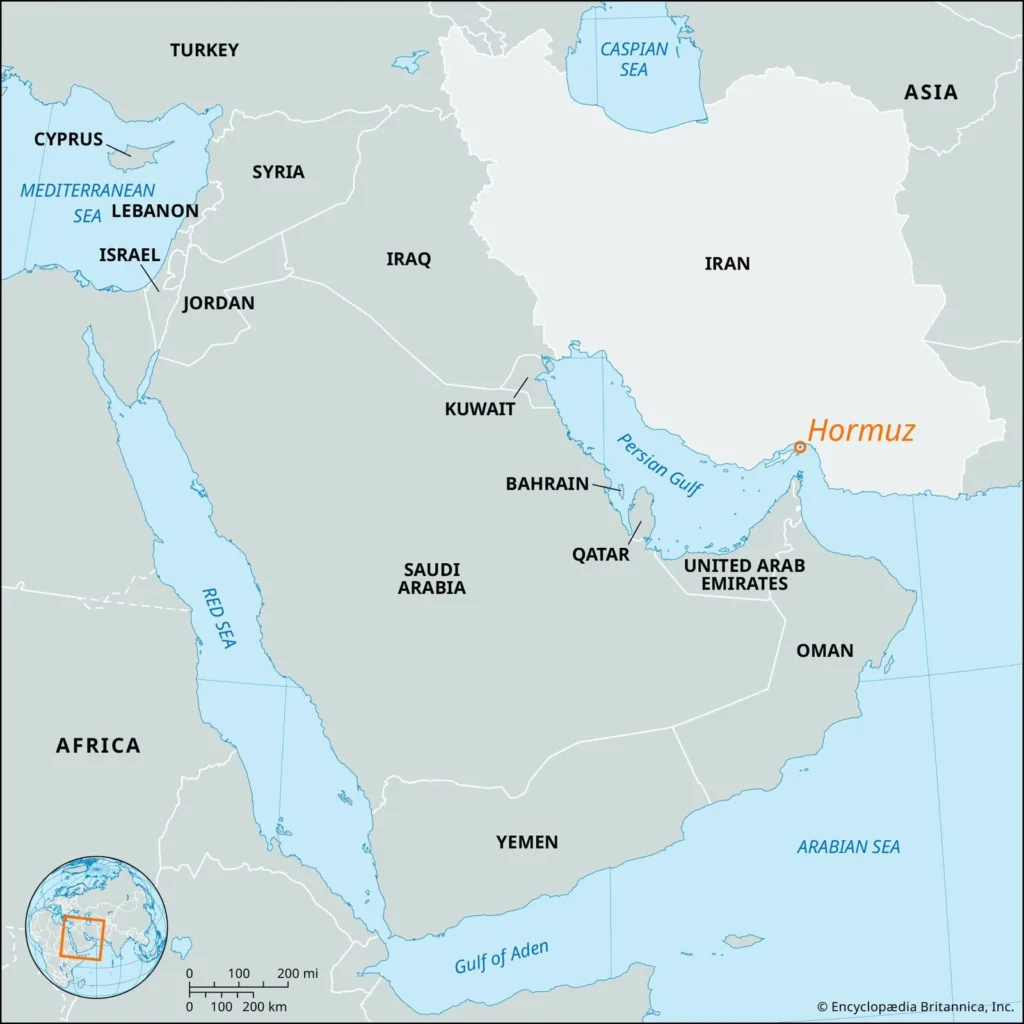
Strait of Hormuz

Location

Connects

Importance

  • Major global oil and LNG chokepoint.
  • Crucial for energy security and commercial shipping.
  • Important for freedom of navigation.

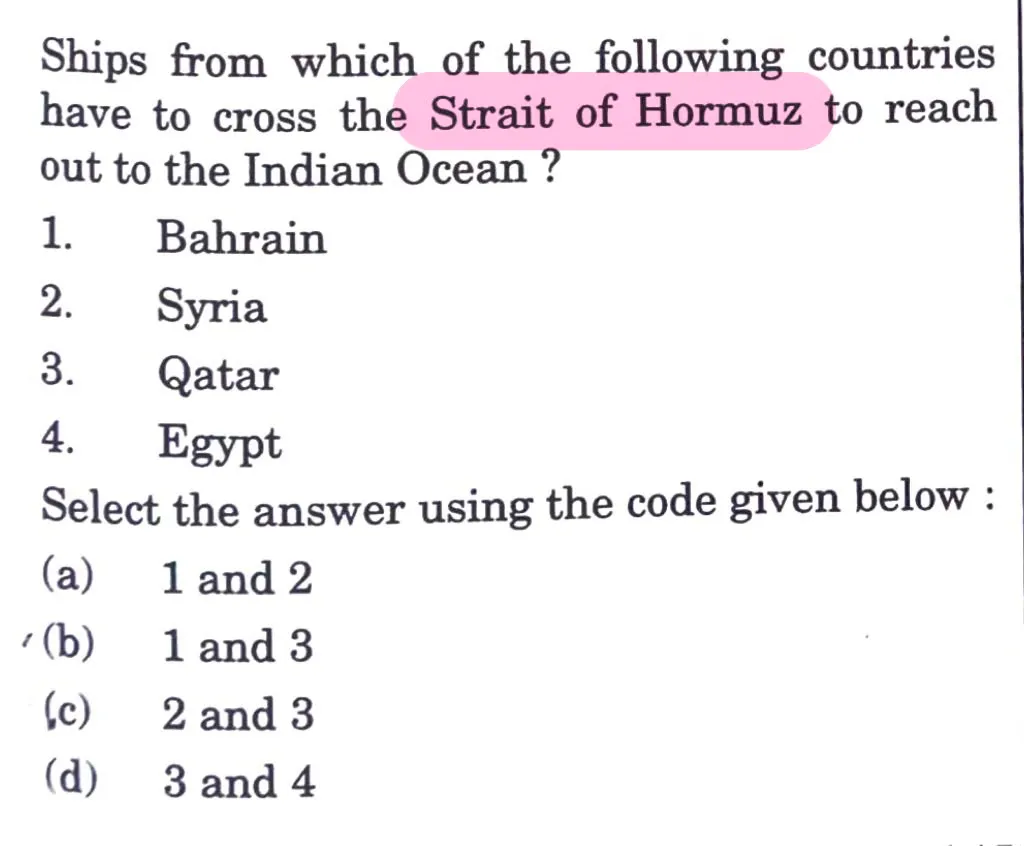
Persian Gulf Countries Dependent on Hormuz

  • Iran
  • Iraq
  • Kuwait
  • Bahrain
  • Qatar
  • Saudi Arabia
  • UAE
  • Oman

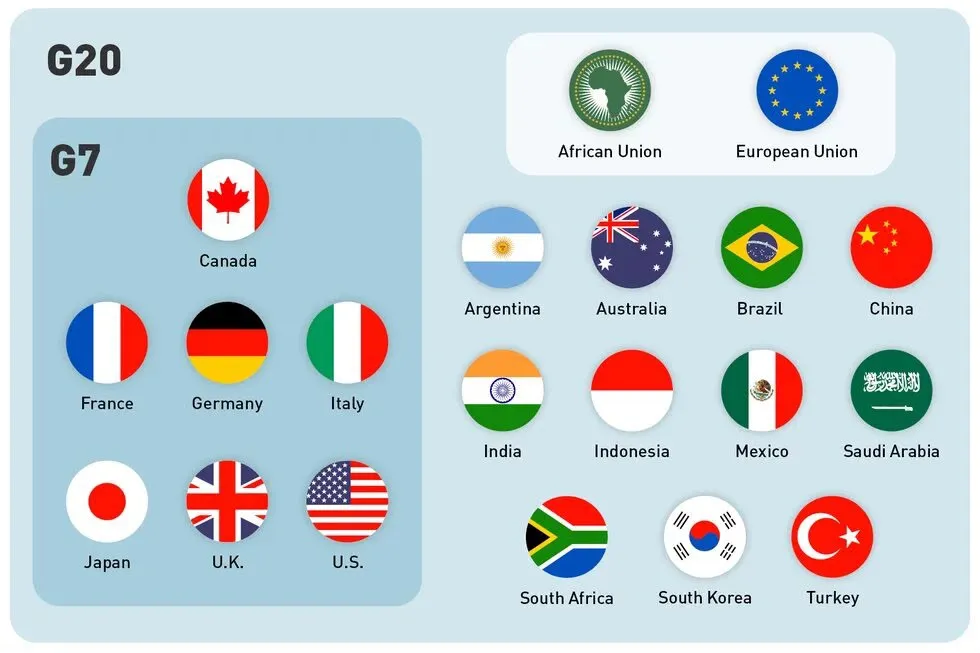
G7: Basics

Established

  • 1975 as G6
  • Canada joined in 1976 to form G7

Members

  • USA
  • UK
  • France
  • Germany
  • Italy
  • Japan
  • Canada

Focus Areas

  • Global economy
  • Trade
  • Energy security
  • Climate change
  • Geopolitical issues

US DCA 12 June 2026 4
US DCA 12 June 2026 16
US DCA 12 June 2026 11

Corporate Bond Tokenisation: Can Blockchain Improve India’s Bond Market?

Context: Corporate Bond Tokenisation
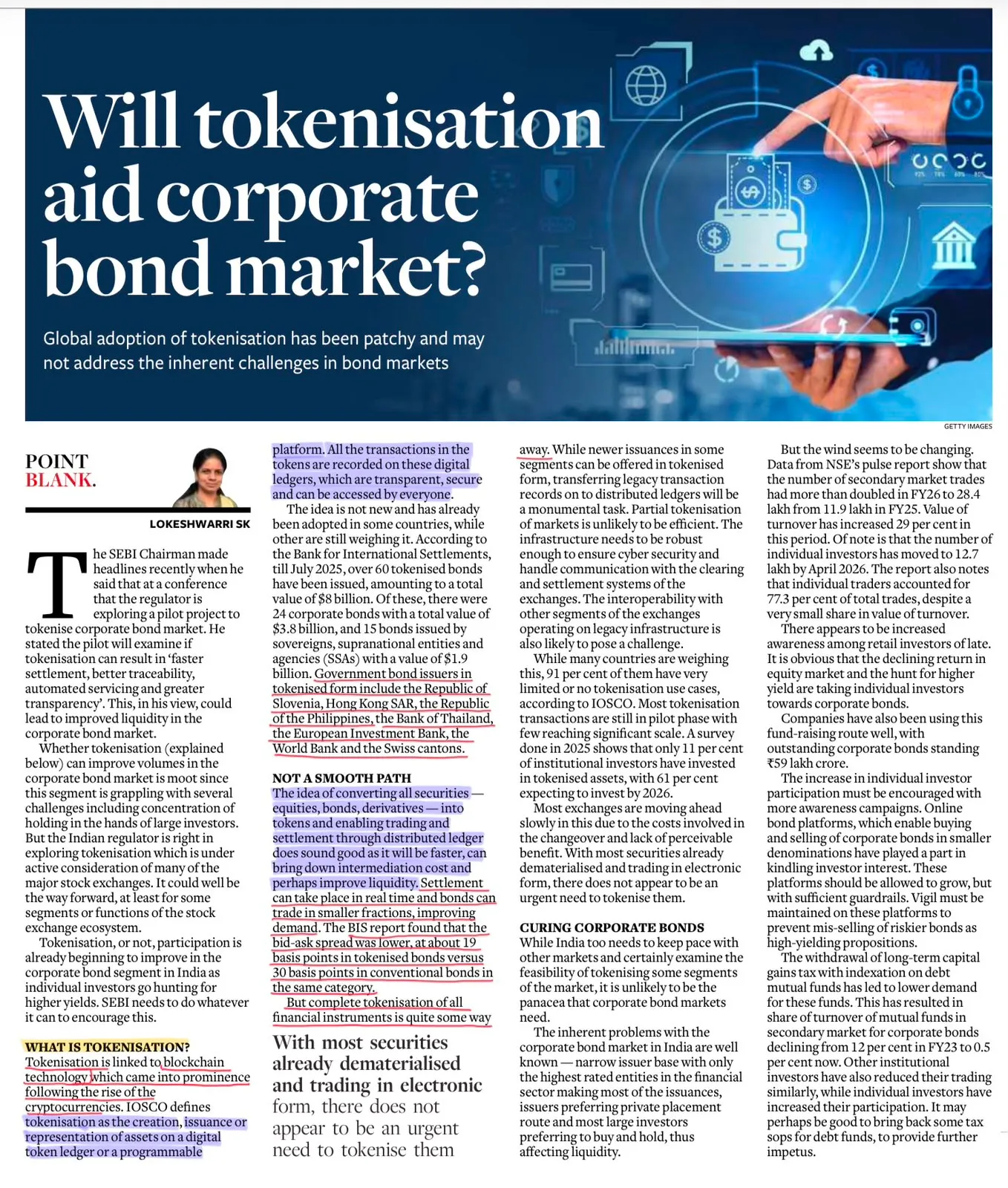
SEBI is examining the use of tokenisation of corporate bonds using blockchain technology to improve market efficiency, transparency and investor participation.

Blockchain, Tokenisation and Real-World Assets

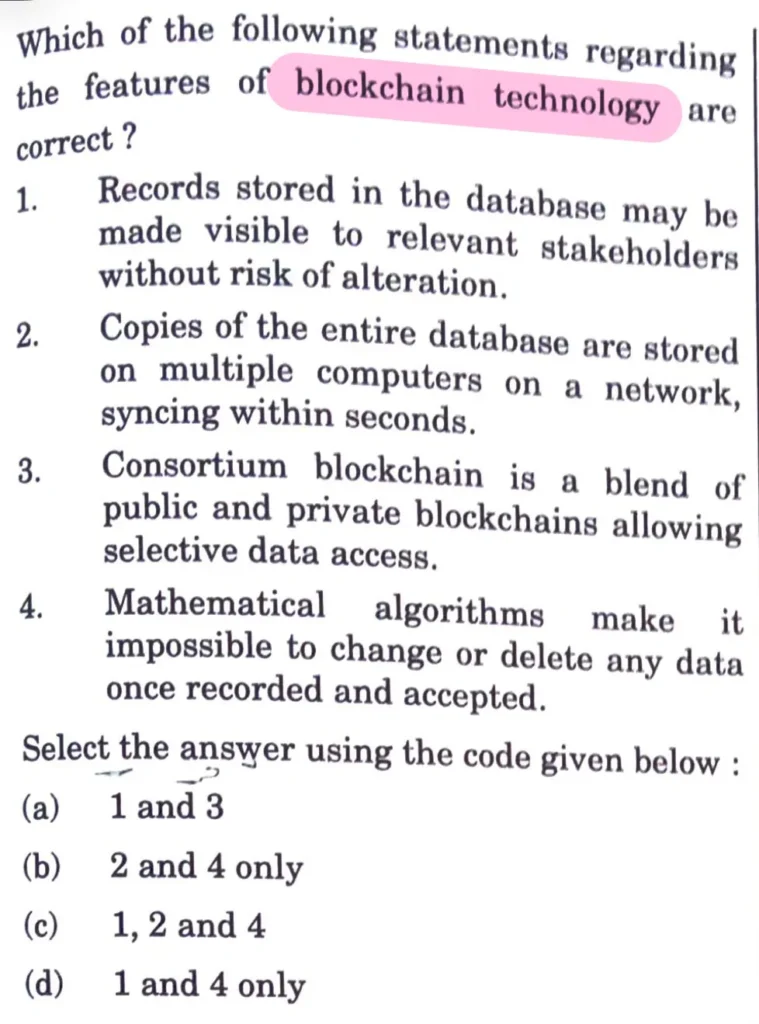
Blockchain

  • Decentralised digital ledger that stores and verifies records across a network of computers.
  • Based on Distributed Ledger Technology.
  • Identical records are maintained across multiple participants without a central authority.

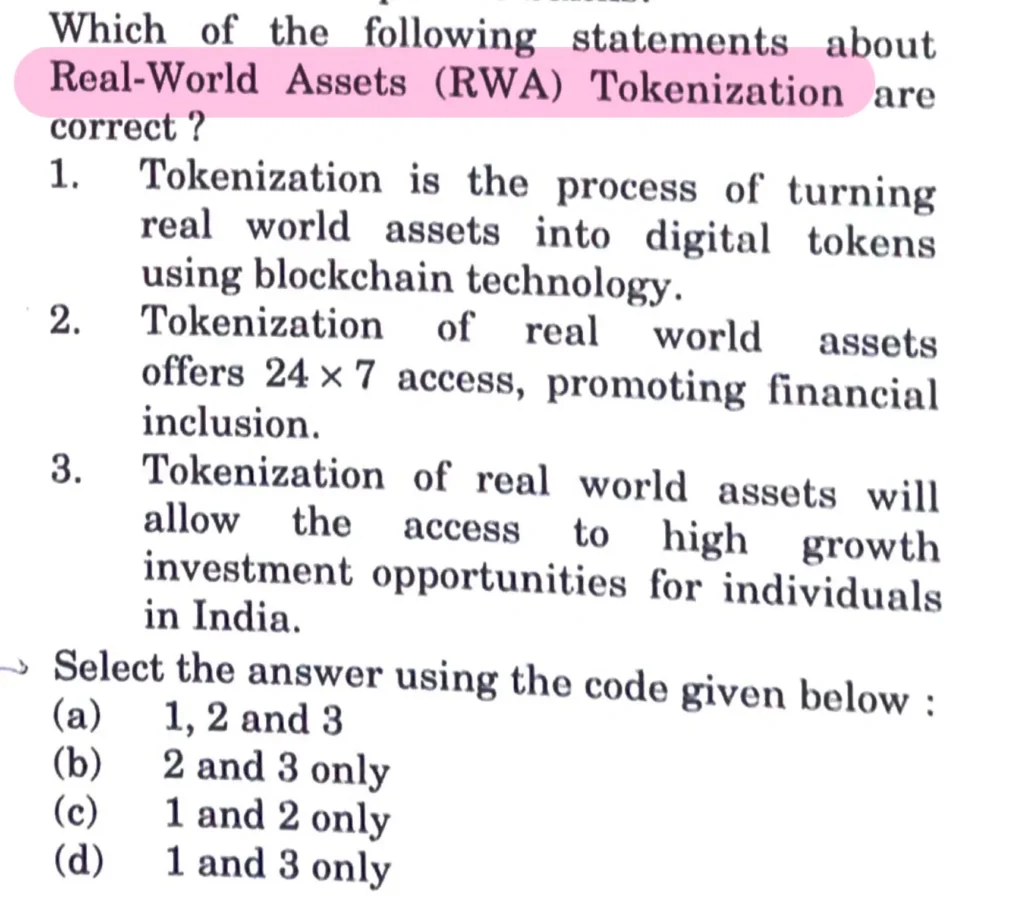
Tokenisation

  • Application of blockchain technology.
  • Creates a digital representation of ownership or rights over an asset in the form of tradable tokens.

Key Features of Tokenisation

  • Fractional ownership
  • 24×7 transferability
  • Improved accessibility
  • Transparency
  • Traceability

Real-World Assets

Real-World Assets are physical or traditional financial assets whose ownership can be digitally represented and traded through blockchain-based tokens.

Examples:

  • Corporate Bonds
  • Government Securities
  • Gold
  • Real Estate
  • Infrastructure Assets

Corporate Bonds

Corporate Bonds are debt instruments through which companies raise funds from investors.

Why Corporate Bond Tokenisation is Important?

Potential Benefits

  • Wider retail participation
  • Small-ticket investments through fractional ownership
  • Faster settlement
  • Lower intermediation costs
  • Greater transparency
  • Improved liquidity

Key Concern in India

India’s corporate bond market remains dominated by large issuers and private placements.

Secondary-market liquidity remains weak.

So, tokenisation can improve market infrastructure, but it cannot by itself solve deeper structural issues.

US DCA 12 June 2026 14
US DCA 12 June 2026 12
US DCA 12 June 2026 2

India France Defence Cooperation: France Backs Make in India in Rafale Deal

Context: India France Defence Cooperation
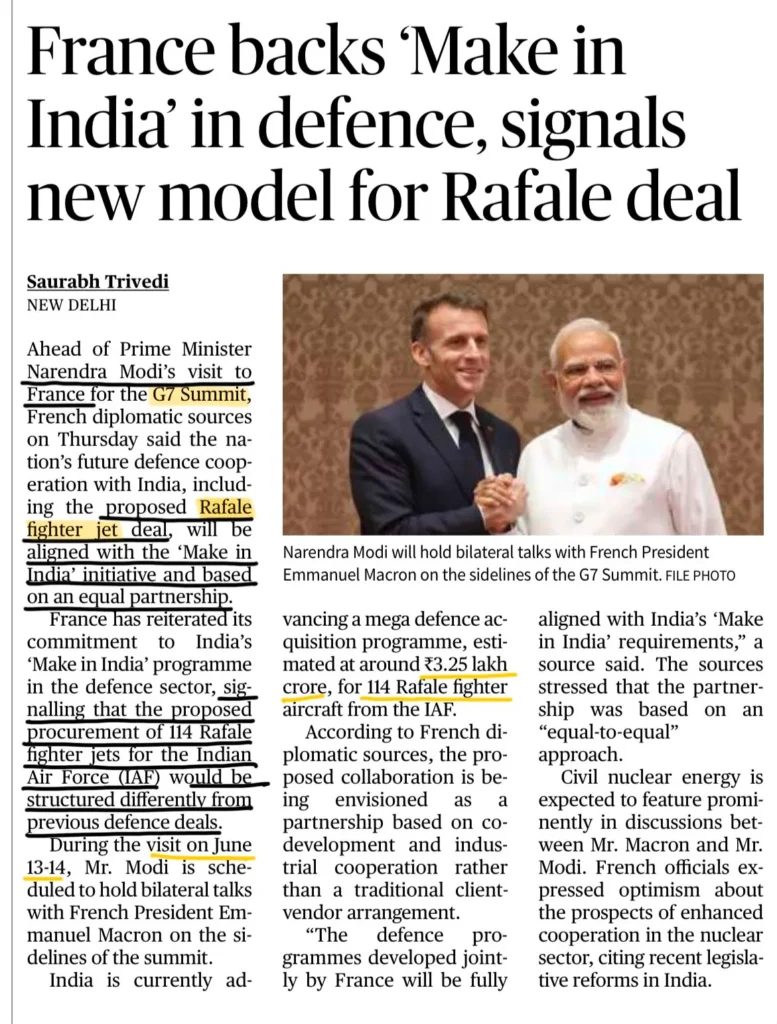
Ahead of Prime Minister Modi’s visit to France for the G7 Summit, France backed India’s Make in India initiative through the proposed 114 Rafale aircraft deal and proposed India’s participation in a maritime security initiative to ensure freedom of navigation in the Strait of Hormuz.

India–France Defence Cooperation

  • Proposed acquisition of 114 Rafale fighter aircraft for the Indian Air Force.
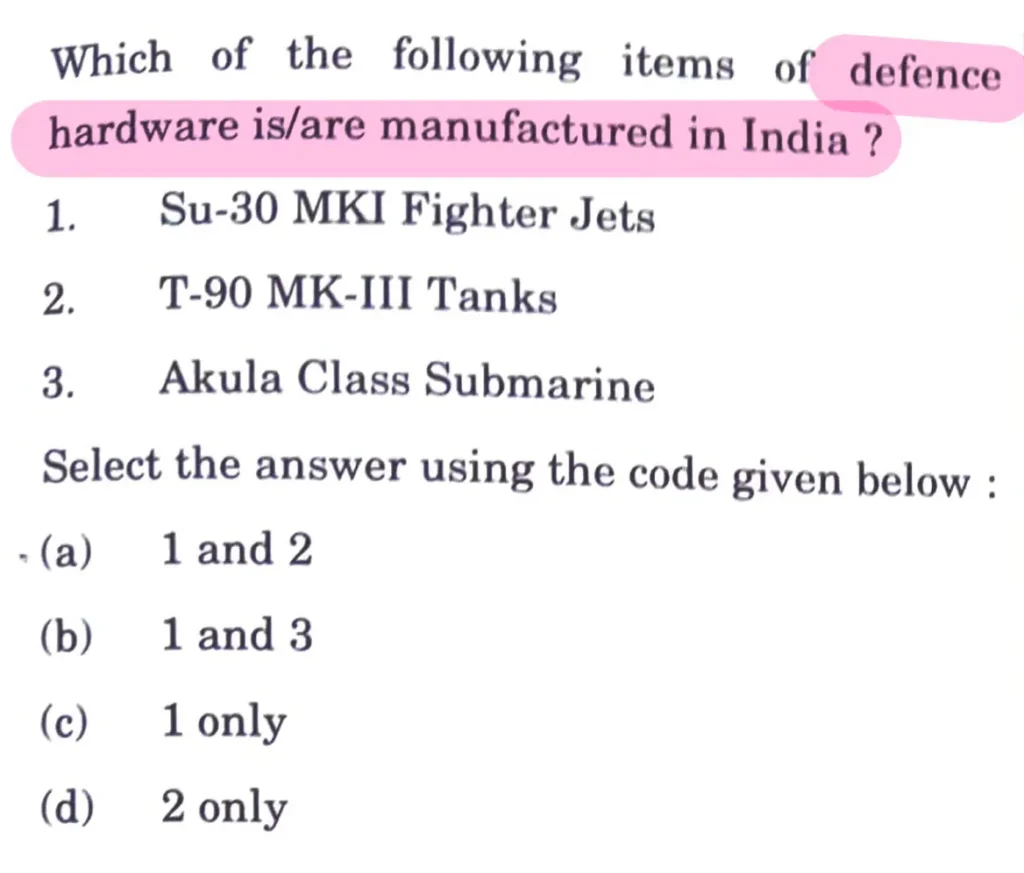
  • Focus on technology transfer, co-development and local manufacturing under Make in India.
  • India already operates 36 Rafale aircraft.

Rafale

  • French-origin 4.5 generation multirole fighter aircraft.
  • Manufactured by Dassault Aviation.

India’s 5th Generation Fighter

AMCA — Advanced Medium Combat Aircraft

  • Under development by DRDO-ADA.

India–France Strategic Partnership

Established in 1998.

Key areas:

  • Defence
  • Space
  • Civil Nuclear Energy
  • Indo-Pacific Cooperation
US DCA 12 June 2026 6
US DCA 12 June 2026 13
US DCA 12 June 2026 7

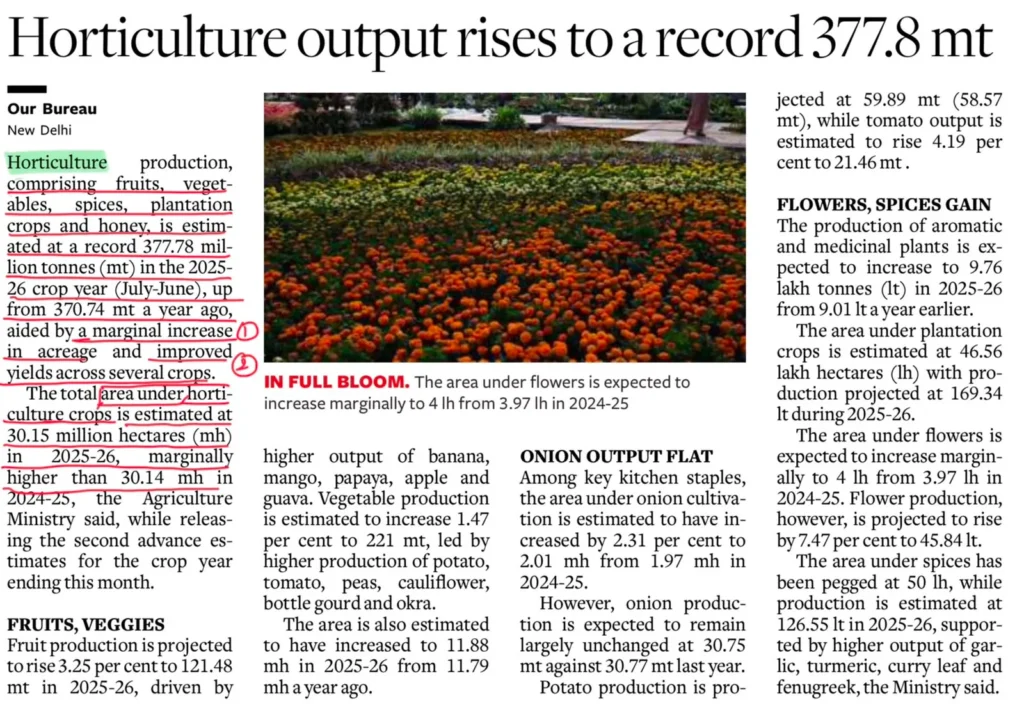
Horticulture Production Reaches Record 377.8 MT in India

Context: Horticulture Production
India’s horticulture production is estimated at a record 377.8 MT in 2025–26, exceeding foodgrain production despite being cultivated on a much smaller area.

Horticulture: Basics

Horticulture includes:

  • Fruits
  • Vegetables
  • Spices
  • Plantation Crops
  • Flowers
  • Aromatic and Medicinal Plants
  • Honey

Recent Trend

Horticulture

  • Area: 30.15 million hectares
  • Production: 377.8 MT

Foodgrains

  • Area: around 129 million hectares
  • Production: around 354 MT

Major Components

  • Vegetables: 221 MT
  • Fruits: 121.5 MT
  • Potato: 59.9 MT
  • Onion: 30.8 MT
  • Tomato: 21.5 MT

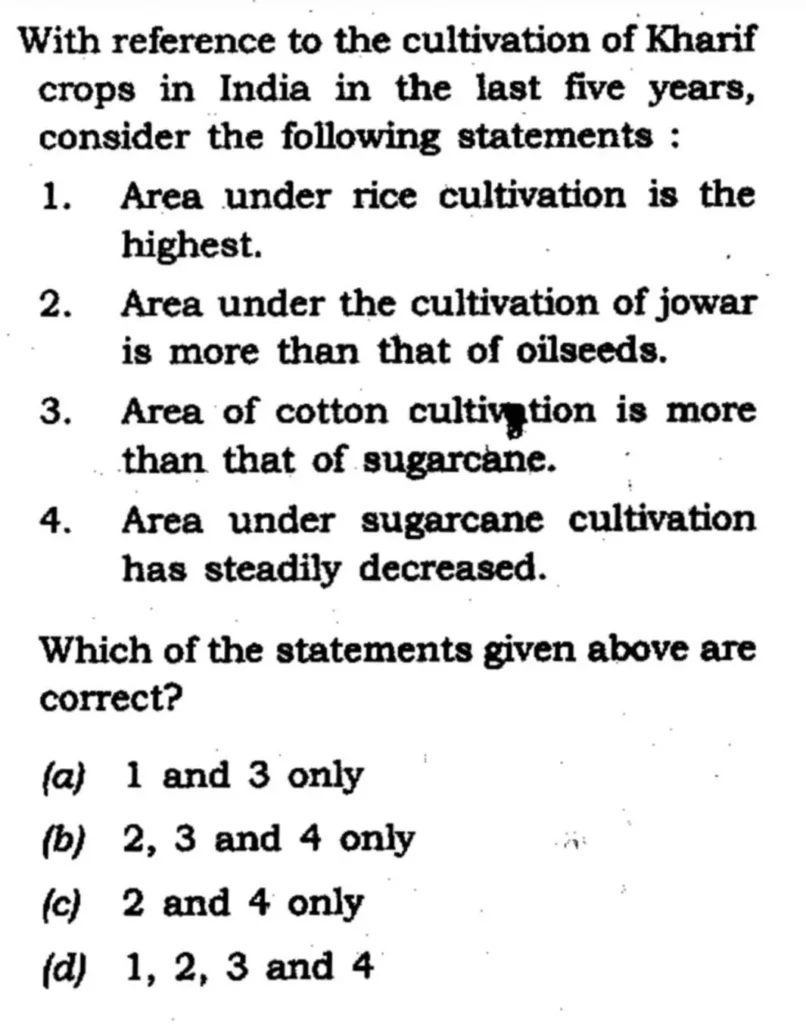
PYQ Value Addition: Area Under Cultivation

Decreasing Order

Rice > Wheat > Oilseeds > Cotton > Pulses > Jowar > Sugarcane

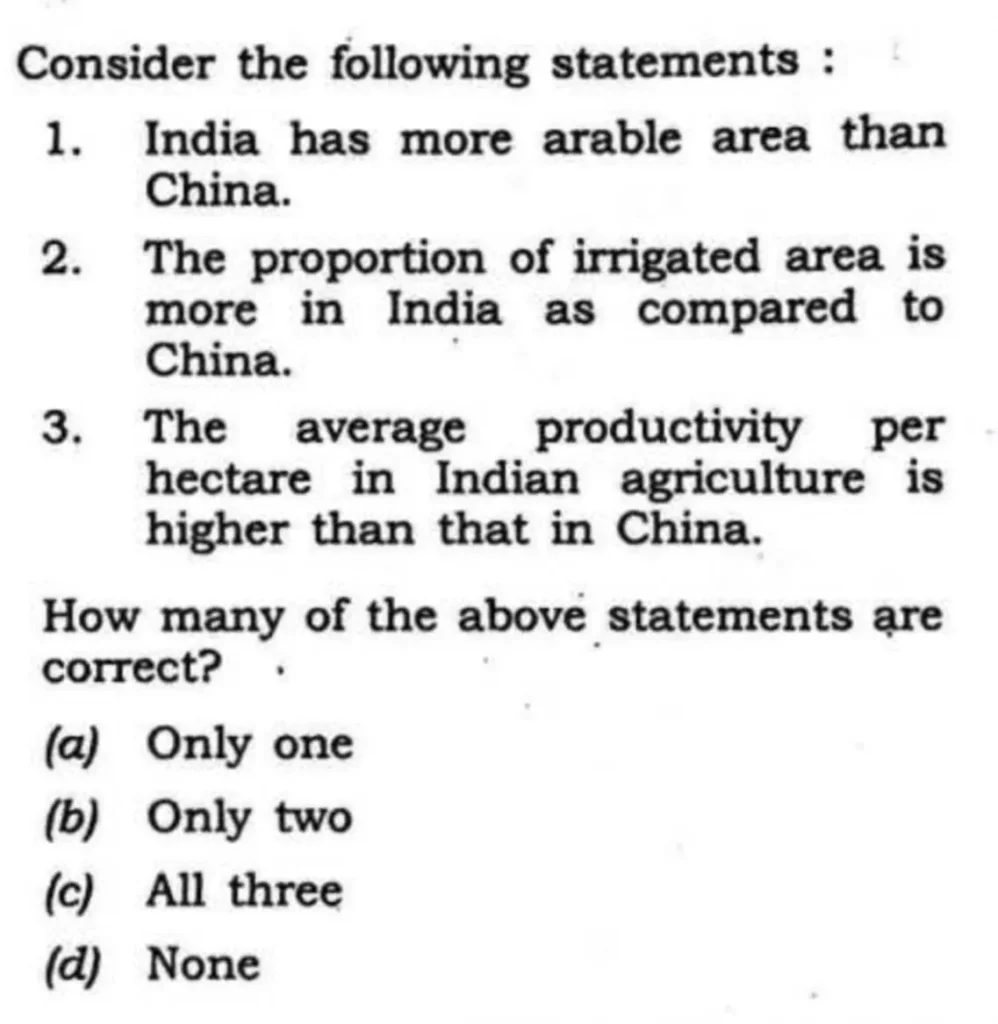
Prelims Facts

  • India’s net sown / arable area: around 154 million hectares — largest in the world.
  • China’s arable area: around 108 million hectares.
  • Irrigated area share: China around 55% > India around 45%.
  • Agricultural productivity: China > India.

Important Facts

  • India is the 2nd largest producer of fruits and vegetables.
  • Andhra Pradesh is the largest fruit-producing State.
  • Uttar Pradesh is the largest vegetable-producing State.
US DCA 12 June 2026 5
US DCA 12 June 2026 15
US DCA 12 June 2026 1

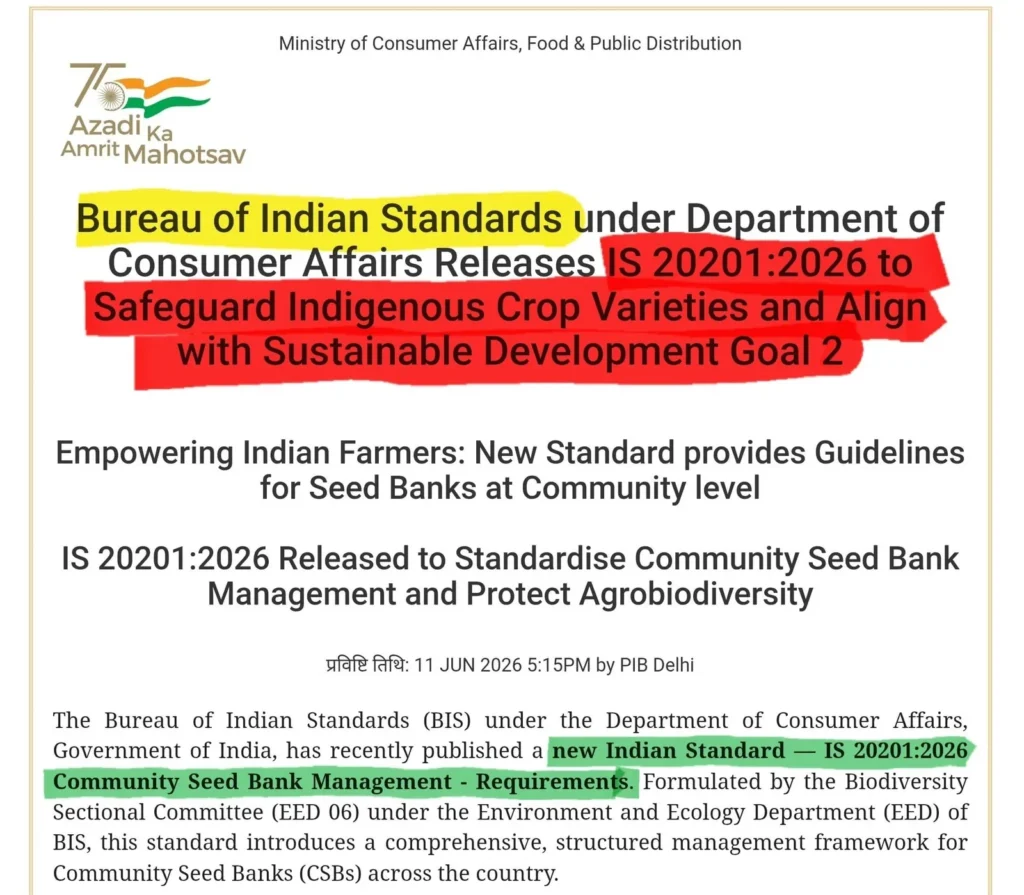
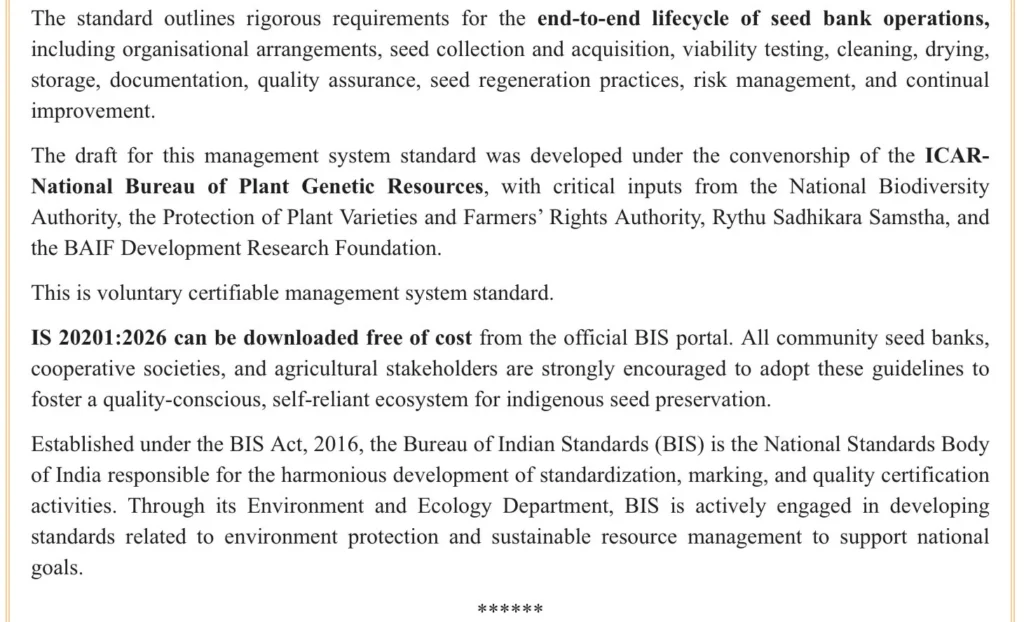
Community Seed Bank Management: BIS Releases IS 20201:2026 Standard

Context: Community Seed Bank Management
The Bureau of Indian Standards has released IS 20201:2026, India’s first standard for Community Seed Bank Management, aimed at conserving indigenous seed varieties, protecting agrobiodiversity and strengthening climate-resilient agriculture.

IS 20201:2026: Key Highlights

Community Seed Bank

  • Community-managed repository for collection, storage, conservation and exchange of traditional or local seeds.

Objectives

  • Indigenous seed conservation
  • Agrobiodiversity protection
  • Climate resilience
  • Food and nutritional security

Importance

  • Preserves drought-resistant and locally adapted crop varieties.
  • Enhances resilience against climate change.
  • Supports sustainable agriculture.

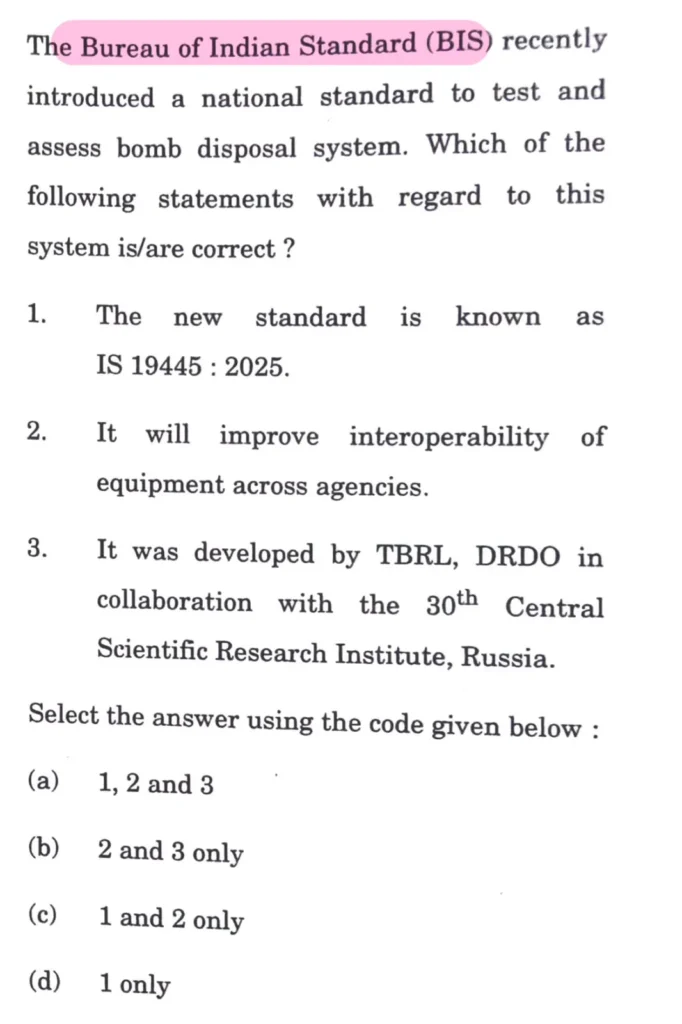
Bureau of Indian Standards

Status

  • National Standards Body of India
  • Statutory body under BIS Act, 2016

Ministry

  • Ministry of Consumer Affairs, Food and Public Distribution

Function

  • Formulates Indian Standards for products, services and systems.

Prelims Facts: Important Quality Marks

ISI Mark

  • Quality certification for industrial products.
  • Issued by BIS.

Hallmark

  • Purity certification for gold and silver jewellery.
  • Issued by BIS.

Eco Mark

  • Environment-friendly products.
  • BIS + Ministry of Environment, Forest and Climate Change.

AGMARK

  • Agricultural products quality certification.
  • Directorate of Marketing and Inspection, Ministry of Agriculture.

FSSAI Logo

  • Food safety compliance.
  • Food Safety and Standards Authority of India.

BEE Star Rating

SDG Link

SDG 2

  • Zero Hunger
US DCA 12 June 2026 9
US DCA 12 June 2026 10
US DCA 12 June 2026 17

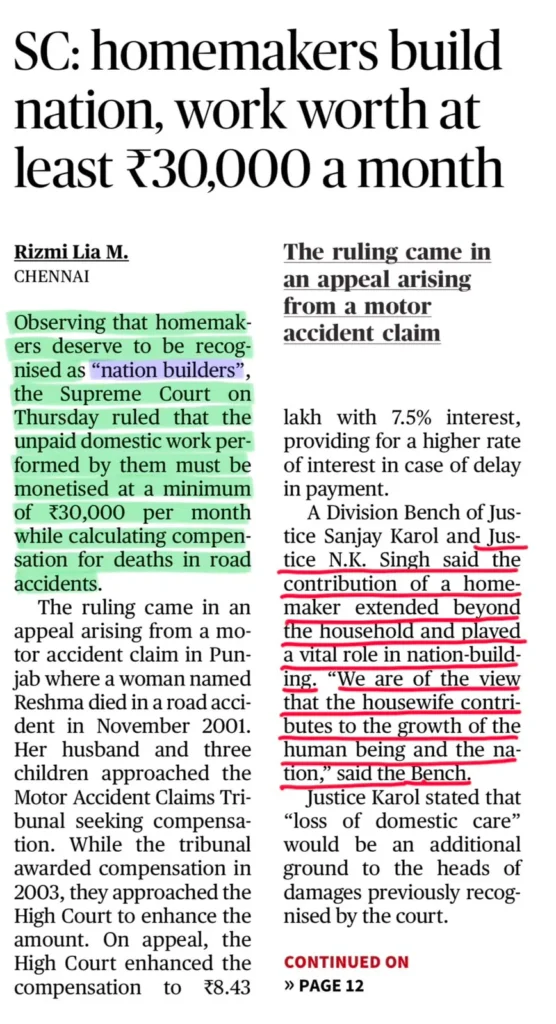
Unpaid Domestic Work: Supreme Court Recognises Economic Value of Homemakers

Context: Unpaid Domestic Work
The Supreme Court held that unpaid domestic work performed by homemakers should be monetarily recognised at a minimum of ₹30,000 per month while calculating compensation in motor accident death cases.

The Court described homemakers as “nation builders” whose contribution extends beyond the household.

GS1: Women and Society

  • Recognition of unpaid care work and domestic labour.
  • Gender-sensitive valuation of women’s contribution to society and economy.

GS2: Social Justice

  • Promotes dignity, equality and economic recognition of homemakers.
  • Strengthens discourse on gender-inclusive policymaking.

GS4: Ethics

Keywords

  • Dignity of Labour
  • Empathy
  • Recognition of Invisible Work

Quote Value Addition

“Homemakers are nation builders.” — Supreme Court

Mains Usage

This can be used as an example in answers on:

  • Gender justice
  • Women’s unpaid labour
  • Social equity
  • Dignity of labour
  • Compassion and empathy in governance
US DCA 12 June 2026 3

Female Genital Mutilation: Colombia Moves to Ban Harmful Practice

Context: Female Genital Mutilation
Colombia’s Senate approved legislation to ban Female Genital Mutilation, becoming the first country in Latin America to prohibit the practice, which continues in some indigenous communities.

Female Genital Mutilation

Female Genital Mutilation refers to practices involving partial or total removal or injury to female genital organs for non-medical reasons.

Why It Matters

  • Violation of bodily autonomy.
  • Violation of dignity and human rights.
  • Linked to gender-based violence.
  • Causes physical, psychological and reproductive health harms.

GS1: Women Issues

  • Patriarchal control over women’s bodies.
  • Harmful traditional practices.
  • Gender inequality and social reform.

GS2: Human Rights and Social Justice

  • Protection of women and girls from violence.
  • Role of law in ending harmful practices.
  • State responsibility to protect bodily autonomy and dignity.

Mains Value

This example can be used in answers on:

  • Women’s rights
  • Human rights
  • Gender justice
  • Social reform
  • Bodily autonomy
  • Harmful traditional practices
US DCA 12 June 2026 8

Copyright © 2026 USARAMBHA EDUCATION (UnderStand UPSC). All Rights Reserved.