14 & 15 June 2026 | Daily Current Affairs

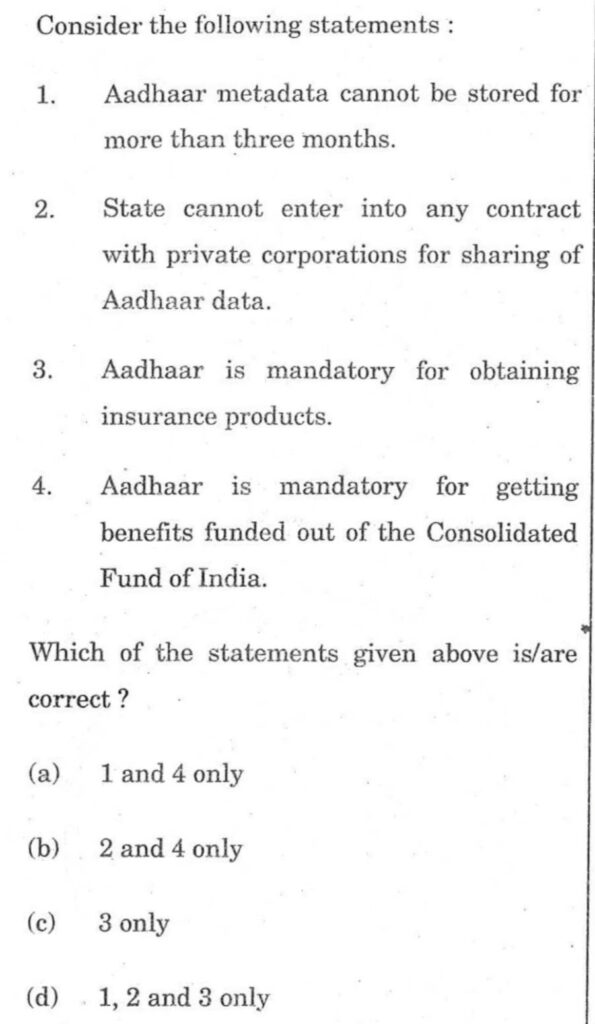
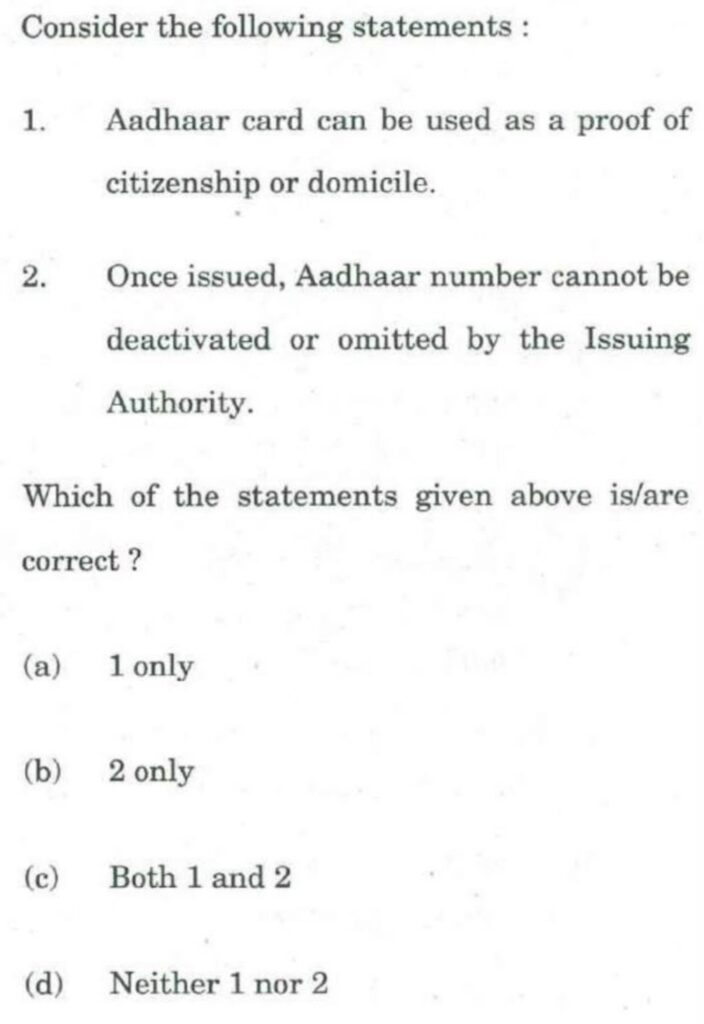
Assam Aadhaar Verification for Adults: New Rules, UIDAI Role & Citizenship Issues for UPSC

Context: Assam Aadhaar Verification
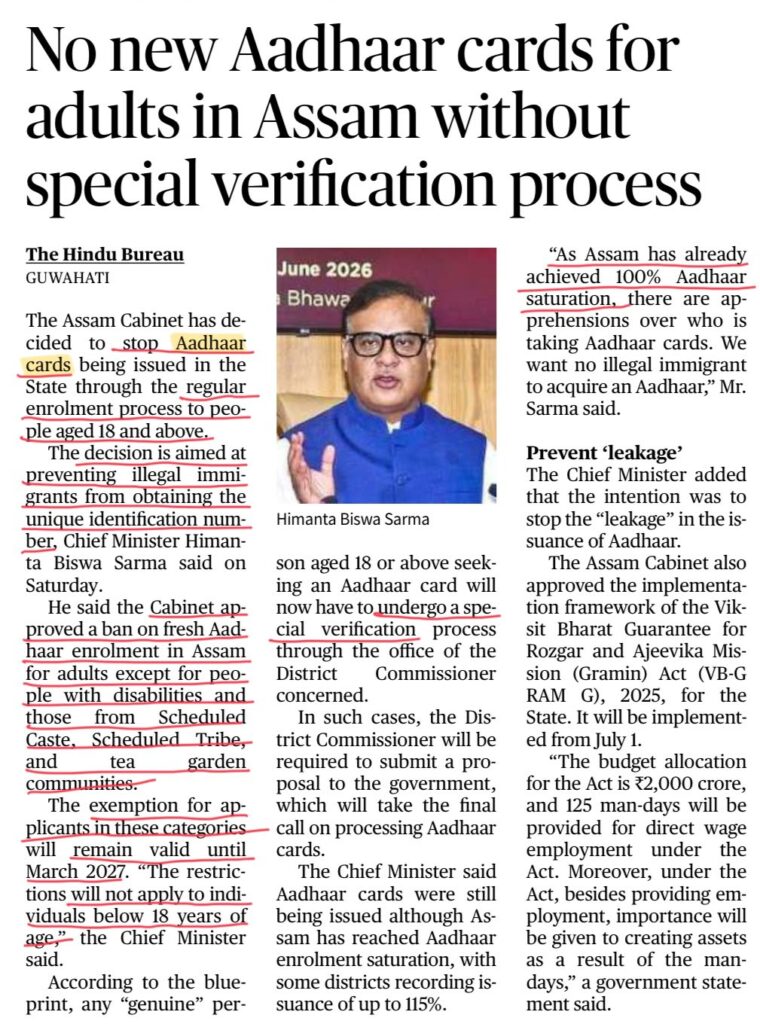
Assam has mandated special verification for new Aadhaar enrolment of persons aged 18 years and above to prevent illegal immigrants from obtaining Aadhaar.

The rule does not apply to minors and, till March 2027, to:

Aadhaar: Core Basics

  • Aadhaar is a 12-digit unique identity number issued to a resident of India.
  • A resident means a person residing in India for 182 days or more during the preceding 12 months.
  • Aadhaar is based on demographic and biometric information.
  • Aadhaar is a tool for identity authentication and welfare delivery.
  • Aadhaar is not proof of citizenship.

UIDAI

Full Form

  • Unique Identification Authority of India

Established

  • 2009

Status

  • Statutory authority under the Aadhaar Act, 2016

Ministry

Functions of UIDAI

  • Issues Aadhaar numbers.
  • Maintains the Central Identities Data Repository.
  • Regulates Aadhaar enrolment and authentication framework.

Role of State Governments

State Governments facilitate enrolment and verify:

  • Residence
  • Identity
  • Supporting documents

Assam’s Measure

Since document and residence verification is undertaken through State authorities, Assam has introduced District Commissioner-level scrutiny before adult applications are forwarded to UIDAI.

Legal Significance

Justice K.S. Puttaswamy Aadhaar Case, 2018

  • Supreme Court upheld Aadhaar’s constitutional validity.
  • It also reinforced privacy safeguards.

Major Uses of Aadhaar
  • Direct Benefit Transfer
  • PM-KISAN
  • MGNREGA
  • Pensions
  • Scholarships
  • e-KYC services

Xuanzang UNESCO Nomination: India-China Joint Heritage Proposal & BRICS Culture Meeting

Context:
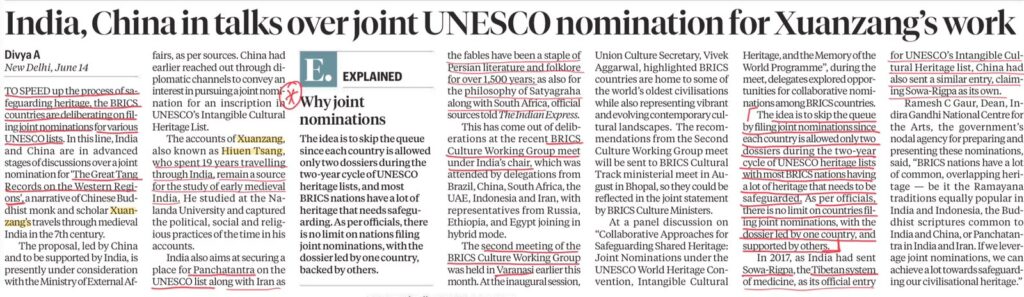
India and China are discussing a joint UNESCO nomination for “The Great Tang Records on the Western Regions,” written by the Chinese Buddhist monk Xuanzang, also known as Hiuen Tsang.

The proposal was discussed during the 2nd BRICS Culture Working Group Meeting held in Varanasi under India’s BRICS Chairmanship.

UNESCO Joint Nomination

A UNESCO joint nomination means two or more countries jointly nominate a heritage element having shared civilisational or cultural roots.

Key Features

  • One country leads the dossier.
  • Other countries support it.
  • Multinational nominations receive greater priority in UNESCO’s evaluation process.

Examples Under Discussion

Xuanzang’s Records

  • India–China

Panchatantra

  • India–Iran
  • Ancient Indian collection of animal fables with influence across Persia and West Asia.

Satyagraha

  • India–South Africa
  • Linked to Mahatma Gandhi’s philosophy of non-violent resistance shaped during his South African years.

Sowa-Rigpa

  • Traditional Tibetan medicine earlier claimed separately by India and China.

2nd BRICS Culture Working Group Meeting

Location

  • Varanasi

Chairmanship

  • India

Objective

  • Promote joint heritage nominations among BRICS countries.
  • Safeguard shared cultural heritage.

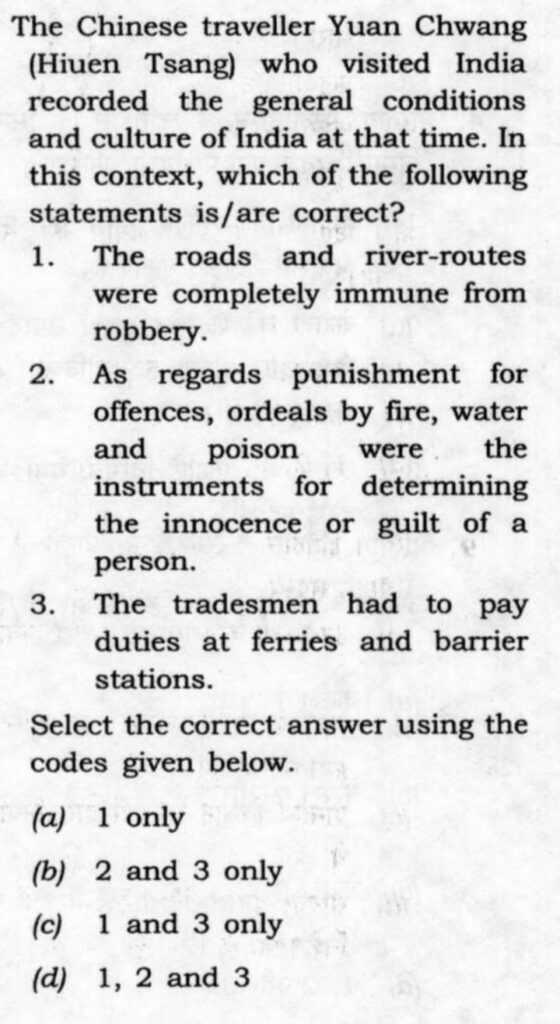
Xuanzang / Hiuen Tsang: UPSC Basics

  • Chinese Buddhist monk.
  • Visited India during the reign of Harshavardhana.
  • Travelled across India between 629 CE and 645 CE.
  • Spent nearly 19 years studying Buddhism.
  • Studied at Nalanda Mahavihara.
  • Authored Great Tang Records on the Western Regions, also known as Si-Yu-Ki.

Importance of Xuanzang’s Account

His writings are an important source for understanding 7th-century India’s:

  • Political conditions
  • Social life
  • Religious practices
  • Economic conditions
  • Buddhist centres of learning

PYQ Fact

Xuanzang recorded that:

  • Traders paid duties at ferries and barriers.
  • Ordeals by fire, water and poison were used in judicial practices.

Anti-Defection Law Merger Provision: Tenth Schedule Rules, Two-Thirds Majority & UPSC Notes

Context:
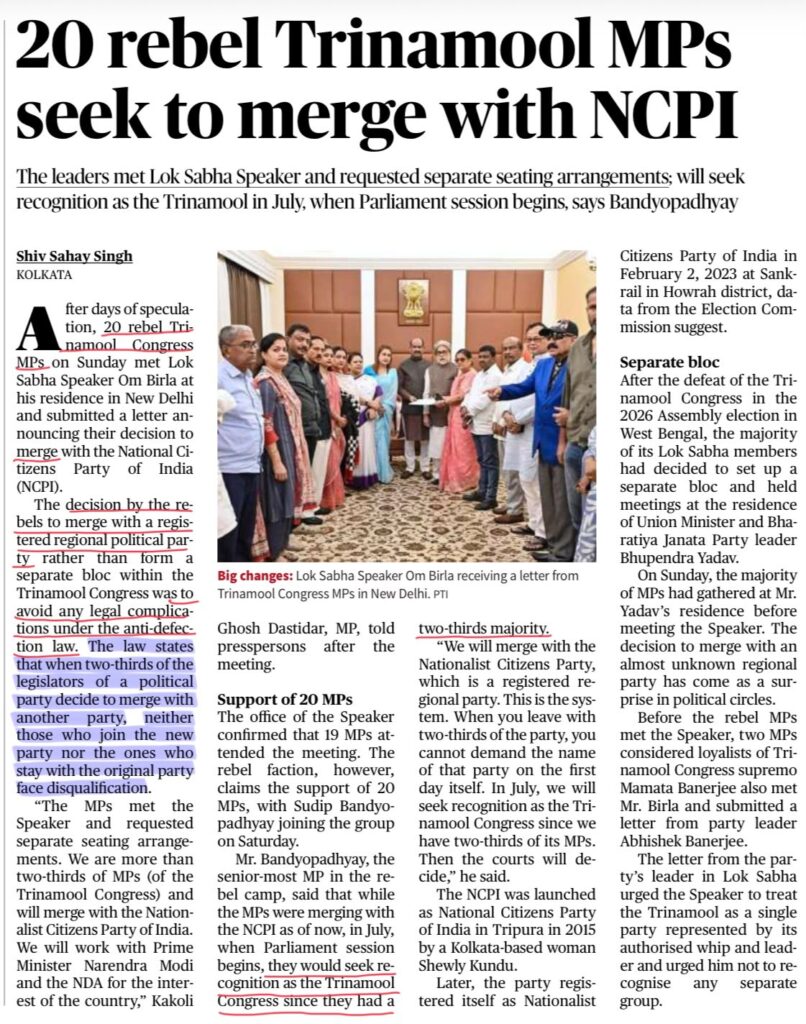
A group of around 20 Trinamool Congress MPs has informed the Lok Sabha Speaker of its decision to merge with the National Citizens Party of India. The group claims support of more than two-thirds of TMC MPs and seeks protection under the merger provision of the Anti-Defection Law.

Anti-Defection Law

Constitutional Basis

Added By

Split vs Merger

Split

Earlier, a split by one-third members was exempt from disqualification.

This exception was removed by the 91st Constitutional Amendment Act, 2003.

Merger

Merger remains valid if at least two-thirds of legislators agree to join another political party.

In such cases, members are protected from disqualification.

Why Merge with NCPI?

Since the split exception no longer exists, merely forming a separate faction can attract disqualification.

Therefore, the MPs have chosen to merge with a registered political party and claim protection under the merger clause.

This is being seen as the first legal step before seeking recognition of their faction in Parliament.

Why Was This Not Seen in Shiv Sena / NCP Cases?

In those cases, the dispute was mainly over which faction represented the original party and controlled its name and symbol.

Here, the MPs are first relying on the merger provision of the Tenth Schedule through another registered party.

Registered vs Recognised Party

Registered Party

Recognised Party

  • A registered party that fulfils ECI criteria for State Party or National Party status.
  • Gets a reserved symbol.

Key Difference

Every recognised party is registered, but every registered party is not recognised.

PYQ Fact

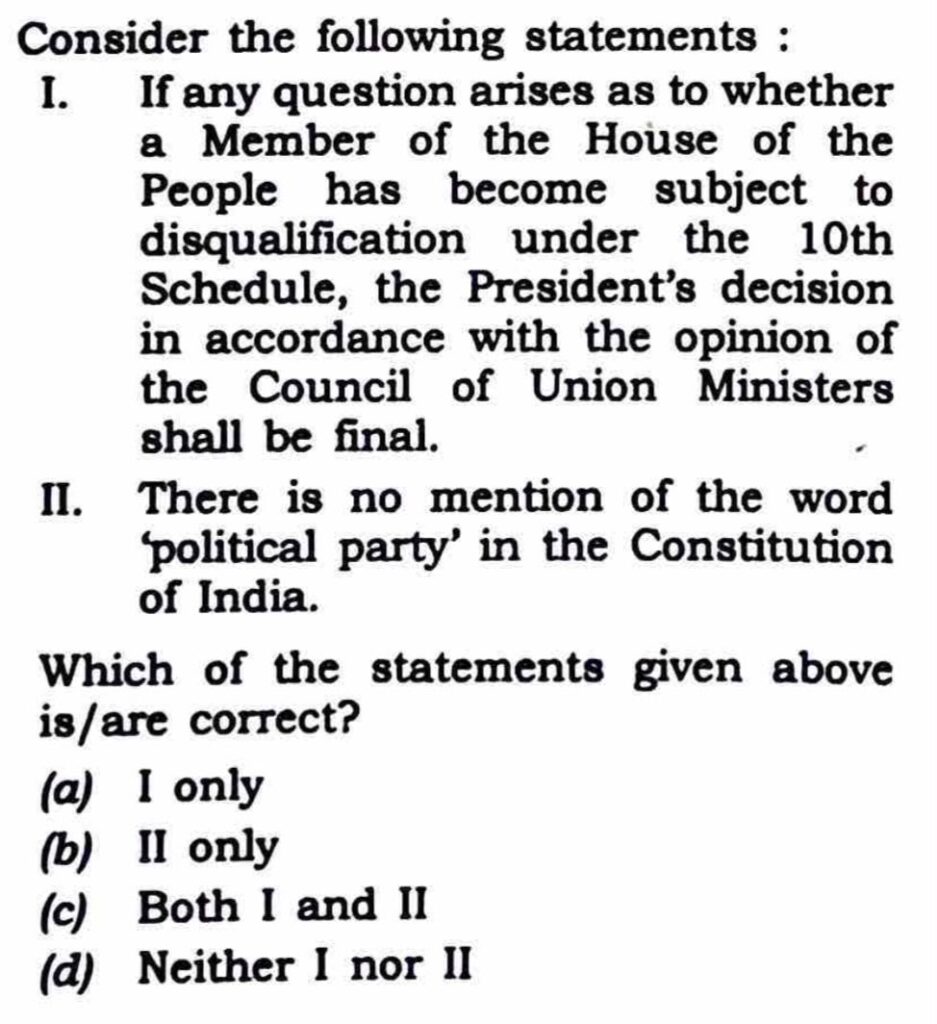
The term “political party” appears in the Constitution through the Tenth Schedule.

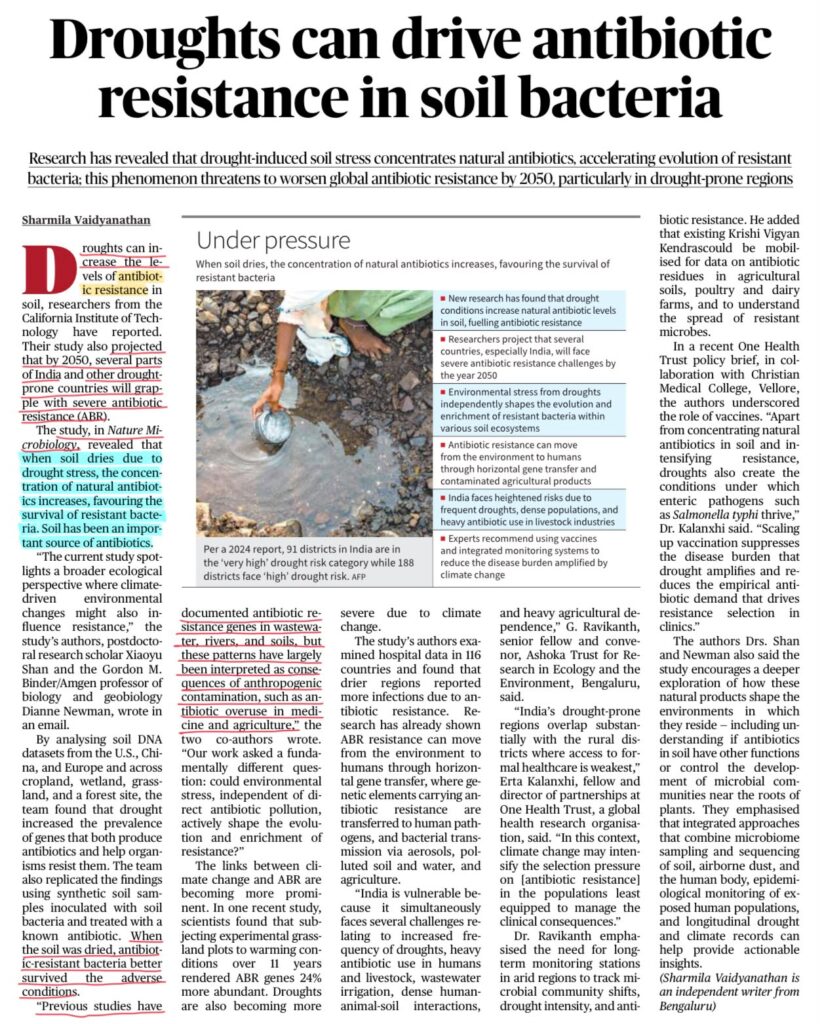
Drought and Antimicrobial Resistance: Climate Change Impact on Soil Bacteria Explained

Context:
A Nature Microbiology study says drought stress can increase antimicrobial resistance in soil bacteria by concentrating natural antibiotics in dry soil, favouring resistant bacteria.

This may worsen AMR by 2050, especially in drought-prone regions like India.

Antimicrobial Resistance

Antimicrobial Resistance occurs when microbes stop responding to medicines, making infections difficult to treat.

It can occur in:

  • Bacteria
  • Viruses
  • Fungi
  • Parasites

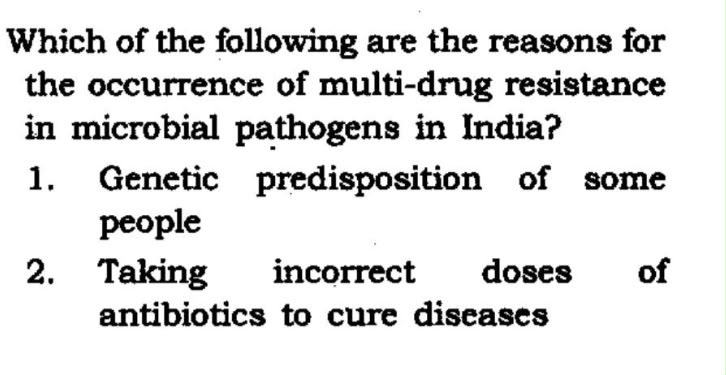
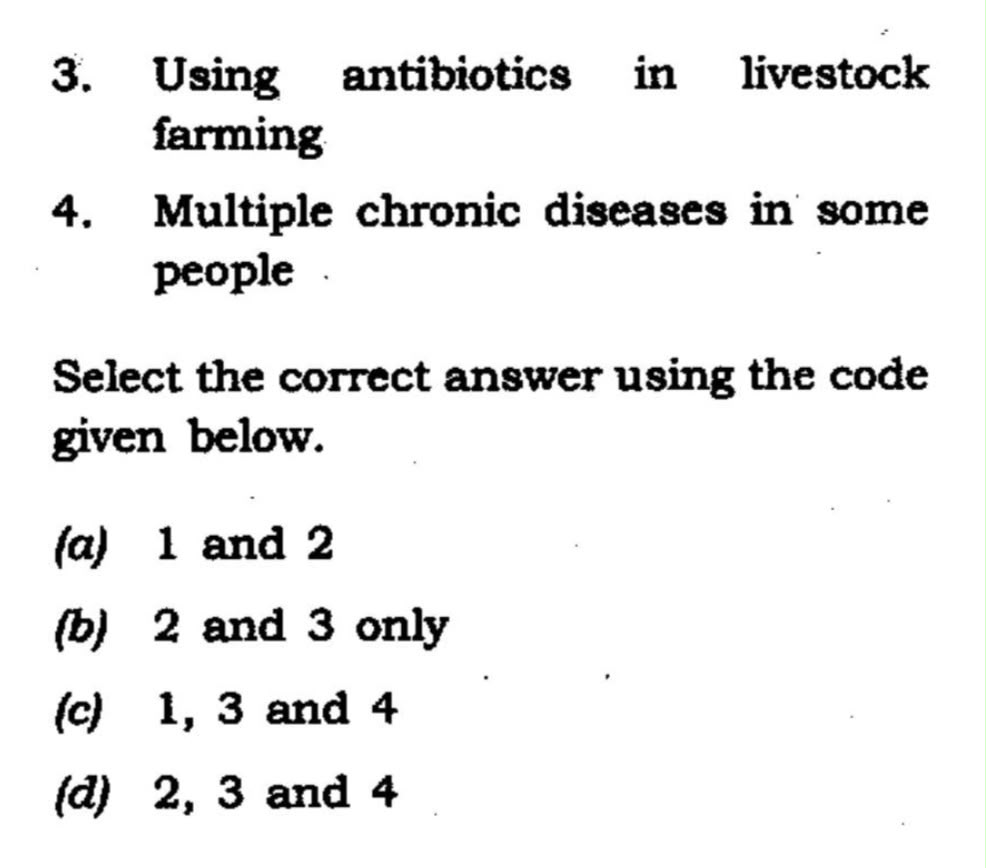
Major Drivers of AMR

  • Wrong or incomplete antibiotic doses
  • Overuse of antibiotics in humans
  • Antibiotic use in livestock farming
  • Wastewater pollution
  • Pharmaceutical pollution

Key Finding of the Study

When soil dries due to drought, natural antibiotics become concentrated.

This creates survival pressure where resistant bacteria survive better.

This shows that climate change can directly influence AMR, not just medical misuse.

India’s Vulnerability

India is vulnerable due to:

  • Frequent droughts
  • High antibiotic use
  • Livestock farming
  • Wastewater irrigation
  • Weak rural healthcare access

Why This Matters

  • Links climate change with public health.
  • Shows that AMR is not only a hospital or medicine-use problem.
  • Drought-prone regions may face higher AMR risk.
  • Requires One Health approach linking humans, animals and environment.

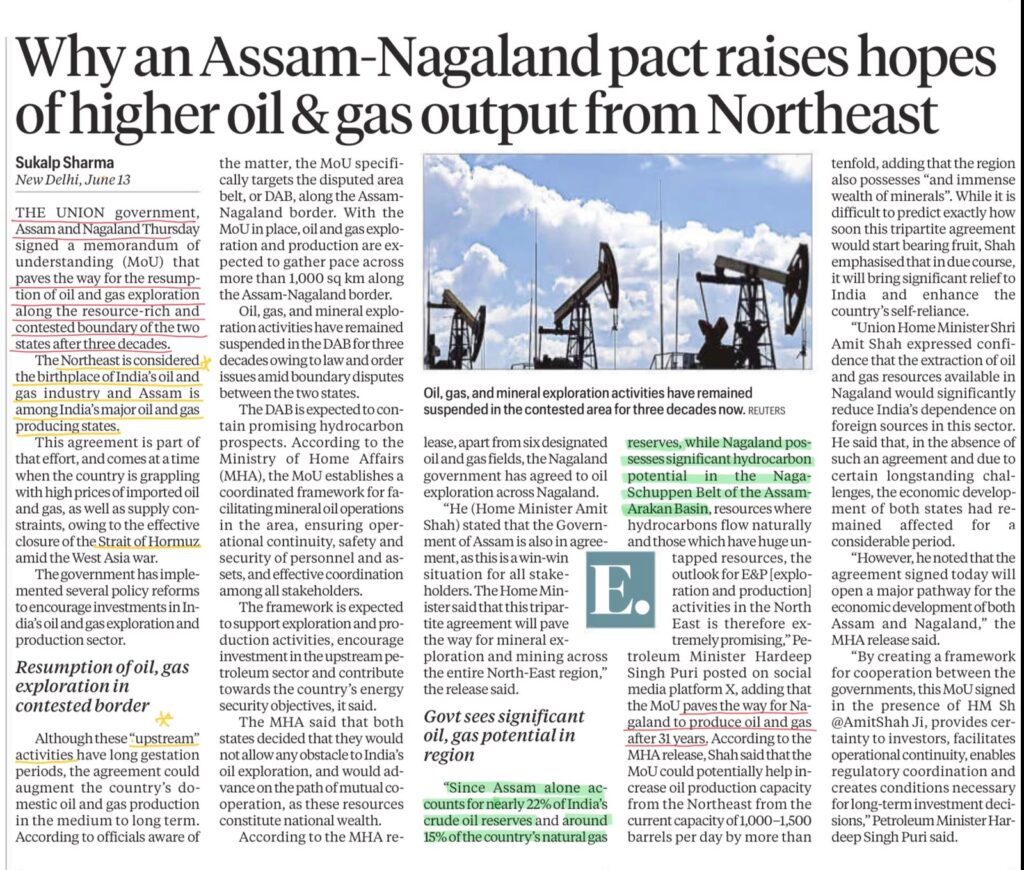
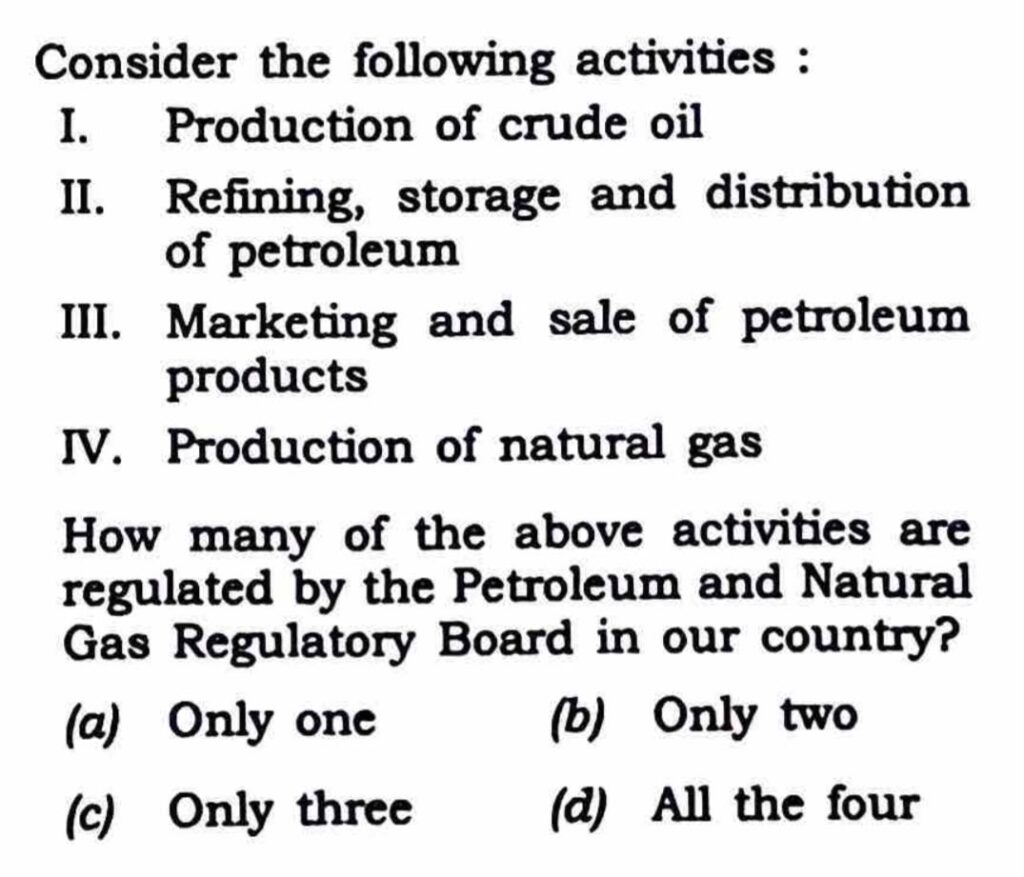
Assam Nagaland Oil and Gas MoU: Hydrocarbon Exploration, Energy Security & PNGRB Facts

Context:
The Centre, Assam and Nagaland have signed an MoU to resume oil and gas exploration in the Disputed Area Belt along the Assam–Nagaland border after nearly 30 years.

The agreement aims to unlock hydrocarbon resources, increase domestic production and strengthen India’s energy security.

Northeast Hydrocarbon Potential

  • Assam is the birthplace of India’s oil industry.
  • Digboi is one of India’s earliest oil centres.
  • Assam accounts for nearly 22% of India’s crude oil reserves.
  • Assam accounts for around 15% of India’s natural gas reserves.

Major Oil and Gas Fields

  • Digboi
  • Naharkatiya
  • Moran
  • Lakwa
  • Rudrasagar

Nagaland’s Potential

Nagaland has significant untapped hydrocarbon potential in the Naga Schuppen Belt of the Assam–Arakan Basin.

MoU Coverage

The MoU covers a resource-rich belt of over 1,000 sq km along the inter-state border.

Upstream and Downstream

Upstream

  • Exploration
  • Drilling
  • Production of crude oil and natural gas

Downstream

  • Refining
  • Processing
  • Storage
  • Transportation
  • Distribution
  • Marketing of petroleum products and natural gas

Petroleum and Natural Gas Regulatory Board

Status

  • Statutory body under the PNGRB Act, 2006

Functions

PNGRB regulates downstream activities only, such as:

  • Pipelines
  • City Gas Distribution
  • Transportation
  • Marketing

Important Limitation

PNGRB does not regulate upstream activities such as exploration and production.

PYQ Fact

Exploration and production of crude oil / natural gas fall outside PNGRB’s jurisdiction.

Transportation, distribution and marketing fall within PNGRB’s jurisdiction.

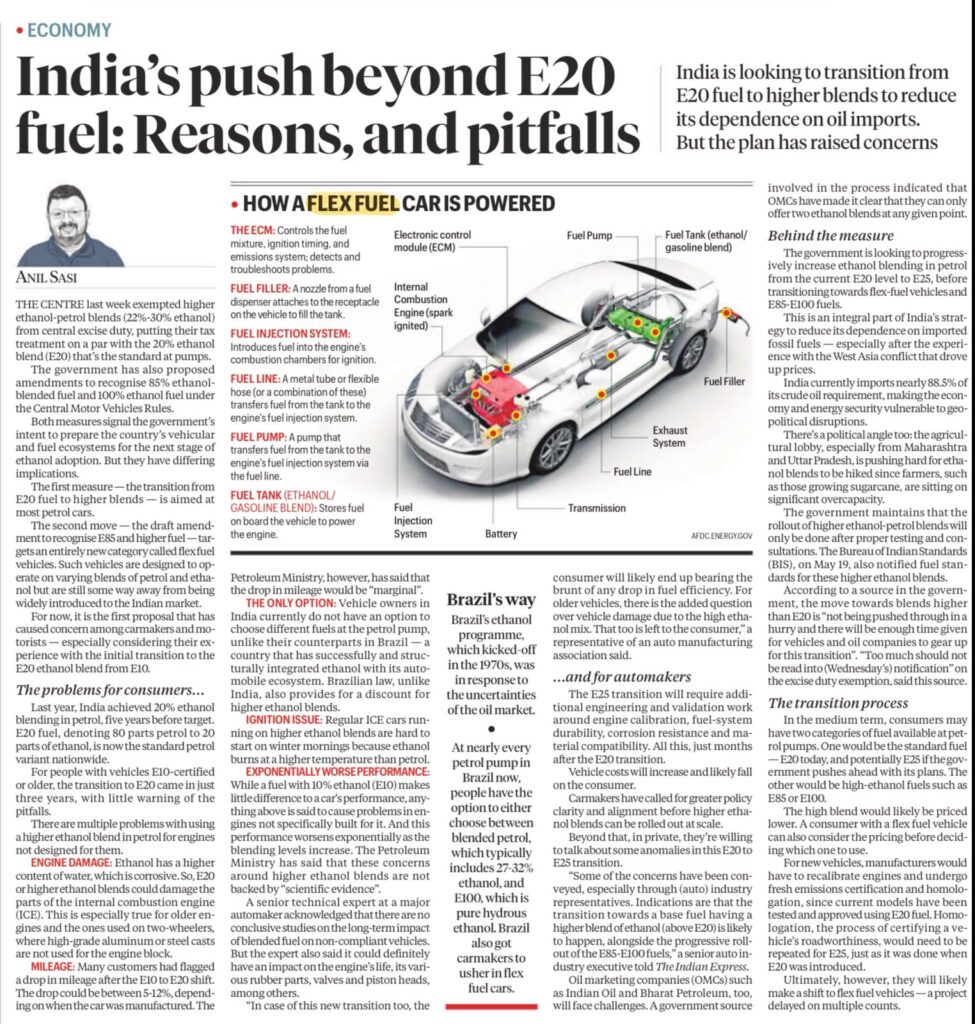
Higher Ethanol Blending in India: Beyond E20, Flex-Fuel Vehicles & Energy Security

Context: Higher Ethanol Blending in India
After achieving the 20% ethanol blending target, E20, ahead of schedule, India is preparing for higher ethanol blends such as E25, E30 and E85, along with adoption of flex-fuel vehicles to reduce crude oil imports and strengthen energy security.

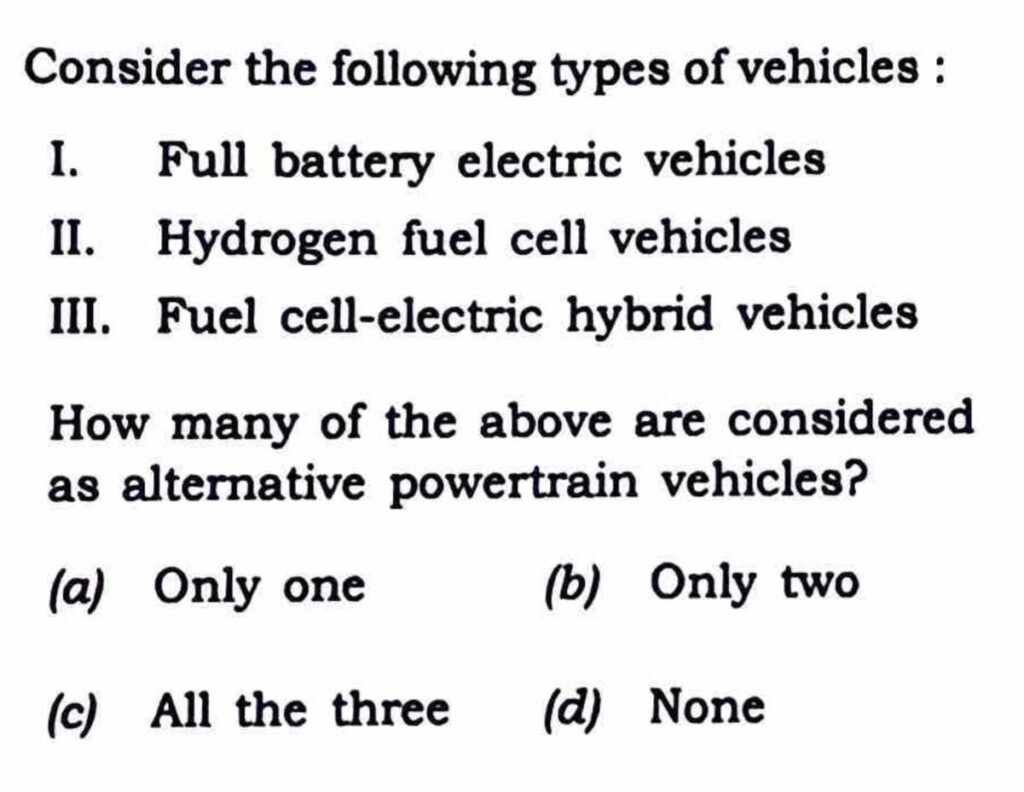
Alternative Powertrain Vehicles

Alternative Powertrain Vehicles use fuels or propulsion systems other than conventional petrol or diesel engines.

Important Types

  • Battery Electric Vehicle
  • Hydrogen Fuel Cell Vehicle
  • Fuel Cell-Electric Hybrid Vehicle
  • Flex-Fuel Vehicle

Flex-Fuel Vehicle

A Flex-Fuel Vehicle can run on different petrol-ethanol blends.

How It Works

It uses an Engine Control Module, an onboard computer that detects the fuel blend and automatically adjusts engine performance.

Its engine and fuel system components are designed to handle higher ethanol content.

Ethanol Blends

E20

  • 20% Ethanol
  • 80% Petrol
  • Current national target achieved

E85

  • 85% Ethanol
  • 15% Petrol
  • Requires flex-fuel vehicles and supporting infrastructure

Why is India Moving Beyond E20?

  • India imports nearly 85% of its crude oil requirement.
  • Higher ethanol blending can further reduce import dependence.
  • Supports domestic biofuel production.
  • Supports farmer incomes.
  • Builds a long-term flex-fuel ecosystem.

Long-Term Roadmap

E20
→ Higher Ethanol Blends
→ Flex-Fuel Ecosystem

Brazil’s Experience

  • Ethanol programme started in the 1970s.
  • Flex-fuel vehicles dominate the market.
  • Consumers can choose petrol, ethanol or blends at fuel stations.

India’s Challenges

  • Most vehicles are currently optimised for E20.
  • Higher ethanol blends may reduce mileage because ethanol has lower energy content.
  • Vehicle modification is required.
  • Fuel infrastructure needs to be upgraded.
  • Adequate ethanol supply must be ensured.
  • Food vs fuel concerns may arise if feedstock demand increases.
About the UPSC Civil Services Examination (UPSC CSE)

The UPSC Civil Services Examination (CSE) is one of the most competitive and esteemed examinations in India, conducted by the Union Public Service Commission to recruit officers for services such as the Indian Administrative Service (IAS), Indian Police Service (IPS), Indian Foreign Service (IFS), and others. The exam comprises three stages — Prelims, Mains, and the Personality Test (Interview) — designed to test a candidate’s knowledge, aptitude, decision-making, and leadership skills.


How to Prepare Effectively for UPSC CSE

Cracking the UPSC CSE requires a deep understanding of the syllabus, consistent revision, structured answer writing, and smart test-taking strategies. The Prelims test analytical and conceptual clarity, the Mains focuses on critical thinking, articulation, and subject mastery, while the Interview assesses presence of mind, ethical judgment, and personality traits relevant to public service.

At UnderStand UPSC, we empower aspirants with a personalized and focused approach to each stage of the exam.


Why Choose UnderStand UPSC?

UnderStand UPSC is a mentorship-driven platform offering a clear, clutter-free strategy to tackle the Civil Services Examination. Our programs like Transform (for beginners and intermediate learners) and Conquer (for advanced mains preparation) provide structured study plans, syllabus-wise video content, interactive live sessions, and answer writing support.

We emphasize:

  • Concept clarity through topic-wise lectures

  • Test series designed around real UPSC standards

  • Personalized mentorship in small groups

  • Regular performance tracking and peer benchmarking

  • Doubt-clearing sessions, current affairs analysis, and monthly magazines


Join the UnderStand UPSC Learning Community

Our mission is to make UPSC preparation less overwhelming and more strategic. We combine mentorship, discipline, and academic rigor to help you clear CSE with confidence. Whether you’re preparing from Delhi, Mumbai, Bangalore, or a remote village — our online-first model ensures quality guidance reaches every corner of India.

Join the thousands of aspirants who trust UnderStand UPSC to guide their journey toward becoming civil servants.

Stay connected with us through our Telegram, YouTube, and Instagram channels for daily tips, strategies, and updates.

Copyright © 2026 USARAMBHA EDUCATION (UnderStand UPSC). All Rights Reserved.

Fill out the form

If you have any queries related to
GS Foundation 2027/28.