Context: Supreme Court judgment on sex work
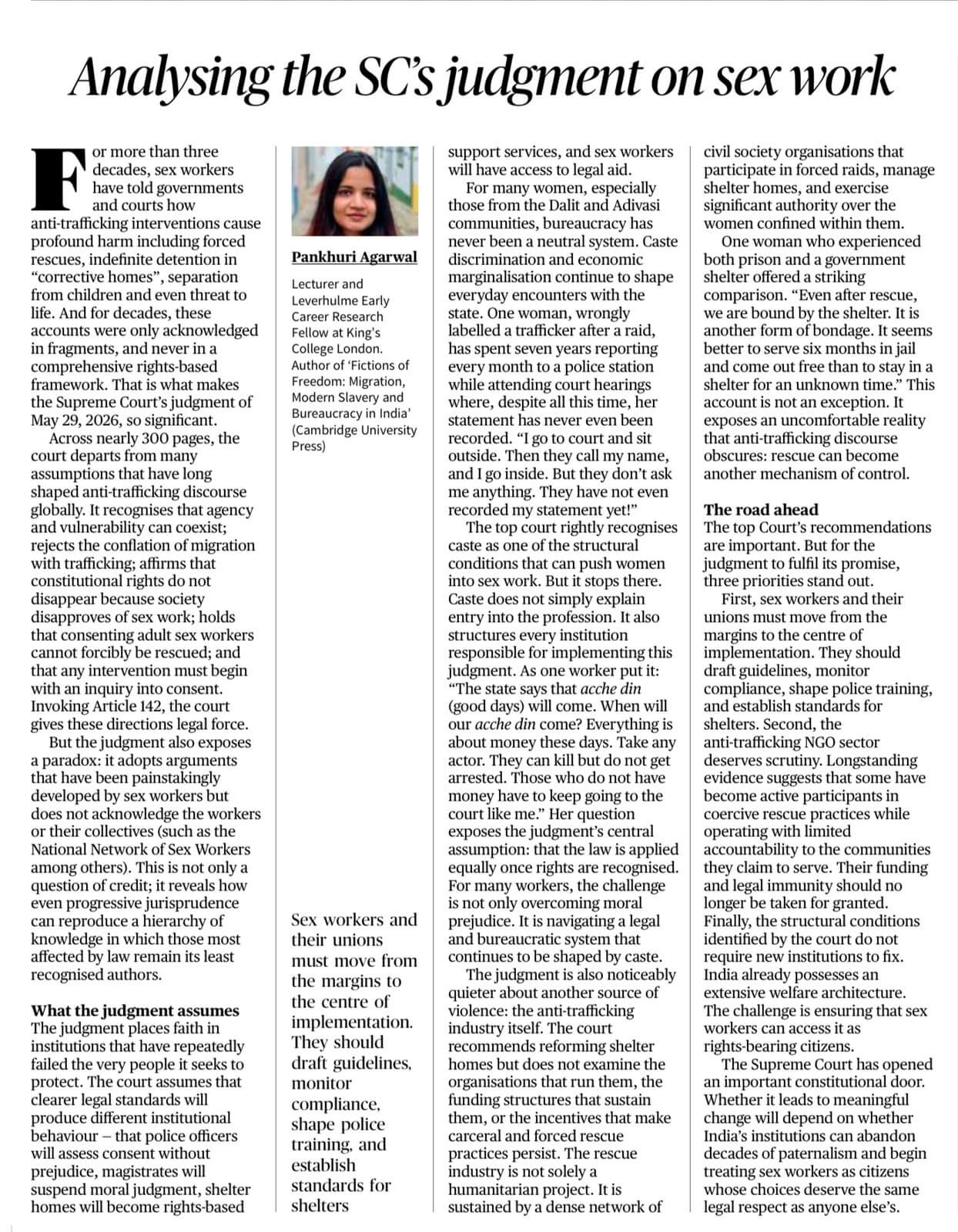
The Supreme Court’s 2026 judgment in Budhadev Karmaskar v. State of West Bengal strengthens a rights-based approach towards sex workers.
The judgment recognises dignity, consent and constitutional protection, while distinguishing adult consensual sex work from trafficking and exploitation.
Core Principle
The judgment recognises that adult consensual sex work is not illegal.
However, trafficking, exploitation and coercion remain punishable.
This distinction is important because sex workers are often treated as offenders instead of rights-bearing individuals.
Rights Recognised
The judgment emphasises that sex workers are entitled to dignity, safety and constitutional protection.
This flows from Article 21, which protects life and personal liberty.
The right to live with dignity applies to all persons, including vulnerable and marginalised groups.
Consent Matters
Rescue and rehabilitation cannot be forced without informed consent.
The judgment cautions against coercive rescue practices.
A person cannot be forcibly placed in a shelter home or rehabilitation system without considering their wishes and circumstances.
Structural Causes
The Court recognised that sex work is often linked with structural vulnerabilities.
These include:
- Poverty
- Caste discrimination
- Lack of livelihood options
- Gender inequality
- Social exclusion
- Weak welfare access
Therefore, the response must not be only policing or rescue.
It must also include welfare, livelihood support and social security.
Institutional Reform
Police, shelter homes and welfare agencies must adopt a rights-based approach.
They should avoid discrimination, abuse and moral policing.
Sex workers should have access to healthcare, legal aid, education and welfare schemes.
Article 142
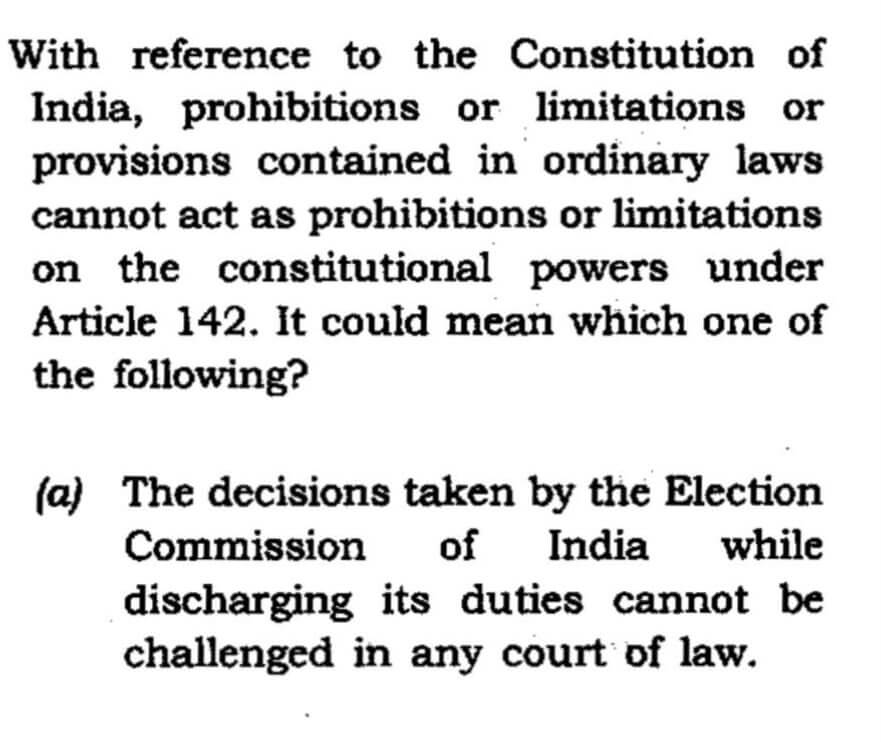
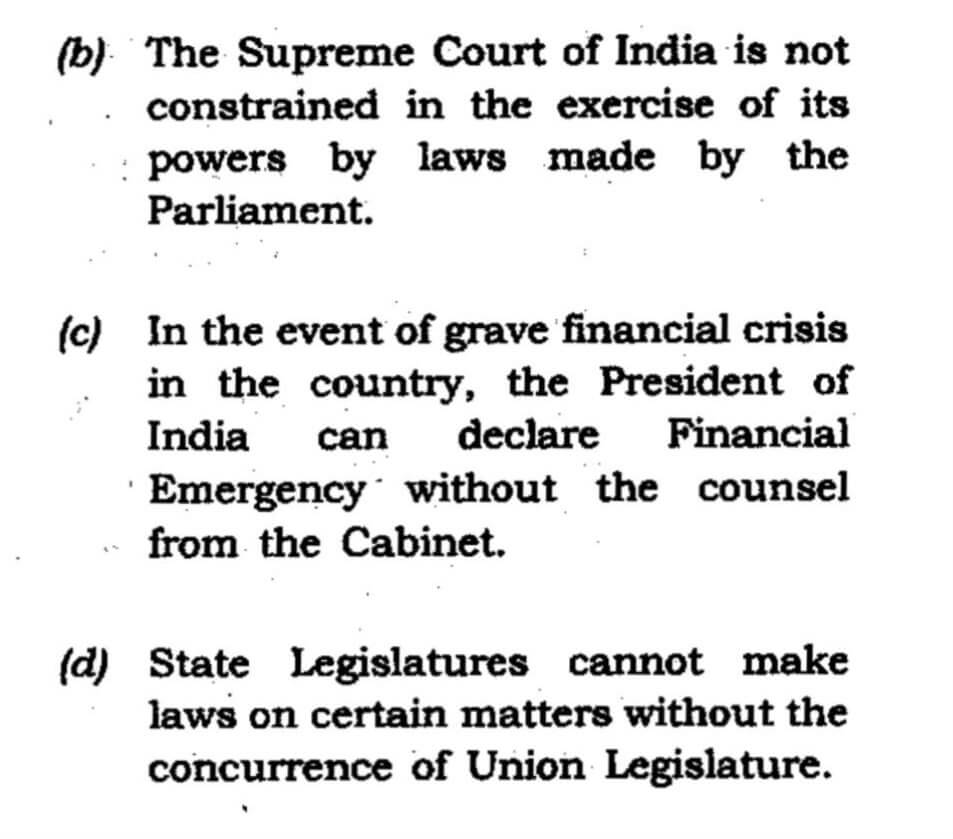
Article 142 gives the Supreme Court power to pass orders necessary for complete justice.
In this case, the Court used Article 142 to frame nationwide operational guidelines for protecting the rights of sex workers.
Challenges
Major challenges include:
- Coercive rescue practices
- Social stigma
- Discrimination by authorities
- Weak livelihood support
- Poor access to healthcare
- Lack of legal aid
- Limited participation of sex worker collectives in policymaking
Way Forward
India should move from a rescue-centric approach to a rights-based rehabilitation model.
Police and welfare institutions must be sensitised.
Healthcare, education, legal aid and social security should be ensured.
Sex worker collectives should be involved in policy design and implementation.
Key Takeaway
The judgment shifts the focus from morality and coercive rescue to dignity, consent and constitutional rights. It recognises sex workers as rights-bearing citizens entitled to protection and welfare.