Why in news
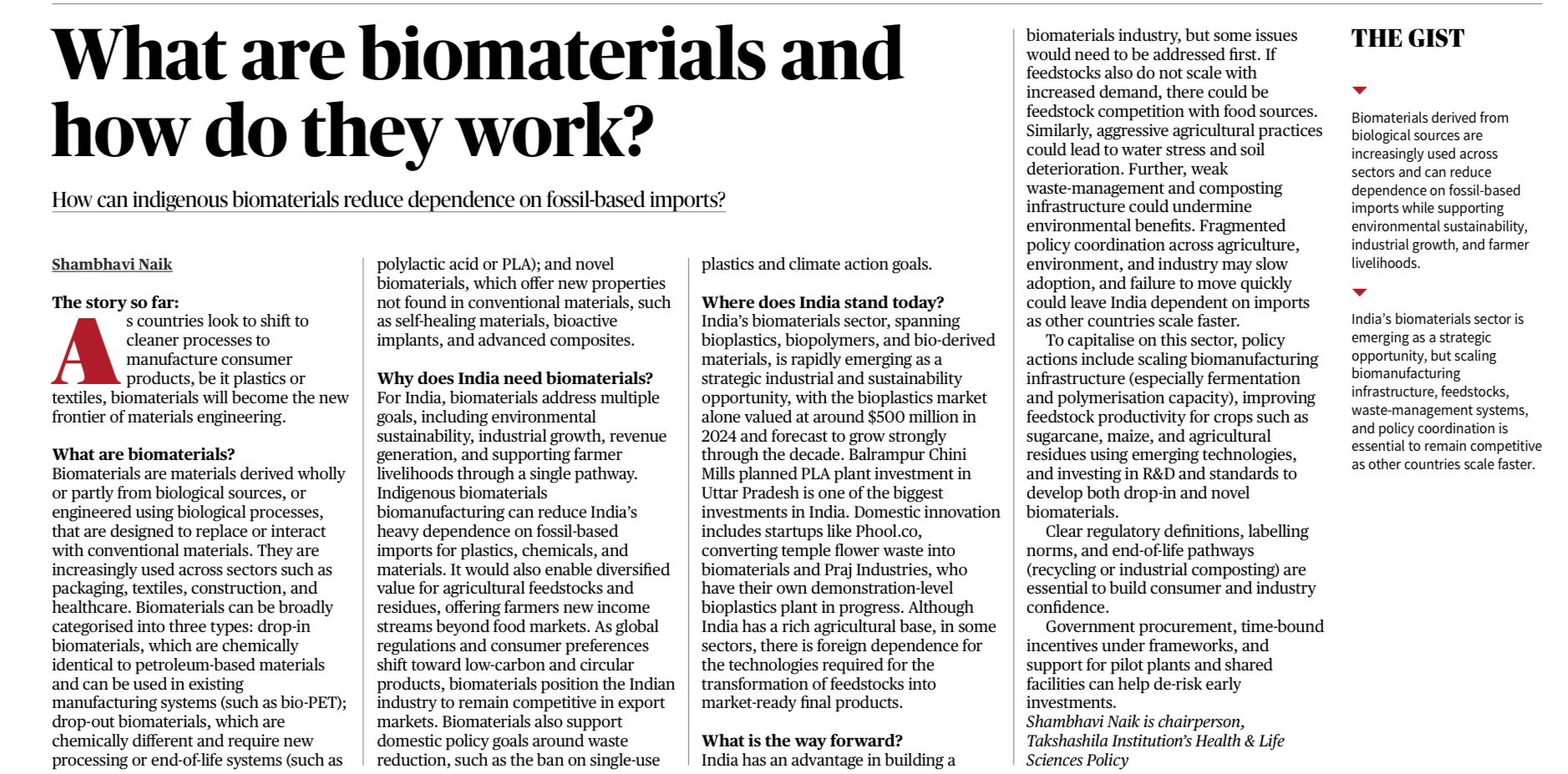
- The shift towards low-carbon manufacturing has increased focus on biomaterials to reduce fossil-fuel dependence, meet climate goals and support Indian farmers and industry.
What are biomaterials
- Biomaterials are materials derived fully or partly from biological sources, or produced using biological processes.
- They are used as alternatives to conventional plastics and chemicals.
Applications
- Packaging
- Textiles
- Construction
- Healthcare
- Implants
Types
1. Drop-in biomaterials
- Same as plastic, but made from plants
- Can be used without changing factories or machines
- Example: Bio-PET (Bio-based Polyethylene Terephthalate)
- Think: “Plant-based plastic, no system change”
2. Drop-out biomaterials
- New kind of material, different from plastic
- Require new machines or disposal methods
- Example: PLA (Polylactic Acid)
- Think: “New material, new system needed”
3. Novel biomaterials
- Advanced, high-tech materials
- Possess special properties such as self-healing and medical use
- Examples: Bio-implants, smart materials
- Think: “Future technology materials”