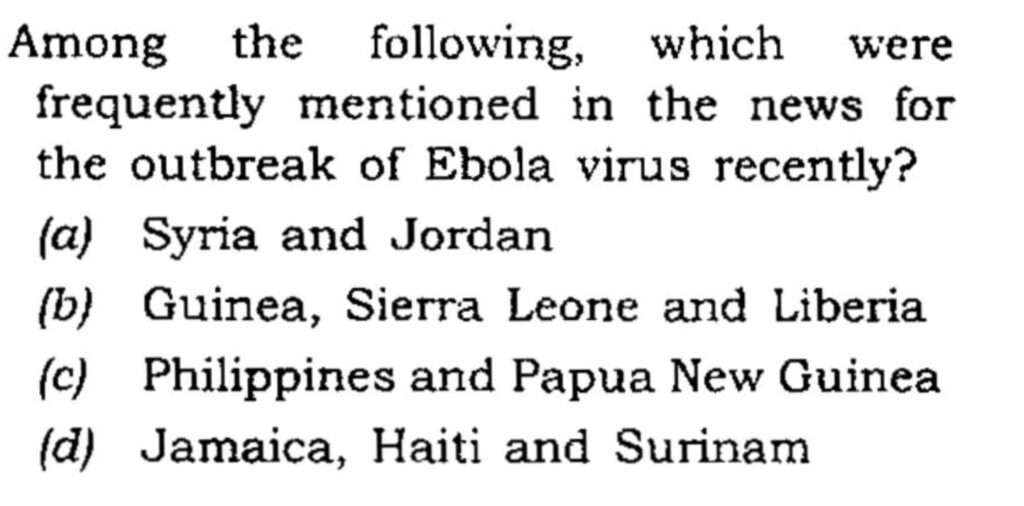
Context: Ebola Outbreak in Congo
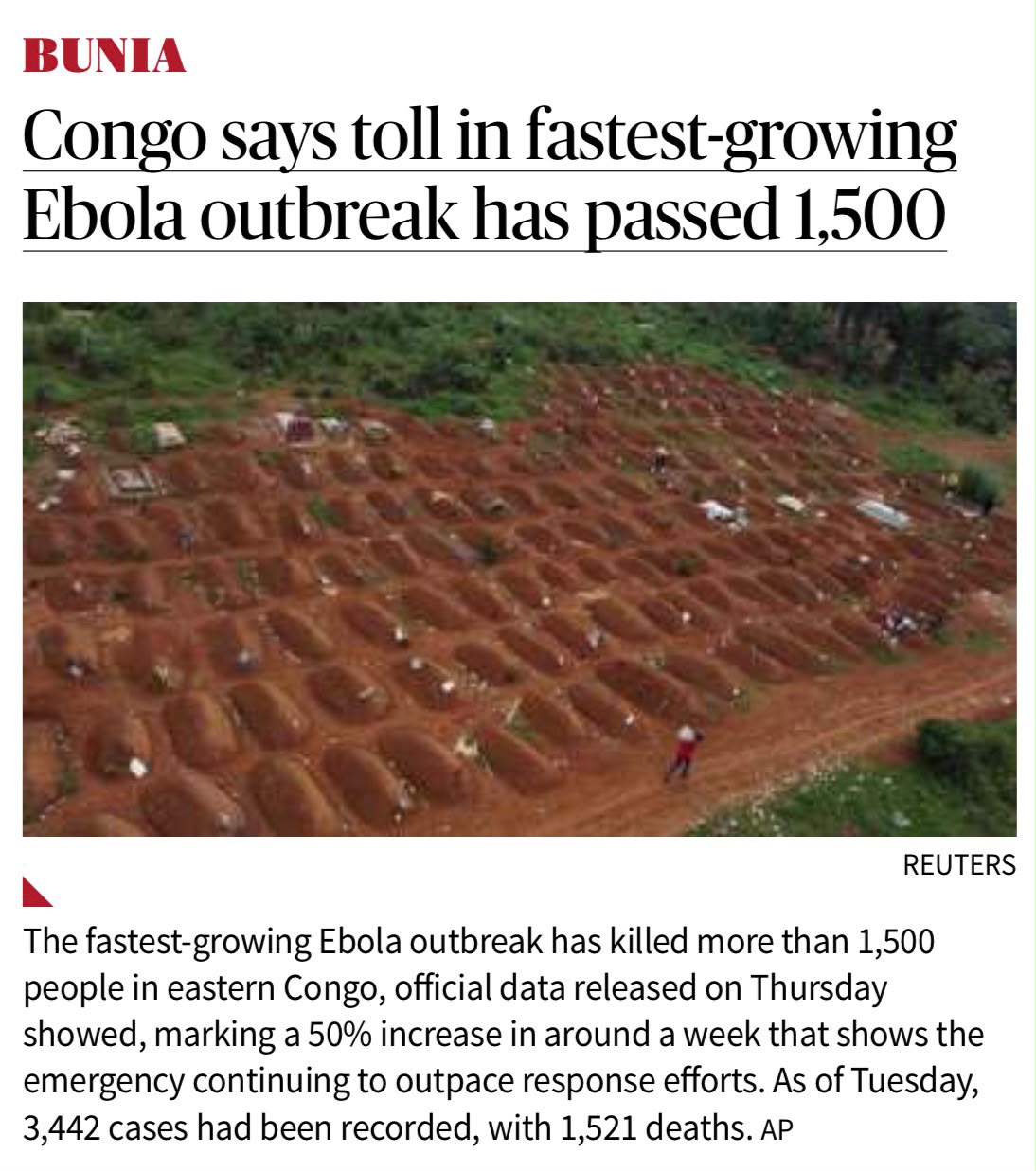
The Democratic Republic of the Congo is witnessing a major Ebola outbreak.
The toll has crossed 1,500 deaths, highlighting the importance of disease surveillance, vaccination, early detection and global health preparedness.
Ebola Virus Disease
Ebola Virus Disease is a viral haemorrhagic fever caused by the Ebolavirus.
It belongs to the Filoviridae family.
The disease has a high fatality rate and can spread rapidly in areas with weak health systems.
Transmission
Ebola spreads through direct contact with:
- Infected blood
- Body fluids
- Contaminated objects
- Unsafe burial practices
- Infected animals in some cases
It does not spread like common airborne infections.
Close contact with infected persons or contaminated materials is the major route of transmission.
Symptoms
Common symptoms may include:
- Fever
- Weakness
- Muscle pain
- Headache
- Vomiting
- Diarrhoea
- Bleeding in severe cases
Severe cases may lead to organ failure, shock and death.
Prevention and Control
Prevention depends on:
- Early detection
- Isolation of cases
- Contact tracing
- Infection control in hospitals
- Safe burial practices
- Public awareness
- Vaccination
The Ervebo vaccine is used against Ebola virus disease.
Democratic Republic of the Congo
The Democratic Republic of the Congo is located in Central Africa.
It is one of Africa’s largest countries.
It is traversed by the Congo River, which is Africa’s second-longest river.
The DRC shares borders with nine countries:
- Republic of the Congo
- Central African Republic
- South Sudan
- Uganda
- Rwanda
- Burundi
- Tanzania
- Zambia
- Angola
Ecological Importance
The DRC is part of the Congo Basin.
The Congo Basin contains the world’s second-largest tropical rainforest after the Amazon.
This makes the region ecologically significant but also challenging for public health response due to difficult terrain, forested zones and remote settlements.
Key Takeaway
The Ebola outbreak in Congo shows that infectious disease control requires strong surveillance, vaccination, local trust, health infrastructure and international cooperation.