
The Information Technology Act, 2000 is India’s primary legislation governing electronic commerce, digital transactions, and cybercrime. It came into force...
Constitutional Provision Article 23(1) provides: “Traffic in human beings and begar and other similar forms of forced labour are prohibited...
Meaning A Private Member’s Bill is a legislative proposal introduced in either House of Parliament by a Member of Parliament...
Constitutional Basis The power to punish for contempt is a constitutional power of the higher judiciary in India. The statutory...
Introduction The Forest Rights Act (FRA) 2006 was enacted to recognize and vest forest rights and occupation in forest land...
Constitutional Position of the Governor The Governor is the constitutional head of a State under Part VI of the Constitution...
ContextSupreme Court has referred petitions to a Constitution Bench to examine whether Section 44(3) of the Digital Personal Data Protection...
JULY CHARTER What is it? A post-uprising reform blueprint proposed under Muhammad Yunus’s transition agenda; approved via referendum with 60.2%...
ContextOdisha’s Assembly numbers create a scenario where BJP, despite not having enough MLAs on its own, is confident of winning...
ContextThe Prime Minister inaugurated the new PMO Seva Teerth and Central Secretariat buildings Kartavya Bhavan 1 & 2, calling them...
A Platform OF The Students
For The Students
By The Students

Follow Us On
The UPSC Civil Services Examination (CSE) is one of the most competitive and esteemed examinations in India, conducted by the Union Public Service Commission to recruit officers for services such as the Indian Administrative Service (IAS), Indian Police Service (IPS), Indian Foreign Service (IFS), and others. The exam comprises three stages — Prelims, Mains, and the Personality Test (Interview) — designed to test a candidate’s knowledge, aptitude, decision-making, and leadership skills.
Cracking the UPSC CSE requires a deep understanding of the syllabus, consistent revision, structured answer writing, and smart test-taking strategies. The Prelims test analytical and conceptual clarity, the Mains focuses on critical thinking, articulation, and subject mastery, while the Interview assesses presence of mind, ethical judgment, and personality traits relevant to public service.
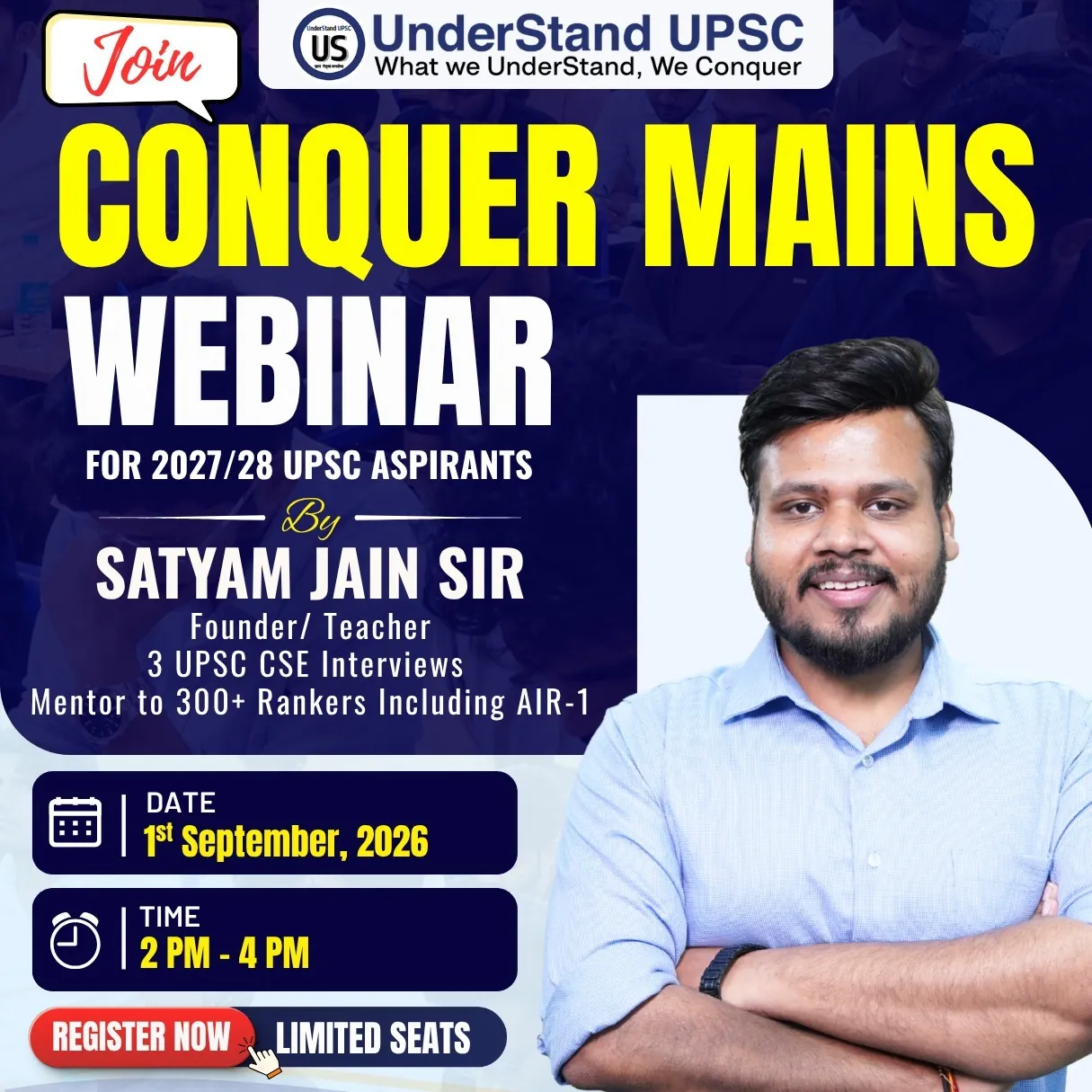
At UnderStand UPSC, we empower aspirants with a personalized and focused approach to each stage of the exam.
UnderStand UPSC is a mentorship-driven platform offering a clear, clutter-free strategy to tackle the Civil Services Examination. Our programs like Transform (for beginners and intermediate learners) and Conquer (for advanced mains preparation) provide structured study plans, syllabus-wise video content, interactive live sessions, and answer writing support.
We emphasize:
Concept clarity through topic-wise lectures
Test series designed around real UPSC standards
Personalized mentorship in small groups
Regular performance tracking and peer benchmarking
Doubt-clearing sessions, current affairs analysis, and monthly magazines
Our mission is to make UPSC preparation less overwhelming and more strategic. We combine mentorship, discipline, and academic rigor to help you clear CSE with confidence. Whether you’re preparing from Delhi, Mumbai, Bangalore, or a remote village — our online-first model ensures quality guidance reaches every corner of India.
Join the thousands of aspirants who trust UnderStand UPSC to guide their journey toward becoming civil servants.
Stay connected with us through our Telegram, YouTube, and Instagram channels for daily tips, strategies, and updates.
Copyright © 2026 USARAMBHA EDUCATION (UnderStand UPSC). All Rights Reserved.
Downloading the free Agriculture Short Notes



