
Source: The Hindu | Page: 6 | Tags: 3 July 2026, GS3, Private Space Sector, Science & Technology, Space Technology
Context: Vikram-1 private orbital rocket
Skyroot Aerospace has announced the launch window of 12 July to 4 August 2026 for Mission Aagaman, the maiden flight of Vikram-1, India’s first privately developed orbital launch vehicle.
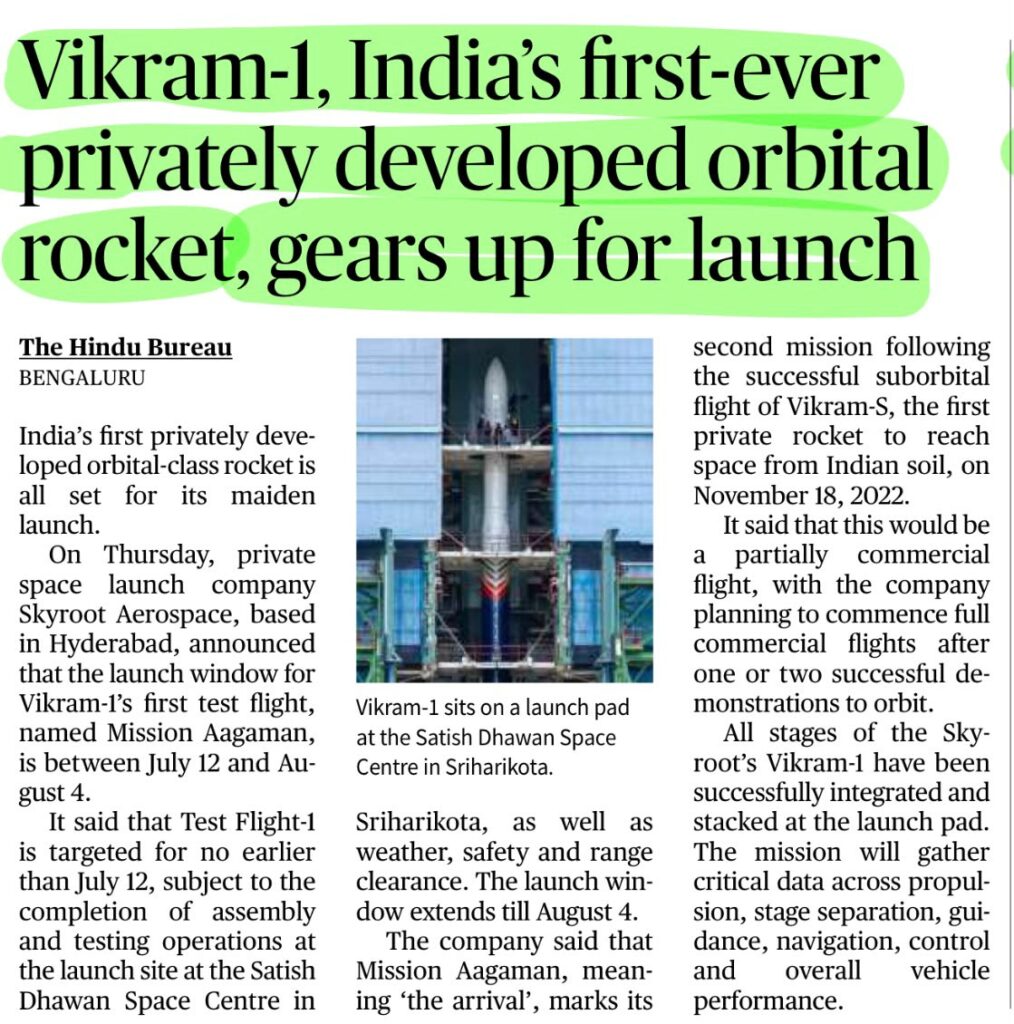
Vikram-1
Developed By
- Skyroot Aerospace
Mission Aagaman
- Maiden flight of Vikram-1.
- Launch site: Satish Dhawan Space Centre, Sriharikota.
Purpose
Vikram-1 is designed to place small satellites into Low Earth Orbit.
Low Earth Orbit
Low Earth Orbit generally refers to an orbit between:
- 160 km and 2,000 km above Earth
Orbital Rocket
An orbital rocket is a launch vehicle capable of achieving orbital velocity and placing satellites into orbit.
Orbital Velocity
- Around 7.8 km per second
Orbital vs Suborbital Rocket
Orbital Rocket
- Reaches space and places payload into orbit.
Suborbital Rocket
- Reaches space but does not enter orbit.
Vikram-S vs Vikram-1
Vikram-S, 2022
- Suborbital rocket
Vikram-1
- Orbital launch vehicle
Significance
- Reflects success of India’s space sector reforms of 2020.
- Strengthens India’s private space ecosystem.
- Supports commercial launch capability.
- Helps India enter the global small-satellite launch market.
- Reduces dependence only on public-sector space infrastructure.
- Encourages start-ups and private innovation in space technology.
Key Institutions
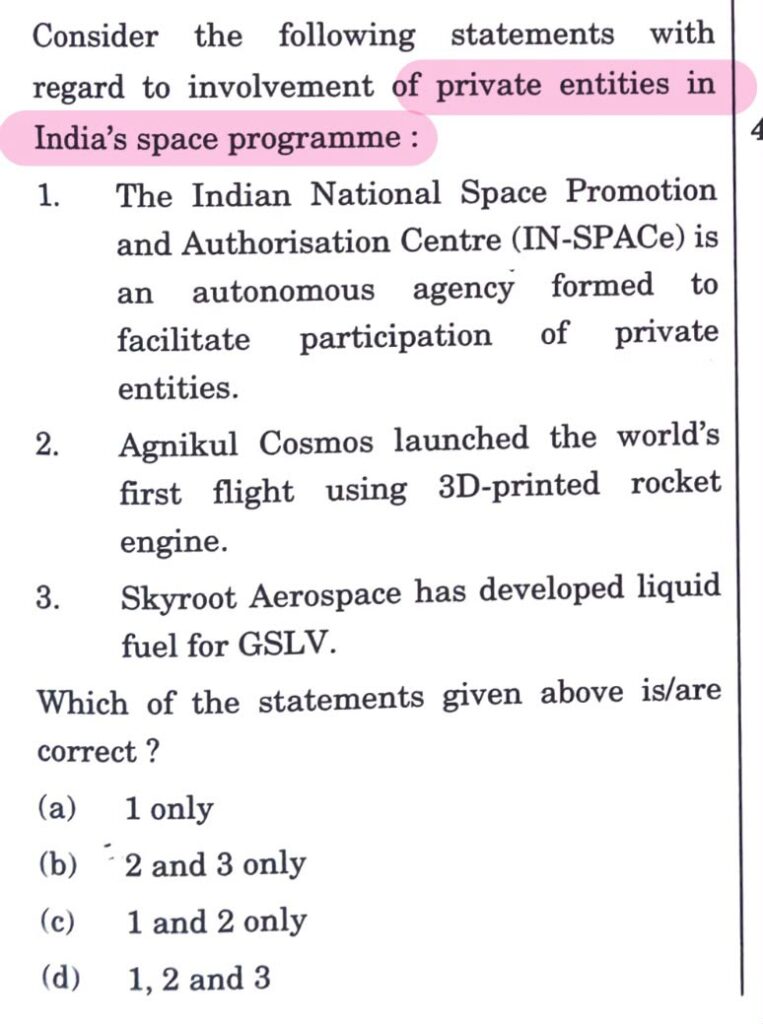
IN-SPACe
Indian National Space Promotion and Authorisation Centre
- Regulates and promotes private space activities.
NSIL
- Commercial arm of ISRO.
UPSC Value Addition
Private sector participation in space can help India in:
- Small satellite launches
- Commercial space services
- Space manufacturing
- Innovation ecosystem
- Global launch market competitiveness
- Strategic autonomy in space technology







