15 April 2026 | Daily Current Affairs

West Asia conflict poverty impact: UNDP warns rise in India poverty

Context: West Asia conflict poverty impact

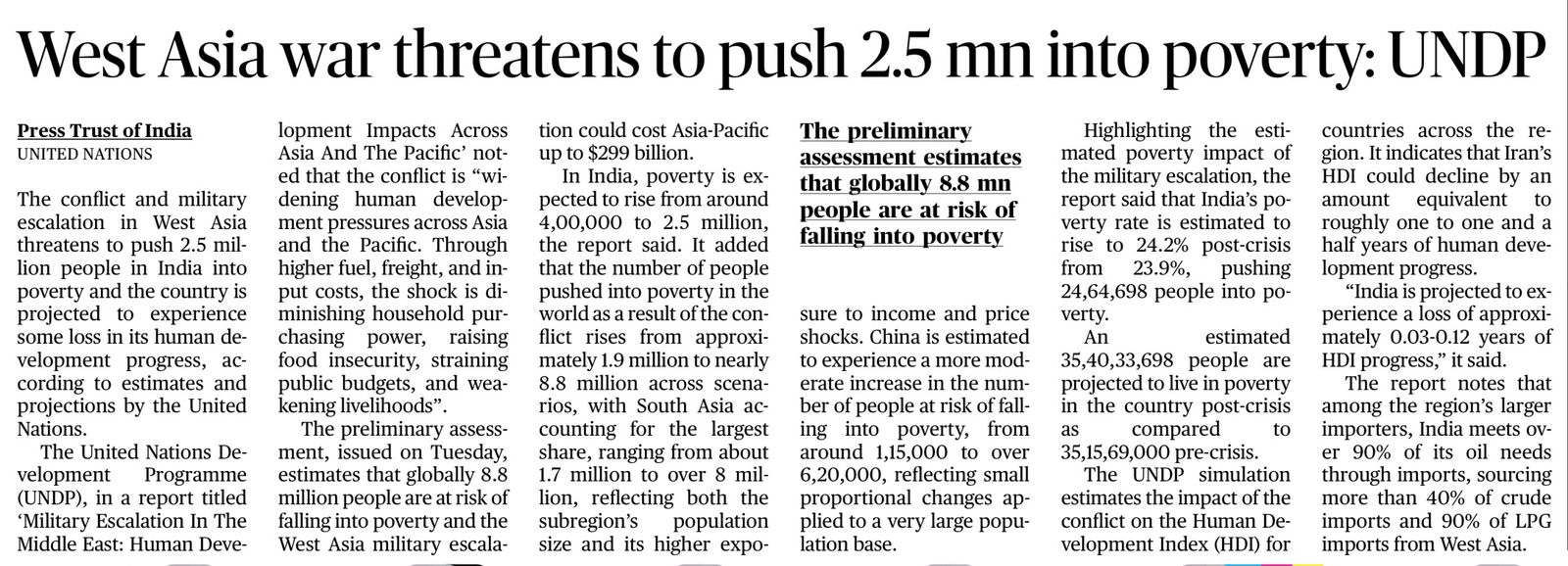
A United Nations Development Programme (UNDP) report titled “The Impact of the West Asia Conflict on Sustainable Development in Asia and the Pacific” highlights that the ongoing West Asia conflict may increase poverty and reverse development gains.
West Asia conflict poverty impact

Key Data

• 2.5 million people in India at risk of falling into poverty.
• 8.8 million people globally at risk.
• India’s poverty rate: 23.9% → 24.2%.
• India imports >90% crude oil, including >40% crude and ~90% Liquefied Petroleum Gas (LPG) from West Asia.
• Countries like Iran may lose 1–1.5 years of Human Development Index (HDI) progress.

Reasons for Rise in Poverty

  1. Rise in crude oil prices → increases overall energy cost.
  2. Higher transport and logistics cost → raises prices of goods.
  3. Food and essential inflation → reduces real income of poor households.
  4. Pressure on jobs and incomes due to slowdown in economic activity.
  5. Fiscal stress on government → limits welfare spending.
US Iran nuclear issue: key disputes on uranium, Strait of Hormuz, and regional conflict

Context: US Iran nuclear issue

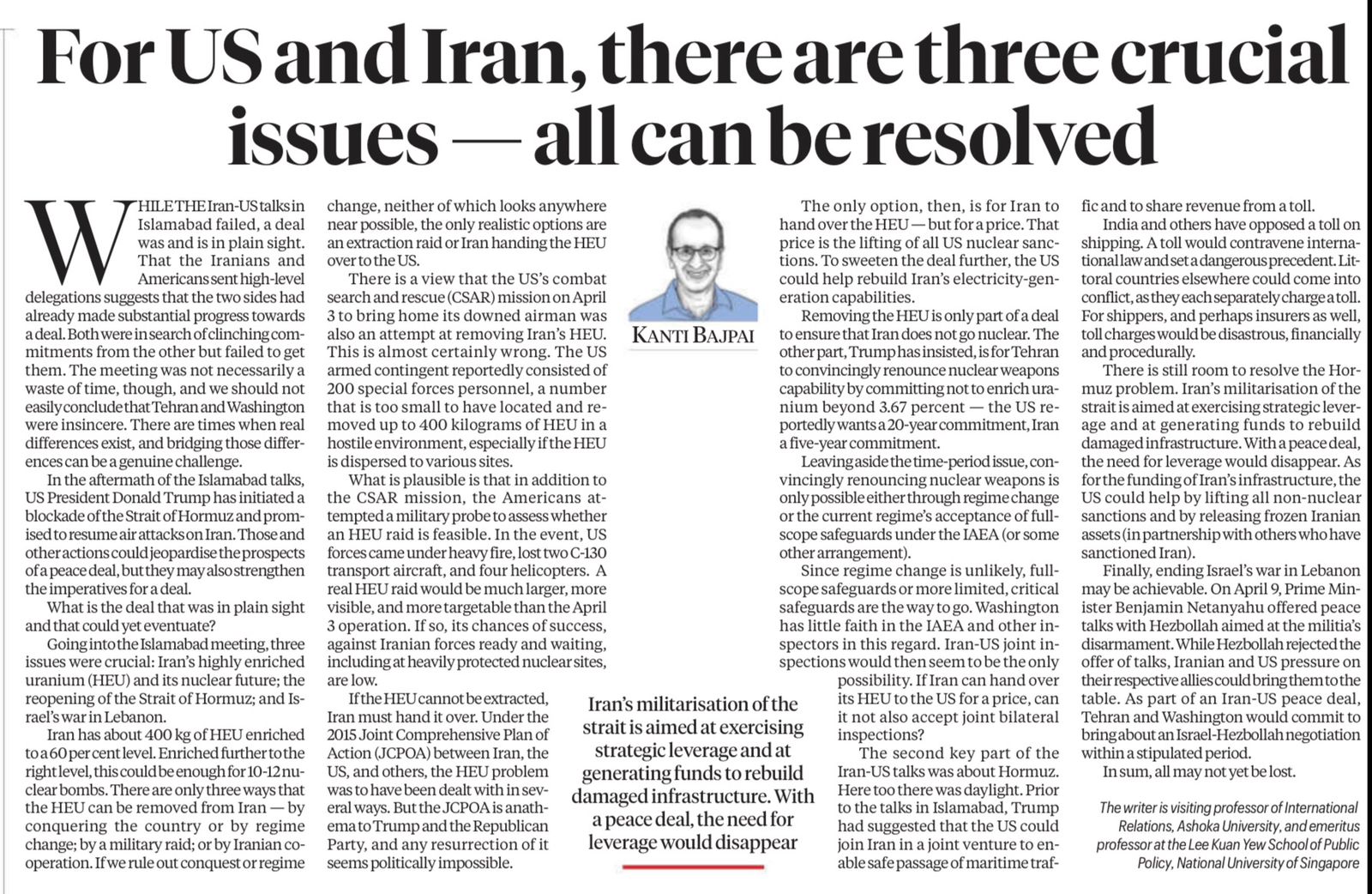
Following Iran–United States (US) talks in Islamabad, both sides have made progress, but disagreements persist over nuclear capability, regional security, and control of strategic routes.

US Iran nuclear issue

Nuclear Issue (Highly Enriched Uranium)

• Problem: Iran possesses about 400 kg of uranium enriched up to 60%, close to weapons-grade (sufficient for ~10–12 nuclear bombs if further enriched).
• Resolution: Iran to hand over or dilute HEU and cap enrichment at 3.67%; in return, the US to lift nuclear sanctions, allow International Atomic Energy Agency (IAEA) inspections, and support peaceful nuclear use.

Strait of Hormuz

• Problem: Iran is militarising the Strait of Hormuz and considering levying tolls on shipping, threatening a key global oil transit route.
• Resolution: The US to ease non-nuclear sanctions and release frozen Iranian assets, reducing Iran’s need for coercive leverage and ensuring free and secure maritime movement.

Israel–Hezbollah Conflict (Lebanon)

• Problem: Iran backs Hezbollah, while the US supports Israel, prolonging conflict in Lebanon.
• Resolution: US and Iran to pressure their respective allies to initiate negotiations, aiming for time-bound de-escalation.

India heatwave legislative gap: lack of legal protection for workers in heat crisis

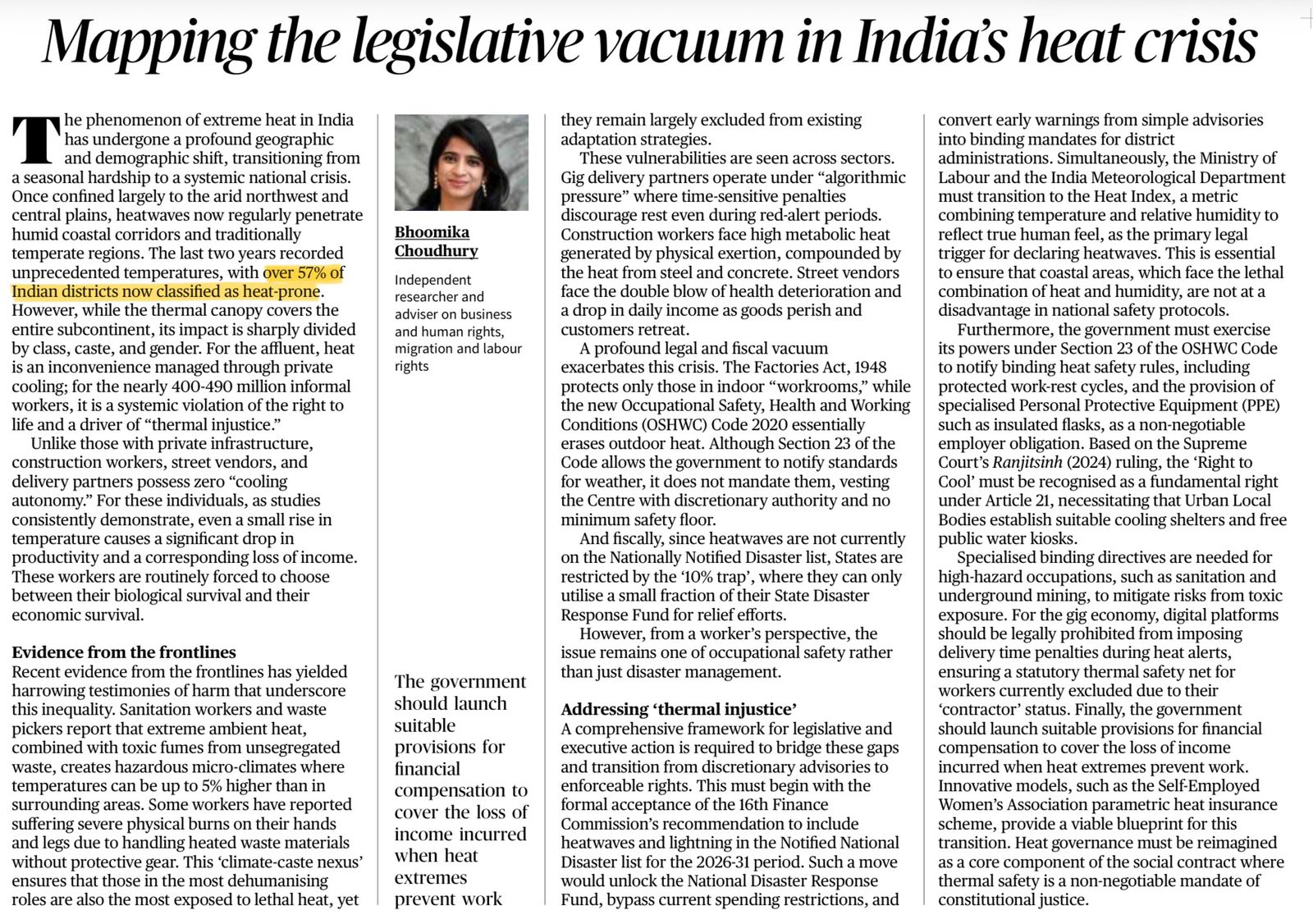
Context: India heatwave legislative gap

India’s heatwaves have evolved into a structural national crisis, with over 57% of districts classified as heat-prone, exposing serious gaps in labour protection, disaster governance, and legal enforcement—especially for informal workers.

India heatwave legislative gap
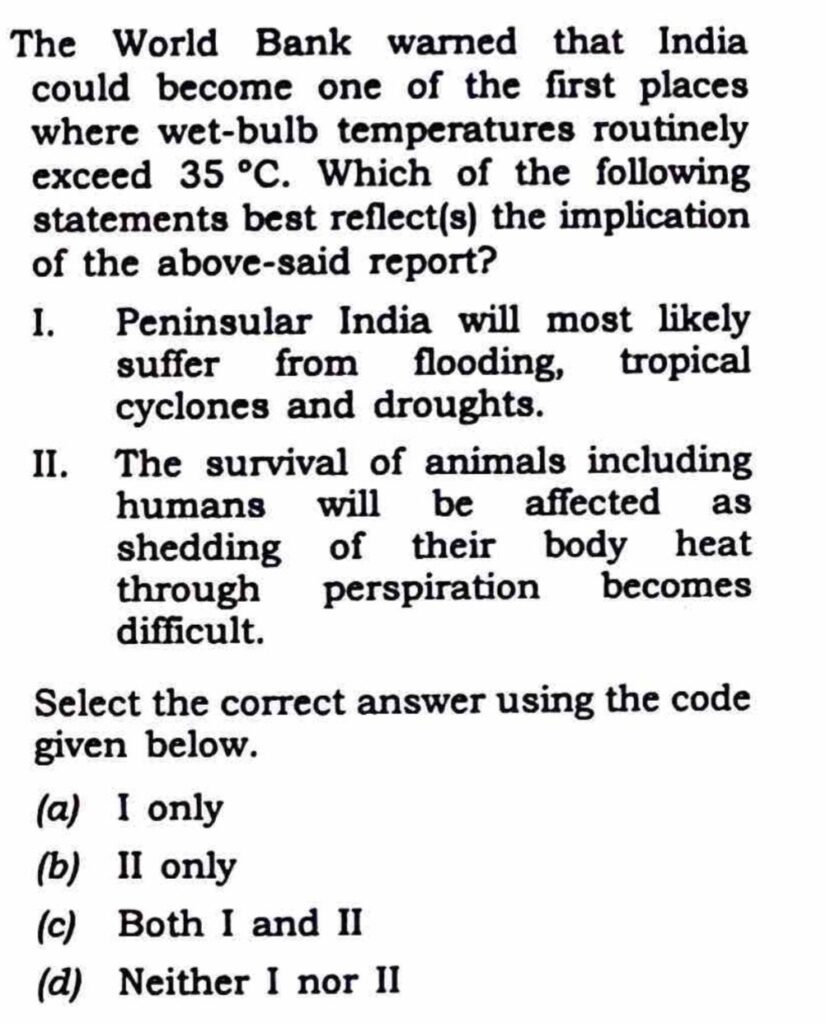
PYQ – 2025, Ans – C

Key Information

Nature of the Crisis (Thermal Inequality)

• Heatwaves now affect coastal and temperate regions.
• Around 400–490 million informal workers face direct exposure.
• Results in income loss + health risks → termed thermal injustice.

Vulnerable Groups

• Construction workers, sanitation workers, street vendors, gig workers.
• Face heat stress + loss of livelihood simultaneously.

Legislative Gap (Core Issue)

• Factories Act, 1948 → limited to indoor workplaces.
Occupational Safety, Health and Working Conditions Code, 2020 (OSHWC)
Section 23: Government can set safety standards (including heat), but not mandatory.
• Implementation exists (Code notified, draft rules issued), but no uniform, enforceable heat protection law.
• Heatwaves not fully integrated into disaster funding framework → limited fiscal response.

What Needs to be Done

• Make heat safety rules legally binding (not advisory).
• Include heatwaves in Notified Disaster List → better funding access.
• Ensure work-rest cycles, protective gear, cooling shelters, water access.
• Provide income compensation during extreme heat days.

Supreme Court Link

• Ranjitsinh v. Union of India (2024)
• Recognised “Right to Cool” under Article 21 (Right to Life).

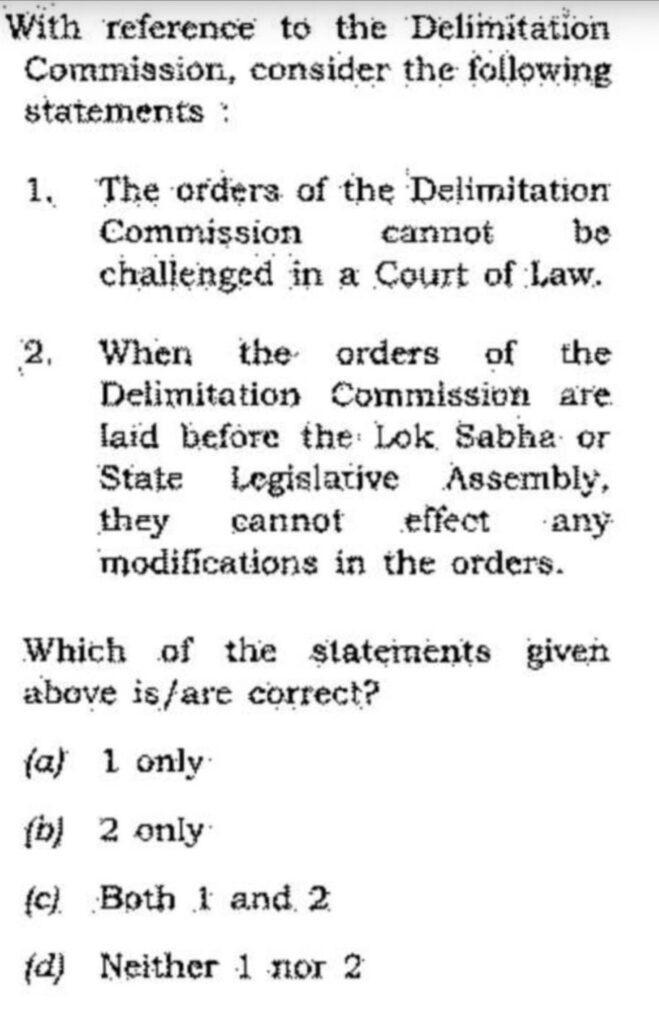
Women reservation delimitation issue: concerns over federal balance and seat redistribution

Context: women reservation delimitation issue

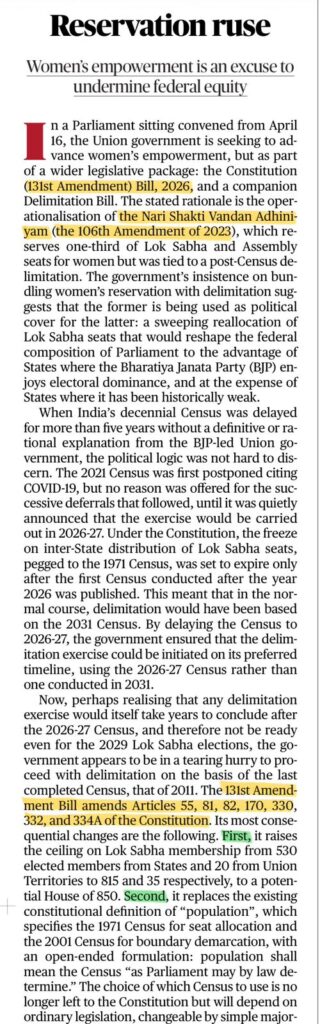
The Union government has introduced the Constitution (131st Amendment) Bill, 2026 along with a Delimitation Bill to implement the Nari Shakti Vandan Adhiniyam, 2023 (106th Constitutional Amendment), linking 33% women’s reservation with delimitation after Census.

PYQ – 2012, Ans – B

Key Information

Core Concern

• Women’s reservation is linked with delimitation, which may change seat distribution among States and affect federal balance.

Census Delay + Removal of Safeguard (Integrated)

• 2021 Census delayed → now 2026–27 → allows earlier delimitation.
• Earlier protection:
• 42nd Amendment (1976) → froze seat distribution (1971 population)
• 84th Amendment (2001) → extended this freeze

Now:
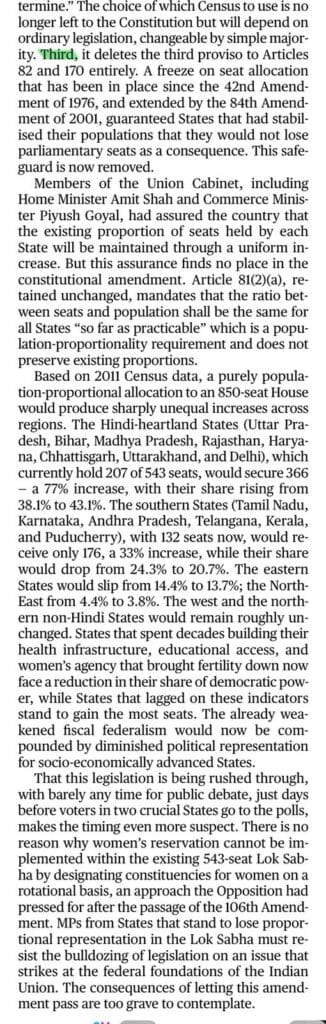
• 131st Amendment removes this safeguard (Articles 82 & 170)

• Result:
• Seats depend more on current population → benefits high-population States.

Major Constitutional Changes

• Articles amended: 55, 81, 82, 170, 330, 332, 334A
Lok Sabha seats increased:
• States: 530 → 815
• Union Territories: 20 → 35
• Total: 550 → 850

Criticism

• States that controlled population may lose representation
• Weakens federal balance
• Women’s reservation can be implemented without delimitation (rotation method)

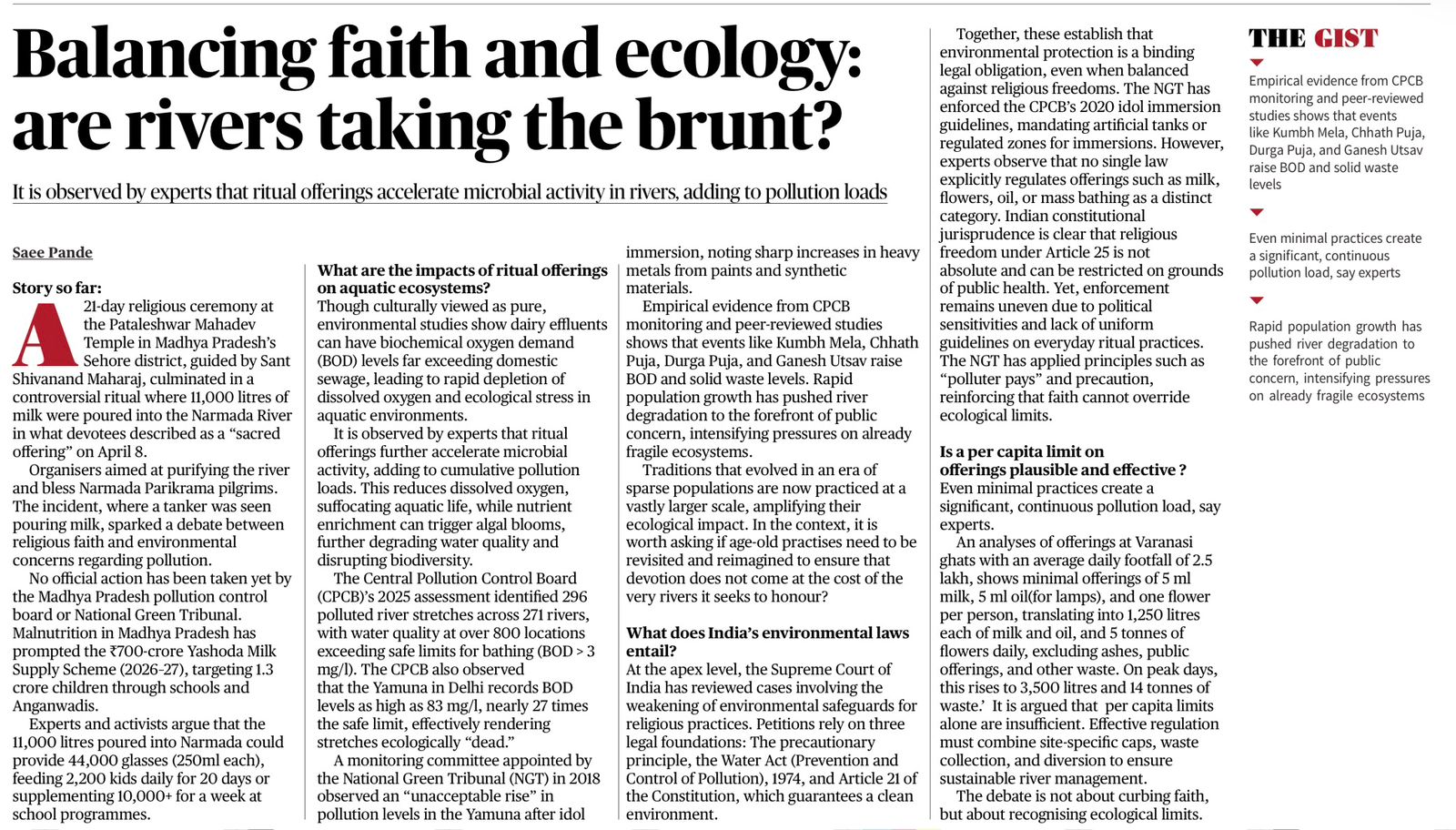
River pollution religious practices: environmental impact of ritual offerings in rivers

Context: River pollution religious practices

A recent incident in Sehore (Madhya Pradesh), where 11,000 litres of milk were poured into the Narmada River during a religious ritual, has reignited the debate on environmental impact of faith-based practices on rivers.

river pollution religious practices
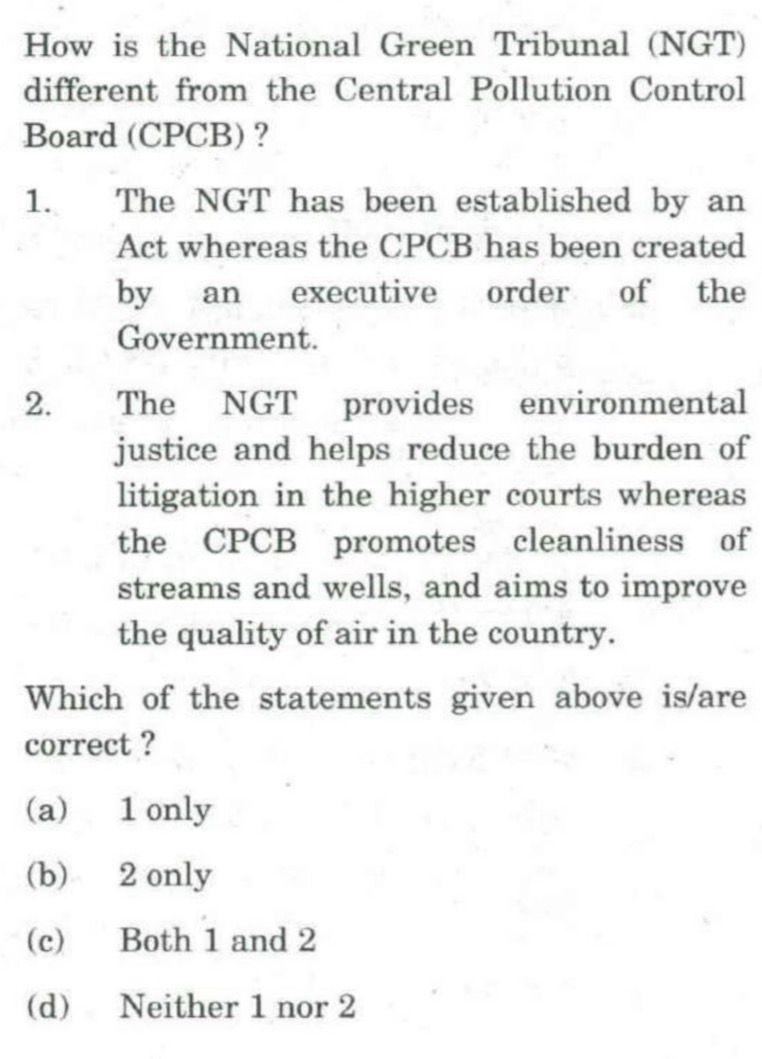
PYQ – 2018. Ans – B

Key Points

Environmental Impact

• Offerings like milk, oil, flowers increase Biochemical Oxygen Demand (BOD) → reduce oxygen in water.
• Leads to aquatic stress, algal blooms, biodiversity loss.

Data Evidence

CPCB (Central Pollution Control Board):
• 296 polluted river stretches (17 rivers)
• Safe limit: BOD < 3 mg/L
• Yamuna: up to 83 mg/L (≈27× limit)
• Festivals (Kumbh, Durga Puja, Ganesh Utsav) → spike in pollution.

Legal Position

Article 21 → Right to clean environment
• Article 25 → Religious freedom (not absolute)
• Water Act, 1974 + NGT enforce norms
• Gap: No specific law regulating ritual offerings

Core Issue

• Faith vs Ecology conflict
• Small individual acts → large cumulative pollution
• Rapid population growth → greater ecological pressure

Way Forward

• Regulated immersion zones / artificial tanks
• Waste management + eco-friendly rituals
• Stronger enforcement (not just advisories)

About the UPSC Civil Services Examination (UPSC CSE)

The UPSC Civil Services Examination (CSE) is one of the most competitive and esteemed examinations in India, conducted by the Union Public Service Commission to recruit officers for services such as the Indian Administrative Service (IAS), Indian Police Service (IPS), Indian Foreign Service (IFS), and others. The exam comprises three stages — Prelims, Mains, and the Personality Test (Interview) — designed to test a candidate’s knowledge, aptitude, decision-making, and leadership skills.


How to Prepare Effectively for UPSC CSE

Cracking the UPSC CSE requires a deep understanding of the syllabus, consistent revision, structured answer writing, and smart test-taking strategies. The Prelims test analytical and conceptual clarity, the Mains focuses on critical thinking, articulation, and subject mastery, while the Interview assesses presence of mind, ethical judgment, and personality traits relevant to public service.

At UnderStand UPSC, we empower aspirants with a personalized and focused approach to each stage of the exam.


Why Choose UnderStand UPSC?

UnderStand UPSC is a mentorship-driven platform offering a clear, clutter-free strategy to tackle the Civil Services Examination. Our programs like Transform (for beginners and intermediate learners) and Conquer (for advanced mains preparation) provide structured study plans, syllabus-wise video content, interactive live sessions, and answer writing support.

We emphasize:

  • Concept clarity through topic-wise lectures

  • Test series designed around real UPSC standards

  • Personalized mentorship in small groups

  • Regular performance tracking and peer benchmarking

  • Doubt-clearing sessions, current affairs analysis, and monthly magazines


Join the UnderStand UPSC Learning Community

Our mission is to make UPSC preparation less overwhelming and more strategic. We combine mentorship, discipline, and academic rigor to help you clear CSE with confidence. Whether you’re preparing from Delhi, Mumbai, Bangalore, or a remote village — our online-first model ensures quality guidance reaches every corner of India.

Join the thousands of aspirants who trust UnderStand UPSC to guide their journey toward becoming civil servants.

Stay connected with us through our Telegram, YouTube, and Instagram channels for daily tips, strategies, and updates.

Copyright © 2026 USARAMBHA EDUCATION (UnderStand UPSC). All Rights Reserved.

Join the Success Journey!