2 July 2026 | Daily Current Affairs

Himalayan Ray-finned Fish Conservation in Arunachal

Context: Himalayan Ray-finned Fish Conservation
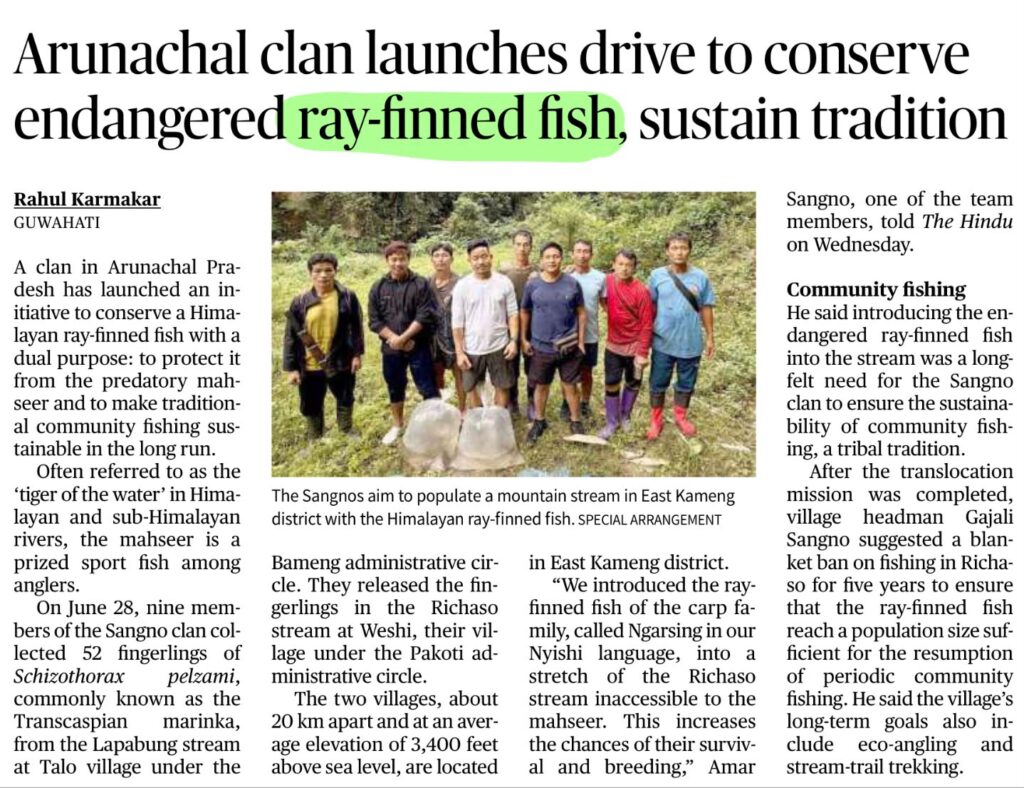
The Sangno clan of the Nyishi tribe in East Kameng, Arunachal Pradesh, translocated the Endangered Himalayan ray-finned fish to a protected mountain stream.

The aim is to protect it from the Golden Mahseer, the apex predator of Himalayan rivers, and promote community-led freshwater biodiversity conservation.

Himalayan Ray-finned Fish

Scientific Name

  • Schizothorax pelzami

Basic Features

  • Freshwater fish
  • Family: Cyprinidae / Carp family
  • Endemic to the Eastern Himalayas

Distribution and Habitat

Found in:

Preferred habitat:

  • Cold streams
  • Clear water
  • Fast-flowing streams
  • Oxygen-rich rocky streams

IUCN Status

  • Endangered

Threats

  • Predation by Golden Mahseer
  • Habitat degradation
  • River modification
  • Overfishing

Conservation Measure

Community-led translocation to Mahseer-free streams can improve:

  • Survival
  • Breeding
  • Population recovery

Golden Mahseer

Scientific Name

  • Tor putitora

Key Facts

  • Largest Himalayan freshwater game fish.
  • Known as the “Tiger of Himalayan Rivers.”
  • Found in the Indus, Ganga and Brahmaputra river basins.
  • Natural predator of juvenile Himalayan ray-finned fish.

Nyishi Tribe

  • Largest tribe of Arunachal Pradesh.
  • Inhabits East Kameng, Papum Pare, Kurung Kumey, Kra Daadi, Lower Subansiri and Upper Subansiri districts.
  • Speaks the Nyishi / Tani language.
  • Known for community-based forest and wildlife conservation.

PYQ Link

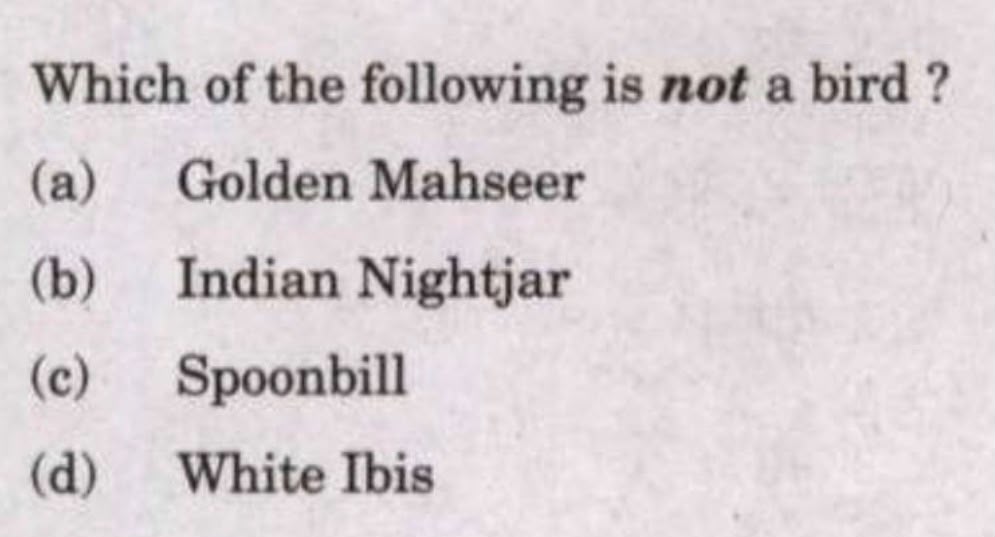
Golden Mahseer is not a bird. It is a fish.

Significance

  • Shows the role of indigenous communities in conservation.
  • Supports freshwater biodiversity protection.
  • Promotes community-led ecological restoration.
  • Helps conserve endemic Himalayan species.
  • Links traditional knowledge with biodiversity management.

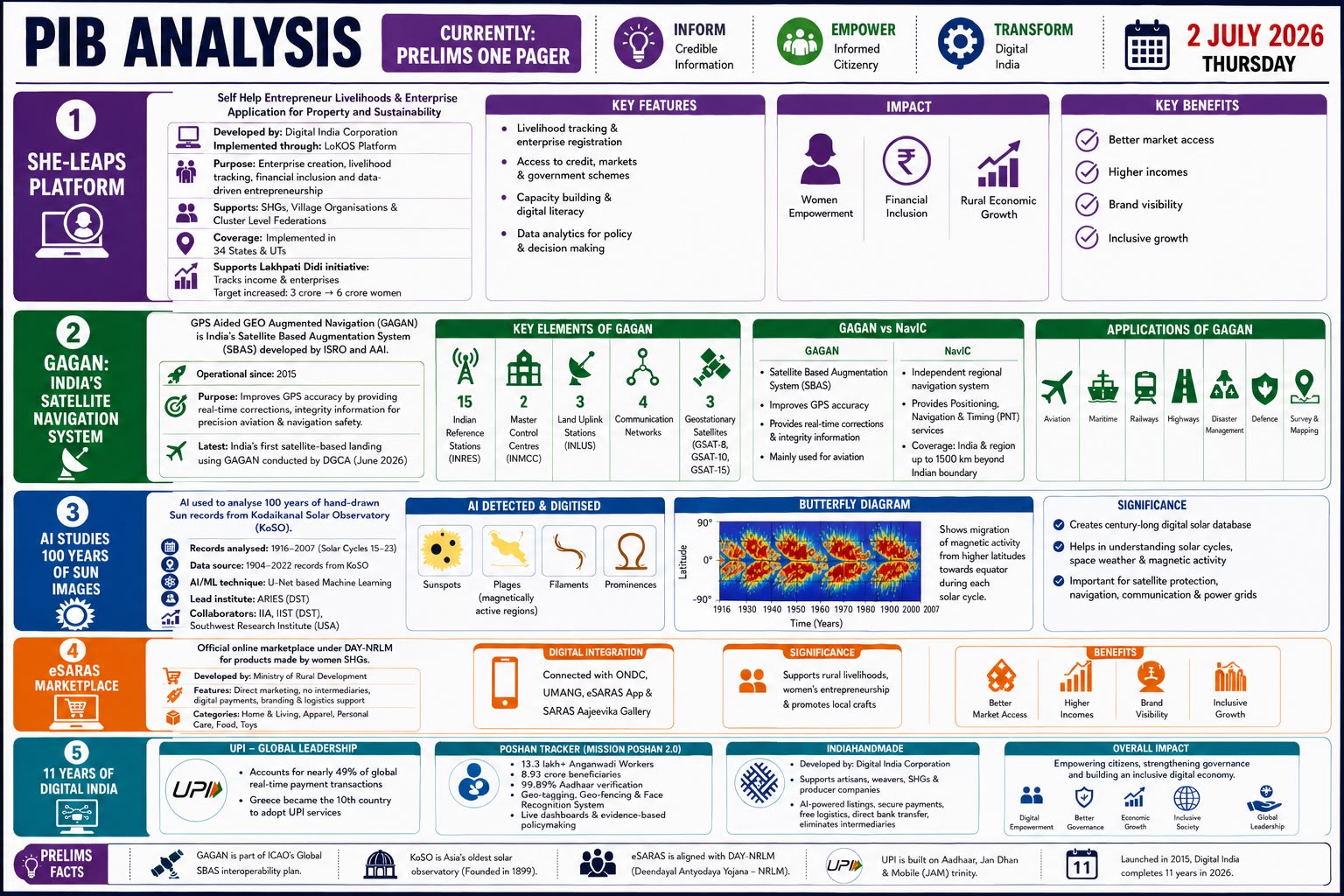
GAGAN Satellite Augmentation System Explained for UPSC

Context: GAGAN Satellite Augmentation System
GAGAN is India’s Satellite-Based Augmentation System, jointly developed by ISRO and Airports Authority of India to improve navigation accuracy and safety.

GAGAN

Full Form

  • GPS Aided GEO Augmented Navigation

Type

  • Satellite-Based Augmentation System

Developed By

Operational Since

  • 2015

Purpose

To improve the accuracy, integrity and reliability of GPS signals.

Coverage

GAGAN covers:

  • India
  • Neighbouring regions
  • Indian Ocean Region

How It Works

GAGAN improves GPS signals by correcting errors caused by:

  • Satellite clock errors
  • Ionospheric delays
  • Orbital errors
  • Signal distortions

Infrastructure

GAGAN uses:

  • 15 Indian Reference Stations
  • 2 Master Control Centres
  • 3 Uplink Stations
  • 3 GEO satellites

Benefits

  • Improves GPS accuracy.
  • Provides real-time correction.
  • Enhances navigation safety.
  • Supports aviation operations.
  • Strengthens India’s satellite navigation infrastructure.

Applications

  • Civil aviation
  • Railways
  • Shipping
  • Road transport
  • Disaster management
  • Surveying and mapping
  • Precision agriculture

Global Comparison

Other Satellite-Based Augmentation Systems include:

  • WAAS — United States
  • EGNOS — Europe
  • MSAS — Japan
  • SDCM — Russia

Prelims Fact

GAGAN is part of the Global Navigation Satellite System augmentation ecosystem.

eSARAS Marketplace Platform for SHG Products Explained

Context: eSARAS Marketplace Platform
The eSARAS Marketplace is a digital platform designed to help Self-Help Groups and rural artisans sell their products online.

eSARAS

Full Form

  • Electronic Self Help Group Artisan Rural Area Stores

Implemented By

  • National Institute of Rural Development and Panchayati Raj

Ministry

Beneficiaries

  • Self-Help Groups
  • Rural artisans
  • Women entrepreneurs
  • Rural producers

Products Sold

  • Handicrafts
  • Handlooms
  • Food products
  • Organic products
  • Home decor
  • Traditional products

Objectives

  • Provide online market access.
  • Improve income of SHG women.
  • Remove middlemen.
  • Promote rural products.
  • Support women-led entrepreneurship.
  • Strengthen rural livelihoods.

Benefits

  • Wider market reach.
  • Brand visibility.
  • Better income.
  • Digital empowerment.
  • Rural economic growth.
  • Support for Vocal for Local.

Link with Governance

eSARAS supports:

  • Digital governance
  • Rural development
  • Women empowerment
  • Financial inclusion
  • Inclusive growth
  • SHG-based entrepreneurship

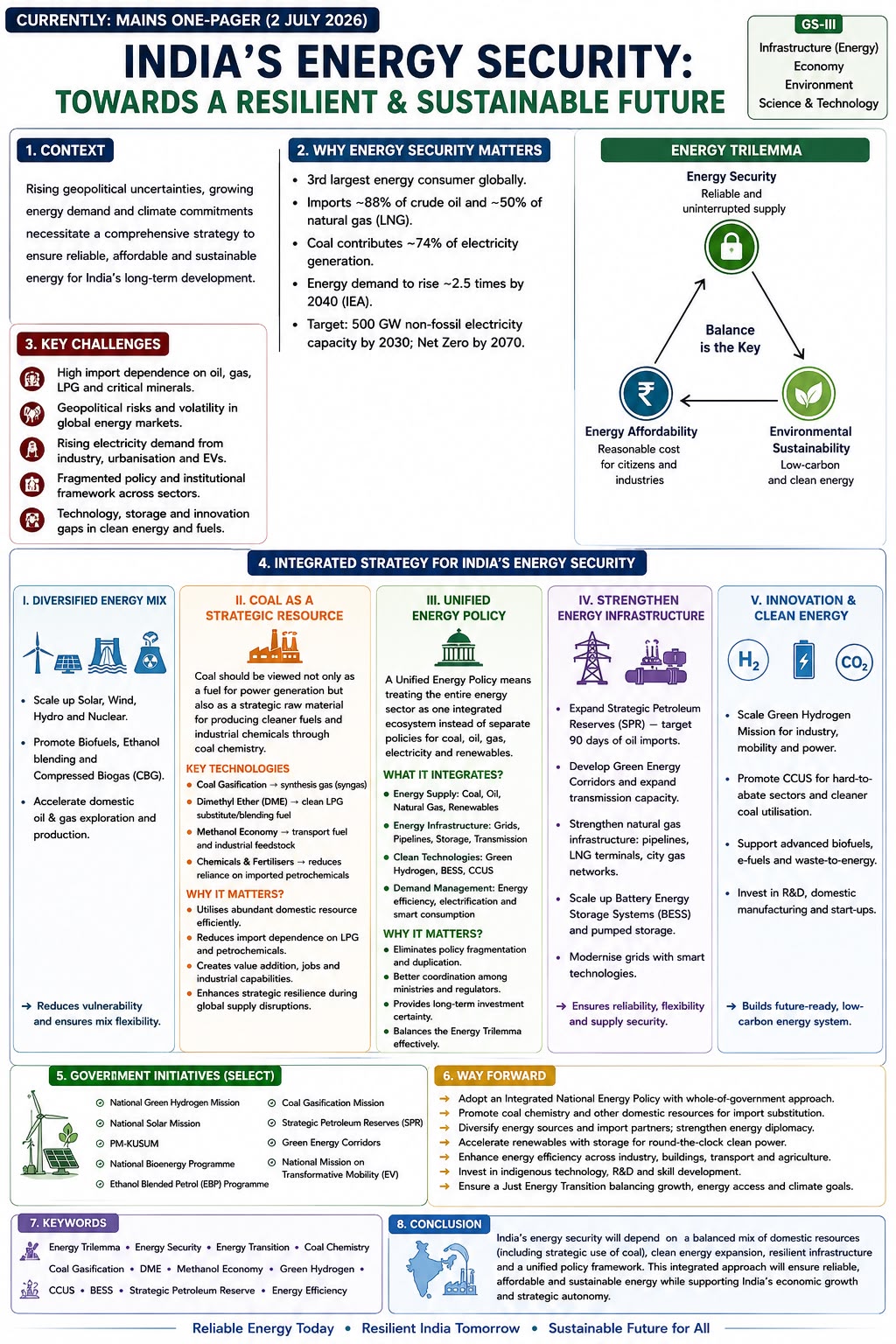
India Energy Security Policy Through Coal Chemistry

Context: India Energy Security Policy
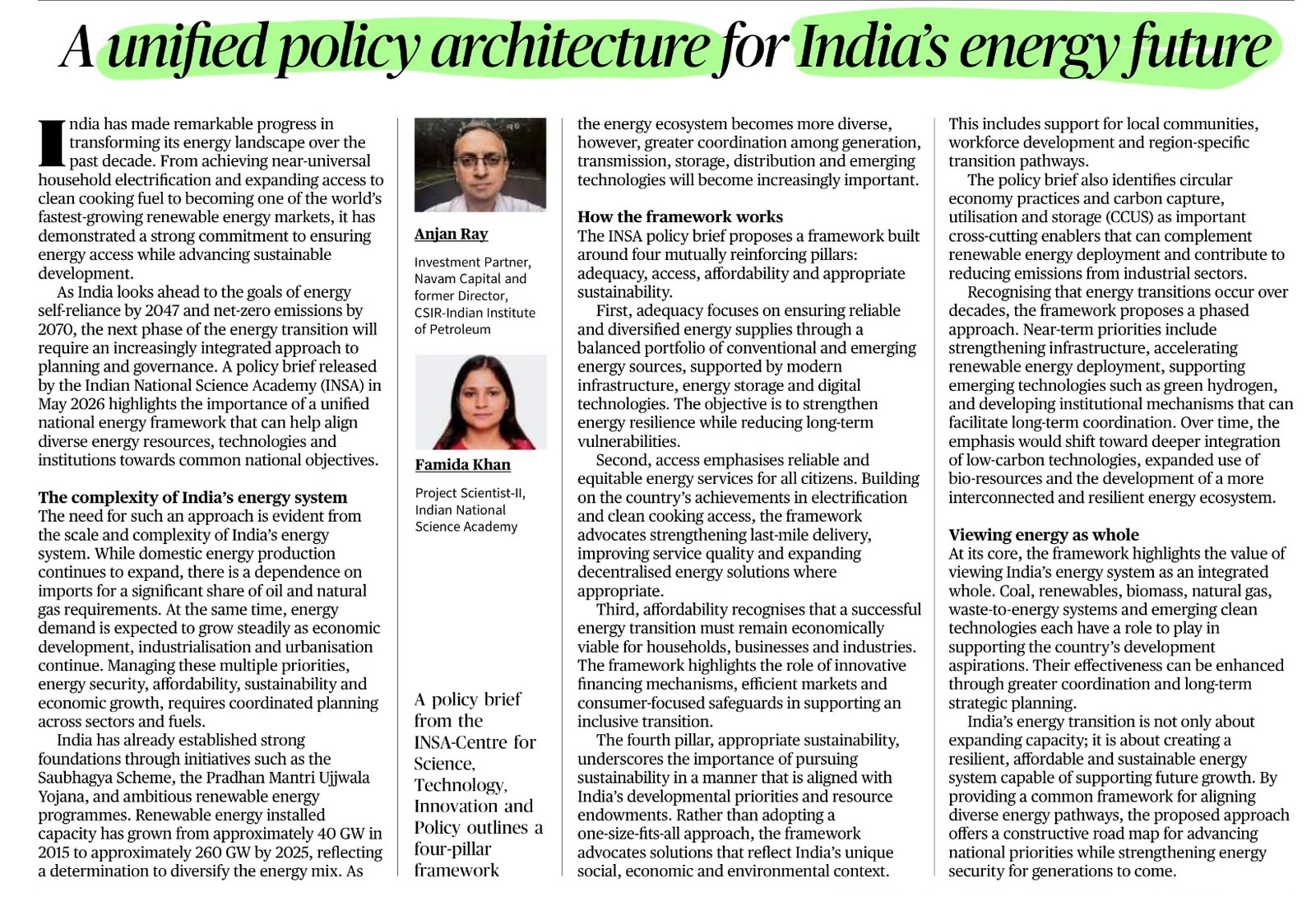
The articles argue that India needs a resilient and sustainable energy strategy combining coal chemistry, clean energy transition and a unified policy architecture.

India’s energy future requires balancing:

  • Energy security
  • Energy affordability
  • Environmental sustainability

Why Energy Security Matters

India is:

  • The 3rd largest energy consumer globally.
  • Dependent on imports for around 88% of crude oil.
  • Dependent on imports for around 50% of natural gas / LNG.
  • Dependent on coal for around 74% of electricity generation.

India’s energy demand may rise 2.5 times by 2040.

India has also set major energy goals:

  • 500 GW non-fossil electricity capacity by 2030.
  • Net Zero by 2070.

Energy Trilemma

India must balance three goals:

1. Energy Security

Reliable and uninterrupted supply.

2. Energy Affordability

Reasonable cost for citizens and industries.

3. Environmental Sustainability

Low-carbon and clean energy transition.

Key Challenges

  • High import dependence on oil, gas, LPG and critical minerals.
  • Geopolitical risks and volatility in global energy markets.
  • Rising electricity demand from industry, transport and households.
  • Fragmented policy and institutional framework across sectors.
  • Technology, storage and innovation gaps in clean energy.

Coal as a Strategic Resource

Coal should not be seen only as a fuel for power generation.

It can also be used as a strategic raw material for:

  • Cleaner fuels
  • Industrial chemicals
  • Graphite
  • Methanol
  • Dimethyl Ether
  • Syngas

Coal Chemistry

Coal chemistry means using coal as a feedstock to produce useful industrial products through chemical conversion.

Key Technologies

1. Coal Gasification

Converts coal into synthesis gas / syngas.

2. Dimethyl Ether

Can be used as an LPG substitute and clean fuel.

3. Methanol Economy

Uses methanol as a cleaner fuel and industrial feedstock.

4. Chemicals and Fertilisers

Coal-derived chemicals can reduce dependence on imported petrochemicals.

Why Coal Chemistry Matters

  • Utilises domestic coal resources efficiently.
  • Reduces import dependence on LPG and petrochemicals.
  • Creates value-added products.
  • Generates jobs and industrial capacity.
  • Enhances strategic resilience during global supply disruptions.

Unified Energy Policy

A unified energy policy means treating the energy sector as one integrated ecosystem rather than separate silos of:

  • Coal
  • Oil
  • Gas
  • Renewables
  • Electricity grids
  • Pipelines
  • Storage
  • Transmission

What It Integrates

  • Energy supply
  • Coal, oil, gas and renewables
  • Energy infrastructure
  • Grids, pipelines, storage and transmission
  • Clean technologies
  • Green hydrogen, BESS and CCUS
  • Demand management
  • Energy efficiency, electrification and smart consumption

Integrated Strategy for Energy Security

1. Diversified Energy Mix

  • Scale up solar, wind, hydro and nuclear.
  • Promote biofuels, ethanol blending and compressed biogas.
  • Accelerate domestic oil and gas exploration.

2. Coal as a Strategic Resource

  • Use coal for cleaner fuels and chemicals.
  • Promote coal gasification.
  • Reduce petrochemical import dependence.

3. Unified Energy Policy

  • Reduce institutional fragmentation.
  • Improve coordination among ministries and regulators.
  • Provide long-term investment certainty.
  • Balance security, affordability and sustainability.

4. Strengthen Energy Infrastructure

  • Expand strategic petroleum reserves.
  • Develop green energy corridors.
  • Strengthen natural gas pipelines.
  • Scale up battery energy storage systems and pumped storage.
  • Modernise grids with smart technologies.

5. Innovation and Clean Energy

  • Scale green hydrogen.
  • Promote carbon capture, utilisation and storage.
  • Support advanced biofuels.
  • Invest in domestic manufacturing and energy start-ups.

Government Initiatives

  • National Green Hydrogen Mission
  • National Solar Mission
  • PM-KUSUM
  • National Bioenergy Programme
  • Ethanol Blended Petrol Programme
  • Coal Gasification Mission
  • Strategic Petroleum Reserves
  • Green Energy Corridors
  • National Mission on Transformative Mobility and Battery Storage

Way Forward

  • Adopt an integrated national energy policy.
  • Promote coal chemistry and clean coal use.
  • Diversify energy sources.
  • Expand renewable energy with storage.
  • Improve energy efficiency across sectors.
  • Invest in indigenous technology and R&D.
  • Ensure a just energy transition balancing growth, access and climate goals.

Conclusion

India’s energy security will depend on a balanced mix of domestic resources, clean energy expansion, resilient infrastructure and unified policy coordination.

SHE-LEAPS Platform UPSC for Women SHG Livelihoods

Context: SHE-LEAPS Platform UPSC
The SHE-LEAPS Platform has been launched to empower women Self-Help Groups through digital livelihood support, better market access and capacity building.

SHE-LEAPS

Full Form

  • Self Help Enterprises Livelihoods & Enterprise Assistance Platform for Prosperity and Sustainability

Implemented By

  • Digital India Corporation

Implemented Under

Purpose

To support women Self-Help Groups through:

  • Digital livelihood tracking
  • Enterprise registration
  • Market linkage
  • Access to credit
  • Training
  • Government scheme integration

Key Features

  • Livelihood tracking and enterprise registration.
  • Access to credit, markets and government schemes.
  • Capacity building and digital literacy.
  • Data analytics for policy and decision-making.

Impact

  • Women empowerment
  • Financial inclusion
  • Rural economic growth
  • Better market access
  • Higher income
  • Brand visibility
  • Inclusive growth

Significance

  • Strengthens women-led entrepreneurship.
  • Enables SHGs to move from subsistence activity to market-linked enterprise.
  • Supports Digital India and rural livelihood missions.
  • Improves formalisation of women-led businesses.
  • Enhances access to schemes and credit.

AI Sun Image Analysis Using Kodaikanal Observatory

Context: AI Sun Image Analysis
Artificial Intelligence is being used to study over 100 years of solar images from the Kodaikanal Solar Observatory.

The aim is to understand solar activity, sunspots and long-term changes in the Sun.

Kodaikanal Solar Observatory

Located In

  • Tamil Nadu

Established

  • 1899

Operated By

  • Indian Institute of Astrophysics

Data Used

The observatory has a long historical archive of solar images.

These include:

  • Sunspot images
  • Plage images
  • Filament images
  • Prominence images

Role of AI

AI helps in:

  • Digitising old solar images
  • Identifying sunspots
  • Studying magnetic activity
  • Tracking solar cycles
  • Analysing long-term solar variability
  • Improving space weather prediction

Why Solar Activity Matters

Solar activity can affect:

  • Satellites
  • GPS systems
  • Communication networks
  • Power grids
  • Aviation routes
  • Space missions

Sunspots

Sunspots are dark, cooler regions on the Sun’s surface associated with intense magnetic activity.

Solar Cycle

The Sun follows an approximately 11-year solar cycle, during which sunspot activity rises and falls.

Significance

  • Helps understand long-term solar behaviour.
  • Improves prediction of solar storms.
  • Supports satellite and communication safety.
  • Strengthens India’s solar physics research.
  • Shows the use of AI in scientific heritage data.

Digital India 11 Years of Governance Transformation

Context: Digital India 11 Years
India completed 11 years of Digital India, highlighting progress in digital governance, digital public infrastructure and citizen-centric service delivery.

Digital India

Launched

  • 2015

Vision

To transform India into a digitally empowered society and knowledge economy.

Three Core Vision Areas

1. Digital Infrastructure as a Core Utility

Includes:

  • Aadhaar
  • Mobile connectivity
  • Internet access
  • Cloud infrastructure
  • Digital identity

2. Governance and Services on Demand

Includes:

  • Online public services
  • e-governance
  • Direct Benefit Transfer
  • DigiLocker
  • UMANG
  • e-Sign

3. Digital Empowerment of Citizens

Includes:

  • Digital literacy
  • Access to information
  • Local language services
  • Digital inclusion

Key Pillars / Achievements

Aadhaar

  • Digital identity backbone.

UPI

  • Real-time digital payments ecosystem.

DigiLocker

  • Digital document storage and verification.

UMANG

  • Unified access to government services.

CoWIN

  • Digital vaccination platform.

ONDC

ABHA

BharatNet

  • Broadband connectivity for rural India.

Direct Benefit Transfer

  • Improved welfare delivery and reduced leakages.

Global Leadership

India’s Digital Public Infrastructure model is increasingly recognised globally for:

  • Scale
  • Inclusion
  • Interoperability
  • Low-cost service delivery
  • Public-private innovation

Impact

  • Improved governance efficiency.
  • Reduced corruption and leakages.
  • Expanded financial inclusion.
  • Strengthened digital payments.
  • Improved access to welfare schemes.
  • Enabled start-up and fintech innovation.
  • Supported rural connectivity.
  • Improved citizen service delivery.

Challenges

  • Digital divide
  • Cybersecurity risks
  • Data privacy concerns
  • Low digital literacy in some regions
  • Connectivity gaps
  • Platform accountability
  • Exclusion due to authentication failures

Way Forward

  • Expand broadband and 5G connectivity.
  • Strengthen cybersecurity.
  • Improve data protection.
  • Promote digital literacy.
  • Build inclusive local-language platforms.
  • Ensure offline alternatives for essential services.
  • Improve grievance redressal for digital exclusion.

Key Takeaway

Digital India has transformed governance by building large-scale digital public infrastructure. The next phase must focus on inclusion, trust, cybersecurity and last-mile access.

About the UPSC Civil Services Examination (UPSC CSE)

The UPSC Civil Services Examination (CSE) is one of the most competitive and esteemed examinations in India, conducted by the Union Public Service Commission to recruit officers for services such as the Indian Administrative Service (IAS), Indian Police Service (IPS), Indian Foreign Service (IFS), and others. The exam comprises three stages — Prelims, Mains, and the Personality Test (Interview) — designed to test a candidate’s knowledge, aptitude, decision-making, and leadership skills.


How to Prepare Effectively for UPSC CSE

Cracking the UPSC CSE requires a deep understanding of the syllabus, consistent revision, structured answer writing, and smart test-taking strategies. The Prelims test analytical and conceptual clarity, the Mains focuses on critical thinking, articulation, and subject mastery, while the Interview assesses presence of mind, ethical judgment, and personality traits relevant to public service.

At UnderStand UPSC, we empower aspirants with a personalized and focused approach to each stage of the exam.


Why Choose UnderStand UPSC?

UnderStand UPSC is a mentorship-driven platform offering a clear, clutter-free strategy to tackle the Civil Services Examination. Our programs like Transform (for beginners and intermediate learners) and Conquer (for advanced mains preparation) provide structured study plans, syllabus-wise video content, interactive live sessions, and answer writing support.

We emphasize:

  • Concept clarity through topic-wise lectures

  • Test series designed around real UPSC standards

  • Personalized mentorship in small groups

  • Regular performance tracking and peer benchmarking

  • Doubt-clearing sessions, current affairs analysis, and monthly magazines


Join the UnderStand UPSC Learning Community

Our mission is to make UPSC preparation less overwhelming and more strategic. We combine mentorship, discipline, and academic rigor to help you clear CSE with confidence. Whether you’re preparing from Delhi, Mumbai, Bangalore, or a remote village — our online-first model ensures quality guidance reaches every corner of India.

Join the thousands of aspirants who trust UnderStand UPSC to guide their journey toward becoming civil servants.

Stay connected with us through our Telegram, YouTube, and Instagram channels for daily tips, strategies, and updates.

Copyright © 2026 USARAMBHA EDUCATION (UnderStand UPSC). All Rights Reserved.

Fill out the form

If you have any queries...

Fill out the form for

Downloading the free Agriculture Short Notes