🚨 ONLY 2 DAYS LEFT! | FREE UPSC OFFLINE MEETUP 2028/29 REGISTER NOW →

25 April 2026 | Daily Current Affairs

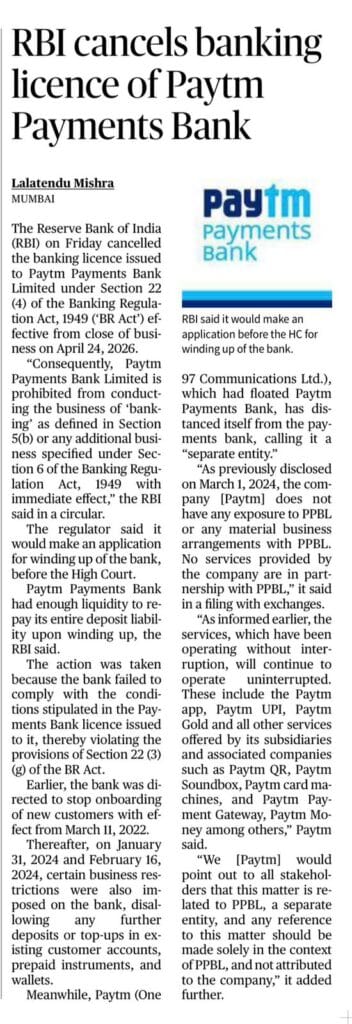
RBI cancels Paytm Payments Bank licence: Reasons, Legal Basis, and Impact for UPSC

Context: RBI cancels Paytm Payments Bank licence

RBI cancelled the licence of Paytm Payments Bank Ltd effective April 24, 2026 after sustained regulatory non-compliance; winding-up proceedings will follow.
WhatsApp Image 2026 04 25 at 12.08.43 PM 1
WhatsApp Image 2026 04 25 at 12.08.43 PM 2
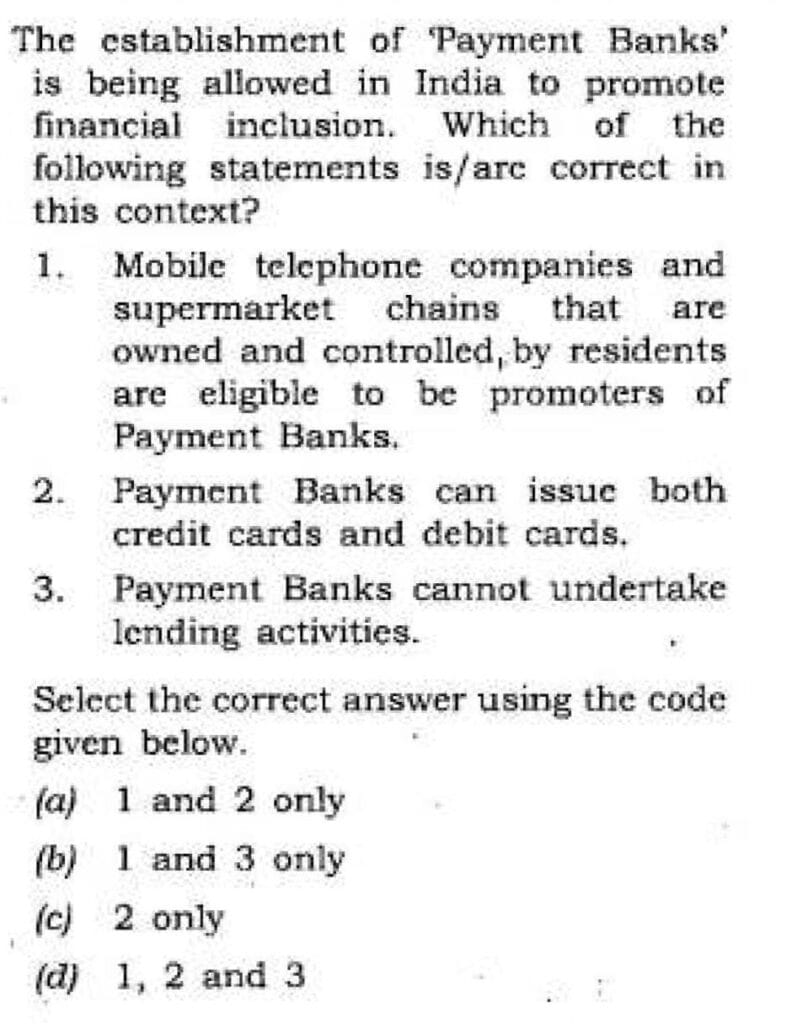
PYQ – 2016, Ans – B

Payments Banks

Model

Niche banks for deposits and payments, not full-service banking

Key Points

  • Deposits up to ₹2 lakh per customer
  • Savings/current accounts, UPI, remittances
  • Debit/ATM cards allowed
  • No lending or credit cards
  • Funds largely invested in government securities

RBI Action Reasons + Legal Basis

RBI used Section 22(4), Banking Regulation Act, 1949.

Grounds

  • Breach of licence conditions under Section 22
  • Persistent non-compliance despite repeated directions
  • KYC/AML lapses and weak due diligence
  • Deficiencies in governance and internal controls
  • Improper conduct of permissible banking activities under Sections 5(b) and 6
  • Threat to depositors’ interest and public interest

Regulatory Trajectory

  • 2022: Bar on new customers
  • 2024: Operational restrictions
  • 2026: Licence cancellation

Anti-Defection Law: Will AAP MPs Shift to BJP Lead to Disqualification? UPSC Analysis

Context: Anti-Defection Law

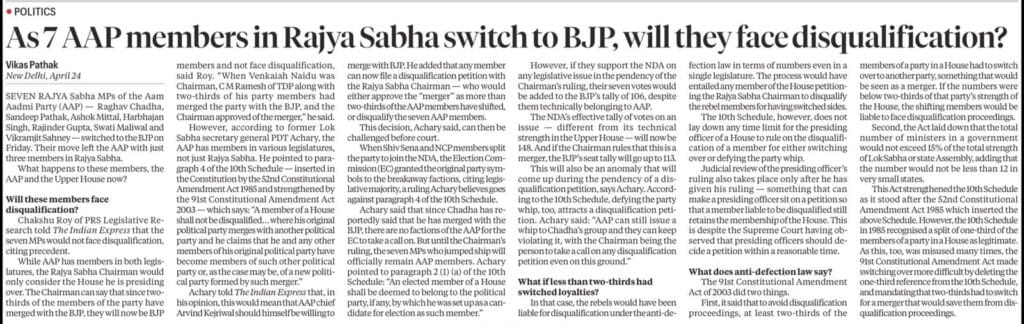
Seven AAP MPs in the Rajya Sabha joined the BJP. The key issue is whether this attracts disqualification under the anti-defection law.

WhatsApp Image 2026 04 25 at 12.08.43 PM
WhatsApp Image 2026 04 25 at 12.08.44 PM
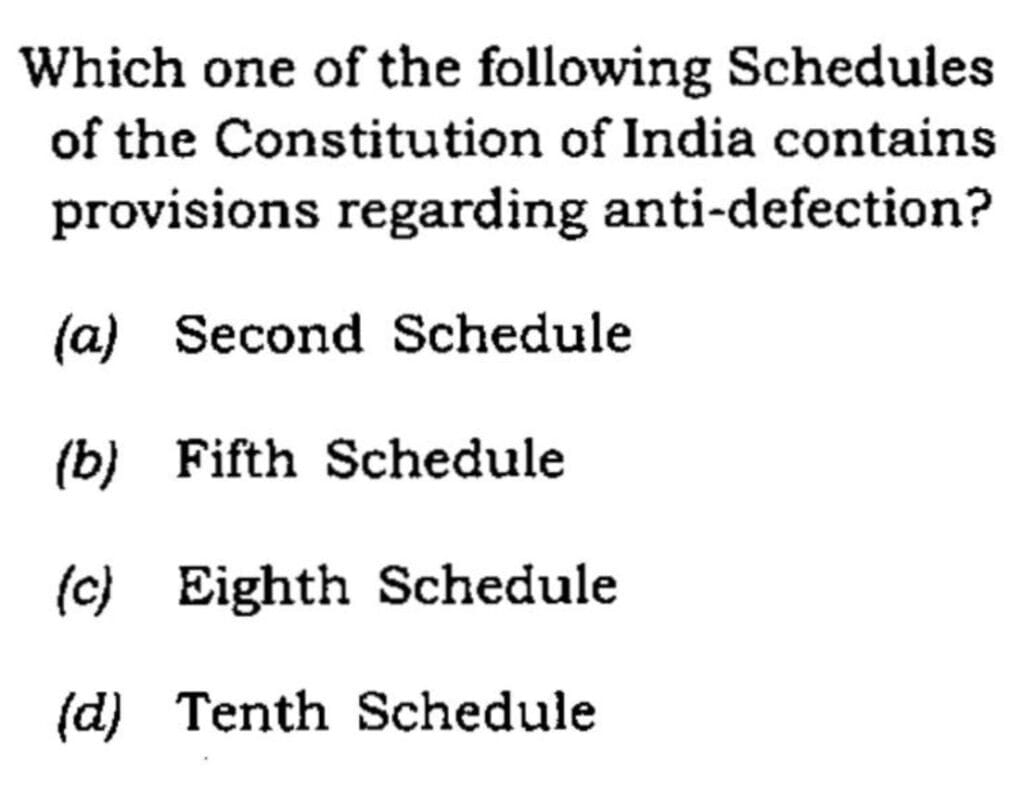
PYQ – 2014, Ans – D

Anti-Defection Law (Tenth Schedule)

Origin and Evolution

Purpose

  • Prevent defections and maintain party discipline

Core Rule

  • A member is disqualified if he/she:
    • Voluntarily gives up party membership
    • Votes or abstains against the party whip

Exception – Merger (Central to this case)

  • Paragraph 4: No disqualification if at least two-thirds of a party’s members in a House agree to merge with another party

91st Amendment (Key Impact)

  • Abolished protection for split (one-third)
  • Only two-thirds merger is a valid safeguard now

Decision Authority

Why disqualification may not apply

  • AAP had 10 MPs in Rajya Sabha; 7 have switched
  • This crosses the two-thirds threshold
  • Therefore, it can be treated as a “merger” under Paragraph 4, not defection
  • If the Chairman accepts this as a merger, no disqualification applies

Foreign Direct Investment: Net FDI Hits 45-Month High in Feb 2026 – Key Facts for UPSC

Context: Foreign Direct Investment

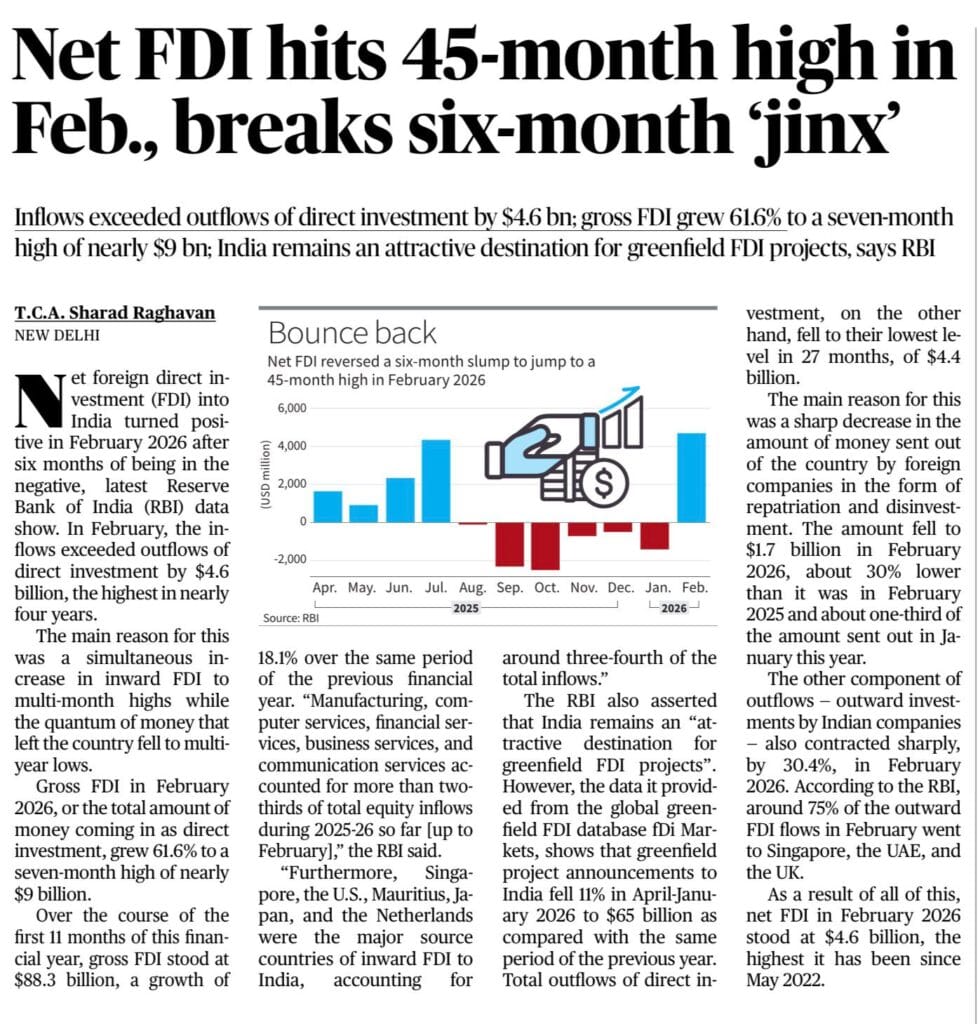
Net FDI turned positive in February 2026, reaching a 45-month high after six months of decline.

WhatsApp Image 2026 04 25 at 12.08.41 PM
WhatsApp Image 2026 04 25 at 12.08.44 PM 1
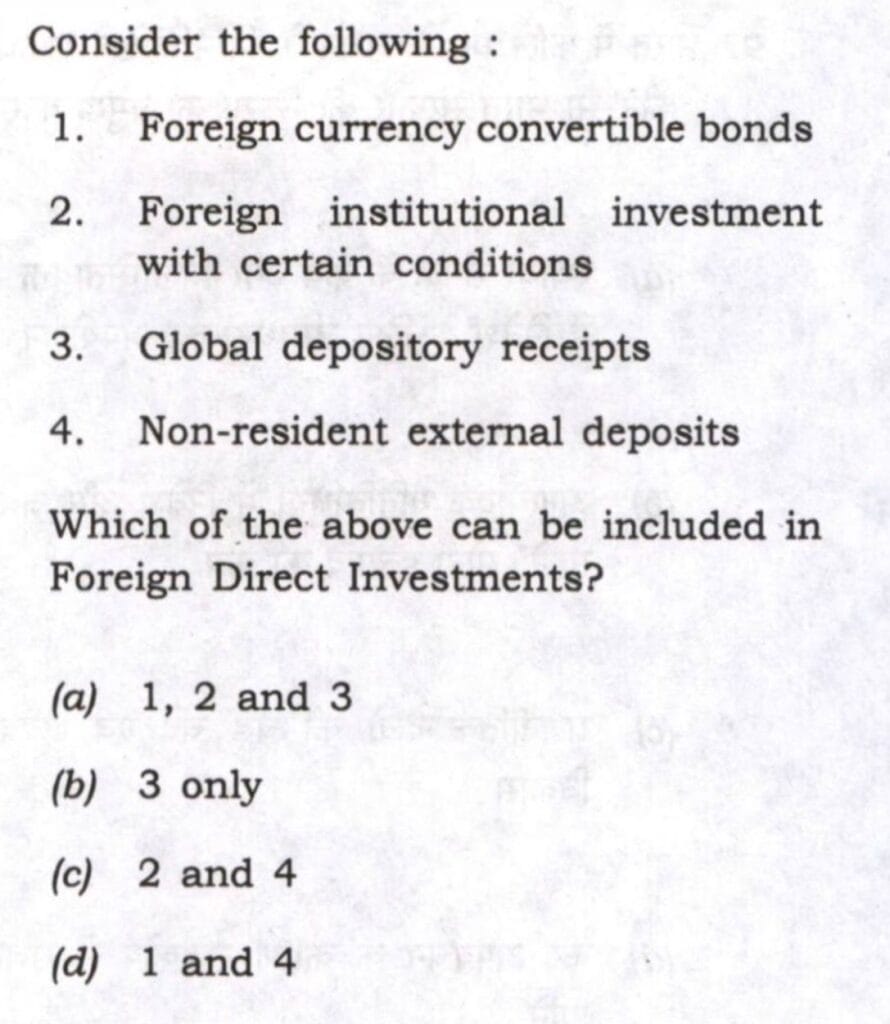
PYQ – 2021, Ans – A

Foreign Direct Investment

  • Definition: Foreign Direct Investment is an investment made by a foreign entity in a domestic enterprise with the objective of establishing lasting interest and significant control (generally 10% or more ownership)
  • Types: Greenfield, Brownfield
  • Components: Equity, reinvested earnings, other capital
  • Significance: Growth, jobs, technology

Key Points

  • Net FDI: $4.6 billion
  • Gross FDI: +61.6% (~$9 billion)
  • Rise mainly due to sharp fall in outflows (lower repatriation + outward FDI)
  • Key sectors: Manufacturing, services
  • Top sources (Economic Survey): Singapore, Mauritius, USA
  • Greenfield attractiveness remains, but announcements declined

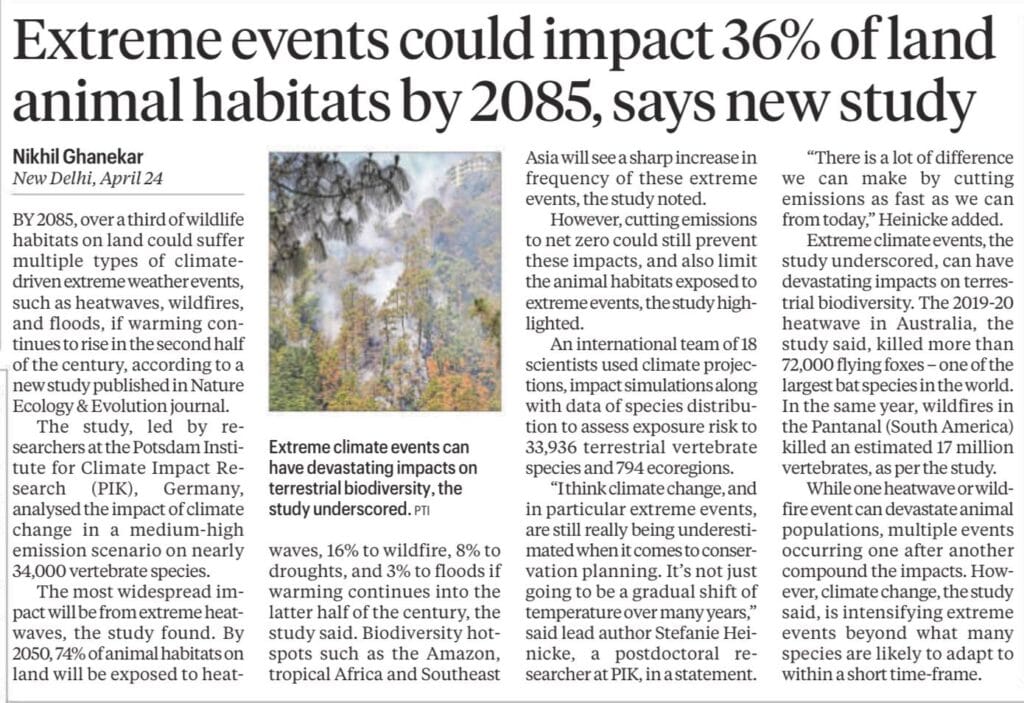
Extreme climate events impact habitats: 36% Land Species at Risk by 2085 – UPSC Study

Context: Extreme climate events impact habitats

A study in Nature Ecology & Evolution finds extreme climate events could affect over one-third of land animal habitats by 2085.

WhatsApp Image 2026 04 25 at 12.08.42 PM 1

Key Points

  • Magnitude of risk
    • 36% habitats exposed to multiple extreme events by 2085
    • Based on ~34,000 vertebrate species across 794 ecoregions
  • Nature of threat
    • Shift from gradual warming to frequent, intense extreme events
    • Heatwaves most widespread driver of impact
  • Projected exposure
    • By 2050: ~74% habitats exposed to heatwaves
    • Other risks:
      • Wildfires: ~16%
      • Droughts: ~8%
      • Floods: ~3%
  • Geographical concentration
  • Compounding effect
    • Sequential or simultaneous events amplify ecosystem damage
    • Greater risk than isolated events
  • Empirical evidence
    • Australia heatwave (2019–20): >72,000 flying foxes died
    • Pantanal wildfires: ~17 million vertebrates lost
  • Key concern
    • Species cannot adapt at the pace of climate change
    • Conservation planning underestimates extreme-event risks
  • Way forward
    • Rapid emission cuts and net-zero transition can significantly limit exposure
    • Need for climate-resilient conservation strategies

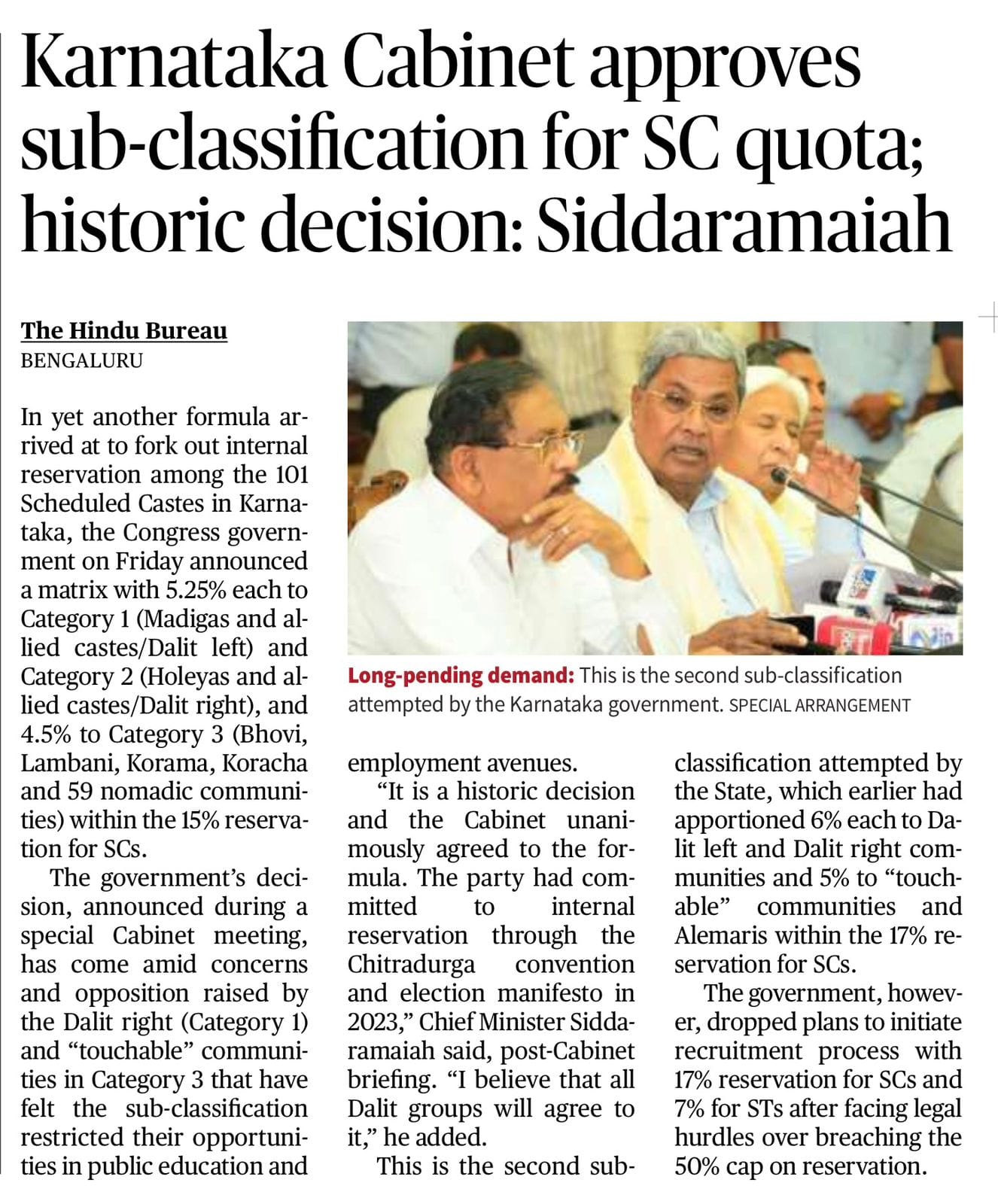
SC quota sub-classification: Karnataka Approves Internal Reservation – Supreme Court View Explained

Context: SC quota sub-classification

Karnataka government approved internal sub-classification within the 15% SC quota to ensure equitable distribution among SC groups, based on commission recommendations.

WhatsApp Image 2026 04 25 at 12.08.42 PM

What Karnataka has done

  • 15% SC quota split as:
    • Category 1 (Madiga & allied): 5.25%
    • Category 2 (Holeya & allied): 5.25%
    • Category 3 (Others incl. Bhovi, Lambani etc.): 4.5%
  • Based on Justice H.N. Nagamohan Das Commission
  • Objective: Address intra-SC inequalities

Supreme Court Position on Sub-classification

  • E.V. Chinnaiah v. State of Andhra Pradesh (2004)
    → SCs treated as a homogeneous class; sub-classification not allowed
  • State of Punjab v. Davinder Singh & Others (2020)
    → Questioned Chinnaiah; held sub-classification may be permissible
    → Referred to a larger Bench
  • State of Punjab v. Davinder Singh (Constitution Bench, 2024)
    → Upheld that States can sub-classify SCs
    → Valid to achieve substantive equality

Copyright © 2026 USARAMBHA EDUCATION (UnderStand UPSC). All Rights Reserved.

Offline Meetup

Reserve Your Meetup Seat