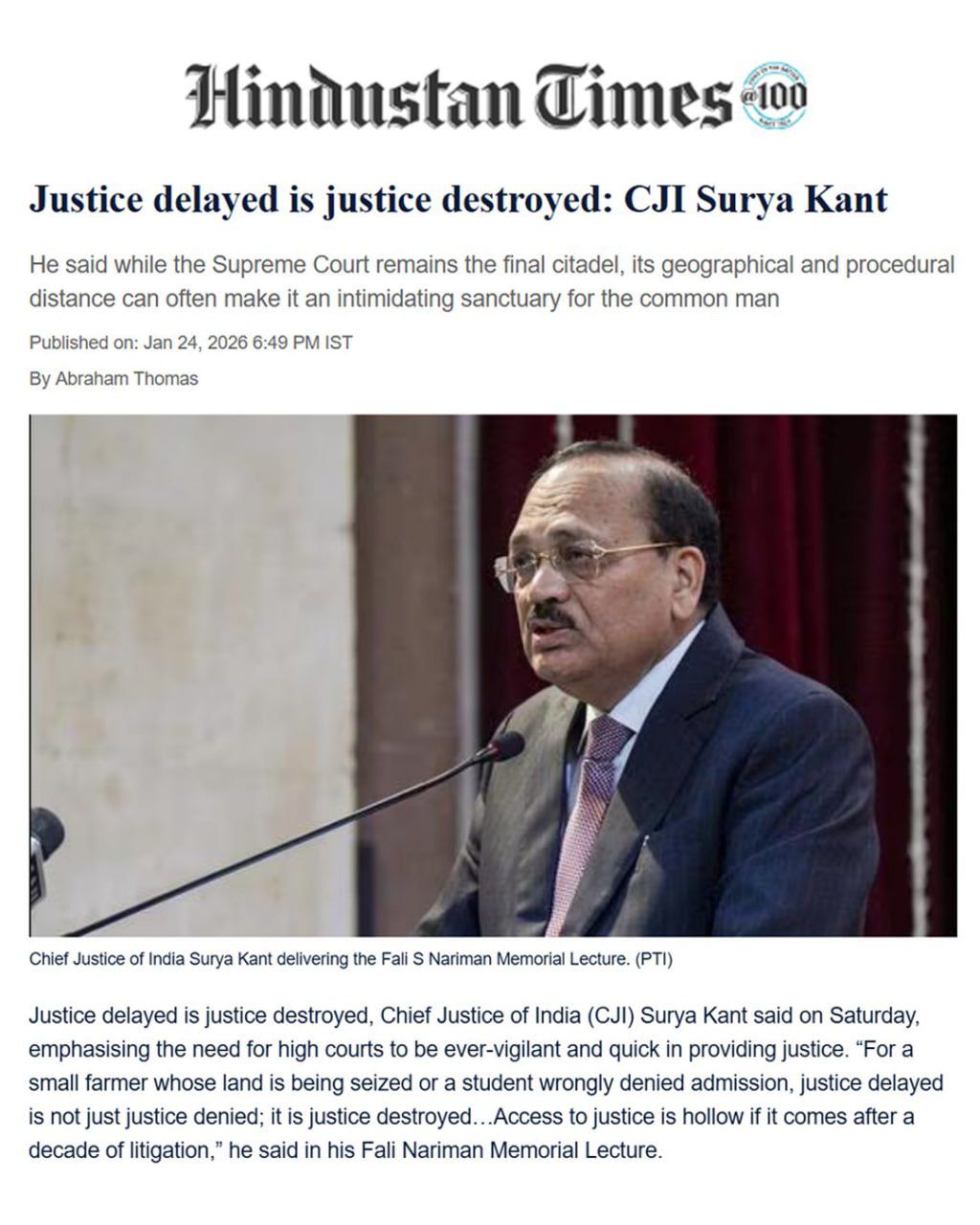
Context The Chief Justice of India highlighted that delays in courts undermine real access to justice, stressing the need for faster and more vigilant judicial processes—especially for ordinary citizens—while speaking at the Fali S. Nariman Memorial Lecture.
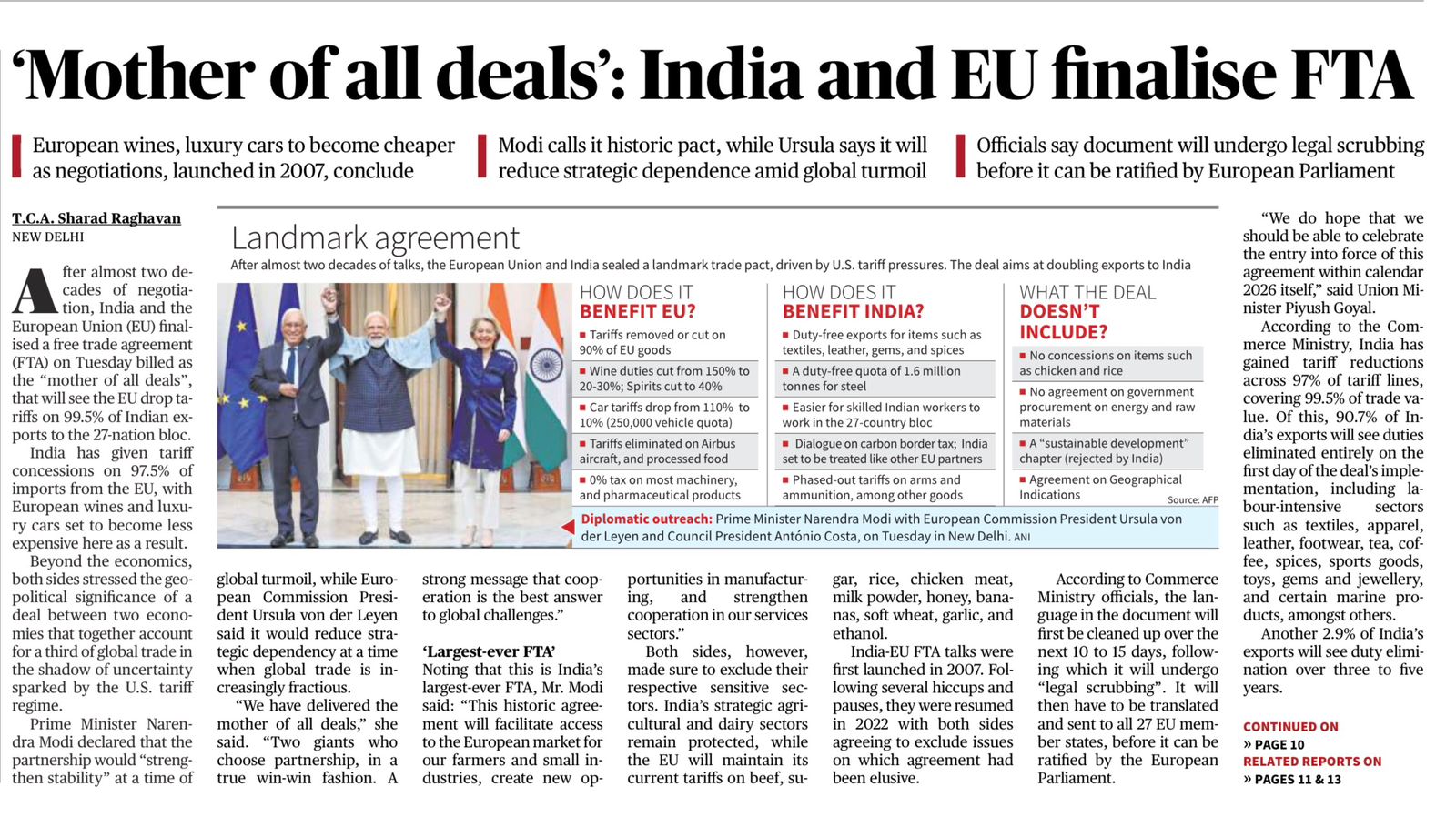
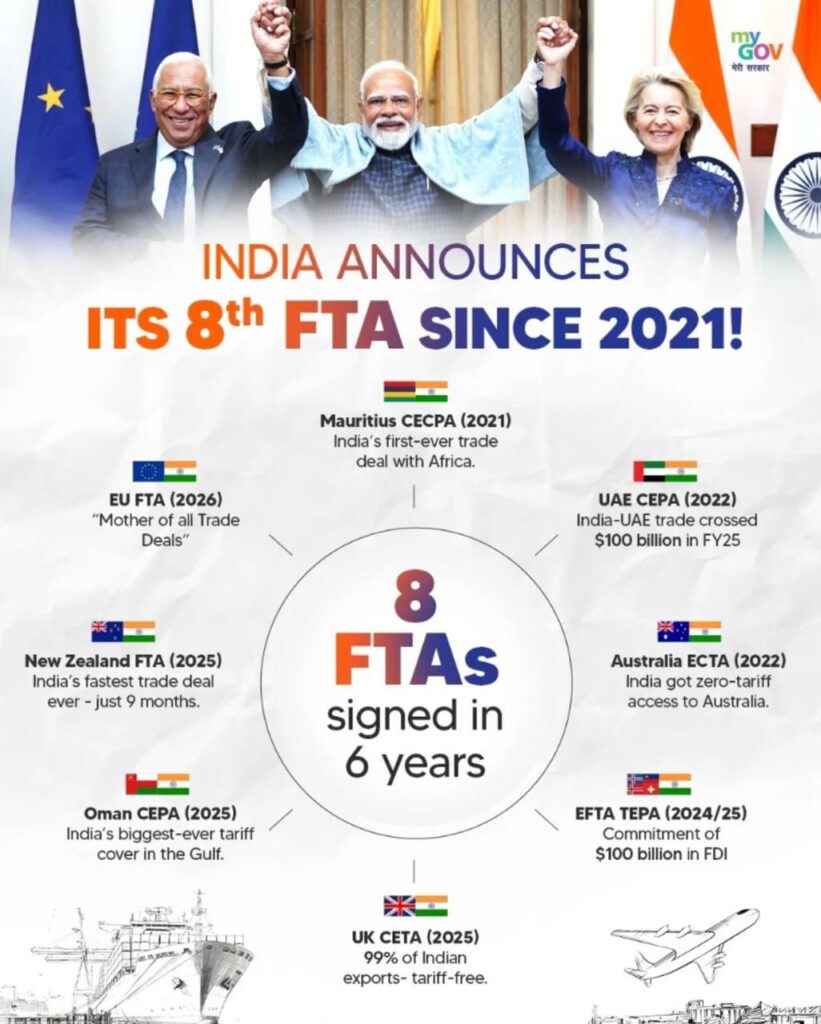
Context After nearly two decades of negotiations, India and the European Union have concluded a landmark Free Trade Agreement (FTA), billed as the largest trade deal for both sides amid global trade uncertainty.
Nature of deal • India–EU Free Trade Agreement (FTA) • Negotiations launched: 2007 • Concluded: 2026 • Covers 27 EU member states
Market Access & Tariffs
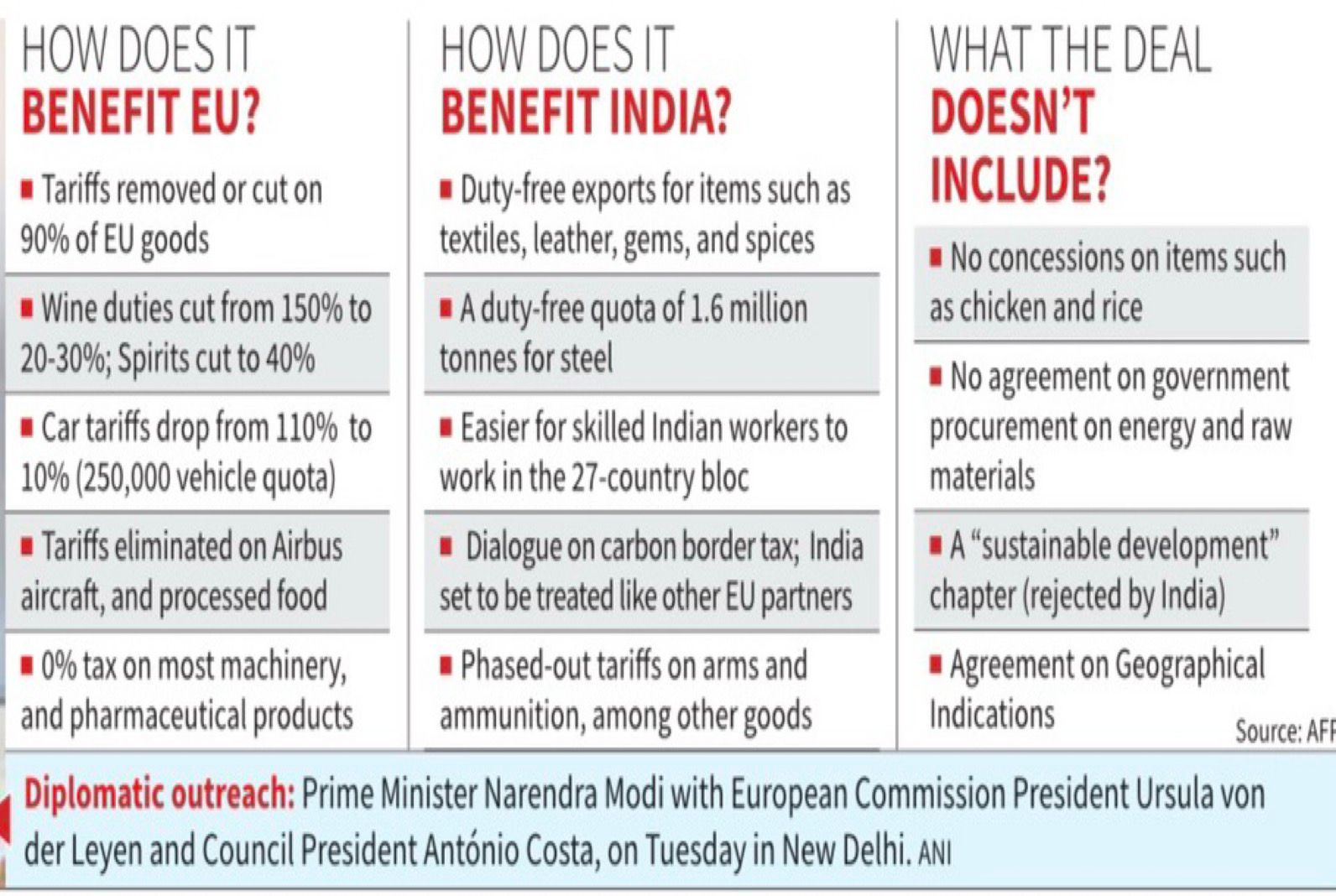
EU side • Tariffs removed/reduced on ~90% EU goods • Wine duties: 150% → 20–30% • Car tariffs: 110% → 10% (quota: ~2.5 lakh vehicles) • Zero duty on most machinery & pharma products
India side • EU to drop tariffs on 99.5% of Indian exports • 97% of Indian export value gets duty-free access from Day 1 • Remaining ~2.9% phased out over 3–5 years
Key Gains for India • Duty-free exports: textiles, leather, gems & jewellery, spices • Easier mobility for skilled Indian professionals in EU • Duty-free quota: 1.6 million tonnes of steel • Boost to manufacturing, MSMEs, services • Reduced strategic dependence; diversification of trade partners
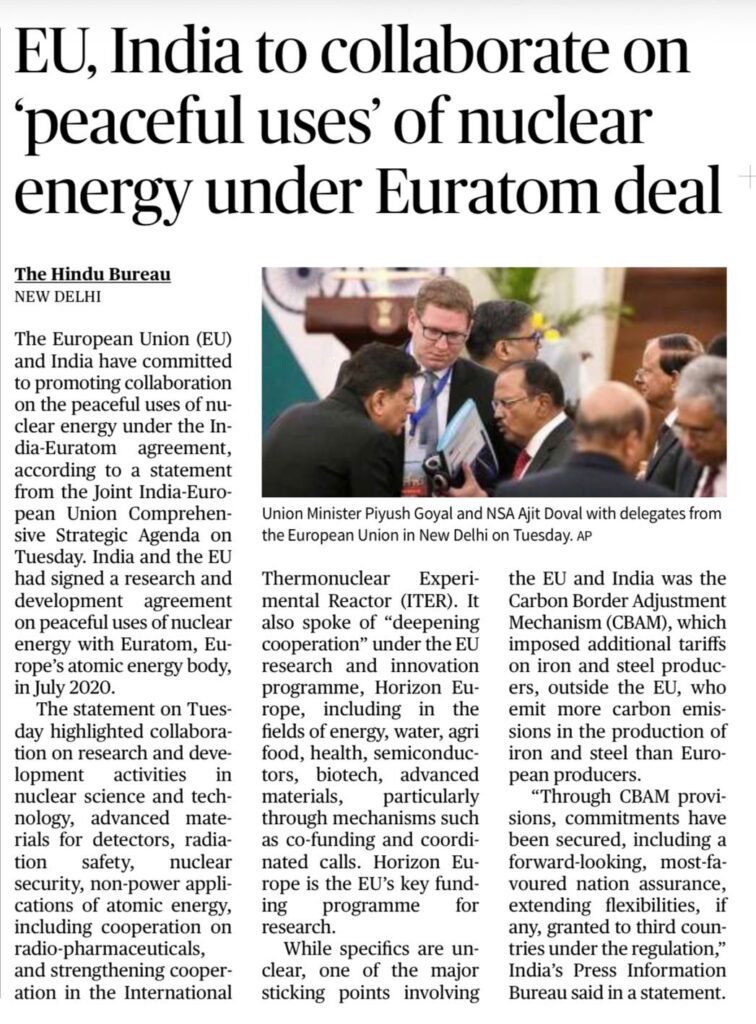
Context India and the EU have agreed to deepen cooperation on peaceful uses of nuclear energy under the India–Euratom framework, alongside broader strategic and trade engagement.
India–EU Nuclear Cooperation (Euratom) • Focus: Peaceful uses of nuclear energy • Framework: India–Euratom Agreement (signed July 2020) • Key areas: • Nuclear R&D • Radiation safety • Nuclear security • Advanced materials • Radio-pharmaceuticals • Non-power applications • Mode: Joint research, co-funding, coordinated calls under EU’s Horizon Europe
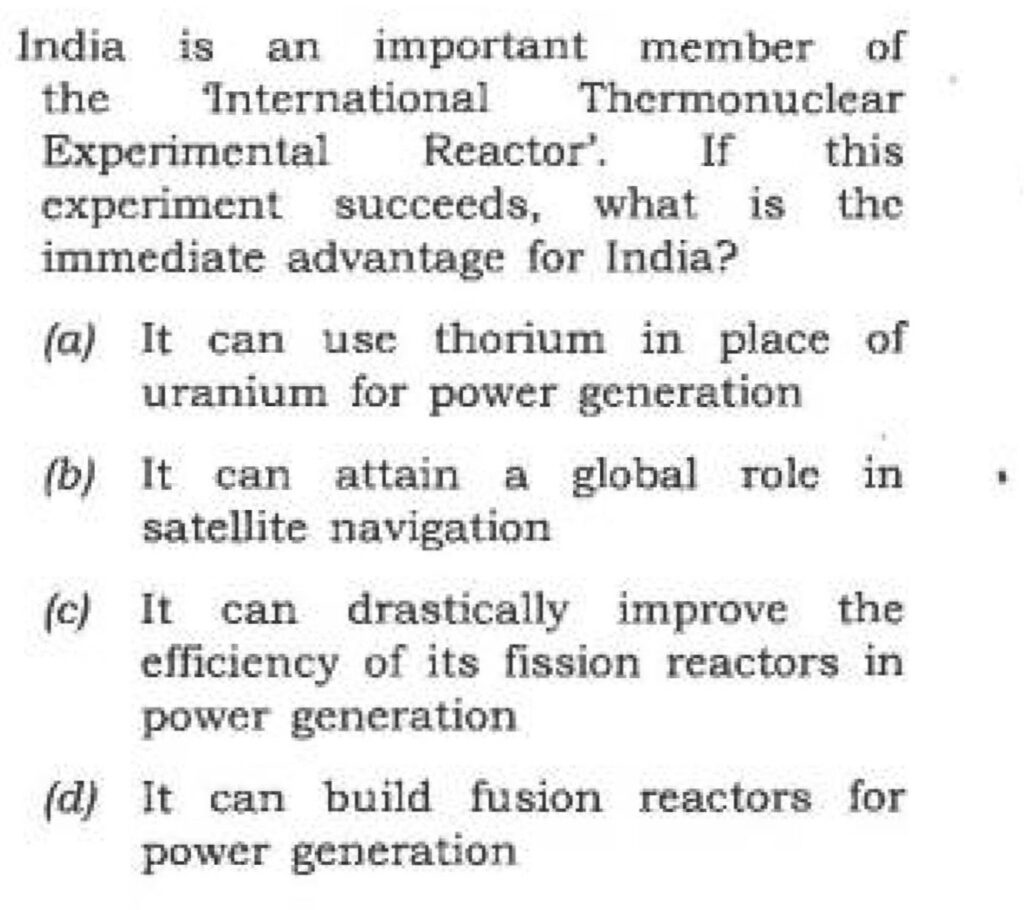
ITER — In one glance • ITER: International Thermonuclear Experimental Reactor • Aim: Demonstrate controlled nuclear fusion as a clean, long-term energy source • Location: Cadarache, France • Members: EU, India, US, Russia, China, Japan, South Korea • India’s role: Superconducting magnets, cryostat, cooling systems • Significance: Future low-carbon, high-output energy
CBAM & India-EU FTA (27 January) — What was concluded • CBAM raised by India as a concern • EU agreed to: • Dialogue & flexibility during transition phase • MFN-like assurances and forward-looking commitments • Continued engagement to address impact on Indian steel/iron exports • Status: CBAM not removed, but safeguards and consultations built into FTA process
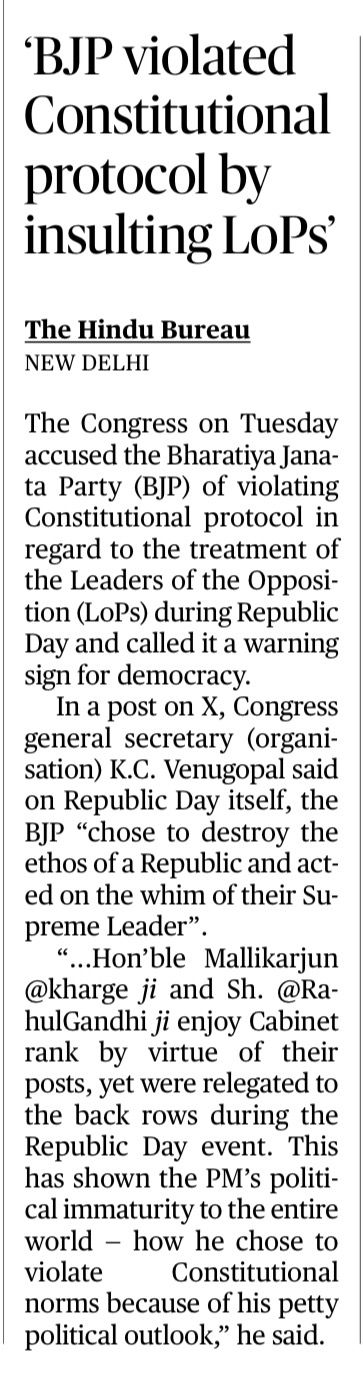
Context Opposition alleges breach of constitutional norms over treatment of Leaders of Opposition (LoPs) during Republic Day.
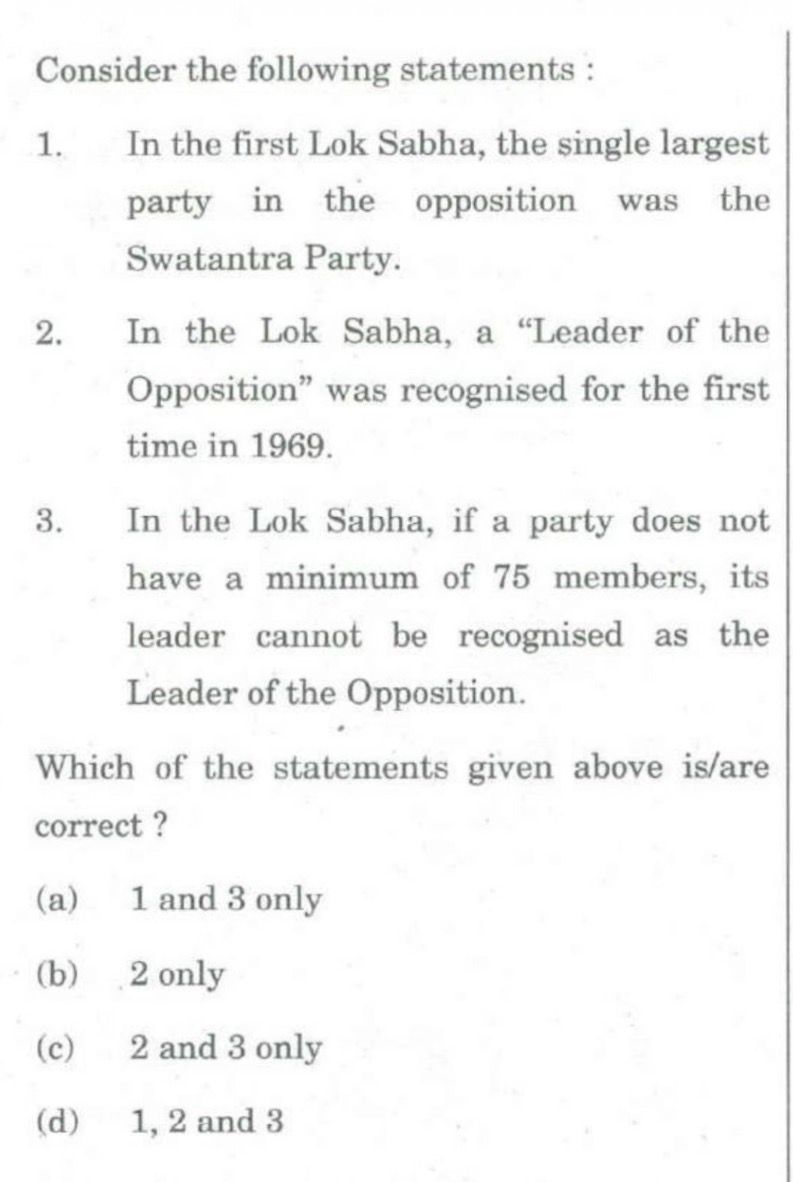
Leader of Opposition (LoP): Key Basics • Who: Leader of largest opposition party in Lok Sabha / Rajya Sabha • Condition: Party must have ≥10% seats in the House • Status: Statutory (Salary and Allowances of LoP Act, 1977)h • Rank: Equivalent to Cabinet Minister • Role: Ensures accountability, voices opposition • Key panels: CBI, CVC, CIC, Lokpal selection committees • Vacancy: No LoP if 10% rule not met
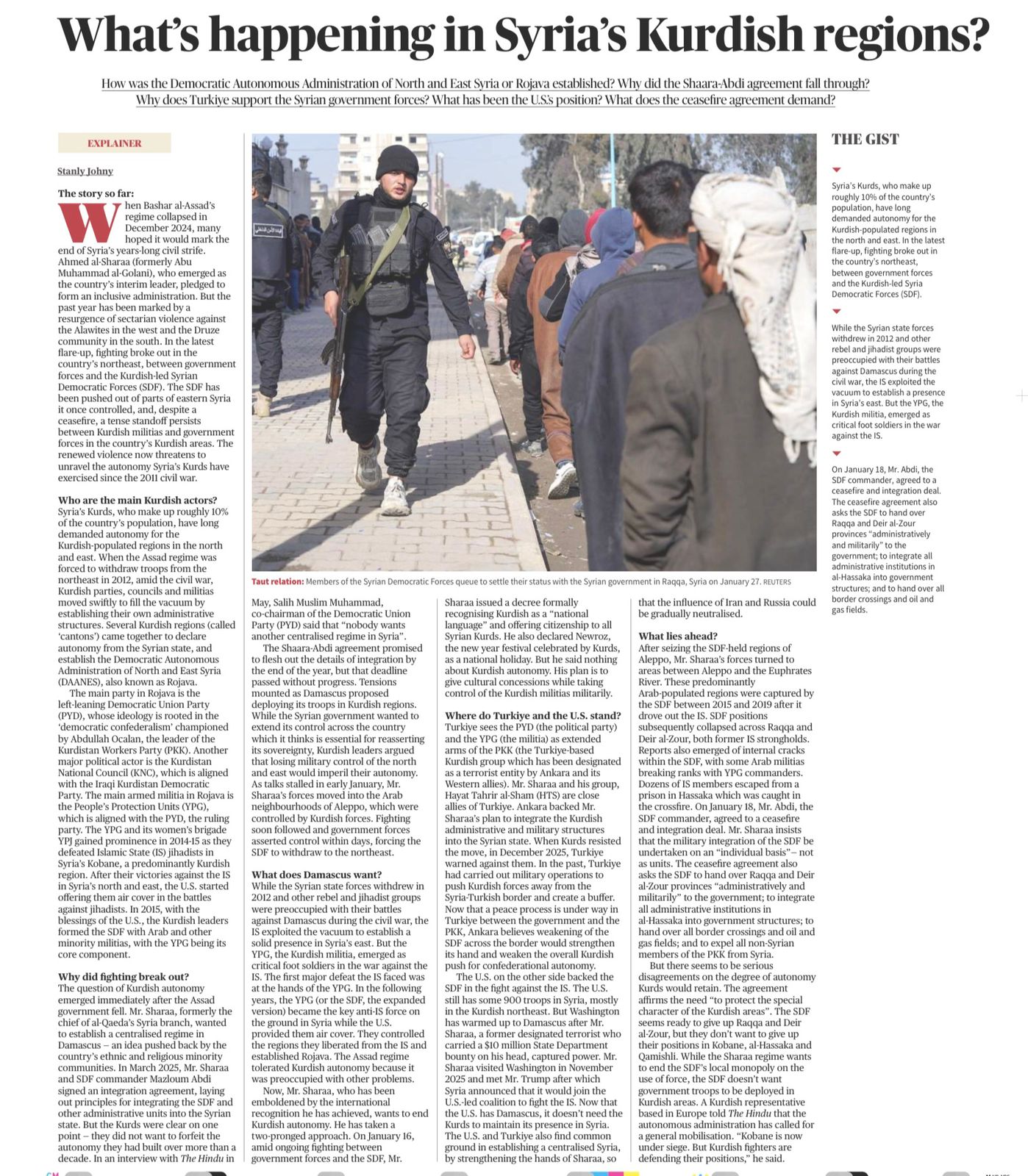
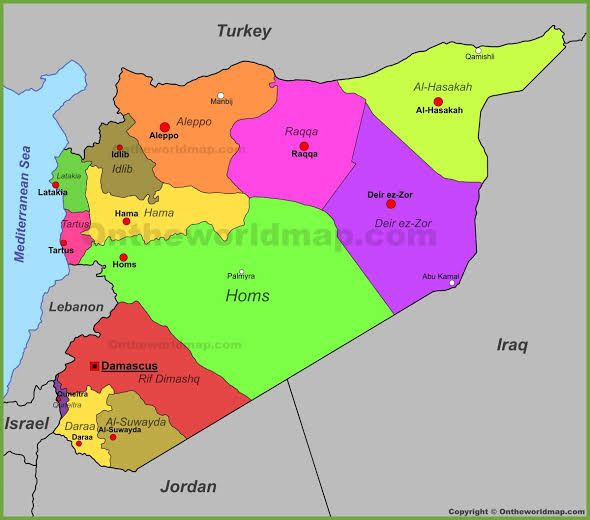
Context After the collapse of Bashar al-Assad’s regime (December 2024), renewed fighting has erupted in northern and eastern Syria between Syrian government forces and the Kurdish-led Syrian Democratic Forces (SDF), threatening the autonomous Kurdish administration established during the civil war.
Kurdish Regions in Syria
Kurdish Regions in Syria
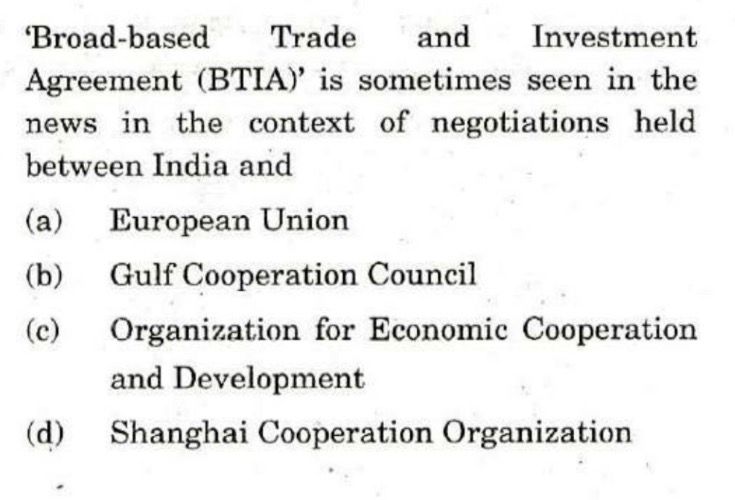
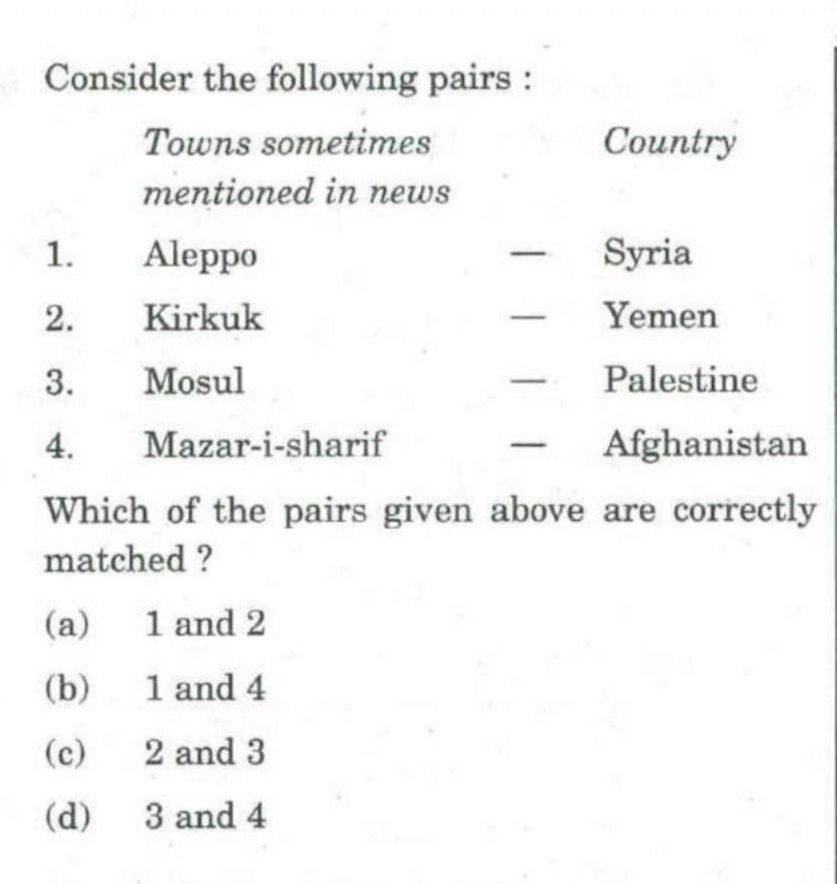
PYQ – 2018 ( Ans – B )
A Platform OF The Students For The Students By The Students