Europe Heatwave Climate Change: WWA Study Explained
Context: Europe Heatwave Climate Change
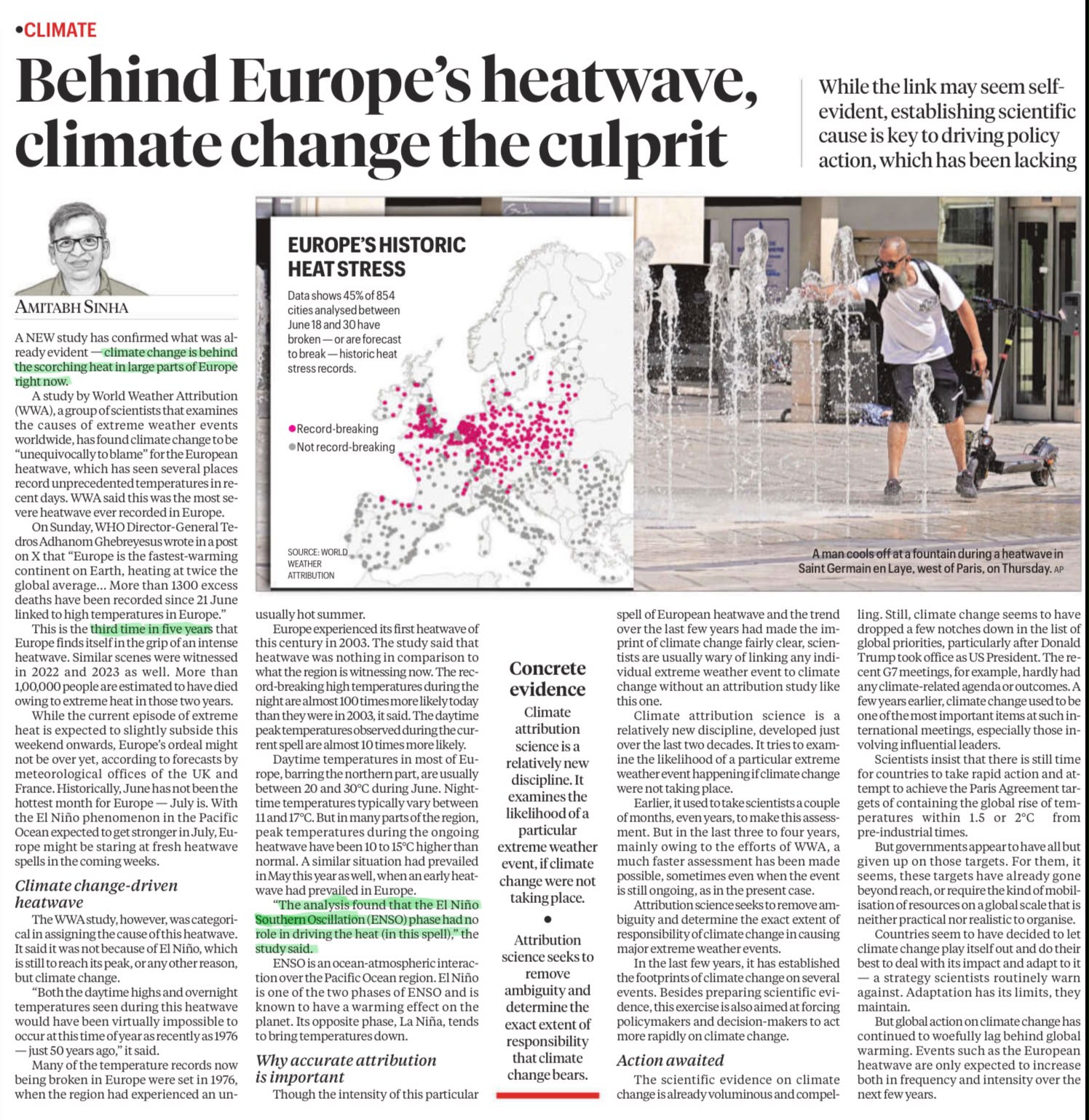
A World Weather Attribution study concluded that the ongoing European heatwave is primarily driven by human-induced climate change, while El Niño–Southern Oscillation had no significant role.
The study strengthens scientific evidence linking climate change with extreme weather events.
Why Is Europe Facing an Extreme Heatwave?
Primary Cause
Anthropogenic greenhouse gas emissions have increased global temperatures, making heatwaves:
- More frequent
- More intense
- Longer lasting
Why Not ENSO?
Scientists found that the present European heatwave cannot be attributed to El Niño.
Climate change is the dominant driver.
Climate Attribution Science
Climate attribution science estimates how much climate change has increased the probability or intensity of an extreme weather event.
Key Findings
- 45% of 854 European cities recorded or equalled historic June heat records.
- More than 1,300 heat-related deaths reported since 21 June.
- The present heatwave is about 100 times more likely than a similar event in 2003.
- Daytime temperatures were 2–4°C higher due to climate change.
- Night temperatures increased by 1–4°C, increasing heat stress.
Why Night Temperatures Matter
High night temperatures are dangerous because the human body gets less time to recover from daytime heat.
This increases risks of:
- Heat stroke
- Dehydration
- Cardiovascular stress
- Mortality among elderly people
- Health risks for outdoor workers
Climate Change and Heatwaves
Climate change intensifies heatwaves by:
- Raising baseline temperatures
- Increasing atmospheric heat retention
- Worsening urban heat island effects
- Increasing frequency of extreme temperature events
- Creating longer warm spells
Disaster Management Relevance
Governments need:
- Heat Action Plans
- Early warning systems
- Cooling centres
- Public health advisories
- Urban greening
- Heat-resilient housing
- Worker safety norms
- Protection for elderly and vulnerable groups
Indian Context
India also faces increasing heatwave risk due to climate change.
This makes heatwave preparedness important for:
- Urban planning
- Public health
- Labour welfare
- Agriculture
- Water management
- Disaster risk reduction
Key Takeaway
Europe’s heatwave shows that climate change is no longer a distant environmental issue. It is already increasing extreme weather risks, public health burdens and disaster-management challenges.