Core Thesis
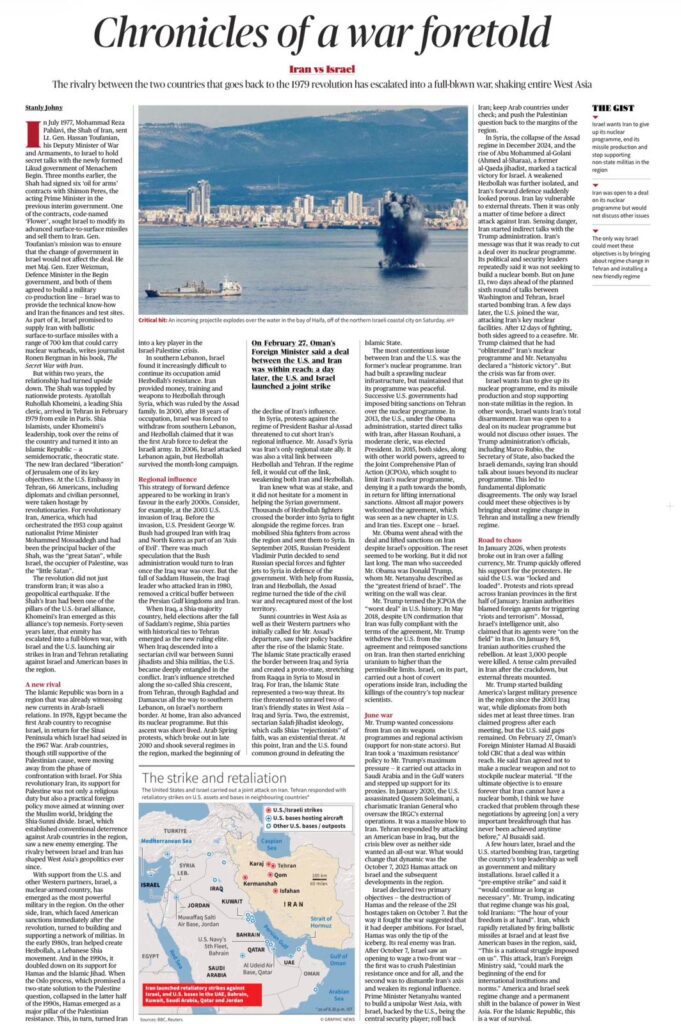
The Iran–Israel war is not sudden. It is the culmination of decades of ideological hostility, proxy conflict, failed nuclear diplomacy and recent regional destabilisation.
Historical Evolution
- Pre-1979: Iran (Shah era) had working ties with Israel and the U.S.
- 1979 Islamic Revolution: Iran became ideologically anti-Israel and anti-U.S.
- Israel began treating Iran as a long-term existential threat.
Proxy War Phase
For decades, confrontation remained indirect:
Iran:
- Built regional network (Hezbollah, Hamas, allied militias)
- Used proxies to pressure Israel
Israel:
- Airstrikes in Syria
- Targeted Iranian assets
- Prevented Iranian entrenchment near borders
Nuclear Trigger
- Iran expanded uranium enrichment
- 2015 nuclear deal collapsed after U.S. withdrawal
- Israel considers nuclear-capable Iran unacceptable
Immediate Escalation (2025–26)
- Gaza war reshaped Israeli security thinking
- Syrian instability exposed Iranian networks
- Oman mediation failed
- Israel launched pre-emptive strikes
- Iran retaliated with direct missile attacks
Shift: Proxy war → Open confrontation
Strategic Objectives
Israel:
- Degrade nuclear capability
- Dismantle militia infrastructure
- Restore deterrence
Iran:
- Preserve regime
- Maintain regional influence
- Avoid strategic humiliation
Wider Implications
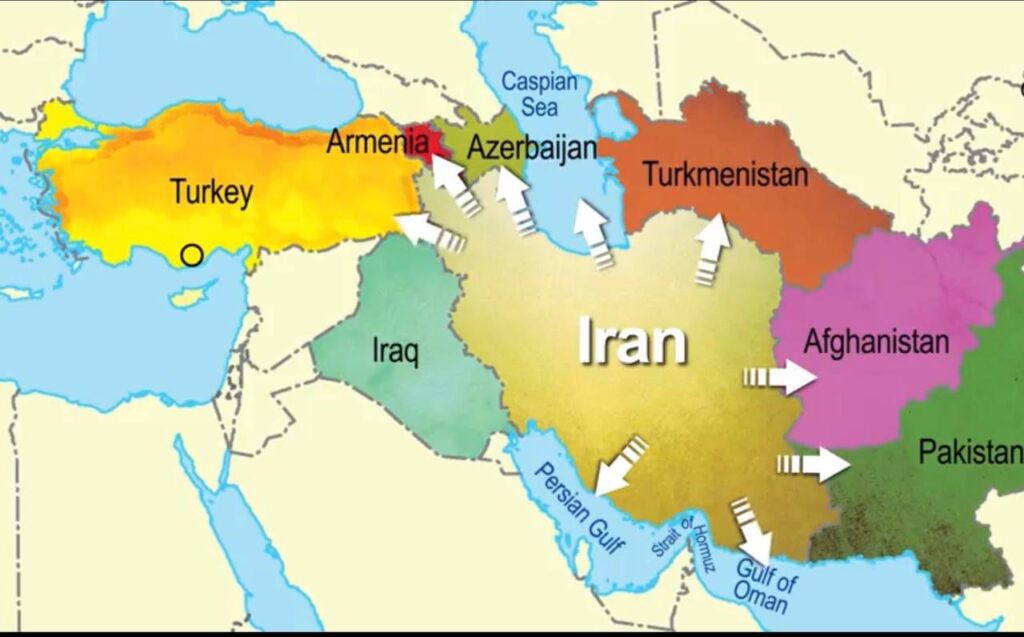
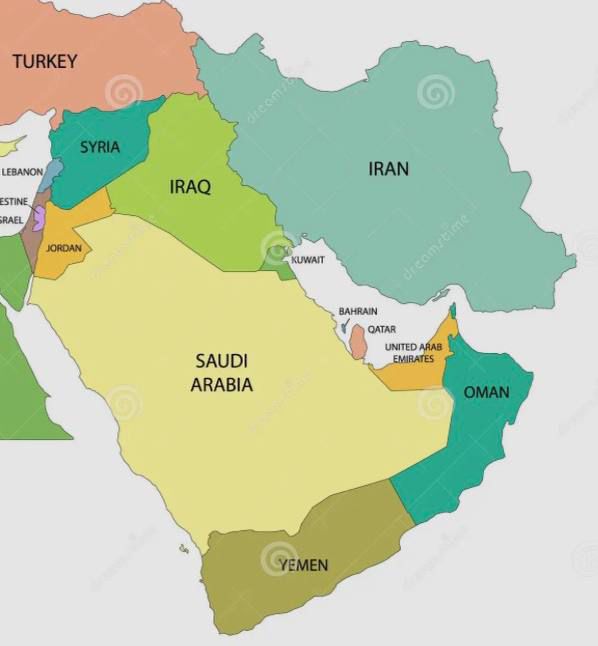
- Strait of Hormuz risk
- U.S. involvement deepening
- Gulf states cautious
- Long-term regional instability