
Floating Solar Photovoltaic Potential in India: 102 GW Capacity Report
Context: Floating Solar Capacity in India
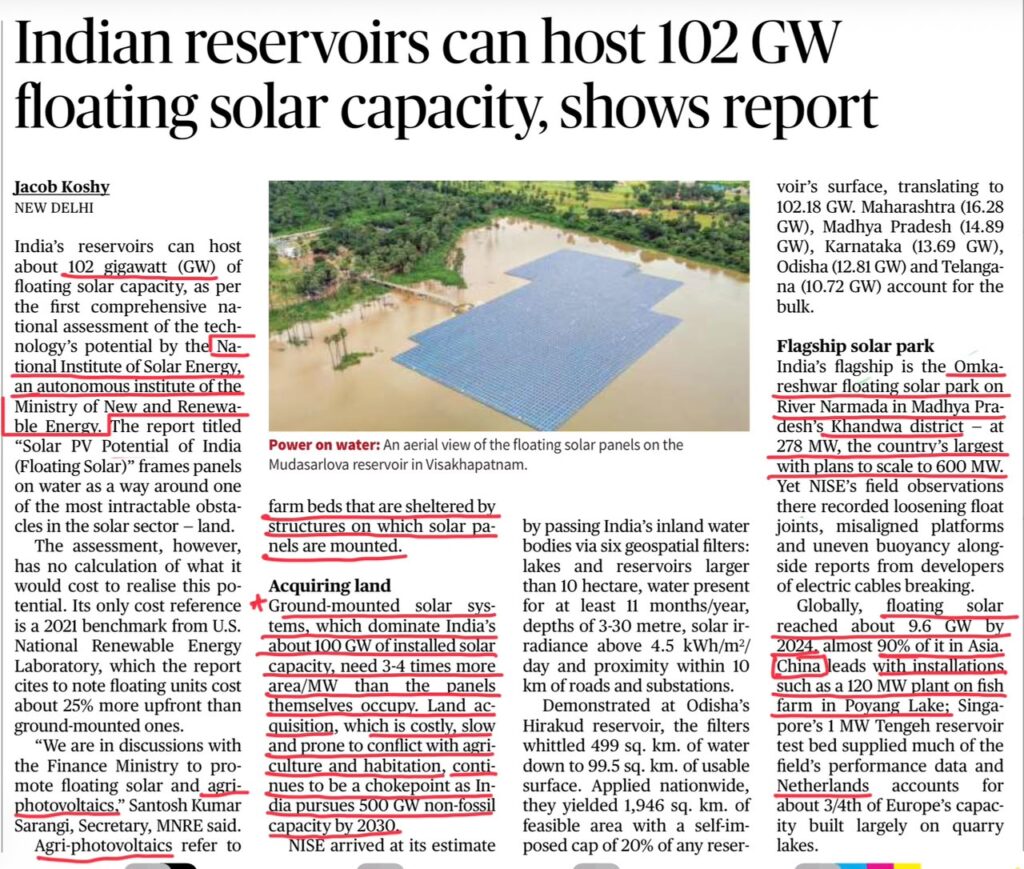
A National Institute of Solar Energy report estimates that India’s reservoirs can support 102.18 GW of Floating Solar Photovoltaic capacity.
Floating Solar and NISE
Floating Solar Photovoltaic
- Solar panels installed on floating structures over reservoirs and lakes.
Importance
- Reduces land requirement.
- Ground-mounted solar faces land constraints.
- Ground-mounted solar requires 3–4 times more land per MW than the panel area.
- Utilises unused water surfaces.
- Reduces evaporation losses.
National Institute of Solar Energy
Status
- Autonomous institution under the Ministry of New and Renewable Energy
Role
- Apex body for solar energy research, testing and certification.
Important Point
- It is not a statutory body.
Value Addition
India’s largest floating solar project
- Omkareshwar Floating Solar Park, Madhya Pradesh
- Capacity: 278 MW
- Planned expansion: 600 MW
Global floating solar capacity
- 9.6 GW in 2024
- China leads globally
- Asia accounts for nearly 90% of installed capacity
India’s renewable energy rank
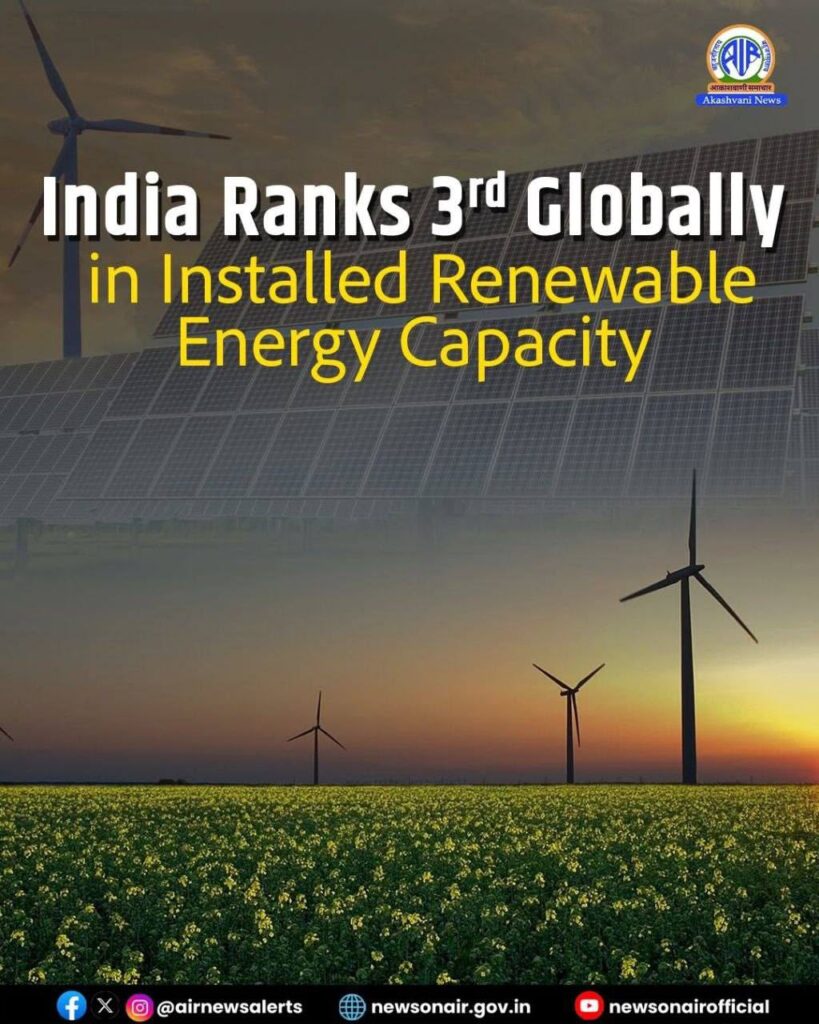
- India ranks 3rd globally in installed Renewable Energy capacity.
- China ranks 1st.
- USA ranks 2nd.
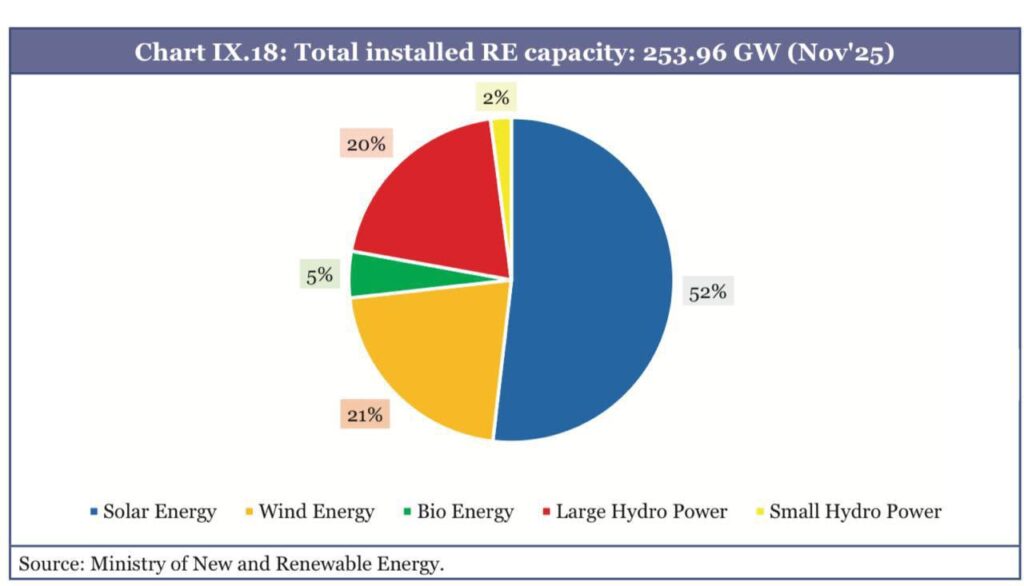
India’s Renewable Energy Mix
Total installed Renewable Energy capacity: 253.96 GW, November 2025
- Solar Energy — 52%
- Wind Energy — 21%
- Large Hydro Power — 20%
- Bio-Energy — 5%
- Small Hydro Power — 2%
Agrivoltaics
Agrivoltaics means cultivation of crops beneath or alongside elevated solar panels.
Benefits
- Dual use of land — agriculture and solar power.
- Additional income for farmers.
- Reduces land acquisition conflicts.