12 March 2026 | Daily Current Affairs

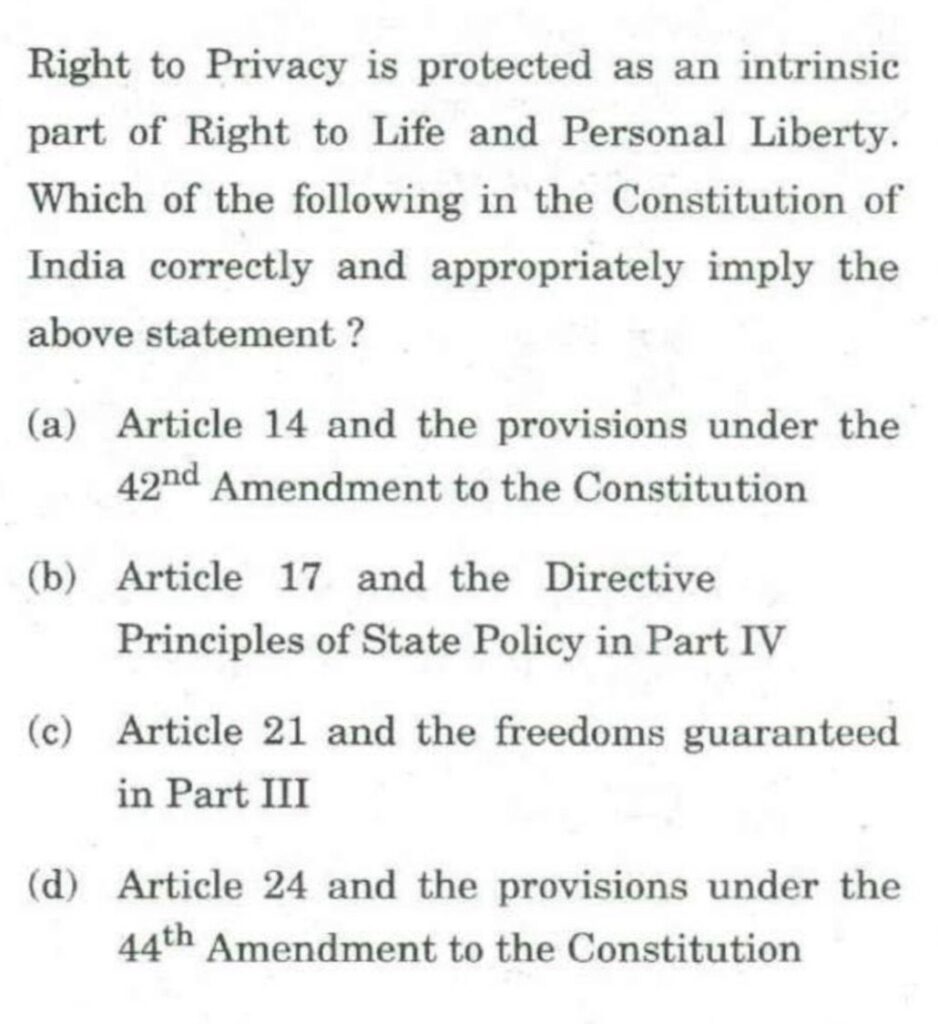
Passive Euthanasia in India: Supreme Court Upholds Right to Die with Dignity under Article 21

Context
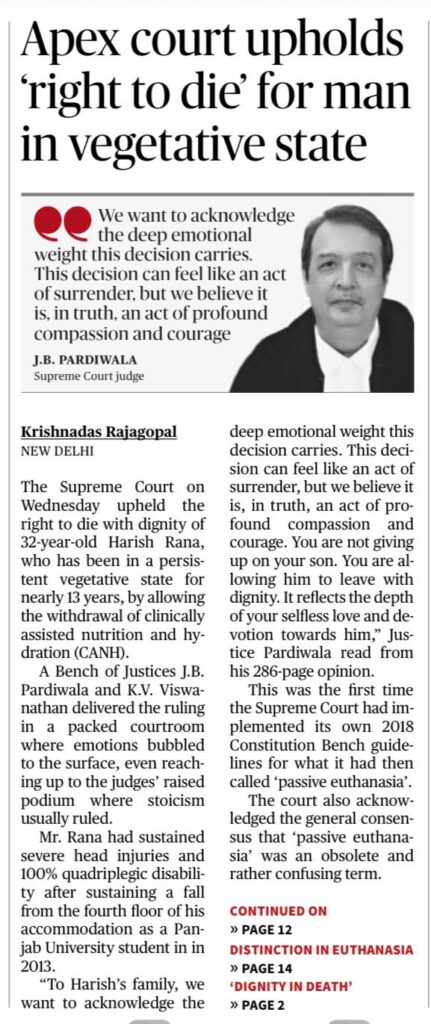
The Supreme Court allowed the withdrawal of clinically assisted nutrition and hydration (CANH) for a man in a persistent vegetative state, reaffirming that the right to die with dignity flows from Article 21 of the Constitution.

Passive Euthanasia

• Passive euthanasia refers to withdrawal or withholding of life-sustaining treatment, such as ventilators, feeding tubes or critical medicines.
• It allows natural death to occur when recovery is medically impossible.
• Importantly, there is no direct act to cause death, unlike active euthanasia.
• In India, passive euthanasia is permitted with strict safeguards under Article 21.

Historical Evolution

Aruna Shanbaug Case (2011)

  • The Supreme Court first recognised passive euthanasia.
  • However, strict approval from courts was required.

Common Cause vs Union of India (2018)

  • The Court ruled that Article 21 includes the right to die with dignity.
  • It also legally recognised the concept of a Living Will, allowing individuals to specify medical decisions in advance.

Present Case

• The recent ruling is not the first recognition of passive euthanasia.
• However, it is one of the first major instances where the Supreme Court itself applied the 2018 safeguards to permit withdrawal of CANH.

Key Observations of the Court

• Artificially prolonging life without the possibility of recovery violates the dignity guaranteed under Article 21.
• Withdrawal of CANH was permitted after medical confirmation of an irreversible and long-term vegetative condition.

Safeguards

The Court mandated safeguards before withdrawal of life-support:
• Approval from a medical board of doctors.
Consent of the family.
• Judicial oversight to ensure the decision is ethical and voluntary.
PYQ – 2018, Ans – C

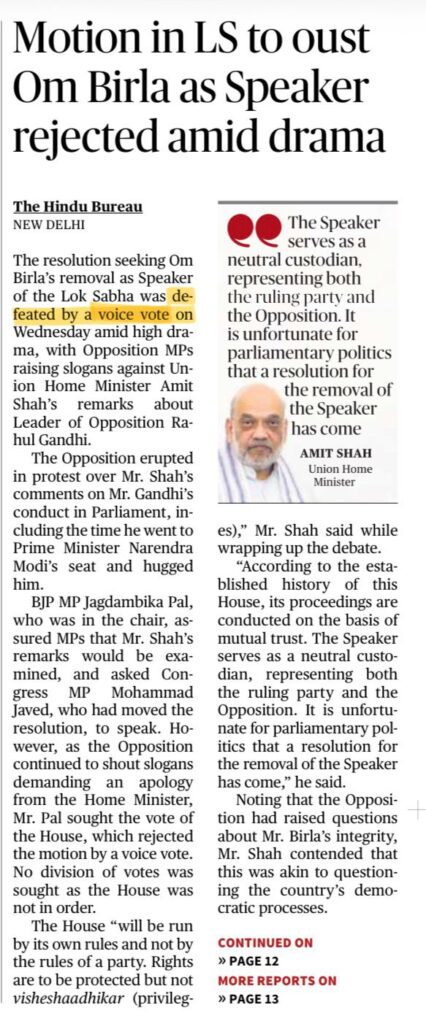
Removal of Lok Sabha Speaker: Constitutional Procedure under Articles 93 and 94

Context
A resolution seeking the removal of Lok Sabha Speaker Om Birla was introduced but was defeated by voice vote.

Constitutional Basis

Article 93 — Provides for the election of the Speaker and Deputy Speaker of the Lok Sabha.
Article 94 — Specifies the procedure for removal of the Speaker or Deputy Speaker.

Notice Requirement

• At least 50 Members of Parliament must support the notice.
• The motion must be given 14 days in advance before being taken up in the House.

Majority Required

• Removal requires an Effective Majority, meaning:
Majority of the total strength of the House minus vacant seats.

Procedure During the Motion

• The Speaker cannot preside over the House when a motion for removal is being considered.
• The proceedings are instead chaired by the Deputy Speaker or another member.

Speaker’s Rights

• The Speaker can participate in the debate.
• The Speaker can also vote during the proceedings.

Voting Methods

Voice Vote — Members verbally support or oppose; exact numbers are not counted.
Division — A formal vote where the exact number of votes is recorded.

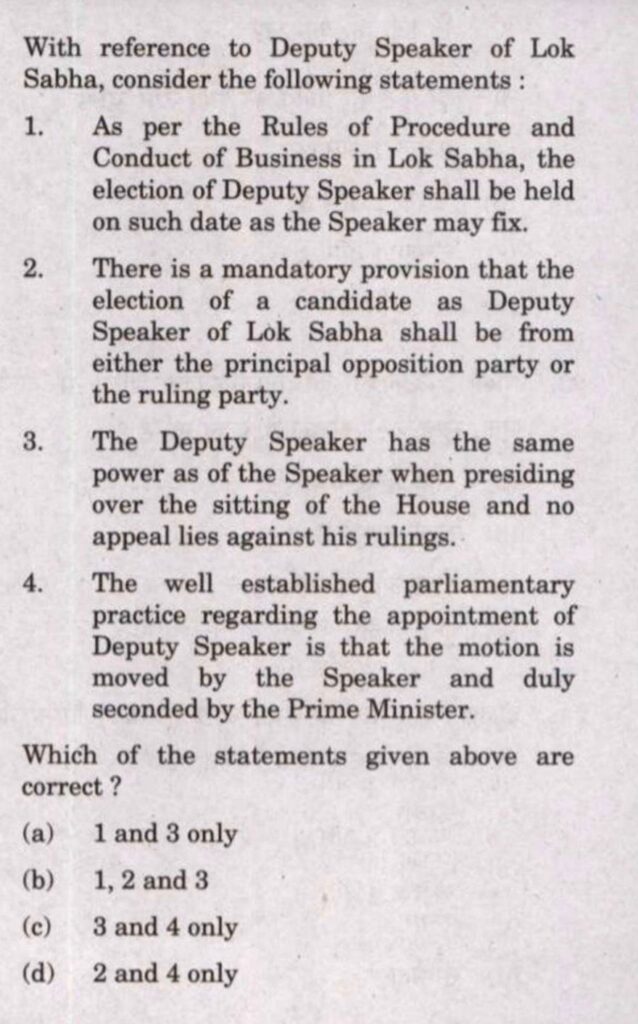
PYQ – 2022, Ans – A

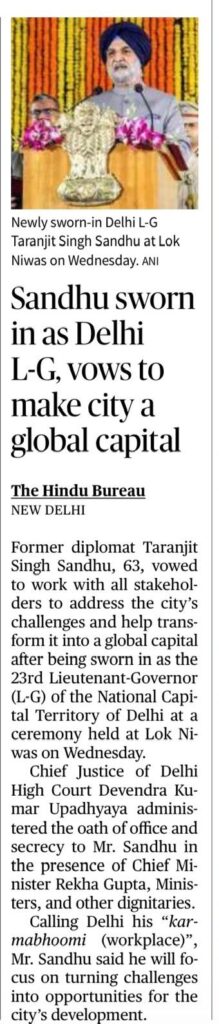
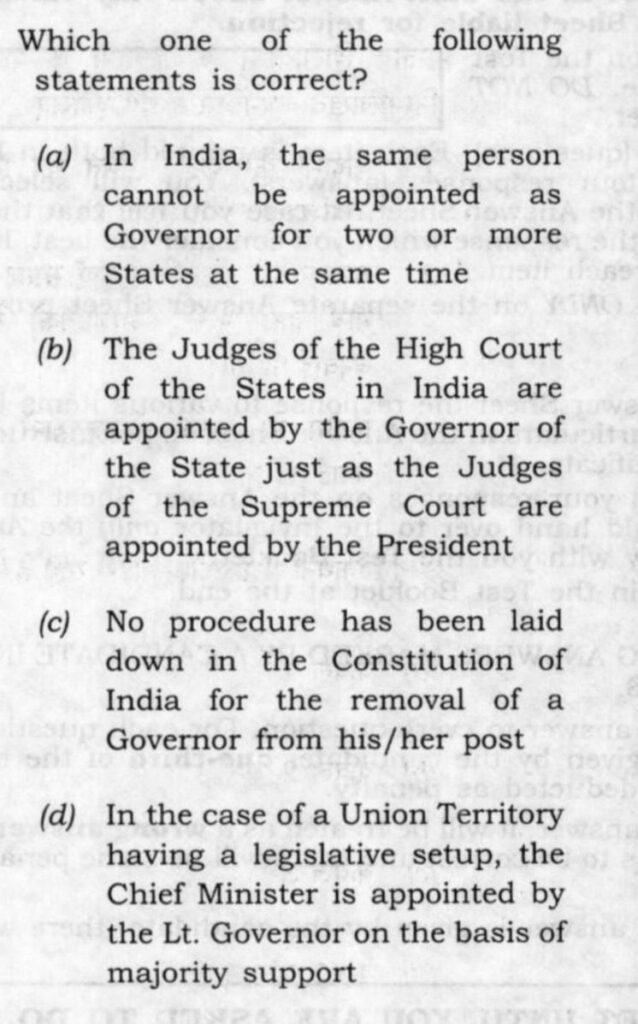
Lieutenant Governor of Delhi: Appointment, Powers and Constitutional Provisions

Context
Taranjit Singh Sandhu was sworn in as the Lieutenant Governor (L-G) of the National Capital Territory of Delhi.

Constitutional Framework

Article 239
• Union Territories are administered by the President through an Administrator or Lieutenant Governor.

Article 239AA
• Provides special constitutional provisions for Delhi.
• Establishes an elected Legislative Assembly and Council of Ministers, but with certain subjects reserved for the Union Government.

Article 239A
• Provides for legislature and council of ministers for certain Union Territories, currently applicable mainly to Puducherry.

Appointment and Tenure

• The Lieutenant Governor is appointed by the President of India.
• The L-G holds office during the pleasure of the President, meaning there is no fixed tenure.


Position and Role

• The L-G functions as the Administrator representing the President in the Union Territory.
• Normally acts on the aid and advice of the Council of Ministers in Delhi and Puducherry.

Special Powers in Delhi

The L-G has special responsibility over certain subjects, including:

• Public Order
• Police
• Land

• In case of disagreement between the elected government and the L-G, the matter may be referred to the President.

PYQ – 2013, Ans – C

India LPG Import Dependence: Impact of West Asia Conflict and Ujjwala Scheme

Context
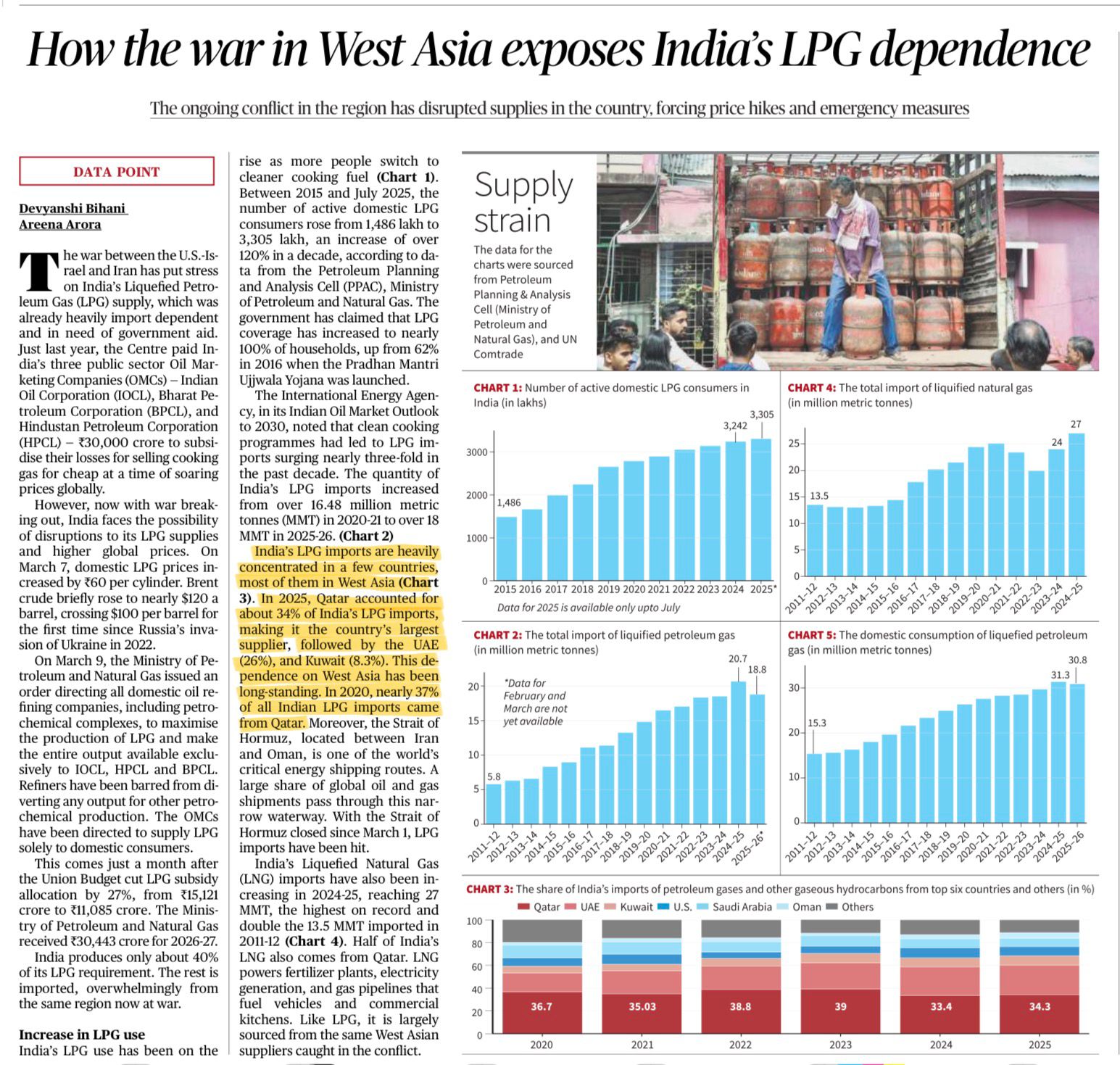
The conflict in West Asia has disrupted global energy supply chains, highlighting India’s growing dependence on LPG imports and increasing the risk of price rises and supply shortages.

Important Data

Domestic LPG Consumers

• 2015 → 1,486 lakh consumers
• 2025 → 3,305 lakh consumers

LPG Imports

• 2011–12 → 5.8 million metric tonnes (MMT)
• 2025–26 → about 18.8 MMT

Domestic LPG Consumption

• 2011–12 → 15.3 MMT
• 2025–26 → about 31 MMT

LNG Imports

• 2011–12 → 13.5 MMT
• 2024–25 → 27 MMT

Import Dependence

• Qatar supplies about 34% of India’s LPG imports.
• Overall dependence on West Asia remains very high, making India vulnerable to geopolitical disruptions.


Why LPG Consumption Increased — Pradhan Mantri Ujjwala Yojana

Launch • Introduced in 2016.

Ministry • Implemented by the Ministry of Petroleum and Natural Gas.

Objective • Provide deposit-free LPG connections to poor households, particularly women.

Implementation • Executed through Oil Marketing Companies (OMCs):

  • Indian Oil Corporation (IOCL)
  • Bharat Petroleum (BPCL)
  • Hindustan Petroleum (HPCL)

• Expanded through Ujjwala 2.0.

Impact

• Promotes clean cooking fuel.
• Reduces indoor air pollution and health risks from traditional biomass fuels.

India Oil Imports from Russia: Reliance US Refinery Deal and Energy Security

Context
Due to global energy disruptions linked to the West Asia conflict, India is balancing its energy security through overseas investments and diversified crude oil sourcing.

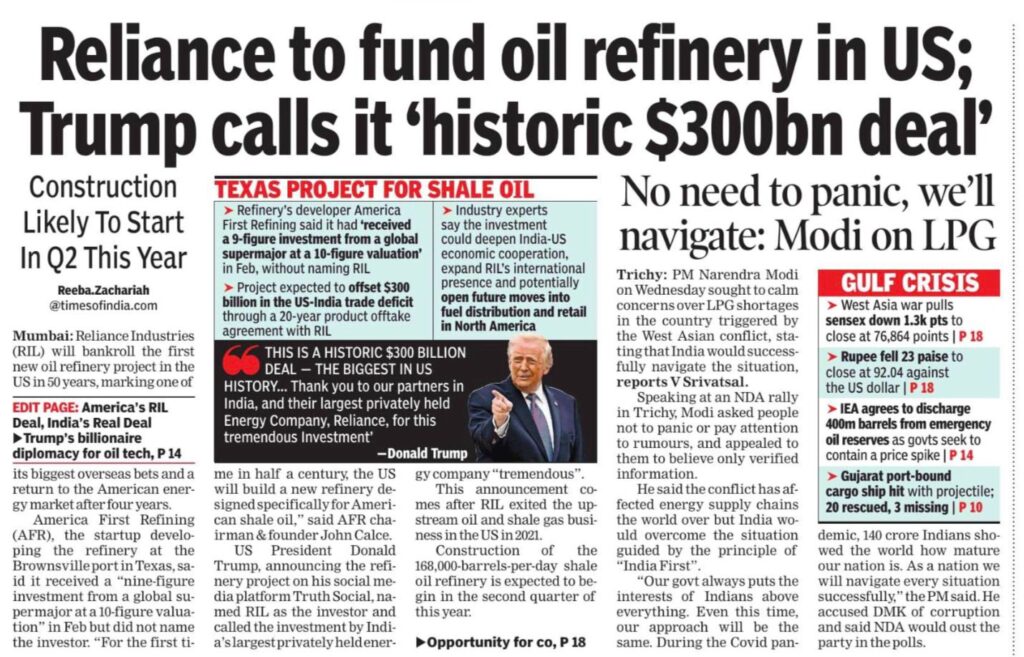
Reliance US Refinery Project

• Reliance Industries plans to fund a new shale-oil refinery in Texas through America First Refining.
• It represents one of the largest overseas energy investments by an Indian company.
• The project is expected to strengthen India–US energy cooperation.
• It may also offset part of the US-India trade deficit through long-term energy trade.


India’s Oil Import Trends

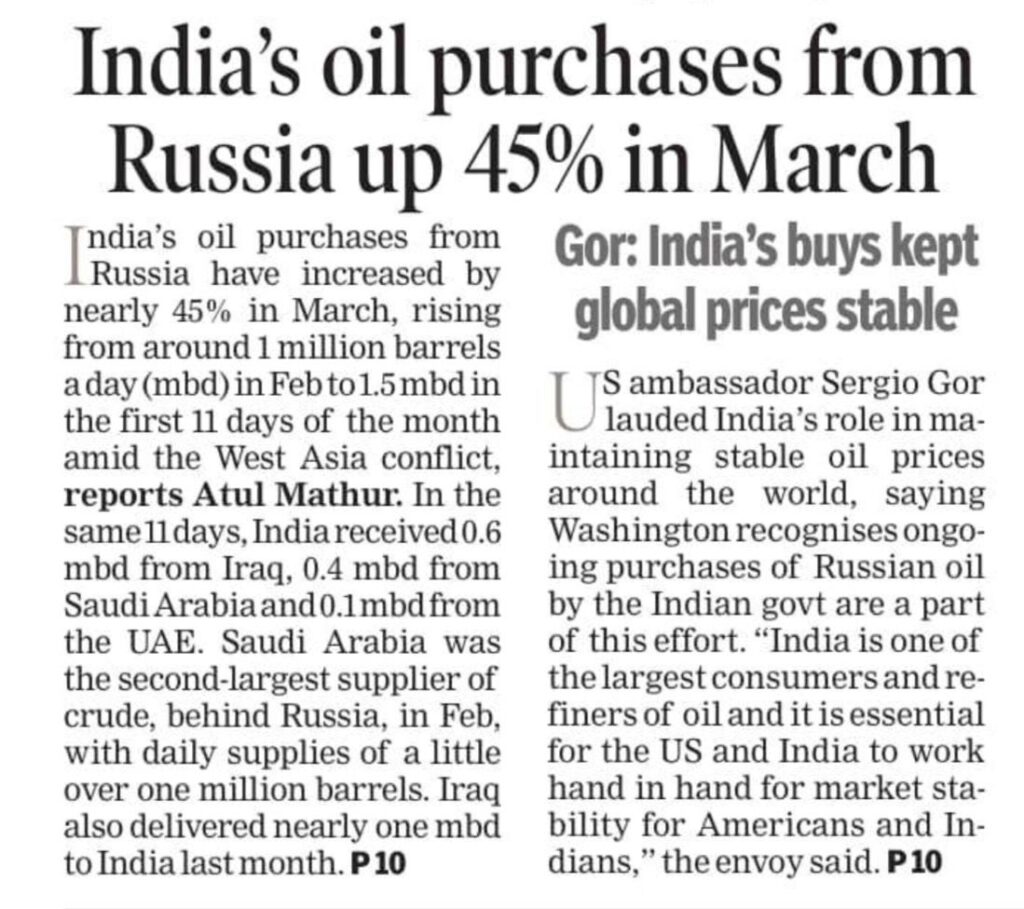
• India’s crude oil purchases from Russia increased about 45% in March.
• Imports rose from around 1 million barrels per day (mbd) to about 1.5 mbd.

Other Major Oil Suppliers

Iraq — around 0.6 mbd
Saudi Arabia — around 0.4 mbd
United Arab Emirates — around 0.1 mbd

Global Significance• The United States believes India’s continued oil purchases help stabilise global oil markets during supply disruptions.

About the UPSC Civil Services Examination (UPSC CSE)

The UPSC Civil Services Examination (CSE) is one of the most competitive and esteemed examinations in India, conducted by the Union Public Service Commission to recruit officers for services such as the Indian Administrative Service (IAS), Indian Police Service (IPS), Indian Foreign Service (IFS), and others. The exam comprises three stages — Prelims, Mains, and the Personality Test (Interview) — designed to test a candidate’s knowledge, aptitude, decision-making, and leadership skills.


How to Prepare Effectively for UPSC CSE

Cracking the UPSC CSE requires a deep understanding of the syllabus, consistent revision, structured answer writing, and smart test-taking strategies. The Prelims test analytical and conceptual clarity, the Mains focuses on critical thinking, articulation, and subject mastery, while the Interview assesses presence of mind, ethical judgment, and personality traits relevant to public service.

At UnderStand UPSC, we empower aspirants with a personalized and focused approach to each stage of the exam.


Why Choose UnderStand UPSC?

UnderStand UPSC is a mentorship-driven platform offering a clear, clutter-free strategy to tackle the Civil Services Examination. Our programs like Transform (for beginners and intermediate learners) and Conquer (for advanced mains preparation) provide structured study plans, syllabus-wise video content, interactive live sessions, and answer writing support.

We emphasize:

  • Concept clarity through topic-wise lectures

  • Test series designed around real UPSC standards

  • Personalized mentorship in small groups

  • Regular performance tracking and peer benchmarking

  • Doubt-clearing sessions, current affairs analysis, and monthly magazines


Join the UnderStand UPSC Learning Community

Our mission is to make UPSC preparation less overwhelming and more strategic. We combine mentorship, discipline, and academic rigor to help you clear CSE with confidence. Whether you’re preparing from Delhi, Mumbai, Bangalore, or a remote village — our online-first model ensures quality guidance reaches every corner of India.

Join the thousands of aspirants who trust UnderStand UPSC to guide their journey toward becoming civil servants.

Stay connected with us through our Telegram, YouTube, and Instagram channels for daily tips, strategies, and updates.

Copyright © 2026 USARAMBHA EDUCATION (UnderStand UPSC). All Rights Reserved.

Join the Success Journey!