
31 July 2026 | UPSC Daily Current Affairs

31 July 2026 | UPSC Daily Current Affairs

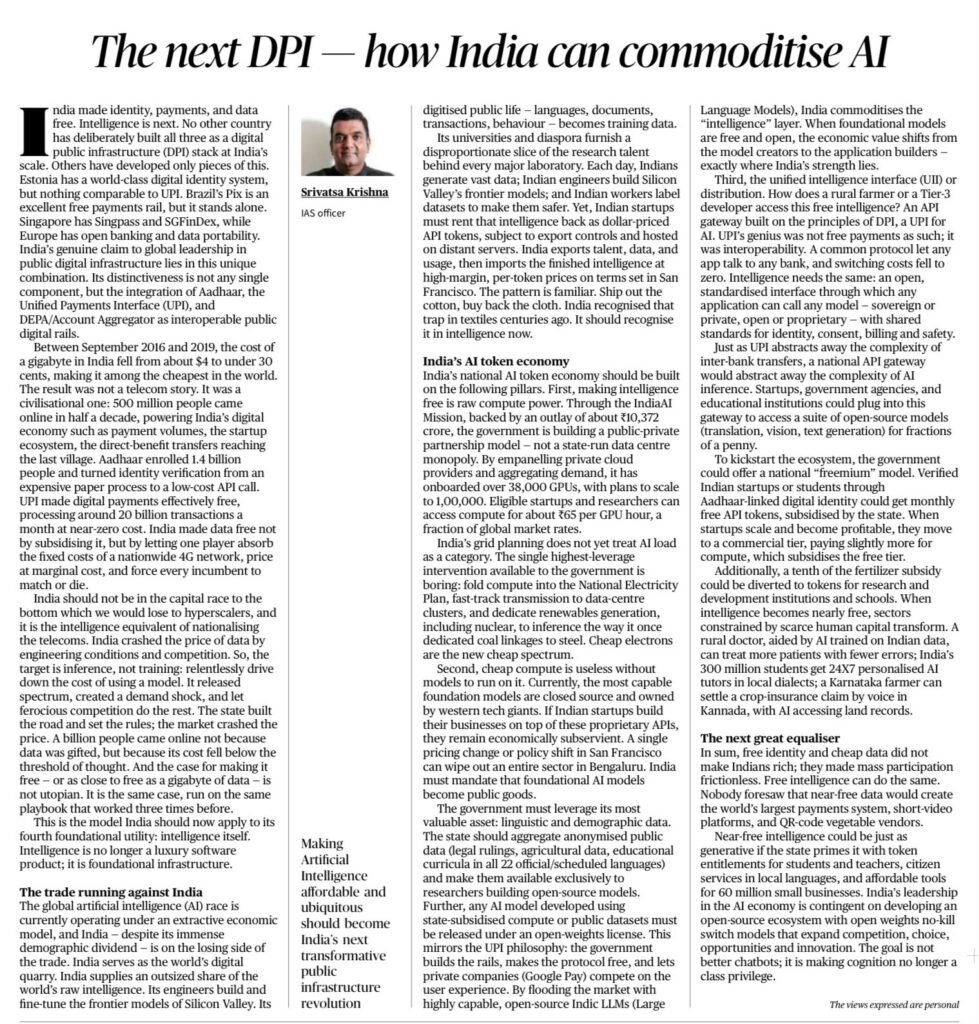
India AI Digital Public Infrastructure: DPI Model Explained

Context: India AI Digital Public Infrastructure
India is exploring how its successful Digital Public Infrastructure model can be extended to Artificial Intelligence.

The idea is to make AI affordable, accessible and widely usable, just as Aadhaar, UPI and Account Aggregator made digital identity, payments and data-sharing accessible at scale. The article argues that AI should not remain concentrated in the hands of a few large foreign technology companies.

Digital Public Infrastructure

Digital Public Infrastructure refers to open, interoperable digital systems that enable public and private services at scale.

India’s DPI ecosystem includes:

These platforms reduced transaction costs, increased digital inclusion and allowed startups, banks, government agencies and citizens to interact through common digital rails.

India’s AI Opportunity

India has several advantages in the AI race.

It has a large digital user base, huge volumes of data, skilled engineers, startups and strong experience in building population-scale digital systems.

However, India still depends heavily on foreign AI models, foreign cloud infrastructure and expensive computing systems.

This limits domestic value creation.

If India only consumes AI built elsewhere, it may lose control over data, innovation and strategic technology capability.

How DPI Can Be Extended to AI

India can build AI as a public digital layer.

This would include:

  • Affordable computing infrastructure
  • Open-source or open-weight foundation models
  • Public-private AI partnerships
  • Multilingual AI systems
  • Responsible use of public datasets
  • A common interface for AI access

The article also refers to the idea of a Unified Intelligence Interface, similar to UPI, through which citizens, startups, governments and institutions could access different AI models easily.

IndiaAI Mission

The IndiaAI Mission can play an important role by expanding domestic computing capacity and supporting AI innovation.

Affordable computing access is important because AI development requires high-end GPUs, energy and cloud infrastructure.

Without low-cost compute, Indian startups and researchers may remain dependent on foreign platforms.

Potential Benefits

A DPI-based AI model can support:

  • Technological self-reliance
  • Lower cost of AI adoption
  • Startup innovation
  • AI use in governance
  • AI tools in healthcare
  • AI support for agriculture
  • Personalised education
  • MSME productivity
  • Multilingual public services

It can also help India build AI for Indian languages, Indian datasets and Indian development needs.

Challenges

The main challenges include high computing and energy requirements.

AI systems also raise issues of data privacy, cybersecurity, misinformation, bias, accountability and ethical governance.

India will need clear regulatory safeguards so that AI access expands without harming rights, safety and public trust.

Key Takeaway

India’s next major digital public infrastructure can be AI. But to make AI truly democratic, India must build affordable compute, open models, multilingual tools and responsible governance frameworks.
India AI Digital Public Infrastructure

SHANTI Framework Bay of Bengal: Maritime Strategy Explained

Context: SHANTI Framework Bay of Bengal
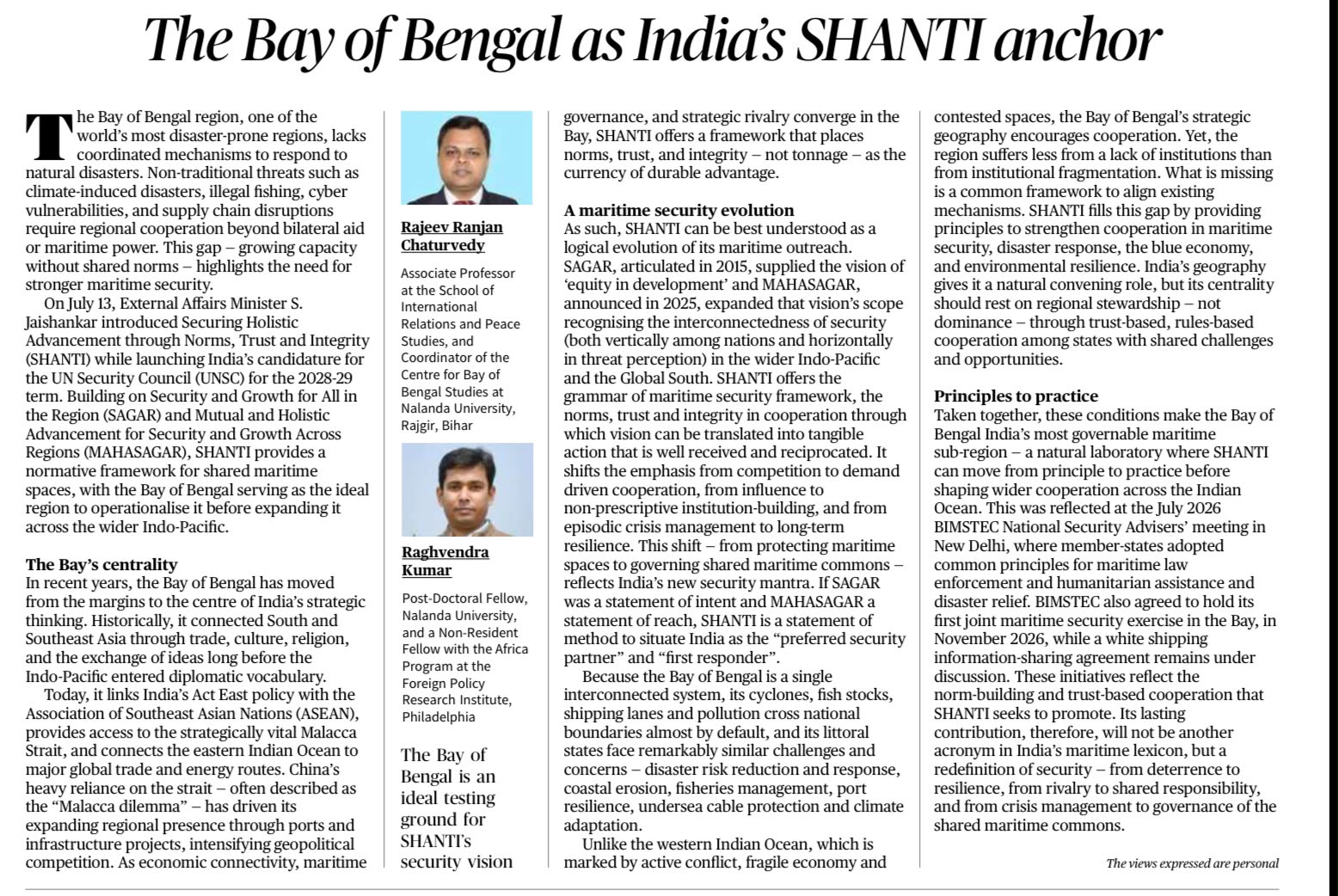
India has proposed SHANTI, or Securing Holistic Advancement through Norms, Trust and Integrity, as a maritime governance framework for the Bay of Bengal.

The framework aims to strengthen regional cooperation through shared rules, trust and institutional partnerships rather than strategic rivalry.

Bay of Bengal’s Strategic Importance

The Bay of Bengal is one of the most important maritime spaces in the Indo-Pacific.

It connects South Asia with Southeast Asia and provides access to important sea routes.

It is also linked with India’s Act East Policy, maritime security strategy and regional connectivity.

The Bay of Bengal is important for:

  • Trade
  • Energy movement
  • Fisheries
  • Disaster response
  • Blue economy
  • Maritime connectivity
  • Security cooperation

SHANTI Framework

SHANTI stands for Securing Holistic Advancement through Norms, Trust and Integrity.

It aims to institutionalise maritime cooperation based on:

  • Rules
  • Trust
  • Shared responsibility
  • Regional coordination
  • Common maritime interests

It complements India’s earlier maritime visions such as SAGAR and MAHASAGAR.

Objectives of SHANTI

The framework seeks to promote a rules-based maritime order.

It also aims to strengthen cooperation in:

  • Maritime security
  • Disaster management
  • Humanitarian assistance
  • Blue economy
  • Fisheries management
  • Environmental protection
  • Maritime law enforcement

The focus is on solving shared regional challenges through institutions and cooperation.

Why the Bay of Bengal Is Suitable

The Bay of Bengal has many common transboundary challenges.

These include cyclones, illegal fishing, climate risks, maritime pollution, trafficking, disaster vulnerability and weak regional coordination.

Because many countries share this maritime space, India can use it as a starting point for cooperative maritime leadership.

Link with BIMSTEC

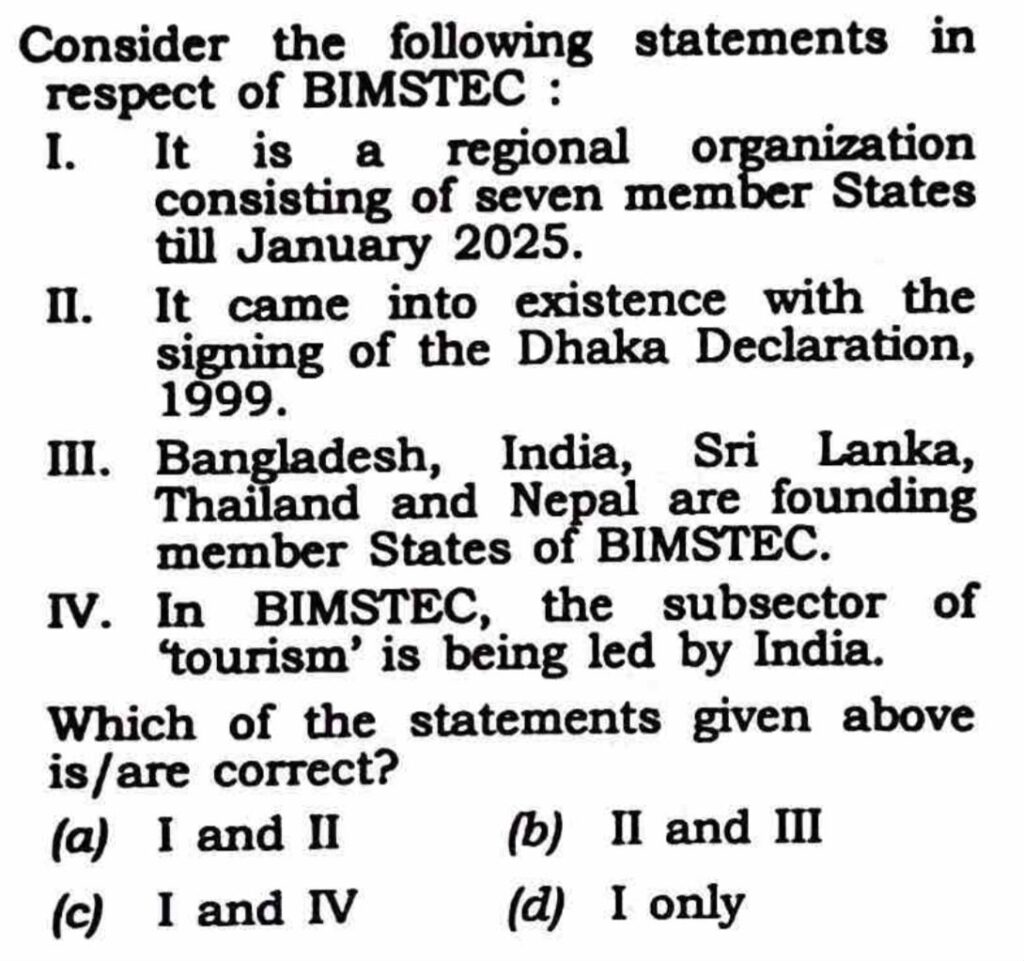
BIMSTEC is an important platform for Bay of Bengal cooperation.

It includes countries from South Asia and Southeast Asia.

A stronger Bay of Bengal framework can deepen cooperation between India, Bangladesh, Sri Lanka, Myanmar, Thailand, Nepal and Bhutan.

This also supports India’s Act East and Indo-Pacific vision.

Significance for India

The framework reinforces India’s role as a preferred security partner in the Indian Ocean Region.

It allows India to lead through consensus-building rather than dominance.

It also helps India counter instability and strategic competition by promoting cooperation, trust and rules.

Key Takeaway

SHANTI can make the Bay of Bengal the starting point of India’s cooperative maritime strategy. It links maritime security with regional trust, institutions and shared development.

SHANTI Framework Bay of Bengal

Fast-Track Courts in India: Speedy Justice and Challenges

Context: Fast-Track Courts in India
The proposal to establish Fast-Track Courts for cases under the Public Examinations (Prevention of Unfair Means) Act, 2024 has revived the debate on whether specialised courts actually ensure speedy justice.

The key question is whether Fast-Track Courts reduce overall judicial delay or simply shift selected cases ahead in the queue.

Fast-Track Courts

Fast-Track Courts are special courts created to dispose of specific categories of cases quickly.

They do not create a separate judicial hierarchy.

In many cases, they use existing judges and existing judicial infrastructure.

This means they may prioritise some cases but may not necessarily increase the total judicial capacity.

Why Fast-Track Courts Are Created

They are usually created for cases that require urgent attention.

These may include:

  • Sexual offences
  • POCSO cases
  • Crimes against women
  • Corruption cases
  • Examination malpractice cases
  • Other high-priority matters

The idea is to ensure quicker trial and disposal.

Core Concern

The main concern is that Fast-Track Courts often redistribute pendency instead of reducing it.

If the same judges and infrastructure are used, then speeding up one category of cases may slow down others.

This creates a deeper question of whether India needs more courts or simply better prioritisation.

Constitutional Angle

Fast-Track Courts must follow Article 14, which guarantees equality before law.

This means that cases chosen for fast-track treatment must be selected on reasonable and non-arbitrary grounds.

Speed cannot become unfairness.

Right to Speedy Trial

The Right to Speedy Trial is part of Article 21, which protects life and personal liberty.

But speedy disposal must not come at the cost of fair investigation, fair trial or due process.

Justice must be both quick and fair.

Challenges

Major causes of delay include:

  • Judicial vacancies
  • Shortage of prosecutors
  • Weak investigation
  • Inadequate forensic laboratories
  • Poor court infrastructure
  • Procedural delays
  • Frequent adjournments

Unless these problems are solved, Fast-Track Courts may have limited impact.

Way Forward

India should increase the number of judges and improve court infrastructure.

Prosecution services must be strengthened.

Forensic capacity should be modernised.

Cases should be assigned to Fast-Track Courts on objective criteria.

Speed, fairness and equality must be balanced.

The Public Examinations law may impose strict penalties, but effective implementation requires adequate judicial and investigative capacity.

Key Takeaway

Fast-Track Courts can help in urgent cases, but they are not a complete solution to judicial delay. India needs deeper reforms in judges, prosecution, investigation and court capacity.

Fast-Track Courts in India

Ebola Outbreak in Congo: Causes, Symptoms and Prevention

Context: Ebola Outbreak in Congo
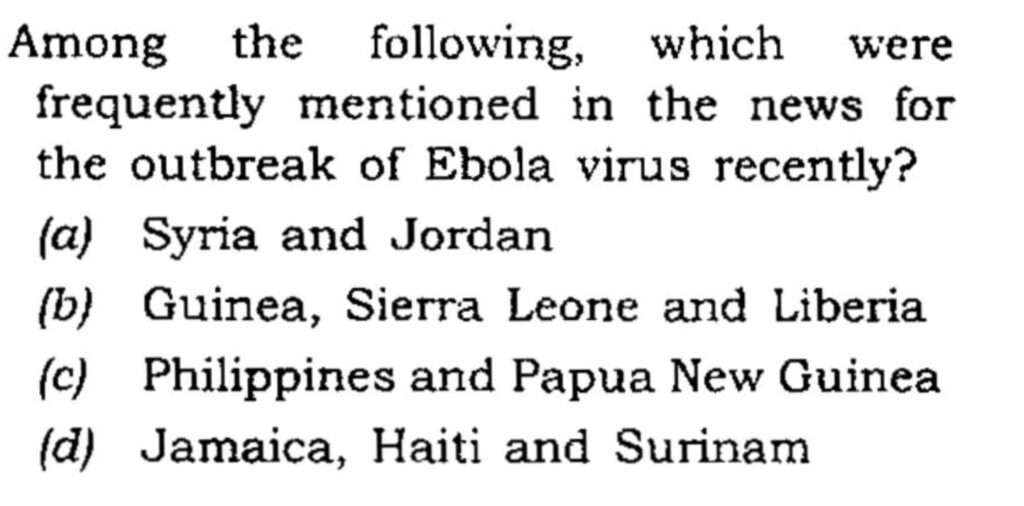
The Democratic Republic of the Congo is witnessing a major Ebola outbreak.

The toll has crossed 1,500 deaths, highlighting the importance of disease surveillance, vaccination, early detection and global health preparedness.

Ebola Virus Disease

Ebola Virus Disease is a viral haemorrhagic fever caused by the Ebolavirus.

It belongs to the Filoviridae family.

The disease has a high fatality rate and can spread rapidly in areas with weak health systems.

Transmission

Ebola spreads through direct contact with:

  • Infected blood
  • Body fluids
  • Contaminated objects
  • Unsafe burial practices
  • Infected animals in some cases

It does not spread like common airborne infections.

Close contact with infected persons or contaminated materials is the major route of transmission.

Symptoms

Common symptoms may include:

  • Fever
  • Weakness
  • Muscle pain
  • Headache
  • Vomiting
  • Diarrhoea
  • Bleeding in severe cases

Severe cases may lead to organ failure, shock and death.

Prevention and Control

Prevention depends on:

  • Early detection
  • Isolation of cases
  • Contact tracing
  • Infection control in hospitals
  • Safe burial practices
  • Public awareness
  • Vaccination

The Ervebo vaccine is used against Ebola virus disease.

Democratic Republic of the Congo

The Democratic Republic of the Congo is located in Central Africa.

It is one of Africa’s largest countries.

It is traversed by the Congo River, which is Africa’s second-longest river.

The DRC shares borders with nine countries:

  • Republic of the Congo
  • Central African Republic
  • South Sudan
  • Uganda
  • Rwanda
  • Burundi
  • Tanzania
  • Zambia
  • Angola

Ecological Importance

The DRC is part of the Congo Basin.

The Congo Basin contains the world’s second-largest tropical rainforest after the Amazon.

This makes the region ecologically significant but also challenging for public health response due to difficult terrain, forested zones and remote settlements.

Key Takeaway

The Ebola outbreak in Congo shows that infectious disease control requires strong surveillance, vaccination, local trust, health infrastructure and international cooperation.

Ebola Outbreak in Congo

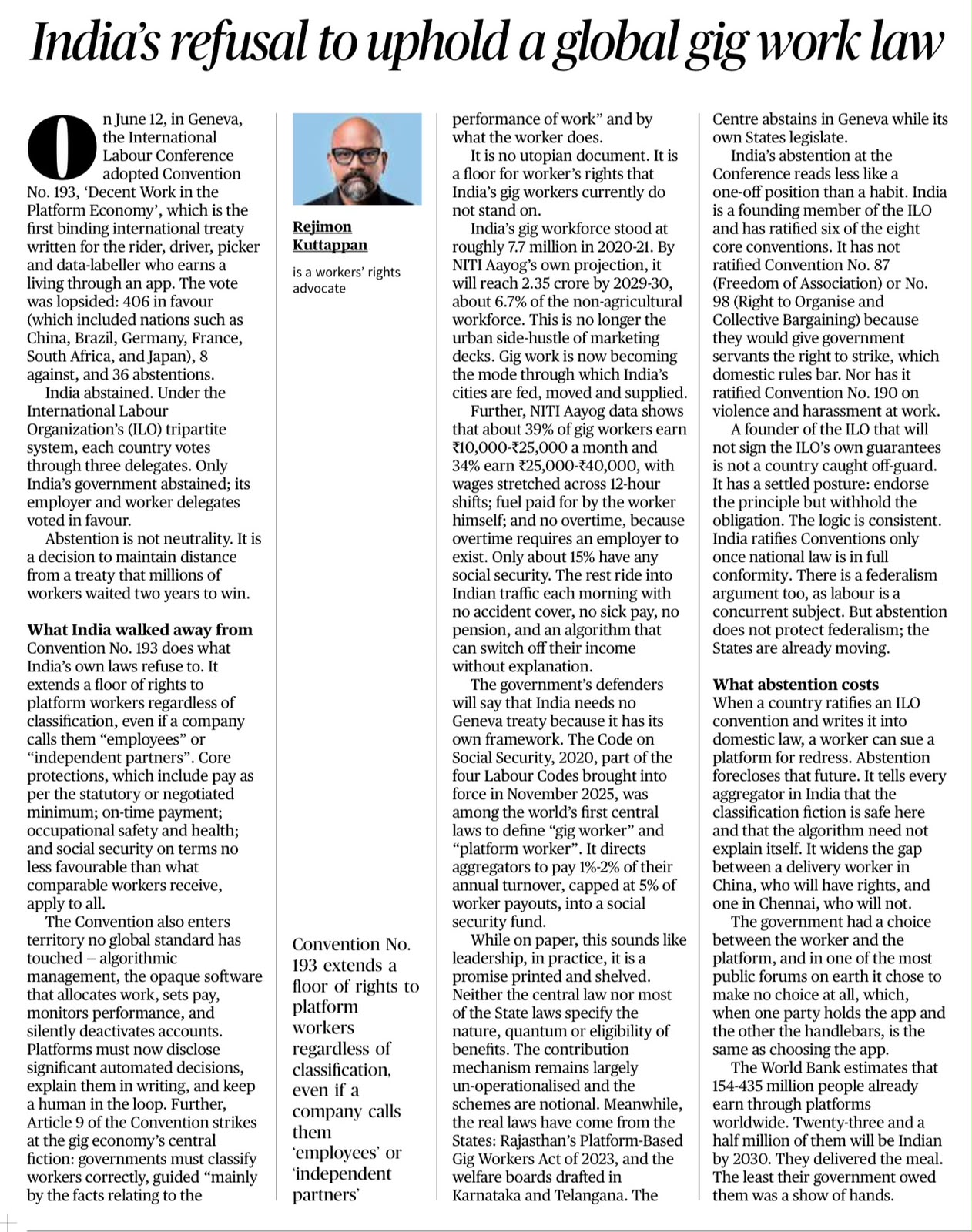
ILO Convention 193 Gig Workers: India’s Position Explained

Context: ILO Convention 193 Gig Workers
The International Labour Conference adopted ILO Convention No. 193 on Decent Work in the Platform Economy.

This is the first legally binding international treaty on gig and platform workers. India abstained from voting, raising questions about its approach to labour rights in the platform economy.

ILO Convention No. 193

ILO Convention No. 193 seeks to establish minimum labour rights for gig and platform workers.

It applies irrespective of whether workers are classified as employees or independent contractors.

This is important because platform companies often classify workers as independent partners, which limits access to labour protections.

Rights Covered

The Convention provides for:

  • Fair remuneration
  • Timely payment
  • Occupational safety
  • Social security
  • Algorithmic transparency
  • Protection against arbitrary deactivation
  • Access to grievance redressal

Ratifying countries must align their domestic laws with the Convention.

India’s Position

India abstained from voting.

India argued that labour is a Concurrent List subject and domestic laws should be aligned before accepting international obligations.

India has already recognised gig workers and platform workers under the Code on Social Security, 2020.

The Code provides for social security schemes funded through contributions from platform aggregators.

Gaps in India’s Framework

Several welfare measures under the Code on Social Security are still not fully operational.

Some States have moved ahead separately.

For example, Rajasthan has enacted legislation for platform workers.

This shows that India’s gig-worker framework is still evolving.

Why Gig Work Matters

India’s gig workforce is large and growing.

Platform workers are now central to urban services such as:

  • Food delivery
  • Ride-hailing
  • Logistics
  • Home services
  • E-commerce delivery
  • On-demand work

However, many workers face insecure income, long working hours, algorithmic control and weak social protection.

Policy Challenge

India must balance three objectives:

  • Labour protection
  • Platform innovation
  • Employment generation

Too much rigidity may affect platform growth.

Too little protection may leave workers vulnerable.

The challenge is to create a fair, flexible and enforceable framework.

Key Takeaway

India’s abstention shows the difficulty of regulating gig work. The future policy challenge is to protect platform workers without weakening innovation and employment opportunities.

ILO Convention 193 Gig Workers

PM CARES Fund Transparency: RTI and Audit Debate Explained

Context: PM CARES Fund Transparency
The non-disclosure of audited financial statements of the PM CARES Fund after FY 2022–23 has revived debate over transparency, accountability and the applicability of the Right to Information Act, 2005.

Activists have raised concerns because recent audit statements have not been made public.

PM CARES Fund

PM CARES stands for Prime Minister’s Citizen Assistance and Relief in Emergency Situations Fund.

It was established in March 2020 as a public charitable trust.

It was created to provide relief during public health emergencies, natural disasters and other emergency situations.

Structure

The Prime Minister is the ex-officio Chairperson of the Fund.

The Defence Minister, Home Minister and Finance Minister are ex-officio Trustees.

The Fund is financed entirely through voluntary contributions from individuals, organisations and institutions.

It does not receive budgetary support from the Consolidated Fund of India.

Legal Status

PM CARES is not a constitutional body.

It is not a statutory body.

It is not a constitutional fund.

It is a public charitable trust registered under the Registration Act, 1908.

RTI and Audit Debate

The Union Government has maintained that PM CARES is not a public authority under Section 2(h) of the RTI Act, 2005.

Therefore, it is not directly subject to RTI provisions.

It is also not audited by the Comptroller and Auditor General.

Instead, its accounts are audited by an independent Chartered Accountant appointed by the Trust.

Issues and Concerns

The non-disclosure of recent audit reports has raised concerns about financial transparency.

The close association of the Fund with constitutional functionaries has led to debate over whether it should face greater public scrutiny.

Critics argue that information about funds collected and spent should be publicly available.

The issue also raises broader questions about emergency funds, institutional accountability and public trust.

Governance Angle

Emergency relief funds require speed and flexibility.

However, transparency is also important when funds are linked with public institutions and national emergency response.

Good governance requires balancing operational flexibility with accountability.

Key Takeaway

The PM CARES debate is not only about one fund. It reflects a larger governance question: how should emergency relief mechanisms balance speed, flexibility, transparency and public accountability?

PM CARES Fund Transparency

About the UPSC Civil Services Examination (UPSC CSE)

The UPSC Civil Services Examination (CSE) is one of the most competitive and esteemed examinations in India, conducted by the Union Public Service Commission to recruit officers for services such as the Indian Administrative Service (IAS), Indian Police Service (IPS), Indian Foreign Service (IFS), and others. The exam comprises three stages — Prelims, Mains, and the Personality Test (Interview) — designed to test a candidate’s knowledge, aptitude, decision-making, and leadership skills.

How to Prepare Effectively for UPSC CSE

Cracking the UPSC CSE requires a deep understanding of the syllabus, consistent revision, structured answer writing, and smart test-taking strategies. The Prelims test analytical and conceptual clarity, the Mains focuses on critical thinking, articulation, and subject mastery, while the Interview assesses presence of mind, ethical judgment, and personality traits relevant to public service.

At UnderStand UPSC, we empower aspirants with a personalized and focused approach to each stage of the exam.

Why Choose UnderStand UPSC?

UnderStand UPSC is a mentorship-driven platform offering a clear, clutter-free strategy to tackle the Civil Services Examination. Our programs like Transform (for beginners and intermediate learners) and Conquer (for advanced mains preparation) provide structured study plans, syllabus-wise video content, interactive live sessions, and answer writing support.

We emphasize:

  • Concept clarity through topic-wise lectures

  • Test series designed around real UPSC standards

  • Personalized mentorship in small groups

  • Regular performance tracking and peer benchmarking

  • Doubt-clearing sessions, current affairs analysis, and monthly magazines

Join the UnderStand UPSC Learning Community

Our mission is to make UPSC preparation less overwhelming and more strategic. We combine mentorship, discipline, and academic rigor to help you clear CSE with confidence. Whether you’re preparing from Delhi, Mumbai, Bangalore, or a remote village — our online-first model ensures quality guidance reaches every corner of India.

Join the thousands of aspirants who trust UnderStand UPSC to guide their journey toward becoming civil servants.

Stay connected with us through our Telegram, YouTube, and Instagram channels for daily tips, strategies, and updates.

Copyright © 2026 USARAMBHA EDUCATION (UnderStand UPSC). All Rights Reserved.

Fill out the form