North Eastern Council: Role in Northeast India’s Development and Connectivity
Context: Govt. has turned Northeast from region of conflict to hub of opportunities
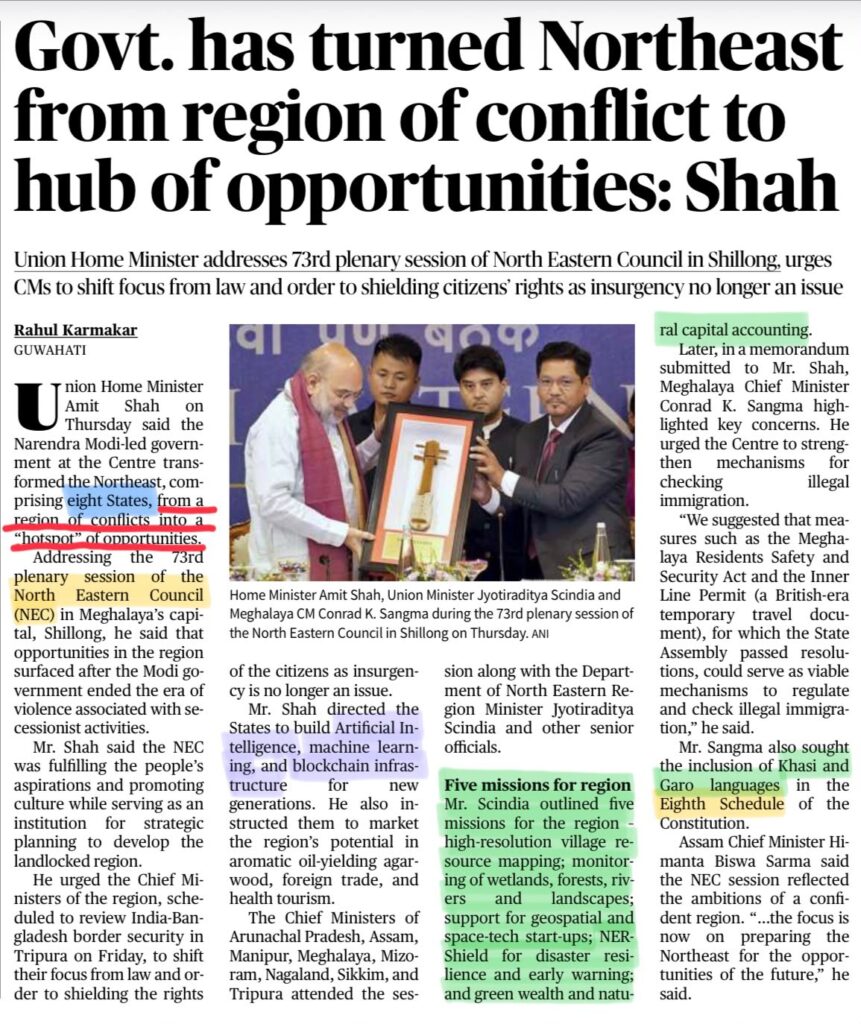
At the 73rd Plenary Session of the North Eastern Council in Shillong, the focus was on Northeast India’s transition from insurgency and security concerns to development, connectivity, technology and economic growth.
North Eastern Council
- Established under the North Eastern Council Act, 1971.
- Operational since 1972.
- It is a statutory body.
- Ministry: Ministry of Development of North Eastern Region.
- Headquarters: Shillong, Meghalaya.
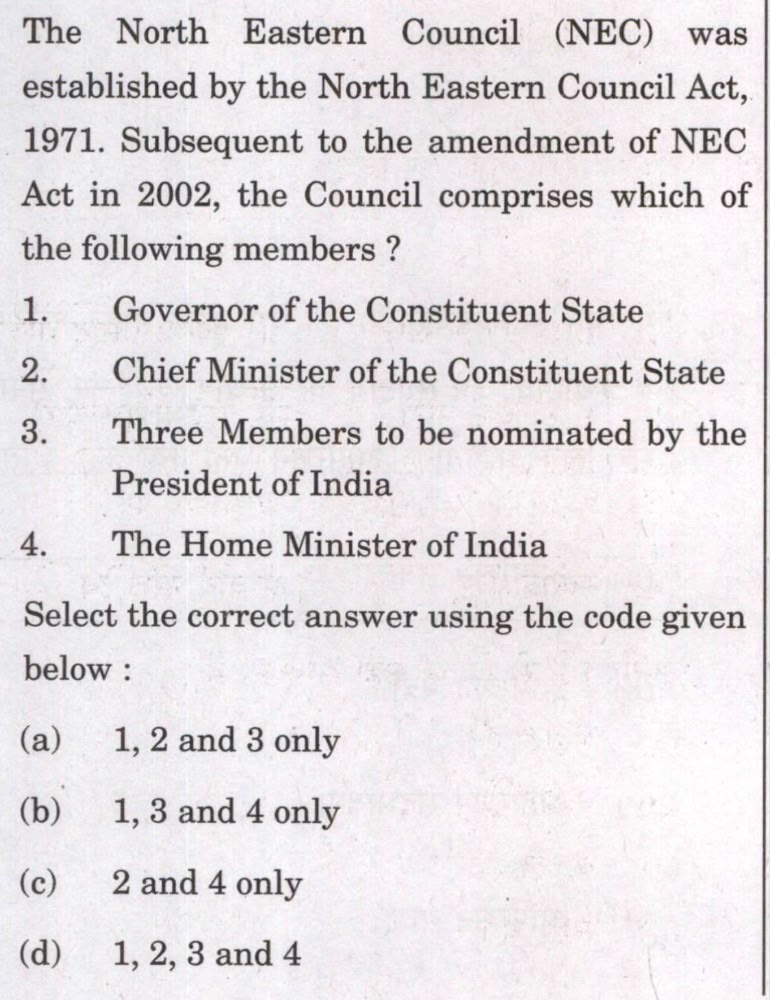
- 2002 Amendment: NEC became the Regional Planning Body for Northeast India and Sikkim was included.
Structure
Chairman
- Union Home Minister
Vice-Chairman
- Minister for Development of North Eastern Region
Members
- Governors of the 8 Northeastern States
- Chief Ministers of the 8 Northeastern States
- 3 members nominated by the President
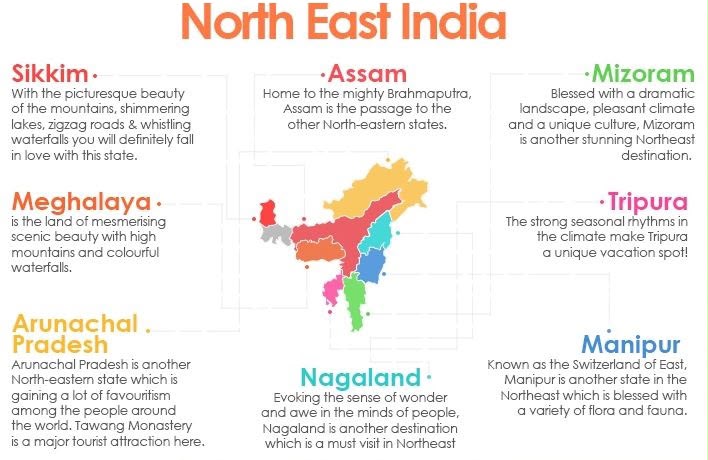
Northeastern States
- Arunachal Pradesh
- Assam
- Manipur
- Meghalaya
- Mizoram
- Nagaland
- Sikkim
- Tripura
Role
- Regional planning
- Connectivity
- Infrastructure
- Socio-economic development
Key Focus Areas
- Village Resource Mapping
- Wetland, Forest and River Monitoring
- Geospatial and Space Technology Start-ups
- NER-Shield for Disaster Resilience and Early Warning
- Green Wealth and Natural Capital Accounting
- Artificial Intelligence, Machine Learning and Blockchain Infrastructure
- Agarwood, Health Tourism and Foreign Trade Promotion
Eighth Schedule
Constitutional Basis
Recognised Languages
- 22 languages
Important Amendments
- 21st Constitutional Amendment Act, 1967: Sindhi
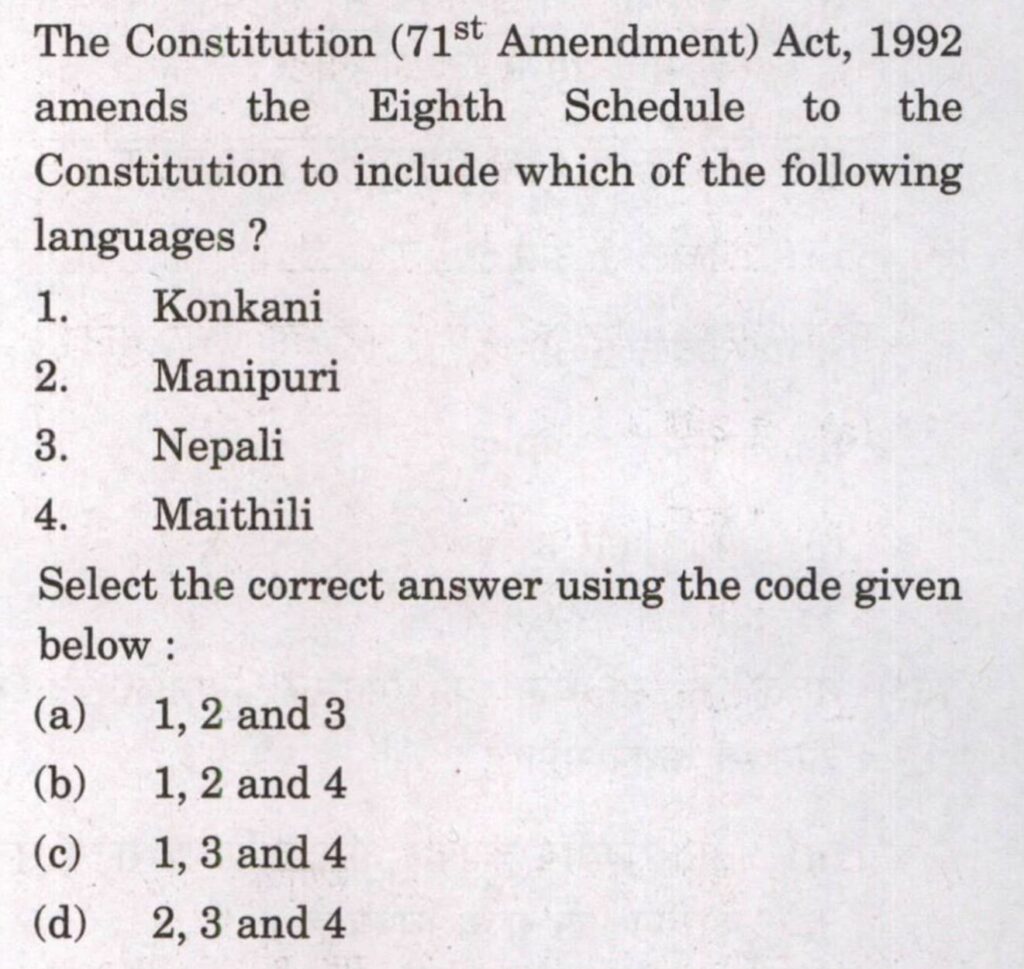
- 71st Constitutional Amendment Act, 1992: Konkani, Manipuri, Nepali
- 92nd Constitutional Amendment Act, 2003: Bodo, Dogri, Maithili, Santali
- 96th Constitutional Amendment Act, 2011: Oriya renamed as Odia