2 April 2026 | Daily Current Affairs

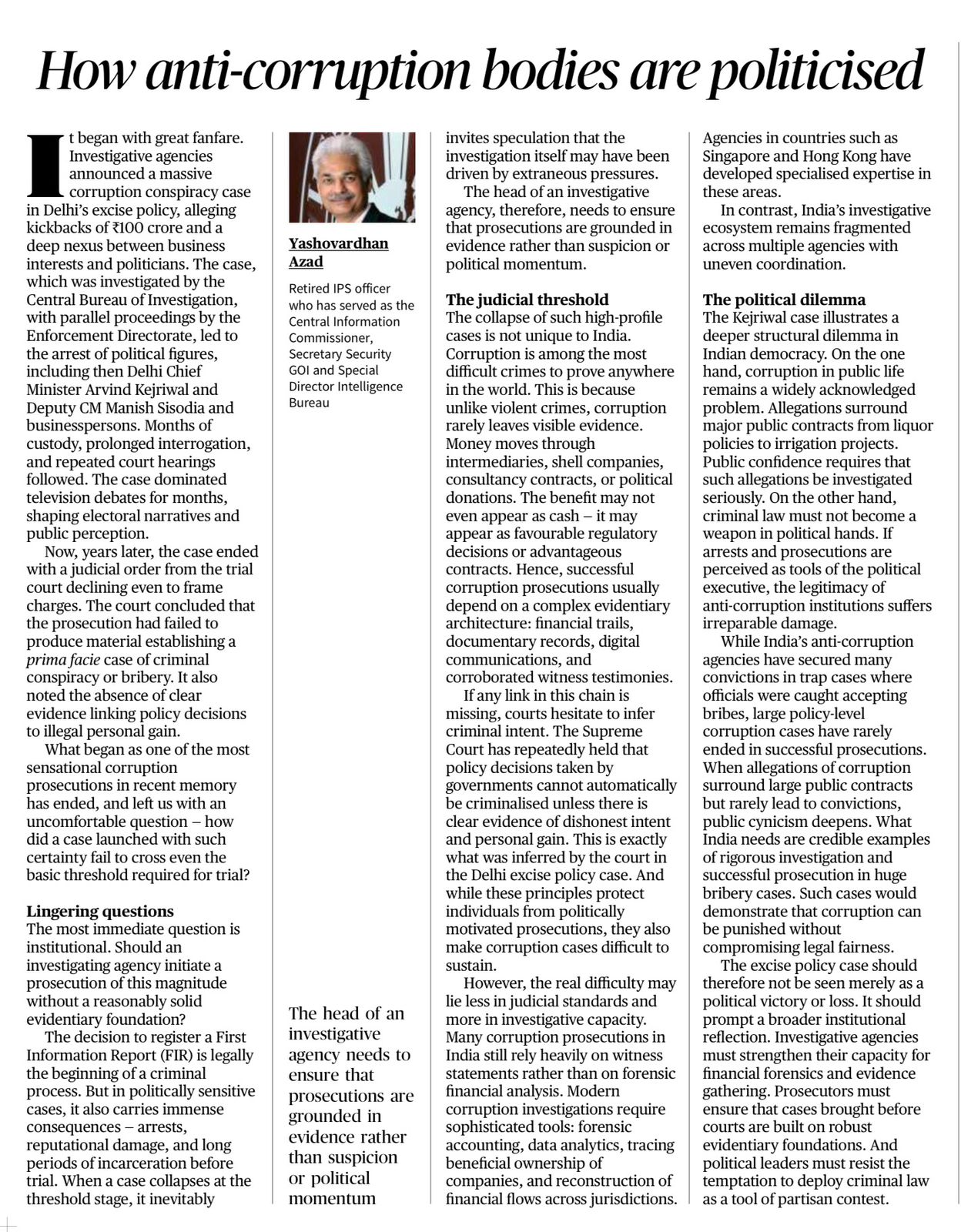
Politicisation of Anti-Corruption Bodies: Issues and Reforms

Context: Politicisation of Anti-Corruption Bodies

The collapse of a high-profile corruption case (Delhi excise policy) highlights concerns that weak evidence and perceived political influence are undermining the credibility of anti-corruption investigations.
Politicisation of Anti-Corruption Bodies

Core Issues

1. Evidence Deficit

• Weak financial forensics; reliance on statements
• Failure to establish money trail + personal gain

2. Judicial Standards

• Courts require intent + quid pro quo
• 2G case → acquittal due to lack of proof

3. Perception of Politicisation

• Action timing creates political bias narrative
• Early arrests, late evidence → credibility loss

4. Structural Weakness

• Fragmented agencies (CBI, ED, ACBs)
• Weak coordination vs specialised models like:
• Independent Commission Against Corruption
• Corrupt Practices Investigation Bureau

Implications

• Low conviction rate → public distrust
• Criminal law seen as political tool
• Policy paralysis in governance

Way Forward

• Forensic-led investigation (money trail, data analytics)
• Institutional autonomy (transparent appointments)
• Evidence-first approach (avoid premature action)
• Integrated framework (better coordination)
• Adopt international best practices: specialised independent agencies (Hong Kong, Singapore)

Conclusion

Anti-corruption must be firm yet fair—driven by proof, independence, and global best practices, ensuring credibility and democratic trust.
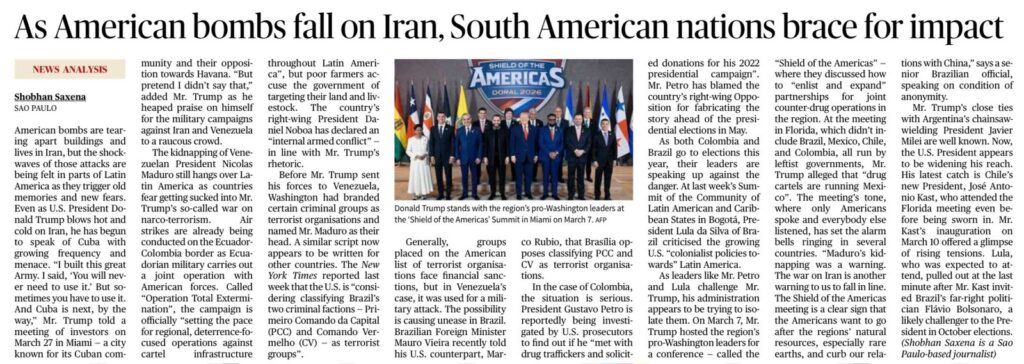
Shield of the Americas: US-Led Security Initiative in Latin America

Context: Shield of the Americas

A U.S.-led regional security initiative aimed at coordinating joint action among selected Latin American countries to combat drug cartels and expand strategic cooperation in the Western Hemisphere.

Shield of the Americas
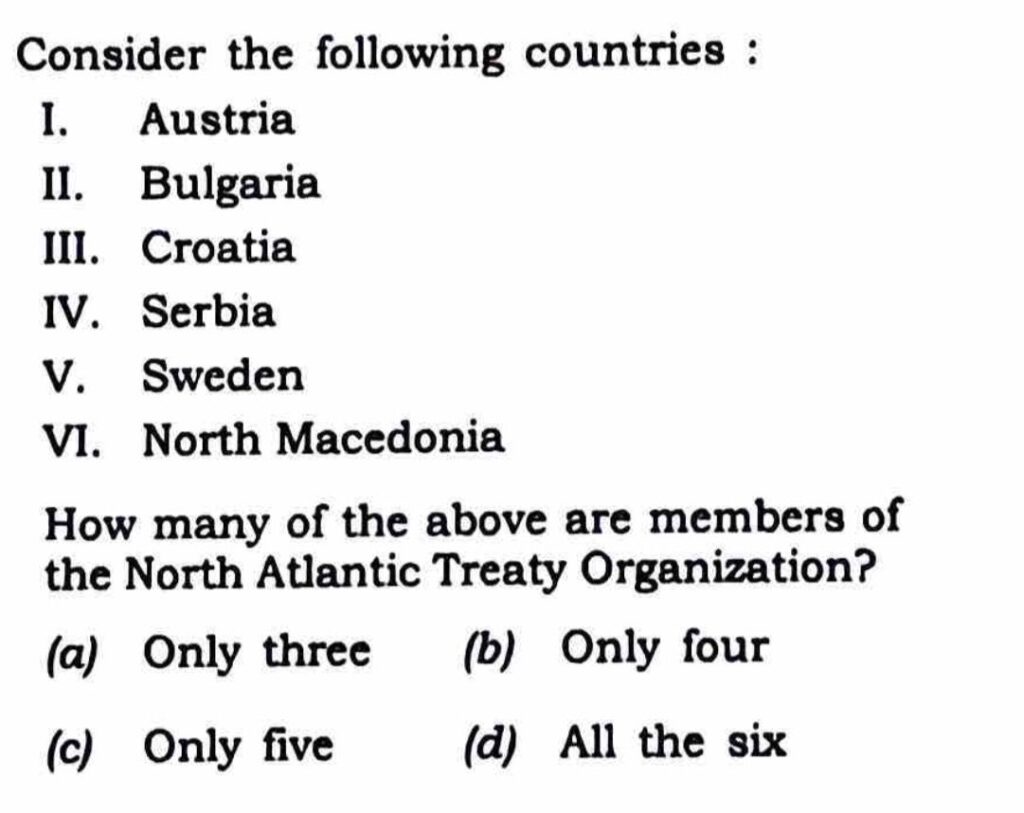
PYQ – 2025, Ans – B

Key Points

1. Objectives

• Joint counter-drug operations
• Enhanced military & intelligence cooperation
• Strategic alignment with U.S. interests
• Securing influence over critical resources

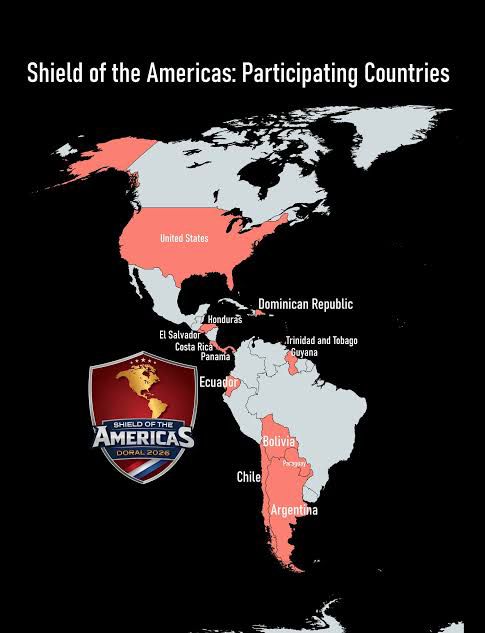
2. Participating Countries

• Mainly pro-U.S. governments
• Argentina, Ecuador, Paraguay, El Salvador, select Central American & Caribbean nations

Not included
Brazil, Mexico, Colombia, Peru and Canada

Additional Point

The Doral Charter emerged from the Shield of the Americas summit held in Doral (Miami, Florida), as a guiding document for U.S.-led regional cooperation.

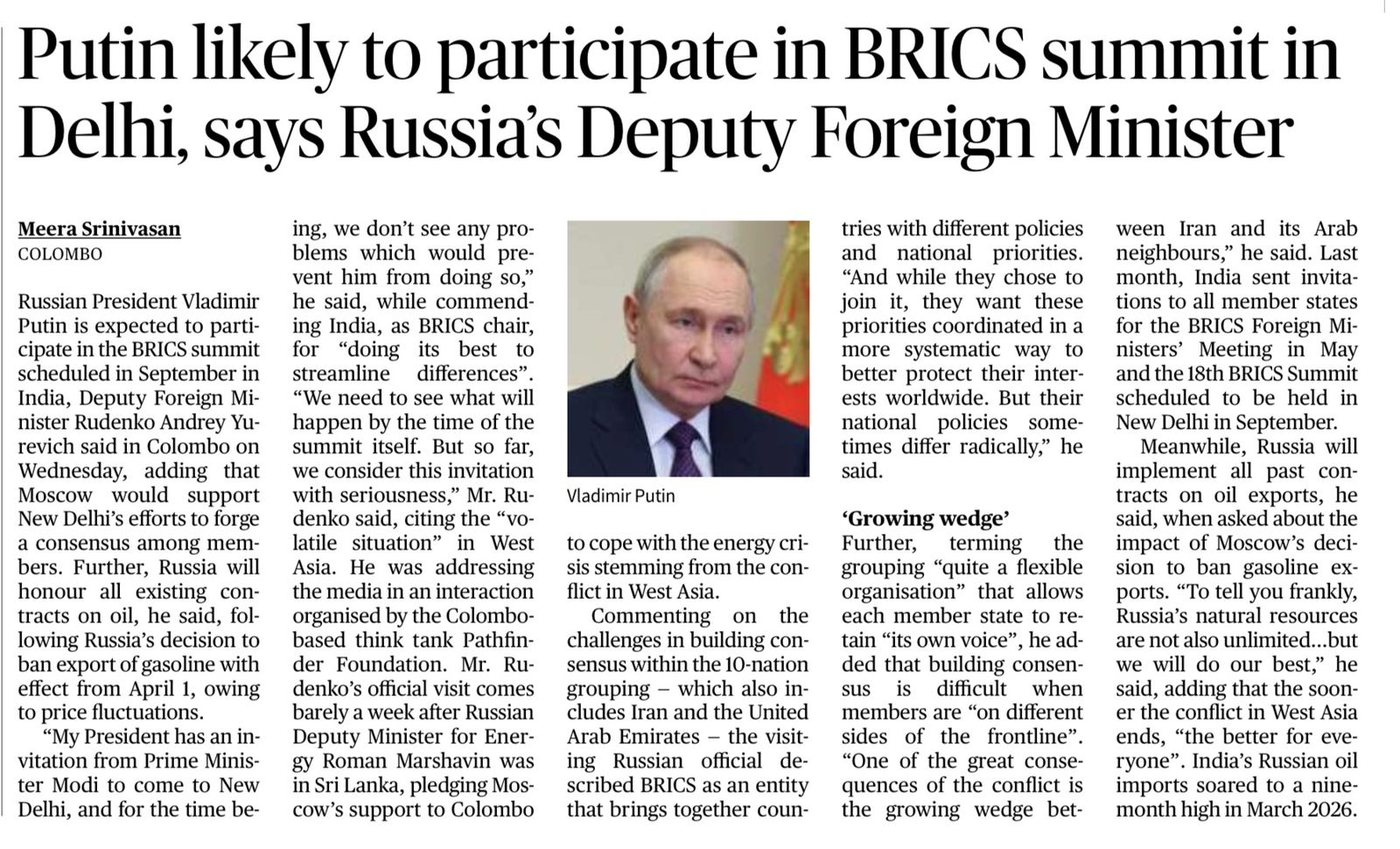
BRICS Summit 2026: Putin Likely to Attend Delhi Meeting

Context: BRICS Summit 2026

The 18th BRICS Summit will be held in New Delhi (September) under India’s chairmanship, where leaders will discuss global tensions, energy issues, and coordination within the grouping.

BRICS Summit 2026
BRICS Summit 2026
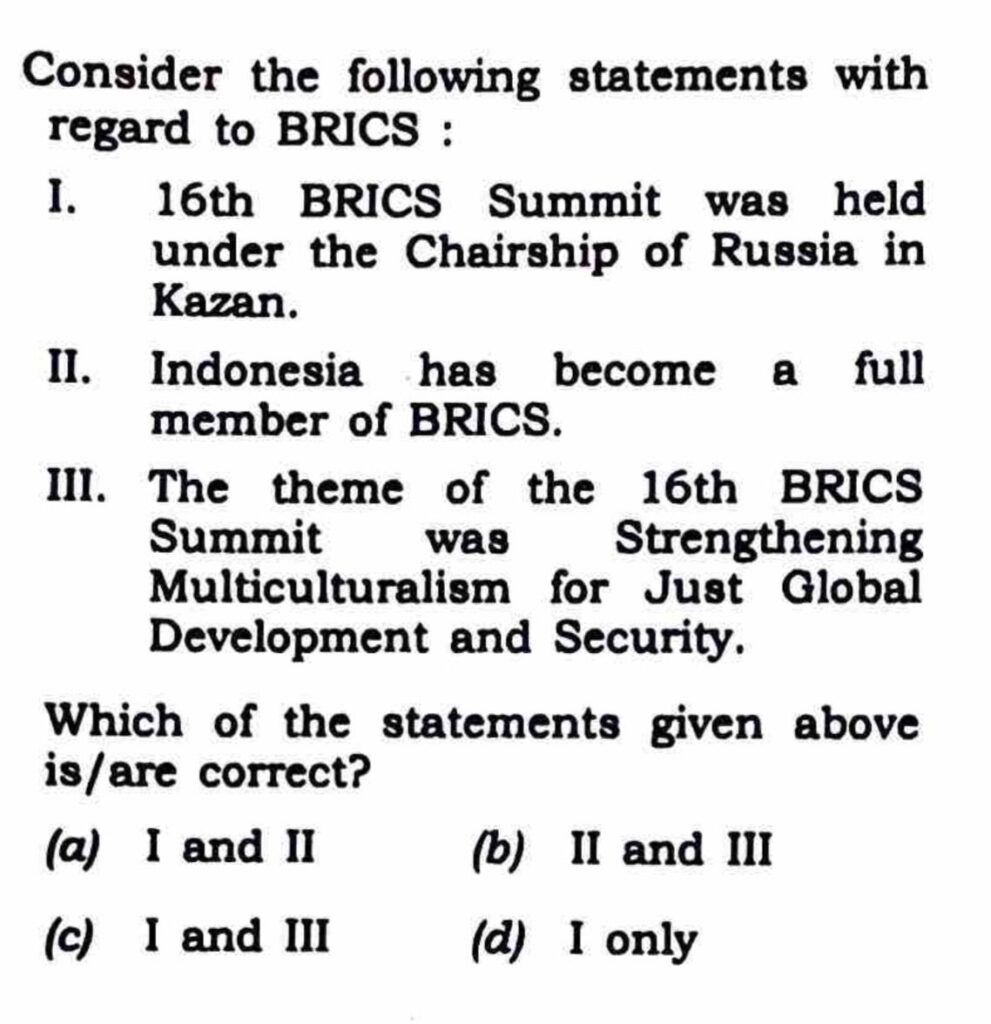
PYQ – 2025, Ans – A

BRICS

• Grouping of major emerging economies
• Aim: economic cooperation + multipolar world + Global South voice

Members

Brazil • Russia • India • China • South Africa • Egypt • Ethiopia • Iran • UAE • Indonesia

Significance

• First summit after recent expansion
• India’s role: build consensus among diverse members

Context

West Asia conflict
→ Energy security issues

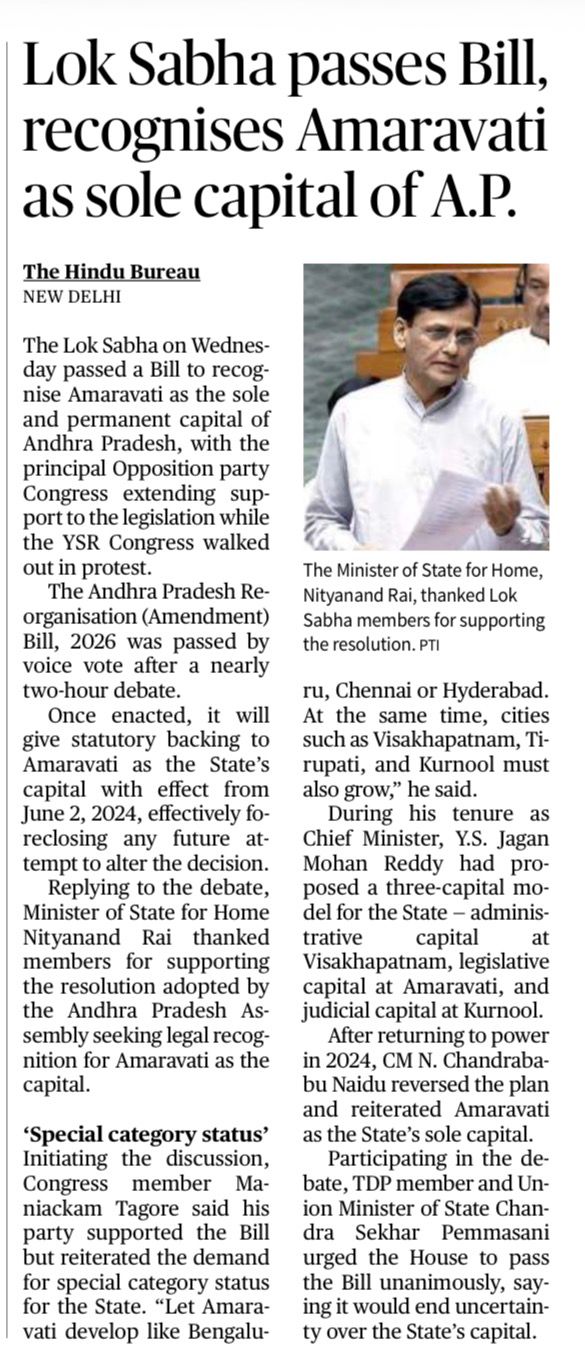
Amaravati Capital Issue: Lok Sabha Declares Amaravati Sole Capital

Context: Amaravati Capital Issue

Parliament passed the Andhra Pradesh Reorganisation (Amendment) Bill, 2026, declaring Amaravati as the sole capital, exercising its powers under Article 3 read with Article 4 of the Constitution of India.

Amaravati Capital Issue

Chronology of Capital Issue

1. 2014 (Bifurcation)

• A.P. Reorganisation Act → Hyderabad (temporary capital)
• Need for new capital

2. Amaravati Phase

• Declared capital; land pooling & development started

3. Three-Capital Proposal

• Visakhapatnam (Executive)
• Amaravati (Legislative)
• Kurnool (Judicial)
• Faced protests + legal issues

4. Reversal

• New government restored Amaravati as sole capital

5. 2026 Bill

• Parliament gives statutory backing → final clarity

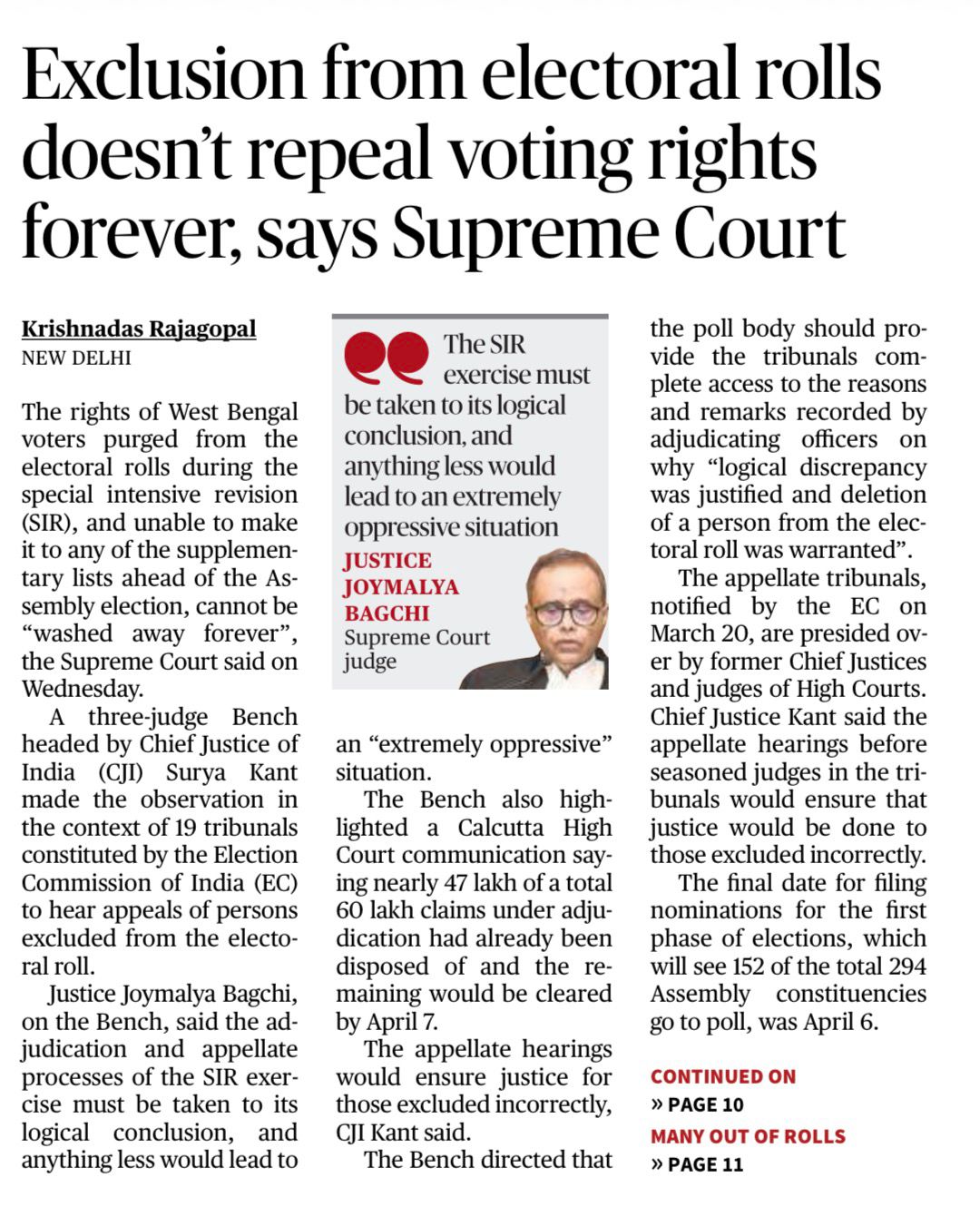
Voting Rights and Electoral Rolls: Supreme Court Ruling Explained

Context: Voting Rights and Electoral Rolls

The Supreme Court held that deletion of names during the Special Intensive Revision (SIR) is only procedural and cannot permanently deprive citizens of voting rights, which must be protected through a legally backed, fair and reviewable process.

Voting Rights and Electoral Rolls

Core Principle

• Voting rights are not permanently extinguished due to deletion
SIR must be carried to its logical conclusion with safeguards
• Arbitrary exclusion → “extremely oppressive situation”

Statutory & Constitutional Basis of SIR

• Article 324(1) → ECI’s plenary powers: superintendence, direction & control of electoral rolls
Representation of the People Act, 1950

Section 21(3) → Allows special revision at any time in any manner deemed fit
Section 22 → Correction (deletion/modification) of entries
Section 23 → Inclusion of eligible voters

• Registration of Electors Rules, 1960
Rule 25 → “Intensive revision” → preparation of rolls afresh (door-to-door verification)

Due Process Safeguards

• Deletion must be based on objective grounds (death, migration, duplication)
• Notice + opportunity to be heard is essential
• EC must record reasons for exclusion

Appellate Mechanism

• 19 tribunals set up by ECI
• Headed by former Chief Justices / High Court judges
• Ensure judicial scrutiny of wrongful exclusions

Scale of Exercise

• Large-scale exclusions (West Bengal context)
• ~47 lakh of 60 lakh claims disposed
• Remaining cases to be cleared within timeline

Constitutional Significance

• Voting → Statutory right (RPA) but core to:
• Free & fair elections (Basic Structure)
• Article 326 (adult suffrage framework)
• Balance required between electoral purity vs voter inclusion

About the UPSC Civil Services Examination (UPSC CSE)

The UPSC Civil Services Examination (CSE) is one of the most competitive and esteemed examinations in India, conducted by the Union Public Service Commission to recruit officers for services such as the Indian Administrative Service (IAS), Indian Police Service (IPS), Indian Foreign Service (IFS), and others. The exam comprises three stages — Prelims, Mains, and the Personality Test (Interview) — designed to test a candidate’s knowledge, aptitude, decision-making, and leadership skills.


How to Prepare Effectively for UPSC CSE

Cracking the UPSC CSE requires a deep understanding of the syllabus, consistent revision, structured answer writing, and smart test-taking strategies. The Prelims test analytical and conceptual clarity, the Mains focuses on critical thinking, articulation, and subject mastery, while the Interview assesses presence of mind, ethical judgment, and personality traits relevant to public service.

At UnderStand UPSC, we empower aspirants with a personalized and focused approach to each stage of the exam.


Why Choose UnderStand UPSC?

UnderStand UPSC is a mentorship-driven platform offering a clear, clutter-free strategy to tackle the Civil Services Examination. Our programs like Transform (for beginners and intermediate learners) and Conquer (for advanced mains preparation) provide structured study plans, syllabus-wise video content, interactive live sessions, and answer writing support.

We emphasize:

  • Concept clarity through topic-wise lectures

  • Test series designed around real UPSC standards

  • Personalized mentorship in small groups

  • Regular performance tracking and peer benchmarking

  • Doubt-clearing sessions, current affairs analysis, and monthly magazines


Join the UnderStand UPSC Learning Community

Our mission is to make UPSC preparation less overwhelming and more strategic. We combine mentorship, discipline, and academic rigor to help you clear CSE with confidence. Whether you’re preparing from Delhi, Mumbai, Bangalore, or a remote village — our online-first model ensures quality guidance reaches every corner of India.

Join the thousands of aspirants who trust UnderStand UPSC to guide their journey toward becoming civil servants.

Stay connected with us through our Telegram, YouTube, and Instagram channels for daily tips, strategies, and updates.

Copyright © 2026 USARAMBHA EDUCATION (UnderStand UPSC). All Rights Reserved.

Join the Success Journey!