24 April 2026 | Daily Current Affairs

De-notified tribes welfare: Report Flags Weak State Support and Gaps

Context: De-notified tribes welfare

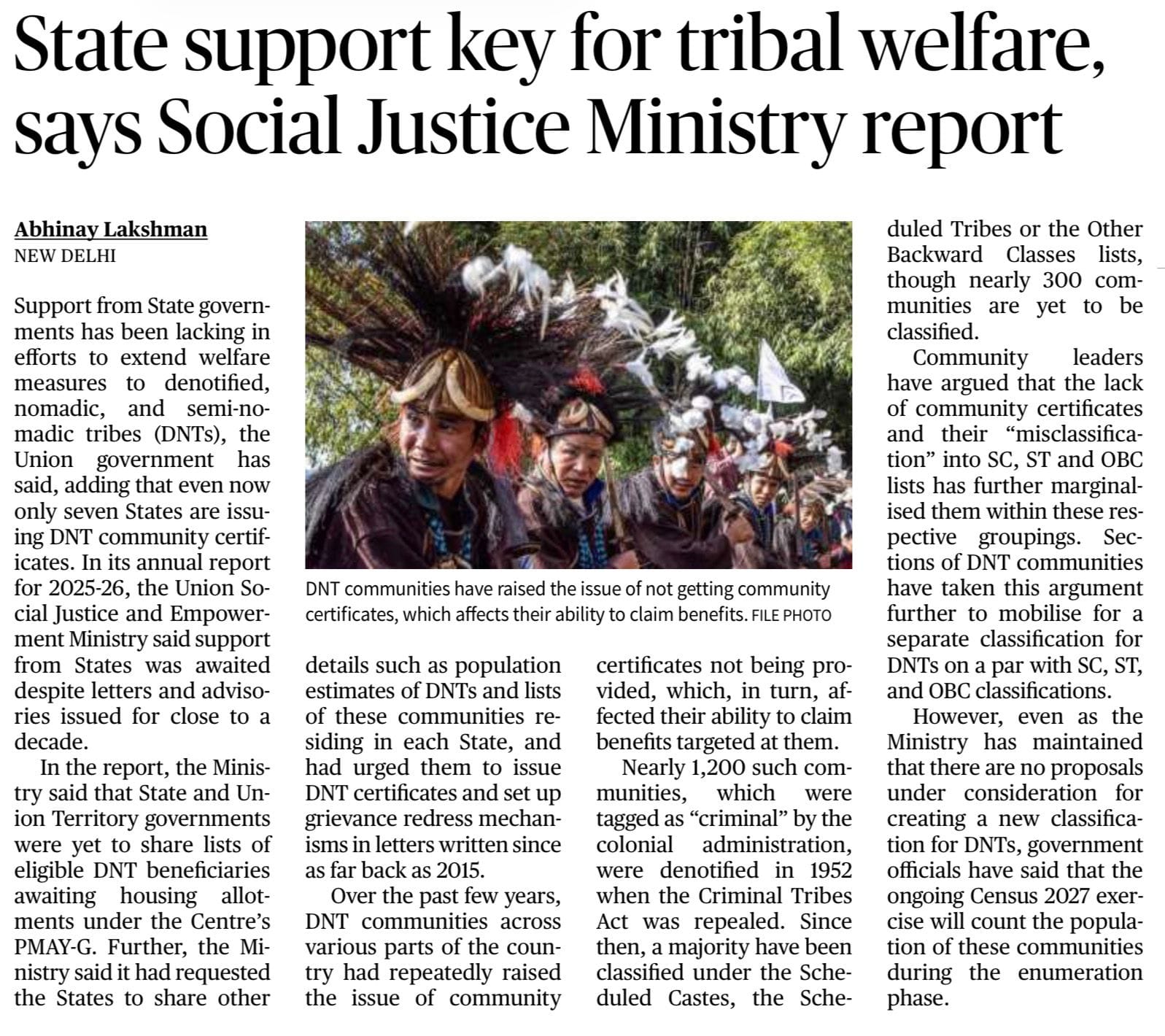
A report by the Union Ministry of Social Justice and Empowerment flags weak State-level implementation of welfare measures for De-notified, Nomadic, and Semi-Nomadic Tribes, resulting in their continued exclusion from benefits.
De-notified tribes welfare

De-notified Tribes (DNTs)

  • Communities earlier labelled as “criminal tribes” under the Criminal Tribes Act, 1871.
  • The Act was repealed in 1952, and they were de-notified.
  • Continue to face stigma, marginalisation, and lack of recognition.
  • Many are nomadic/semi-nomadic, leading to documentation and identification issues.
  • Often misclassified or left out of SC, ST, or OBC categories, limiting access to welfare schemes.

Key points

  • Poor State support in extending welfare measures to DNTs.
  • Limited issuance of community certificates, restricting access to benefits.
  • Delay in identifying beneficiaries, affecting schemes like PMAY-G.
  • Lack of proper data and lists of DNT populations across States.
  • Continued issue of misclassification within SC/ST/OBC categories.
  • Around 1,200 communities historically affected by colonial “criminal tribe” tagging.
  • Repeated advisories by Centre since 2015, but weak implementation persists.
  • Demand for separate classification, but no proposal under consideration.
  • Upcoming Census expected to improve enumeration and data availability.
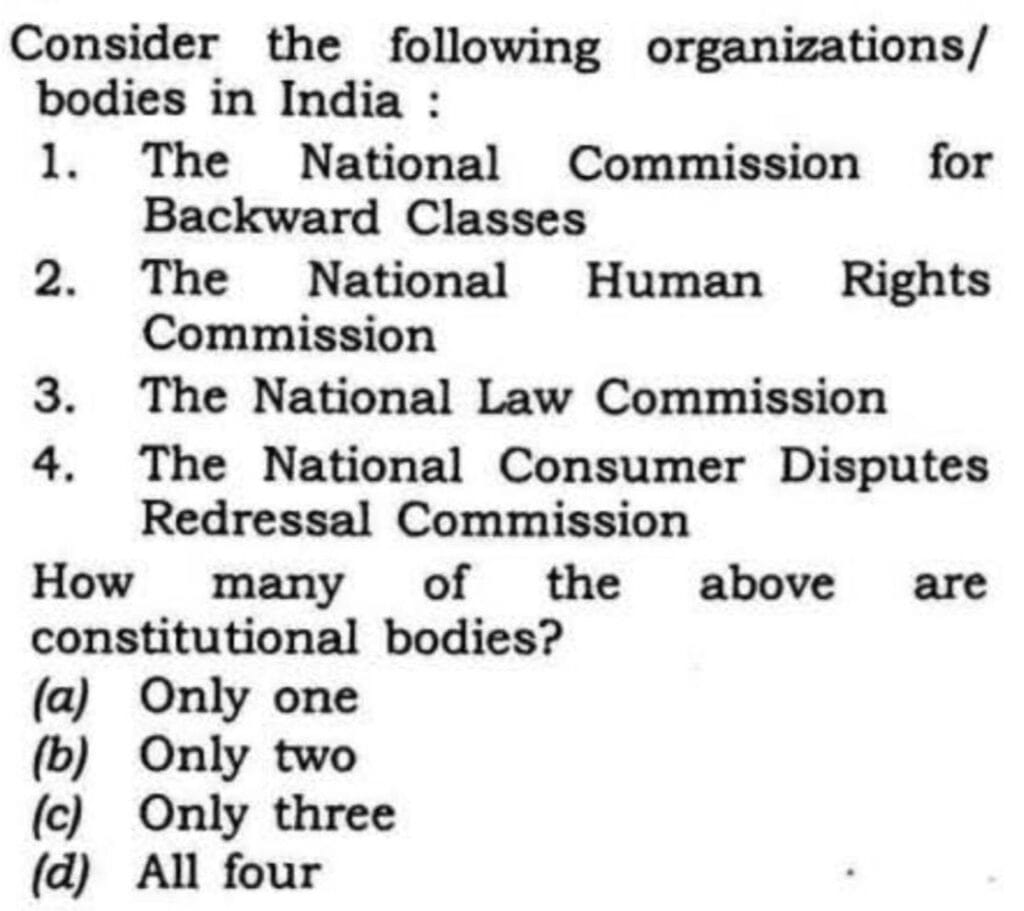
NCERT textbooks adoption: NHRC Notice on RTE and Education Norms Violation

Context: NCERT textbooks adoption

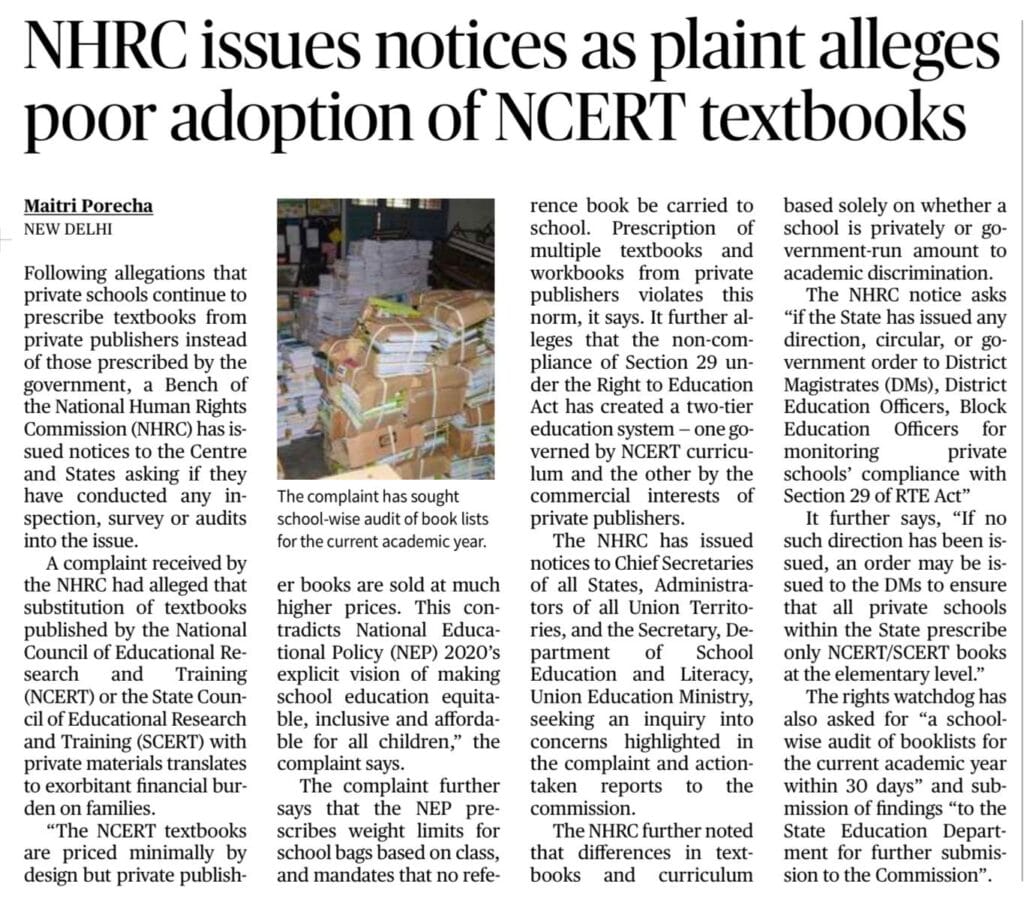
The National Human Rights Commission has issued notices to the Centre and States over complaints that private schools are not adhering to prescribed NCERT/SCERT textbooks, raising concerns about violation of education norms and equity.

NCERT textbooks adoption
PYQ – 2023, Ans – A

Key violations

  1. Violation of Section 29 of the Right to Education Act, 2009 — failure to follow curriculum based on NCERT/SCERT framework.
  2. Violation of National Education Policy 2020 — undermines principles of equitable, inclusive, and affordable education.

Section 29 of the Right to Education Act, 2009

  • Curriculum must be based on NCERT/SCERT guidelines.
  • Focus on uniform, child-centric, and fear-free education.
  • Ensures standardisation across schools.

National Human Rights Commission (NHRC)

Type: Statutory, quasi-judicial body under the Protection of Human Rights Act, 1993.

Objective: Protect life, liberty, equality, and dignity.

Functions:

  • Inquires into human rights violations.
  • Takes suo motu action.
  • Reviews safeguards and recommends reforms.

Powers: Civil court powers; recommendations not binding.

Composition: Chairperson: former Chief Justice of India + members.

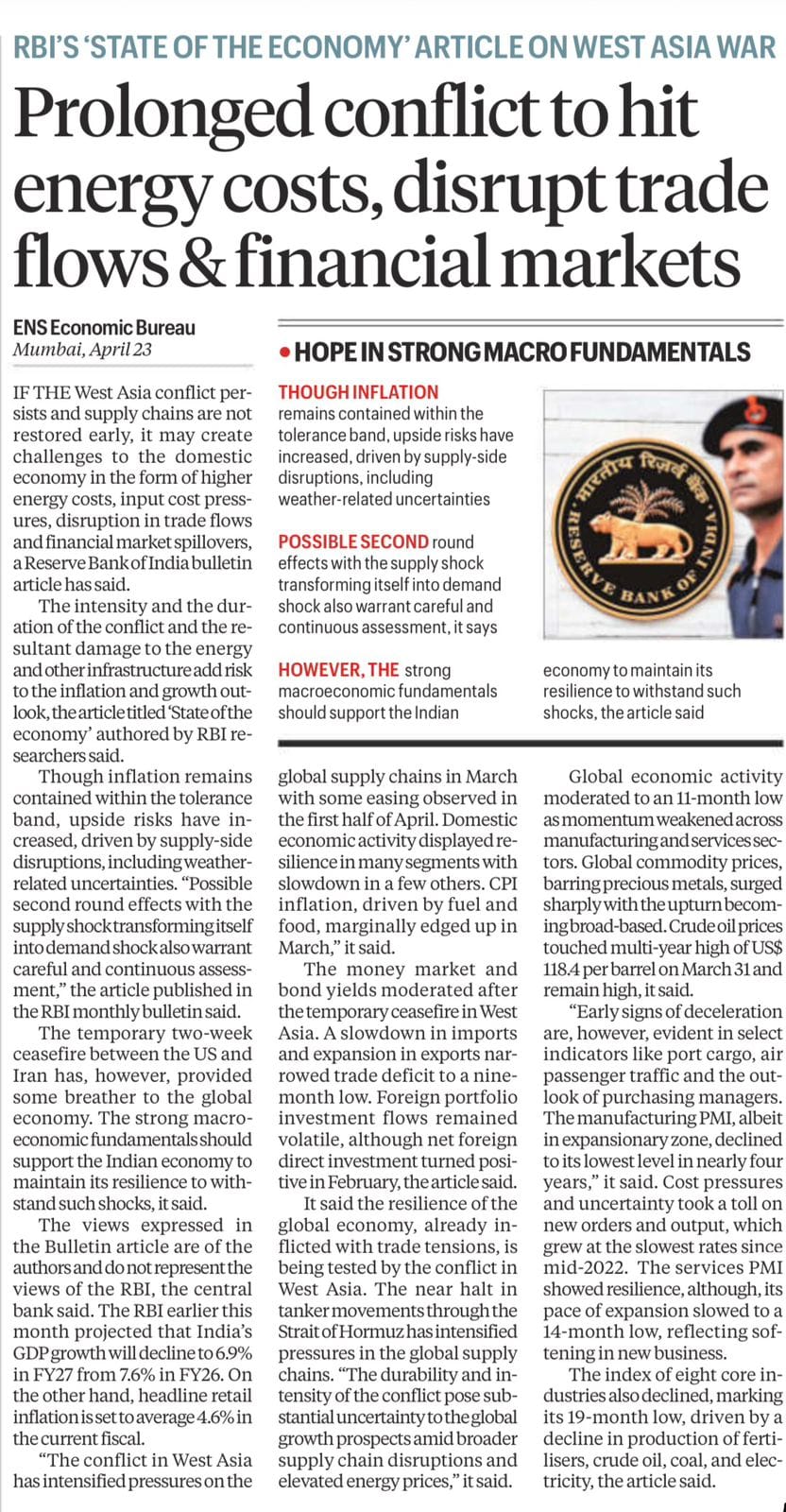
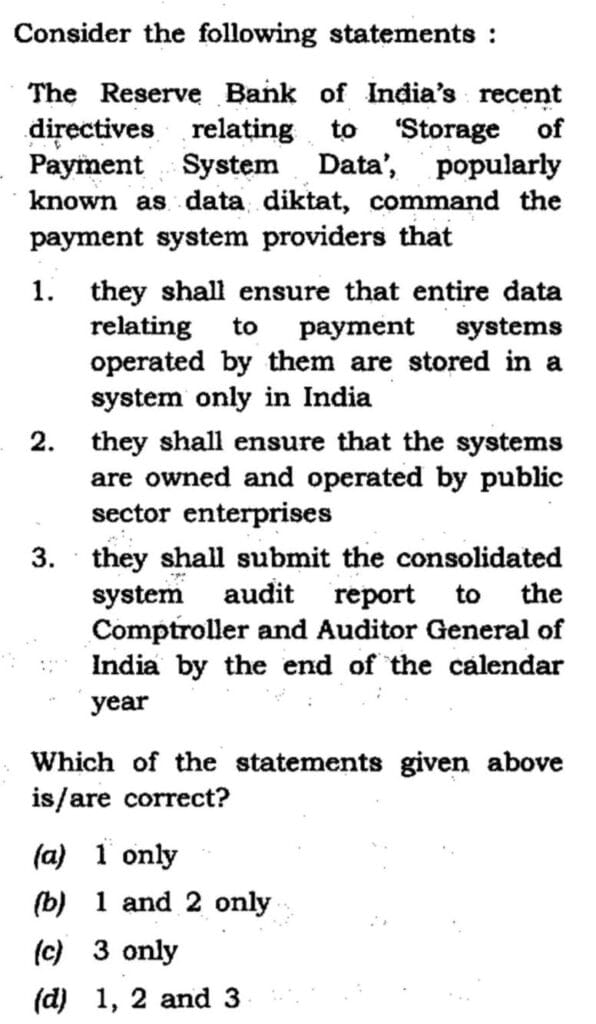
West Asia conflict impact: RBI on Energy Costs, Trade and Financial Markets

Context: West Asia conflict impact

The Reserve Bank of India, in its “State of the Economy” article, has cautioned that a prolonged West Asia conflict could raise energy costs and disrupt trade and financial markets, while noting that India’s strong macroeconomic fundamentals may help absorb such shocks.

West Asia conflict impact
PYQ, Ans – A

Key observations of RBI

  • Energy risk: Prolonged conflict may push up crude oil prices, increasing import bills and inflation.
  • Inflation outlook: Consumer Price Index (CPI) inflation is within the tolerance band but faces upside risks from supply disruptions.
  • Second-round effects: Supply shocks could spill into demand, requiring close monitoring.
  • Global slowdown: Economic activity weakening; manufacturing and services showing loss of momentum.
  • Trade impact: Disruptions in global supply chains and trade routes (e.g., Strait of Hormuz).
  • Financial markets: Potential volatility in capital flows and bond markets.
  • Domestic economy: Mixed trends — resilience in some sectors, slowdown in others.
  • External sector: Trade deficit narrowed; Foreign Direct Investment (FDI) turned positive, though flows remain volatile.
  • Core sector: Index of Eight Core Industries at a 19-month low, indicating slowing industrial activity.
  • Overall: Strong macroeconomic fundamentals provide resilience, but risks remain elevated.

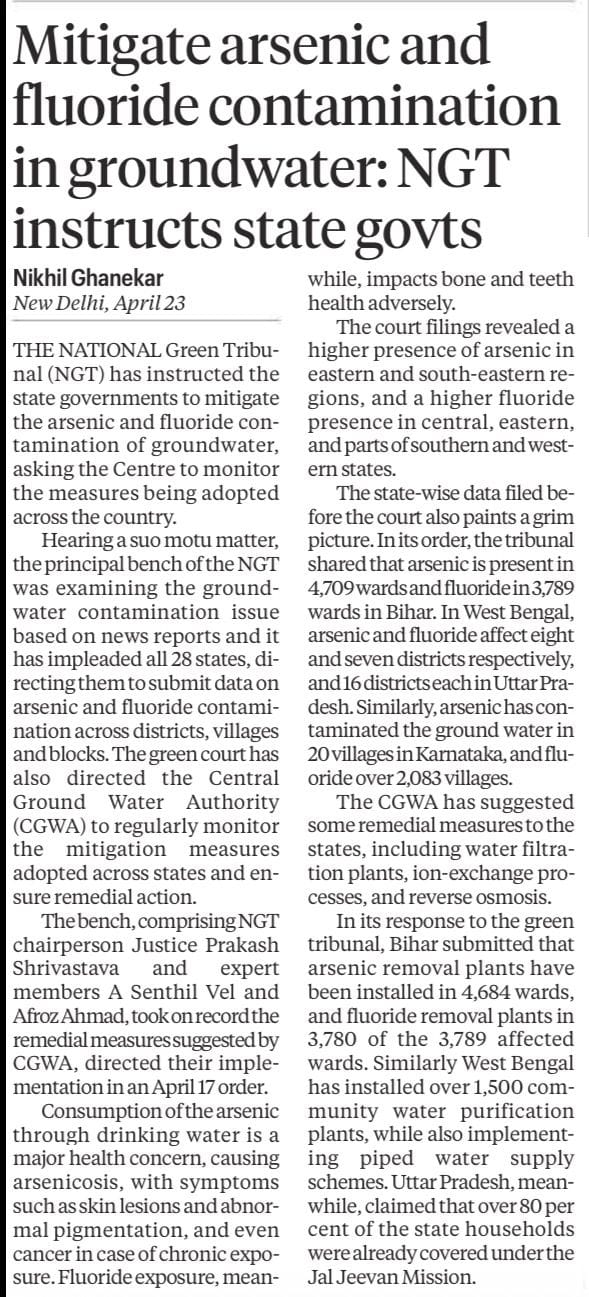
Groundwater contamination India: NGT Directions on Arsenic and Fluoride Control

Context: Groundwater contamination India

The National Green Tribunal has directed states to curb arsenic and fluoride contamination in groundwater and asked the Centre to monitor actions, highlighting a serious nationwide water quality issue.

Groundwater contamination India
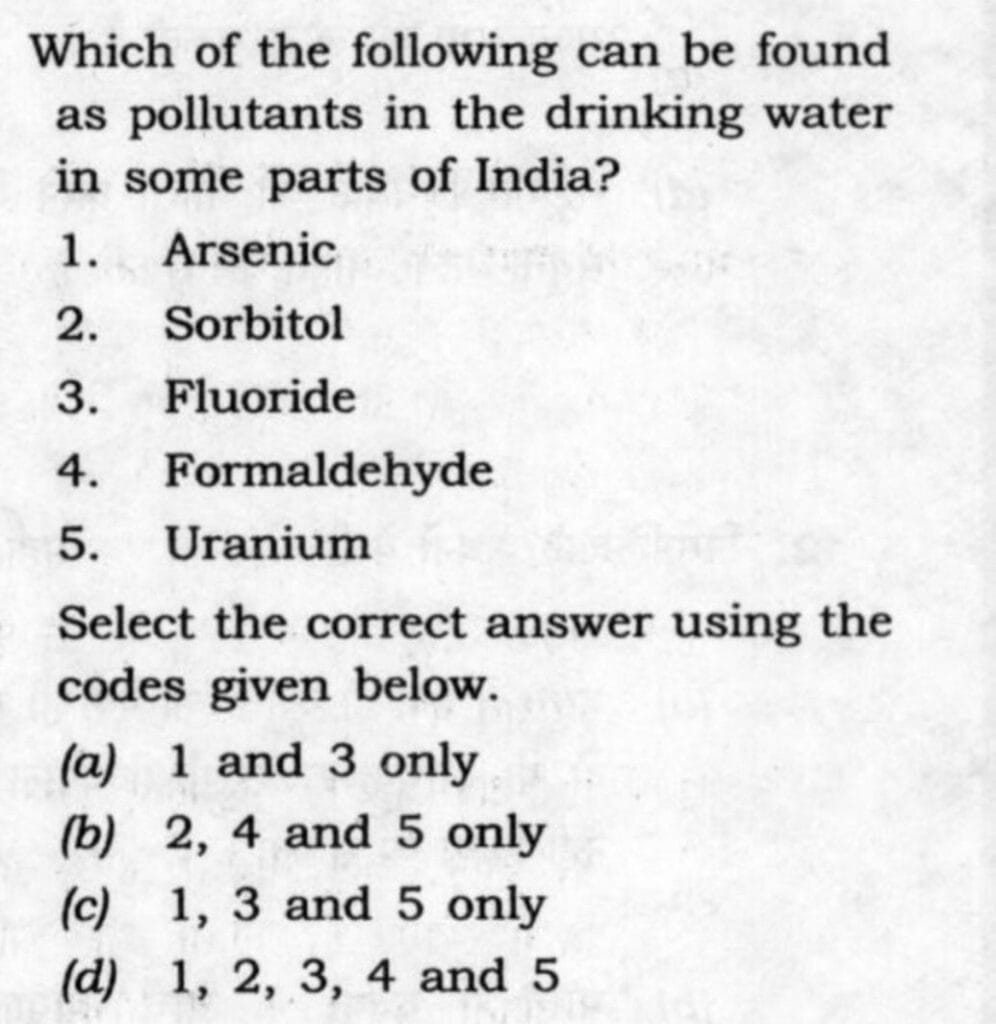
PYQ – 2013, Ans – C

Key water pollutants

  • Arsenic: Toxic metal; causes skin lesions, organ damage, cancer (common in eastern regions).
  • Fluoride: Excess leads to fluorosis, affecting bones and teeth (central and western regions).
  • Nitrate: From fertilizers and sewage; causes “blue baby syndrome” and other health risks.
  • Heavy metals (lead, mercury, cadmium): Industrial sources; damage nervous system and organs.
  • Pathogens (bacteria, viruses): From untreated sewage; cause water-borne diseases.
  • Pesticides and chemicals: Agricultural runoff; long-term toxicity and bioaccumulation.

CGWA vs CGWB

  • Central Ground Water Authority: Regulatory body — controls and monitors groundwater use.
  • Central Ground Water Board: Scientific body — surveys, data collection, and assessment.

2038 Asian Games India: Hosting Bid, Strategy and Key Updates

Context: 2038 Asian Games India

India, after securing the 2030 Commonwealth Games and pursuing the 2036 Olympics bid, has now set its sights on hosting the 2038 Asian Games.

2038 Asian Games India

Key points

  • India has formally expressed interest in hosting the 2038 Asian Games by approaching the Olympic Council of Asia.
  • 2038 is the next available edition after:
    • 2026 Asian Games — Aichi–Nagoya, Japan
    • 2030 Asian Games — Doha, Qatar
    • 2034 Asian Games — Riyadh, Saudi Arabia
  • The proposal has been discussed at the Executive Board level.
  • An evaluation team is likely to visit India.
  • The move is part of India’s larger strategy of hosting major events.

Other major upcoming events

Commonwealth Games:

  • 2026 — Glasgow, Scotland
  • 2030 — India

Olympic Games:

  • 2028 — Los Angeles, United States
  • 2032 — Brisbane, Australia
  • 2036 — yet to be decided (India is bidding)

Reasons India wants to host

  • Strengthen its 2036 Olympics bid
  • Boost infrastructure development
  • Drive economic growth and tourism
  • Enhance global image
  • Promote sports culture
  • Increase international influence
About the UPSC Civil Services Examination (UPSC CSE)

The UPSC Civil Services Examination (CSE) is one of the most competitive and esteemed examinations in India, conducted by the Union Public Service Commission to recruit officers for services such as the Indian Administrative Service (IAS), Indian Police Service (IPS), Indian Foreign Service (IFS), and others. The exam comprises three stages — Prelims, Mains, and the Personality Test (Interview) — designed to test a candidate’s knowledge, aptitude, decision-making, and leadership skills.


How to Prepare Effectively for UPSC CSE

Cracking the UPSC CSE requires a deep understanding of the syllabus, consistent revision, structured answer writing, and smart test-taking strategies. The Prelims test analytical and conceptual clarity, the Mains focuses on critical thinking, articulation, and subject mastery, while the Interview assesses presence of mind, ethical judgment, and personality traits relevant to public service.

At UnderStand UPSC, we empower aspirants with a personalized and focused approach to each stage of the exam.


Why Choose UnderStand UPSC?

UnderStand UPSC is a mentorship-driven platform offering a clear, clutter-free strategy to tackle the Civil Services Examination. Our programs like Transform (for beginners and intermediate learners) and Conquer (for advanced mains preparation) provide structured study plans, syllabus-wise video content, interactive live sessions, and answer writing support.

We emphasize:

  • Concept clarity through topic-wise lectures

  • Test series designed around real UPSC standards

  • Personalized mentorship in small groups

  • Regular performance tracking and peer benchmarking

  • Doubt-clearing sessions, current affairs analysis, and monthly magazines


Join the UnderStand UPSC Learning Community

Our mission is to make UPSC preparation less overwhelming and more strategic. We combine mentorship, discipline, and academic rigor to help you clear CSE with confidence. Whether you’re preparing from Delhi, Mumbai, Bangalore, or a remote village — our online-first model ensures quality guidance reaches every corner of India.

Join the thousands of aspirants who trust UnderStand UPSC to guide their journey toward becoming civil servants.

Stay connected with us through our Telegram, YouTube, and Instagram channels for daily tips, strategies, and updates.

Copyright © 2026 USARAMBHA EDUCATION (UnderStand UPSC). All Rights Reserved.

Join the Success Journey!


Fill the form and our Team will reach out to you soon


Fill the form and our Team will reach out to you soon