9 May 2026 | Daily Current Affairs

Rabindranath Tagore and Gandhi Debate on Charkha for UPSC

Context: Rabindranath Tagore

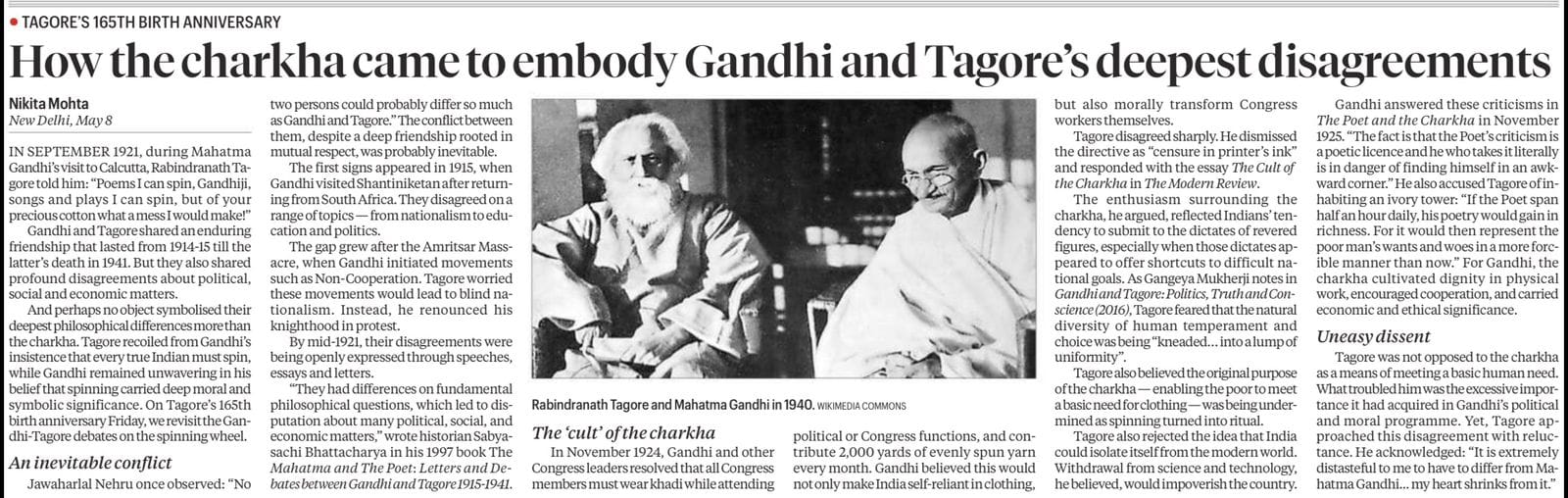
On the 165th birth anniversary of Rabindranath Tagore, discussions have revived around his literary contributions, educational philosophy and ideological debates with Mahatma Gandhi over nationalism and the charkha.
Rabindranath Tagore
Rabindranath Tagore
PYQ – 2021, Ans – D

Key Facts About Rabindranath Tagore

1. Birth & Identity

  • Born on 7 May 1861 in Kolkata.
  • Poet, philosopher, novelist, dramatist, painter, composer and educationist.
  • Popularly known as “Gurudev.”
  • Major figure of the Bengal Renaissance.

2. Nobel Prize

  • Became the first Asian Nobel laureate by winning the Nobel Prize in Literature (1913) for Gitanjali.

3. Major Literary Works

  • Poetry: Gitanjali, Balaka, Manasi
  • Novels: Gora, Ghare-Baire, Chokher Bali
  • Plays: Dak Ghar, Raktakarabi
  • Songs: Composed over 2,000 songs collectively known as Rabindra Sangeet.

4. National Anthems

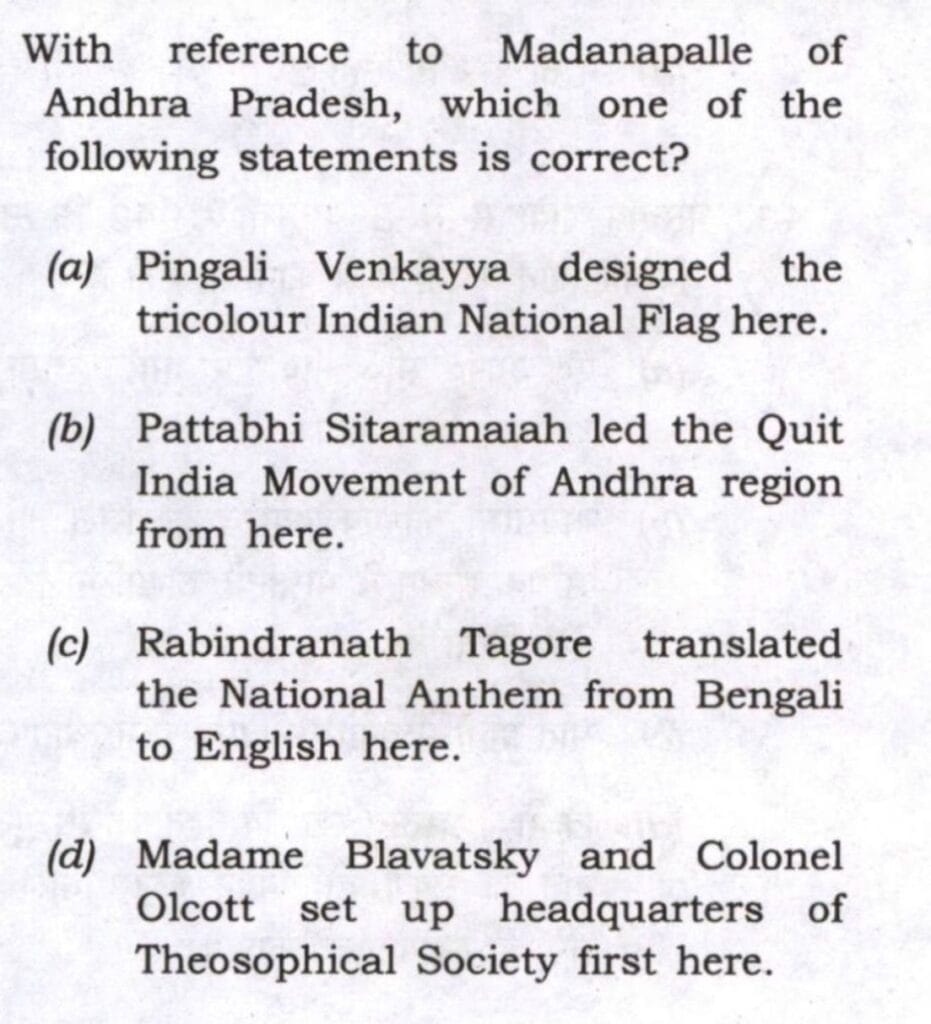
  • Wrote India’s National Anthem — “Jana Gana Mana.”
  • Wrote Bangladesh’s National Anthem — “Amar Sonar Bangla.”
  • Inspired the tune and spirit of Sri Lanka’s national anthem as well.

5. Educational Contributions

  • Founded Visva-Bharati University (1921) at Santiniketan.
  • Advocated open, nature-based, creative and internationally oriented education.
  • Promoted cultural exchange between East and West.

6. Knighthood & Jallianwala Bagh

  • Received a Knighthood from the British Crown in 1915.
  • Returned it in 1919 after the Jallianwala Bagh Massacre as a protest against British brutality.
  • In his famous letter to the Viceroy, Tagore stated that “the time has come when badges of honour make our shame glaring.”

7. Political & Philosophical Views

  • Supported India’s freedom struggle but criticised extreme nationalism and mass hysteria.
  • Opposed narrow nationalism and warned against aggressive identity politics.
  • Favoured humanism, internationalism and intellectual freedom.

8. Debate with Gandhi on Charkha

  • Gandhi saw the charkha as a symbol of self-reliance, dignity of labour and Swadeshi.
  • Tagore feared its excessive glorification could discourage scientific progress and individual creativity.
  • Despite disagreements, Gandhi called Tagore the “Great Sentinel”, while Tagore gave Gandhi the title “Mahatma.”
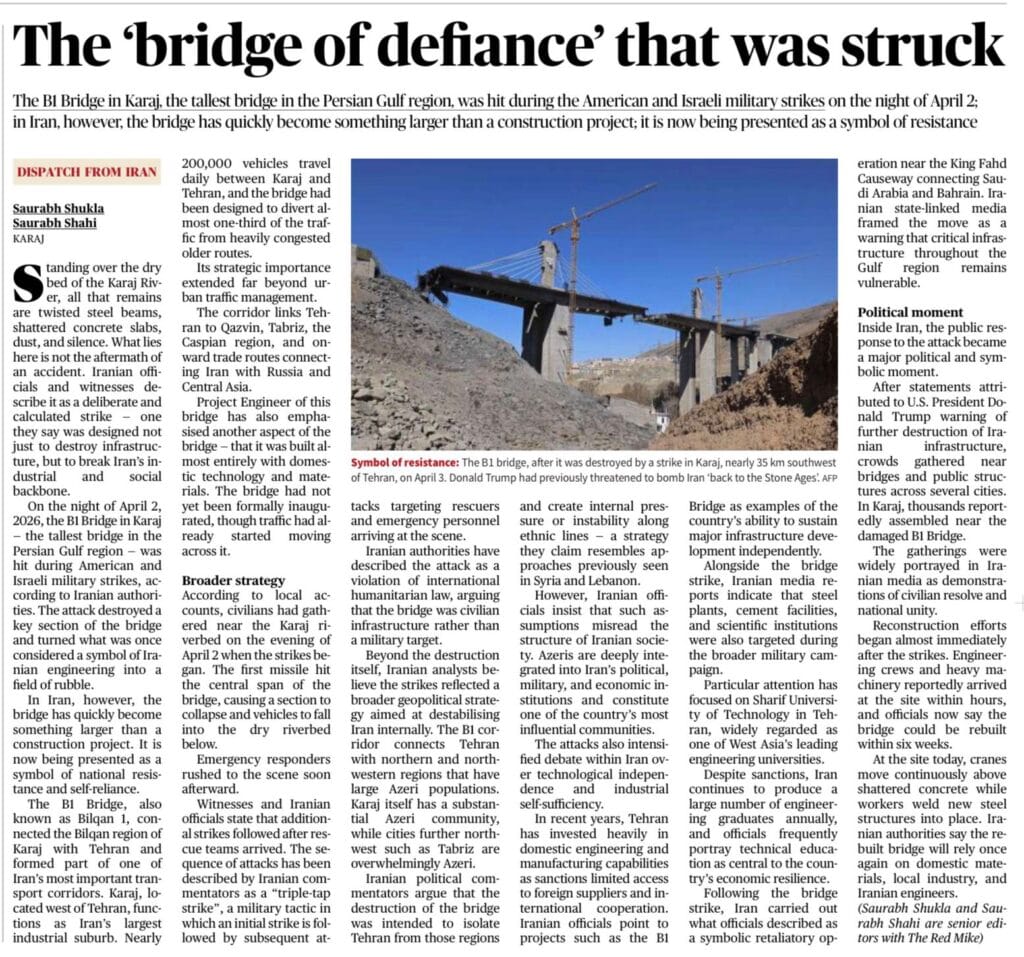
B1 Bridge Strike in Iran and Its Strategic Importance for UPSC

Context: B1 Bridge

Iran has projected the damaged B1 (Bilqan) Bridge in Karaj as a symbol of resistance and self-reliance after it was struck during recent U.S. attacks.

B1 Bridge
B1 Bridge
B1 Bridge
B1 Bridge

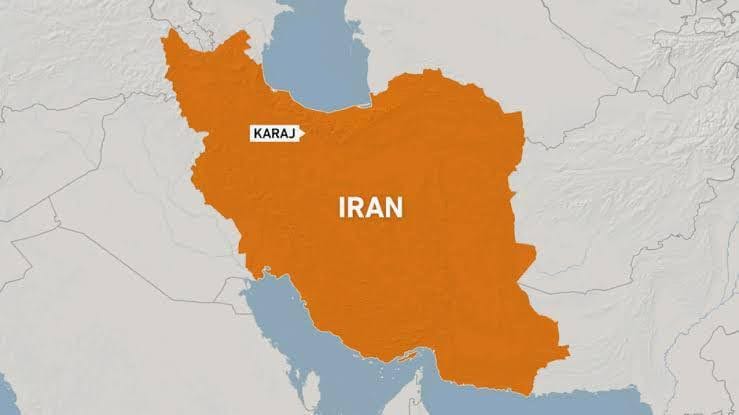
Karaj & Importance of the Bridge

  1. Karaj lies northwest of Tehran in Alborz Province and is a major industrial and transport hub.
  2. The B1 Bridge connects Tehran with northern and western corridors towards Qazvin, Tabriz and the Caspian region.
  3. Iran considers it a symbol of indigenous engineering capability and infrastructure resilience.

Important Iranian Locations Hit in Recent Conflict

  1. Karaj — B1 Bridge and transport corridor struck.
  2. Tehran — military and infrastructure targets hit.
  3. Natanz — major uranium enrichment facility targeted.
  4. Fordow — underground nuclear facility attacked.
  5. Isfahan — nuclear and industrial infrastructure hit.
  6. Tabriz — military and logistical targets reported.

NCRB Crime in India Report 2024 Highlights Crimes Against Women

Context: NCRB Crime in India Report 2024

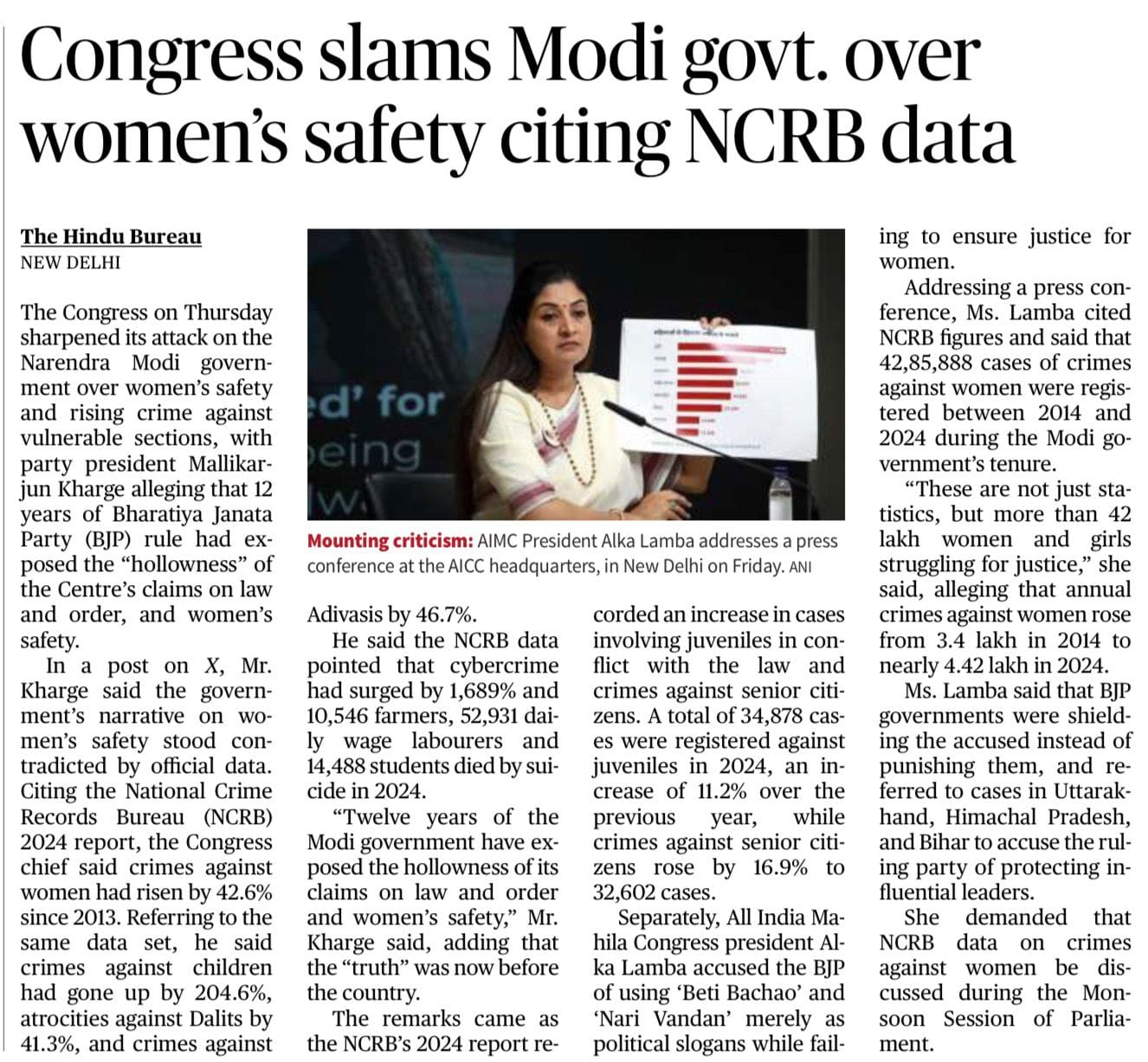
The NCRB’s “Crime in India 2024” report highlights rising concerns over crimes against women and children.

NCRB Crime in India Report 2024

Crimes Against Women

  1. Cases increased from nearly 3.4 lakh (2014) to around 4.42 lakh (2024).
  2. Around 42.85 lakh cases were registered during 2014–2024.
  3. Major offences:
  • Cruelty by husband/relatives
  • Kidnapping & abduction
  • Assault and rape
  • Cyber harassment.

Crimes Against Children

  1. Crimes against children rose by around 5.9% in 2024.
  2. Major offences included:
  • Kidnapping
  • POCSO-related crimes
  • Child trafficking and sexual offences.
  1. Cases involving juveniles in conflict with law rose to 34,878 in 2024.

Oil Marketing Companies Face Losses Amid Rising Crude Oil Prices

Context: Oil Marketing Companies

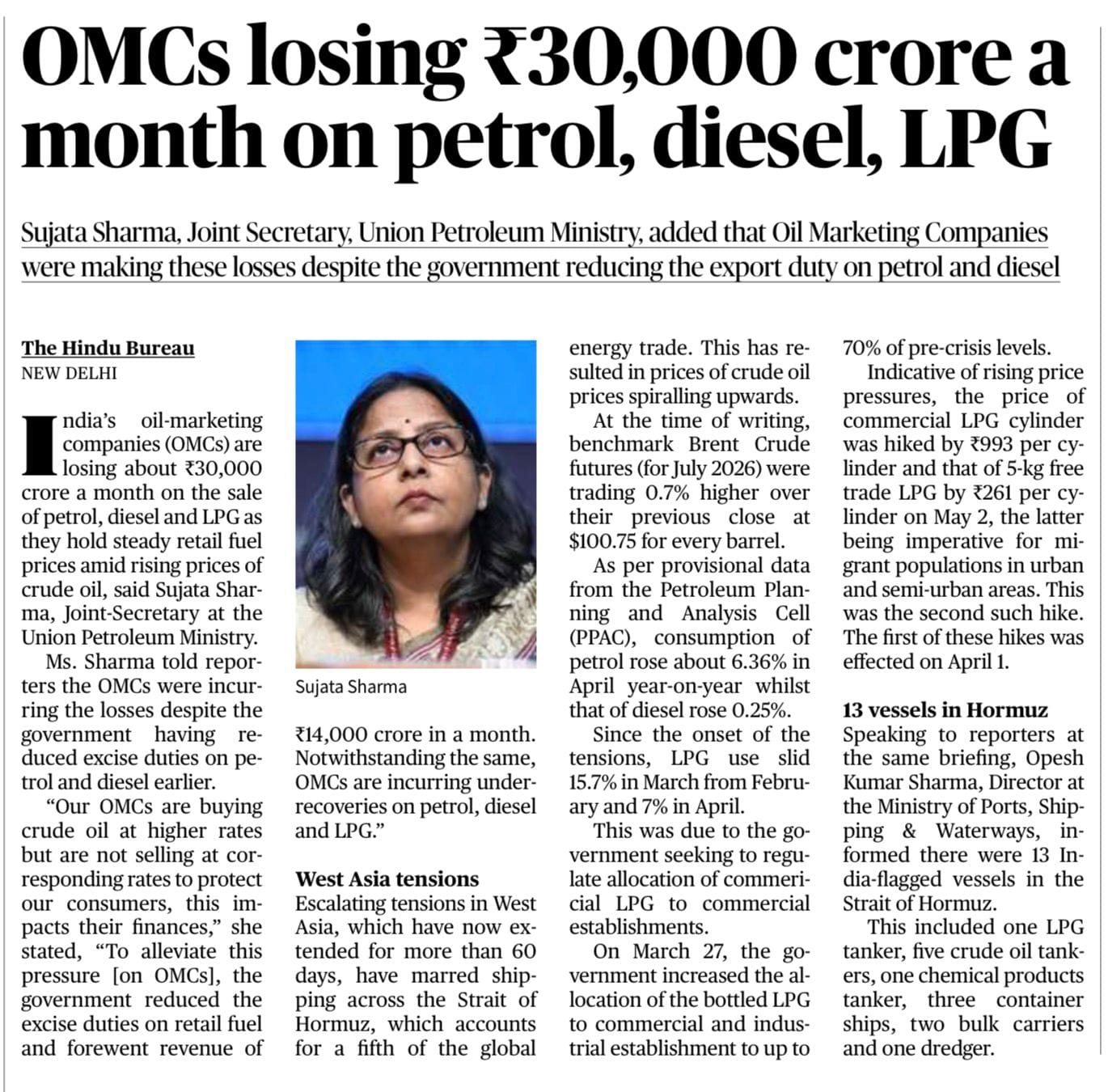
India’s Oil Marketing Companies (OMCs) are reportedly losing around ₹30,000 crore per month due to rising global crude oil prices and West Asia tensions, while domestic fuel prices remain relatively stable.

Oil Marketing Companies

What are Oil Marketing Companies (OMCs)?

  1. OMCs are companies involved in:
  • Importing crude oil
  • Refining petroleum products
  • Transporting and marketing fuels like petrol, diesel and LPG.
  1. Major OMCs in India:
  • Indian Oil Corporation (IOC)
  • Bharat Petroleum Corporation Limited (BPCL)
  • Hindustan Petroleum Corporation Limited (HPCL)
  1. Key Roles
  • Maintain fuel supply across India
  • Operate petrol pumps and LPG distribution
  • Manage strategic fuel availability
  • Cushion sudden global oil shocks at times.

How Petrol & Diesel Pricing is Done

  1. India follows dynamic fuel pricing since 2017.
  2. Retail fuel prices are revised daily based on:
  • Global crude oil prices
  • Exchange rate (₹ vs $)
  • Refining and transportation costs
  • Central & State taxes (excise + VAT)
  • Dealer commission.
  1. Main benchmark used:
  • Brent Crude oil prices in international markets.
  1. Even after deregulation, governments and OMCs sometimes absorb losses to avoid sharp retail price hikes during global crises.

Why OMCs are Facing Losses

  1. Rising crude oil prices due to West Asia tensions.
  2. Disruptions around the Strait of Hormuz, through which nearly one-fifth of global oil trade passes.
  3. Domestic fuel prices not increasing proportionately with global crude prices.

NITI Aayog School Education Report Flags Low Learning Outcomes

Context: NITI Aayog School Education Report

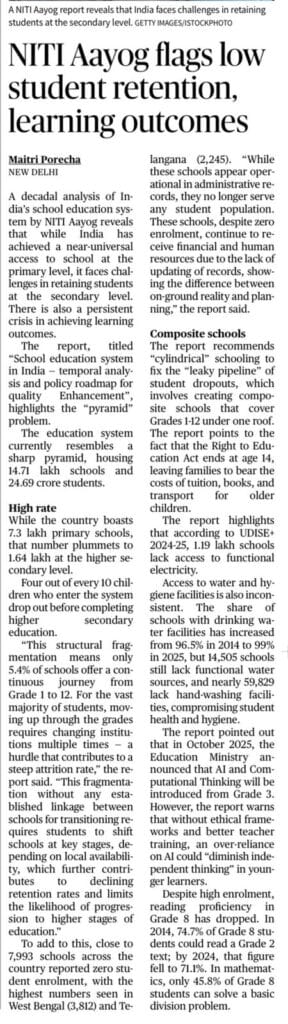
A recent NITI Aayog report titled “School Education System in India: Temporal Analysis and Policy Roadmap for Quality Enhancement” highlighted low student retention and weak learning outcomes at the secondary level.

NITI Aayog School Education Report
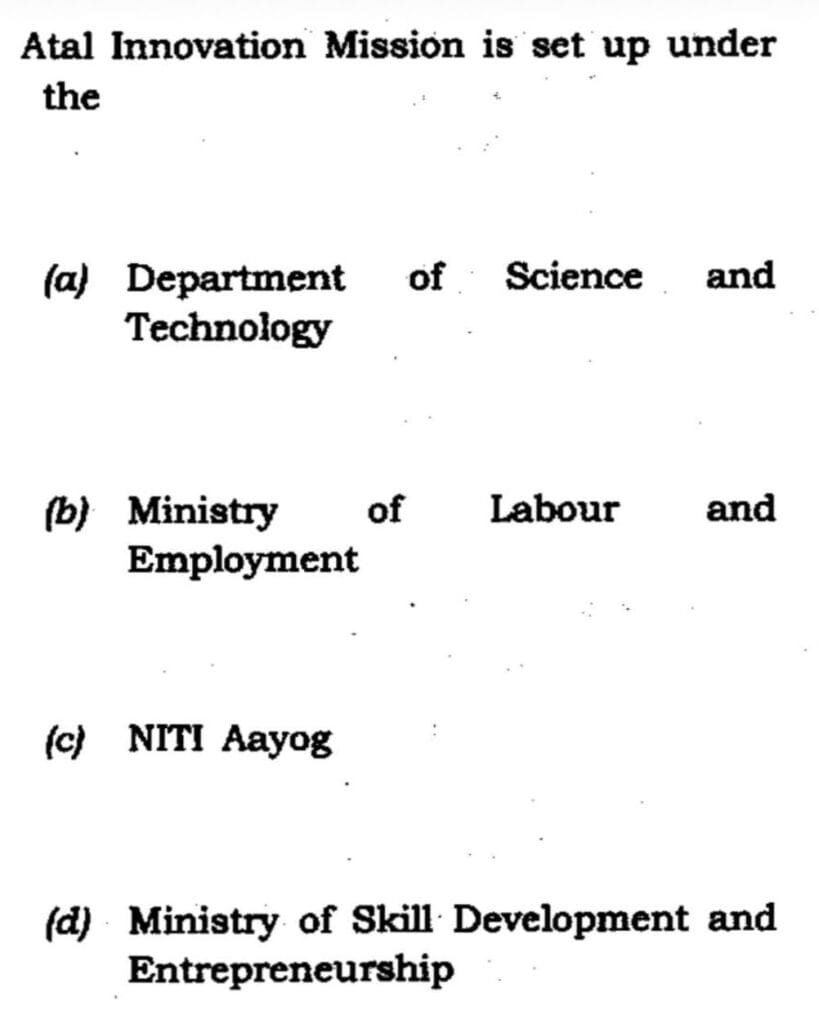
PYQ – 2019, Ans – C
PYQ -2015, Ans – D

Key Findings

  1. India has around 14.71 lakh schools and 24.69 crore students.
  2. Nearly 4 out of 10 students drop out before higher secondary level.
  3. Only 5.4% schools provide continuous education from Class 1–12.
  4. Around 7,993 schools reported zero enrolment.
  5. Learning outcomes remain weak: only 45.8% Grade 8 students could solve a basic division problem.
  6. The report recommended composite schools to reduce dropout rates.

NITI Aayog — Basics

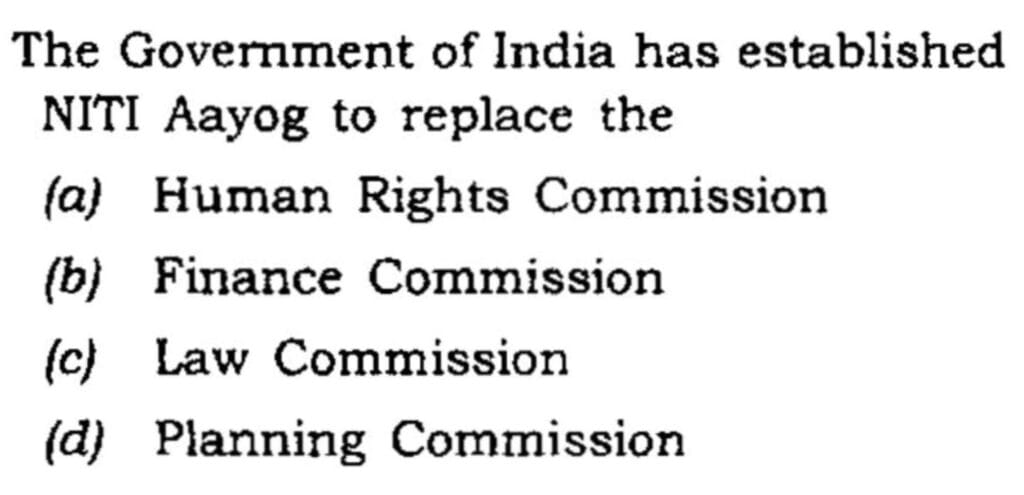
  1. NITI Aayog (National Institution for Transforming India) was established in 2015 replacing the Planning Commission.
  2. It is the Government’s premier public policy think tank.
  3. Chairperson: Prime Minister of India.
  4. Focus areas: policy reforms, SDGs, innovation and cooperative federalism.

Important Reports Published by NITI Aayog

  1. SDG India Index
  2. India Innovation Index
  3. National Multidimensional Poverty Index (MPI)
  4. School Education Quality Index (SEQI)
  5. Export Preparedness Index
  6. Health Index
  7. State Energy & Climate Index
  8. Composite Water Management Index
  9. Electric Vehicle (EV) Adoption Reports
  10. Strategy for New India @75

About the UPSC Civil Services Examination (UPSC CSE)

The UPSC Civil Services Examination (CSE) is one of the most competitive and esteemed examinations in India, conducted by the Union Public Service Commission to recruit officers for services such as the Indian Administrative Service (IAS), Indian Police Service (IPS), Indian Foreign Service (IFS), and others. The exam comprises three stages — Prelims, Mains, and the Personality Test (Interview) — designed to test a candidate’s knowledge, aptitude, decision-making, and leadership skills.


How to Prepare Effectively for UPSC CSE

Cracking the UPSC CSE requires a deep understanding of the syllabus, consistent revision, structured answer writing, and smart test-taking strategies. The Prelims test analytical and conceptual clarity, the Mains focuses on critical thinking, articulation, and subject mastery, while the Interview assesses presence of mind, ethical judgment, and personality traits relevant to public service.

At UnderStand UPSC, we empower aspirants with a personalized and focused approach to each stage of the exam.


Why Choose UnderStand UPSC?

UnderStand UPSC is a mentorship-driven platform offering a clear, clutter-free strategy to tackle the Civil Services Examination. Our programs like Transform (for beginners and intermediate learners) and Conquer (for advanced mains preparation) provide structured study plans, syllabus-wise video content, interactive live sessions, and answer writing support.

We emphasize:

  • Concept clarity through topic-wise lectures

  • Test series designed around real UPSC standards

  • Personalized mentorship in small groups

  • Regular performance tracking and peer benchmarking

  • Doubt-clearing sessions, current affairs analysis, and monthly magazines


Join the UnderStand UPSC Learning Community

Our mission is to make UPSC preparation less overwhelming and more strategic. We combine mentorship, discipline, and academic rigor to help you clear CSE with confidence. Whether you’re preparing from Delhi, Mumbai, Bangalore, or a remote village — our online-first model ensures quality guidance reaches every corner of India.

Join the thousands of aspirants who trust UnderStand UPSC to guide their journey toward becoming civil servants.

Stay connected with us through our Telegram, YouTube, and Instagram channels for daily tips, strategies, and updates.

Copyright © 2026 USARAMBHA EDUCATION (UnderStand UPSC). All Rights Reserved.

Fill the form

Our team will reach out to you soon