12 May 2026 | Daily Current Affairs

India Energy Security: Fuel Stocks and Forex Reserves Amid West Asia Tensions

Context: India Energy Security

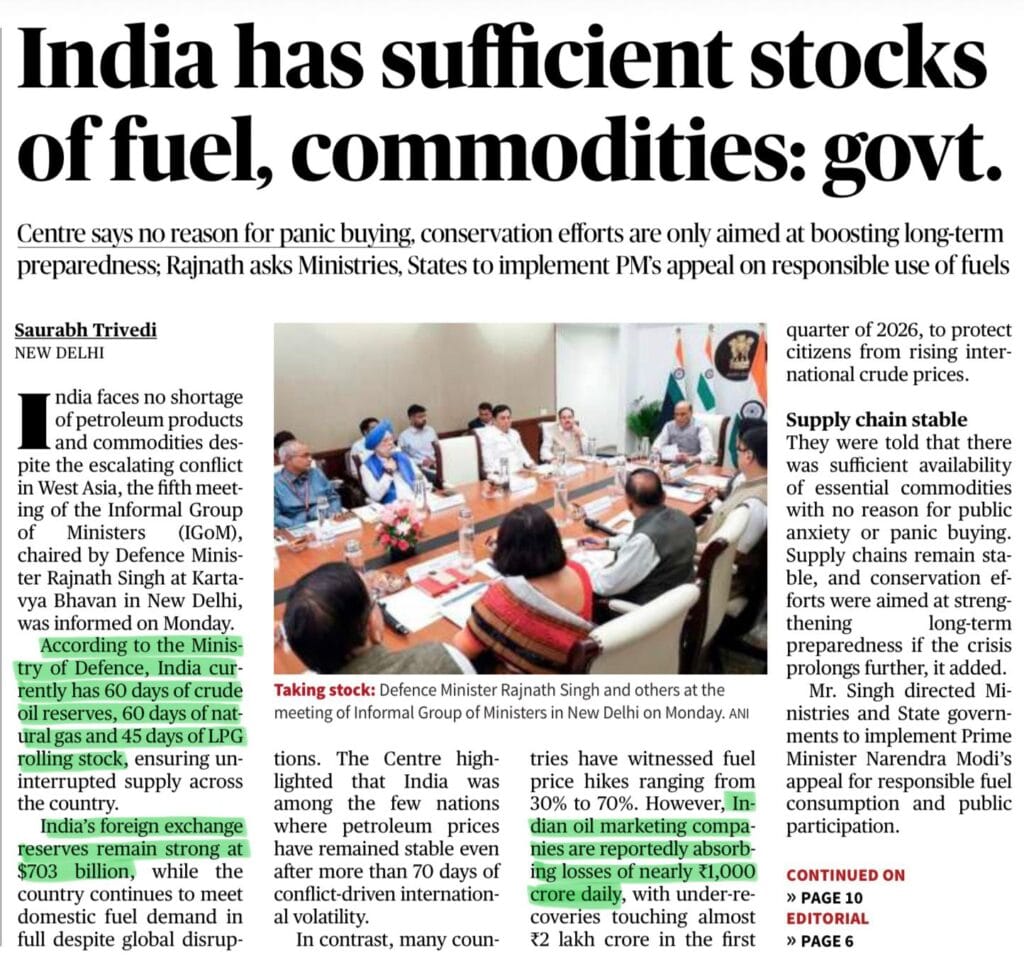
Amid West Asia tensions and fears of global fuel supply disruption, the Centre said India has adequate fuel stocks and strong forex reserves to manage short-term energy shocks.

Key Data

Crude oil reserves: 60 days
Natural gas reserves: 60 days
LPG rolling stock: 45 days
Forex reserves: around $703 billion

India ranks around 4th globally in forex reserves.
1st: China
2nd: Japan
3rd: Switzerland

India’s Energy Import Dependence

Crude Oil:

  • Imports nearly 85% requirement
  • Largest supplier: Russia

Natural Gas (LNG):

  • Imports around 45%–50%
  • Major supplier: Qatar

LPG:

  • Imports around 55%–60%
  • Major suppliers: Saudi Arabia, Qatar, UAE

Import Cover

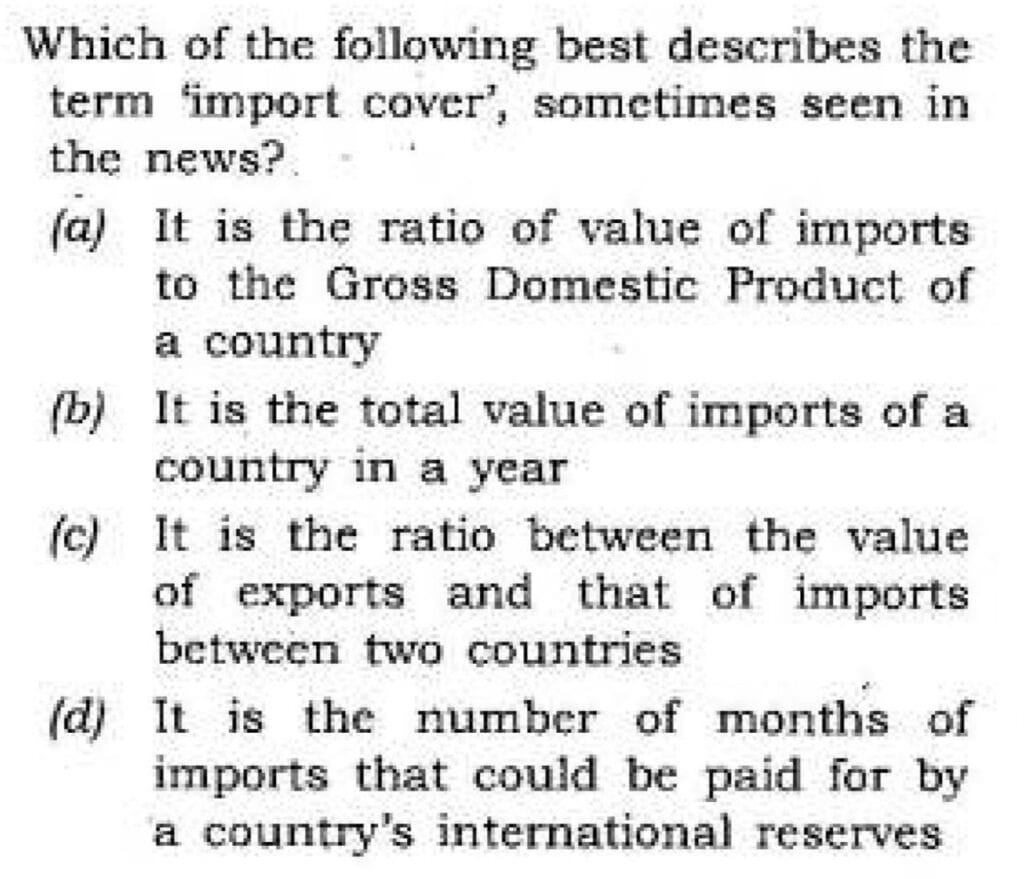
Import cover = number of months a country can finance imports using forex reserves if external inflows stop.

Higher import cover reflects stronger external sector stability during crises.

India Energy Security
PYQ – 2018, Ans – D

International Big Cat Alliance: China Unlikely to Join India-Led Conservation Group

Context: International Big Cat Alliance

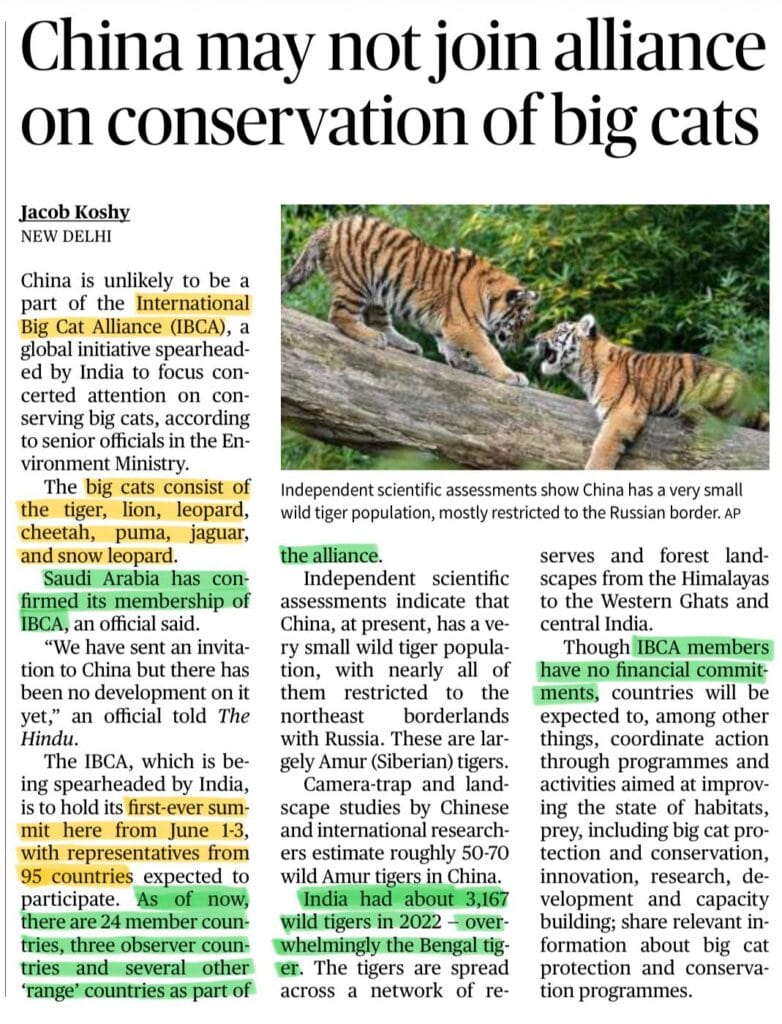
China is unlikely to join the International Big Cat Alliance (IBCA), a global conservation initiative led by India. Saudi Arabia has confirmed membership. India will host the first IBCA summit from June 1–3.

IBCA Basics

Launched: 2023 during 50 years of Project Tiger
Headquarters: New Delhi

Aim: Conservation of big cats, habitats and prey base through global cooperation, research, anti-poaching and capacity building

Members: 24 member countries + 3 observer countries
~95 countries expected in first summit
No mandatory financial commitments for members

Big Cats under IBCA + IUCN Status

Tiger — Endangered
Lion — Vulnerable
Leopard — Vulnerable
Snow Leopard — Vulnerable
Cheetah — Vulnerable
Jaguar — Near Threatened
Puma — Least Concern

Important Data

India had ~3,167 wild tigers (2022) — highest globally

China has only ~50–70 wild Amur (Siberian) tigers near Russian border

India’s tiger population is largely Bengal Tiger spread across Himalayan, Central Indian and Western Ghats landscapes

Importance for India

Enhances India’s wildlife diplomacy and global conservation leadership

Strengthens cooperation on habitat protection, research and anti-poaching efforts

International Big Cat Alliance

VB G RAM G Replaces MGNREGA Framework from July 1

Context: VB G RAM G

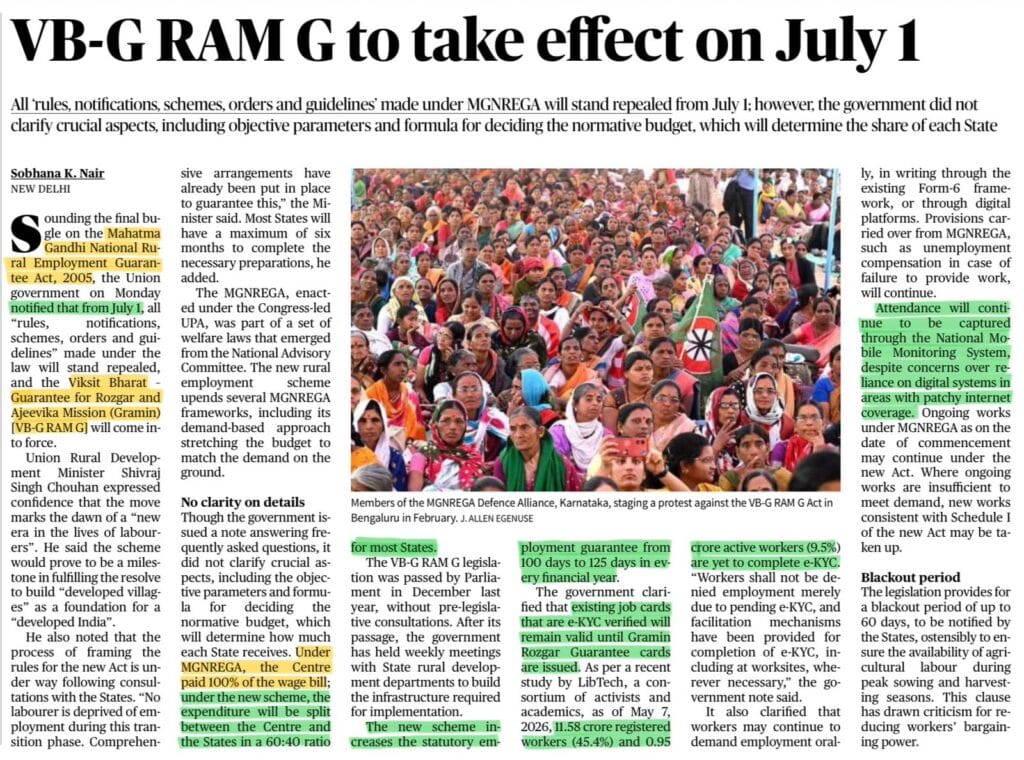
The Union Government notified that the Viksit Bharat–Gramin Rozgar and Ajeevika Mission (Gramin) [VB G RAM G] will replace the Mahatma Gandhi National Rural Employment Guarantee Act (MGNREGA) framework from July 1. The scheme comes under the Ministry of Rural Development.

MGNREGA vs VB G RAM G

MGNREGA

  • Rights based and demand driven employment guarantee law
  • Guaranteed 100 days wage employment
  • Centre largely funded wage expenditure
  • Demand based fund allocation
  • Operated under MGNREGA Act, 2005

VB G RAM G

  • More scheme based and budget linked framework
  • Employment guarantee increased from 100 to 125 days annually
  • Centre State expenditure sharing in 60:40 ratio
  • State allocation through “normative budget” formula
  • Existing MGNREGA rules and guidelines repealed from July 1

Issues Highlighted

  • No clarity on formula or objective parameters for State wise budget allocation
  • Concerns over weakening of demand driven nature of employment guarantee
  • Dependence on digital systems despite poor rural internet connectivity
  • Around 0.95 crore active workers still pending e KYC
  • Criticism over “blackout period” provision during peak agricultural seasons
  • Concerns over limited pre legislative consultation before implementation

Important Data & Basics

  • As of May 7, 2026, around 11.58 crore registered workers under MGNREGA
  • National Mobile Monitoring System (NMMS): Mobile based attendance system used for capturing worker attendance at worksites
  • Existing e KYC verified job cards will remain valid till new Gramin Rozgar Guarantee cards are issued.
VB G RAM G
VB G RAM G

India Vietnam Relations Strengthen During Vietnam President’s India Visit

Context: India Vietnam Relations

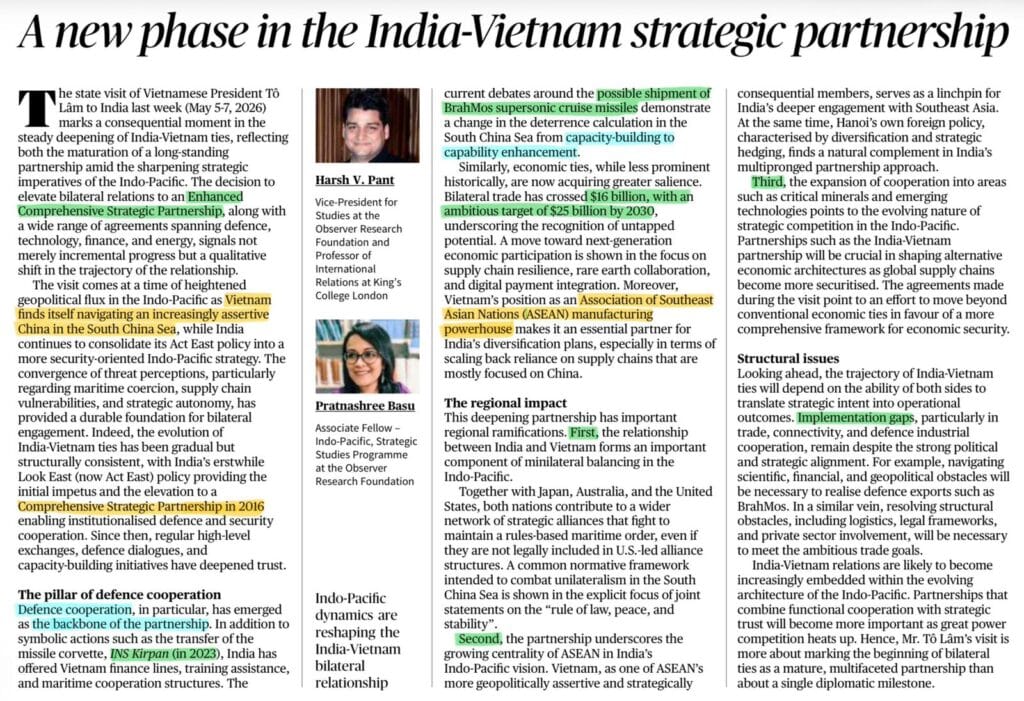
Vietnamese President Tô Lâm’s India visit (May 5–7, 2026) marked a major step in deepening India–Vietnam ties amid evolving Indo-Pacific geopolitics. Both countries upgraded ties to an Enhanced Comprehensive Strategic Partnership.

Strategic Importance of Vietnam for India

Vietnam is central to India’s Act East and Indo-Pacific strategy.

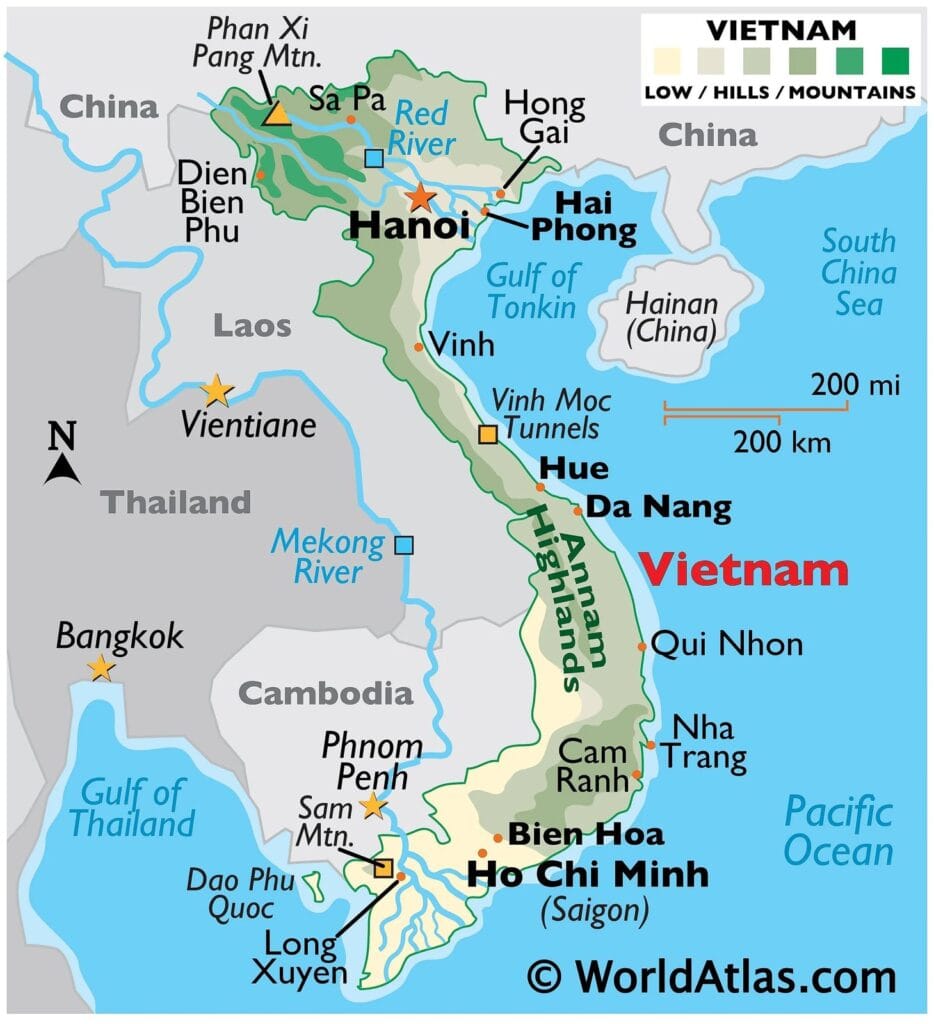
Both countries share concerns over China’s assertiveness in the South China Sea.

Partnership supports rules-based maritime order and strategic autonomy in Indo-Pacific.

Vietnam is an important ASEAN manufacturing hub helping India diversify supply chains away from China.

Defence & Security Cooperation

Defence cooperation remains the backbone of India–Vietnam partnership.

India transferred INS Kirpan to Vietnam in 2023.

India has provided training assistance, maritime cooperation and defence capacity building.

Possible BrahMos missile deal reflects shift from capacity building to capability enhancement.

Economic & Technology Cooperation

Bilateral trade crossed $16 billion.

Target: $25 billion trade by 2030.

Cooperation expanding in:

  • Critical minerals
  • Semiconductor and emerging technologies
  • Digital payments integration
  • Supply chain resilience

Regional & Indo-Pacific Significance

India–Vietnam ties strengthen minilateral balancing in Indo-Pacific alongside Japan, Australia and the United States.

Partnership reinforces ASEAN centrality in India’s Indo-Pacific vision.

Helps create alternative economic and strategic networks beyond China-centric supply chains.

Key Challenges

Implementation gaps in trade, connectivity and defence industrial cooperation.

Scientific, financial and geopolitical obstacles in defence exports such as BrahMos.

Need for stronger logistics, legal frameworks and private sector participation to achieve trade targets.

India Vietnam Relations

Solid Waste Management Rules 2026: Key Changes and Concerns

Context: Solid Waste Management Rules 2026

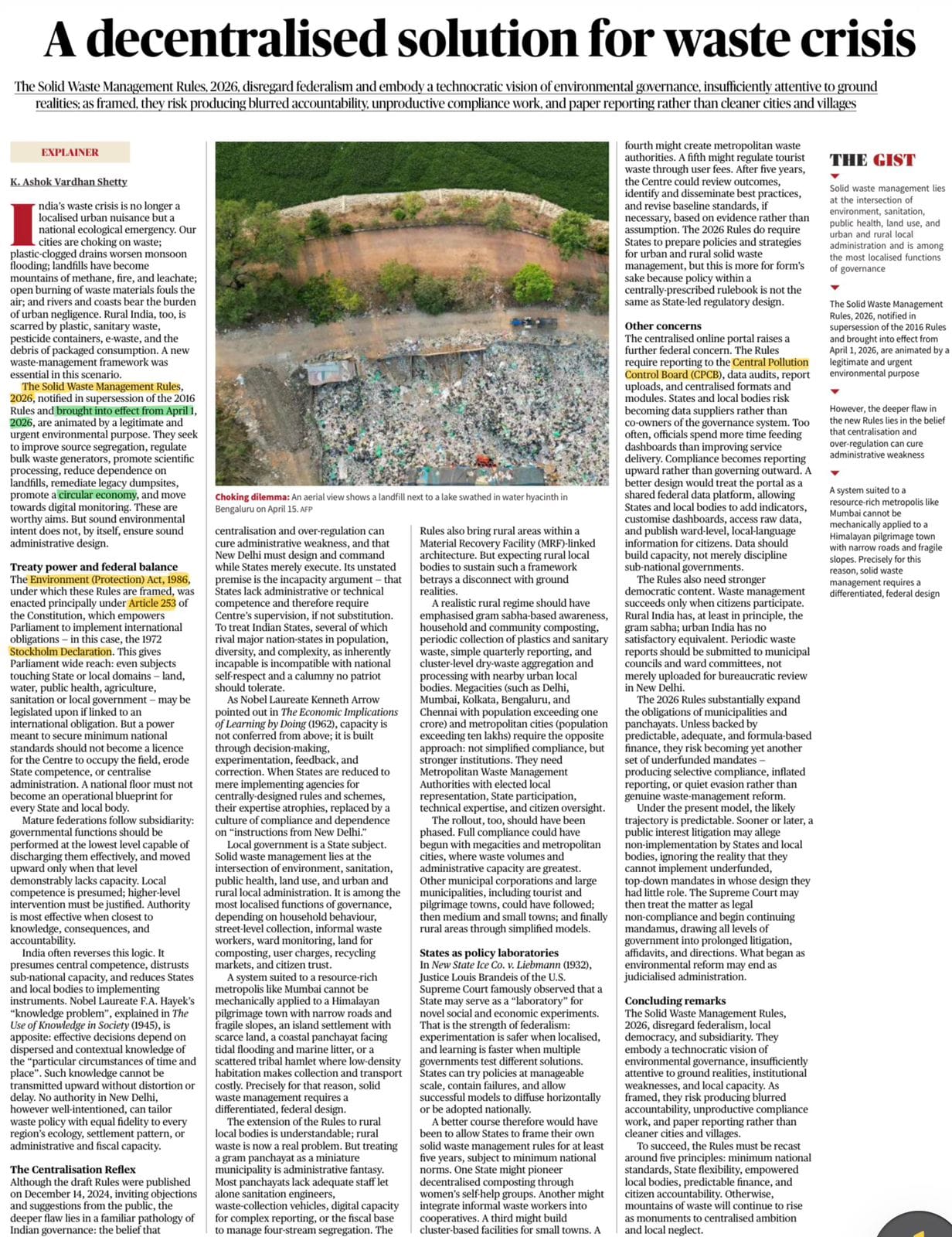
The Centre notified the Solid Waste Management Rules, 2026 replacing the 2016 Rules to strengthen scientific waste processing, recycling and circular economy practices amid rising urban and rural waste challenges.

Solid Waste Management Rules

Notified under Environment (Protection) Act, 1986.

Ministry: Ministry of Environment, Forest and Climate Change (MoEFCC).

Cover segregation, collection, recycling, composting, processing and scientific disposal of solid waste across urban and rural areas.

Major Improvements in SWM Rules, 2026

Greater emphasis on source segregation and scientific processing of waste.

Stronger focus on circular economy and reduction in landfill dependence.

Wider integration of rural waste management systems.

Expansion of Material Recovery Facility (MRF)-based recycling systems.

Improved compliance tracking through digital reporting and audits.

Enhanced monitoring role of CPCB.

Major Issues & Concerns

Excessive centralisation through centrally designed compliance systems, dashboards and audits may reduce flexibility for States and local bodies.

Uniform national standards may not suit diverse local realities such as Himalayan towns, coastal regions, megacities and rural panchayats.

Larger role of CPCB may weaken autonomy of State Pollution Control Boards and urban local bodies.

Heavy compliance and reporting requirements may increase paperwork instead of improving actual waste processing outcomes.

Rural local bodies may lack finances, technical manpower and digital infrastructure for implementation.

Greater dependence on digital systems may create implementation gaps in low-connectivity regions.

Concerns over inadequate consultation with States and local bodies before notification of Rules.

Compliance-heavy framework may burden smaller municipalities and gram panchayats disproportionately.

Weak clarity on financial support and capacity-building mechanisms for local institutions.

Constitutional, Legal & International Basis

Article 253 empowers Parliament to legislate for implementing international treaties and agreements.

Stockholm Declaration, 1972 laid foundation for modern environmental governance globally.

Environment (Protection) Act, 1986 enacted after Bhopal Gas Tragedy serves as India’s umbrella environmental legislation.

Principle of Subsidiarity: governance functions should be handled at the lowest effective level closest to citizens and local realities.

Solid Waste Management Rules 2026
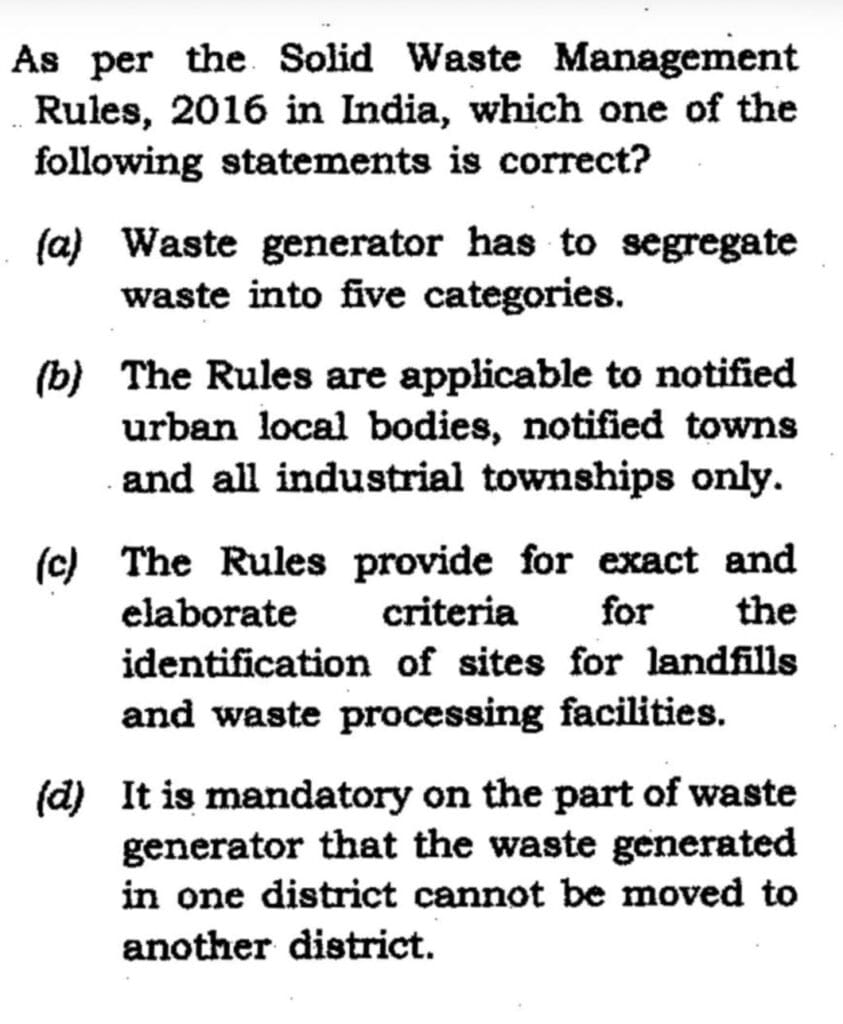
PYQ – 2019, Ans – C

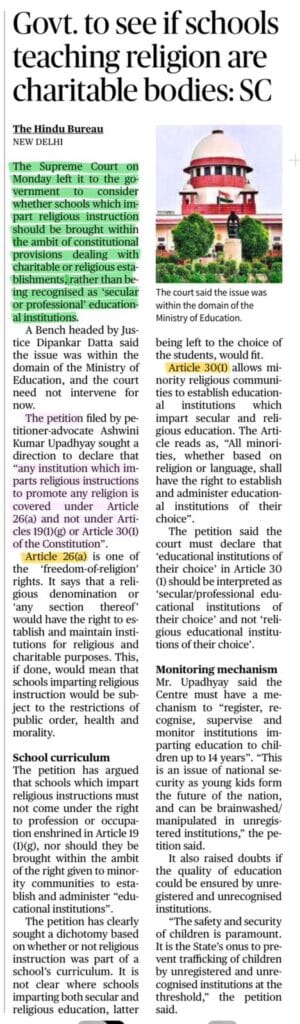
Supreme Court Asks Centre to Review Status of Minority Educational Institutions

Context: Minority Educational Institutions

The Supreme Court asked the Union Government to examine whether institutions imparting religious instruction should continue to enjoy protections available to minority educational institutions under Article 30(1) or be treated as religious institutions under Article 26(a).

Core Issue

The petition argued that institutions mainly teaching religion should fall under Article 26(a) dealing with religious and charitable institutions, not under Article 30(1) or Article 19(1)(g).

Why It Matters

Article 30(1) gives minority educational institutions greater autonomy and protection from excessive State interference.

Bringing such institutions under Article 26(a) could allow stronger government regulation, monitoring and supervision.

Supreme Court’s Stand

The Court said the matter falls within the policy domain of the government and Ministry of Education and did not intervene presently.

Minority Educational Institutions
About the UPSC Civil Services Examination (UPSC CSE)

The UPSC Civil Services Examination (CSE) is one of the most competitive and esteemed examinations in India, conducted by the Union Public Service Commission to recruit officers for services such as the Indian Administrative Service (IAS), Indian Police Service (IPS), Indian Foreign Service (IFS), and others. The exam comprises three stages — Prelims, Mains, and the Personality Test (Interview) — designed to test a candidate’s knowledge, aptitude, decision-making, and leadership skills.


How to Prepare Effectively for UPSC CSE

Cracking the UPSC CSE requires a deep understanding of the syllabus, consistent revision, structured answer writing, and smart test-taking strategies. The Prelims test analytical and conceptual clarity, the Mains focuses on critical thinking, articulation, and subject mastery, while the Interview assesses presence of mind, ethical judgment, and personality traits relevant to public service.

At UnderStand UPSC, we empower aspirants with a personalized and focused approach to each stage of the exam.


Why Choose UnderStand UPSC?

UnderStand UPSC is a mentorship-driven platform offering a clear, clutter-free strategy to tackle the Civil Services Examination. Our programs like Transform (for beginners and intermediate learners) and Conquer (for advanced mains preparation) provide structured study plans, syllabus-wise video content, interactive live sessions, and answer writing support.

We emphasize:

  • Concept clarity through topic-wise lectures

  • Test series designed around real UPSC standards

  • Personalized mentorship in small groups

  • Regular performance tracking and peer benchmarking

  • Doubt-clearing sessions, current affairs analysis, and monthly magazines


Join the UnderStand UPSC Learning Community

Our mission is to make UPSC preparation less overwhelming and more strategic. We combine mentorship, discipline, and academic rigor to help you clear CSE with confidence. Whether you’re preparing from Delhi, Mumbai, Bangalore, or a remote village — our online-first model ensures quality guidance reaches every corner of India.

Join the thousands of aspirants who trust UnderStand UPSC to guide their journey toward becoming civil servants.

Stay connected with us through our Telegram, YouTube, and Instagram channels for daily tips, strategies, and updates.

Copyright © 2026 USARAMBHA EDUCATION (UnderStand UPSC). All Rights Reserved.

Join the Success Journey!