16 June 2026 | Daily Current Affairs

Dropshipping Model in E-Commerce: Meaning, Features and Revenue Models for UPSC

Context: Dropshipping Model
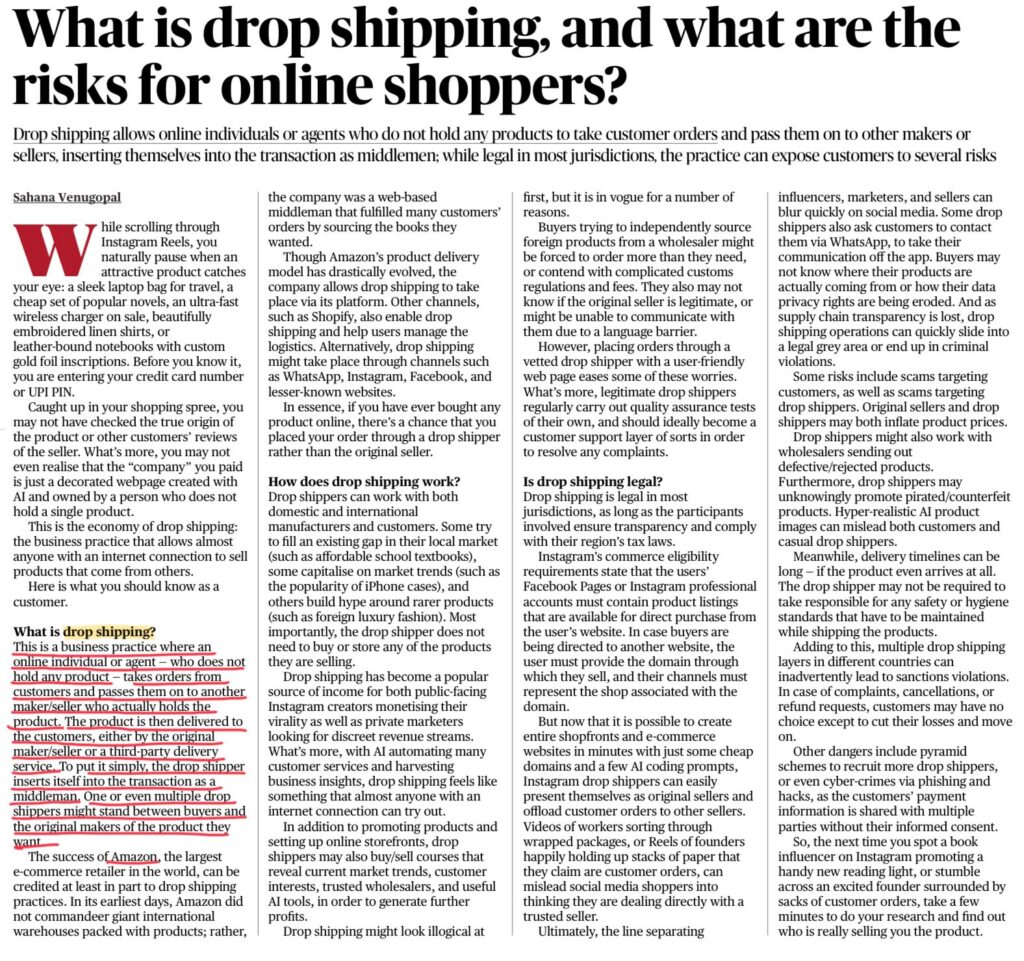
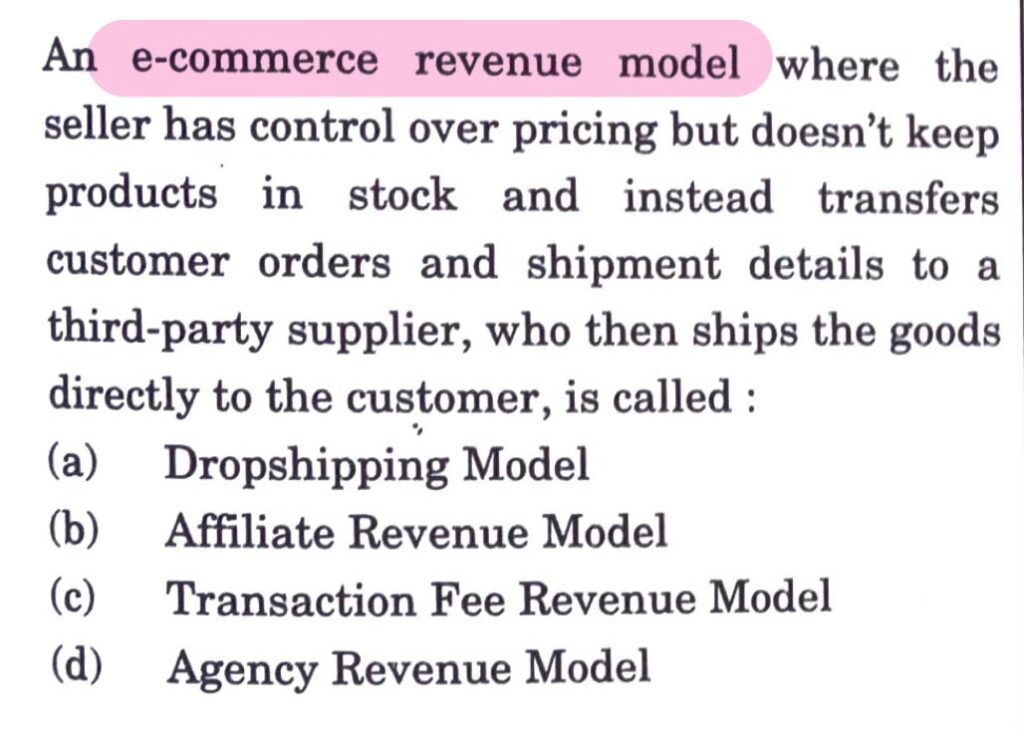
Dropshipping has emerged as a popular e-commerce model where sellers operate online stores without keeping inventory. The seller takes the order and forwards it to a supplier or manufacturer, who directly ships the product to the customer.

Dropshipping Model

Meaning:
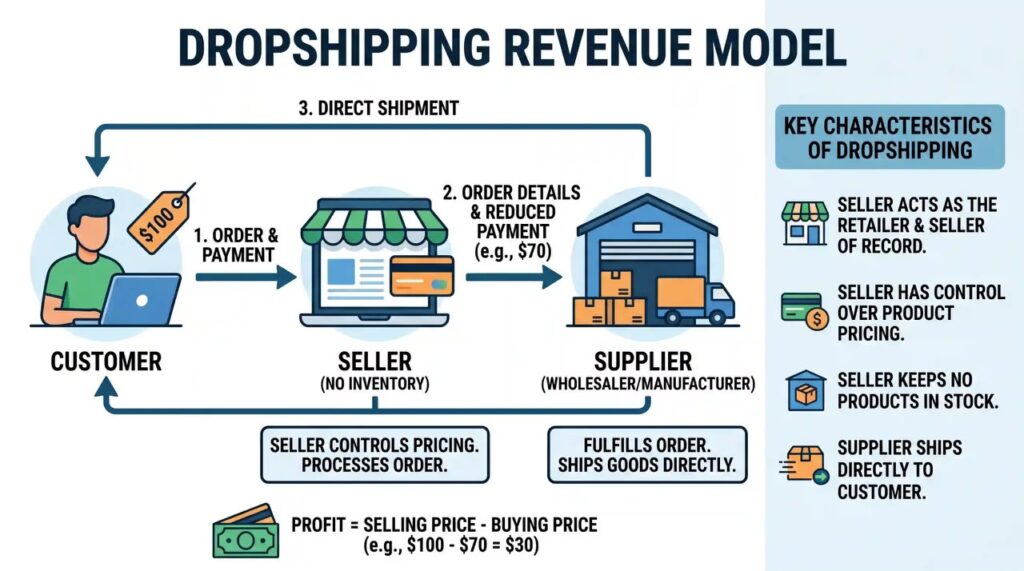
The seller does not keep inventory. After receiving an order, the seller forwards it to a supplier or manufacturer, who ships the product directly to the customer.

Flow

Customer → Seller → Supplier → Customer

Example

A Shopify-based online store selling phone covers sourced from manufacturers in China. The store owner markets the product and collects payment, while the supplier ships it.

Key Features

  • Seller acts as retailer and seller of record.
  • Seller controls product pricing.
  • Seller keeps no products in stock.
  • Supplier ships directly to the customer.
  • Profit is the difference between selling price and buying price.

Other E-Commerce Revenue Models

Affiliate Revenue Model

  • Earn commission by referring customers.
  • No ownership of products.
  • Example: Amazon Associates Program.

Transaction Fee Revenue Model

  • Platform charges a fee on every transaction.
  • Example: Paytm, Razorpay.

Agency Revenue Model

  • A company earns money by providing specialised professional services to businesses or individuals.
  • Instead of selling physical products, the agency sells expertise, time and creative labour.
  • Example: Uber, Ola, Airbnb.
Drone Warfare: FPV Drones, UAVs and Modern Warfare Trends for UPSC

Context: Drone Warfare
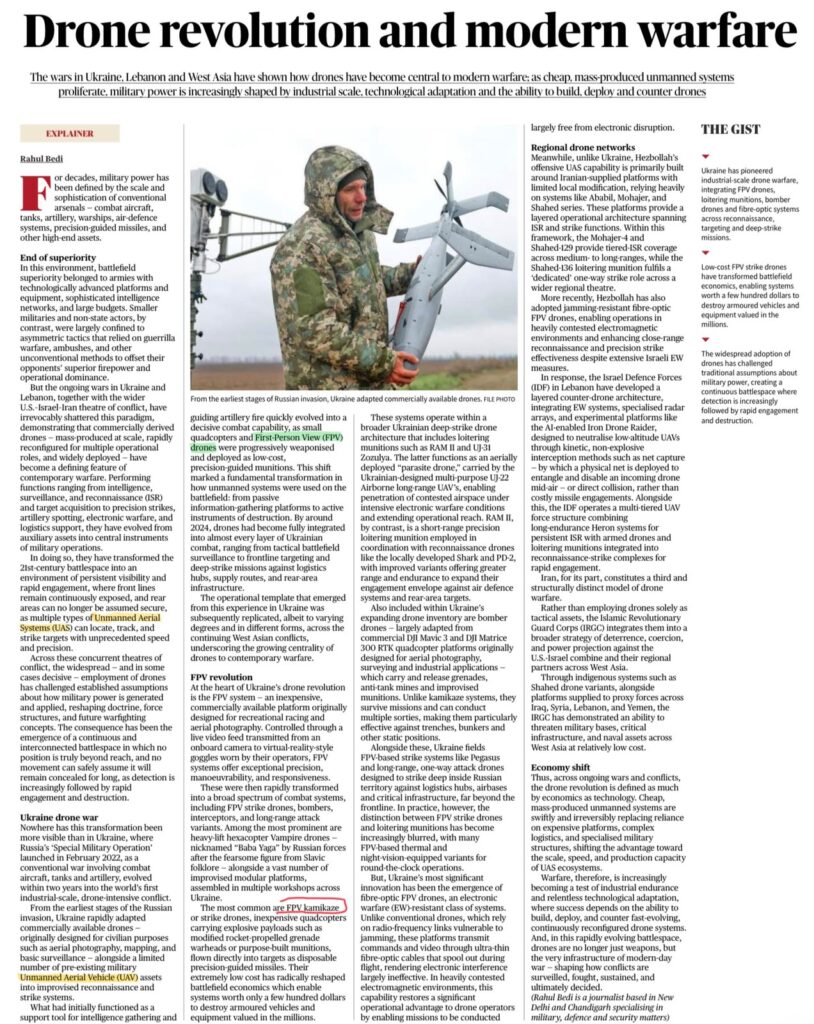
Recent wars in Ukraine, Lebanon and West Asia have shown that drones have become central to modern warfare. Cheap, mass-produced unmanned systems are reshaping military strategy, battlefield surveillance, targeting and precision strikes.

Unmanned Aerial Vehicle

Definition:
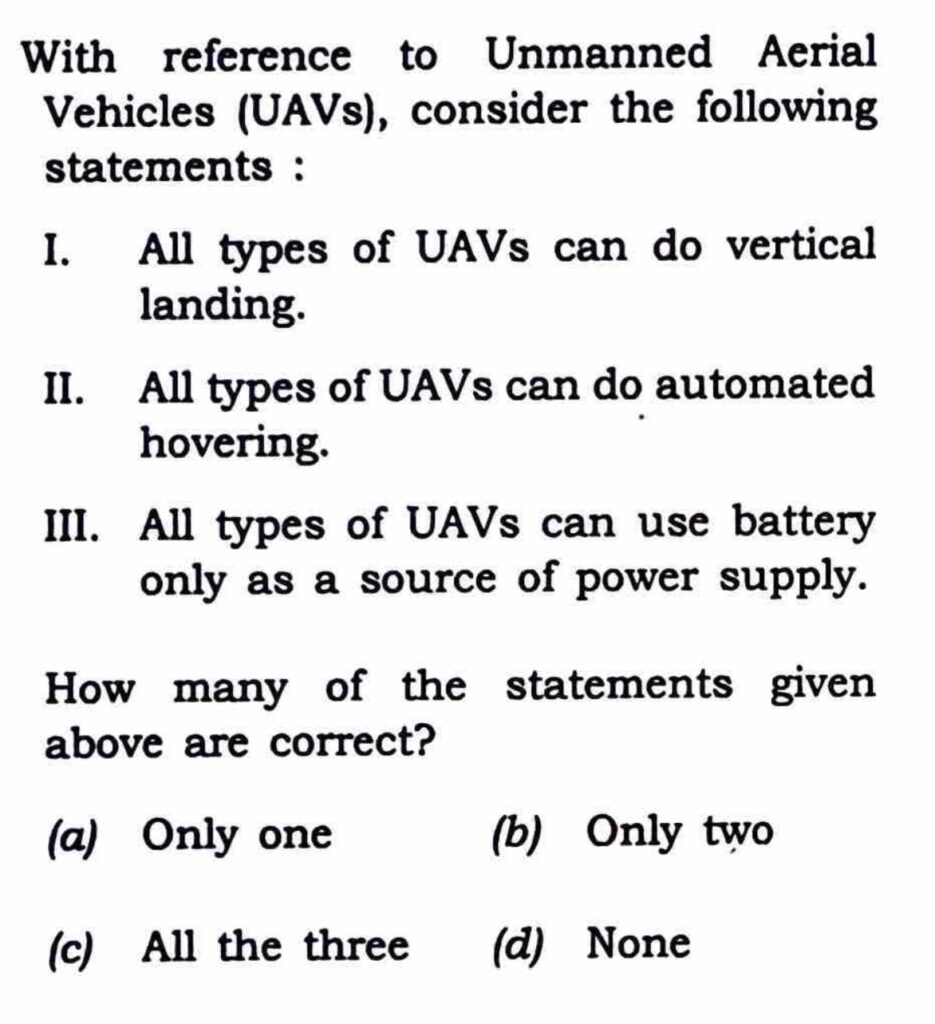
A powered aircraft that operates without a human pilot inside the aircraft and is controlled remotely or through onboard autonomous systems.

Examples

  • MQ-9 Reaper — USA
  • Heron — Israel
  • TAPAS-BH-201 — India

Importance

Used for:

  • Surveillance
  • Reconnaissance
  • Border monitoring
  • Precision strikes

First-Person View Drone

Definition:
A type of UAV in which the operator receives a real-time video feed from the drone’s onboard camera, enabling navigation and targeting from the drone’s viewpoint.

Examples

  • Ukrainian FPV kamikaze drones
  • Russian FPV kamikaze drones

Importance

  • Low-cost
  • Highly accurate
  • Difficult to detect
  • Increasingly used for precision attacks in modern warfare

Strategic Significance

  • Drones have lowered the cost of modern warfare.
  • Small military actors can use drones to challenge larger forces.
  • FPV drones are being used for battlefield strikes and targeting.
  • Drone warfare demands counter-drone systems, electronic warfare and air-defence modernisation.

India-France Innovation Roadmap 2030: AI, Space and Technology Cooperation for UPSC

Context: India-France Innovation Roadmap 2030
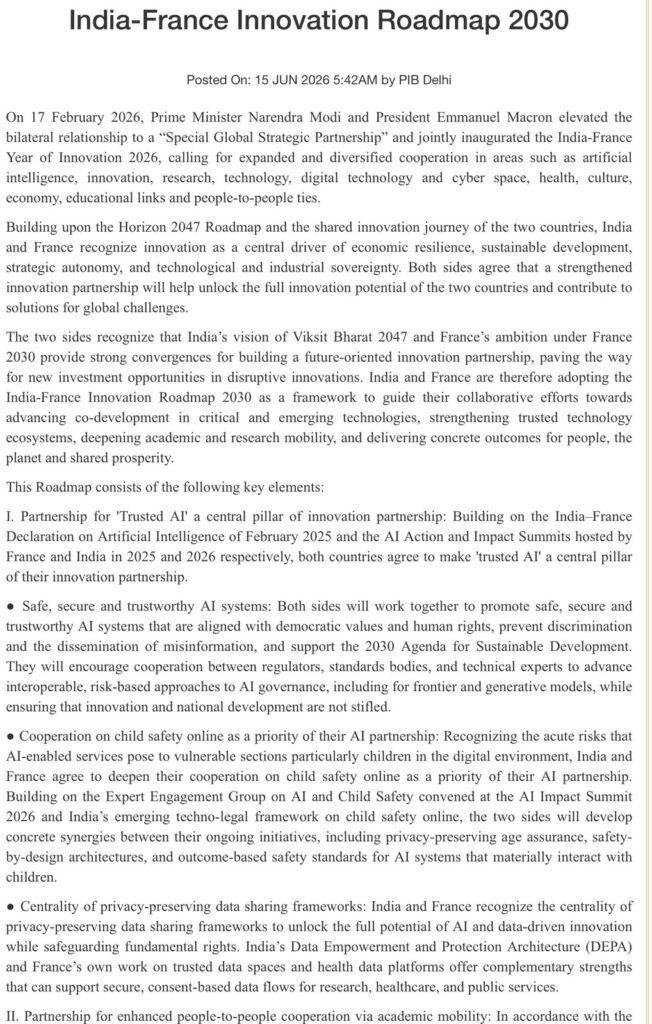
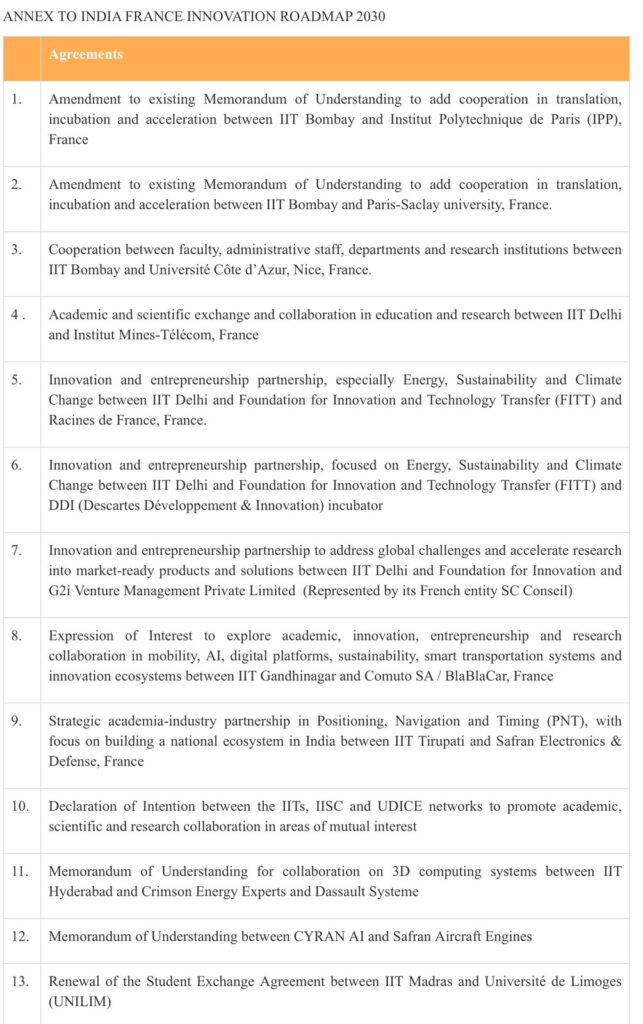
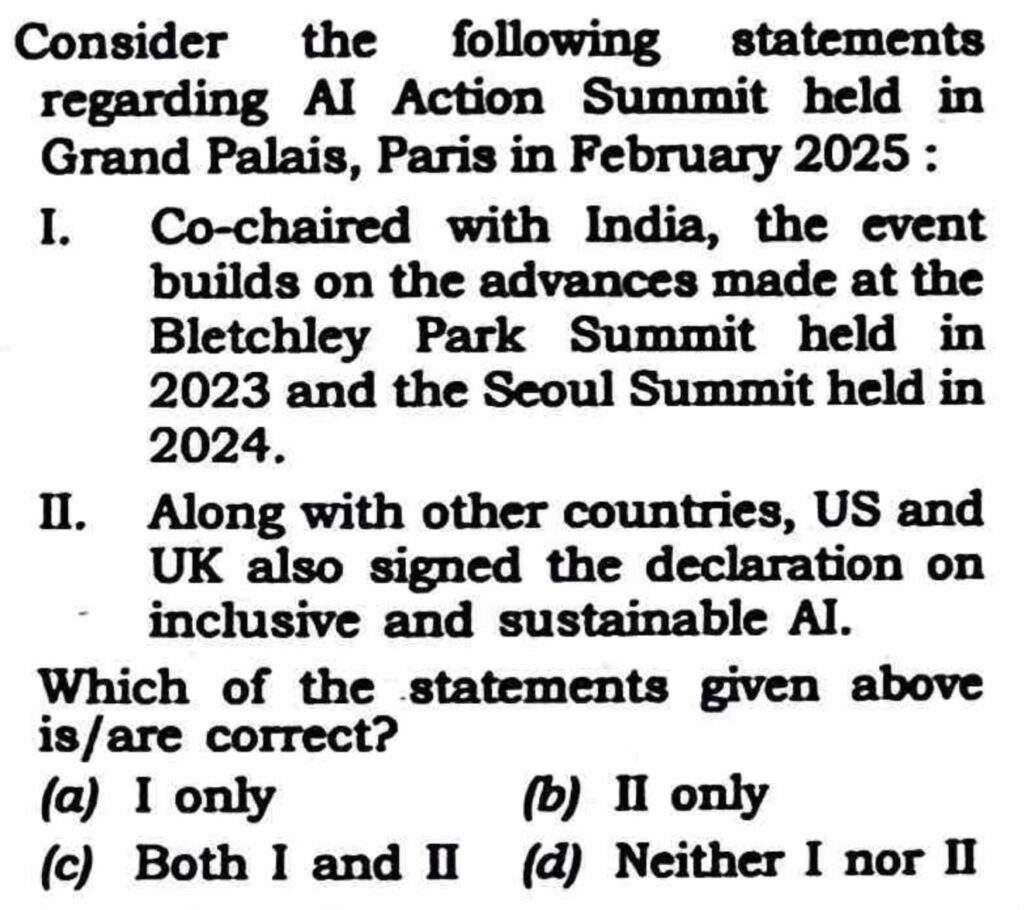
India and France adopted the India–France Innovation Roadmap 2030 and announced 19 outcomes, including MoUs, agreements and institutional partnerships, to strengthen cooperation in Artificial Intelligence, research, higher education, startups, healthcare, space and emerging technologies under the India–France Special Global Strategic Partnership.

Key Highlights

1. Trusted AI as the Core Pillar

  • Joint focus on safe, secure and trustworthy Artificial Intelligence.
  • Cooperation on AI governance, generative AI regulation and prevention of misinformation.
  • Special emphasis on child safety online, privacy-preserving age verification and AI safety standards.

2. Data Sharing and Digital Innovation

  • Collaboration on privacy-preserving data-sharing frameworks.
  • India’s Data Empowerment and Protection Architecture and France’s trusted data ecosystems will support research, healthcare and public services.

3. Academic Mobility and Education

  • France reiterated its goal of hosting 30,000 Indian students by 2030.
  • Expansion of Mutual Recognition of Qualifications.
  • Multiple MoUs signed between IITs, IISc and leading French universities for student exchange and research collaboration.

4. Industry–Academia–Startup Ecosystem

Strengthening of:

  • CEFIPRA — Indo-French Centre for the Promotion of Advanced Research
  • India–France Innovation Network
  • Startup collaboration
  • Innovation clusters
  • Resilient technology supply chains

5. New Initiatives

  • Franco-Indian Aeronautics Training Campus to be established in Kanpur.
  • India–France InnoXchange Bridge for startup, research and entrepreneurship exchanges.
  • Greater cooperation among SMEs and innovation ecosystems.

6. Space Cooperation

Expanded collaboration in:

  • Earth observation
  • Human spaceflight
  • Future Indian space station in Low Earth Orbit
  • Bengaluru Space Expo
  • International Space Summit in Paris

7. Health and AI

  • Joint work on AI-driven healthcare solutions.
  • Collaboration between Indian Council of Medical Research and France’s Health Data Hub for consent-based health data sharing.

Mains Value Addition Keywords

  • Trusted AI
  • Technological Sovereignty
  • Strategic Autonomy
  • Innovation Diplomacy
  • Digital Public Infrastructure
  • Academic Mobility

India Merchandise Trade Deficit Widens Despite Record Goods Exports in May 2026

Context: India Merchandise Trade Deficit
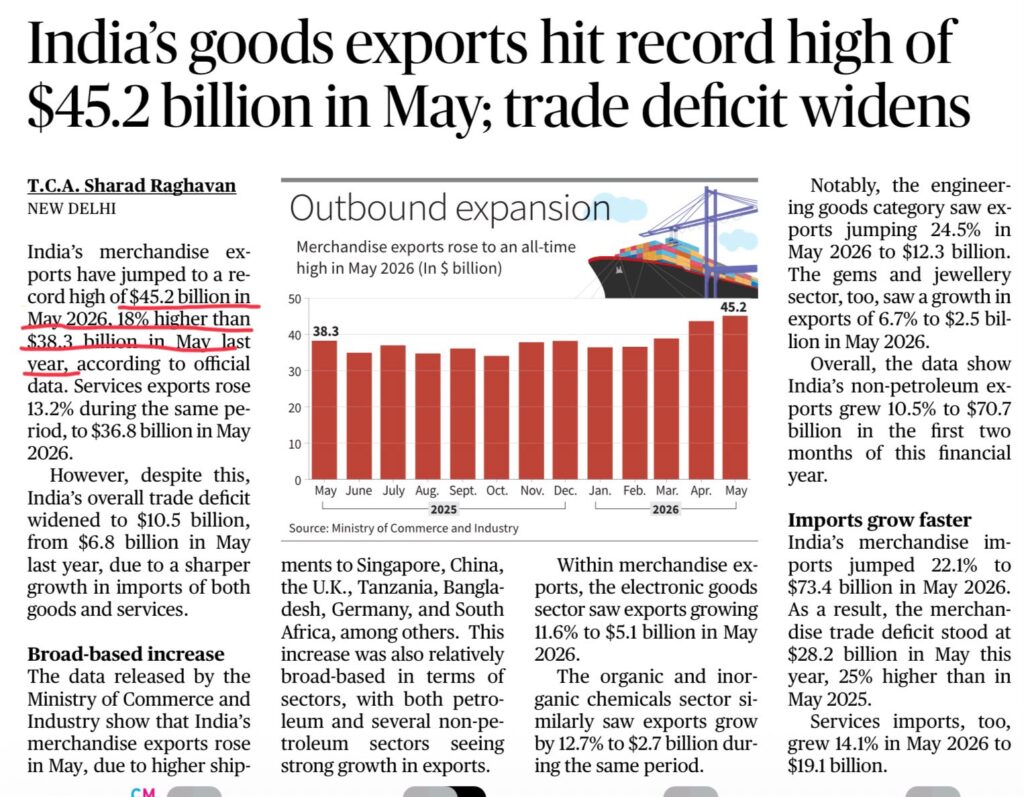
India’s merchandise exports reached a record high of $45.2 billion in May 2026, led by engineering goods, electronics and chemicals. However, imports grew faster, resulting in a wider merchandise trade deficit.

Trade Basics

Merchandise Trade

  • Trade in physical goods.

Services Trade

  • Trade in services such as IT, finance and tourism.

Trade Deficit

  • Imports are greater than exports.

Trade Surplus

  • Exports are greater than imports.

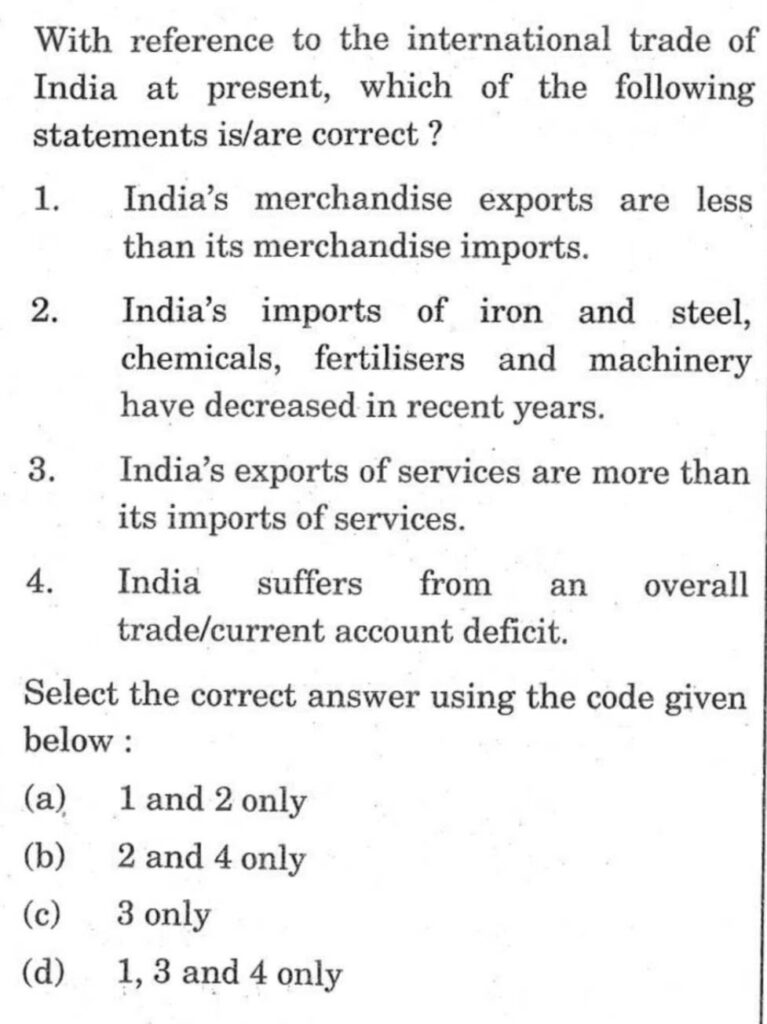
PYQ Link

  • India generally runs a merchandise trade deficit.
  • India generally records a services trade surplus.
  • Services surplus partly offsets the merchandise deficit and reduces pressure on the Current Account Deficit.

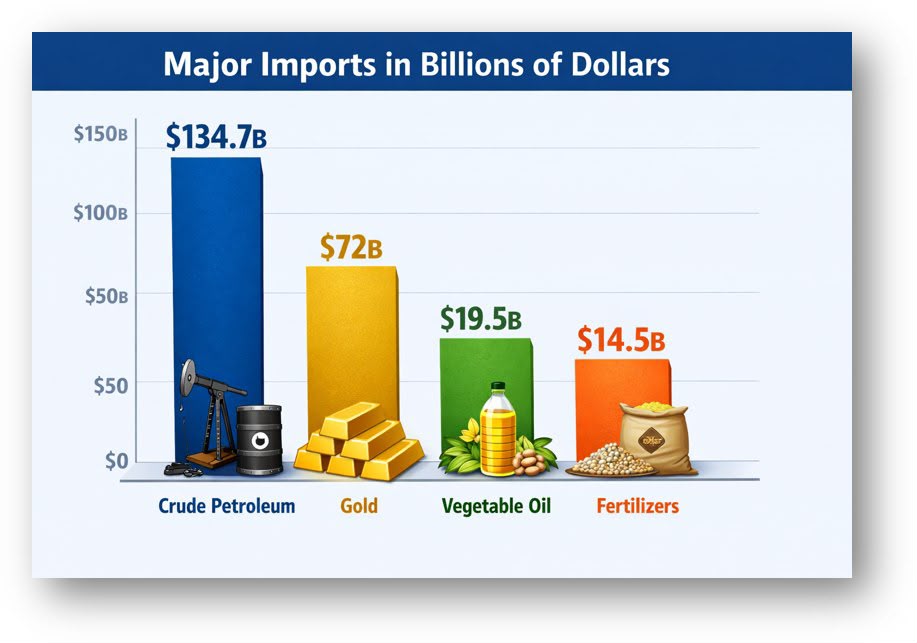
Major Imports: Value Addition

  • Crude Petroleum: $134.7 billion
  • Gold: $72 billion
  • Vegetable Oils: $19.5 billion
  • Fertilisers: $14.5 billion

Significance

  • Record exports show improved external demand and export competitiveness.
  • Faster import growth widens the trade deficit.
  • Crude petroleum and gold remain major import-pressure items.
  • Services surplus remains important for stabilising the external sector.

India-France Strategic Partnership: Technology, Innovation, and Indo-Pacific Cooperation

Context: India-France Strategic Partnership
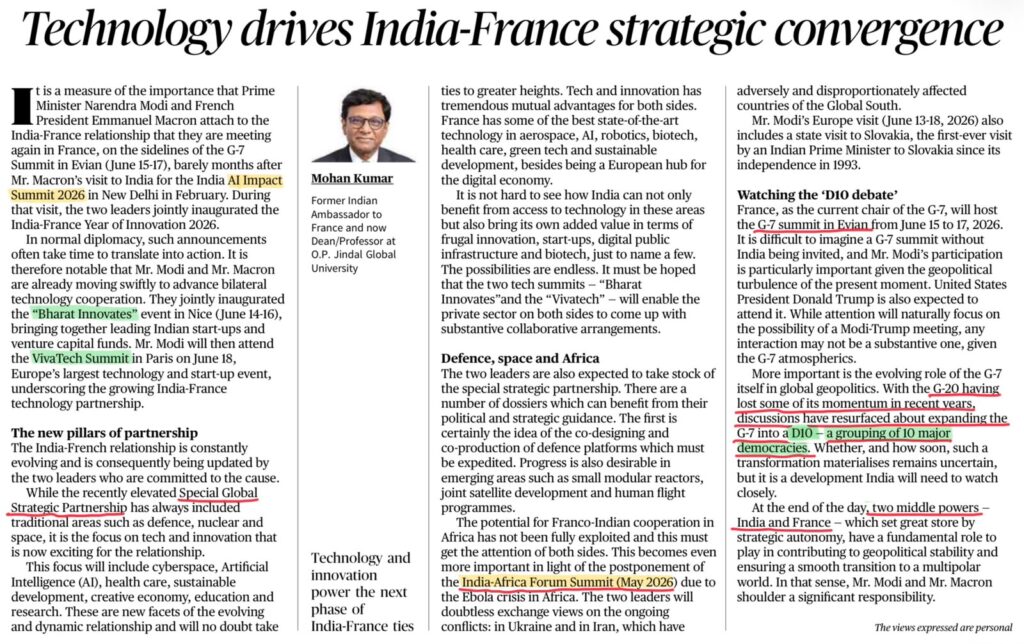
The India–France relationship is being updated by a focus on technology and innovation. Traditional areas such as defence, nuclear energy and space remain important, but new domains such as Artificial Intelligence, cybersecurity, green technology, biotech, health care and startups are becoming central to the partnership.

Strategic Partnership

India and France elevated ties to a Special Global Strategic Partnership.

New Pillars of Partnership

  • Cybersecurity
  • Artificial Intelligence
  • Health care
  • Sustainable development
  • Creative economy
  • Education
  • Research
  • Startups
  • Innovation

Bharat Innovates

Meaning:
A flagship India–France innovation and startup initiative aimed at connecting startups, investors, incubators and research institutions of both countries.

India’s Relevance:
Helps Indian startups access global capital, technology partnerships and European markets.

VivaTech Summit

Meaning:
Europe’s largest technology and startup event, held annually in Paris, bringing together innovators, entrepreneurs, investors and policymakers.

India’s Relevance:
Provides a global platform for Indian startups and emerging technologies to attract investment and international collaborations.

D10 — Democracy 10

Meaning:
A proposed grouping of 10 major democracies, popularised in 2020.

Members

G7 countries:

  • USA
  • UK
  • Canada
  • France
  • Germany
  • Italy
  • Japan

Plus:

  • India
  • Australia
  • South Korea

Purpose

To strengthen coordination among leading democracies on major global political, economic and strategic issues.

Mains Significance

India–France ties can be used as an example of:

  • Middle-power cooperation
  • Strategic autonomy
  • Technology diplomacy
  • Indo-Pacific cooperation
  • Defence-space-technology convergence

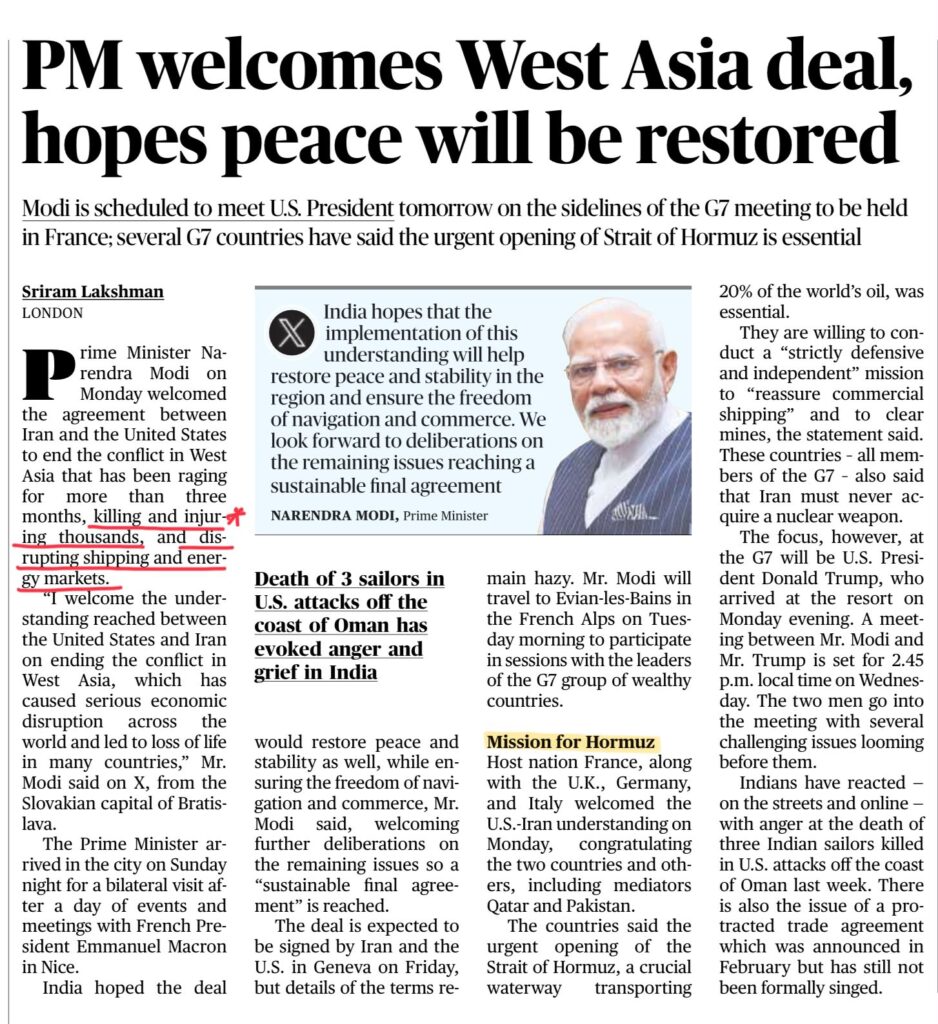
Strait of Hormuz and U.S.-Iran Understanding: Significance for India and Global Energy

Context: Strait of Hormuz
The U.S. and Iran reportedly agreed on a 14-point proposal aimed at reducing tensions in West Asia and restoring normal trade, energy and shipping flows.

What Does the Proposal Seek to Do?

1. Reopen the Strait of Hormuz

  • Ensure uninterrupted global oil and commercial shipping.

2. End Military Hostilities

  • Prevent further escalation of the West Asia conflict.

3. Revive Nuclear Negotiations

  • Address concerns over Iran’s nuclear programme through diplomacy.

4. Ease Economic Sanctions

  • Provide phased sanctions relief to Iran.

5. Release Frozen Iranian Assets

  • Improve Iran’s access to overseas funds.

6. Restore Trade and Maritime Activities

  • Normalise regional commerce and shipping.

Why Is It Important for India?

  • Stable and potentially lower crude oil prices.
  • Secure energy imports from Gulf countries.
  • Safer shipping routes through the Strait of Hormuz.
  • Greater regional stability for trade and the Indian diaspora.

Strait of Hormuz: Importance

  • One of the world’s most important oil chokepoints.
  • Connects the Persian Gulf with the Gulf of Oman.
  • Crucial for global oil and LNG movement.
  • Any disruption affects energy prices, shipping and inflation.

Ground-Level Ozone and Heatwaves: Health Risks, Air Pollution and Climate Change

Context: Ground-Level Ozone
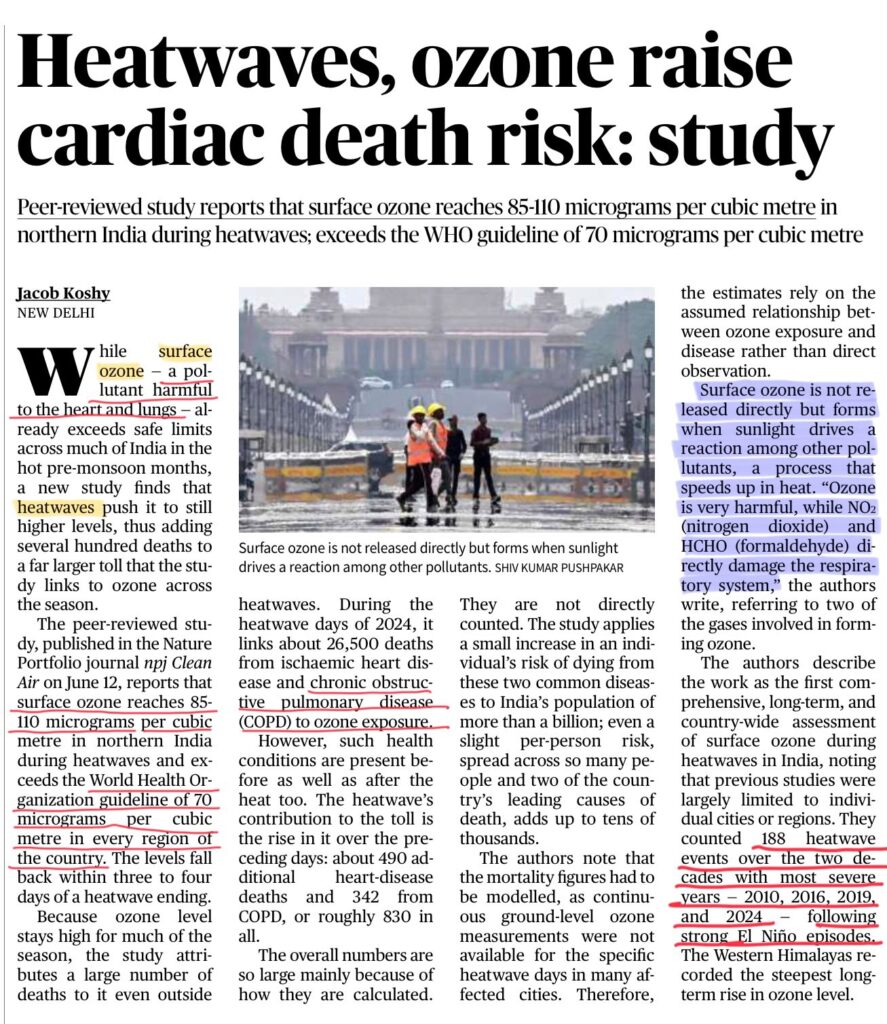
A study published in npj Clean Air found that heatwaves significantly increase ground-level ozone concentrations in India, pushing them beyond the World Health Organization safety guideline.

Ground-Level Ozone

Stratospheric Ozone — Good Ozone

  • Forms the ozone layer.
  • Protects Earth from harmful ultraviolet radiation.

Ground-Level Ozone — Bad Ozone

  • Harmful air pollutant.
  • Formed when sunlight reacts with:
    • Nitrogen Dioxide
    • Formaldehyde
    • Volatile Organic Compounds

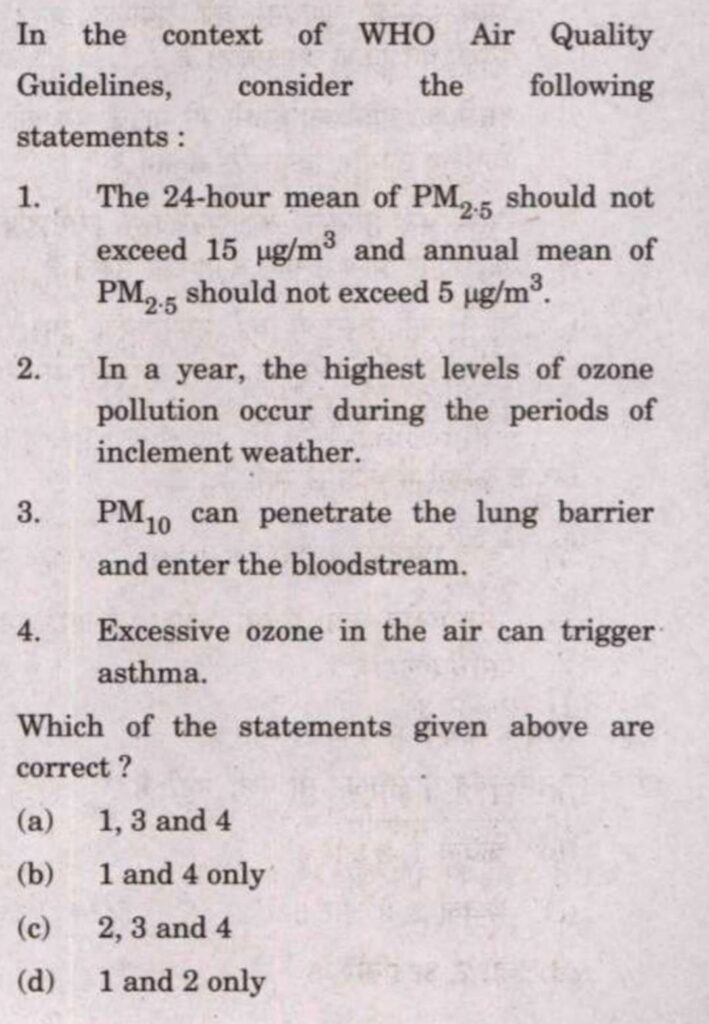
WHO Guideline

Ozone concentration should not exceed 70 µg/m³ during any 8-hour period.

Heatwaves: IMD Criteria

Plains

  • 40°C or above

Coastal Areas

  • 37°C or above

Hilly Regions

  • 30°C or above

Duration

  • Conditions persist for at least 2 consecutive days with significant departure from normal temperature.

Link Between Heatwaves and Ozone

Higher temperature + Stronger sunlight = Faster ozone formation

Key Findings

  • Study analysed 188 heatwave events across India.
  • Ozone levels in northern India reached 85–110 µg/m³, exceeding WHO limits.
  • Major ozone spikes were observed during:
    • 2010
    • 2016
    • 2019
    • 2024

Health Impact

Ground-level ozone damages the lungs and heart.

It aggravates:

  • Asthma
  • Chronic Obstructive Pulmonary Disease
  • Cardiovascular diseases

Mains Significance

This topic connects:

  • Climate change
  • Heatwaves
  • Air pollution
  • Public health
  • Urban planning
  • Disaster management

It can be used to show how climate stress multiplies existing health risks.

About the UPSC Civil Services Examination (UPSC CSE)

The UPSC Civil Services Examination (CSE) is one of the most competitive and esteemed examinations in India, conducted by the Union Public Service Commission to recruit officers for services such as the Indian Administrative Service (IAS), Indian Police Service (IPS), Indian Foreign Service (IFS), and others. The exam comprises three stages — Prelims, Mains, and the Personality Test (Interview) — designed to test a candidate’s knowledge, aptitude, decision-making, and leadership skills.


How to Prepare Effectively for UPSC CSE

Cracking the UPSC CSE requires a deep understanding of the syllabus, consistent revision, structured answer writing, and smart test-taking strategies. The Prelims test analytical and conceptual clarity, the Mains focuses on critical thinking, articulation, and subject mastery, while the Interview assesses presence of mind, ethical judgment, and personality traits relevant to public service.

At UnderStand UPSC, we empower aspirants with a personalized and focused approach to each stage of the exam.


Why Choose UnderStand UPSC?

UnderStand UPSC is a mentorship-driven platform offering a clear, clutter-free strategy to tackle the Civil Services Examination. Our programs like Transform (for beginners and intermediate learners) and Conquer (for advanced mains preparation) provide structured study plans, syllabus-wise video content, interactive live sessions, and answer writing support.

We emphasize:

  • Concept clarity through topic-wise lectures

  • Test series designed around real UPSC standards

  • Personalized mentorship in small groups

  • Regular performance tracking and peer benchmarking

  • Doubt-clearing sessions, current affairs analysis, and monthly magazines


Join the UnderStand UPSC Learning Community

Our mission is to make UPSC preparation less overwhelming and more strategic. We combine mentorship, discipline, and academic rigor to help you clear CSE with confidence. Whether you’re preparing from Delhi, Mumbai, Bangalore, or a remote village — our online-first model ensures quality guidance reaches every corner of India.

Join the thousands of aspirants who trust UnderStand UPSC to guide their journey toward becoming civil servants.

Stay connected with us through our Telegram, YouTube, and Instagram channels for daily tips, strategies, and updates.

Copyright © 2026 USARAMBHA EDUCATION (UnderStand UPSC). All Rights Reserved.

Fill out the form

If you have any queries related to
GS Foundation 2027/28.