17 June 2026 | Daily Current Affairs

India Japan Joint Crediting Mechanism under Article 6.2 of the Paris Agreement Explained for UPSC

Context: India Japan Joint Crediting Mechanism
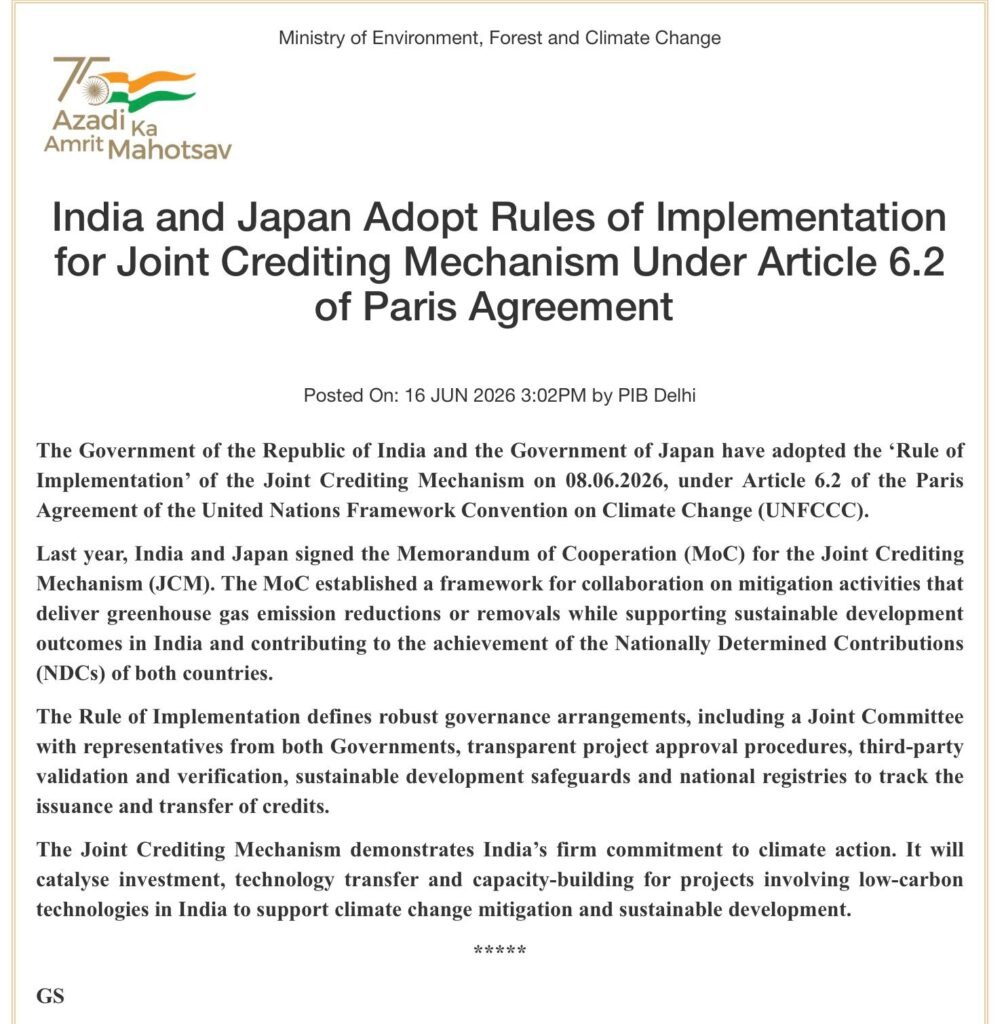
India and Japan adopted the Rules of Implementation for the Joint Crediting Mechanism under Article 6.2 of the Paris Agreement, operationalising bilateral carbon-market cooperation.

Carbon Credit

A carbon credit is a tradable unit representing 1 tonne of Carbon Dioxide or equivalent greenhouse gas reduced, avoided or removed.

Joint Crediting Mechanism

The Joint Crediting Mechanism is a bilateral mechanism under which Japan finances or provides low-carbon technology in India.

The resulting emission reductions generate carbon credits that are shared by both countries.

Internationally Transferred Mitigation Outcomes

Internationally Transferred Mitigation Outcomes are carbon credits transferred between countries under Article 6.2 towards their Nationally Determined Contributions.

Flow

Japan’s finance / technology
→ Emission reduction project in India
→ Carbon credits generated
→ Credits transferred / shared as ITMOs

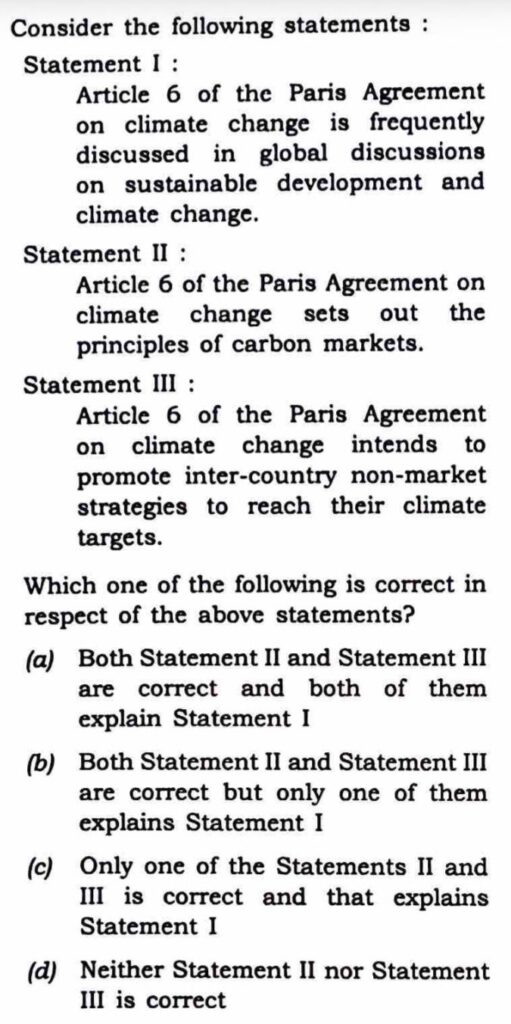
Article 6 of the Paris Agreement

Article 6.2

  • Country-to-country carbon market.
  • Includes mechanisms like JCM and ITMOs.

Article 6.4

  • United Nations-supervised global carbon market.

Article 6.8

  • Non-market cooperation.
  • Includes finance, technology transfer and capacity building.

Significance

  • Promotes low-carbon technology transfer.
  • Helps India achieve climate mitigation targets.
  • Supports Japan’s climate commitments.
  • Encourages private investment in clean technologies.
  • Strengthens bilateral climate cooperation.
India Japan Joint Crediting Mechanism

Central Bank Gold Reserves Survey 2026 Highlights Rising Gold Holdings and RBI Reserves

Context: Central Bank Gold Reserves Survey
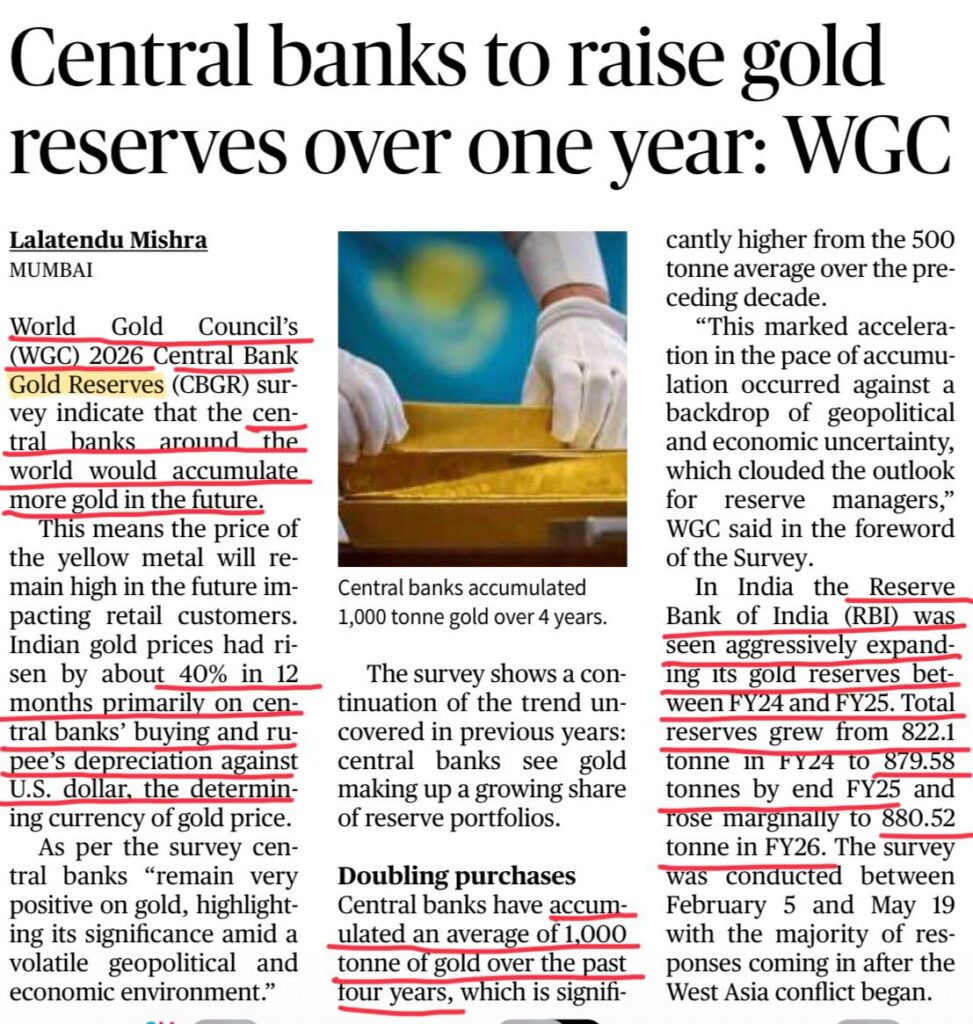
The World Gold Council 2026 Central Bank Gold Reserves Survey projects continued gold accumulation by central banks. India’s gold holdings rose to 880.52 tonnes in FY26.

World Gold Council

Established

  • 1987

Nature

  • Global association of gold mining companies.
  • It is not a United Nations agency.

Headquarters

  • London, United Kingdom

Functions

  • Promotes responsible gold use.
  • Publishes data on global gold markets.
  • Tracks central-bank gold reserves.

Important Reports

  • Central Bank Gold Reserves Survey
  • Gold Demand Trends
  • Gold Outlook

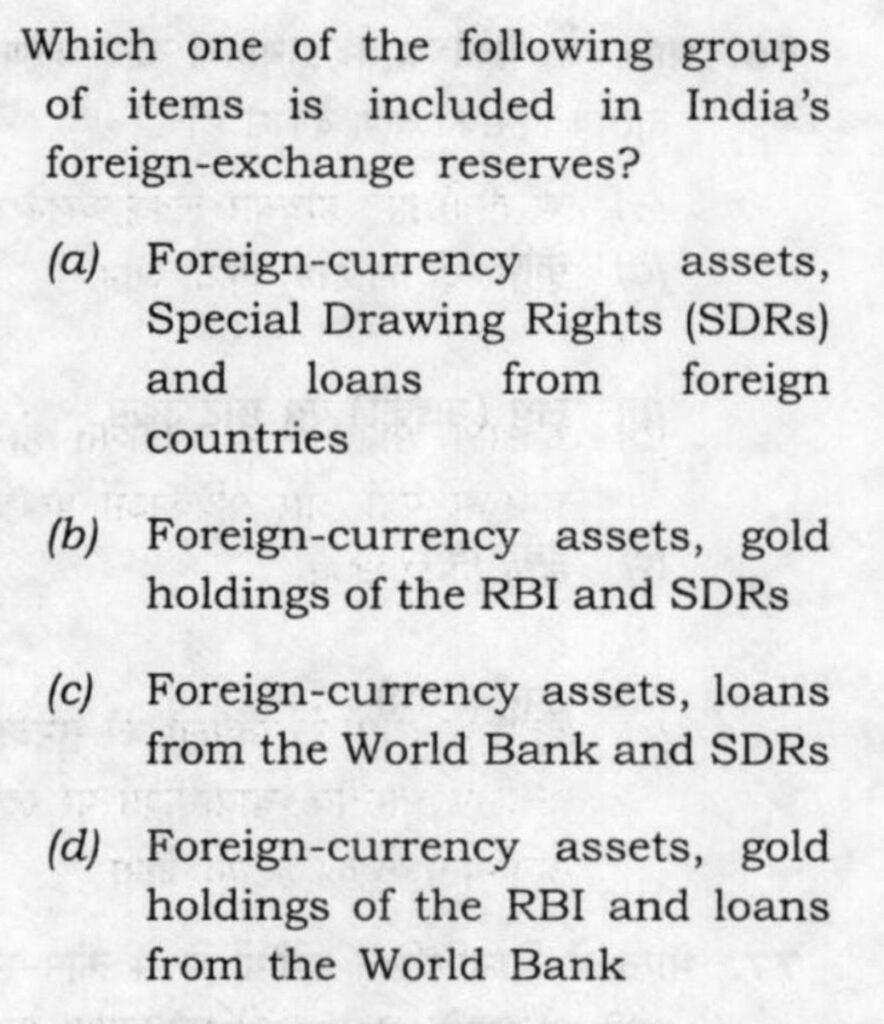
India’s Foreign Exchange Reserves

Forex reserves are external assets held by the Reserve Bank of India to maintain currency stability and meet external payment obligations.

Components of Forex Reserves

Foreign Currency Assets

  • Holdings of foreign currencies and foreign government securities.

Gold Reserves

  • Gold held by RBI as a reserve asset.

Special Drawing Rights

Reserve Tranche Position

  • India’s readily withdrawable reserve with the International Monetary Fund.

Composition

Foreign Currency Assets
→ Gold Reserves
→ Special Drawing Rights
→ Reserve Tranche Position

Approximate composition:

  • Foreign Currency Assets: 85%
  • Gold Reserves: 12%
  • Special Drawing Rights: 2–3%
  • Reserve Tranche Position: 1%

Why Are Central Banks Buying Gold?

  • Diversification away from the U.S. Dollar.
  • Hedge against inflation.
  • Hedge against currency volatility.
  • Protection against geopolitical risks.
  • Protection against sanctions risks.
  • Safe-haven asset during global uncertainty.
Central Bank Gold Reserves Survey

Urban Water Stress in India: Causes and Five Key Solutions for Water Security

Context: Urban Water Stress in India
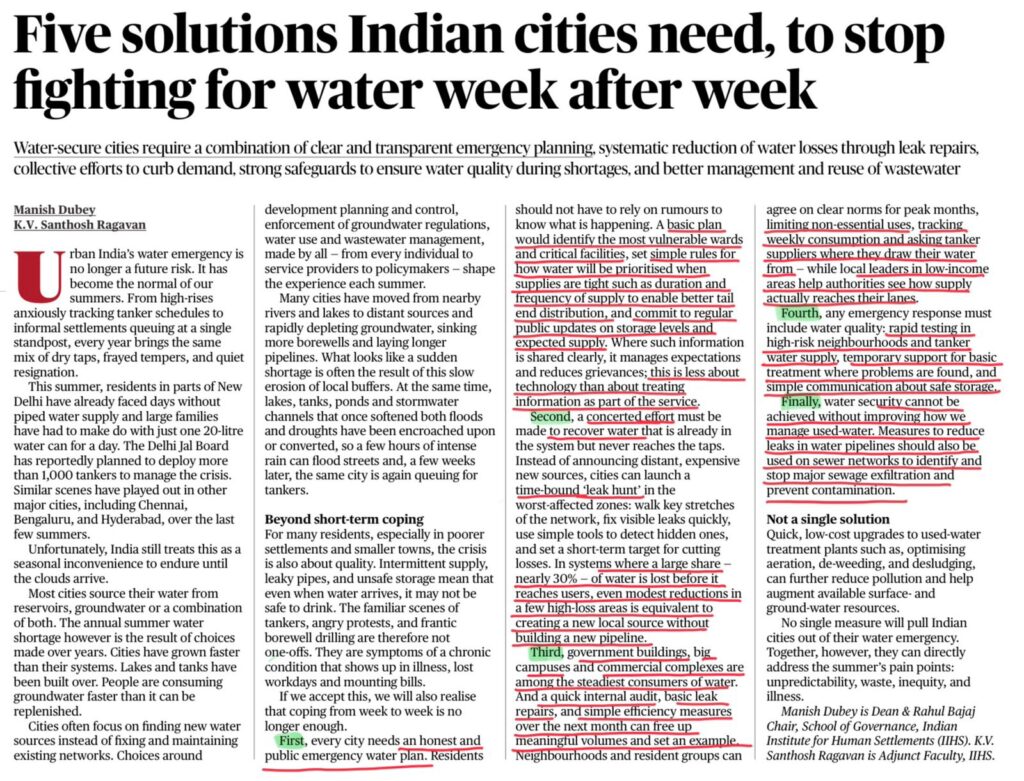
The article argues that recurring water crises in Indian cities are not caused only by rainfall deficits. They are also caused by poor water governance, groundwater depletion, leakages, shrinking urban water bodies and inadequate wastewater reuse.

Water Stress in India

Water Stress — Falkenmark Indicator

A region is considered water-stressed when annual per capita freshwater availability falls below 1,700 cubic metres.

Water Scarcity

  • Below 1,000 cubic metres.

Absolute Water Scarcity

  • Below 500 cubic metres.

Key Facts

NITI Aayog’s Composite Water Management Index

  • Nearly 600 million Indians face high-to-extreme water stress.
  • Water demand may become twice the available supply by 2030.

United Nations World Water Development Report

  • Uses the Falkenmark framework for assessing water stress and scarcity.

Central Water Commission

India’s per capita water availability declined from:

  • 5,177 cubic metres in 1951
  • To about 1,486 cubic metres in 2021

This places India in the water-stressed category.

Drivers of Water Stress

  • Uneven monsoon distribution
  • Groundwater over-extraction
  • Rapid urbanisation
  • Rising urban water demand
  • Encroachment of lakes
  • Encroachment of wetlands
  • Encroachment of drainage channels
  • Pollution reducing usable freshwater

Five Solutions Suggested

1. Urban Water Security Planning

Cities should prepare:

  • City-specific water budgets
  • Drought contingency plans
  • Reservoir monitoring systems
  • Transparent water-allocation frameworks

2. Improve Water-Use Efficiency

Reduce Non-Revenue Water through:

  • Leak detection
  • Smart metering
  • Pipeline modernisation
  • Efficient distribution networks

3. Demand-Side Water Management

Promote:

  • Water audits
  • Rational pricing
  • Greywater reuse
  • Behavioural change to curb excessive urban water consumption

4. Restore and Protect Urban Water Ecosystems

Rejuvenate:

  • Lakes
  • Wetlands
  • Storm-water drains
  • Groundwater recharge zones

This strengthens local water resilience.

5. Circular Water Economy

Expand:

  • Wastewater treatment
  • Recycling
  • Reuse for industrial purposes
  • Reuse for construction
  • Reuse for landscaping

This reduces dependence on freshwater sources.

Urban Water Stress in India

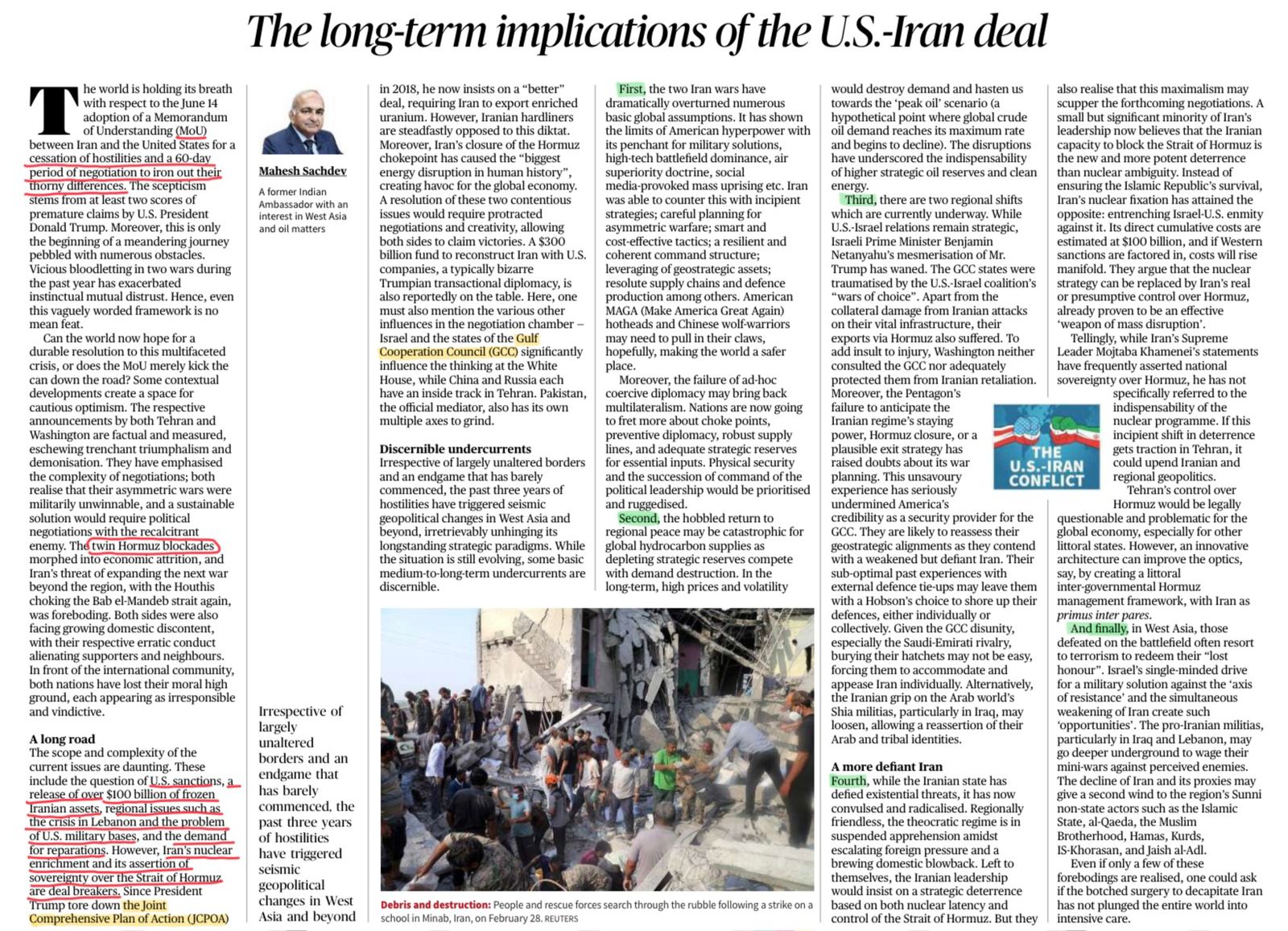
US Iran Deal Implications for West Asia Energy Security and India UPSC Notes

Context: US Iran Deal Implications
The article analyses renewed U.S.–Iran engagement and its implications for West Asian geopolitics, regional security and global energy markets.

Joint Comprehensive Plan of Action

Signed

  • 2015

Parties

  • Iran
  • P5+1:
    • United States
    • United Kingdom
    • France
    • Russia
    • China
    • Germany
  • European Union

Core Idea

Iran agreed to restrict uranium enrichment and accept International Atomic Energy Agency inspections in return for sanctions relief.

U.S. Withdrawal

The United States withdrew from the agreement in 2018.

Gulf Cooperation Council

Established

  • 1981

Headquarters

  • Riyadh, Saudi Arabia

Members

  • Bahrain
  • Kuwait
  • Oman
  • Qatar
  • Saudi Arabia
  • United Arab Emirates

Objective

Economic, political and security cooperation among Gulf states.

Long-Term Implications

1. Reassessment of Military Power

The crisis shows the limits of conventional military superiority and increases emphasis on:

  • Deterrence
  • Resilience
  • Asymmetric warfare

2. Global Energy Security Risks

Tensions around the Strait of Hormuz can disrupt oil supplies and increase price volatility.

3. Changing GCC Security Calculus

Gulf states may diversify strategic partnerships beyond traditional security arrangements.

4. Emergence of a More Assertive Iran

Iran may rely more on:

  • Nuclear latency
  • Deterrence
  • Strategic leverage in regional diplomacy

5. Rise of Non-State Security Threats

Regional instability may strengthen:

  • Proxy militias
  • Extremist organisations

Implications for India

1. Energy Security

Higher crude oil prices can widen the Current Account Deficit and increase imported inflation.

2. Connectivity Interests

Stability in Iran remains crucial for:

3. Indian Diaspora and Remittances

Instability may affect over 9 million Indians residing in Gulf countries.

4. Trade and Maritime Security

Disruptions in West Asian sea lanes can increase:

  • Freight costs
  • Insurance costs

5. Strategic Balancing

India must balance relations with:

  • Iran
  • Israel
  • GCC countries
  • United States

while maintaining strategic autonomy.

US Iran Deal Implications

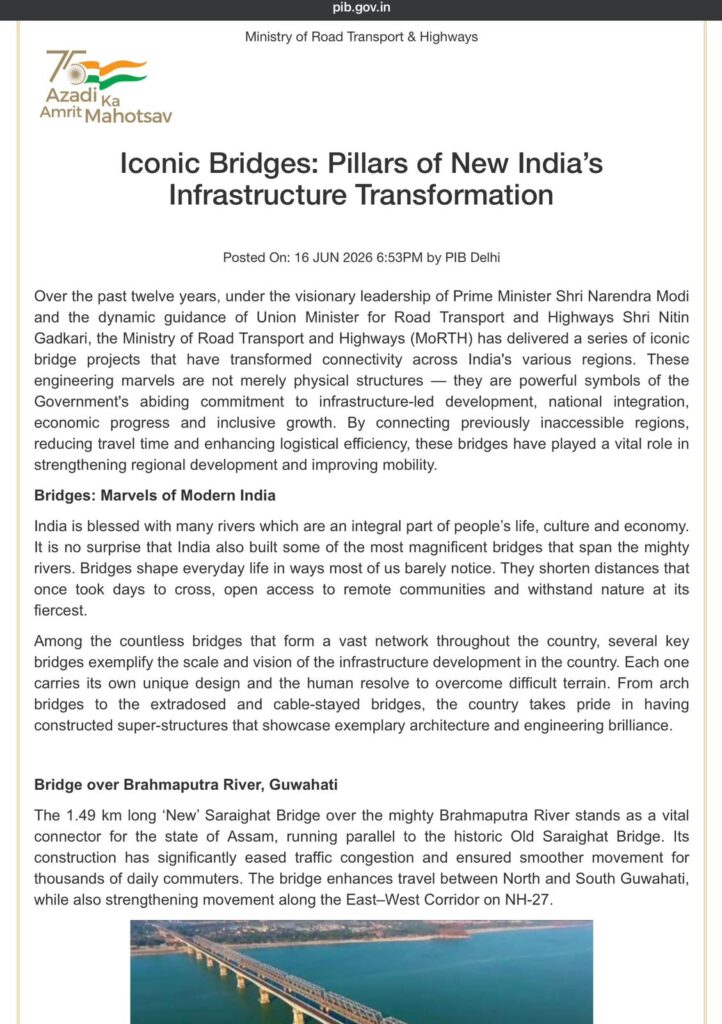
Important Bridges in India and Their Role in Infrastructure Development for UPSC

Context: Important Bridges in India
Bridges are critical infrastructure assets that improve connectivity, logistics efficiency, regional integration, border accessibility and economic growth, particularly in riverine and remote regions.

Importance of Bridges

  • Improve regional connectivity.
  • Reduce travel time.
  • Support logistics efficiency.
  • Strengthen border accessibility.
  • Promote economic growth.
  • Connect remote and riverine regions.
  • Support national integration.

Important Bridges

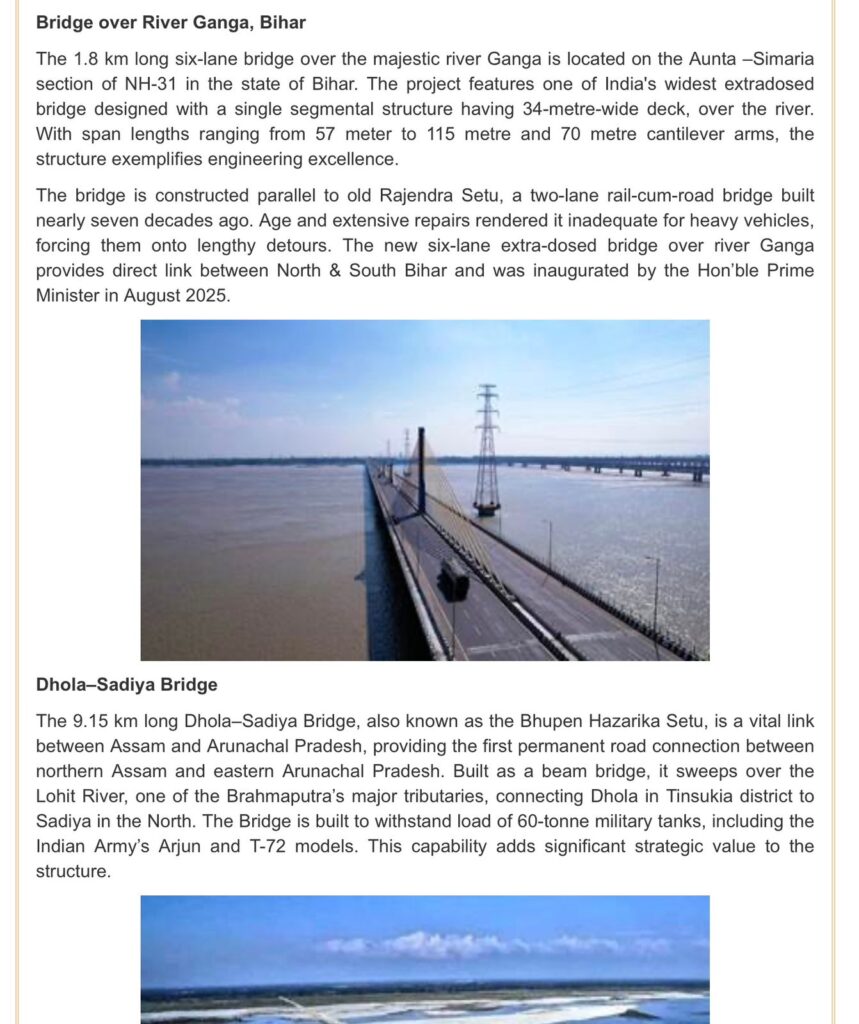
1. Dhola–Sadiya Bridge / Bhupen Hazarika Setu

River

  • Lohit River

Location

  • Assam

Connects

  • Dhola and Sadiya

Significance

  • Provides strategic access to Arunachal Pradesh.
  • Important for civilian and military mobility.

2. New Saraighat Bridge

River

Location

  • Assam

Connects

  • North Guwahati and South Guwahati

Significance

  • Strengthens NH-27.
  • Reduces congestion around Guwahati.

3. Aunta–Simaria Bridge

River

  • Ganga River

Location

  • Bihar

Connects

  • Mokama and Begusarai

Significance

  • Links North and South Bihar.
  • Improves regional mobility.

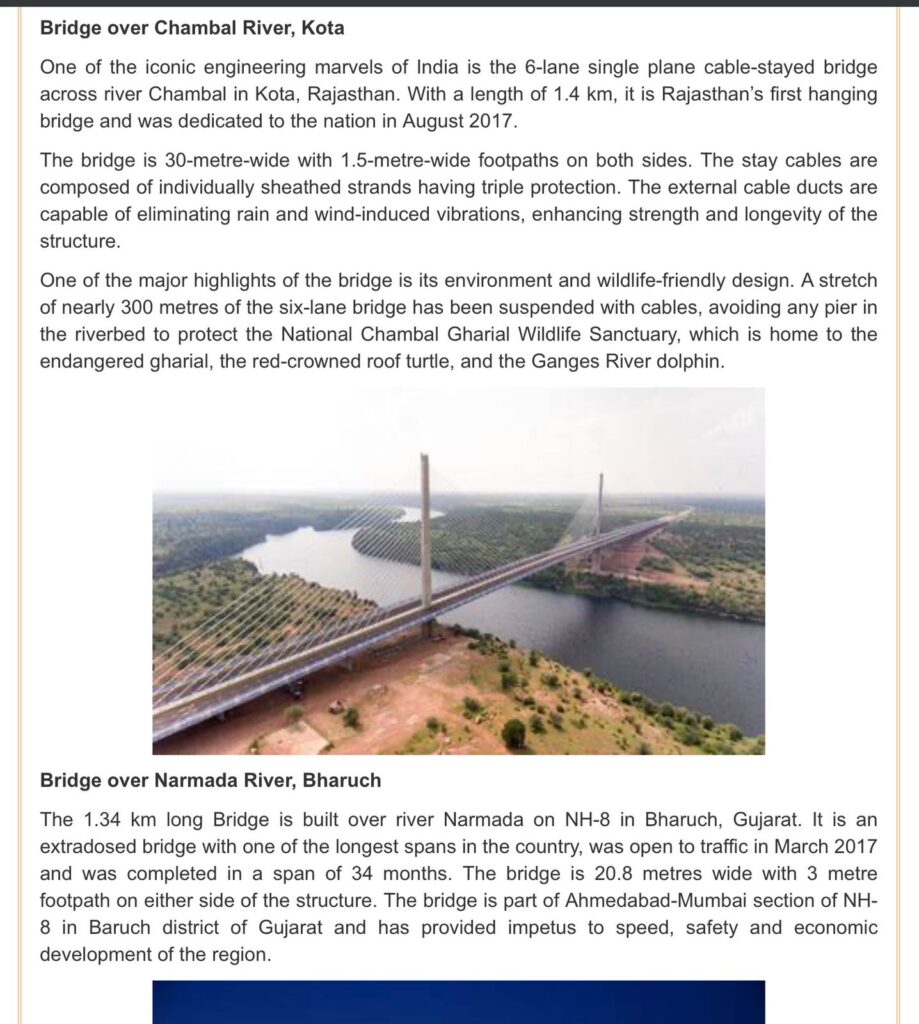
4. Narmada Extradosed Bridge

River

Location

  • Bharuch, Gujarat

Significance

  • Key link on Ahmedabad–Mumbai Corridor.
  • Supports trade and industrial movement.

5. Chambal Cable-Stayed Bridge

River

  • Chambal River

Location

  • Kota, Rajasthan

Significance

  • Eco-sensitive design near National Chambal Gharial Sanctuary.
  • Important example of balancing infrastructure and biodiversity protection.

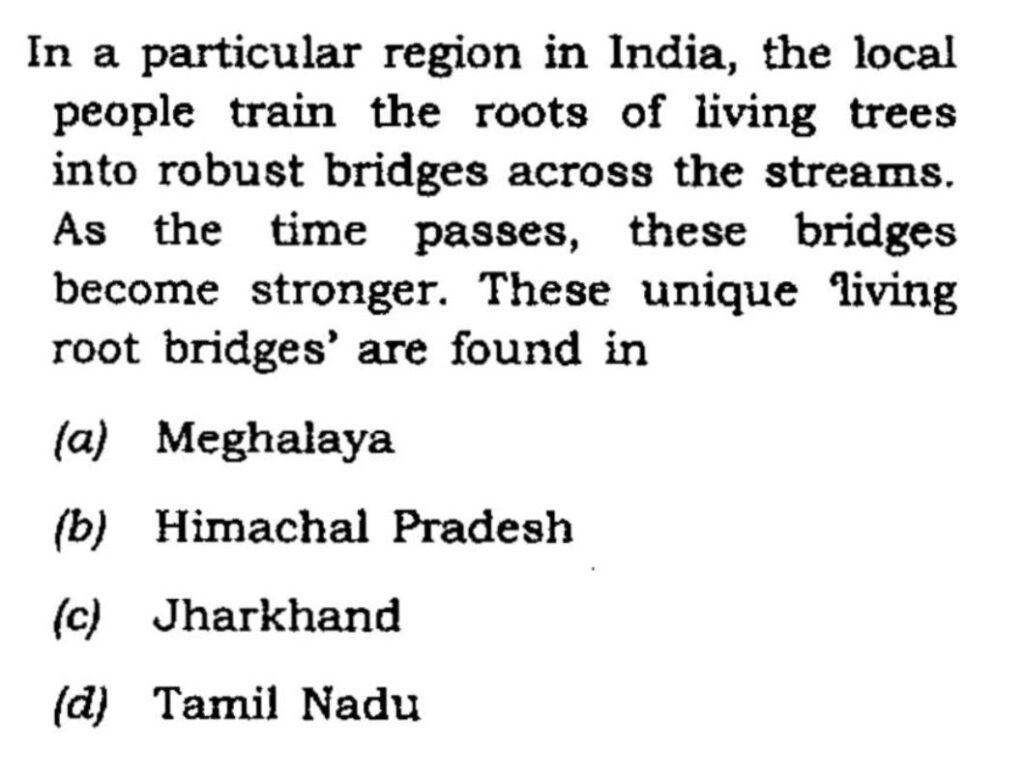
PYQ Link

Living root bridges are found in Meghalaya.

Important Bridges in India

Over the Counter Sale of Cough Syrups Banned Under Amended Drugs Rules 1945

Context: Over the Counter Sale of Cough Syrups
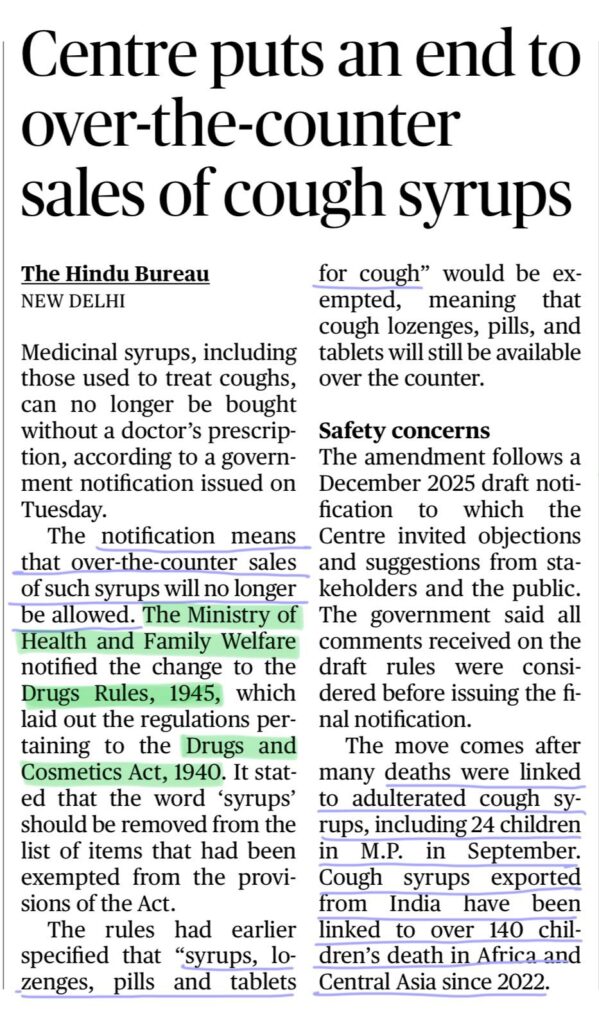
The Union Government has amended the Drugs Rules, 1945 to prohibit over-the-counter sale of medicinal cough syrups. These will now require a doctor’s prescription.

Over-the-Counter Drugs

Over-the-counter drugs are medicines that can be purchased without a doctor’s prescription.

Drugs Rules, 1945

These rules govern:

  • Manufacture of medicines
  • Storage of medicines
  • Sale of medicines
  • Distribution of medicines

The rules have been amended to remove medicinal cough syrups from the OTC category.

Drugs and Cosmetics Act, 1940

This is the parent legislation regulating:

  • Import of drugs and cosmetics
  • Manufacture of drugs and cosmetics
  • Distribution of drugs and cosmetics
  • Sale of drugs and cosmetics in India

Ministry

Why This Matters

  • Improves regulation of cough syrup sales.
  • Reduces irrational self-medication.
  • Addresses safety concerns linked to contaminated or adulterated cough syrups.
  • Strengthens health governance and pharmaceutical regulation.
  • Protects vulnerable groups, especially children.
Over the Counter Sale of Cough Syrups
About the UPSC Civil Services Examination (UPSC CSE)

The UPSC Civil Services Examination (CSE) is one of the most competitive and esteemed examinations in India, conducted by the Union Public Service Commission to recruit officers for services such as the Indian Administrative Service (IAS), Indian Police Service (IPS), Indian Foreign Service (IFS), and others. The exam comprises three stages — Prelims, Mains, and the Personality Test (Interview) — designed to test a candidate’s knowledge, aptitude, decision-making, and leadership skills.


How to Prepare Effectively for UPSC CSE

Cracking the UPSC CSE requires a deep understanding of the syllabus, consistent revision, structured answer writing, and smart test-taking strategies. The Prelims test analytical and conceptual clarity, the Mains focuses on critical thinking, articulation, and subject mastery, while the Interview assesses presence of mind, ethical judgment, and personality traits relevant to public service.

At UnderStand UPSC, we empower aspirants with a personalized and focused approach to each stage of the exam.


Why Choose UnderStand UPSC?

UnderStand UPSC is a mentorship-driven platform offering a clear, clutter-free strategy to tackle the Civil Services Examination. Our programs like Transform (for beginners and intermediate learners) and Conquer (for advanced mains preparation) provide structured study plans, syllabus-wise video content, interactive live sessions, and answer writing support.

We emphasize:

  • Concept clarity through topic-wise lectures

  • Test series designed around real UPSC standards

  • Personalized mentorship in small groups

  • Regular performance tracking and peer benchmarking

  • Doubt-clearing sessions, current affairs analysis, and monthly magazines


Join the UnderStand UPSC Learning Community

Our mission is to make UPSC preparation less overwhelming and more strategic. We combine mentorship, discipline, and academic rigor to help you clear CSE with confidence. Whether you’re preparing from Delhi, Mumbai, Bangalore, or a remote village — our online-first model ensures quality guidance reaches every corner of India.

Join the thousands of aspirants who trust UnderStand UPSC to guide their journey toward becoming civil servants.

Stay connected with us through our Telegram, YouTube, and Instagram channels for daily tips, strategies, and updates.

Copyright © 2026 USARAMBHA EDUCATION (UnderStand UPSC). All Rights Reserved.

Fill out the form

If you have any queries related to
GS Foundation 2027/28.