20 June 2026 | Daily Current Affairs

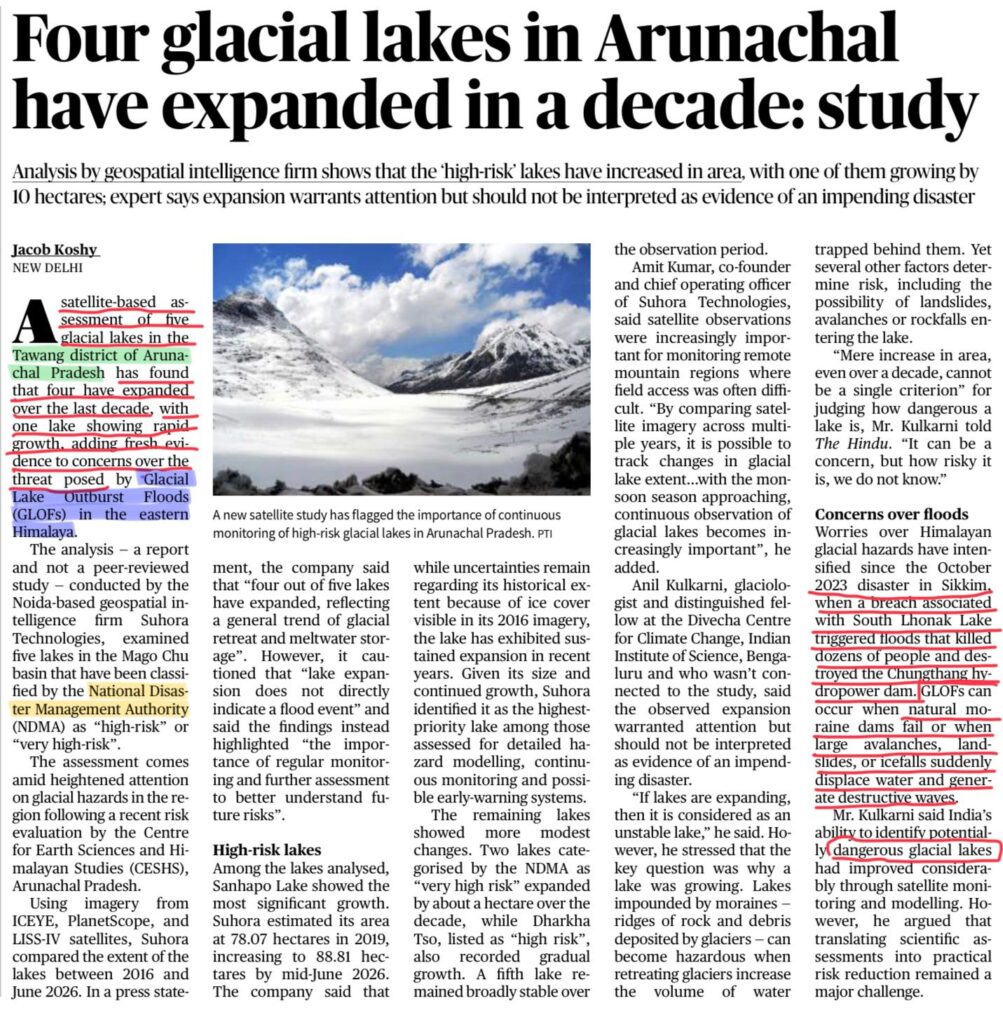
High-Risk Glacial Lakes in Arunachal Pradesh Expanding

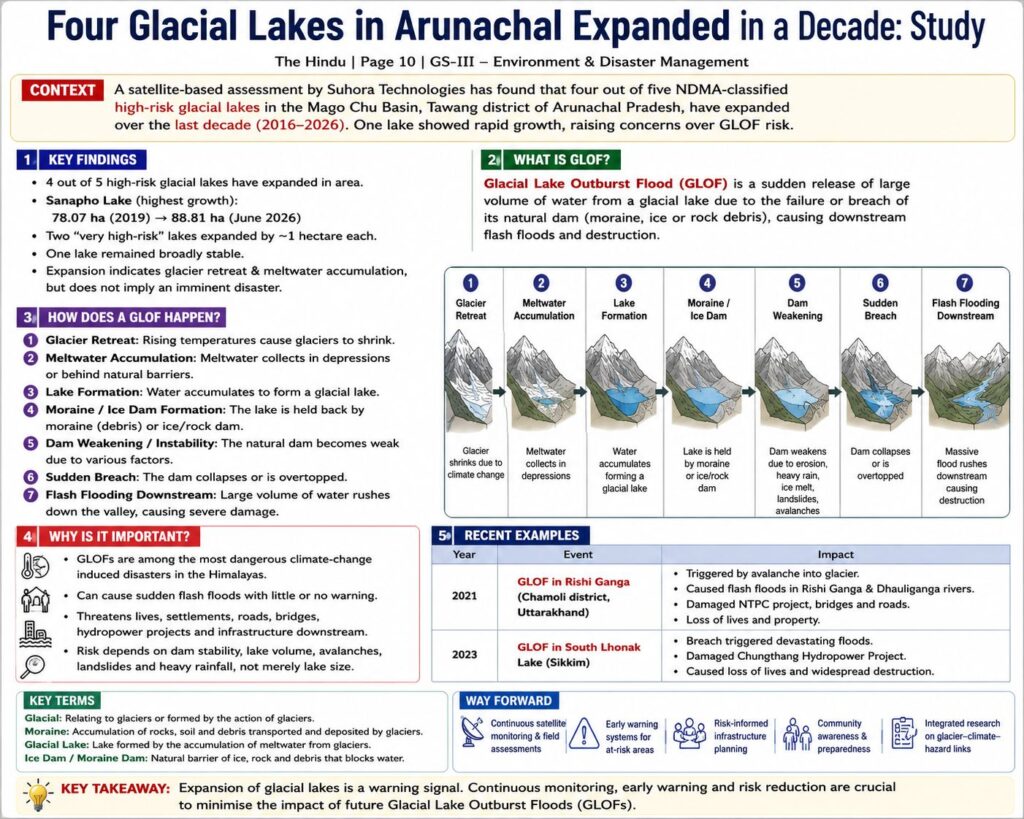
Context: High-Risk Glacial Lakes in Arunachal Pradesh
A satellite-based assessment found that four out of five NDMA-classified high-risk glacial lakes in the Mago Chu Basin, Tawang district of Arunachal Pradesh, have expanded in area over the last decade.

This has renewed concerns over Glacial Lake Outburst Floods.

Key Findings

  • 4 out of 5 high-risk glacial lakes have expanded in area.
  • Sangacho Lake showed major growth.
  • One lake expanded by more than one hectare.
  • Expansion indicates glacier retreat and meltwater accumulation.
  • It does not automatically mean immediate disaster, but it signals rising risk.

Glacial Lake Outburst Flood

A Glacial Lake Outburst Flood is a sudden release of large volumes of water from a glacial lake due to failure or breach of its natural dam.

Natural Dams May Be Made Of

  • Moraine
  • Ice
  • Rock debris

How GLOF Happens

  1. Glacier retreats due to warming.
  2. Meltwater accumulates in depressions.
  3. A lake forms behind moraine, ice or rock debris.
  4. Dam becomes unstable.
  5. Sudden breach releases massive water downstream.
  6. Flash floods, landslides and destruction follow.

Why It Is Important

GLOFs are among the most dangerous climate-induced disasters in the Himalayas.

They can trigger:

  • Sudden flash floods
  • Damage to hydropower projects
  • Damage to roads and bridges
  • Landslides
  • Loss of lives and livelihoods
  • Downstream disaster risks

Recent Examples

Chamoli, Uttarakhand — 2021

  • Triggered by avalanche-like glacier event.
  • Caused flash floods in Rishi Ganga and Dhauliganga rivers.
  • Damaged NTPC project, bridges and roads.

South Lhonak Lake, Sikkim — 2023

  • Breach triggered devastating floods.
  • Damaged the Chungthang hydropower project.
  • Caused loss of lives and widespread destruction.

Way Forward

  • Continuous satellite monitoring
  • Early warning systems
  • Risk-informed infrastructure planning
  • Community preparedness
  • Integrated research on glacial lakes
  • Hazard mapping and evacuation planning
Pradhan Mantri Viksit Bharat Rozgar Yojana Explained

Context:
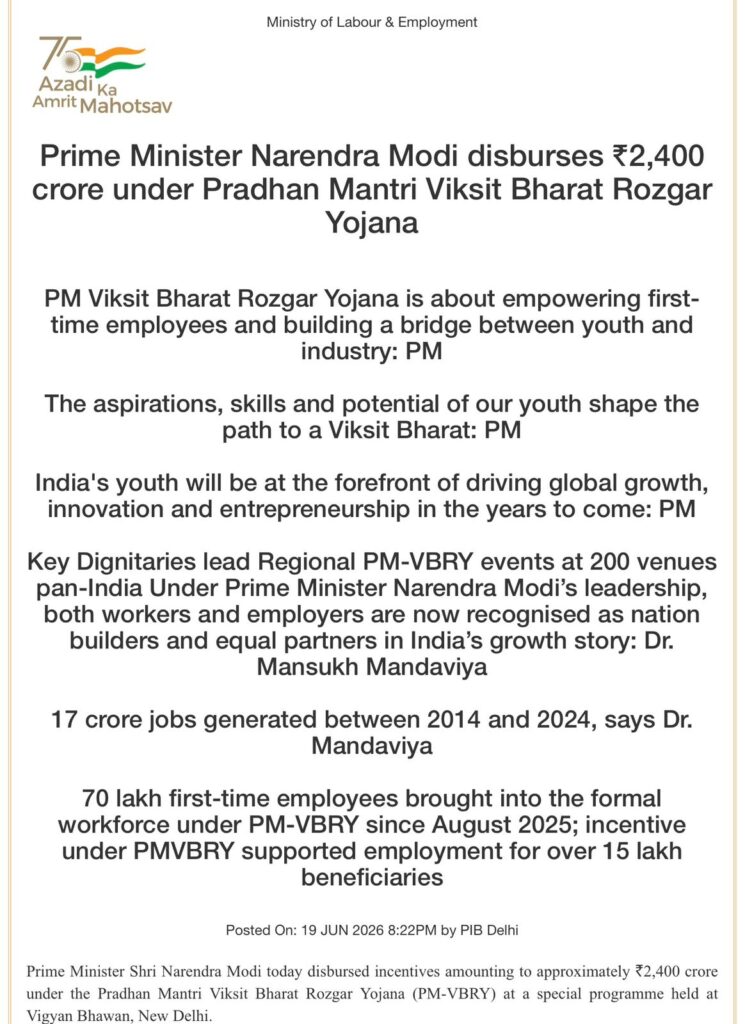
Prime Minister Narendra Modi released ₹2,400 crore under the Pradhan Mantri Viksit Bharat Rozgar Yojana, aimed at promoting formal employment, expanding social security coverage and creating quality jobs for India’s youth.

Pradhan Mantri Viksit Bharat Rozgar Yojana

Type

  • Central Sector Scheme

Ministry

  • Ministry of Labour and Employment

Launch

  • 1 August 2025

Implementation

  • Employees’ Provident Fund Organisation

Outlay

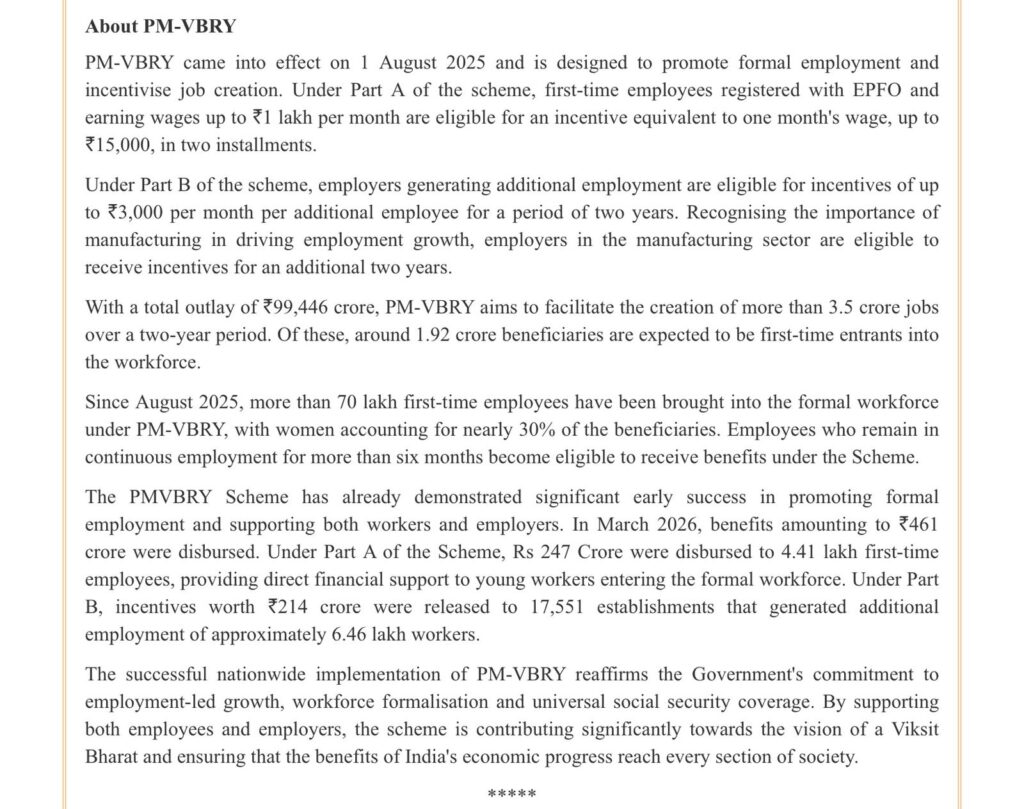
  • ₹99,446 crore

Objective

  • Formal employment generation
  • First-time workforce participation
  • Employer-led job creation
  • Expansion of social security coverage

Target

  • More than 3.5 crore jobs in 2 years
  • Includes 1.92 crore first-time employees

Key Features

Employee Incentive

First-time EPFO-registered employees earning salary up to ₹1 lakh per month receive incentive up to ₹15,000.

Employer Incentive

Employers receive up to ₹3,000 per month per additional employee for 2 years.

The manufacturing sector gets extended support.

Progress

  • ₹2,400 crore disbursed
  • 70 lakh+ first-time employees formalised
  • Around 30% women beneficiaries
  • 15 lakh+ beneficiaries supported

Significance

  • Promotes formalisation of labour.
  • Strengthens social security coverage.
  • Encourages youth employment.
  • Supports women’s workforce participation.
  • Incentivises employers to create jobs.
  • Helps bridge the gap between skills and formal employment.

Right to Walk Safely on Footpaths Under Article 21

Context: Right to Walk Safely on Footpaths
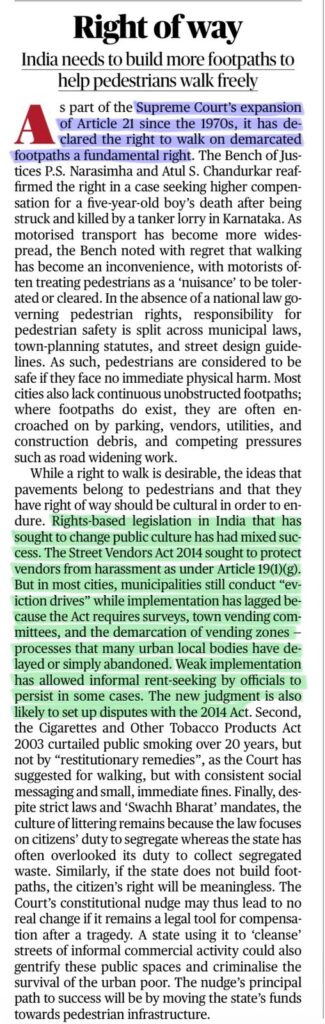
A Supreme Court Bench headed by Justice P.S. Narasimha held that the right to walk safely on designated footpaths is part of Article 21, meaning it is connected to the right to life and personal liberty.

Article 21

Article 21 guarantees:

  • Right to life
  • Right to personal liberty

It has been expanded by judicial interpretation to include dignified and safe living.

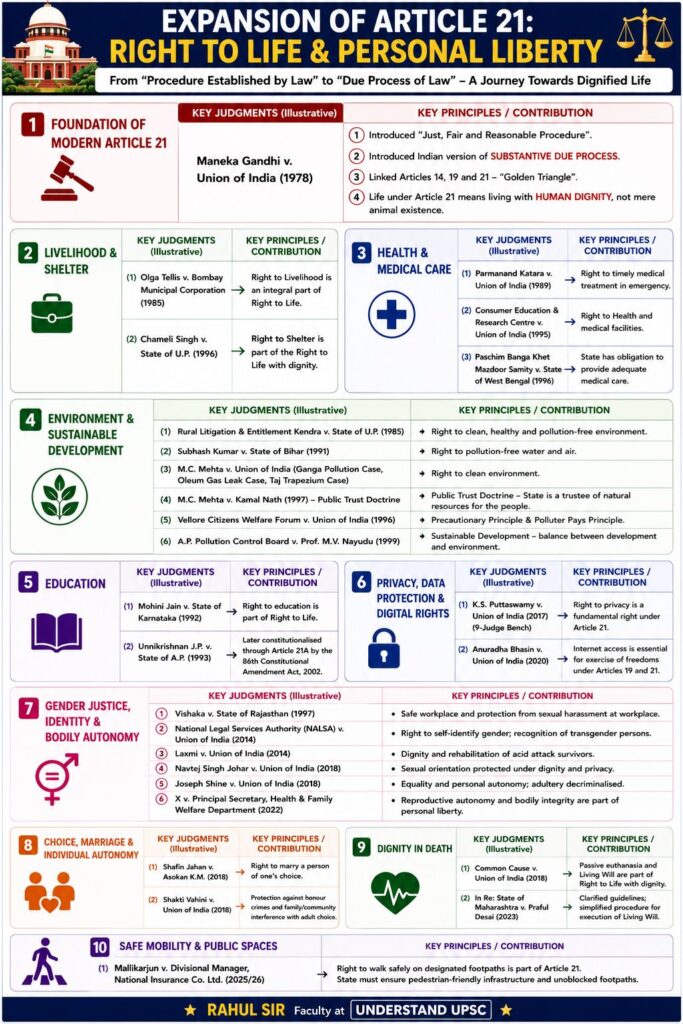
Expansion of Article 21

Article 21 now includes:

  • Right to privacy
  • Right to health
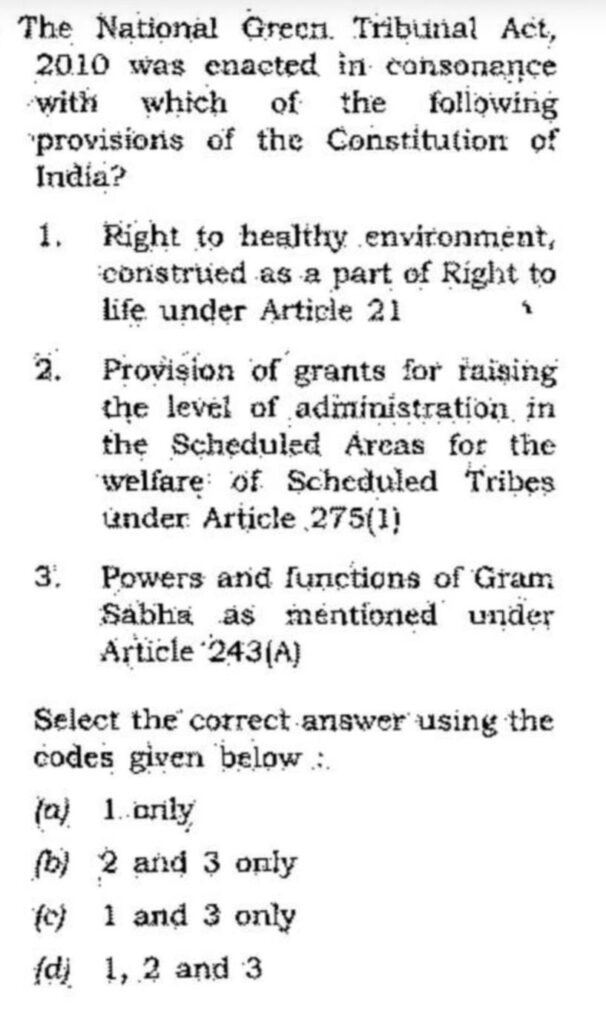
  • Right to clean environment
  • Right to livelihood
  • Right to education
  • Right to shelter
  • Right to dignity
  • Right to die with dignity
  • Right to marry a person of one’s choice
  • Right to safe mobility and pedestrian safety

Key Idea

The Court held that pedestrians cannot be forced to walk on unsafe roads because footpaths are encroached, poorly maintained or unavailable.

Why It Matters

  • Recognises pedestrian safety as a constitutional concern.
  • Links urban planning with fundamental rights.
  • Places responsibility on State authorities and local bodies.
  • Strengthens the idea of safe public spaces.
  • Expands Article 21 beyond survival to dignified urban life.

Governance Angle

Municipal bodies must ensure:

  • Clear footpaths
  • Removal of encroachments
  • Road safety
  • Pedestrian-friendly infrastructure
  • Inclusive urban planning
  • Accountability for unsafe civic design

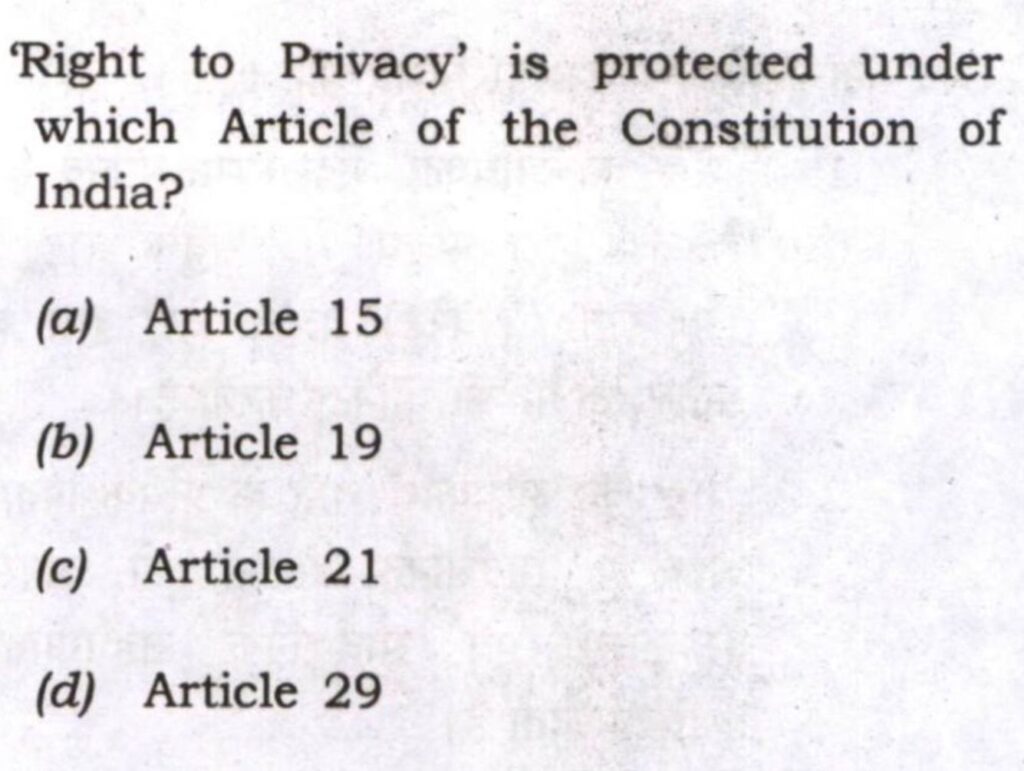
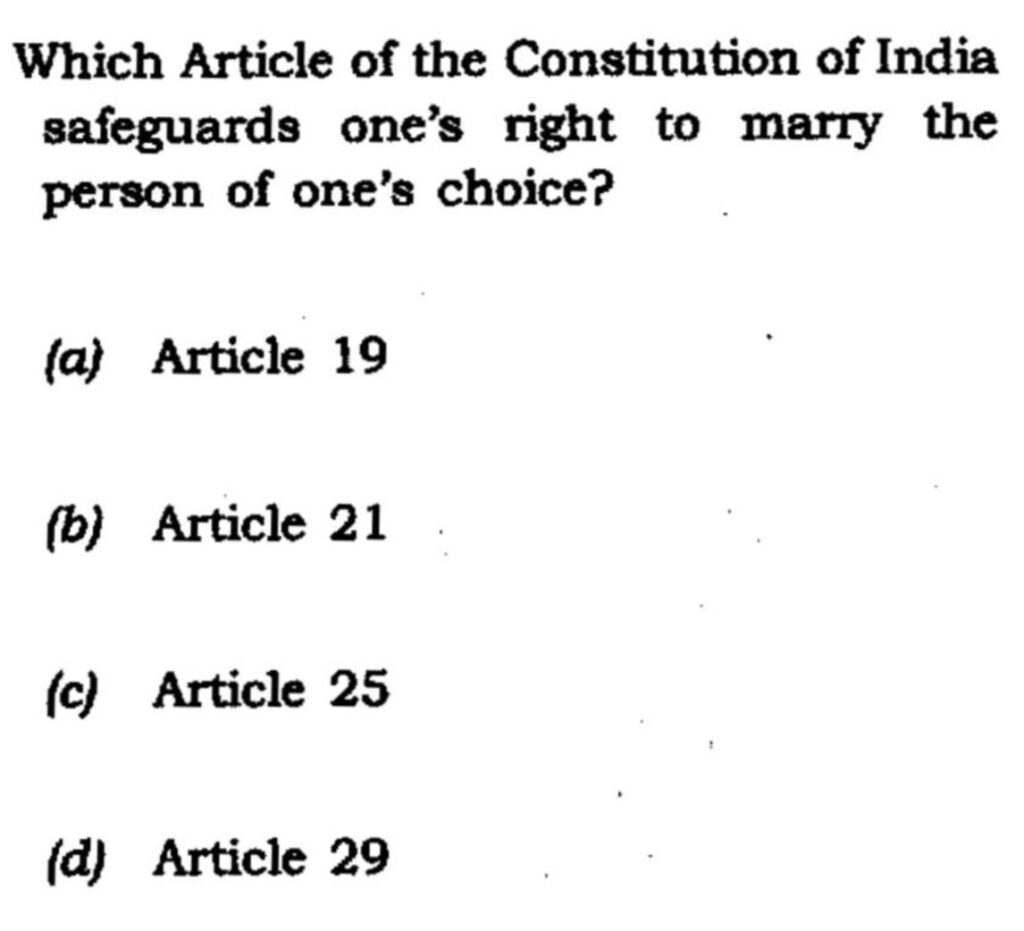
PYQ Link

Right to Privacy is protected under Article 21.

Right to marry a person of one’s choice is also protected under Article 21.

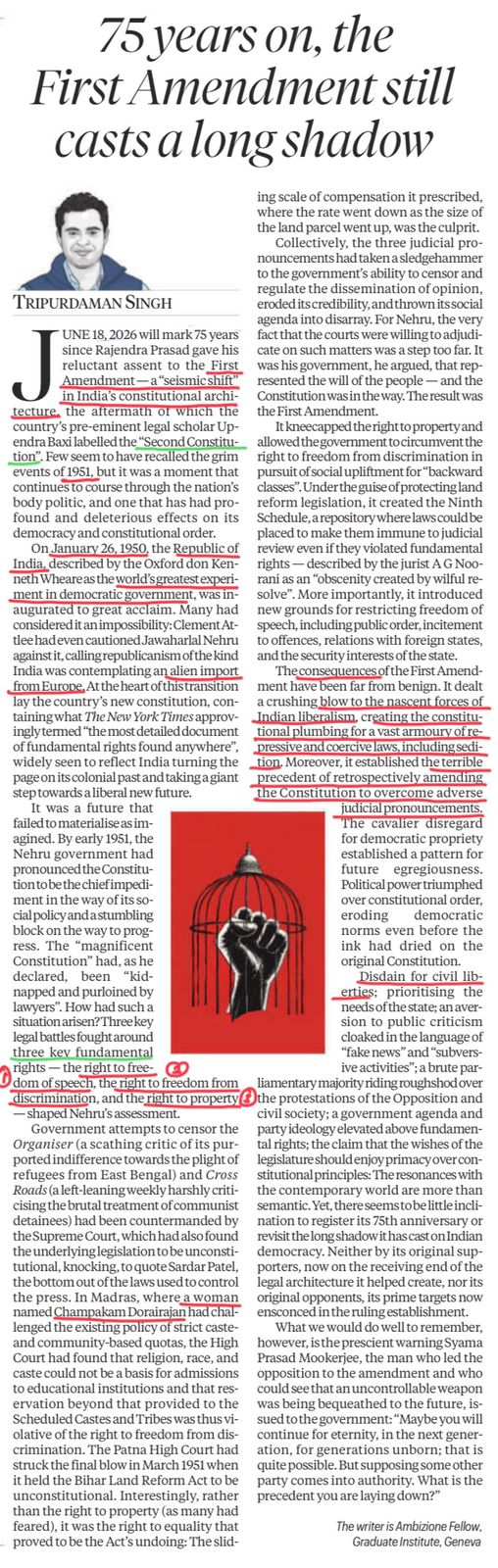
First Constitutional Amendment Act 1951 at 75 Years

Context: First Constitutional Amendment Act 1951
The First Constitutional Amendment Act was enacted on 18 June 1951. It was Parliament’s response to early Supreme Court judgments on free speech, reservations and land reforms.

Upendra Baxi described it as India’s “Second Constitution” because of its transformative impact.

Key Triggers and Constitutional Response

1. Freedom of Speech — Article 19(1)(a)

Cases

  • Romesh Thappar v. State of Madras, 1950
  • Brij Bhushan v. State of Delhi, 1950

Response

Article 19(2) was amended.

Grounds Added

  • Public Order
  • Friendly Relations with Foreign States
  • Incitement to an Offence

2. Reservations and Equality — Article 15

Case

  • State of Madras v. Champakam Dorairajan, 1951

Response

Article 15(4) was inserted.

Outcome

It created a constitutional basis for reservations for:

  • Socially and Educationally Backward Classes
  • Scheduled Castes
  • Scheduled Tribes

3. Land Reforms and Right to Property — Article 31

Issue

Zamindari abolition and agrarian reforms were challenged before courts.

Response

Inserted:

  • Article 31A
  • Article 31B
  • Ninth Schedule

Outcome

Land reform laws were protected from judicial challenge.

Why the First Amendment Is Still Debated

Supporters’ Argument

  • Protected land reforms and abolition of zamindari.
  • Enabled affirmative action through Article 15(4).
  • Strengthened the welfare-state vision.
  • Supported socio-economic transformation.
  • Ensured judicial interpretation did not obstruct democratic reforms.

Critics’ Argument

  • Expanded State power over civil liberties through Article 19(2).
  • Introduced the Ninth Schedule, reducing judicial scrutiny.
  • Set a precedent for constitutional amendments to overcome court rulings.
  • Raised concerns about constitutional checks and balances.

Constitutional Voices

Jawaharlal Nehru

  • Constitution should serve as an instrument of social transformation and not become an obstacle to reform.

Syama Prasad Mookerjee

  • Excessive concentration of State power may undermine democratic freedoms and individual liberty.

Upendra Baxi

  • Described the First Constitutional Amendment as India’s “Second Constitution” because it fundamentally altered the constitutional balance.

A.G. Noorani

  • Criticised the Ninth Schedule for insulating laws from constitutional scrutiny and weakening judicial review.

SEBI Open-Market Buybacks Reintroduced and Reforms

Context: SEBI Open-Market Buybacks Reintroduced
The Securities and Exchange Board of India approved the reintroduction of open-market share buybacks, reforms to deepen the Municipal Bond market, and faster transmission of securities to legal heirs.

Municipal Bonds

Municipal Bonds are debt instruments issued by Urban Local Bodies to raise funds for urban infrastructure.

Uses of Municipal Bonds

Funds can be used for:

  • Roads
  • Water supply
  • Sewage projects
  • Metro projects
  • Smart-city projects
  • Other urban infrastructure

Flow

Urban Local Body
→ Raises funds from investors
→ Pays interest and principal

Share Buyback

A share buyback means a company purchases its own shares from existing shareholders.

Effects of Buyback

  • Reduces shares available in the market.
  • Improves Earnings Per Share.
  • Often signals confidence in future growth.
  • May return surplus cash to shareholders.

Open-Market Buyback

Open-market buyback means shares are repurchased through stock exchanges during normal trading hours.

Securities and Exchange Board of India

Established

  • 1988

Statutory Status

  • Securities and Exchange Board of India Act, 1992

Ministry

  • Ministry of Finance

Core Functions

  • Protect investor interests.
  • Regulate securities and capital markets.
  • Prevent insider trading.
  • Prevent unfair trade practices.
  • Regulate listed companies, intermediaries and market infrastructure.

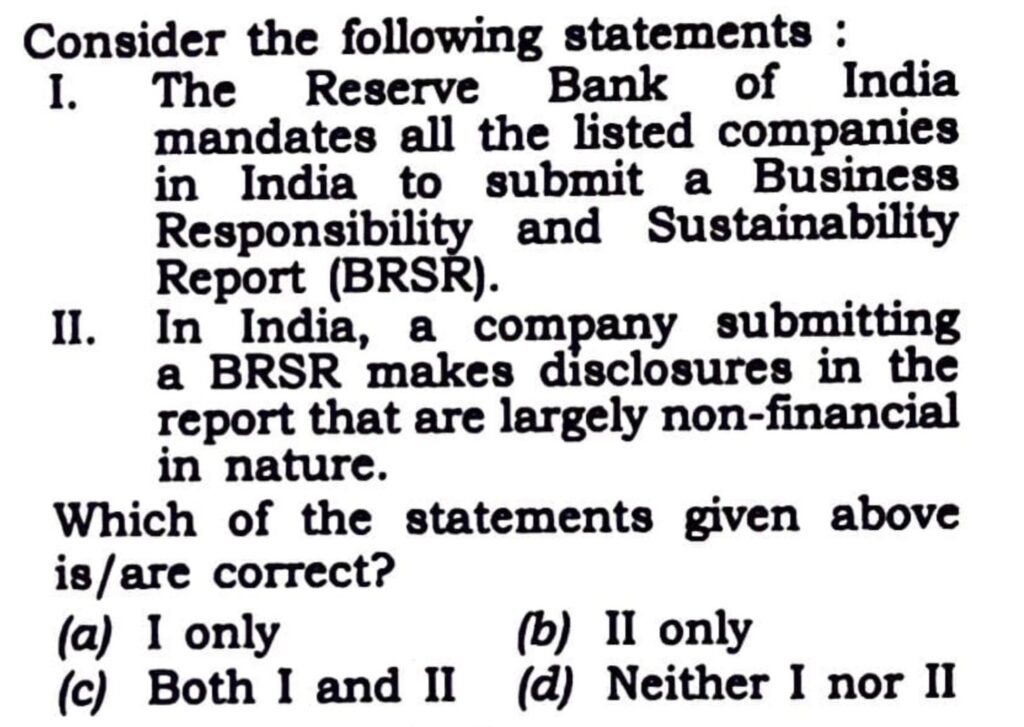
PYQ Link

Business Responsibility and Sustainability Report is mandated by SEBI, not RBI.

BRSR disclosures are largely non-financial in nature.

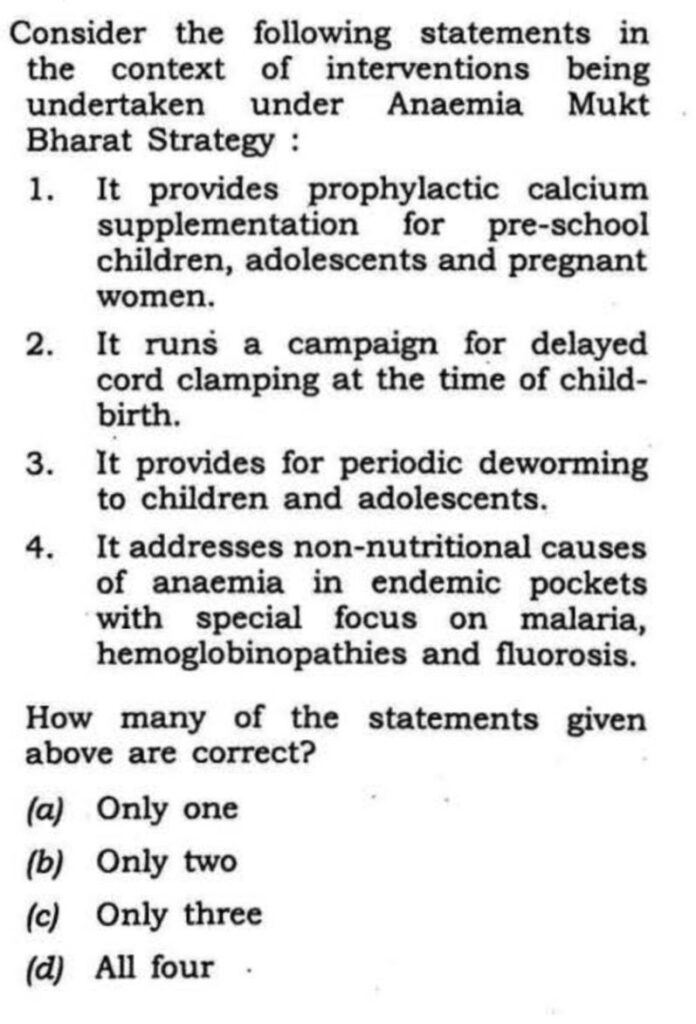
National Sickle Cell Anaemia Elimination Mission Progress

Context:
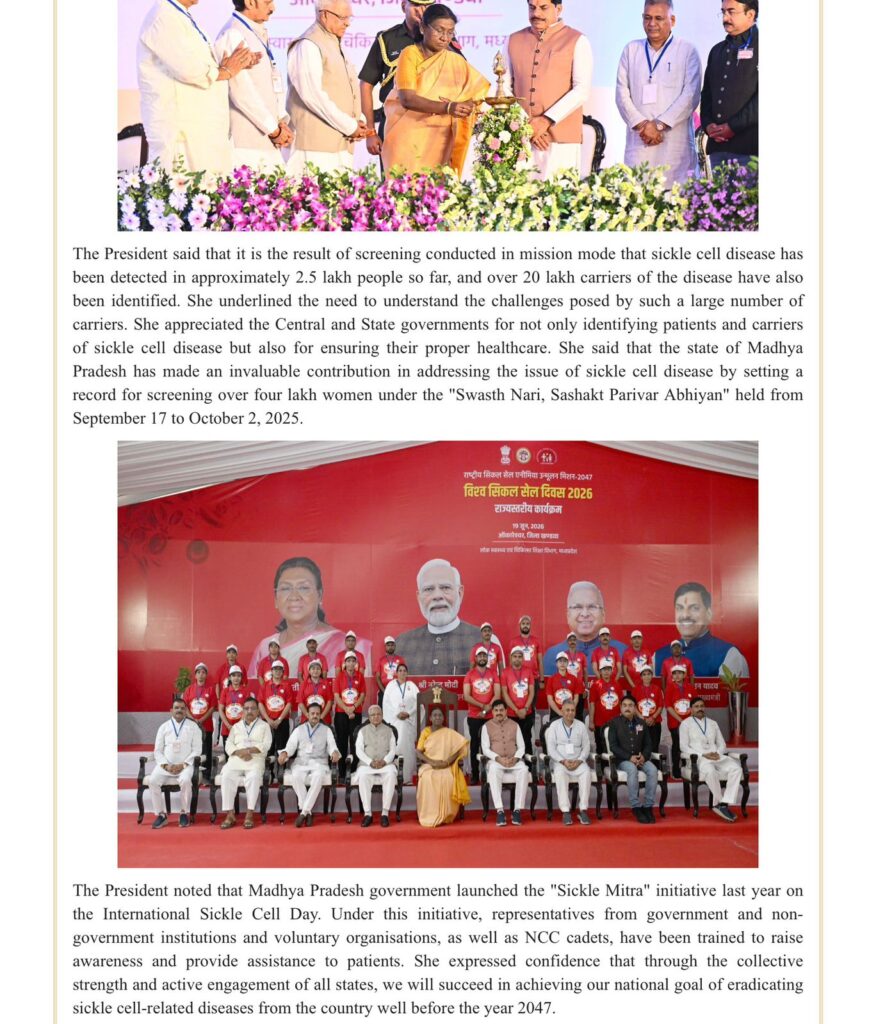
President Droupadi Murmu reviewed the progress of the National Sickle Cell Anaemia Elimination Mission and reiterated India’s commitment to eliminate Sickle Cell Disease as a public health challenge by 2047.

Sickle Cell Anaemia

Sickle Cell Anaemia is a hereditary blood disorder caused by abnormal Haemoglobin-S.

This makes Red Blood Cells:

  • Rigid
  • Sticky
  • Sickle-shaped

Pathology

Abnormal HbS
→ Sickling of Red Blood Cells
→ Rapid Red Blood Cell destruction
→ Blood vessel blockage

Consequences

  • Chronic haemolytic anaemia
  • Reduced oxygen supply to tissues
  • Recurrent pain crises
  • Multi-organ damage
  • Brain, lungs, kidney and spleen complications

Management

  • Early screening
  • Genetic counselling
  • Hydroxyurea therapy
  • Folic acid supplementation
  • Vaccination and infection control
  • Blood transfusion in severe cases
  • Bone marrow transplant as a potential cure

National Sickle Cell Anaemia Elimination Mission

Launched

  • 1 July 2023

Announced In

  • Union Budget 2023–24

Target

  • Eliminate Sickle Cell Disease as a public health problem by 2047.

Coverage

Screening of 7 crore individuals aged 0–40 years, especially in tribal-dominated areas.

Approach

Screen
→ Identify
→ Counsel
→ Treat
→ Prevent transmission

Progress

  • 7 crore people screened
  • Around 2.5 lakh patients identified
  • More than 20 lakh carriers identified

Significance

  • Important for tribal health.
  • Supports preventive public health.
  • Promotes genetic counselling.
  • Reduces disease burden in vulnerable communities.
  • Links health governance with social justice.
About the UPSC Civil Services Examination (UPSC CSE)

The UPSC Civil Services Examination (CSE) is one of the most competitive and esteemed examinations in India, conducted by the Union Public Service Commission to recruit officers for services such as the Indian Administrative Service (IAS), Indian Police Service (IPS), Indian Foreign Service (IFS), and others. The exam comprises three stages — Prelims, Mains, and the Personality Test (Interview) — designed to test a candidate’s knowledge, aptitude, decision-making, and leadership skills.


How to Prepare Effectively for UPSC CSE

Cracking the UPSC CSE requires a deep understanding of the syllabus, consistent revision, structured answer writing, and smart test-taking strategies. The Prelims test analytical and conceptual clarity, the Mains focuses on critical thinking, articulation, and subject mastery, while the Interview assesses presence of mind, ethical judgment, and personality traits relevant to public service.

At UnderStand UPSC, we empower aspirants with a personalized and focused approach to each stage of the exam.


Why Choose UnderStand UPSC?

UnderStand UPSC is a mentorship-driven platform offering a clear, clutter-free strategy to tackle the Civil Services Examination. Our programs like Transform (for beginners and intermediate learners) and Conquer (for advanced mains preparation) provide structured study plans, syllabus-wise video content, interactive live sessions, and answer writing support.

We emphasize:

  • Concept clarity through topic-wise lectures

  • Test series designed around real UPSC standards

  • Personalized mentorship in small groups

  • Regular performance tracking and peer benchmarking

  • Doubt-clearing sessions, current affairs analysis, and monthly magazines


Join the UnderStand UPSC Learning Community

Our mission is to make UPSC preparation less overwhelming and more strategic. We combine mentorship, discipline, and academic rigor to help you clear CSE with confidence. Whether you’re preparing from Delhi, Mumbai, Bangalore, or a remote village — our online-first model ensures quality guidance reaches every corner of India.

Join the thousands of aspirants who trust UnderStand UPSC to guide their journey toward becoming civil servants.

Stay connected with us through our Telegram, YouTube, and Instagram channels for daily tips, strategies, and updates.

Copyright © 2026 USARAMBHA EDUCATION (UnderStand UPSC). All Rights Reserved.

Fill out the form for

Downloading the free Agriculture Short Notes


Fill out the form

If you have any queries related to
Our Programs We Offer