9 July 2026 | Daily Current Affairs

States welfare schemes fiscal federalism for UPSC

Context:
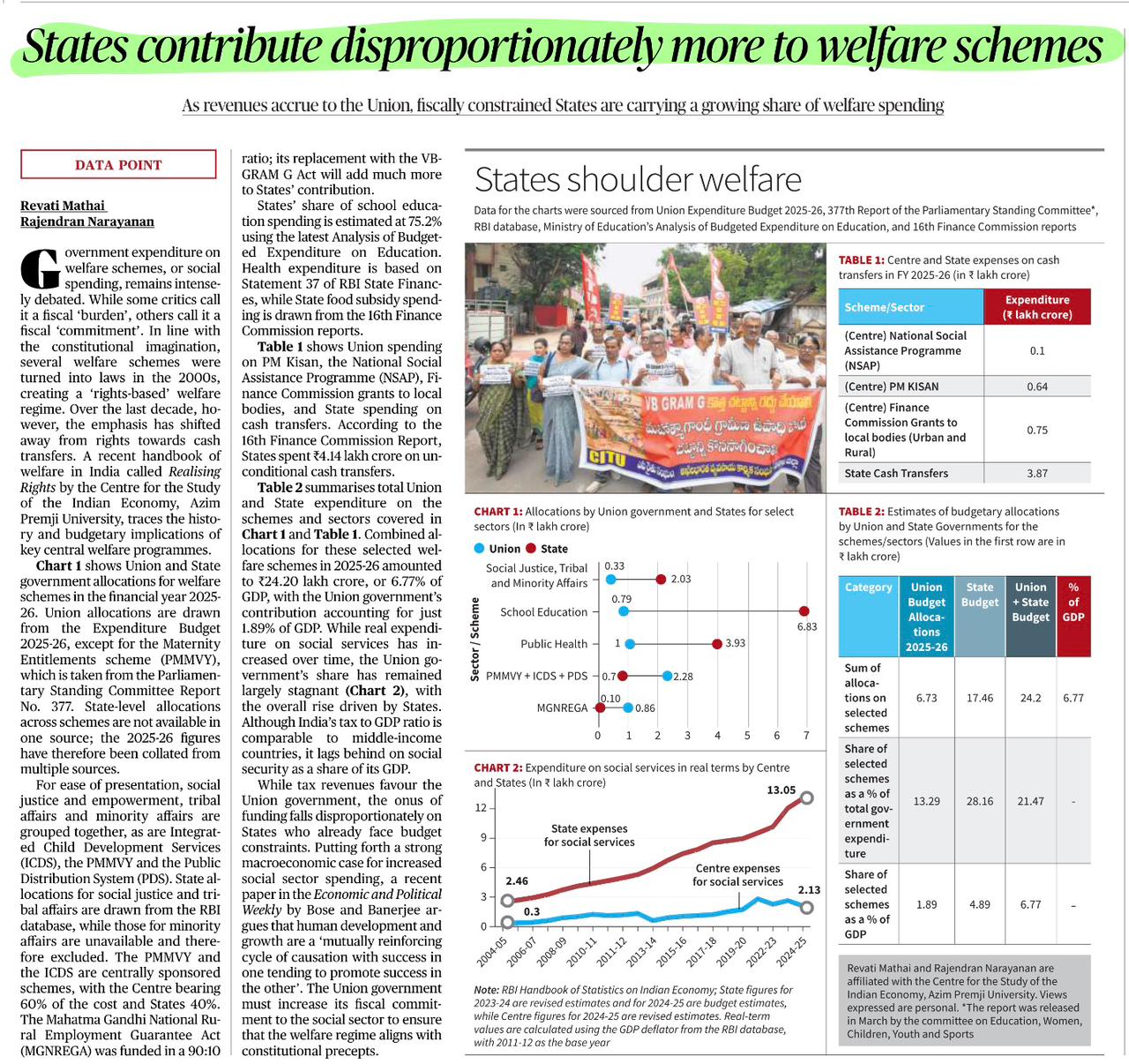
The article highlights that while many welfare schemes are centrally designed, States are bearing a disproportionately high share of welfare expenditure.

This raises concerns around fiscal federalism, State autonomy and the growing fiscal pressure on State governments.

Core Issue

States carry major responsibilities in sectors such as:

  • Health
  • Education
  • Nutrition
  • Rural development
  • Social welfare
  • Agriculture
  • Public distribution
  • Local infrastructure

However, their fiscal space is limited because a large part of revenue collection and policy design remains with the Union.

Fiscal Federalism Angle

Fiscal federalism refers to the distribution of:

  • Revenue powers
  • Expenditure responsibilities
  • Grants
  • Tax devolution
  • Borrowing powers

between the Union and the States.

Why States Face Pressure

1. Welfare Burden

States are responsible for implementing and financing many welfare schemes.

Even when schemes are centrally sponsored, States often bear:

  • Matching contributions
  • Administrative costs
  • Last-mile delivery costs
  • Additional top-ups

2. Limited Revenue Flexibility

States have fewer broad-based taxation powers after GST.

Their major revenue sources include:

  • State GST share
  • Excise duty
  • Stamp duty
  • Motor vehicle tax
  • Property-related revenues
  • Central tax devolution
  • Grants-in-aid

3. Rising Committed Expenditure

State budgets are increasingly burdened by:

  • Salaries
  • Pensions
  • Interest payments
  • Subsidies
  • Welfare commitments

4. Dependence on Union Transfers

States depend on:

  • Finance Commission transfers
  • Centrally Sponsored Schemes
  • Grants
  • GST compensation-type arrangements

Key Concern

If States have high welfare responsibilities but limited fiscal autonomy, it weakens:

  • Cooperative federalism
  • State-level policy innovation
  • Quality of public service delivery
  • Development spending
  • Capital expenditure

Constitutional Linkages

Article 268–281

  • Distribution of taxes and revenues between Union and States.

Article 275

  • Grants-in-aid from Union to States.

Article 280

  • Finance Commission.

Article 293

  • Borrowing by States.

Way Forward

  • Ensure predictable and timely tax devolution.
  • Increase untied transfers to States.
  • Give States more flexibility in scheme design.
  • Reduce excessive conditionalities in Centrally Sponsored Schemes.
  • Strengthen State finances through better GST compensation-like mechanisms.
  • Improve expenditure quality.
  • Strengthen local governments for last-mile delivery.

Key Takeaway

India’s welfare architecture depends heavily on States. Fiscal federalism must ensure that States have enough financial autonomy and predictable resources to deliver welfare effectively.
WHO cancer treatment inequities for UPSC Explained

Context:
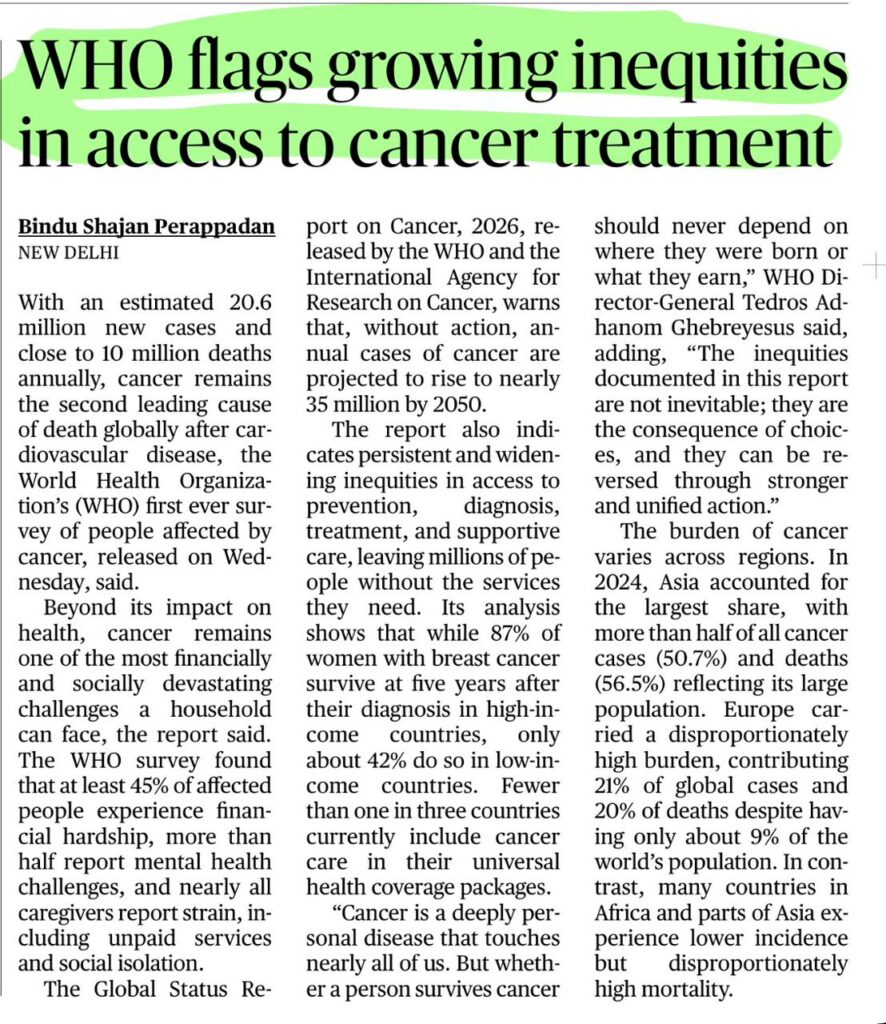
The World Health Organization’s Global Status Report on Cancer 2026 highlights widening inequities in access to cancer care, treatment and survival outcomes.

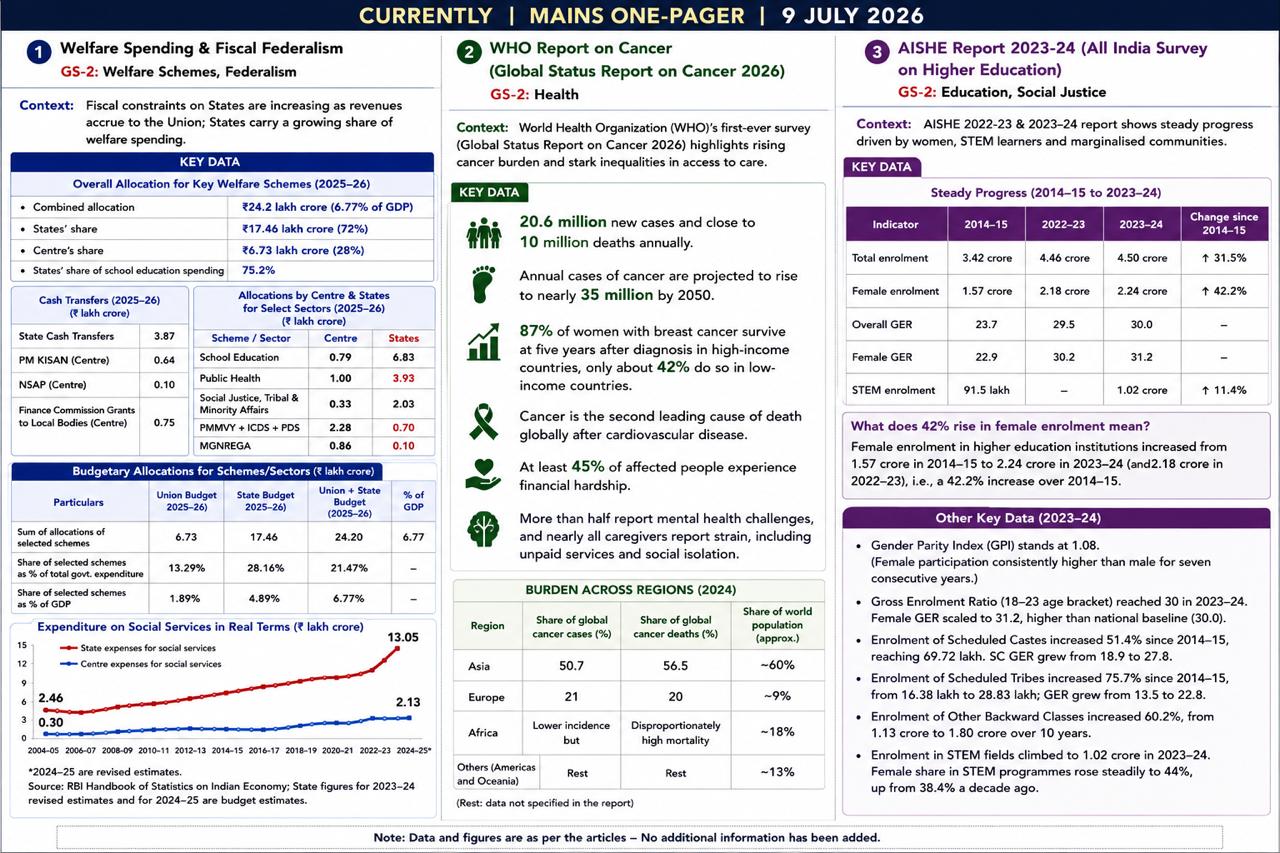
Key Data

  • Around 20.6 million new cancer cases are estimated globally.
  • Nearly 10 million deaths occur annually due to cancer.
  • Annual cancer cases are projected to reach nearly 35 million by 2050.

Cancer Inequality

Cancer treatment outcomes differ sharply between high-income and low-income countries.

Key Finding

About 87% of women with breast cancer survive five years after diagnosis in high-income countries.

This falls to only about 42% in low-income countries.

Why Inequality Exists

Cancer care inequality is caused by:

  • Late diagnosis
  • Poor screening coverage
  • Limited treatment infrastructure
  • High cost of medicines
  • Shortage of oncologists
  • Lack of radiotherapy centres
  • Limited insurance coverage
  • Weak palliative care
  • Poor public health systems

Burden on Households

Cancer is one of the most financially devastating diseases.

It can lead to:

  • Out-of-pocket expenditure
  • Debt
  • Loss of income
  • Mental health stress
  • Caregiver burden
  • Social isolation

Regional Burden

Asia

Asia accounts for the largest share of global cancer cases and deaths because of its large population.

Africa

Africa and parts of Asia face lower incidence but disproportionately high mortality due to poor access to diagnosis and treatment.

Why It Matters for India

India needs stronger:

  • Cancer screening
  • Early diagnosis
  • Affordable treatment
  • Public cancer hospitals
  • Palliative care
  • Health insurance coverage
  • Cancer registries
  • Awareness campaigns

Link with Universal Health Coverage

Cancer care should not depend on ability to pay.

Equitable access to cancer treatment is essential for achieving Universal Health Coverage.

Way Forward

  • Expand screening for breast, cervical and oral cancers.
  • Strengthen district-level cancer care.
  • Improve access to radiotherapy.
  • Make essential cancer medicines affordable.
  • Expand insurance coverage.
  • Strengthen palliative care.
  • Improve cancer registries and surveillance.
  • Promote preventive measures against tobacco, alcohol and unhealthy diets.

Key Takeaway

Cancer is not only a medical issue. It is also a social justice issue because survival depends heavily on income, geography and access to healthcare.

AISHE female enrolment report for UPSC Explained

Context:
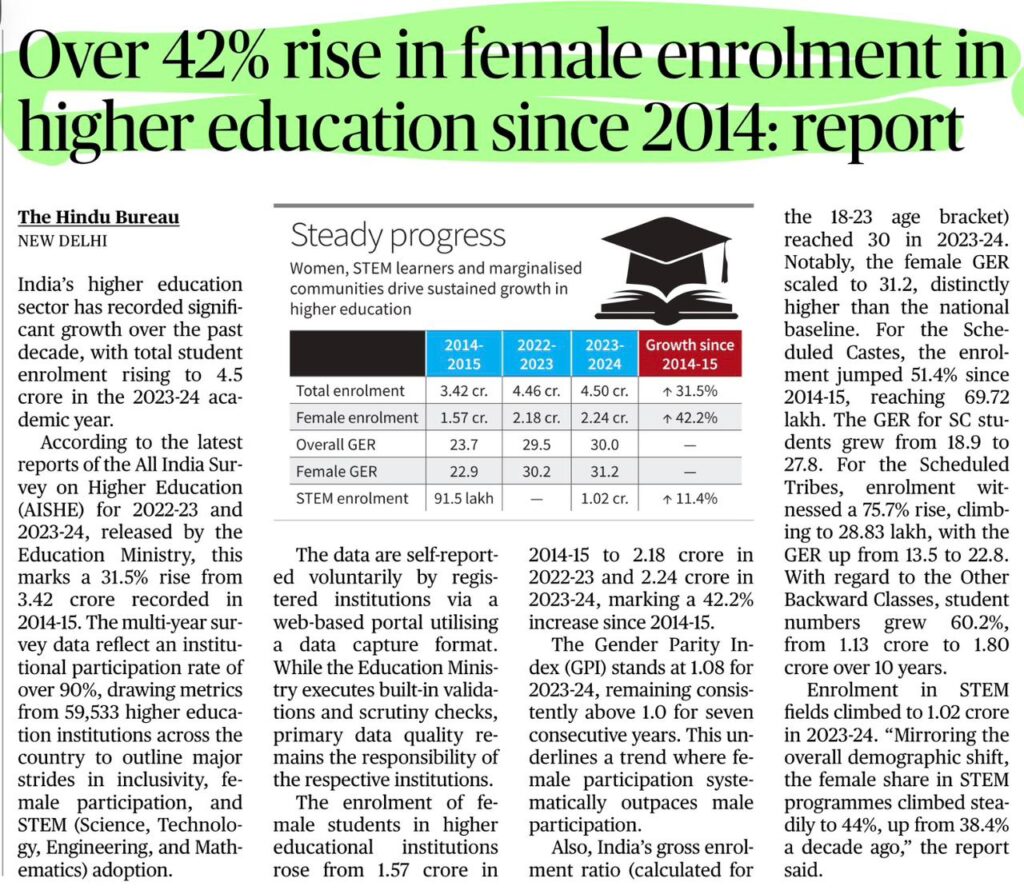
The AISHE 2023–24 report shows a major rise in female enrolment in higher education since 2014.

It reflects progress in access, gender inclusion and social justice in higher education.

AISHE

Full Form

  • All India Survey on Higher Education

Conducted By

  • Ministry of Education

Purpose

AISHE collects data on higher education institutions, enrolment, teachers, courses and educational indicators.

Key Data

Total Enrolment

  • 2014–15: 3.42 crore
  • 2023–24: 4.50 crore
  • Growth: 31.5%

Female Enrolment

  • 2014–15: 1.57 crore
  • 2023–24: 2.24 crore
  • Growth: 42.2%

Female GER

  • 2014–15: 22.9
  • 2023–24: 31.2

STEM Enrolment

  • 2014–15: 91.5 lakh
  • 2023–24: 1.02 crore
  • Growth: 11.4%

Marginalised Communities

The report shows improved participation among:

  • Women
  • Scheduled Castes
  • Scheduled Tribes
  • Other Backward Classes

Significance

1. Gender Justice

Rising female enrolment improves equality in education and expands women’s opportunities.

2. Demographic Dividend

Educated women contribute to:

  • Workforce participation
  • Better family health
  • Better child education
  • Social mobility

3. Social Inclusion

Higher participation of SC, ST and OBC students reflects wider access to higher education.

4. STEM Participation

Growth in women’s STEM enrolment can support India’s future workforce in:

  • Science
  • Technology
  • Engineering
  • Mathematics
  • Innovation
  • Research

Challenges

  • Dropout rates among women.
  • Safety and mobility concerns.
  • Digital divide.
  • Low labour-force participation despite education.
  • Regional disparities.
  • Quality of higher education.
  • Underrepresentation in research and leadership roles.

Way Forward

  • Improve scholarships for women and marginalised groups.
  • Build safe campuses and hostels.
  • Strengthen transport and digital access.
  • Improve STEM mentoring for girls.
  • Link higher education with employment.
  • Promote women in research and faculty roles.
  • Improve quality and employability of higher education.

Key Takeaway

Rising female enrolment is a major social achievement, but the next challenge is converting educational gains into employment, leadership and economic empowerment.

Right to be Forgotten UPSC Explained in GS-2

Context:
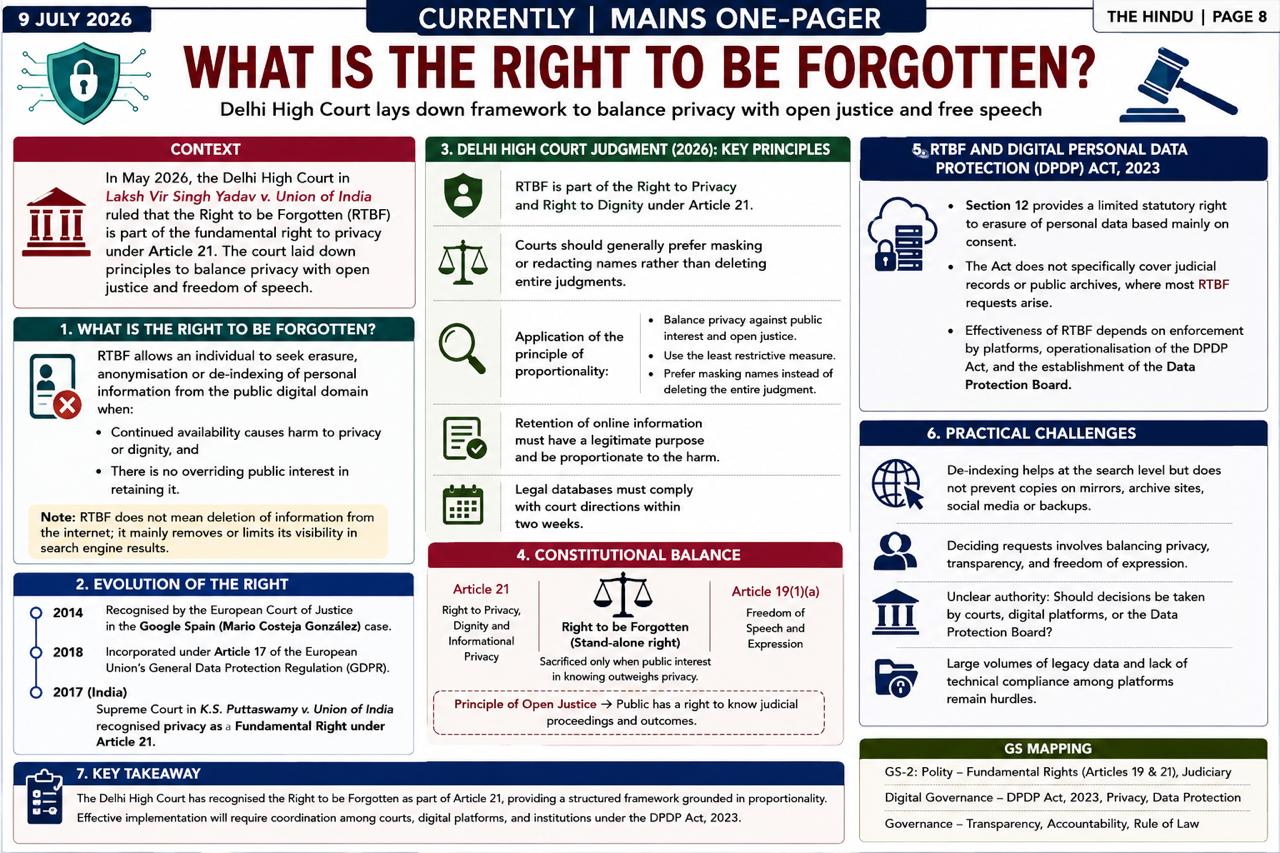
The Delhi High Court, in Kalki v. Singh Yadav v. Union of India, held that the Right to be Forgotten must be balanced with open justice and freedom of speech.

Right to be Forgotten

The Right to be Forgotten allows an individual to seek removal, deletion or de-indexing of personal information from public digital access when continued availability causes harm and no longer serves a legitimate public interest.

Meaning

It does not mean automatic deletion of all information.

It usually means reducing easy public access to outdated, irrelevant or harmful personal data.

Constitutional Basis

The Right to be Forgotten is part of the broader Right to Privacy.

Right to Privacy

Recognised by the Supreme Court in:

K.S. Puttaswamy v. Union of India, 2017

Privacy is protected under:

Constitutional Balance

The Right to be Forgotten must be balanced against:

Article 19(1)(a)

  • Freedom of speech and expression
  • Public right to know
  • Press freedom

Open Justice Principle

Court proceedings and judgments are generally public to ensure transparency and accountability.

Article 21

  • Privacy
  • Dignity
  • Reputation

Practical Examples

A person may seek de-indexing of:

  • Old acquittal records
  • Personal details in judgments
  • Sensitive personal information
  • Irrelevant search results
  • Outdated content causing disproportionate harm

Delhi High Court Position

The Court laid down that requests should generally be made before masking or redacting names rather than deleting entire judgments.

Key Principles

1. Balancing Test

Courts must balance privacy with public interest.

2. Proportionality

The restriction should be proportionate and not excessive.

3. Legitimate Purpose

Retention of online information must serve a legitimate public purpose.

4. Open Justice

Judicial transparency should not be undermined.

DPDP Act, 2023 Link

The Digital Personal Data Protection Act, 2023 provides a limited statutory basis for erasure of personal data.

However, it does not specifically use the phrase “Right to be Forgotten”.

Challenges

  • Search engines may remove links but copies may remain elsewhere.
  • Balancing privacy with press freedom is difficult.
  • Court records serve public accountability.
  • Large volumes of legacy data make compliance hard.
  • Lack of clear procedural framework.

Key Takeaway

The Right to be Forgotten protects privacy and dignity, but it cannot override open justice, public interest and freedom of expression in every case.

Pinaka Long-Range Guided Rocket for UPSC GS-3

Context:
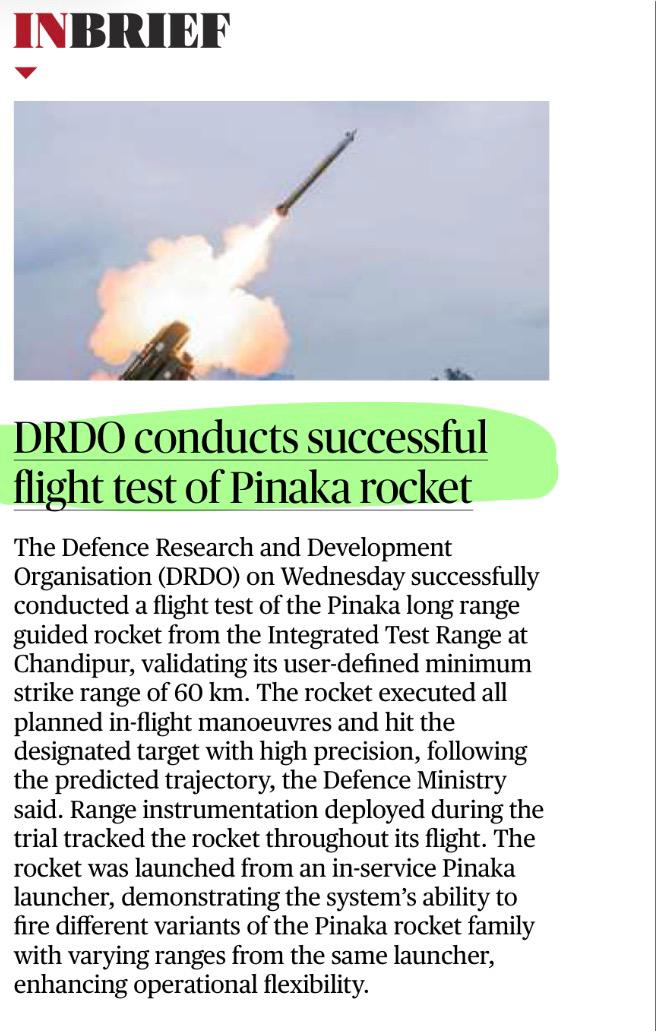
DRDO successfully flight-tested the Pinaka Long-Range Guided Rocket from the Integrated Test Range, Chandipur, Odisha.

The test validated a user-defined minimum strike range of 60 km.

Pinaka Rocket System

Type

  • Indigenous guided multi-barrel rocket launcher weapon system

Important Clarification

Pinaka is a rocket system, not a missile.

Developed By

  • Defence Research and Development Organisation

User

  • Indian Army

Role

Pinaka provides long-range precision and area fire support against:

  • Enemy troop concentrations
  • Artillery positions
  • Logistics nodes
  • Tactical targets

Variants

The Pinaka family includes:

  • Pinaka Mk-I
  • Enhanced Pinaka
  • Guided Pinaka
  • Long-Range Guided Pinaka

Operational Flexibility

Different variants can be fired from the same launcher.

This improves:

  • Operational flexibility
  • Logistics efficiency
  • Battlefield adaptability

Significance

  • Strengthens indigenous artillery capability.
  • Enhances precision strike capability.
  • Supports Atmanirbhar Bharat in defence.
  • Improves battlefield firepower.
  • Reduces dependence on imported rocket artillery.
  • Enhances Indian Army’s long-range strike options.

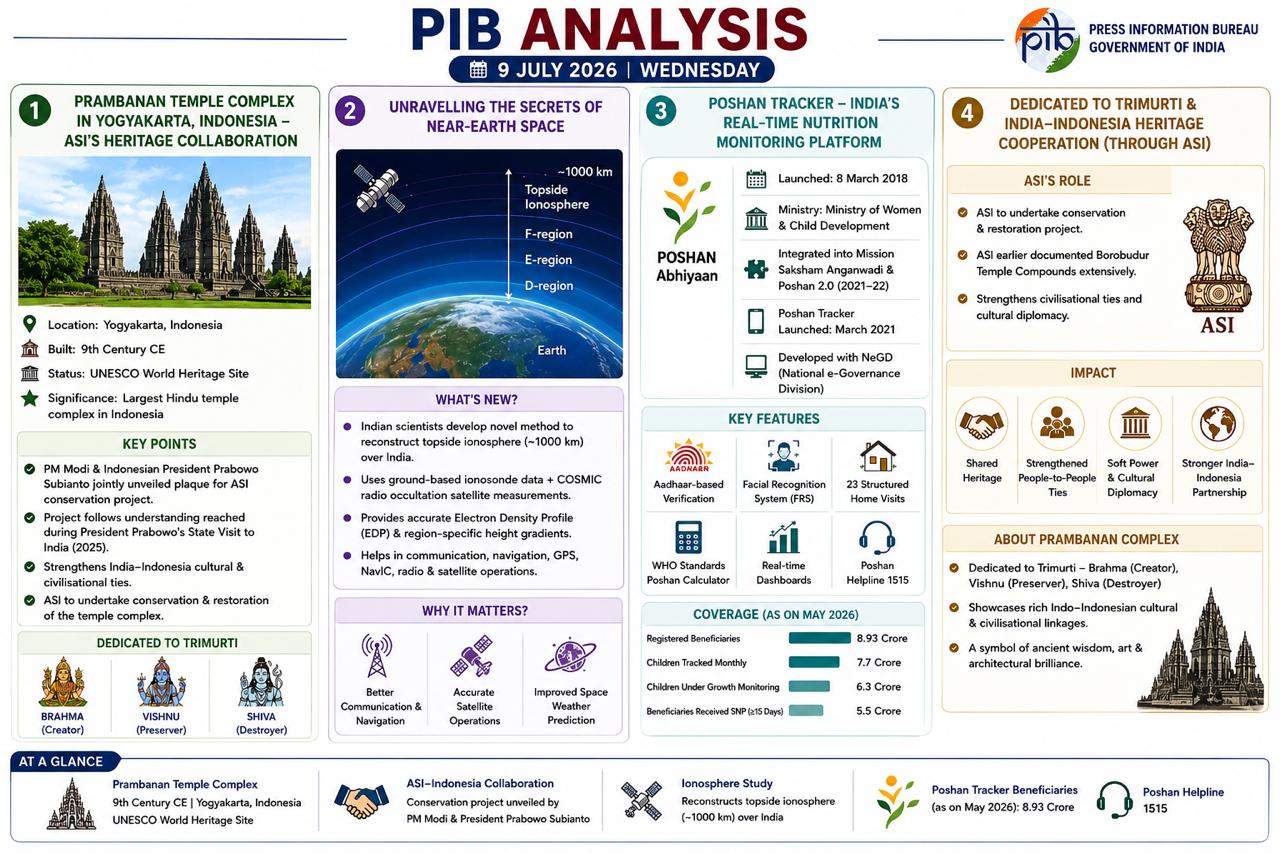
Prambanan Temple Complex Indonesia for UPSC

Context:
India and Indonesia are deepening heritage cooperation through Archaeological Survey of India support for restoration and conservation work at the Prambanan Temple Complex in Indonesia.

Prambanan Temple Complex

Location

  • Yogyakarta, Indonesia

Built By

  • Sanjaya Dynasty

Date

  • 9th century CE

Religious Association

  • Hindu temple complex

Main Deities

Dedicated primarily to the Trimurti:

  • Brahma
  • Vishnu
  • Shiva

UNESCO Status

  • UNESCO World Heritage Site

Cultural Importance

Prambanan reflects:

  • Indian cultural influence in Southeast Asia
  • Hindu temple architecture
  • Shared civilisational links
  • India–Indonesia cultural connections

ASI Role

The Archaeological Survey of India supports:

  • Conservation
  • Restoration
  • Technical expertise
  • Heritage management
  • Capacity building

Significance

  • Strengthens India–Indonesia cultural diplomacy.
  • Highlights India’s civilisational outreach.
  • Builds goodwill through heritage cooperation.
  • Supports protection of shared cultural heritage.
  • Promotes soft power.

Related Example

India has also supported restoration of temples such as:

  • Angkor Wat, Cambodia
  • Ta Prohm, Cambodia
  • Wat Phou, Laos
  • My Son, Vietnam

Near-Earth Space secrets for UPSC Explained

Context:
Indian scientists are studying near-Earth space to understand the ionosphere and space weather, which affect communication, satellites and navigation systems.

Near-Earth Space

Near-Earth space includes the region around Earth influenced by:

  • Earth’s magnetic field
  • Solar radiation
  • Charged particles
  • Ionospheric activity

Ionosphere

The ionosphere is the ionised layer of Earth’s upper atmosphere.

It affects:

  • Radio communication
  • GPS accuracy
  • Satellite signals
  • Space weather effects

Ionospheric Layers

The ionosphere includes:

  • D region
  • E region
  • F region

Why It Matters

Changes in near-Earth space can affect:

  • Satellite communication
  • Navigation systems
  • GPS
  • Aviation
  • Defence communication
  • Power grids

Space Weather

Space weather refers to conditions in space caused mainly by solar activity.

It includes:

  • Solar flares
  • Coronal mass ejections
  • Geomagnetic storms
  • Charged particle flows

Significance

Studying near-Earth space helps improve:

  • Communication navigation
  • Satellite operations
  • Disaster prediction
  • Weather and climate understanding
  • Defence preparedness
  • Space mission safety

Poshan Tracker platform for UPSC GS-2 Explained

Context:
The Poshan Tracker is India’s real-time digital platform for monitoring nutrition service delivery under the Poshan Abhiyaan.

Poshan Tracker

Launched

  • March 2021

Ministry

  • Ministry of Women and Child Development

Integrated With

  • Poshan Abhiyaan
  • Saksham Anganwadi and Poshan 2.0

Purpose

To digitally monitor:

  • Anganwadi services
  • Nutrition delivery
  • Growth measurement
  • Beneficiary tracking
  • Supplementary nutrition
  • Real-time data reporting

Beneficiaries

The platform tracks services for:

  • Children
  • Pregnant women
  • Lactating mothers
  • Adolescent girls

Key Features

  • Aadhaar-based verification
  • Facial recognition system
  • Real-time dashboards
  • Mobile-based reporting
  • Growth monitoring
  • Nutrition service tracking
  • Household-level data

Coverage

As per the PDF, coverage includes:

  • Around 8.91 crore beneficiaries
  • Around 7.72 crore children tracked
  • Around 6.30 crore children growth-monitored
  • Around 5.50 crore beneficiaries receiving supplementary nutrition support

Significance

  • Improves nutrition governance.
  • Enables real-time monitoring.
  • Reduces leakages.
  • Supports targeted interventions.
  • Helps identify malnutrition early.
  • Strengthens accountability of Anganwadi services.
  • Improves evidence-based policymaking.

Concerns

  • Digital divide.
  • Data quality.
  • Aadhaar-related exclusion.
  • Privacy concerns.
  • Infrastructure gaps at Anganwadi centres.
  • Training needs of frontline workers.

Way Forward

  • Ensure offline alternatives.
  • Improve data protection.
  • Train Anganwadi workers.
  • Strengthen grievance redressal.
  • Improve device and internet access.
  • Use data for targeted nutrition interventions.

ASI Indonesia heritage cooperation for UPSC GS-2

Context:
India and Indonesia are working together on heritage conservation, with ASI supporting restoration of culturally significant sites.

Archaeological Survey of India

Established

  • 1861

Founder

  • Alexander Cunningham

Ministry

  • Ministry of Culture

Role

ASI is responsible for:

  • Archaeological research
  • Conservation of monuments
  • Restoration of heritage sites
  • Protection of ancient monuments
  • Epigraphy
  • Excavations
  • Heritage management

India–Indonesia Cultural Links

India and Indonesia share:

  • Hindu-Buddhist civilisational links
  • Ramayana traditions
  • Temple architecture
  • Maritime trade links
  • Sanskrit cultural influence
  • Shared heritage across Southeast Asia

Importance of Heritage Cooperation

Heritage cooperation supports:

  • Cultural diplomacy
  • Soft power
  • People-to-people ties
  • Tourism
  • Academic exchange
  • Civilisational diplomacy
  • Strategic partnership

Prambanan Link

Prambanan Temple Complex is a key example of India–Indonesia shared cultural heritage.

Key Takeaway

ASI–Indonesia heritage cooperation shows how cultural diplomacy can strengthen modern strategic relations by building on shared civilisational memory.

About the UPSC Civil Services Examination (UPSC CSE)

The UPSC Civil Services Examination (CSE) is one of the most competitive and esteemed examinations in India, conducted by the Union Public Service Commission to recruit officers for services such as the Indian Administrative Service (IAS), Indian Police Service (IPS), Indian Foreign Service (IFS), and others. The exam comprises three stages — Prelims, Mains, and the Personality Test (Interview) — designed to test a candidate’s knowledge, aptitude, decision-making, and leadership skills.


How to Prepare Effectively for UPSC CSE

Cracking the UPSC CSE requires a deep understanding of the syllabus, consistent revision, structured answer writing, and smart test-taking strategies. The Prelims test analytical and conceptual clarity, the Mains focuses on critical thinking, articulation, and subject mastery, while the Interview assesses presence of mind, ethical judgment, and personality traits relevant to public service.

At UnderStand UPSC, we empower aspirants with a personalized and focused approach to each stage of the exam.


Why Choose UnderStand UPSC?

UnderStand UPSC is a mentorship-driven platform offering a clear, clutter-free strategy to tackle the Civil Services Examination. Our programs like Transform (for beginners and intermediate learners) and Conquer (for advanced mains preparation) provide structured study plans, syllabus-wise video content, interactive live sessions, and answer writing support.

We emphasize:

  • Concept clarity through topic-wise lectures

  • Test series designed around real UPSC standards

  • Personalized mentorship in small groups

  • Regular performance tracking and peer benchmarking

  • Doubt-clearing sessions, current affairs analysis, and monthly magazines


Join the UnderStand UPSC Learning Community

Our mission is to make UPSC preparation less overwhelming and more strategic. We combine mentorship, discipline, and academic rigor to help you clear CSE with confidence. Whether you’re preparing from Delhi, Mumbai, Bangalore, or a remote village — our online-first model ensures quality guidance reaches every corner of India.

Join the thousands of aspirants who trust UnderStand UPSC to guide their journey toward becoming civil servants.

Stay connected with us through our Telegram, YouTube, and Instagram channels for daily tips, strategies, and updates.

Copyright © 2026 USARAMBHA EDUCATION (UnderStand UPSC). All Rights Reserved.

UpSurge Mains Test Series 2027

Fill out the form

Fill out the form for

Downloading the free Agriculture Short Notes