27 July 2026 | UPSC Daily Current Affairs

27 July 2026 | UPSC Daily Current Affairs

Sarnath UNESCO World Heritage Site Added by UNESCO

Context: Sarnath UNESCO World Heritage Site
At the 48th Session of the UNESCO World Heritage Committee held in Busan, South Korea, UNESCO inscribed three new World Heritage Sites:

  • Ancient Buddhist Site of Sarnath — India
  • Sebastia — West Bank, Palestine
  • Five Castles of Mount Amel — Lebanon

With the inscription of Sarnath, India now has 45 UNESCO World Heritage Sites. The sites in the West Bank and Lebanon were also placed on the List of World Heritage in Danger due to the ongoing conflict in West Asia.

Sarnath

Sarnath is located near Varanasi, Uttar Pradesh.

It is one of the most important Buddhist pilgrimage sites in the world.

Why Sarnath Is Important

Sarnath is the place where Lord Buddha delivered his first sermon after attaining enlightenment.

This event is known as Dharmachakra Pravartana, or the turning of the wheel of Dharma.

Sarnath is also one of the four major Buddhist pilgrimage sites.

Important Monuments

Sarnath is famous for:

  • Dhamek Stupa
  • Ashokan Lion Capital
  • Ancient monasteries
  • Buddhist archaeological remains

The Ashokan Lion Capital from Sarnath is also the basis of India’s National Emblem.

Sebastia

Sebastia is located northwest of Nablus in the West Bank.

It is identified with the ancient city of Samaria.

The site has remains from:

  • Iron Age
  • Roman period
  • Byzantine period
  • Islamic period

Five Castles of Mount Amel

The Five Castles of Mount Amel are located in southern Lebanon.

They represent medieval fortified architecture influenced by:

  • Crusader architecture
  • Ayyubid architecture
  • Mamluk architecture
  • Local architectural traditions

These castles were also added to the List of World Heritage in Danger.

Key Takeaway

Sarnath’s inscription strengthens India’s global cultural profile and highlights the civilisational importance of Buddhism in India’s heritage diplomacy.


India Rice Methane Emissions: Causes and Solutions

Context: India rice methane emissions
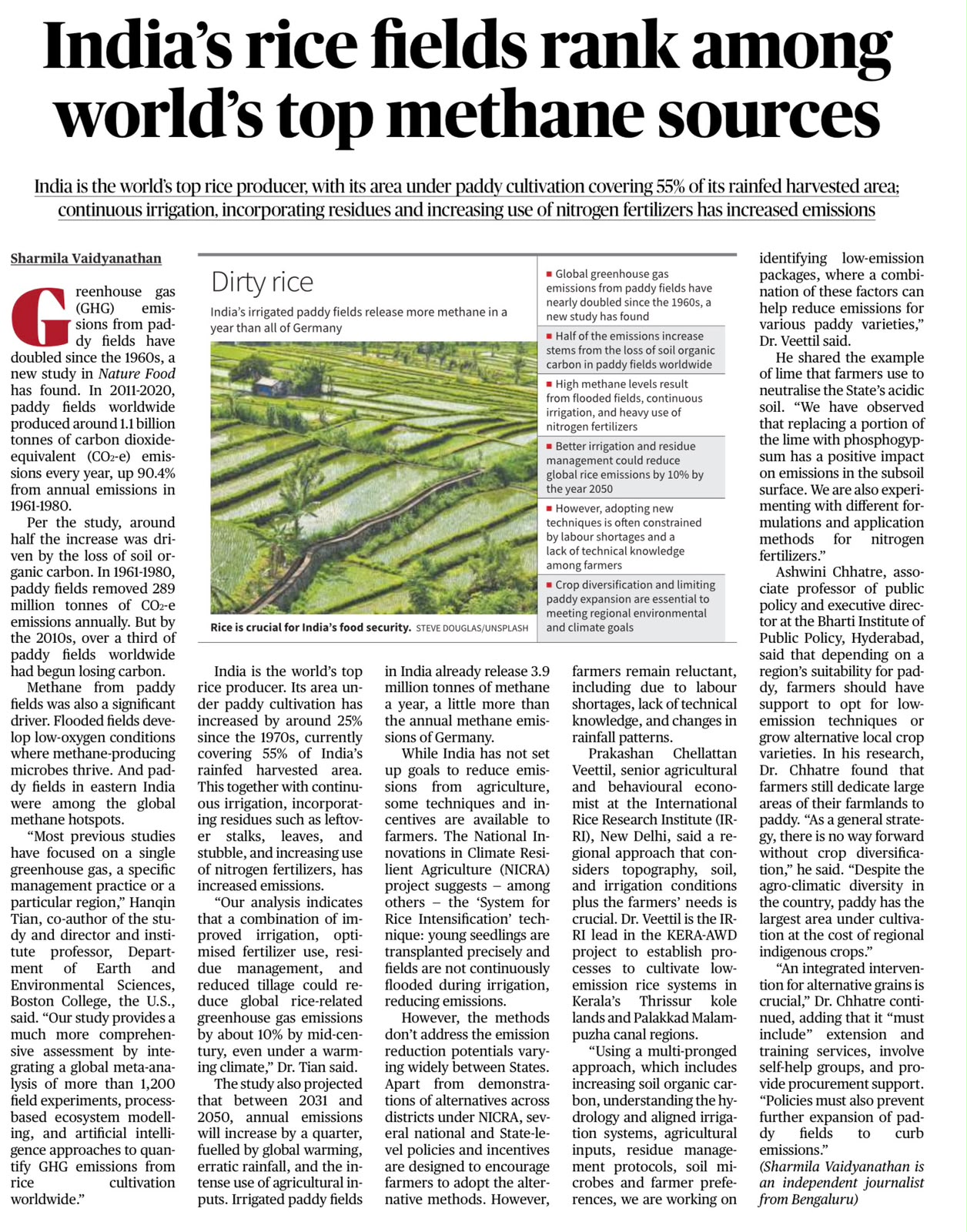
A Nature Food study reported by The Hindu found that greenhouse gas emissions from paddy fields have nearly doubled since the 1960s.

India, being the world’s largest rice producer, is among the largest methane emitters from rice cultivation due to flooded fields, crop residue incorporation and intensive fertiliser use.

Methane

Methane, or CH₄, is a powerful greenhouse gas.

It is much more potent than carbon dioxide in terms of warming impact over a 100-year period.

Methane is produced under anaerobic conditions, where oxygen is absent or very limited.

Why Paddy Fields Emit Methane

Rice is often grown in flooded fields.

Flooded soil creates oxygen-deficient conditions.

Under such conditions, methane-producing microbes become active and release methane into the atmosphere.

Major Sources of Methane

Important methane sources include:

  • Wetlands
  • Paddy fields
  • Livestock
  • Landfills
  • Oil and gas extraction
  • Coal mining

Indian Context

India is the world’s largest rice producer.

Paddy cultivation covers around 55% of India’s rainfed harvested area.

Irrigated paddy fields in India emit around 3.9 million tonnes of methane per year.

The main drivers are:

  • Continuous flooding
  • Crop residue incorporation
  • Nitrogen fertiliser use
  • Large paddy cultivation area

Environmental Concern

Methane from rice cultivation adds to agricultural greenhouse gas emissions.

This makes paddy farming important not only for food security but also for climate policy.

India must balance rice production with low-emission agricultural practices.

Mitigation Measures

Alternate Wetting and Drying

This method allows fields to dry for certain periods instead of keeping them continuously flooded.

It reduces methane emissions by limiting anaerobic conditions.

System of Rice Intensification

SRI uses improved water, seedling and soil management practices.

It can reduce water use and help lower emissions.

Better Fertiliser and Residue Management

Efficient fertiliser use and improved crop residue handling can reduce emissions.

Crop Diversification

Diversifying away from water-intensive paddy in suitable regions can reduce environmental stress.

Key Takeaway

Rice is crucial for India’s food security, but paddy cultivation is also a major methane source. India needs climate-smart rice farming to protect both food security and environmental goals.

Public Examinations Amendment Bill 2026 Explained

Context: Public Examinations Amendment Bill 2026
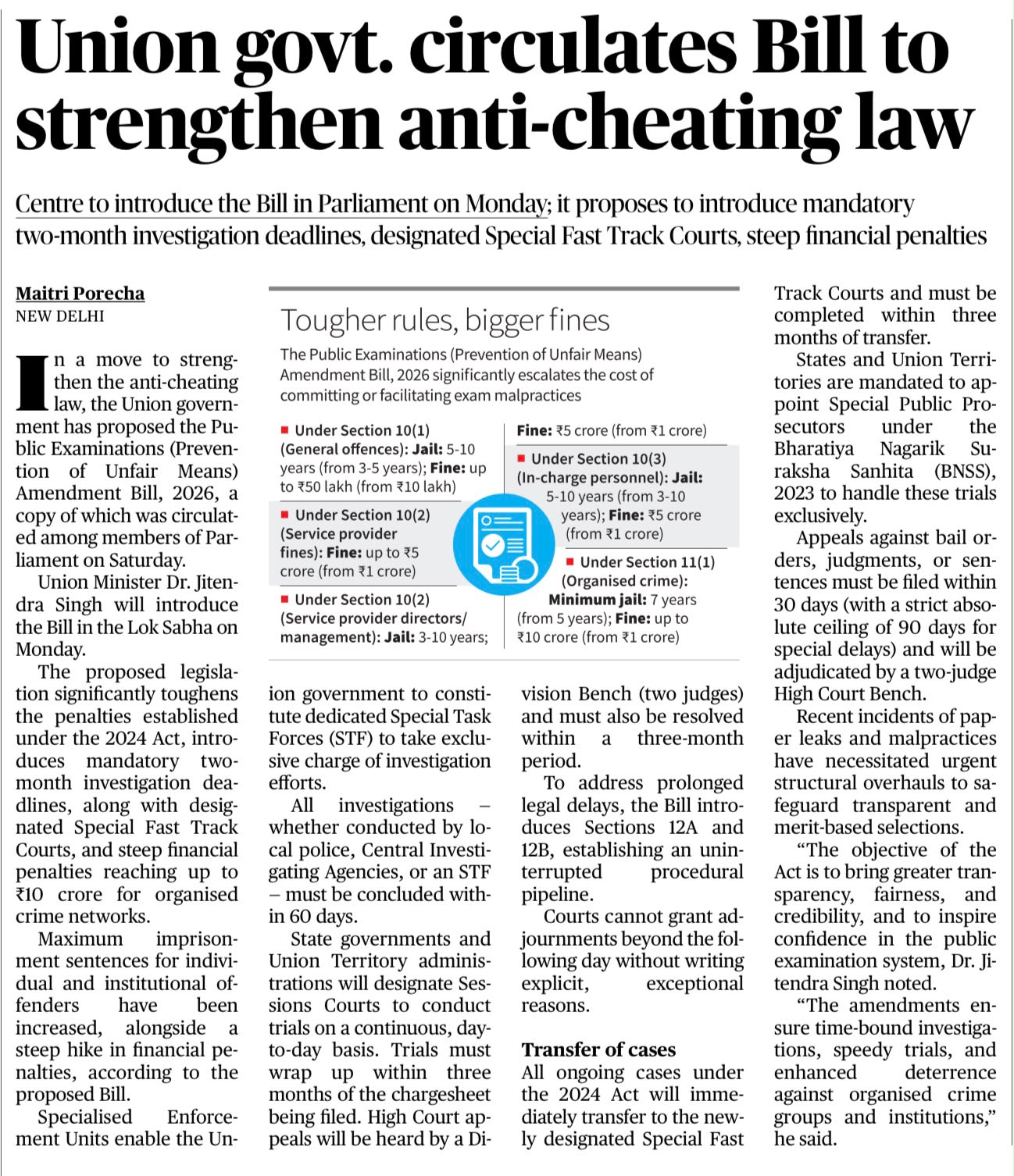
The Union Government has circulated the Public Examinations (Prevention of Unfair Means) Amendment Bill, 2026.

The Bill seeks to strengthen the anti-cheating framework introduced under the 2024 Act by proposing stricter penalties, time-bound investigations, special courts and dedicated enforcement mechanisms.

Objective

The Bill aims to ensure that public examinations remain:

  • Fair
  • Transparent
  • Merit-based
  • Credible

It seeks to deter organised paper leaks and examination fraud through stronger enforcement.

Key Provisions

1. Time-Bound Investigation

Investigations must be completed within 60 days.

This is meant to prevent prolonged delay in exam-related offences.

2. Special Fast Track Courts

The Bill proposes the establishment of Special Fast Track Courts for speedy trial and disposal of examination fraud cases.

3. Special Task Forces

Special Task Forces may be created for investigation.

This can help deal with organised cheating networks more effectively.

4. Special Public Prosecutors

States and Union Territories will appoint Special Public Prosecutors to handle cases under the law.

5. Restrictions on Delays

The Bill provides for time-bound appeals and restrictions on unnecessary adjournments.

This is aimed at faster judicial disposal.

Enhanced Penalties

General Offences

Punishment may include 5–10 years imprisonment and fine up to ₹50 lakh.

Service Providers and In-Charge Personnel

For service providers or in-charge personnel involved in malpractice, fine may go up to ₹5 crore, with imprisonment up to 10 years.

Organised Crime

For organised examination fraud, minimum imprisonment may be 7 years, with fine up to ₹10 crore.

Significance

The Bill strengthens deterrence against:

  • Paper leaks
  • Organised cheating
  • Institutional collusion
  • Exam fraud networks
  • Malpractices by service providers

It also aims to restore public confidence in the examination system.

Governance Angle

Public examinations are linked to equality of opportunity.

Paper leaks hurt honest candidates and weaken trust in recruitment and admission processes.

Stronger laws must therefore be backed by credible investigation, quick trials and institutional accountability.

Key Takeaway

The proposed amendment seeks to make exam fraud costlier, faster to prosecute and harder to organise, thereby protecting merit and public trust in examinations.

Machine Readable Legal Publishing for Better Governance

Context: Machine readable legal publishing
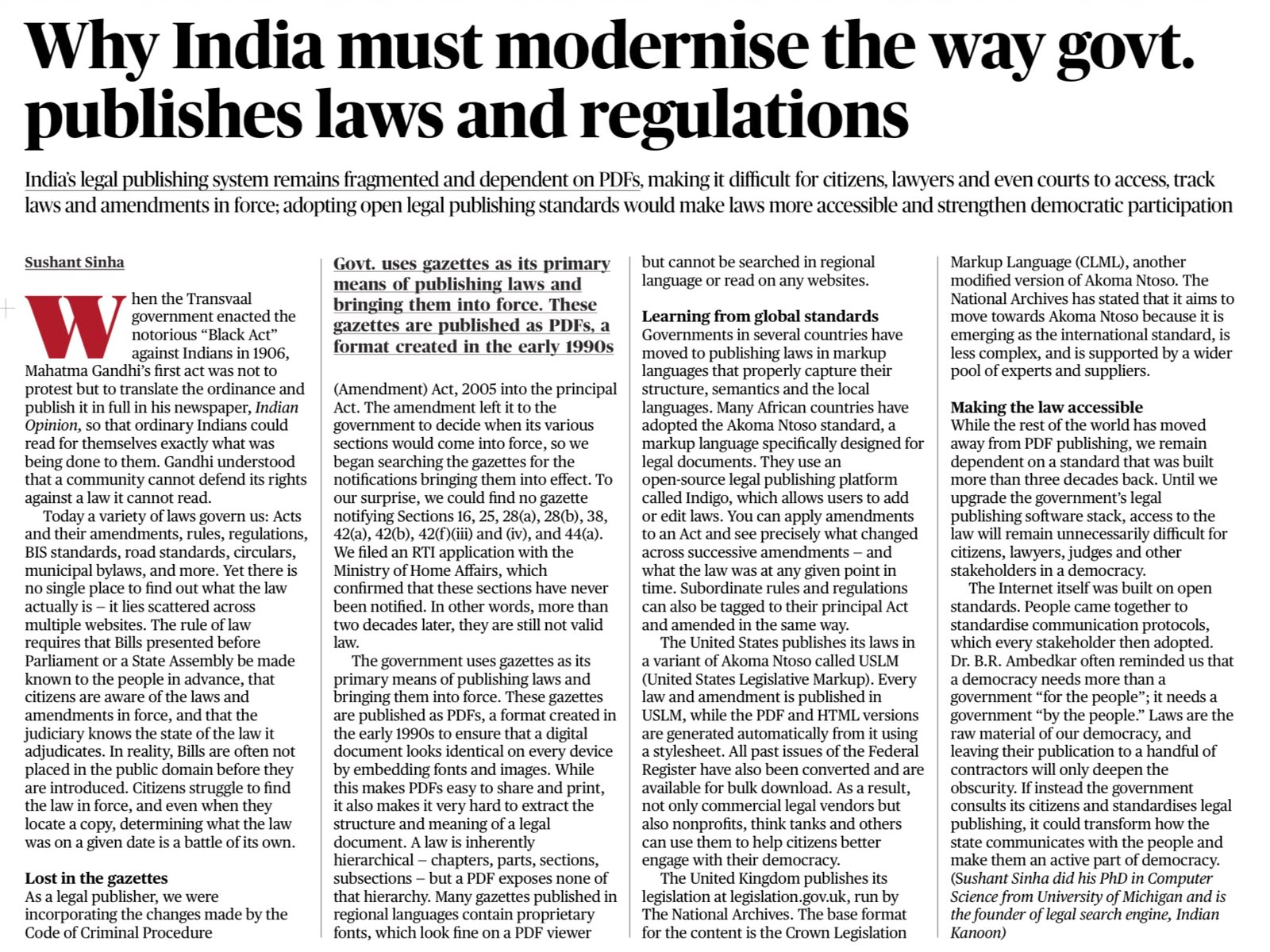
India’s legal publishing system still depends heavily on PDF-based Gazette notifications for publishing laws, rules and regulations.

This makes it difficult to search laws, track amendments and identify the law currently in force. The article argues that India should adopt open and machine-readable legal publishing standards.

Core Problem

Laws, rules, notifications and amendments are scattered across multiple platforms.

Many are published as PDFs, which are not always easy to search, update or cross-reference.

This creates confusion for:

  • Citizens
  • Lawyers
  • Judges
  • Researchers
  • Businesses
  • Government officials

Key Issues

1. Fragmented Legal Information

Legal documents are spread across different websites and departments.

This makes it difficult to find the latest legal position.

2. PDF-Based Publication

Gazette notifications are mostly in PDF format.

PDFs limit searchability, machine readability and automated tracking.

3. Difficulty in Tracking Amendments

It is often difficult to know what the law said earlier, what changed later and what is currently in force.

4. Regional Language Barriers

Regional-language gazettes are often not digitally searchable.

This affects accessibility and inclusive governance.

Proposed Reforms

India should move towards machine-readable legal publishing standards.

This would allow:

  • Searchable laws
  • Updated legal versions
  • Amendment history
  • Cross-linking between Acts and rules
  • Easier access for citizens and institutions
  • Better compliance by businesses

Global Best Practices

Akoma Ntoso

An international open standard for legislative documents.

It helps structure legal text in a machine-readable format.

USLM

United States Legislative Markup is used by the United States for digital legal publication.

legislation.gov.uk

The United Kingdom provides updated and consolidated legislation through a searchable platform.

CLML

India’s National Archives is exploring Common Legislative Markup Language.

Significance

Modernising legal publication can improve:

  • Transparency
  • Legal certainty
  • Judicial efficiency
  • Ease of compliance
  • Rule of law
  • Citizen participation

Key Takeaway

A modern democracy needs laws that are not only passed but also easily accessible, searchable and understandable. Legal publishing reform is essential for transparency and rule of law.

India Defence Production 2026: Key Developments Explained

Context: India defence production 2026
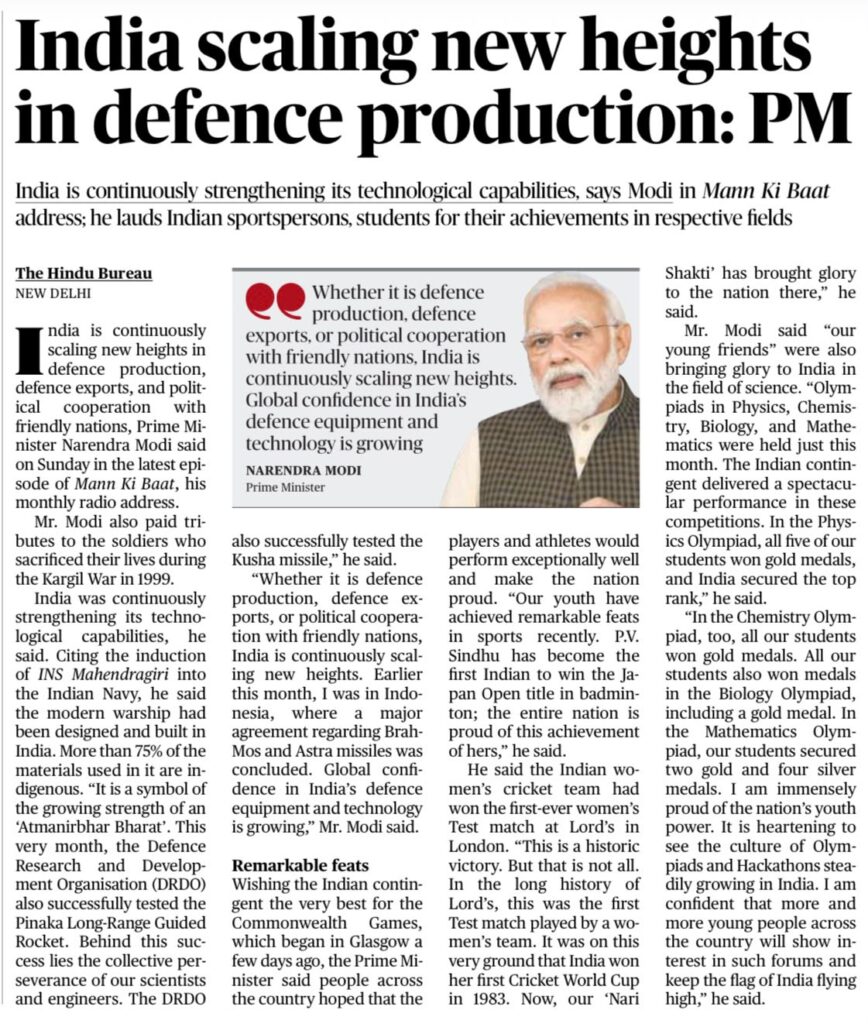
India is strengthening its defence manufacturing and export capabilities under the Aatmanirbhar Bharat initiative.

Recent developments such as indigenous platforms, missile tests and defence cooperation with friendly countries show India’s growing self-reliance and credibility in the defence sector.

India’s Progress in Defence Production

India is focusing on indigenous production, advanced technology and export-oriented defence manufacturing.

This is helping reduce dependence on imports and improve strategic autonomy.

Key Developments

INS Mahendragiri

INS Mahendragiri has been inducted into the Indian Navy.

It has over 75% indigenous content, reflecting progress in domestic shipbuilding and defence manufacturing.

DRDO Missile Tests

DRDO successfully tested:

These tests strengthen India’s indigenous missile and rocket capabilities.

Defence Cooperation with Indonesia

India signed an agreement with Indonesia for cooperation on BrahMos and Akash missiles.

This reflects growing global acceptance of Indian defence platforms.

Global Acceptance

India’s defence equipment and technology are gaining wider international confidence.

This supports India’s ambition to become a defence manufacturing and export hub.

Significance

1. Aatmanirbhar Bharat

Indigenous defence production strengthens self-reliance.

2. Reduced Import Dependence

Domestic manufacturing lowers excessive dependence on foreign suppliers.

3. Military Capability

Advanced indigenous platforms improve operational readiness.

4. Defence Exports

Export of defence systems enhances India’s global strategic footprint.

5. Strategic Partnerships

Defence cooperation with friendly countries strengthens diplomatic and security ties.

Key Takeaway

India’s defence production push is not only about manufacturing weapons. It is about technological self-reliance, strategic autonomy and India’s rise as a credible defence partner.

About the UPSC Civil Services Examination (UPSC CSE)

The UPSC Civil Services Examination (CSE) is one of the most competitive and esteemed examinations in India, conducted by the Union Public Service Commission to recruit officers for services such as the Indian Administrative Service (IAS), Indian Police Service (IPS), Indian Foreign Service (IFS), and others. The exam comprises three stages — Prelims, Mains, and the Personality Test (Interview) — designed to test a candidate’s knowledge, aptitude, decision-making, and leadership skills.

How to Prepare Effectively for UPSC CSE

Cracking the UPSC CSE requires a deep understanding of the syllabus, consistent revision, structured answer writing, and smart test-taking strategies. The Prelims test analytical and conceptual clarity, the Mains focuses on critical thinking, articulation, and subject mastery, while the Interview assesses presence of mind, ethical judgment, and personality traits relevant to public service.

At UnderStand UPSC, we empower aspirants with a personalized and focused approach to each stage of the exam.

Why Choose UnderStand UPSC?

UnderStand UPSC is a mentorship-driven platform offering a clear, clutter-free strategy to tackle the Civil Services Examination. Our programs like Transform (for beginners and intermediate learners) and Conquer (for advanced mains preparation) provide structured study plans, syllabus-wise video content, interactive live sessions, and answer writing support.

We emphasize:

  • Concept clarity through topic-wise lectures

  • Test series designed around real UPSC standards

  • Personalized mentorship in small groups

  • Regular performance tracking and peer benchmarking

  • Doubt-clearing sessions, current affairs analysis, and monthly magazines

Join the UnderStand UPSC Learning Community

Our mission is to make UPSC preparation less overwhelming and more strategic. We combine mentorship, discipline, and academic rigor to help you clear CSE with confidence. Whether you’re preparing from Delhi, Mumbai, Bangalore, or a remote village — our online-first model ensures quality guidance reaches every corner of India.

Join the thousands of aspirants who trust UnderStand UPSC to guide their journey toward becoming civil servants.

Stay connected with us through our Telegram, YouTube, and Instagram channels for daily tips, strategies, and updates.

Copyright © 2026 USARAMBHA EDUCATION (UnderStand UPSC). All Rights Reserved.

Fill out the form

Fill out the form for

Downloading the free Agriculture Short Notes