
Coal Exchanges in India: Coal Exchange Rules 2026, Coal Sector Reforms & MMDR Act Explained for UPSC
Context: Coal Exchanges in India
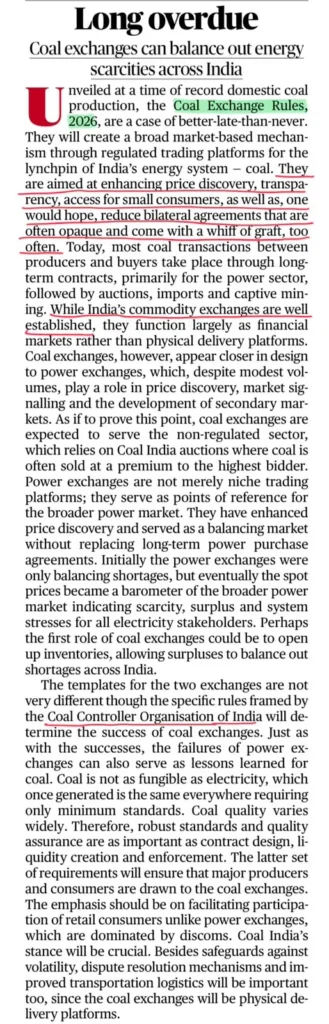
Coal Exchange Rules, 2026 were notified under the Mines and Minerals (Development and Regulation) Amendment Act, 2025 to establish regulated Coal Exchanges for market-based coal trading.
Why this Reform?
India’s coal sector has largely operated through:
- Long-term contracts
- Auctions
- Administrative allocation
Coal Exchanges aim to introduce:
- Transparent price discovery
- Competition
- Efficient allocation
- Wider market-based access to coal
Coal Exchange
A Coal Exchange is a regulated platform where multiple buyers and sellers trade coal, similar to power exchanges.
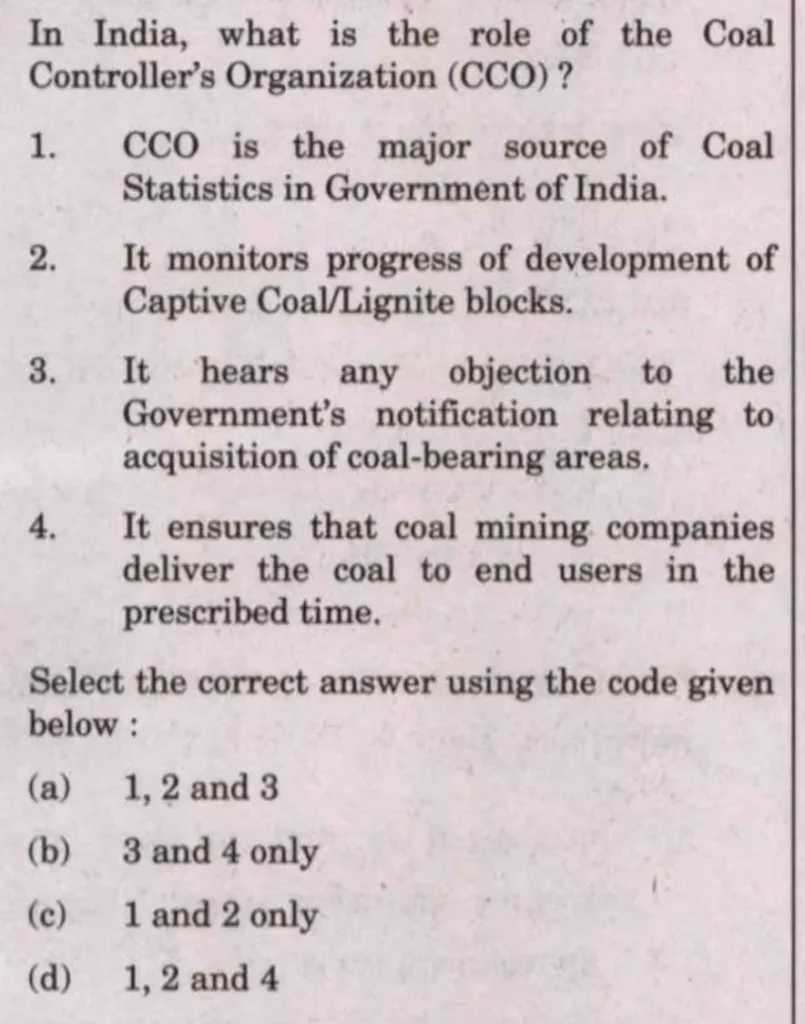
Coal Controller Organisation
Status
- Non-statutory office under the Ministry of Coal.
Functions of Coal Controller Organisation
- Coal statistics
- Coal grading
- Quality surveillance
- Monitoring captive coal / lignite blocks
- Regulation of Coal Exchanges
Legal Framework
MMDR Act, 1957
- Principal law governing mining.
- States auction most onshore mineral blocks and grant leases.
- Centre notifies minerals and frames rules.
Coal Mines Special Provisions Act, 2015
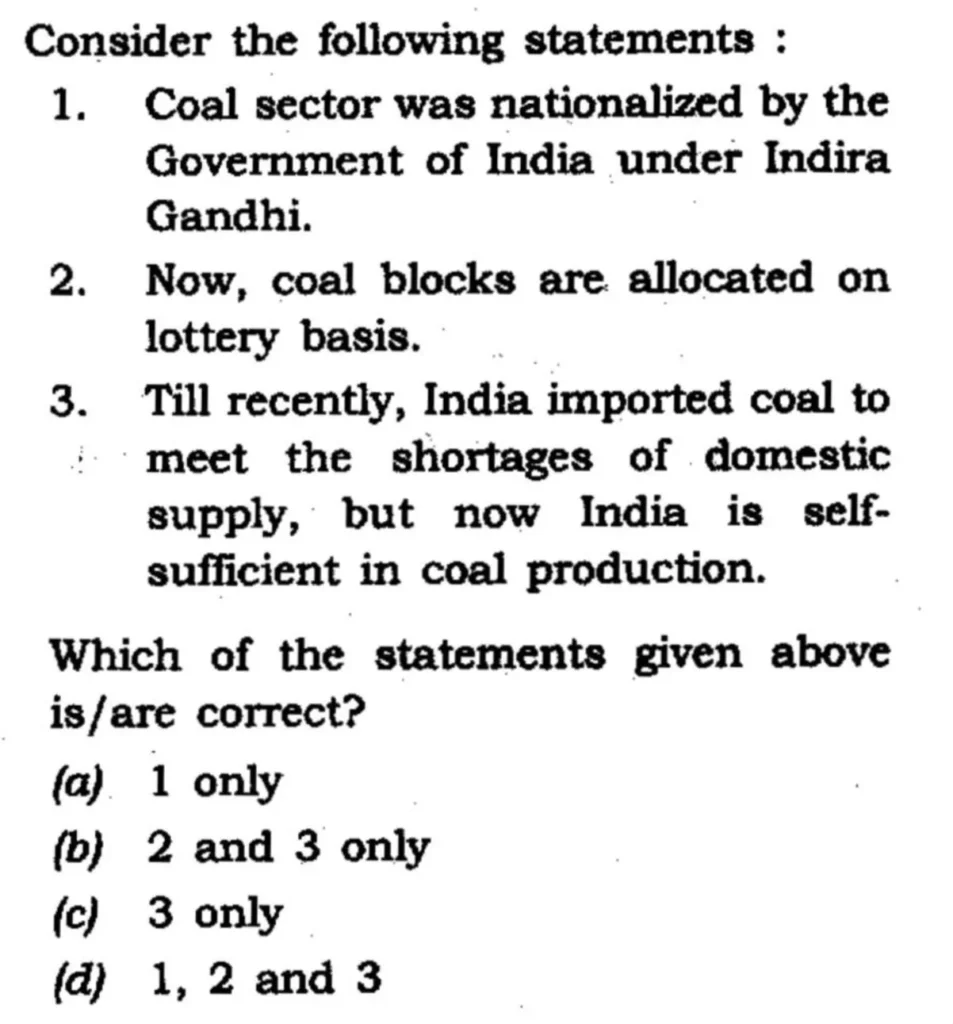
- Introduced auction-based allocation of coal blocks.
Coal Sector Reforms Timeline
Private Mining
→ Nationalisation
→ Coal India Limited, 1975
→ Coal Block Auctions, 2015
→ Commercial Coal Mining, 2020
→ Coal Exchanges, 2026
Nationalisation of Coal
Coking Coal Mines Nationalisation Act, 1972
Coal Mines Nationalisation Act, 1973
Prelims Facts
- China is the world’s largest producer and consumer of coal.
- India ranks 2nd in coal production and consumption.
- USA has the world’s largest coal reserves.
- India ranks 5th in coal reserves, around 401 billion tonnes.
- India’s annual coal production has crossed 1 billion tonnes.
- Coal India Limited contributes about 75% of domestic coal production.
- Coal-based thermal power plants generate nearly 75% of India’s electricity.
- India imports coal mainly for coking coal used in the steel industry.
Coal Quality Sequence
Anthracite → Bituminous → Lignite → Peat
This is the decreasing order of carbon content and calorific value.