22 June 2026 | Daily Current Affairs

India Statistical Databases Upgrade and New Base Years

Context: India Statistical Databases Upgrade
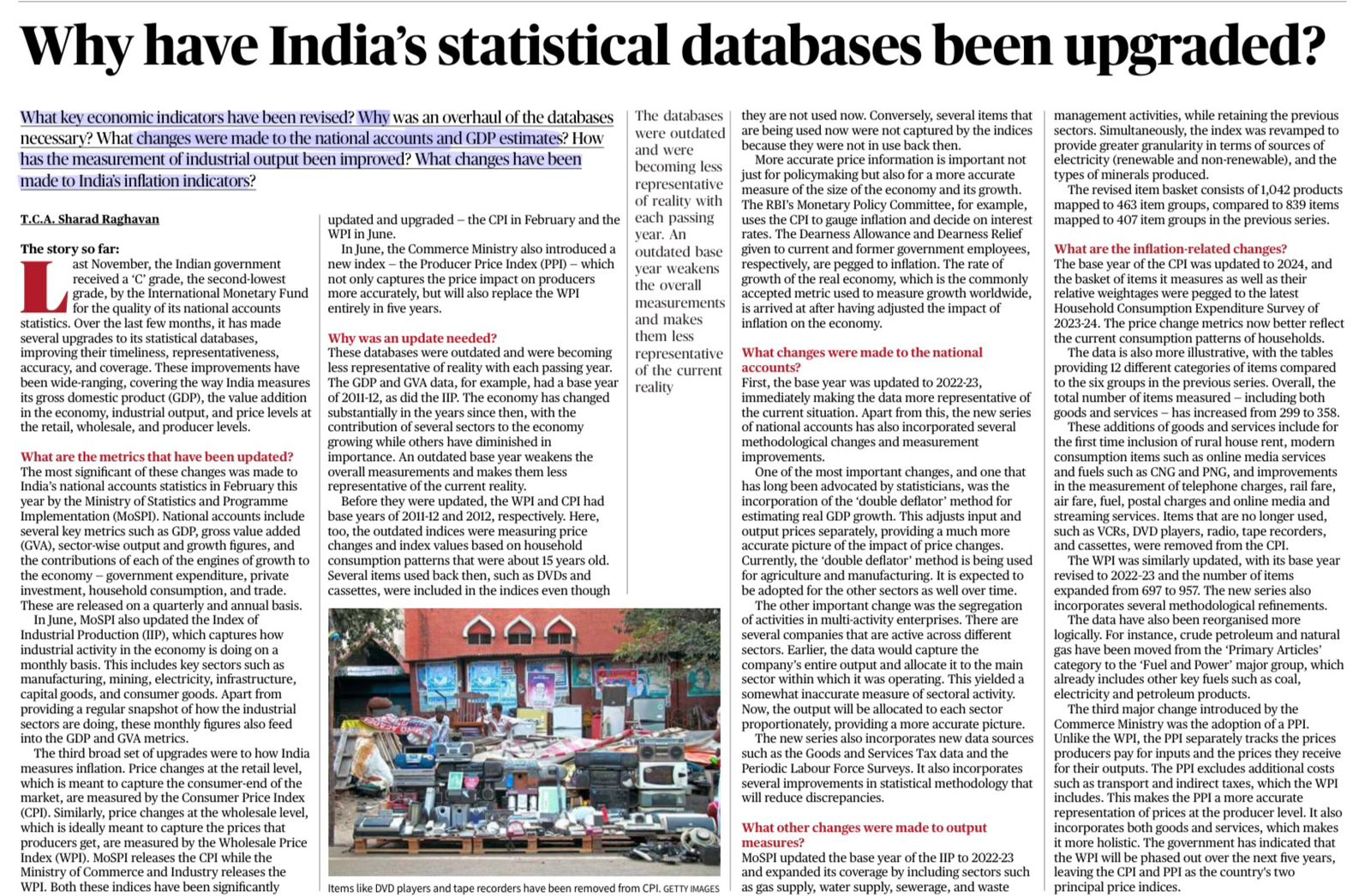
India has upgraded major statistical databases covering GDP, GVA, IIP, CPI and WPI to improve accuracy, representativeness and policy relevance.

The reforms follow the International Monetary Fund’s upgrade of India’s national accounts statistics to Grade A, the second-highest category.

Important Facts

Gross Domestic Product

GDP means the total value of final goods and services produced within India.

Base Year

  • Earlier: 2011–12
  • New: 2022–23

Gross Value Added

GVA means value of output minus intermediate consumption.

Base Year

  • Earlier: 2011–12
  • New: 2022–23

Index of Industrial Production

IIP measures industrial output in:

  • Manufacturing
  • Mining
  • Electricity

Base Year

  • Earlier: 2011–12
  • New: 2022–23

Consumer Price Index

CPI measures retail inflation.

It is the inflation-targeting benchmark of the Reserve Bank of India.

Base Year

  • Earlier: 2012
  • New: 2024

Wholesale Price Index

WPI measures wholesale-level inflation.

Base Year

  • Earlier: 2011–12
  • New: 2022–23

Producer Price Index

PPI measures prices received by producers for goods and services.

It has been newly introduced and is expected to gradually replace WPI.

Why Was the Revision Needed?

  • Existing databases no longer reflected current production and consumption patterns.
  • Rapid expansion of the digital economy and services sector was under-represented.
  • Obsolete products remained in indices.
  • Several new products and services were excluded.
  • Outdated base years reduced the accuracy of GDP, inflation and industrial output estimates.

Major Improvements

GDP / GVA

IIP

  • Improved sectoral coverage.
  • Better product basket.
  • Improved electricity classification.

CPI

  • Based on Household Consumption Expenditure Survey 2023–24.
  • Includes digital and modern consumption items.

WPI

  • Expanded product basket.
  • Improved classification.

PPI

  • Separately captures producer-level input and output prices.

Significance

  • More accurate measurement of economic growth and inflation.
  • Better monetary policy decisions by the Monetary Policy Committee.
  • Improved fiscal planning.
  • Improved welfare targeting.
  • Stronger evidence-based policymaking.
  • Better international comparability.
India Statistical Databases Upgrade

Right to Vote Fundamental Right: Constitutional Debate

Context: Right to Vote Fundamental Right
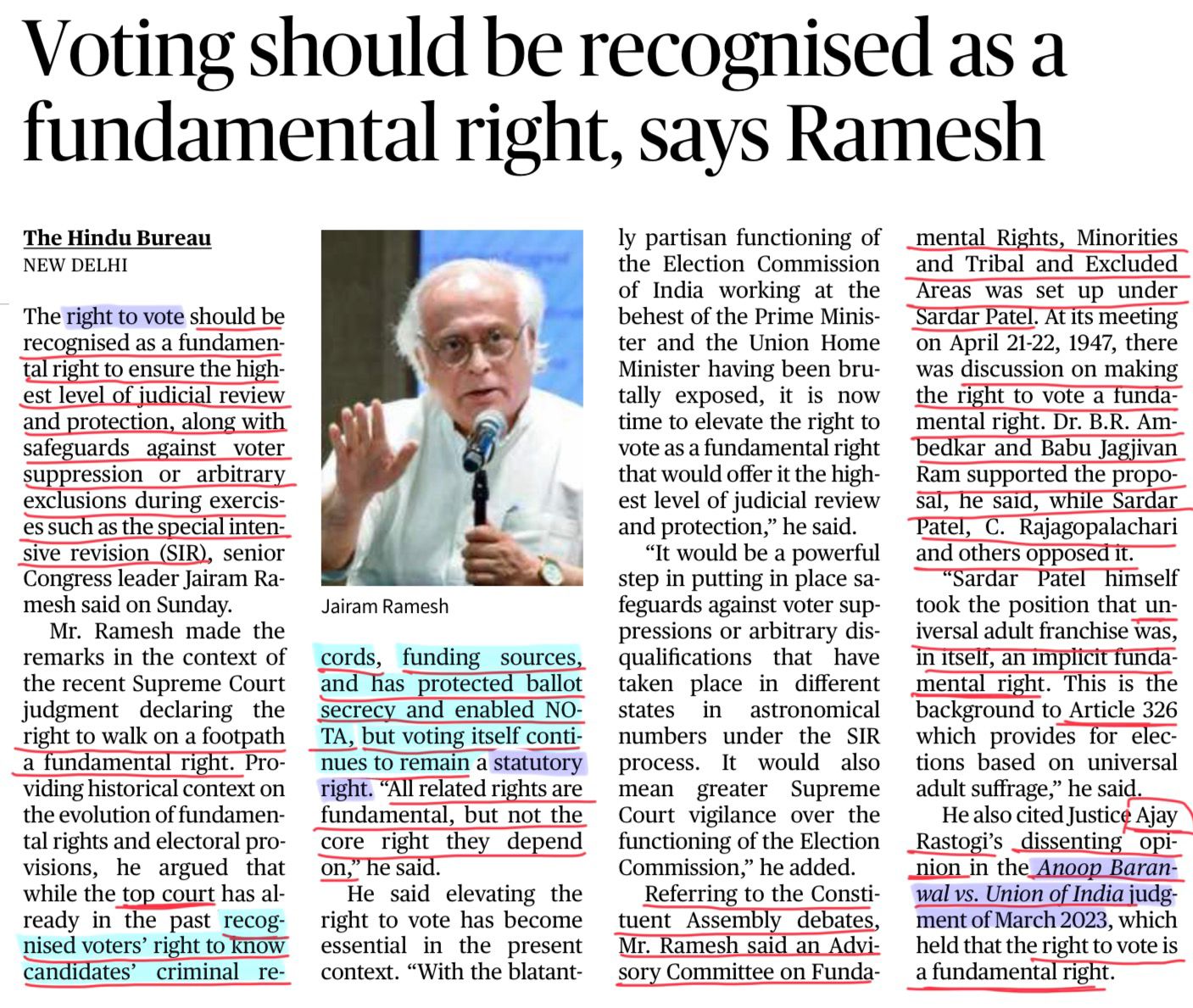
Congress leader Jairam Ramesh demanded that the Right to Vote be recognised as a Fundamental Right, arguing that stronger constitutional protection is needed against voter exclusion and arbitrary electoral processes.

Core Constitutional Provisions

Article 324

  • Gives the Election Commission of India superintendence, direction and control over elections.

Article 326

Article 327

  • Empowers Parliament to make laws relating to elections.

Laws Made Under Article 327

Representation of the People Act, 1950

  • Deals with electoral rolls and voter registration.

Representation of the People Act, 1951

  • Deals with conduct of elections, qualifications, disqualifications and election disputes.

Nature of Voting Rights in India

Article 326

  • Constitutional foundation of voting.

RPA 1950 and RPA 1951

  • Statutory mechanism for voting and elections.

Article 19(1)(a)

  • Basis for Right to Know candidate information and None of the Above.

Election Commissioner Appointment

Anoop Baranwal v. Union of India, 2023

Chief Election Commissioner and Other Election Commissioners Act, 2023

  • Appointment committee now consists of:
    • Prime Minister
    • Leader of Opposition
    • Union Cabinet Minister nominated by Prime Minister

Constituent Assembly Debate on Right to Vote

Supported by

  • Dr. B.R. Ambedkar
  • Babu Jagjivan Ram

Opposed by

Patel’s View

Universal Adult Franchise itself was considered a sufficient democratic safeguard, so a separate Fundamental Right was seen as unnecessary.

As a result, voting was placed under Article 326, not under Part III of the Constitution.

Supreme Court-led Electoral Reforms

Indira Nehru Gandhi v. Raj Narain, 1975

Association for Democratic Reforms Case, 2002

  • Candidate disclosure of criminal cases, assets and educational qualifications.

PUCL, 2003

  • Right to Know recognised under Article 19(1)(a).

PUCL, 2013

  • NOTA and ballot secrecy.

Lily Thomas v. Union of India, 2013

  • Immediate disqualification upon conviction.

Public Interest Foundation v. Union of India, 2018

  • Wider disclosure of criminal antecedents.

Anoop Baranwal v. Union of India, 2023

  • Independent appointment process for Election Commissioners.

Final Supreme Court Position

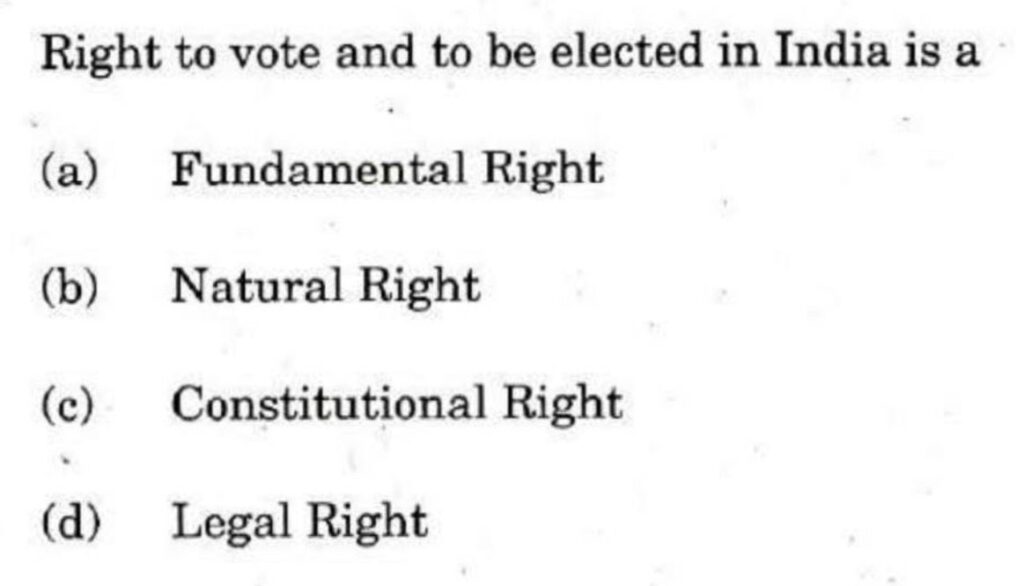
The Supreme Court position through cases such as N.P. Ponnuswami, 1952, Jyoti Basu, 1982 and Kuldip Nayar, 2006 is that the Right to Vote is not a Fundamental Right.

It is a Statutory Right, though rooted in Article 326.

Right to Vote Fundamental Right

Super El Niño Impact India and Monsoon Concerns

Context: Super El Niño Impact India
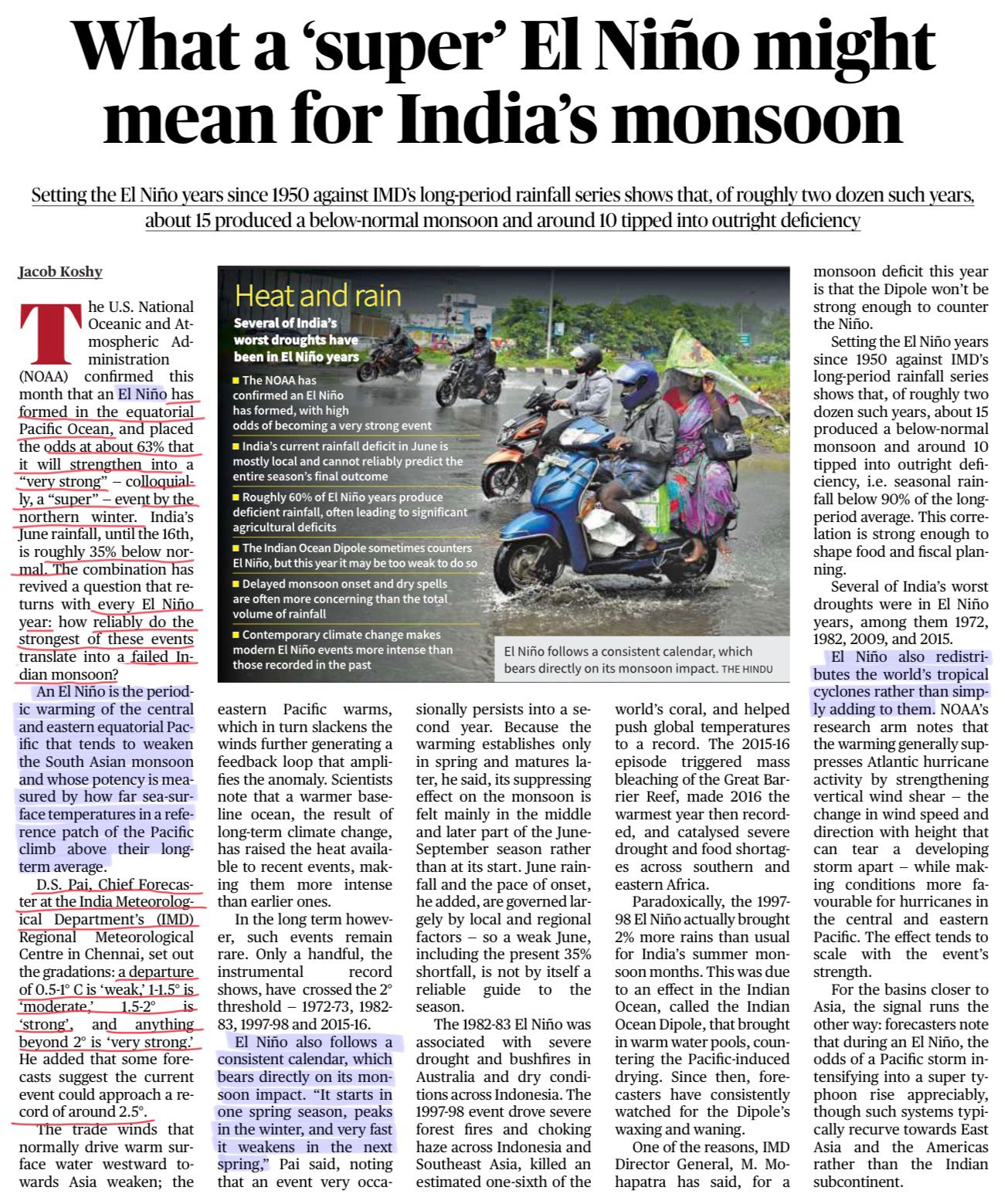
The National Oceanic and Atmospheric Administration, USA, confirmed El Niño conditions in the equatorial Pacific Ocean and estimated a 63% probability of it strengthening into a strong or “super” event, raising concerns over India’s southwest monsoon.

El Niño–Southern Oscillation

ENSO is an ocean-atmosphere phenomenon over the equatorial Pacific Ocean that affects global weather and monsoons.

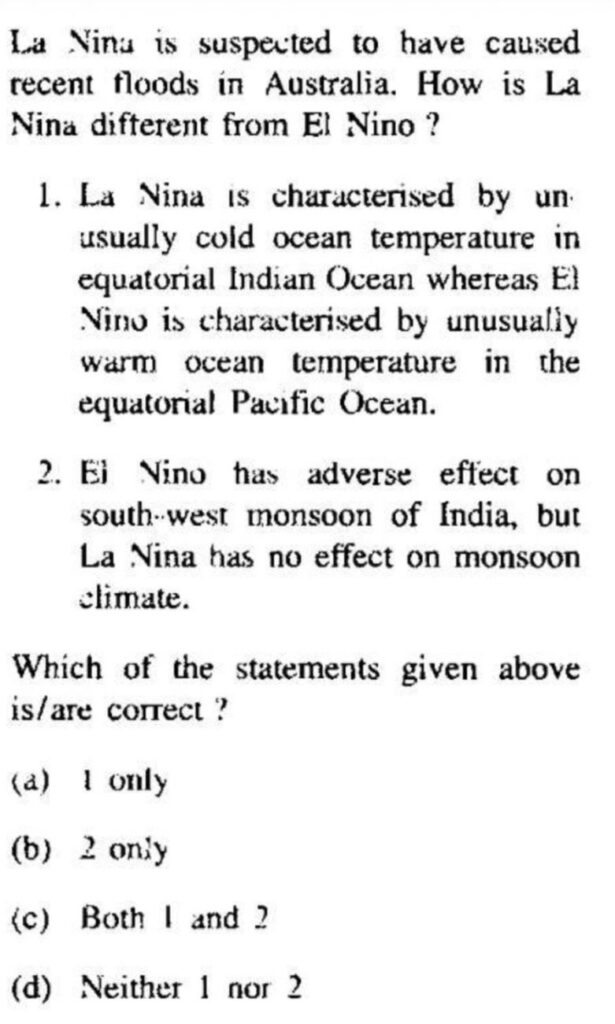
El Niño

El Niño refers to abnormal warming of Sea Surface Temperature in the central-eastern equatorial Pacific Ocean.

Impact

  • Weakens trade winds.
  • Generally weakens the Indian monsoon.
  • Can lead to deficient rainfall and drought-like conditions.

La Niña

La Niña refers to abnormal cooling of Sea Surface Temperature in the central-eastern equatorial Pacific Ocean.

Impact

  • Strengthens trade winds.
  • Generally strengthens the Indian monsoon.
  • Can lead to above-normal rainfall and floods.

IMD Classification Based on SST Anomaly

Weak El Niño

  • +0.5°C to less than +1°C

Moderate El Niño

  • +1°C to less than +1.5°C

Strong El Niño

  • +1.5°C to less than +2°C

Very Strong / Super El Niño

  • 2°C or above

Impact on India

El Niño

  • Around 60% of El Niño years are associated with deficient monsoon rainfall.
  • Since 1950, nearly 15 El Niño years recorded below-normal rainfall.
  • Around 10 El Niño years resulted in drought conditions.

Associated Effects

  • Delayed monsoon onset
  • Prolonged dry spells
  • Lower agricultural output
  • Food inflation
  • Water stress

Major Drought Years Linked to El Niño

  • 1972
  • 1982
  • 2009
  • 2015

La Niña

Generally linked with:

  • Above-normal monsoon rainfall
  • Higher agricultural output
  • Groundwater recharge
  • Better reservoir storage
  • Higher flood risk in some regions

Indian Ocean Dipole

Positive Indian Ocean Dipole can offset El Niño effects.

Example:

  • 1997–98 El Niño did not significantly weaken India’s monsoon.

Climate Change Link

Warmer oceans may intensify future El Niño events and amplify impacts on:

  • Agriculture
  • Water security
  • Food prices
  • Disaster risks
Super El Niño Impact India

Biochar Benefits for Agriculture and Climate Action

Context: Biochar Benefits for Agriculture
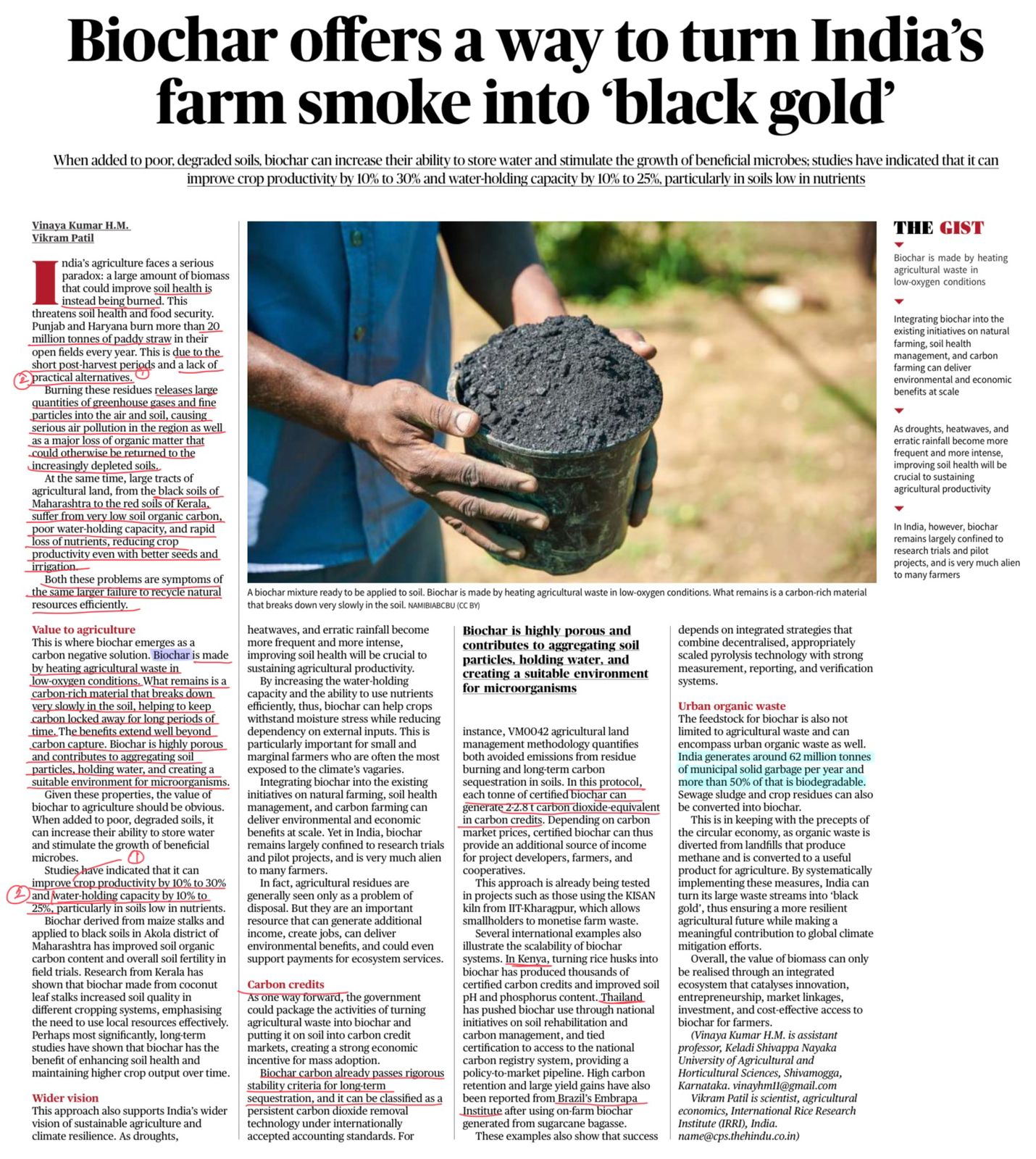
Biochar is emerging as a sustainable solution to India’s crop-residue burning problem by converting agricultural waste into a carbon-rich soil amendment.

It offers a triple benefit:

  • Improving soil health
  • Enhancing farm productivity
  • Supporting climate-change mitigation

Biochar

Biochar is a carbon-rich material produced through pyrolysis.

Pyrolysis

Pyrolysis means heating biomass in low-oxygen conditions.

Biomass Used

  • Crop residues
  • Organic waste
  • Bagasse
  • Coconut waste
  • Other biodegradable waste

Why Biochar Is Different From Open Burning

Unlike open burning, carbon remains locked in a stable form for decades.

This makes biochar a long-term carbon sink.

Key Property

Biochar is highly porous.

This enables:

  • Water retention
  • Nutrient storage
  • Microbial growth

Significance / Applications

1. Soil Health

Biochar improves:

  • Soil organic carbon
  • Nutrient retention
  • Microbial activity
  • Water-holding capacity by 10–25%

2. Agricultural Productivity

Biochar can:

  • Increase crop yields by 10–30%
  • Improve drought resilience
  • Improve moisture availability
  • Improve soil fertility and organic carbon, especially in black-soil regions

3. Climate Action

Biochar:

  • Reduces emissions from stubble burning
  • Is recognised as a Carbon Dioxide Removal technology
  • Can generate carbon credits

Carbon Credit Value

1 tonne of certified biochar can generate 2–2.8 tonnes of carbon dioxide-equivalent carbon credits.

4. Farmer Income

Biochar converts crop residue into a value-added product.

It can create additional revenue opportunities through carbon-credit markets.

5. Circular Economy

Biochar helps utilise:

  • Crop residue
  • Sewage sludge
  • Biodegradable urban waste

Municipal Solid Waste Link

India generates about 62 million tonnes of municipal solid waste annually, with over 50% biodegradable.

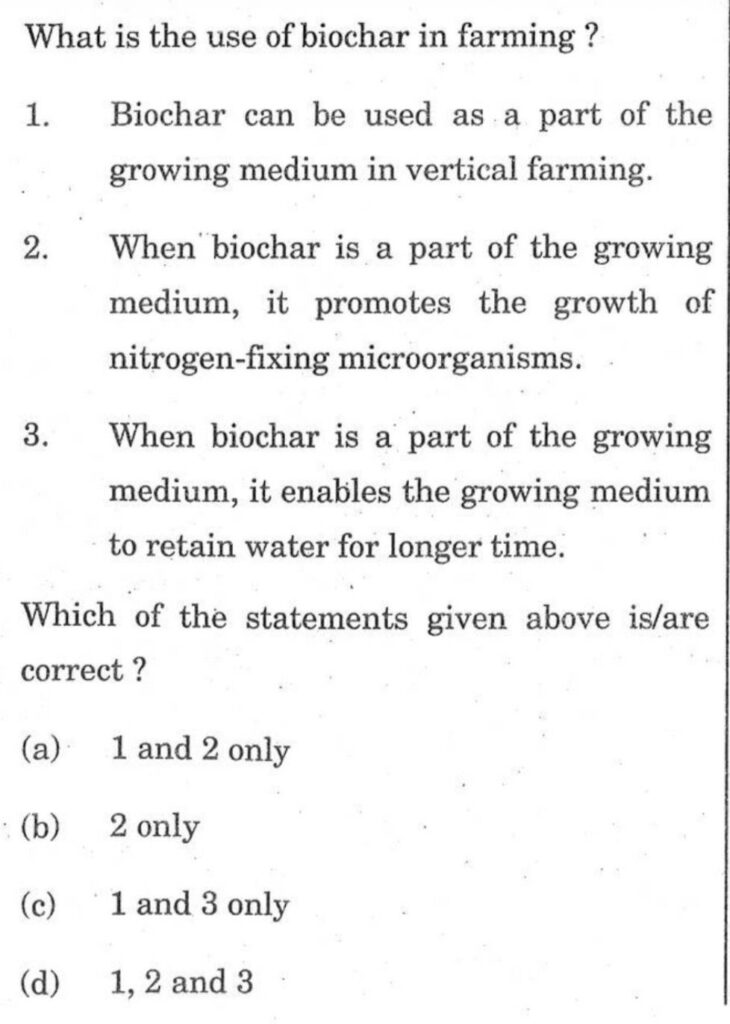
PYQ Link

Biochar can be used in farming because it:

  • Can be part of growing medium in vertical farming.
  • Promotes the growth of nitrogen-fixing microorganisms.
  • Helps the growing medium retain water for longer.
Biochar Benefits for Agriculture

Google Project Nimbus Explained for UPSC Preparation

Context: Google Project Nimbus Explained
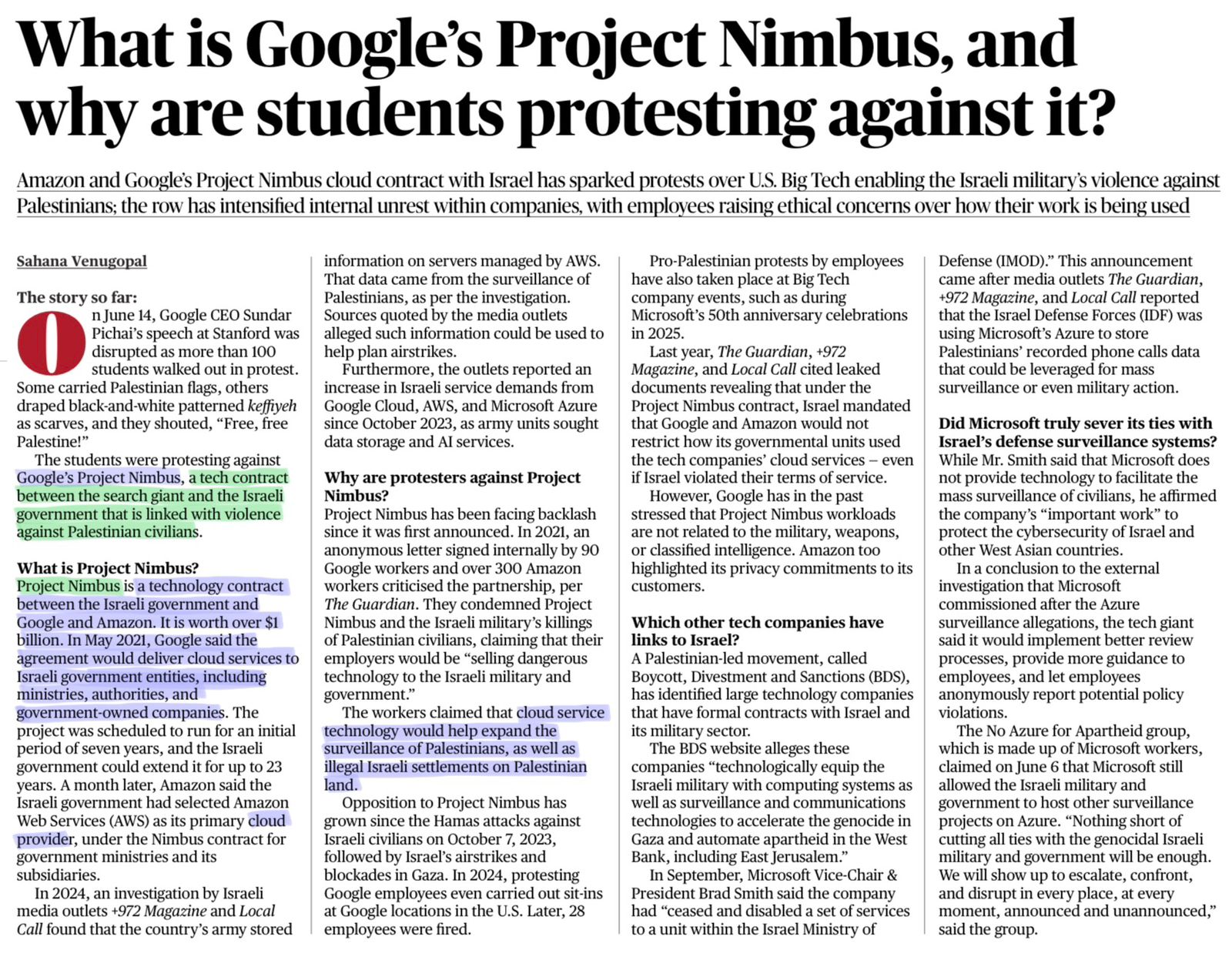
Project Nimbus, a $1.2 billion cloud-services contract between Israel, Google Cloud and Amazon Web Services, has triggered protests over the alleged use of cloud and Artificial Intelligence technologies in surveillance and security operations.

Cloud Computing

Cloud computing means delivery of computing resources over the internet instead of local devices.

Cloud Resources Include

  • Servers
  • Storage
  • Databases
  • Software
  • Artificial Intelligence services

Examples

  • Google Drive
  • Amazon Web Services
  • Microsoft Azure
  • Microsoft 365

Types of Cloud Services

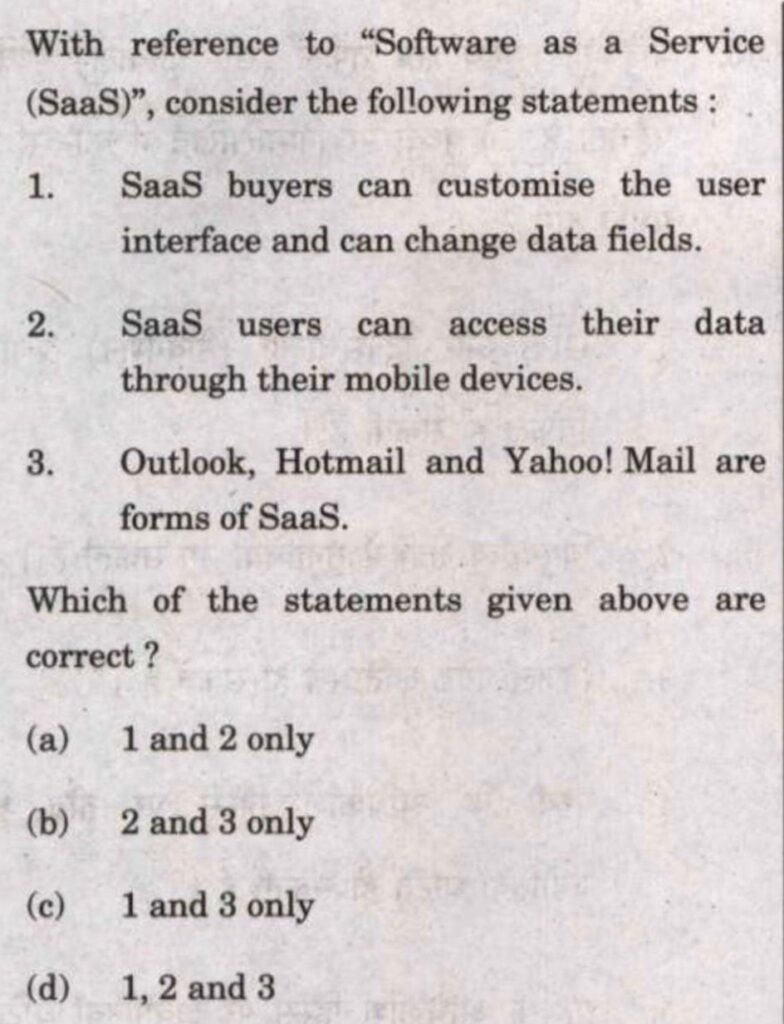
Software as a Service

Ready-to-use software over the internet.

Examples

  • Gmail
  • Google Docs
  • Microsoft 365

Platform as a Service

Platform for developing, testing and deploying applications.

Examples

  • Google App Engine
  • Microsoft Azure App Services

Infrastructure as a Service

Virtual servers, storage and networking infrastructure.

Examples

  • Amazon Web Services
  • Google Compute Engine
  • Microsoft Azure

Project Nimbus

Project Nimbus provides:

  • Cloud infrastructure
  • Storage
  • Computing power
  • Artificial Intelligence services

to Israeli government entities.

Why Are Students Protesting?

Students and activists argue that cloud and AI tools may be used in:

  • Surveillance
  • Military operations
  • Security monitoring
  • Data processing linked to conflict zones

Significance / Applications of Cloud Computing

Governance

  • E-governance
  • Digital Public Infrastructure
  • Public-service delivery

Business and Economy

  • Reduces infrastructure costs.
  • Enables scalable computing.
  • Supports digital innovation.

Artificial Intelligence

Supports:

Defence and Security

Supports:

  • Real-time data processing
  • Intelligence analysis
  • Secure data storage

Education and Research

Supports:

  • Remote learning
  • Collaboration
  • High-performance computing
Google Project Nimbus Explained

Further Investigation Court Permission: Supreme Court

Context: Further Investigation Court Permission
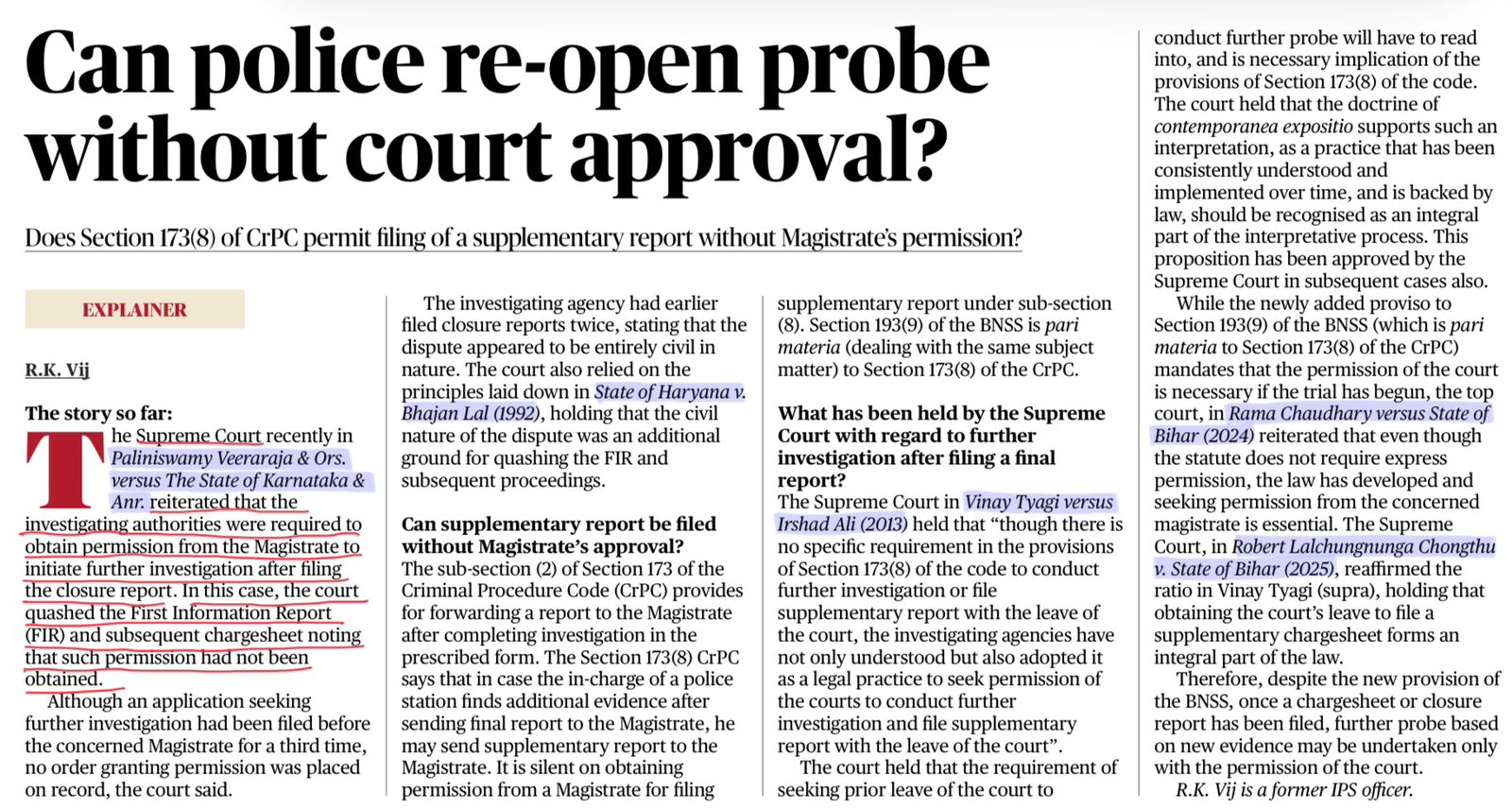
In Paliswamy Veeraraja v. State of Karnataka, 2026, the Supreme Court held that after filing a closure report or chargesheet, further investigation cannot be conducted without prior permission of the concerned Magistrate.

Legal Basis

Section 173(8), Criminal Procedure Code, 1973

  • Permits further investigation and filing of a supplementary report after submission of the final report.

Section 193(9), Bharatiya Nagarik Suraksha Sanhita, 2023

  • Provides for further investigation and supplementary report after submission of the final report.

Important Point

The provisions are silent on court permission.

However, judicial interpretation has evolved to require prior permission of the Magistrate.

Supreme Court Position

The consistent position has evolved through:

  • Vinay Tyagi v. Irshad Ali, 2013
  • Rama Chaudhary v. State of Bihar, 2024
  • Robert Lalchungnunga Chongthu v. State of Bihar, 2025
  • Paliswamy Veeraraja v. State of Karnataka, 2026

Final Position

Further investigation is permissible.

But prior permission of the Magistrate is required before filing a supplementary chargesheet or supplementary report.

Related Terms / PYQ Linkage

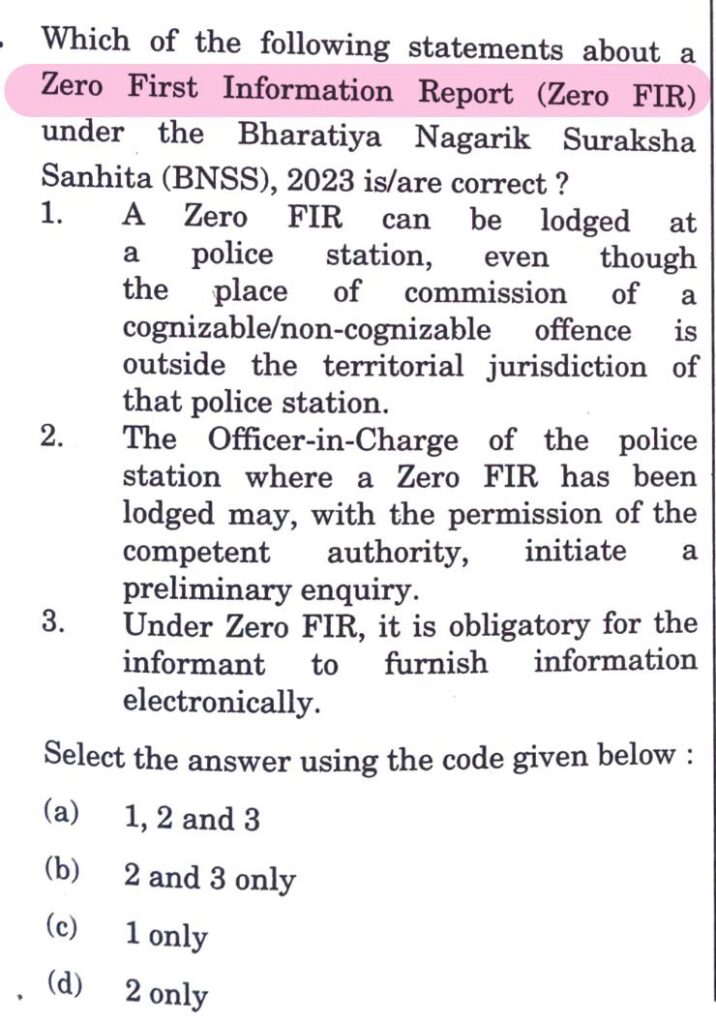
Zero First Information Report

Zero FIR can be lodged at any police station irrespective of territorial jurisdiction.

It is later transferred to the competent police station.

Electronic First Information Report

e-FIR enables electronic reporting of cognizable offences for faster access to justice.

Further Investigation Court Permission
About the UPSC Civil Services Examination (UPSC CSE)

The UPSC Civil Services Examination (CSE) is one of the most competitive and esteemed examinations in India, conducted by the Union Public Service Commission to recruit officers for services such as the Indian Administrative Service (IAS), Indian Police Service (IPS), Indian Foreign Service (IFS), and others. The exam comprises three stages — Prelims, Mains, and the Personality Test (Interview) — designed to test a candidate’s knowledge, aptitude, decision-making, and leadership skills.


How to Prepare Effectively for UPSC CSE

Cracking the UPSC CSE requires a deep understanding of the syllabus, consistent revision, structured answer writing, and smart test-taking strategies. The Prelims test analytical and conceptual clarity, the Mains focuses on critical thinking, articulation, and subject mastery, while the Interview assesses presence of mind, ethical judgment, and personality traits relevant to public service.

At UnderStand UPSC, we empower aspirants with a personalized and focused approach to each stage of the exam.


Why Choose UnderStand UPSC?

UnderStand UPSC is a mentorship-driven platform offering a clear, clutter-free strategy to tackle the Civil Services Examination. Our programs like Transform (for beginners and intermediate learners) and Conquer (for advanced mains preparation) provide structured study plans, syllabus-wise video content, interactive live sessions, and answer writing support.

We emphasize:

  • Concept clarity through topic-wise lectures

  • Test series designed around real UPSC standards

  • Personalized mentorship in small groups

  • Regular performance tracking and peer benchmarking

  • Doubt-clearing sessions, current affairs analysis, and monthly magazines


Join the UnderStand UPSC Learning Community

Our mission is to make UPSC preparation less overwhelming and more strategic. We combine mentorship, discipline, and academic rigor to help you clear CSE with confidence. Whether you’re preparing from Delhi, Mumbai, Bangalore, or a remote village — our online-first model ensures quality guidance reaches every corner of India.

Join the thousands of aspirants who trust UnderStand UPSC to guide their journey toward becoming civil servants.

Stay connected with us through our Telegram, YouTube, and Instagram channels for daily tips, strategies, and updates.

Copyright © 2026 USARAMBHA EDUCATION (UnderStand UPSC). All Rights Reserved.

Fill out the form for

Downloading the free Agriculture Short Notes


Fill out the form

If you have any queries related to
Our Programs We Offer