26 Feb 2026 | Daily Current Affairs

U.S. 126% Duty on Indian Solar Imports – WTO Rules, CVD & AD Explained for UPSC

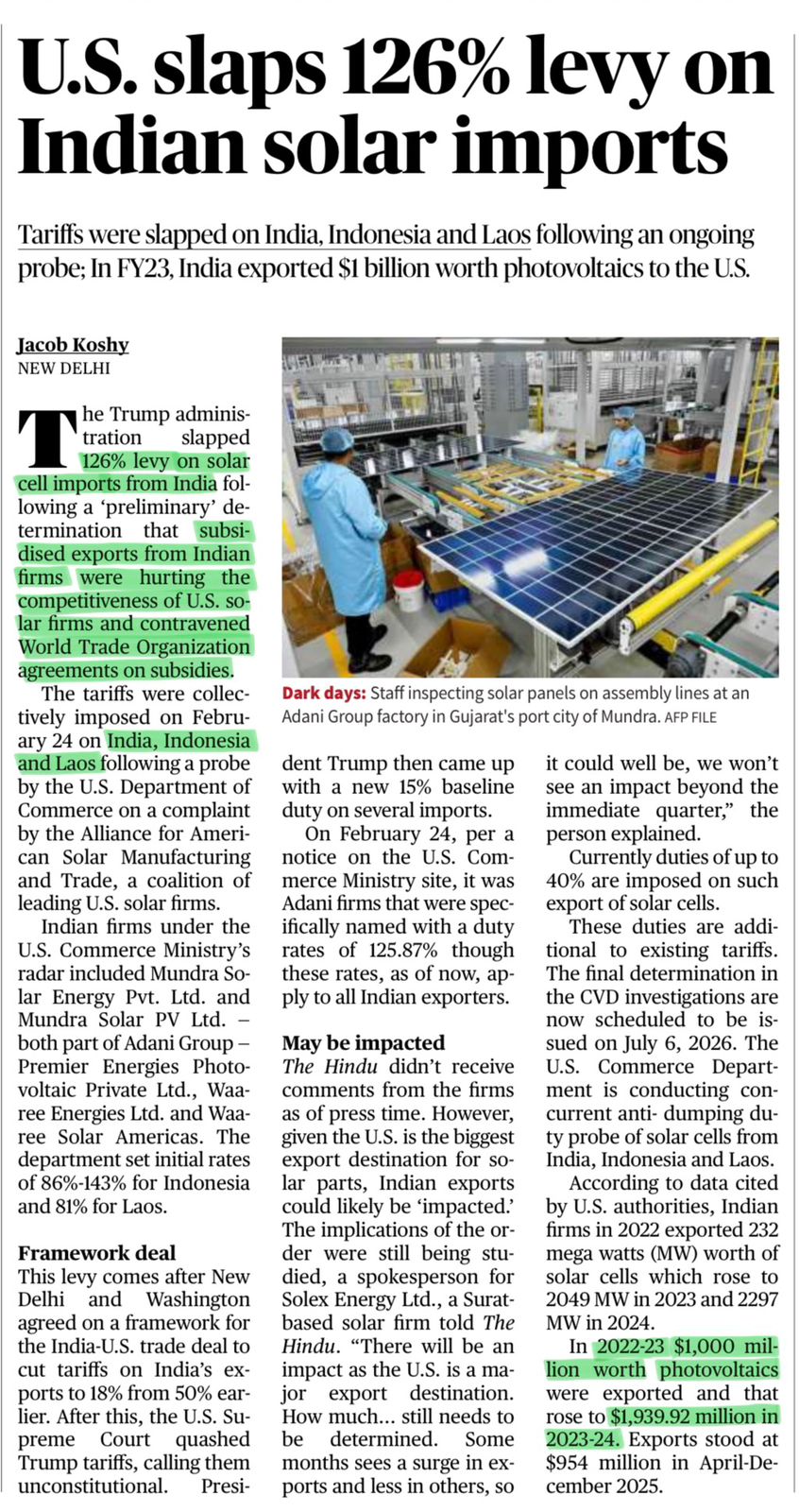
U.S. 126% Duty on Indian Solar Imports

1) Context:

U.S. imposed ~126% duty on Indian solar cells after a preliminary probe found subsidised exports harming U.S. manufacturers; complaint by the Alliance for American Solar Manufacturing and Trade; similar action on Indonesia and Laos.

2) Legal Basis:

Under U.S. trade remedy laws consistent with World Trade Organization rules.

• Countervailing Duty (CVD): Imposed to offset financial subsidies given by a foreign government to its exporters.
• Anti-Dumping Duty (AD): Imposed when goods are exported at prices lower than their normal value (below fair market price).

3) What India Exports:

Solar cells, solar modules (panels), photovoltaic components; ~$1 billion exported to U.S. in FY23.

4) Photovoltaics (PV):

Technology converting sunlight directly into electricity using semiconductors (usually silicon); basic unit = solar cell; cells combine to form modules/panels.

5) Global Export Position:

Top exporters — China (dominant), Vietnam, Malaysia, Thailand; India ranks outside top 10 but is among leading countries in installed solar capacity.
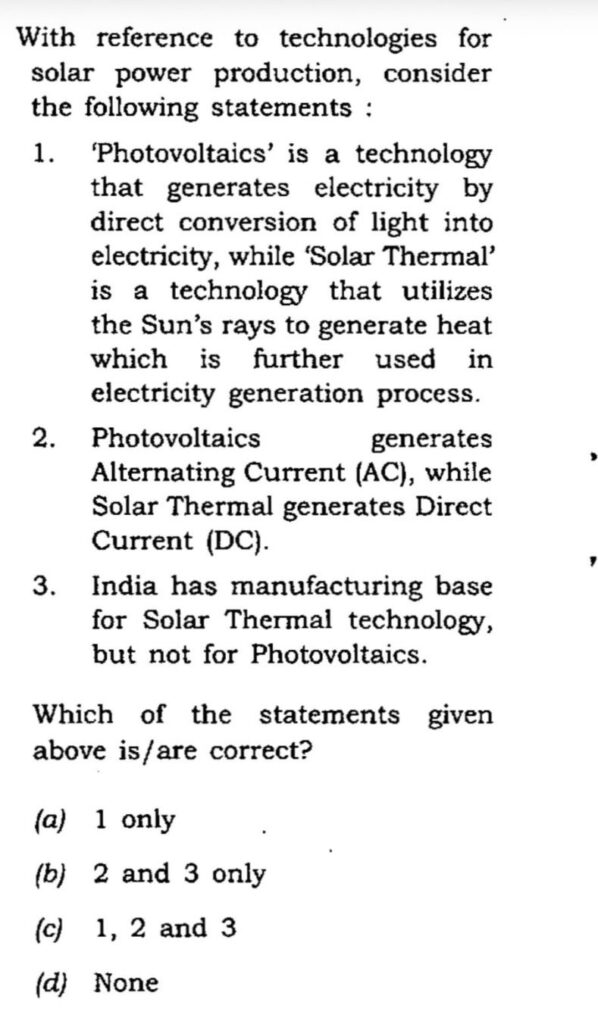
U.S. 126% Duty on Indian Solar Imports
PYQ – 2014, Ans – A

SC Suo Motu Case Over NCERT Textbook – Articles 32, 129 & 142 Explained for UPSC

SC Suo Motu Case Over NCERT Textbook

1) Context

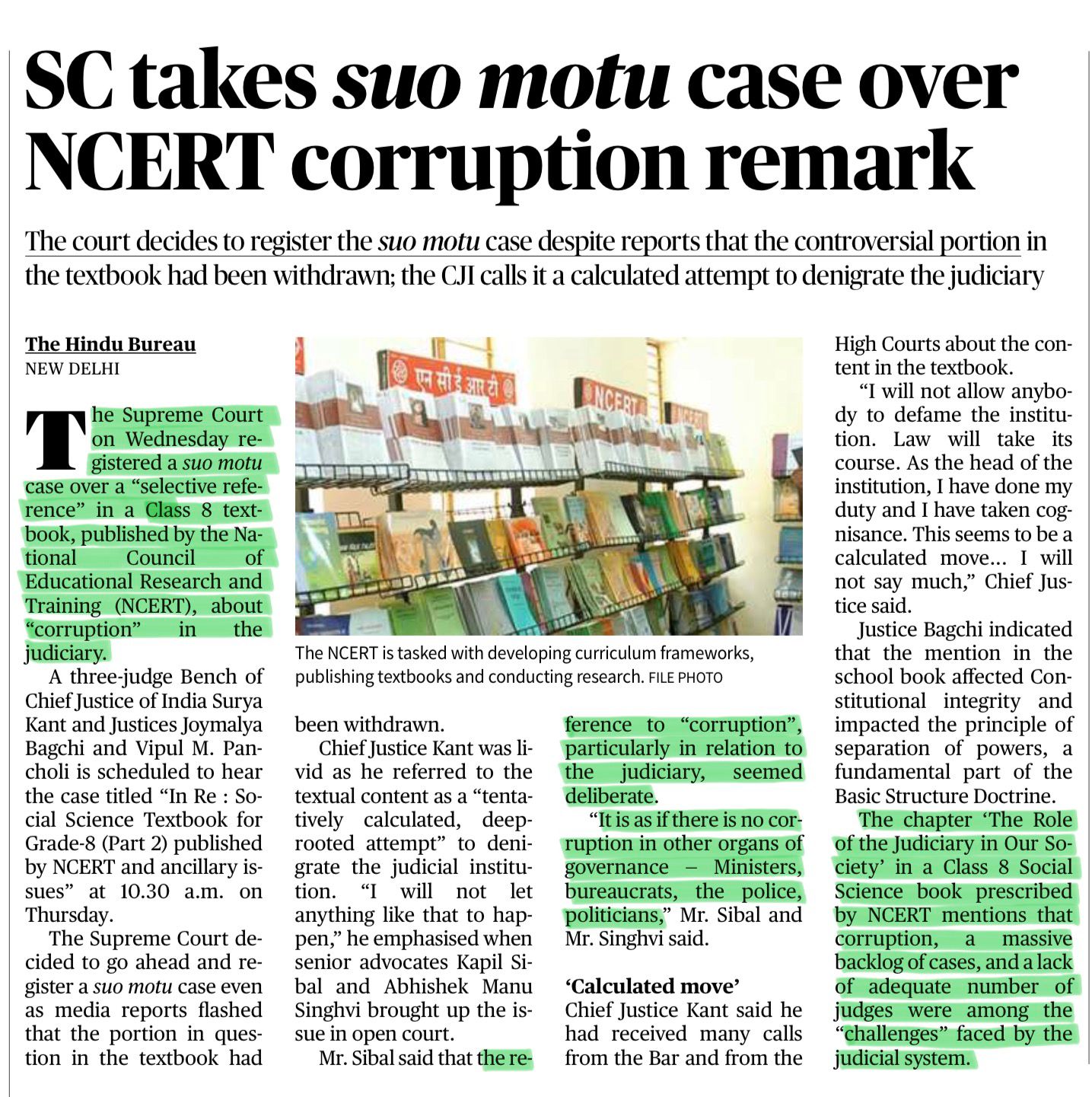
1.1 Trigger: The Supreme Court of India registered a suo motu case over content in a Class 8 Social Science textbook published by National Council of Educational Research and Training (NCERT).

1.2 Chapter: “The Role of the Judiciary in Our Society referred to corruption, case backlog, and shortage of judges as challenges in the judicial system. The Chief Justice observed that the selective reference to “corruption” in the judiciary appeared deliberate and could undermine institutional credibility, even though the passage was later withdrawn.

2) Constitutional Basis of Suo Motu Power

2.1 Meaning: Suo motu = Court acts on its own initiative without a formal petition.

2.2 Enabling Provisions: • Article 32 → Power to enforce Fundamental Rights.
Article 142 → Power to pass any order necessary for “complete justice.”
• Article 129 → Supreme Court is a Court of Record with power to punish for contempt.

These provisions, read together, allow the Court to intervene when constitutional institutions or public interest are implicated.

3) Link with Contempt of Court

3.1 Constitutional Source: Article 129 gives the Supreme Court contempt jurisdiction.

3.2 Statutory Framework:
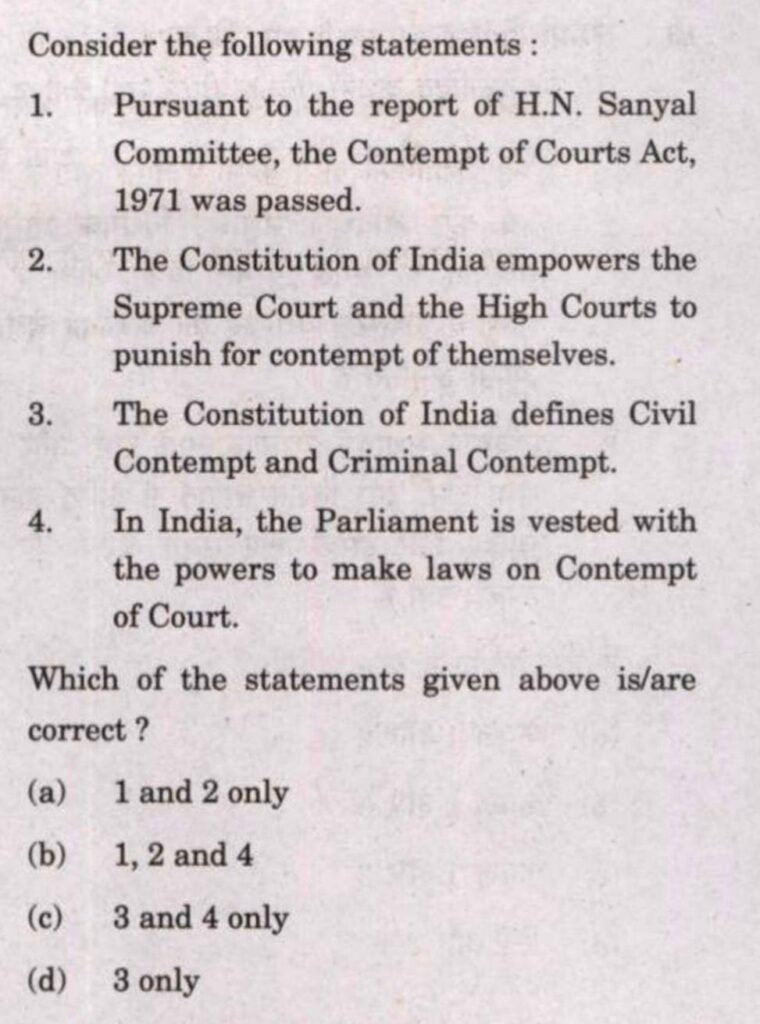
Contempt of Courts Act, 1971

• Civil Contempt: Wilful disobedience of court orders.
• Criminal Contempt (Section 2(c)): Acts that scandalise or lower the authority of the court, interfere with judicial proceedings, or obstruct administration of justice.

SC Suo Motu Case Over NCERT Textbook
PYQ – 2022, Ans – B

Carbon Capture and Utilisation Technologies – Hard-to-Abate Sectors & India’s Net Zero Plan for UPSC

Carbon Capture, Hard-to-Abate Sectors & EU Bioeconomy Strategy

1) Context

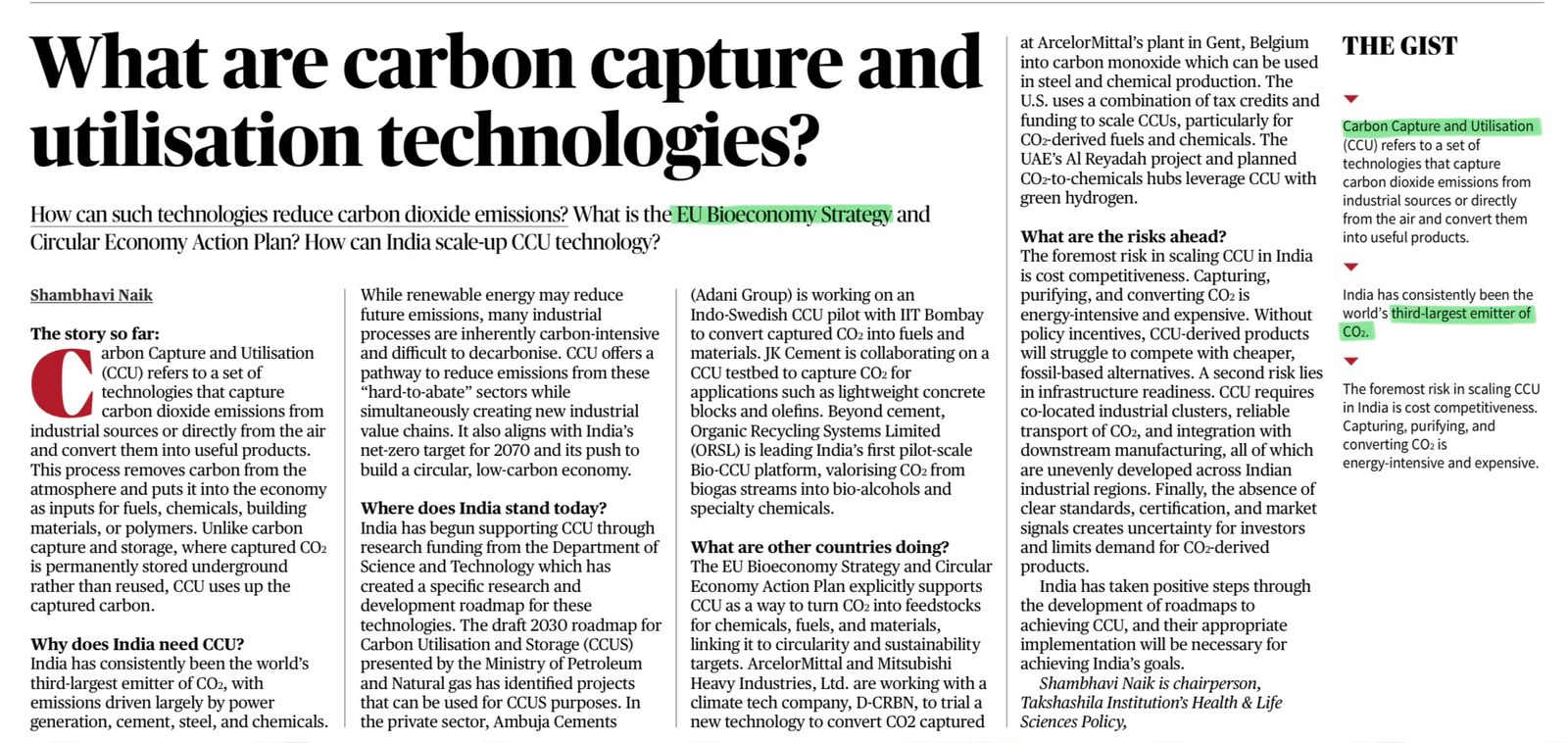
India, the world’s third-largest CO₂ emitter, faces rising industrial emissions from cement, steel, power and chemicals. Since these sectors cannot be rapidly decarbonised through renewables alone, Carbon Capture and Utilisation (CCU) is being examined as a transition tool alongside India’s 2070 net-zero target.

2) Carbon Capture & Utilisation (CCU)

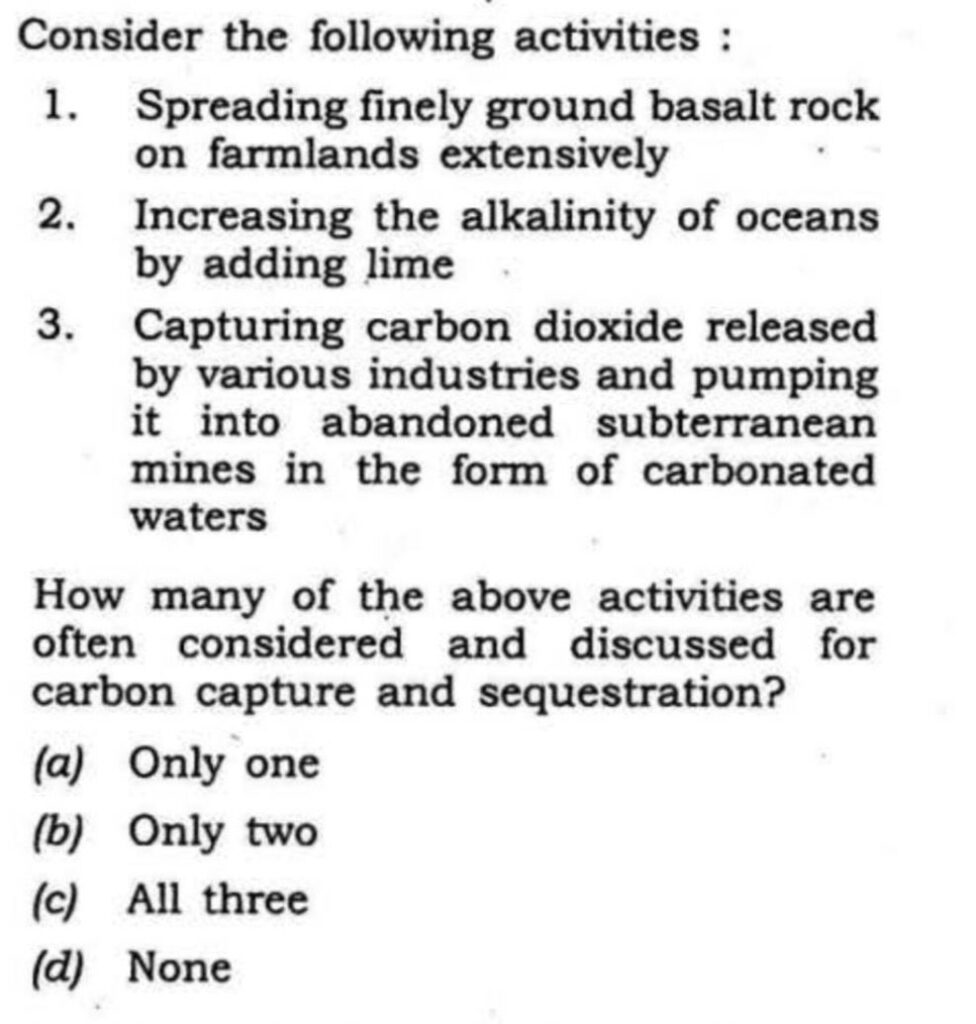
CCU captures CO₂ from industrial sources (or directly from air) and converts it into fuels, chemicals, construction materials or other products.

• CCS: storage underground.
• CCU: reuse in economic value chains.

3) What are Hard-to-Abate Sectors?

Industries where emissions arise from chemical processes or high-temperature operations, not just fuel use:

• Cement (limestone calcination),
• Steel (coke in blast furnaces),
• Chemicals & fertilisers (fossil feedstock),
• Refineries.

These emissions are structurally difficult to eliminate without capture technologies.

4) India’s Position

• R&D support and draft CCUS roadmap (2030).
• Pilot projects in cement and bio-CCU.
• Key constraints: high cost, energy intensity, infrastructure and policy support gaps.

5) EU Bioeconomy Strategy

The EU Bioeconomy Strategy promotes replacing fossil-based systems with bio-based and circular production. It supports using captured CO₂ as feedstock for fuels, chemicals and materials, linking climate action with industrial transformation under the EU Circular Economy framework.

Carbon Capture and Utilisation Technologies
PYQ – 2023, Ans – C

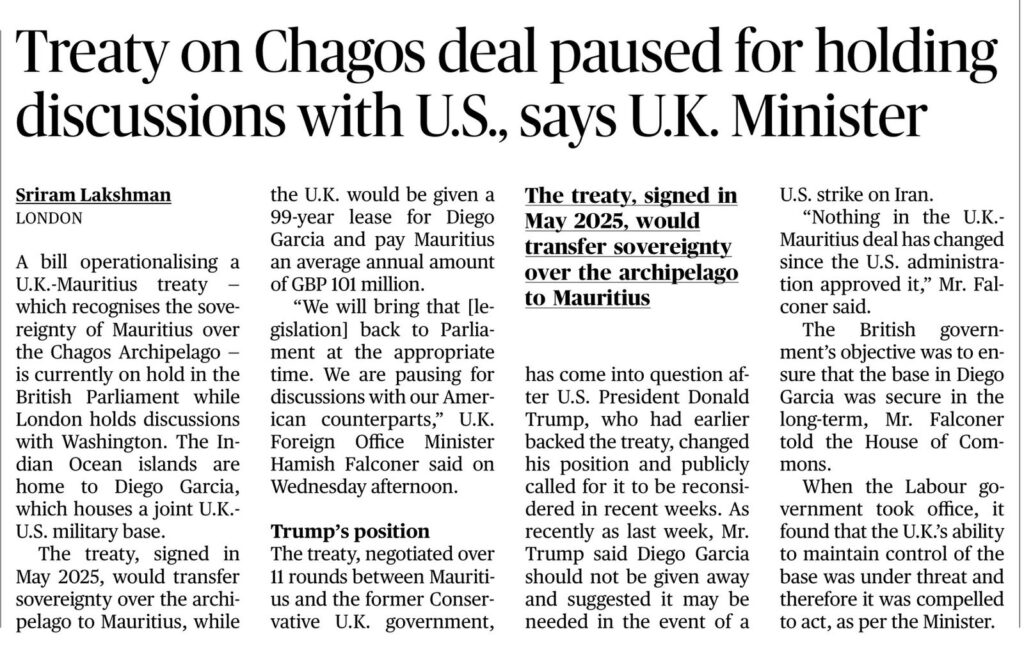
Chagos Treaty Pause – UK–Mauritius Deal, Diego Garcia & ICJ Ruling for UPSC

Chagos Treaty Pause

1) Context:

The U.K. has paused legislation operationalising a treaty signed in May 2025 to transfer sovereignty over the Chagos Archipelago to Mauritius, pending discussions with the U.S. The treaty proposes Mauritian sovereignty with a 99-year U.K. lease over Diego Garcia for the joint U.K.–U.S. military base.

2) Chagos Archipelago & Diego Garcia

2.1 Chagos Archipelago

• Group of 60+ islands in the central Indian Ocean.
• Strategically located between Africa and Southeast Asia.
• Administered by the U.K. as the British Indian Ocean Territory (BIOT).

2.2 Diego Garcia

• Largest island in the archipelago.
• Hosts a major U.K.–U.S. military base (critical for Indo-Pacific and West Asian operations).
• Currently under U.K. control; base operated jointly with the U.S.

3) Chronological Background

3.1 Colonial Phase (Pre-1965)

Chagos was administered as part of British colonial Mauritius under the British Empire.

3.2 1965 – Creation of BIOT

Before granting independence to Mauritius, the U.K. detached Chagos and created the British Indian Ocean Territory (BIOT).

3.3 1966 – U.S.–U.K. Agreement

U.K. leased Diego Garcia to the U.S. for military use.
Chagossians were displaced between 1968–1973.

3.4 1968 – Mauritius Independence

Mauritius gained independence, but without Chagos; it has since claimed sovereignty.

3.5 UN Developments

• 2017: United Nations General Assembly requested an advisory opinion from the ICJ.
• 2019: International Court of Justice ruled that the U.K.’s separation of Chagos was unlawful and decolonisation was incomplete.
• 2019 (UNGA Resolution): Called on the U.K. to withdraw administration within six months.

The U.K. initially rejected the ruling but later entered negotiations with Mauritius.

4) Recent Shift 2022–2025:

• U.K.–Mauritius negotiations progressed.
• Treaty signed (May 2025) to transfer sovereignty to Mauritius while leasing Diego Garcia back to the U.K. for 99 years to ensure continued U.S. base access.
• Implementation paused pending U.S. consultations.

Chagos Treaty Pause
Chagos Treaty Pause
Chagos Treaty Pause
Chagos Treaty Pause

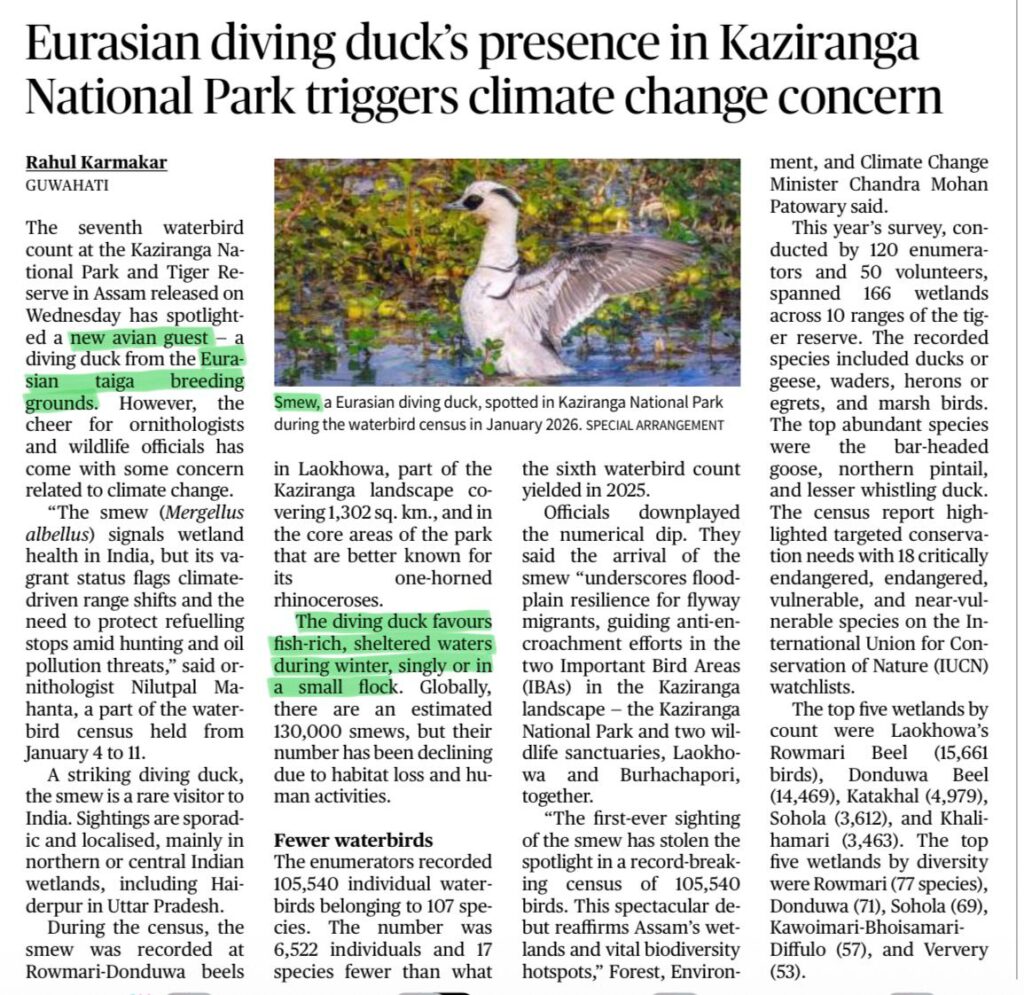
Eurasian Smew in Kaziranga – Climate Change & Migratory Shift Concerns for UPSC

Eurasian Smew in Kaziranga

1) Context:

• First-ever sighting during 7th waterbird census at Kaziranga National Park.
• Indicates possible climate-linked migratory shift.

2) Bird Profile — Smew (Mergellus albellus):

• Small Eurasian diving duck.
• Breeds in Eurasian taiga (N. Europe & Siberia).
• Winter migrant; prefers fish-rich, sheltered freshwater wetlands.
• Usually solitary or in small flocks.
• Rare/vagrant visitor to India.

3) Why Seen in Assam?

• Climate-driven range shift.
• Availability of suitable floodplain wetlands.
• Wetland resilience of Kaziranga landscape.

4) 7th Waterbird Census:

• Conducted by Assam Forest Department.
• Covered 166 wetlands across 10 ranges.
• Recorded 1+ lakh waterbirds (100+ species).

Significance: Indicator of wetland health and changing migration patterns.

Eurasian Smew in Kaziranga
About the UPSC Civil Services Examination (UPSC CSE)

The UPSC Civil Services Examination (CSE) is one of the most competitive and esteemed examinations in India, conducted by the Union Public Service Commission to recruit officers for services such as the Indian Administrative Service (IAS), Indian Police Service (IPS), Indian Foreign Service (IFS), and others. The exam comprises three stages — Prelims, Mains, and the Personality Test (Interview) — designed to test a candidate’s knowledge, aptitude, decision-making, and leadership skills.


How to Prepare Effectively for UPSC CSE

Cracking the UPSC CSE requires a deep understanding of the syllabus, consistent revision, structured answer writing, and smart test-taking strategies. The Prelims test analytical and conceptual clarity, the Mains focuses on critical thinking, articulation, and subject mastery, while the Interview assesses presence of mind, ethical judgment, and personality traits relevant to public service.

At UnderStand UPSC, we empower aspirants with a personalized and focused approach to each stage of the exam.


Why Choose UnderStand UPSC?

UnderStand UPSC is a mentorship-driven platform offering a clear, clutter-free strategy to tackle the Civil Services Examination. Our programs like Transform (for beginners and intermediate learners) and Conquer (for advanced mains preparation) provide structured study plans, syllabus-wise video content, interactive live sessions, and answer writing support.

We emphasize:

  • Concept clarity through topic-wise lectures

  • Test series designed around real UPSC standards

  • Personalized mentorship in small groups

  • Regular performance tracking and peer benchmarking

  • Doubt-clearing sessions, current affairs analysis, and monthly magazines


Join the UnderStand UPSC Learning Community

Our mission is to make UPSC preparation less overwhelming and more strategic. We combine mentorship, discipline, and academic rigor to help you clear CSE with confidence. Whether you’re preparing from Delhi, Mumbai, Bangalore, or a remote village — our online-first model ensures quality guidance reaches every corner of India.

Join the thousands of aspirants who trust UnderStand UPSC to guide their journey toward becoming civil servants.

Stay connected with us through our Telegram, YouTube, and Instagram channels for daily tips, strategies, and updates.

Copyright © 2026 USARAMBHA EDUCATION (UnderStand UPSC). All Rights Reserved.

Join the Success Journey!