6 June 2026 | Daily Current Affairs

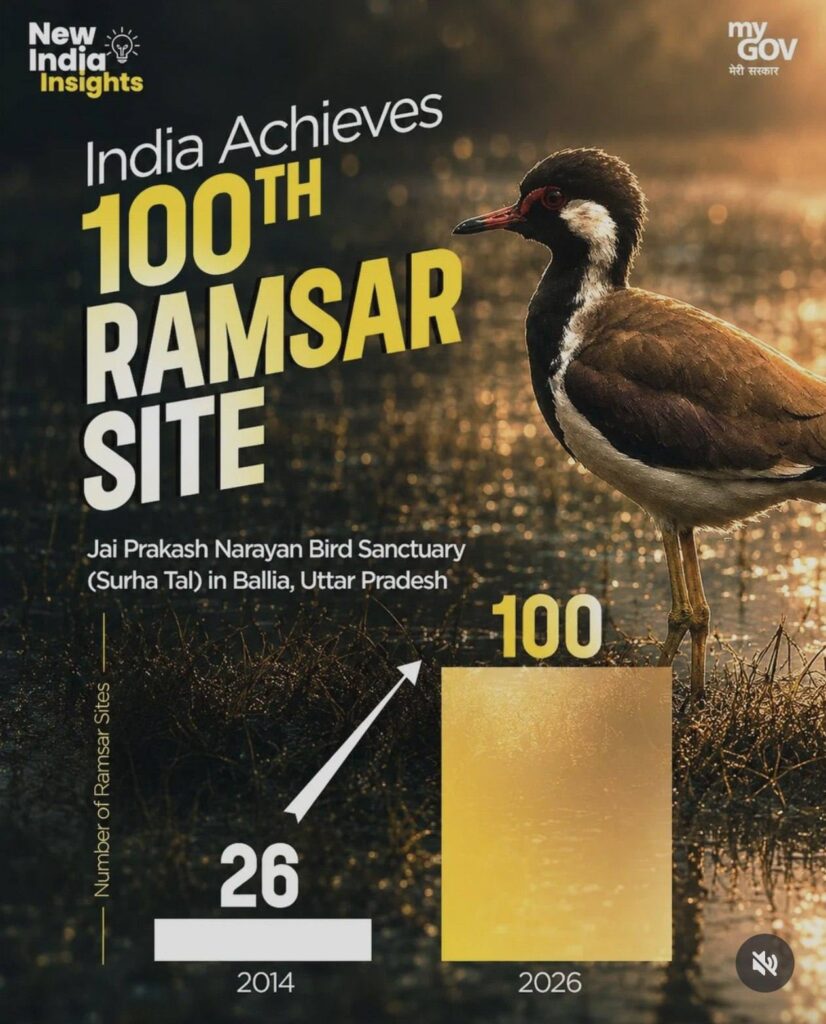
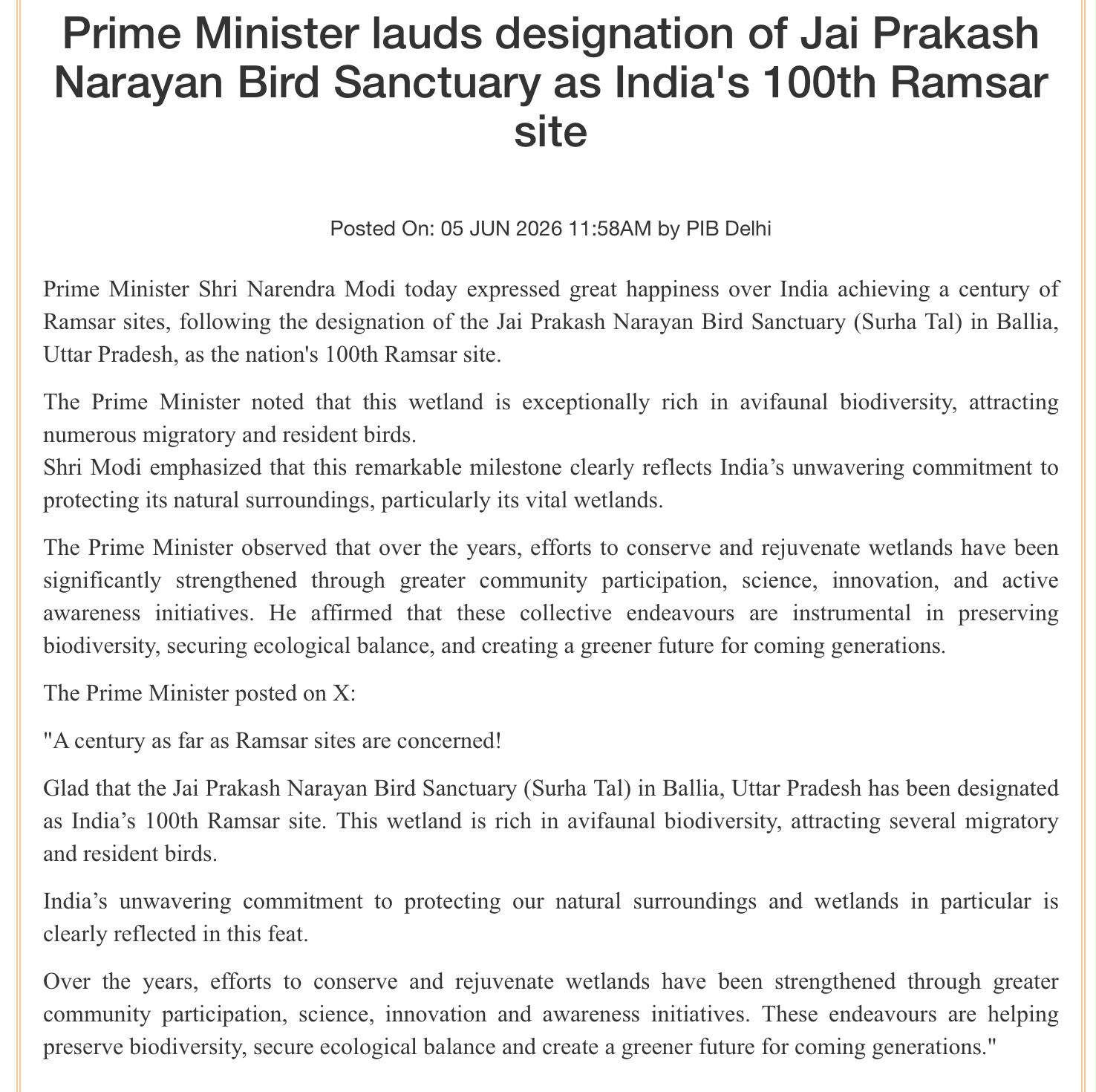
Jai Prakash Narayan Bird Sanctuary Becomes India’s 100th Ramsar Site

Context:
Jai Prakash Narayan Bird Sanctuary, also known as Surha Tal, in Ballia, Uttar Pradesh became India’s 100th Ramsar Site on 5 June 2026.

Latest Ramsar Sites

100. Jai Prakash Narayan Bird Sanctuary (Surha Tal)
Ballia, Uttar Pradesh

99. Shekha Jheel Bird Sanctuary
Aligarh, Uttar Pradesh

98. Chhari-Dhand Wetland
Kutch, Gujarat

97. Patna Bird Sanctuary
Etah, Uttar Pradesh

96. Siliserh Lake
Alwar, Rajasthan

Recent:
Udaypur Lake — West Champaran, Bihar

Highest Ramsar Sites

  • Tamil Nadu: 20
  • Uttar Pradesh: 12

Ramsar Convention and Ramsar Site

  • Ramsar Convention: 1971, Ramsar, Iran
  • In force: 1975
  • India joined: 1982
  • World Wetlands Day: 2 February

Ramsar Site:
A wetland of international importance recognised for its ecological, biodiversity, hydrological or species-support value.

Benefits

  • Wise Use Principle
  • Maintenance of ecological character
  • Better conservation and restoration
  • International recognition and cooperation

Ramsar Criteria and Waterfowl Habitat

A wetland becomes a Ramsar Site if it satisfies at least one of the 9 Ramsar Criteria.

Criterion 1:
Unique / Rare Wetland

Criteria 2–4:
Biodiversity, threatened species, ecological importance

Criteria 5–6:
Waterbirds / Waterfowl Habitat

Criteria 7–8:
Fish diversity, breeding and migration grounds

Criterion 9:
Other wetland-dependent fauna

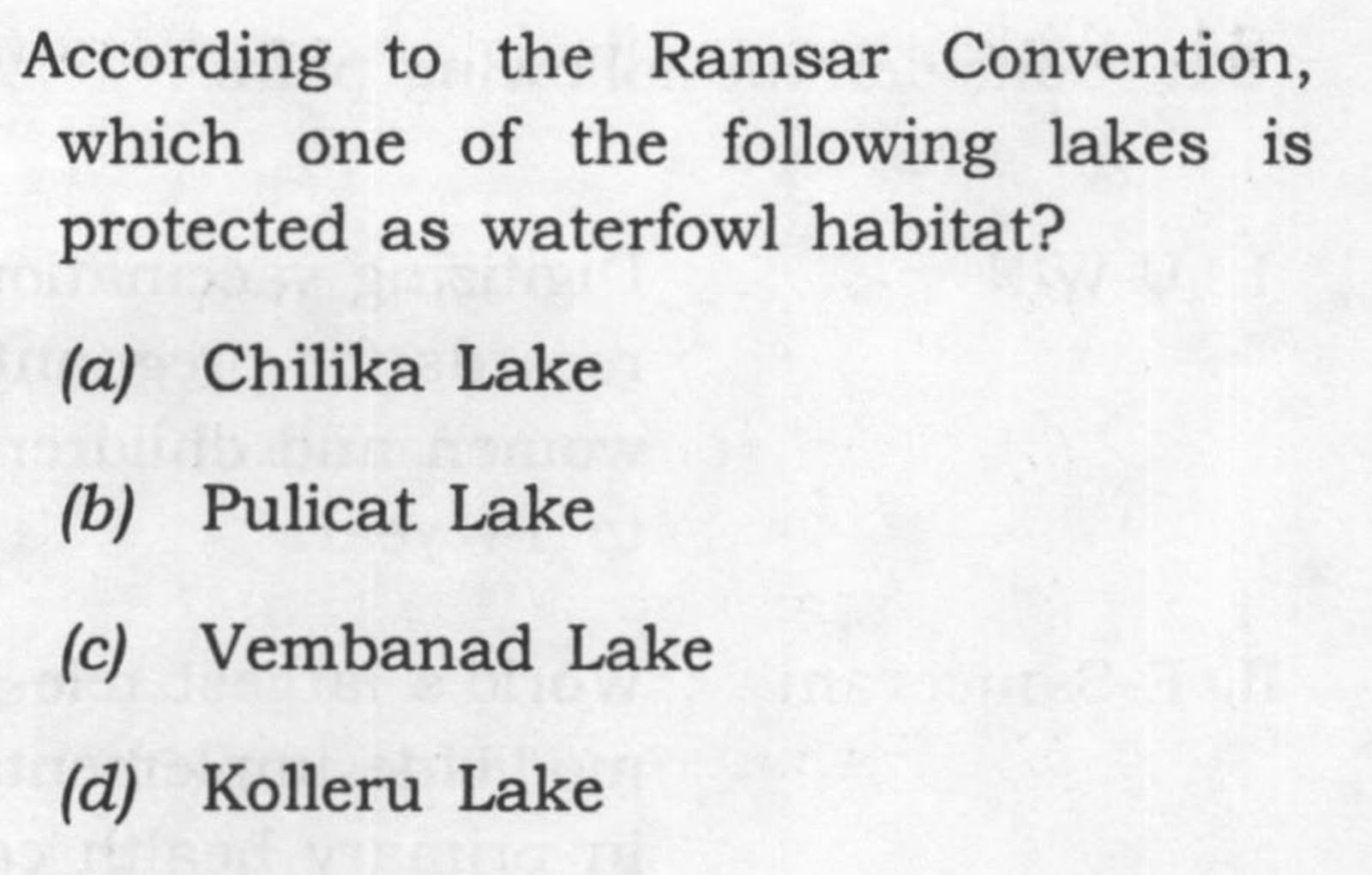
Waterfowl Habitat Criterion

A Ramsar Site is recognised as a Waterfowl Habitat when it satisfies:

  • Criterion 5: Supports 20,000+ waterbirds, or
  • Criterion 6: Supports 1% of the global population of a waterbird species / subspecies.

Examples

  • Chilika Lake, Odisha
  • Keoladeo National Park, Rajasthan
  • Harike Wetland, Punjab

Nilgiri Tahr Population Increases to 1,364 in Tamil Nadu

Context:
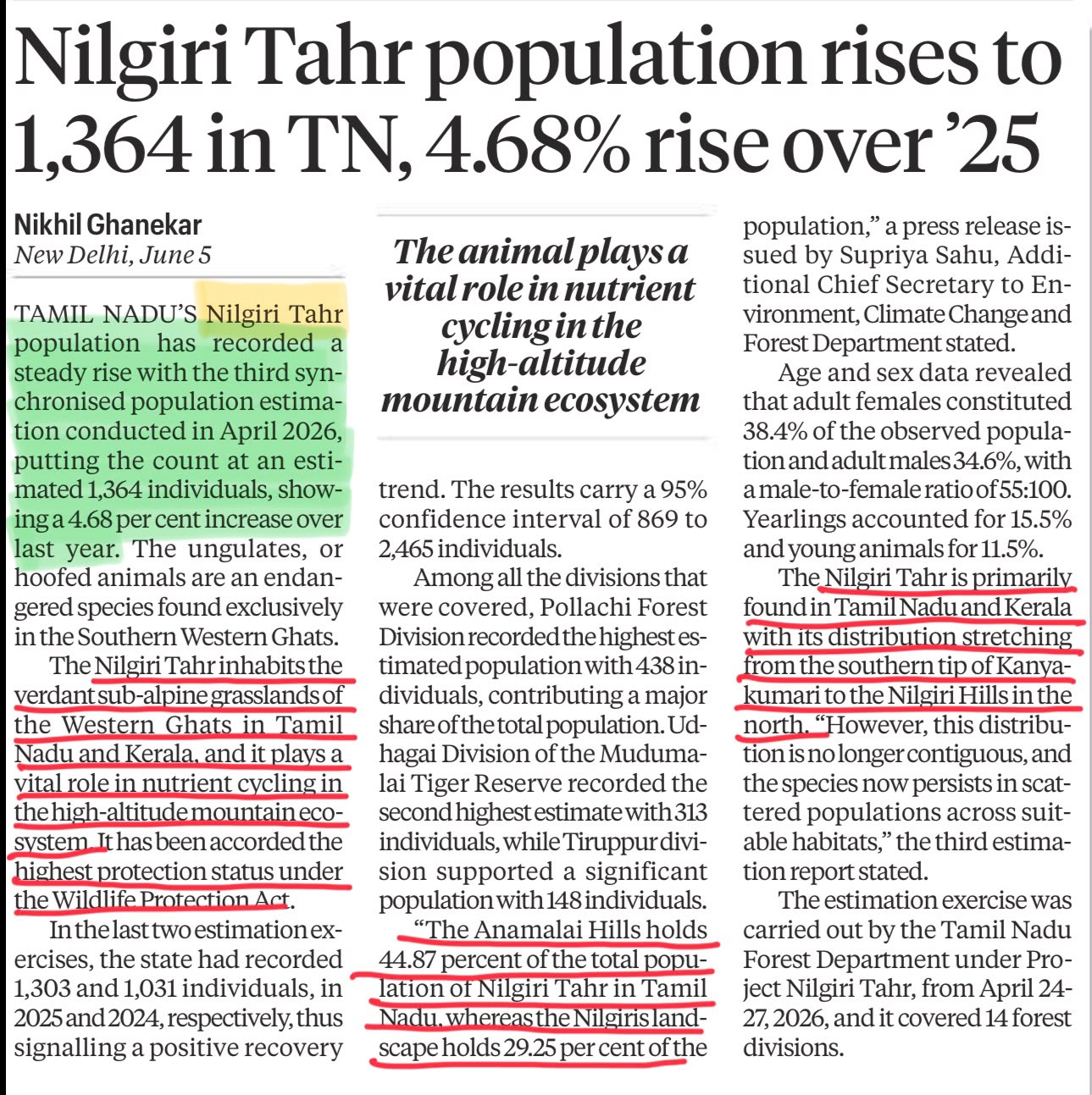
Tamil Nadu’s 3rd synchronised Nilgiri Tahr estimation in April 2026 recorded 1,364 individuals, up 4.68% from 2025, when 1,303 individuals were recorded. Anamalai Hills hold 44.87% and Nilgiri Landscape holds 29.25% of the population.

Nilgiri Tahr

Scientific Name:
Nilgiritragus hylocrius

IUCN Status:
Endangered

Wildlife Protection Act, 1972:
Schedule I

State Animal:
Tamil Nadu

Characteristics

  • Largest wild mountain ungulate, or hoofed mammal, of southern India
  • Herbivore
  • Excellent cliff climber
  • Endemic to Western Ghats
  • Indicator species of Shola-Grassland ecosystem

Distribution and Habitat

States:
Tamil Nadu and Kerala

Major Habitats:

  • Eravikulam National Park — largest population
  • Mukurthi National Park

Range:
Kanyakumari Hills → Anamalai Hills → Nilgiri Hills

Important Facts

  • Anamudi Peak, 2,695 m, in the Anamalai Hills is the highest peak of South India and Peninsular India.
  • Doddabetta Peak, 2,637 m, is the highest peak of the Nilgiri Hills.

Government Securities Market Reforms to Boost FPI Investment

Context:
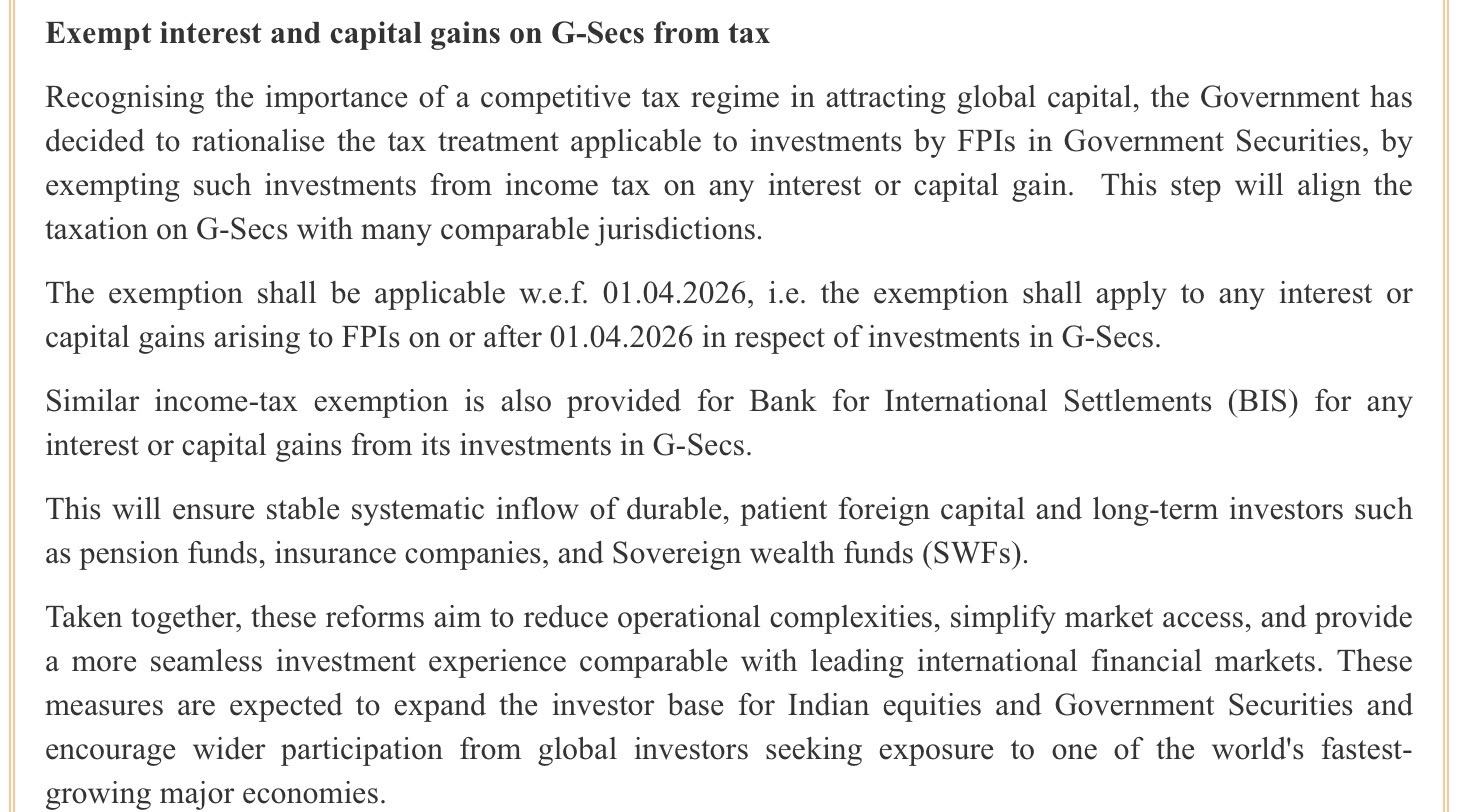
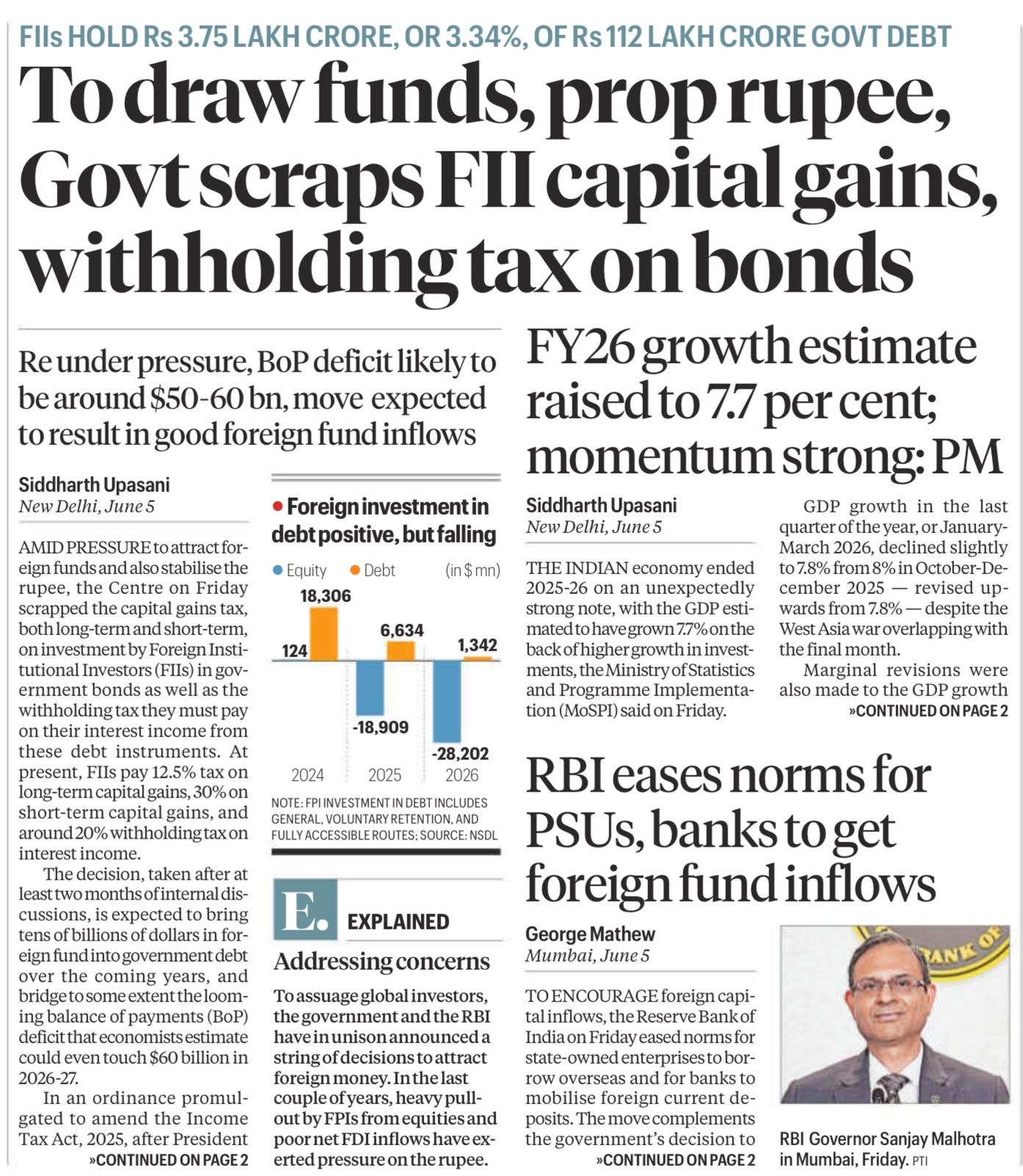
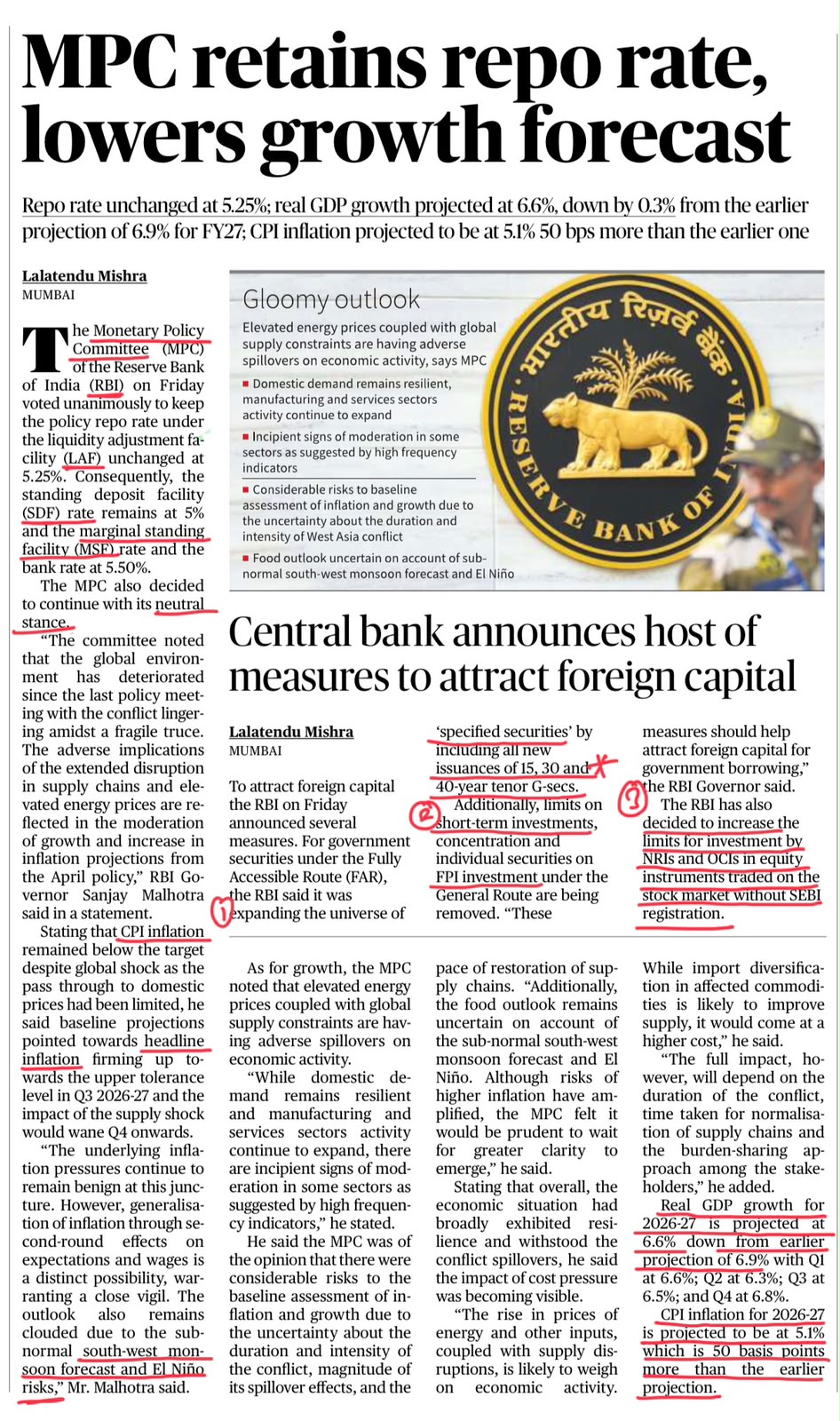
Government announced measures to attract Foreign Portfolio Investment, deepen the Government Securities market, strengthen the rupee and improve the Balance of Payments.

Basics

FPI:
Foreign investment in shares, bonds and securities without management control.

G-Sec:
Government borrowing instrument.

Treasury Bills:
91 days, 182 days and 364 days.

Dated G-Secs:
1–40 years.

FAR — Fully Accessible Route:
Selected G-Secs fully open to foreign investors.

PROI — Persons Resident Outside India:
Overseas individuals / entities eligible to invest in India.

Interest Income:
Coupon / interest earned from holding G-Secs.

Capital Gain:
Profit from selling G-Secs above purchase price.

STCG — Short-Term Capital Gain:
Less than or equal to 12 months.

LTCG — Long-Term Capital Gain:
More than 12 months.

Core Measures

Tax Relief

Earlier:

  • Interest Tax: around 20%
  • STCG: 30%
  • LTCG: 12.5%

Now, from 1 April 2026:

  • Interest Tax: Nil
  • STCG: Nil
  • LTCG: Nil

FAR Expanded

  • 15-year G-Secs
  • 30-year G-Secs
  • 40-year G-Secs
  • Sovereign Green Bonds

Restrictions Removed

  • Short-term limit
  • Concentration limit
  • Security-wise limit

FPI Cap Retained

  • 6% of Central Government Securities
  • 2% of State Government Securities

PROI Limit

  • Individual limit increased from 5% to 10%
  • Overall limit increased from 10% to 24%

Monetary Policy Committee Retains Repo Rate at 5.25%

Context:
The Monetary Policy Committee kept the Repo Rate unchanged at 5.25% and retained Neutral Stance. RBI revised FY 2026–27 Real GDP Growth to 6.6%, from 6.9%, and Consumer Price Index Inflation to 5.1%, from 4.6%, due to global uncertainties and higher energy prices.

Key Projections: FY 2026–27

Real GDP Growth:
6.6%

CPI Inflation:
5.1%

Reasons

  • West Asia tensions
  • Higher crude oil prices
  • Supply-chain disruptions
  • Monsoon uncertainty

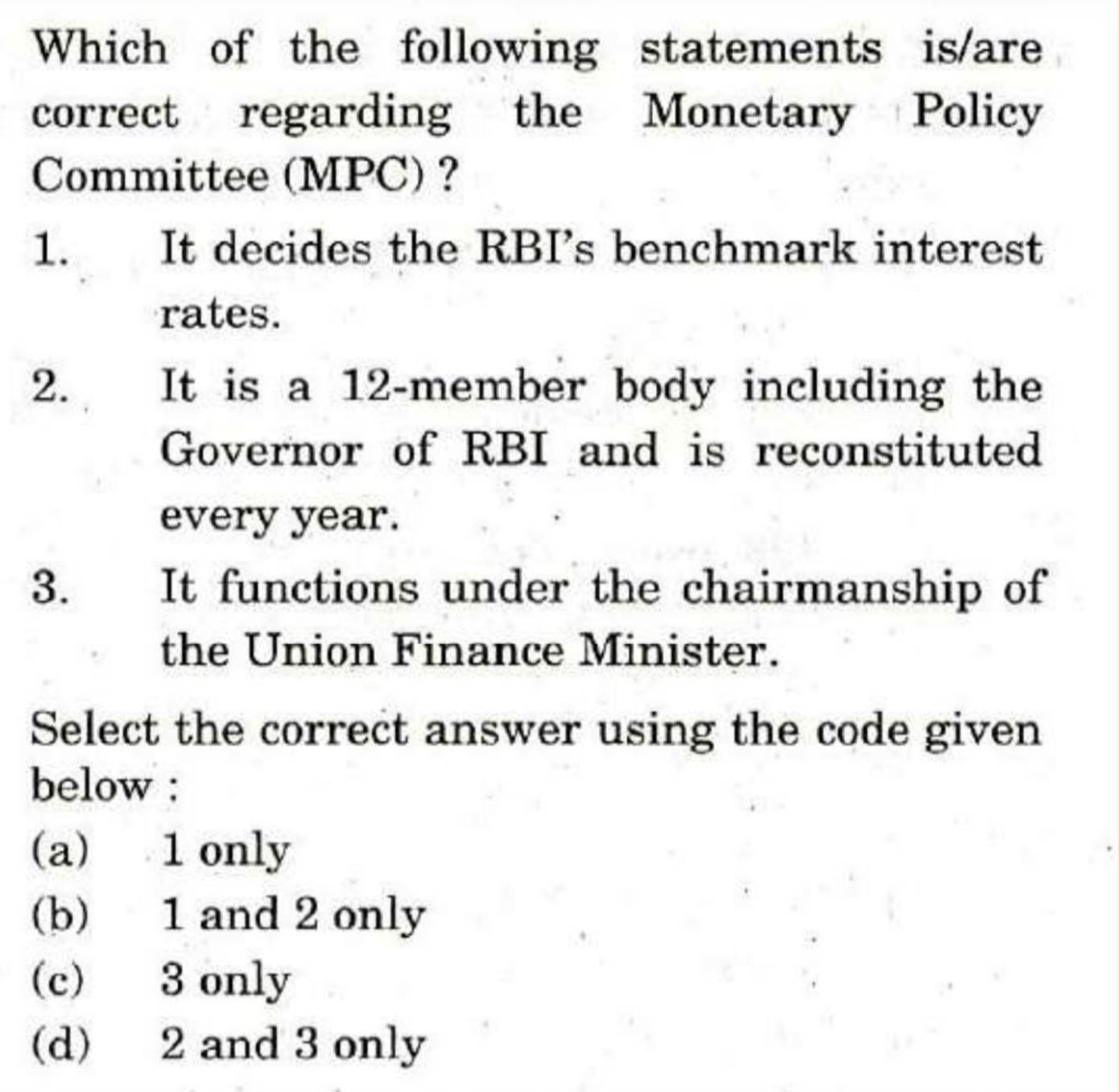
Monetary Policy Committee

Recommendation:
Urjit Patel Committee, 2014

Legal Basis:
Reserve Bank of India Act, 1934, amended in 2016

Members:
6 members

Composition:

  • RBI Governor — Chairperson
  • RBI Deputy Governor in charge of Monetary Policy
  • 1 RBI nominee
  • 3 Central Government nominees

Voting:
Simple majority

Casting Vote:
RBI Governor

Target:
CPI Inflation 4% ± 2%

Inflation Basics

Headline Inflation:
Includes all items in CPI basket, including food, fuel and others.

Core Inflation:
CPI excluding food and fuel; reflects underlying inflation trend.

MPC Target Band:
2%–6%, with 4% as the target.

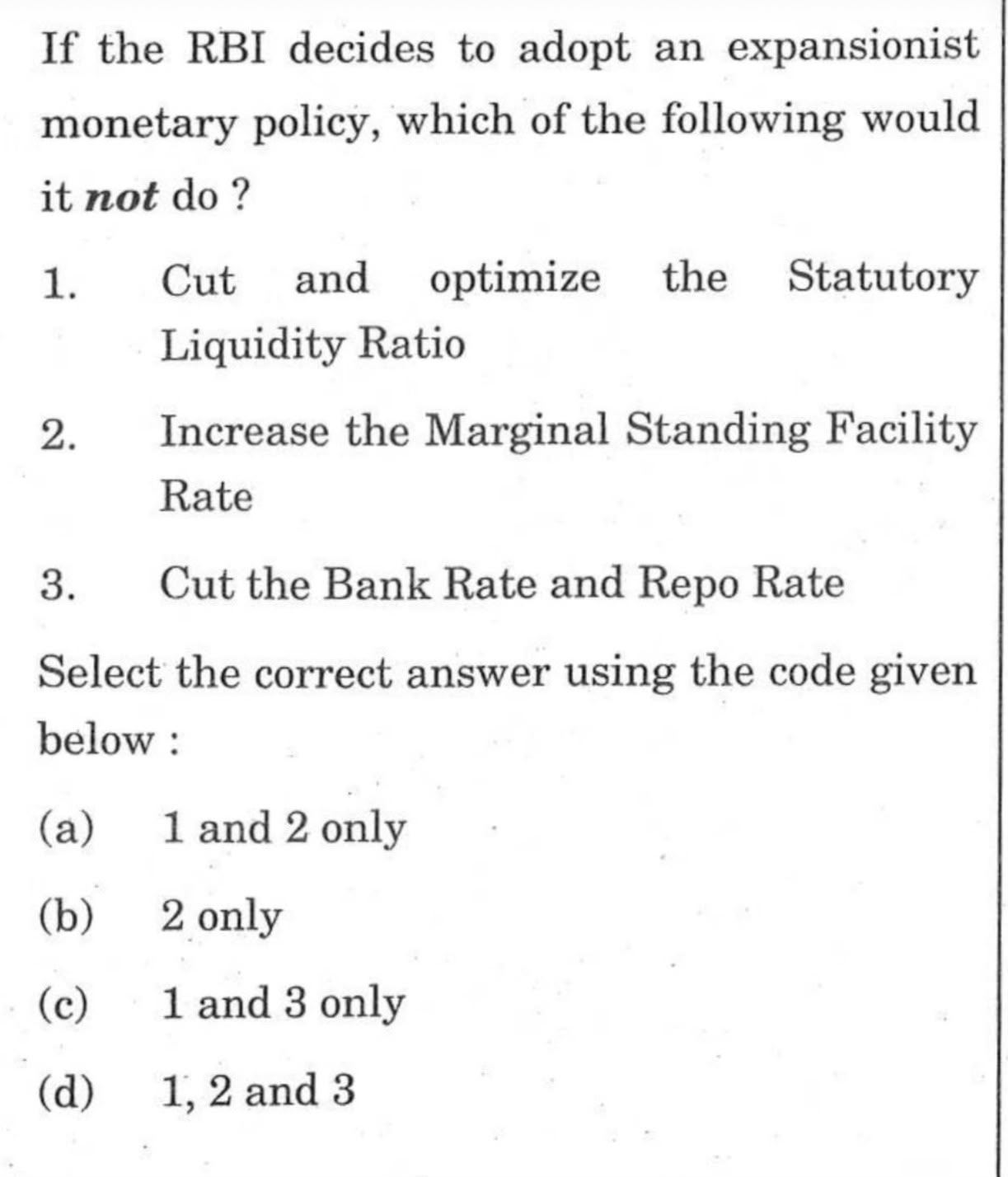
Liquidity Adjustment Facility

Liquidity Adjustment Facility:
RBI’s framework for managing short-term liquidity, meaning money available with banks, and keeping short-term interest rates stable.

Standing Deposit Facility — 5.00%

  • Banks have excess funds.
  • They deposit with RBI.
  • Liquidity is absorbed.

Repo Rate — 5.25%

  • Banks need normal short-term funds.
  • RBI lends against Government Securities.
  • Liquidity is injected.

Marginal Standing Facility — 5.50%

  • Banks face emergency fund shortage.
  • RBI provides overnight emergency funds.

Monetary Policy Stances

Neutral:
Status quo is possible.

Accommodative / Dovish:
Growth priority; rate cuts or liquidity support likely.

Hawkish:
Inflation control priority; rate hikes likely.

BRICS Culture Working Group Meeting Concludes in Varanasi

Context: BRICS Culture Working Group Meeting
The 2nd BRICS Culture Working Group Meeting concluded in Varanasi under India’s BRICS Presidency, 2026.

Key Outcomes

Heritage Protection and Repatriation

  • Cooperation for preservation and return of cultural artefacts.

UNESCO Cooperation

  • Joint nominations under:
    • World Heritage Convention
    • Intangible Cultural Heritage List
    • Memory of the World Programme

Culture and Development

  • Culture recognised as a driver of social inclusion, sustainability and economic resilience.

BRICS Basics

Members:
10 members

  • Brazil
  • Russia
  • India
  • China
  • South Africa
  • Egypt
  • Ethiopia
  • Iran
  • UAE
  • Indonesia

Saudi Arabia:
Invited but not a full member.

Founded:
2009 as BRIC

South Africa joined:
2010

Fortaleza Declaration, 2014, Brazil:
Established:

  • New Development Bank
  • Contingent Reserve Arrangement

New Development Bank Headquarters:
Shanghai, China.

About the UPSC Civil Services Examination (UPSC CSE)

The UPSC Civil Services Examination (CSE) is one of the most competitive and esteemed examinations in India, conducted by the Union Public Service Commission to recruit officers for services such as the Indian Administrative Service (IAS), Indian Police Service (IPS), Indian Foreign Service (IFS), and others. The exam comprises three stages — Prelims, Mains, and the Personality Test (Interview) — designed to test a candidate’s knowledge, aptitude, decision-making, and leadership skills.


How to Prepare Effectively for UPSC CSE

Cracking the UPSC CSE requires a deep understanding of the syllabus, consistent revision, structured answer writing, and smart test-taking strategies. The Prelims test analytical and conceptual clarity, the Mains focuses on critical thinking, articulation, and subject mastery, while the Interview assesses presence of mind, ethical judgment, and personality traits relevant to public service.

At UnderStand UPSC, we empower aspirants with a personalized and focused approach to each stage of the exam.


Why Choose UnderStand UPSC?

UnderStand UPSC is a mentorship-driven platform offering a clear, clutter-free strategy to tackle the Civil Services Examination. Our programs like Transform (for beginners and intermediate learners) and Conquer (for advanced mains preparation) provide structured study plans, syllabus-wise video content, interactive live sessions, and answer writing support.

We emphasize:

  • Concept clarity through topic-wise lectures

  • Test series designed around real UPSC standards

  • Personalized mentorship in small groups

  • Regular performance tracking and peer benchmarking

  • Doubt-clearing sessions, current affairs analysis, and monthly magazines


Join the UnderStand UPSC Learning Community

Our mission is to make UPSC preparation less overwhelming and more strategic. We combine mentorship, discipline, and academic rigor to help you clear CSE with confidence. Whether you’re preparing from Delhi, Mumbai, Bangalore, or a remote village — our online-first model ensures quality guidance reaches every corner of India.

Join the thousands of aspirants who trust UnderStand UPSC to guide their journey toward becoming civil servants.

Stay connected with us through our Telegram, YouTube, and Instagram channels for daily tips, strategies, and updates.

Copyright © 2026 USARAMBHA EDUCATION (UnderStand UPSC). All Rights Reserved.

Fill the form

Our team will reach out to you soon