
8 May 2026 | Daily Current Affairs

CEC Appointment Act 2023 Under Supreme Court Scrutiny | UPSC Polity

Context: CEC Appointment Act 2023

Supreme Court questioned whether Parliament properly debated the CEC & EC Appointment Act, 2023, which changed the appointment process of Election Commissioners and allegedly diluted the spirit of the Anoop Baranwal (2023) judgment.
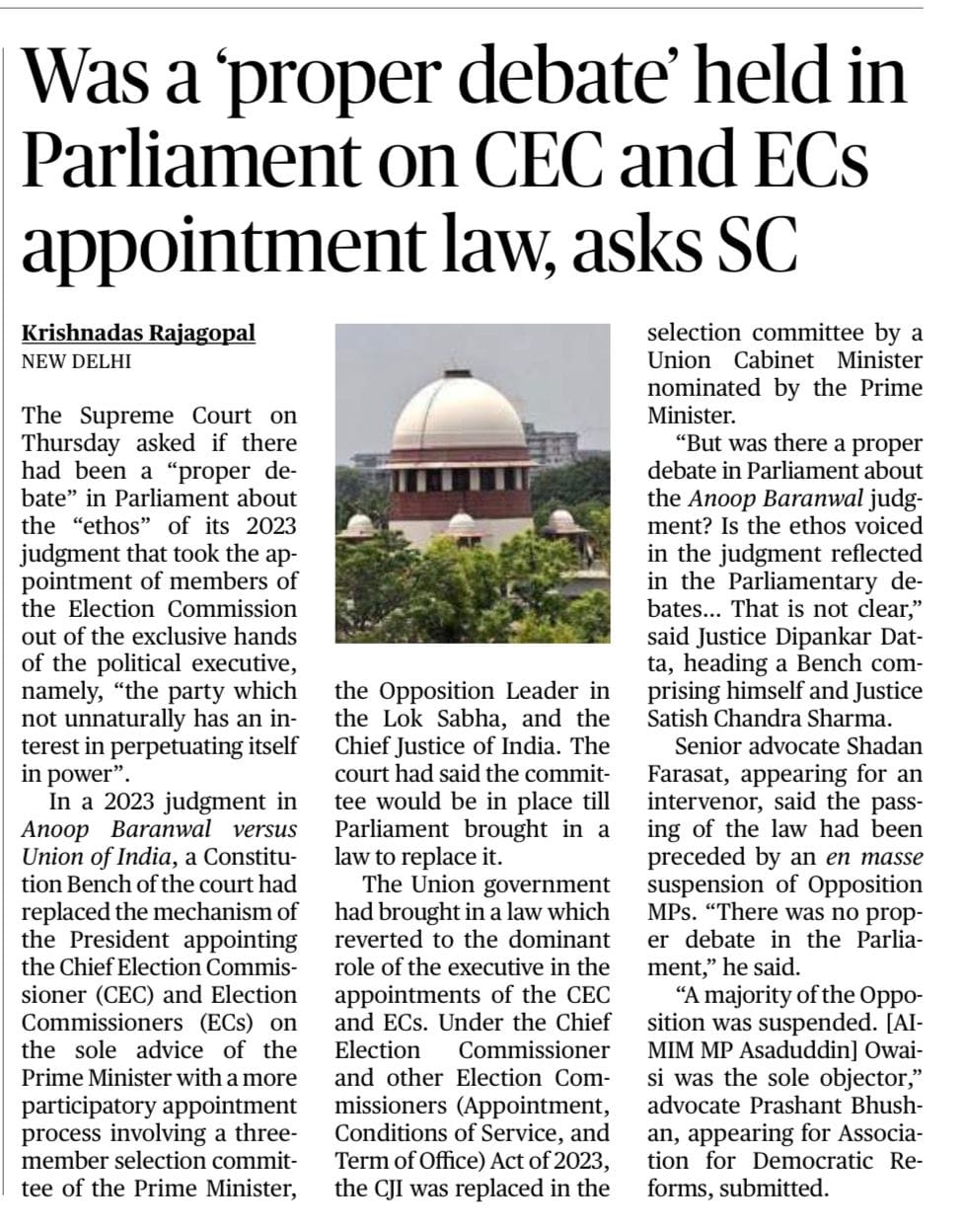
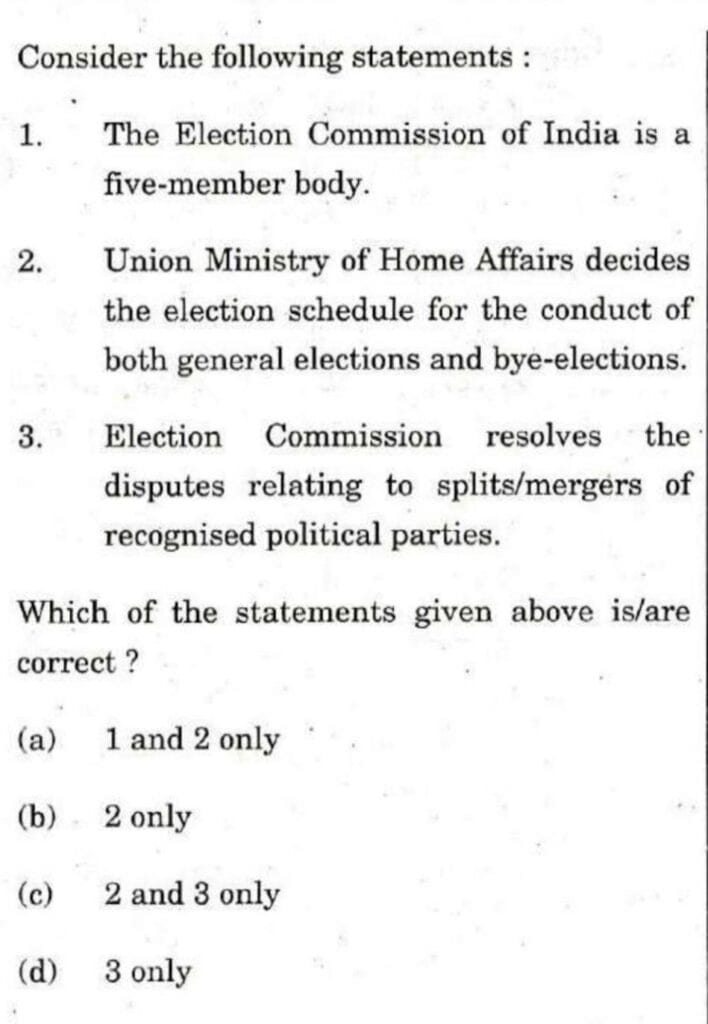
CEC Appointment Act 2023
PYQ – 2017, Ans – D

Constitutional Basis

  • Article 324 → Election Commission of India (ECI)
  • Article 324(2) → President appoints CEC & ECs, subject to parliamentary law
  • Article 324(5) → CEC removable like SC judge; ECs removable only on CEC recommendation

Before 2023

  • No parliamentary law on appointments.
  • Appointments effectively controlled by Union Executive/PM.

Concern: Executive dominance over ECI.

Committees Supporting Independent Appointment

Anoop Baranwal vs Union of India (2023)

SC held free & fair elections are part of Basic Structure.

Interim Selection Committee:
PM | LoP | CJI

Aim: Reduce executive control till Parliament makes a law.

Parliament’s 2023 Act

Chief Election Commissioner and Other Election Commissioners Act, 2023

New Selection Committee:
PM | LoP | Cabinet Minister nominated by PM

Major Change: CJI removed → Executive regains majority.
AMOC Weakening and Climate Change Impact on Monsoon | UPSC Geography

Context: AMOC weakening

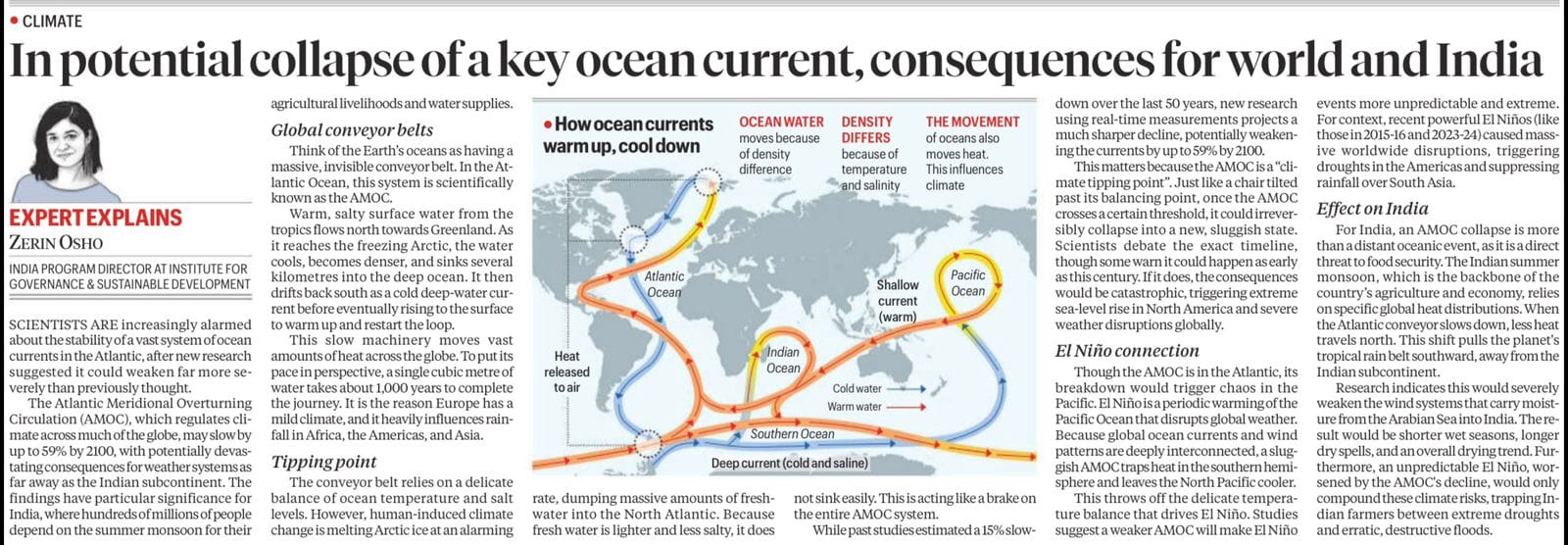
A recent study published in Nature warns that the Atlantic Meridional Overturning Circulation (AMOC) — a major Atlantic Ocean current system — may weaken sharply due to climate change, affecting global climate and India’s monsoon.

AMOC weakening
AMOC weakening
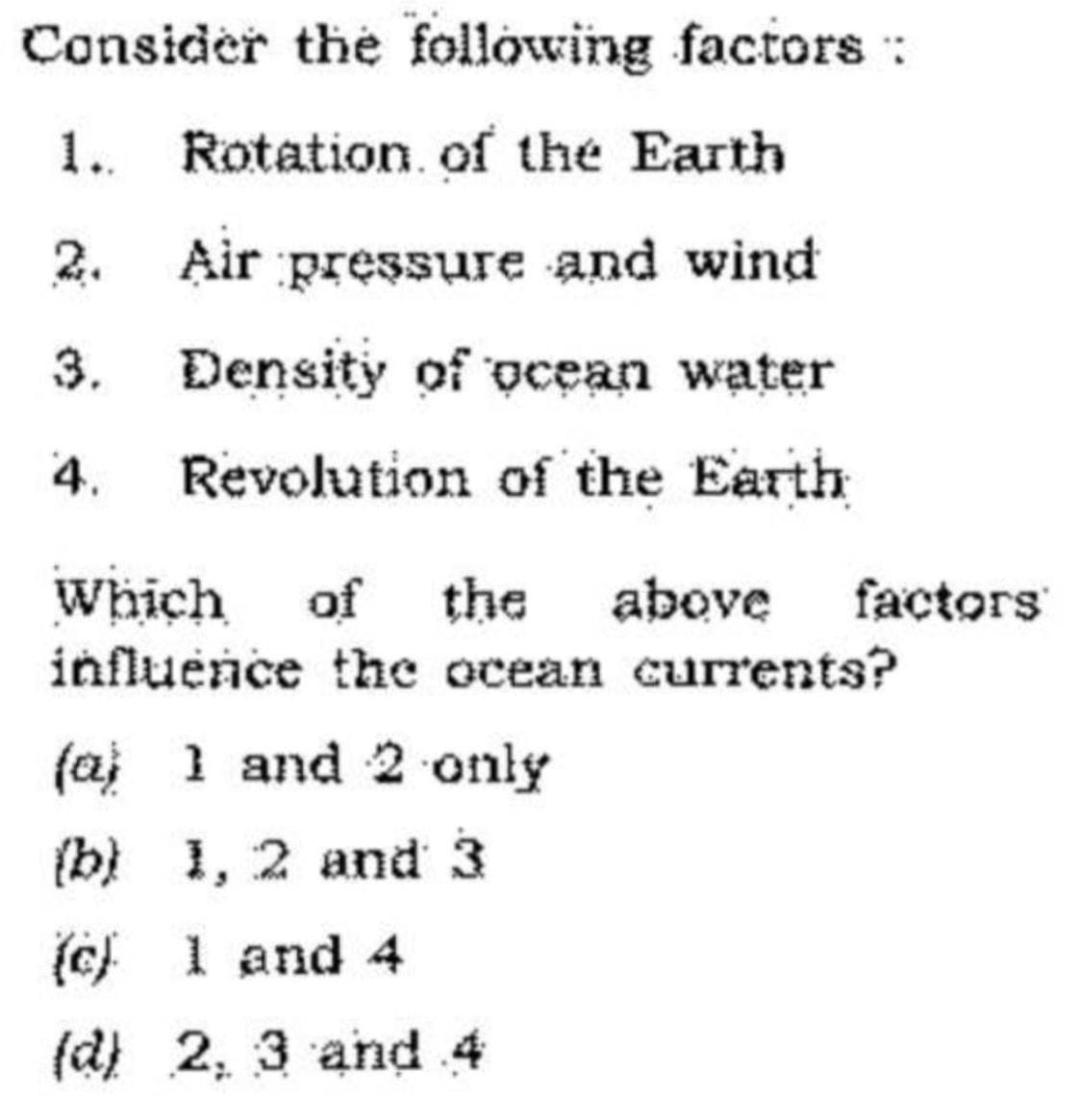
PYQ – 2012, Ans – B
AMOC weakening
AMOC weakening

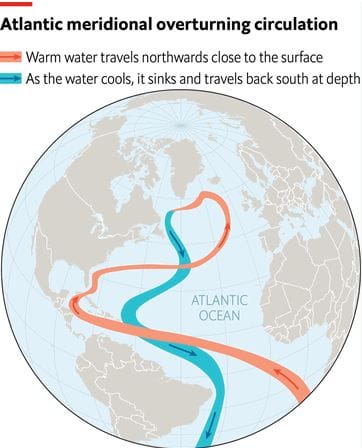
What is AMOC?

  • A giant Atlantic Ocean “conveyor belt”.
  • Warm surface water moves northwards; cold dense water sinks and flows southward deep in ocean.
  • Helps distribute global heat and regulate climate.

Why is it Weakening?

  • Melting Arctic/Greenland ice adds freshwater.
  • Reduced salinity prevents water from sinking properly.
  • This disrupts the circulation cycle.

Why is it Important?

AMOC influences:

  • Europe’s climate
  • Global rainfall patterns
  • Hurricanes & extreme weather
  • Monsoon systems

Tipping Point

  • Scientists fear irreversible collapse beyond a threshold.
  • Studies project up to 59% weakening by 2100.

Impact on India

  • Weak Indian monsoon
  • Erratic rainfall, floods & droughts
  • Longer dry spells
  • Threat to agriculture, food & water security
  • Stronger/unpredictable El Niño effects

India-EU FTA and Non-Tariff Barrier Concerns | UPSC Economy

Context: India-EU FTA

EU Ambassador to India Hervé Delphin called the proposed India–EU FTA the “mother of all trade deals”, but warned that strict EU compliance norms could reduce its actual benefits. Negotiations concluded in principle in January 2026; implementation is expected by early 2027.

India–EU FTA: Basics

  • Negotiations resumed in 2022 after an 8-year pause.
  • Covers:
    Goods | Services | Investment | Digital Trade | GIs
  • Potentially one of the world’s largest FTAs:
    ~2 billion people | ~25% global GDP

Why Important for India?

Better access to EU markets for:
Pharma | Textiles | Engineering goods | IT services

  • Investment & technology inflow
  • Supply-chain diversification
  • Strategic economic partnership with Europe

Core Concern

Even if tariffs are reduced, Indian exporters may still face strict EU:

  • Technical standards
  • Product certification
  • Environmental & sustainability rules
  • Customs/documentation requirements

These act as Non-Tariff Barriers (NTBs).

India’s Main Problem

  • Compliance costs may become too high, especially for MSMEs.
  • Businesses may feel FTA benefits are smaller than compliance burden.
  • EU’s strict green and regulatory framework may limit actual market access.

Kerala Accelerates Oil Spill Contingency Plan After Shipwrecks | UPSC Environment

Context: Oil Spill Contingency Plan

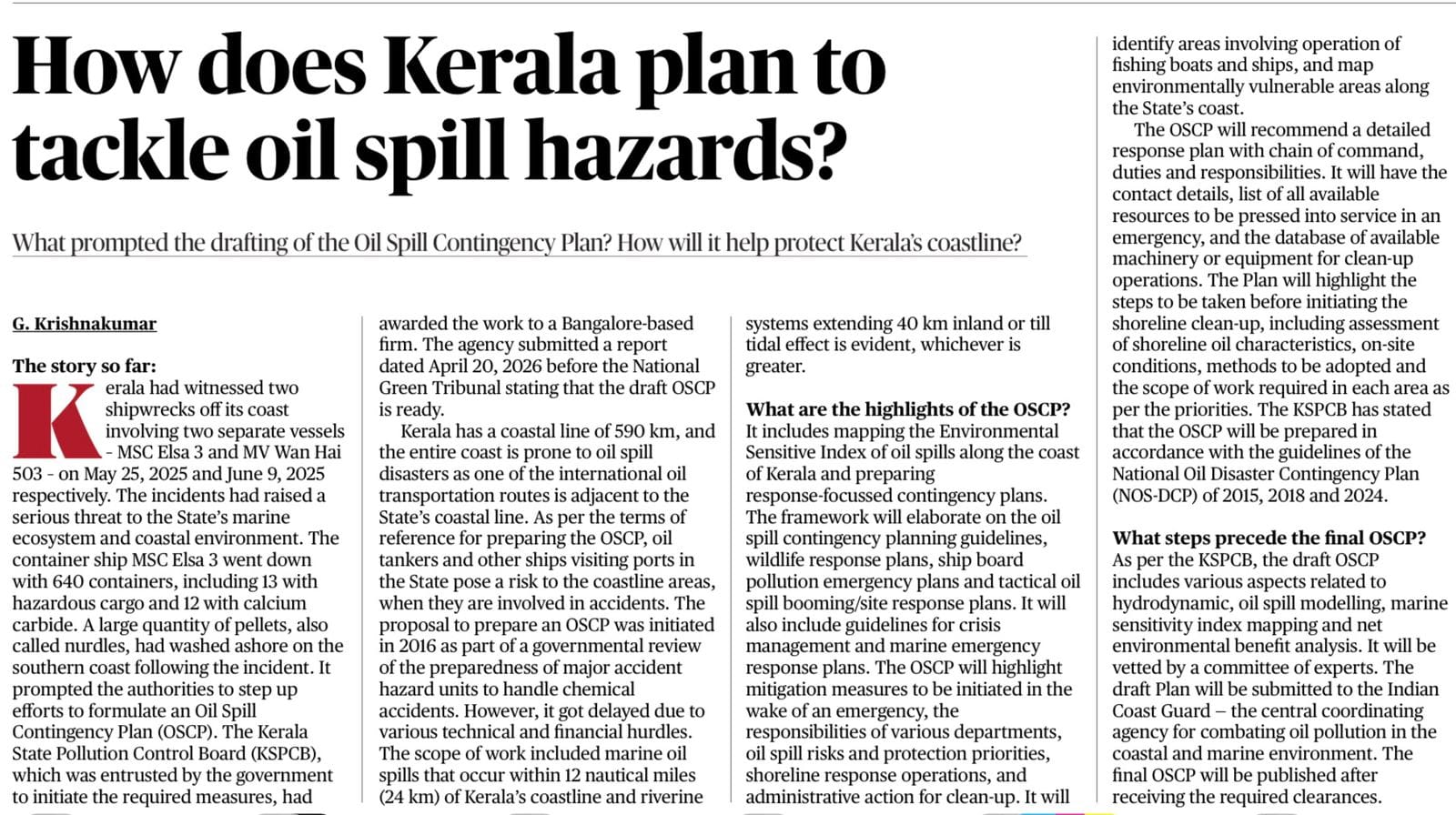
Following the MSC Elsa-3 and MV Wan Hai 503 shipwreck incidents off Kerala coast in 2025, the State accelerated preparation of an Oil Spill Contingency Plan (OSCP) to protect its marine ecosystem and coastline from oil spill disasters.

Oil Spill Contingency Plan

What are Oil Spills?

Release of crude oil/petroleum products into marine or coastal environment due to:
Ship accidents | Tanker leaks | Offshore drilling | Pipeline failure

Impacts of Oil Spills

  • Damage to marine biodiversity and fish breeding grounds
  • Threat to mangroves, coral reefs and coastal ecosystems
  • Decline in fisheries and tourism livelihoods
  • Toxic contamination of seawater and beaches
  • Long-term ecological and economic damage

Why Kerala is Vulnerable?

  • Kerala has a ~590 km coastline
  • Located near major international shipping and oil transport routes
  • Dense coastal population and fishing dependence increase risk

What is Kerala Doing?

Kerala State Pollution Control Board (KSPCB) is preparing the Oil Spill Contingency Plan (OSCP).

Prepared according to National Oil Spill Disaster Contingency Plan (NOS-DCP) guidelines.

Main Features of OSCP

  • Mapping environmentally sensitive coastal areas
  • Emergency response mechanism for oil spills
  • Clear chain of command and departmental responsibilities
  • Database of equipment and clean-up resources
  • Wildlife and shoreline protection plans
  • Coordination with Indian Coast Guard

Operation Sindoor and India’s Emerging Security Challenges | UPSC Internal Security

Context: Operation Sindoor

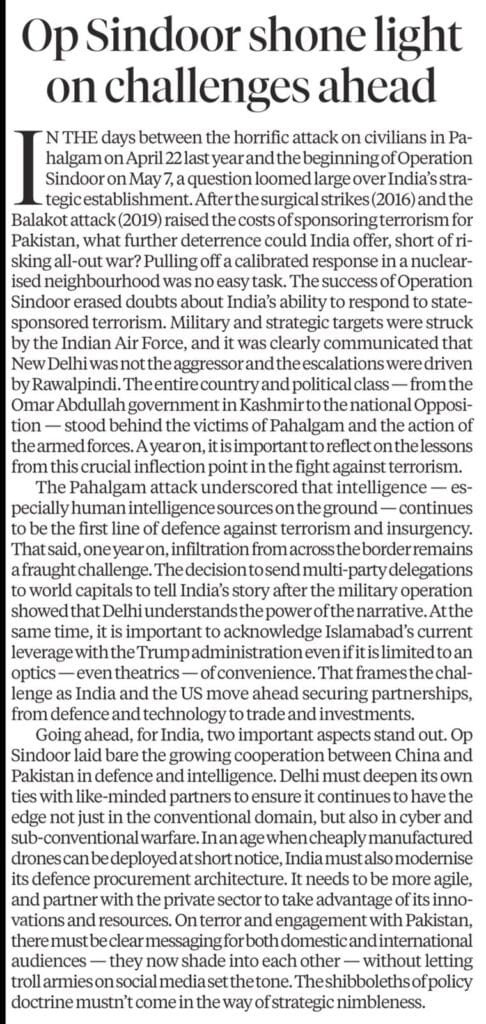
Operation Sindoor and the Pahalgam terror attack highlighted emerging challenges in India’s counter-terrorism and security strategy.

Operation Sindoor
Operation Sindoor

Key Challenges

  • Continued cross-border terrorism & infiltration
  • Growing China–Pakistan defence cooperation
  • Rise of drones, cyber and hybrid warfare
  • Importance of intelligence and surveillance
  • Increasing role of global narrative and diplomacy

What India Needs

  • Faster defence modernisation
  • Better intelligence coordination
  • Indigenous defence technology
  • Greater private sector participation
  • Stronger strategic partnerships

Core Idea

Future security challenges will depend not only on military strength, but also on technology, intelligence, cyber capability and strategic communication.

About the UPSC Civil Services Examination (UPSC CSE)

The UPSC Civil Services Examination (CSE) is one of the most competitive and esteemed examinations in India, conducted by the Union Public Service Commission to recruit officers for services such as the Indian Administrative Service (IAS), Indian Police Service (IPS), Indian Foreign Service (IFS), and others. The exam comprises three stages — Prelims, Mains, and the Personality Test (Interview) — designed to test a candidate’s knowledge, aptitude, decision-making, and leadership skills.


How to Prepare Effectively for UPSC CSE

Cracking the UPSC CSE requires a deep understanding of the syllabus, consistent revision, structured answer writing, and smart test-taking strategies. The Prelims test analytical and conceptual clarity, the Mains focuses on critical thinking, articulation, and subject mastery, while the Interview assesses presence of mind, ethical judgment, and personality traits relevant to public service.

At UnderStand UPSC, we empower aspirants with a personalized and focused approach to each stage of the exam.


Why Choose UnderStand UPSC?

UnderStand UPSC is a mentorship-driven platform offering a clear, clutter-free strategy to tackle the Civil Services Examination. Our programs like Transform (for beginners and intermediate learners) and Conquer (for advanced mains preparation) provide structured study plans, syllabus-wise video content, interactive live sessions, and answer writing support.

We emphasize:

  • Concept clarity through topic-wise lectures

  • Test series designed around real UPSC standards

  • Personalized mentorship in small groups

  • Regular performance tracking and peer benchmarking

  • Doubt-clearing sessions, current affairs analysis, and monthly magazines


Join the UnderStand UPSC Learning Community

Our mission is to make UPSC preparation less overwhelming and more strategic. We combine mentorship, discipline, and academic rigor to help you clear CSE with confidence. Whether you’re preparing from Delhi, Mumbai, Bangalore, or a remote village — our online-first model ensures quality guidance reaches every corner of India.

Join the thousands of aspirants who trust UnderStand UPSC to guide their journey toward becoming civil servants.

Stay connected with us through our Telegram, YouTube, and Instagram channels for daily tips, strategies, and updates.

Copyright © 2026 USARAMBHA EDUCATION (UnderStand UPSC). All Rights Reserved.

Join the Success Journey!


Talk to Our Mentor
Fill the form & we’ll get back to you


Talk to Our Mentor
Fill the form & we’ll get back to you