9 March 2026 | Daily Current Affairs

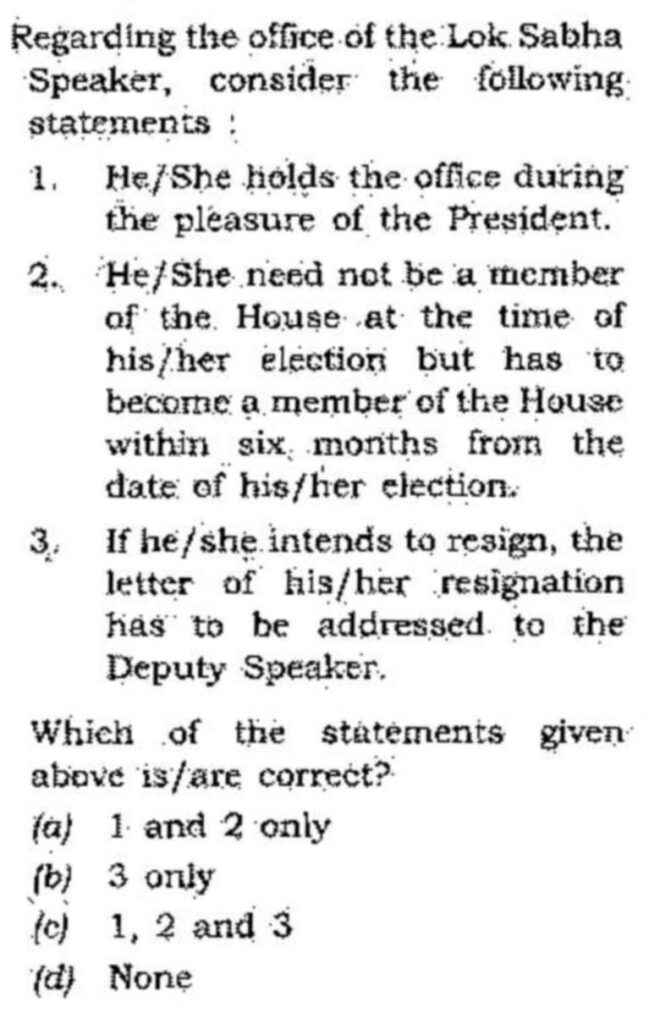
Removal of Lok Sabha Speaker: Constitutional Provisions and Process Explained for UPSC

Context:
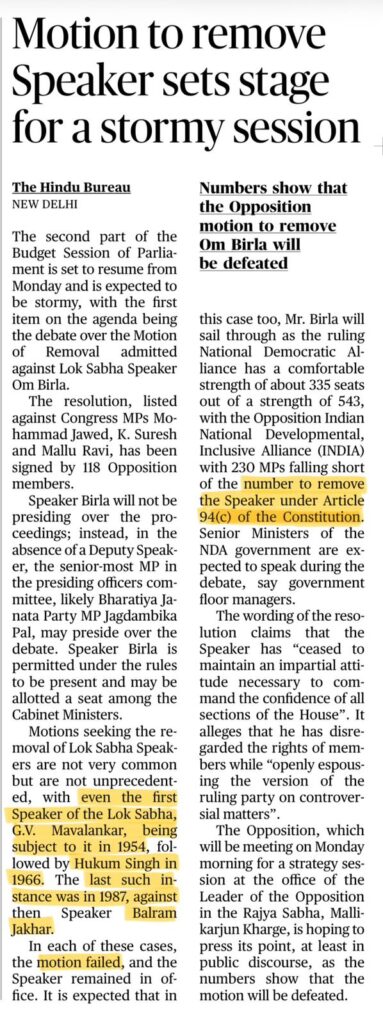
The Opposition moved a resolution to remove Lok Sabha Speaker Om Birla, leading to a major debate in the Budget Session.

1. Constitutional Provisions on Speaker

Article 93 — Election
• Lok Sabha elects Speaker and Deputy Speaker from among its members.

Article 94 — Tenure & Removal
• Speaker vacates office if:
– Ceases to be MP
– Resigns (to Deputy Speaker)
– Removed by Lok Sabha (Art. 94(c)).

Article 95 — Acting Presiding Officer
• Deputy Speaker or another member presides if office vacant or Speaker absent.

Article 96 — During Removal Motion
• Speaker does not preside; may participate and vote as a member.

2. Who Admits the Removal Motion

• Motion must be given with 14 days’ notice under Lok Sabha Rules.
• It is admitted by the Secretary-General of Lok Sabha (as per Rules of Procedure) after verifying notice requirements.
• Debate presided over by Deputy Speaker or senior-most member.
• Passage requires majority of all the then members of Lok Sabha (Art. 94(c)).

3. Present Numbers

• Motion signed by 118 Opposition Members of Parliament (MPs).
• Ruling alliance (~335/543) indicates defeat likely.

4. Motions earlier moved against

– G.V. Mavalankar (1954)
– Hukam Singh (1966)
– Balram Jakhar (1987)

• All failed; Speakers continued.
PYQ – 2012, Ans – B

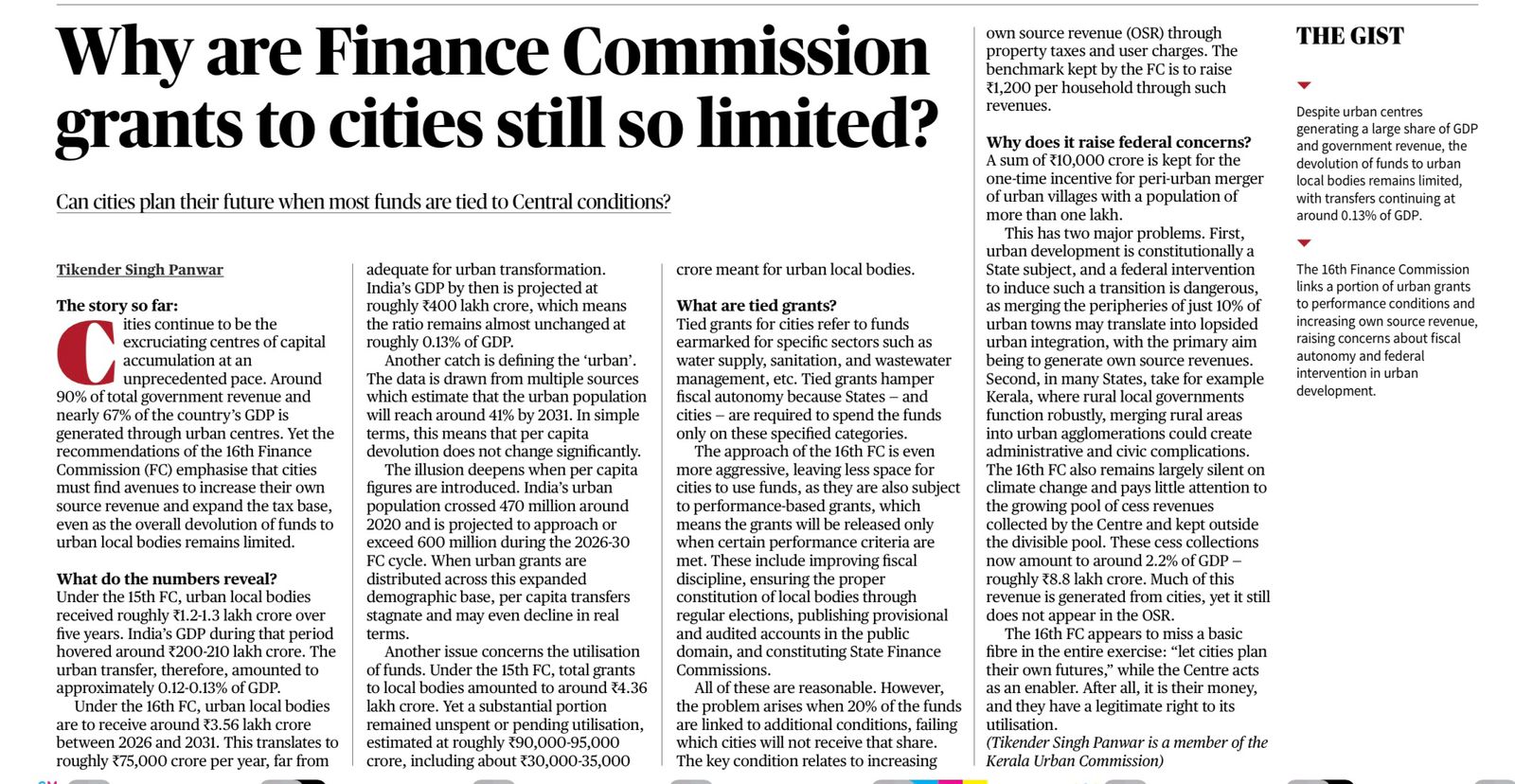
Finance Commission Grants to Urban Local Bodies: Issues and Trends for UPSC

Context:
Cities generate ~67% of GDP and ~90% of government revenue, yet Finance Commission transfers to urban local bodies remain only ~0.12–0.13% of GDP.

1. Finance Commission — Basis & Role

• Constituted under Article 280 by the President (every 5 years).
• Composition: 1 Chairman + 4 Members.

Recommends:
– Tax devolution (Union–States; among States).
– Grants-in-aid under Article 275.
– Measures to augment funds of Panchayats & Municipalities (urban local bodies).

2. Transfers to Urban Local Bodies

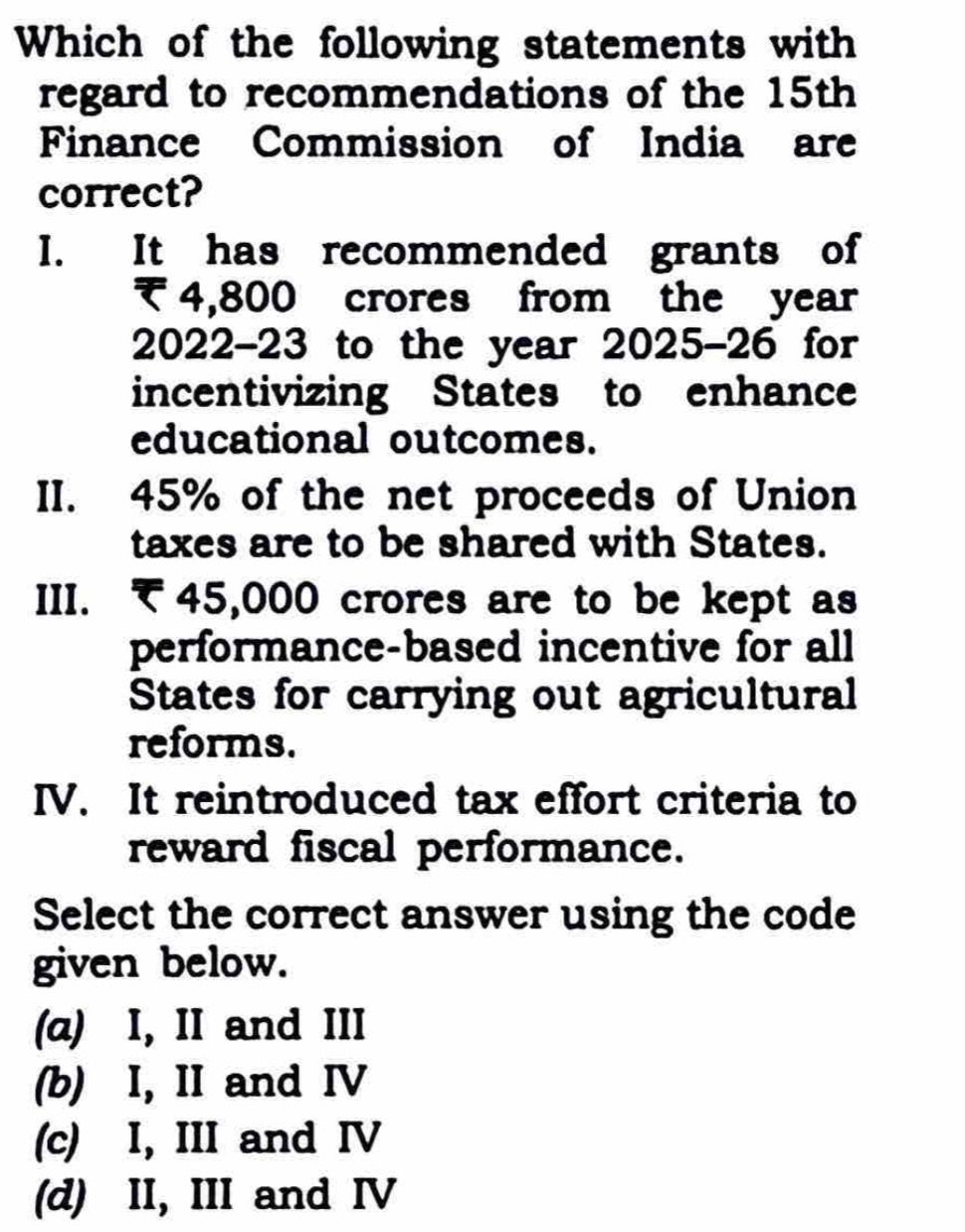
15th Finance Commission: ~₹1.2–1.3 lakh crore (5 years).
16th Finance Commission: ₹3.56 lakh crore (2026–31) (₹75,000 crore/year).

• Urban population:
– ~470 million (2020)
– May exceed 600 million by 2030
→ Per-capita support limited.

3. Why Grants Stay Limited

• Mostly tied grants (water, sanitation, waste), limiting flexibility.
Performance-linked conditions: audits, elections, fiscal discipline, State Finance Commissions.
• Urban development is a State subject (State List), raising federal concerns.

4. Structural Constraints

• Rising cess collections (~2.2% of GDP) outside divisible pool reduce devolution space.
• Weak own-source revenue (property tax, user charges) constrains cities.

PYQ – 2025, Ans – C

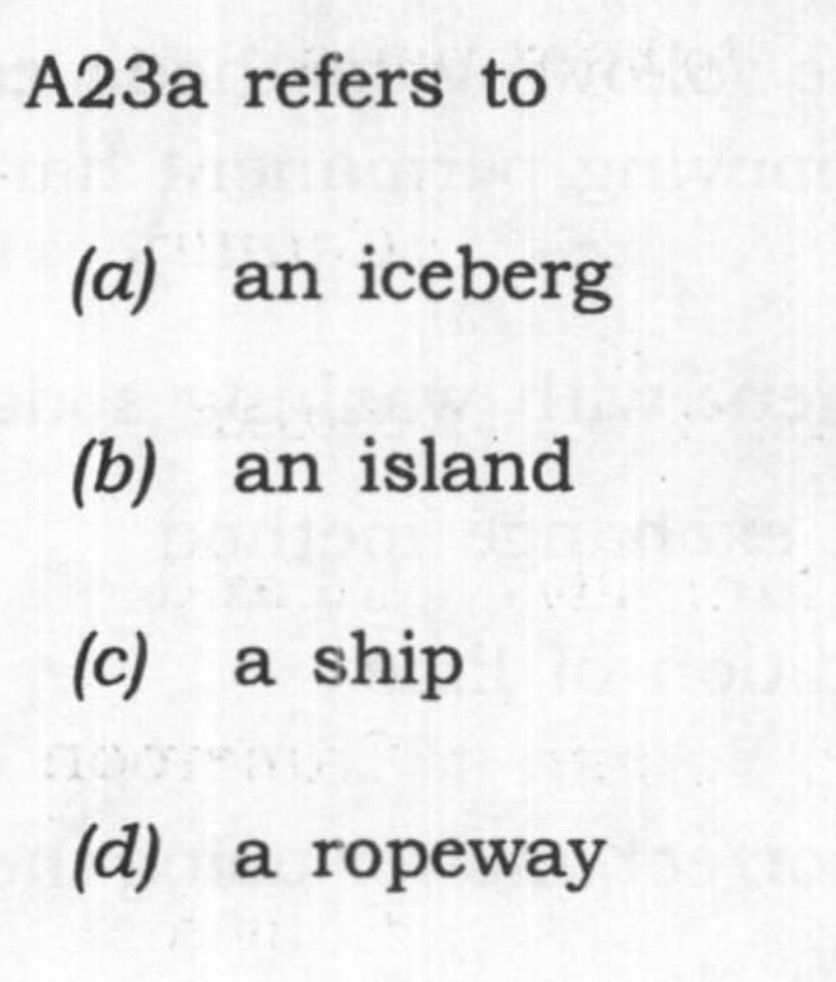
A23a Iceberg Drifting in South Atlantic: Antarctic Iceberg Lifecycle for UPSC Geography

Context

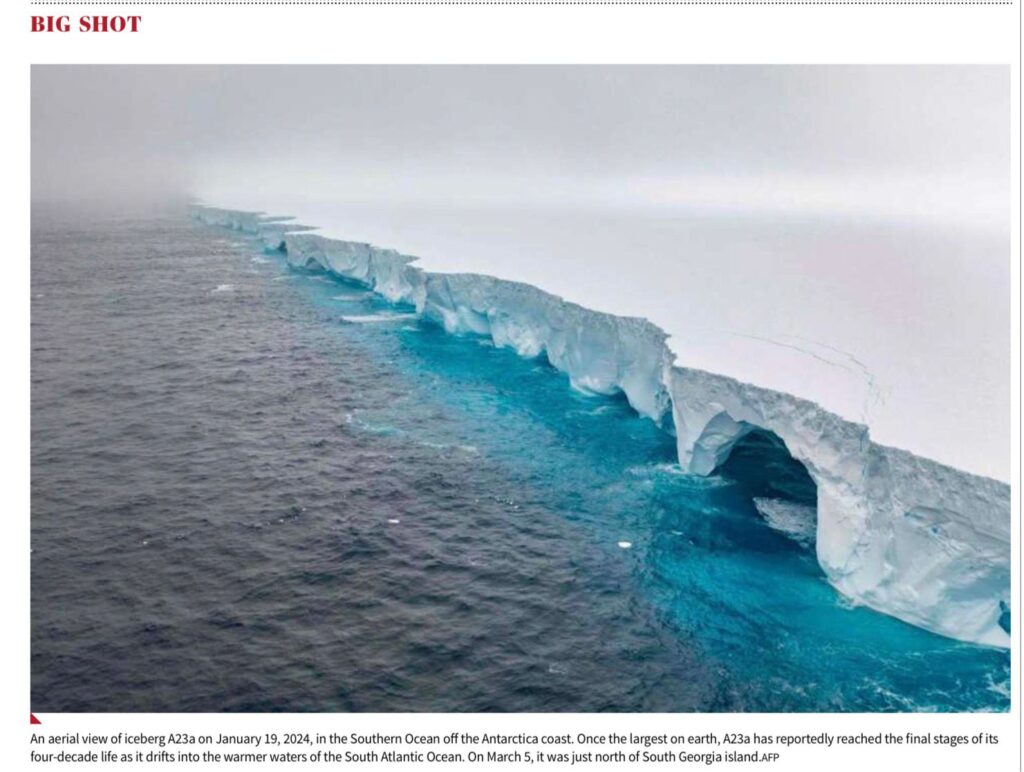
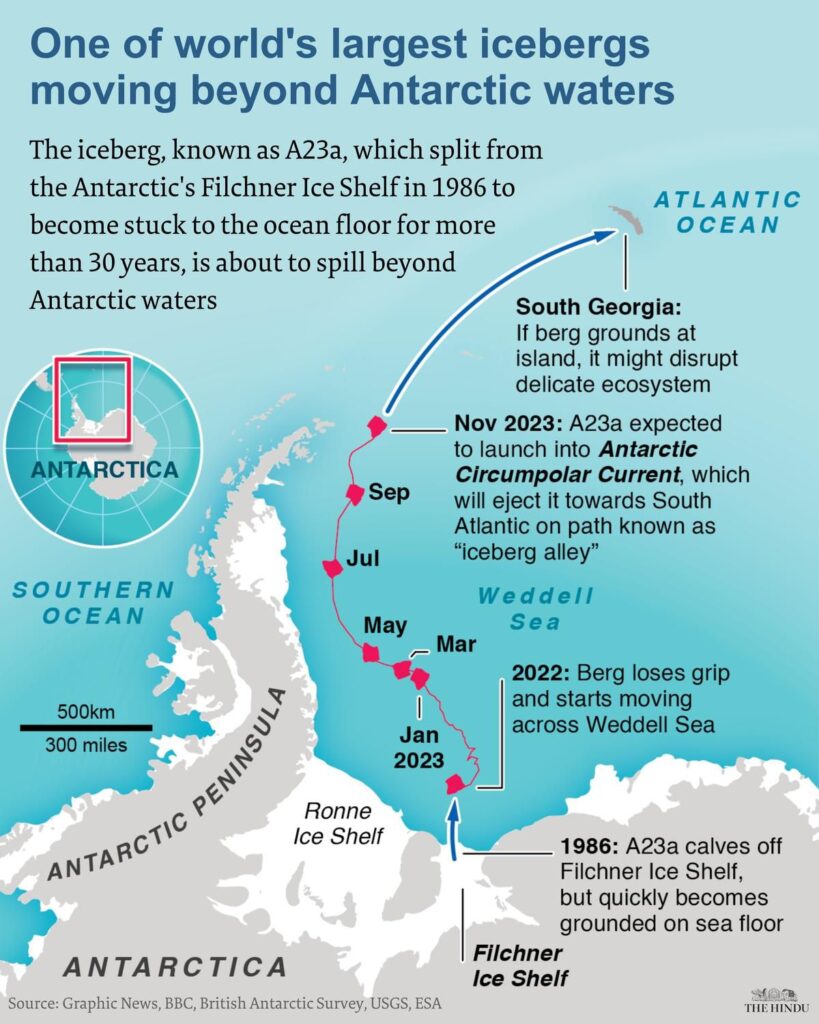
The giant Antarctic iceberg A23a, once the world’s largest, is drifting northwards into warmer waters of the South Atlantic near South Georgia Island, entering the final stage of its life cycle.

About A23a

• One of the largest icebergs ever recorded (~3,900 sq km).
• Broke off from Antarctica’s Filchner–Ronne Ice Shelf in 1986.
• Remained grounded in the Weddell Sea for decades before drifting since the 2020s.
• Now moving into warmer waters → expected to fragment and melt.

PYQ, Ans – A

Project Cheetah: Cheetahs Moving from Kuno to Rajasthan Explained for UPSC

1. Context

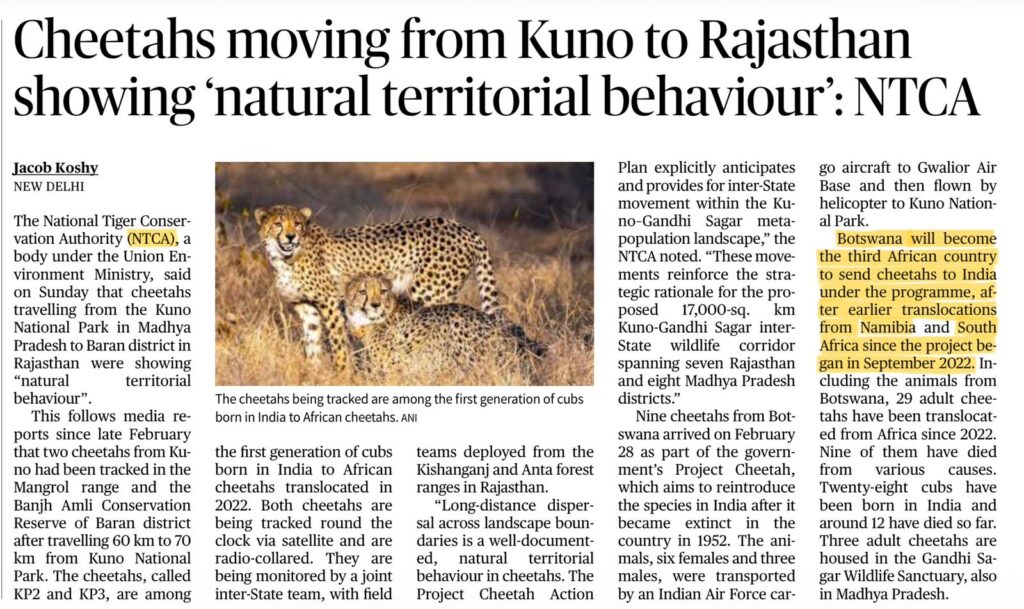
NTCA noted cheetahs moving from Kuno National Park (Madhya Pradesh) to Baran district (Rajasthan) show natural territorial dispersal.
• Two cheetahs (KP2, KP3), among first cubs born in India to African cheetahs (since 2022 translocation), travelled ~60–70 km.
• Movement aligns with the proposed Kuno–Gandhi Sagar landscape corridor (~17,000 sq km) across MP–Rajasthan.

2. National Tiger Conservation Authority (NTCA)

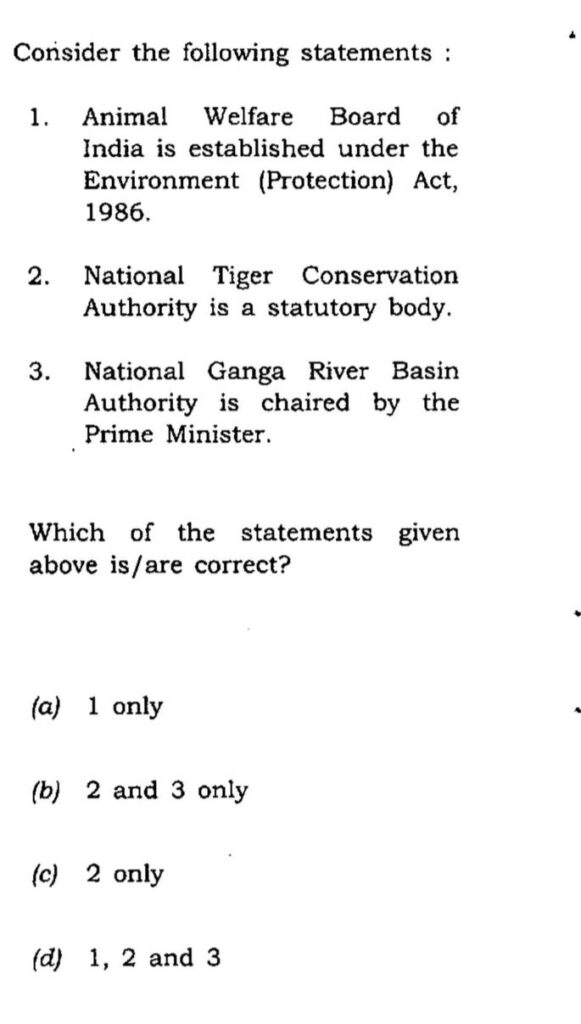
Statutory body under the Wild Life (Protection) Act, 1972 (amended 2006).
• Under Ministry of Environment, Forest and Climate Change.

Functions:
• Implement Project Tiger.
• Approve tiger reserves.
• Monitor conservation plans.
• Coordinate Centre–State action.
• Now overseeing Project Cheetah.

• Chaired by Union Environment Minister; includes officials, experts and MPs.

3. Project Cheetah

• Aims to reintroduce cheetahs in India after extinction in 1952.
• Began September 2022 with African cheetahs.

• So far:
– ~29 adults translocated
– Several deaths reported
– ~28 cubs born
– ~12 cub deaths noted

• Ongoing monitoring via satellite collars; inter-State dispersal expected in open savanna landscapes.

4. Source Countries (Africa) — Key Points

Namibia
• First batch (2022).
• Strong free-ranging cheetah population; semi-arid savanna habitat.

South Africa
• Managed metapopulation model.
• Fenced reserves aid breeding and genetic management.

Botswana
• Third African country sending cheetahs.
• Hosts one of Africa’s largest wild cheetah populations in the Kalahari ecosystem.

5. African vs Asiatic Cheetah

African cheetah (Acinonyx jubatus jubatus)
• Larger population.
• Found across eastern & southern Africa.
• Adapted to open grasslands.
• Source for India’s reintroduction.

Asiatic cheetah (Acinonyx jubatus venaticus)
Critically endangered.
• Now confined mainly to Iran.
• Smaller population, lighter coat, more fragmented habitat.

PYQ – 2014, Ans – B

Earthquake Zoning in India: Draft IS 1893 Changes and Government Withdrawal Explained

Context:
The Centre withdrew the revised earthquake zoning under draft IS 1893:2025 after objections over its scientific basis and cost implications for infrastructure.

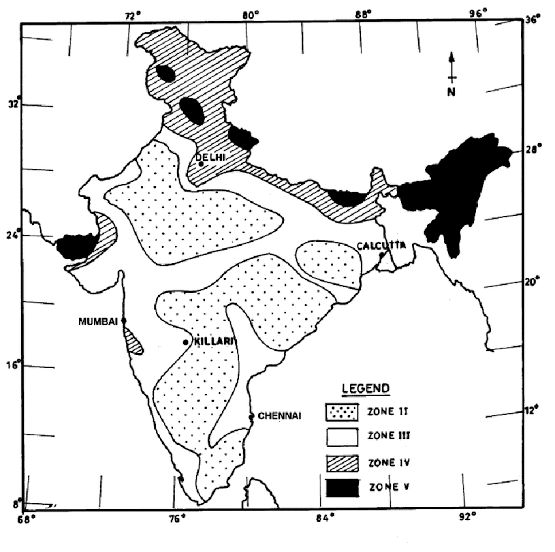
1. Earlier Zoning (IS 1893:2016)

Zone II (Low)
• Central & Peninsular interiors — e.g., Madhya Pradesh, Chhattisgarh, parts of Karnataka, Telangana.

Zone III (Moderate)
• e.g., Kerala, Tamil Nadu, Andhra Pradesh, Odisha, Maharashtra (parts).

Zone IV (High)
• e.g., Delhi, Haryana, Punjab, Bihar, West Bengal (parts).

Zone V (Very High)
• e.g., Jammu & Kashmir/Ladakh, Himachal Pradesh, Uttarakhand, Northeast, Rann of Kutch.

2. Proposed Change (IS 1893:2025 draft — exact shift)

• Based on probabilistic seismic hazard assessment (PSHA), new ground-motion data, tectonic mapping and historical earthquake records.

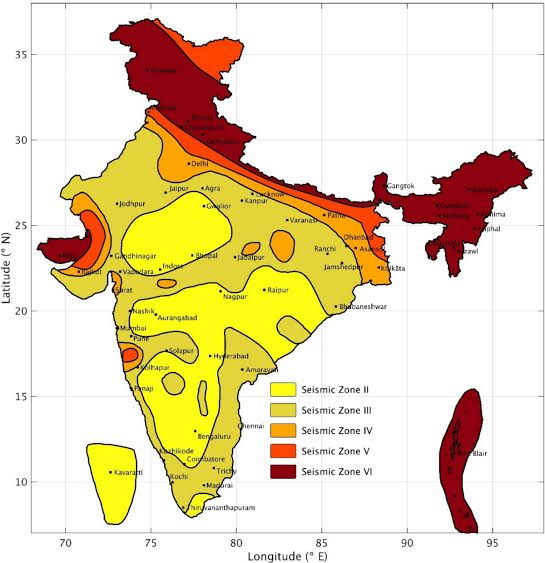
• Proposed six-zone gradation (II–VI):

Zone II: Low — peninsular interiors.
Zone III: Moderate — southern & central belts.
Zone IV: High — Indo-Gangetic plains (Delhi–Bihar belt).
Zone V: Very high — Himalayan belt & Northeast.
Zone VI (new): Extremely high — parts of Kashmir, Northeast and Kutch.

3. Basis for Introducing Zone VI

• Areas with highest peak ground acceleration (PGA) levels.
• Active faults and plate-boundary interactions (Himalayan collision zone).
• Past major earthquakes (Kashmir, Assam, Bhuj region).
• Required stricter building norms, deeper foundations and higher safety margins.

4. Why Questioned

• Agencies (MoHUA, NDMA/NDSA, Metro Rail bodies) flagged methodology concerns.
• Reclassification → higher construction costs for large infrastructure.
• Risks of delays and stranded projects cited.

5. Agency Responsible

Bureau of Indian Standards (BIS) prepares seismic zoning and building codes.
• BIS is a statutory body under the BIS Act, 2016.
• Works under Ministry of Consumer Affairs, Food & Public Distribution.

Copyright © 2026 USARAMBHA EDUCATION (UnderStand UPSC). All Rights Reserved.

Inquiry form for
Takshila Residential Program