13 June 2026 | Daily Current Affairs

Coal Exchanges in India: Coal Exchange Rules 2026, Coal Sector Reforms & MMDR Act Explained for UPSC

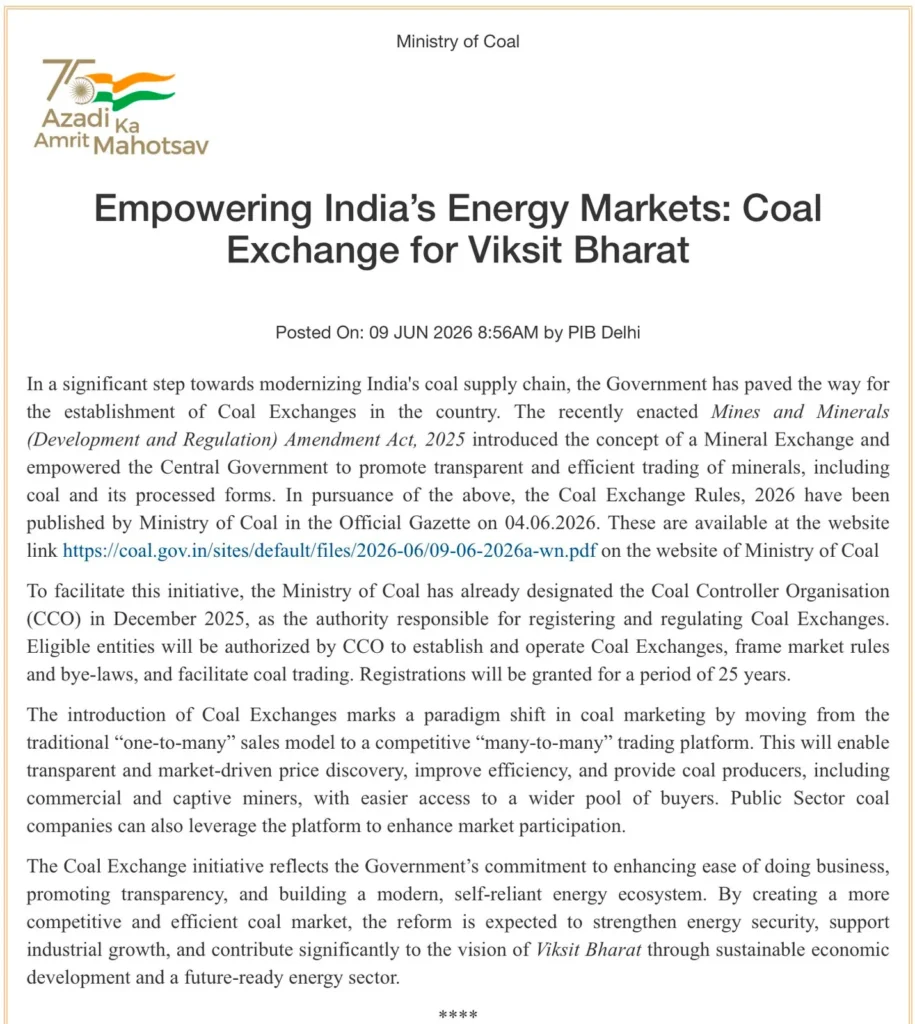
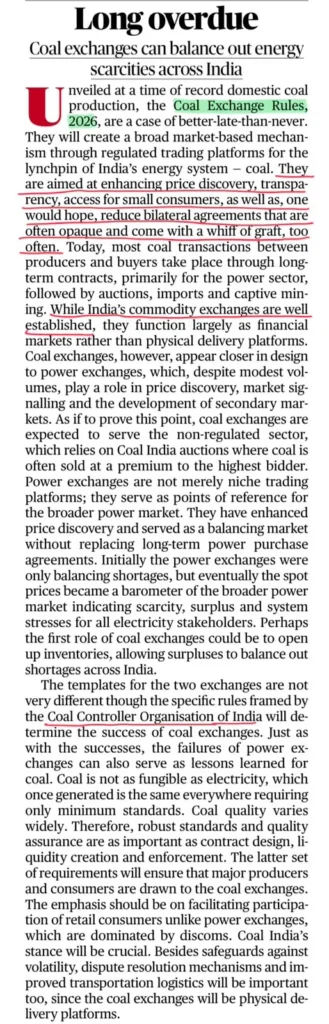
Context: Coal Exchanges in India
Coal Exchange Rules, 2026 were notified under the Mines and Minerals (Development and Regulation) Amendment Act, 2025 to establish regulated Coal Exchanges for market-based coal trading.

Why this Reform?

India’s coal sector has largely operated through:

  • Long-term contracts
  • Auctions
  • Administrative allocation

Coal Exchanges aim to introduce:

  • Transparent price discovery
  • Competition
  • Efficient allocation
  • Wider market-based access to coal

Coal Exchange

A Coal Exchange is a regulated platform where multiple buyers and sellers trade coal, similar to power exchanges.

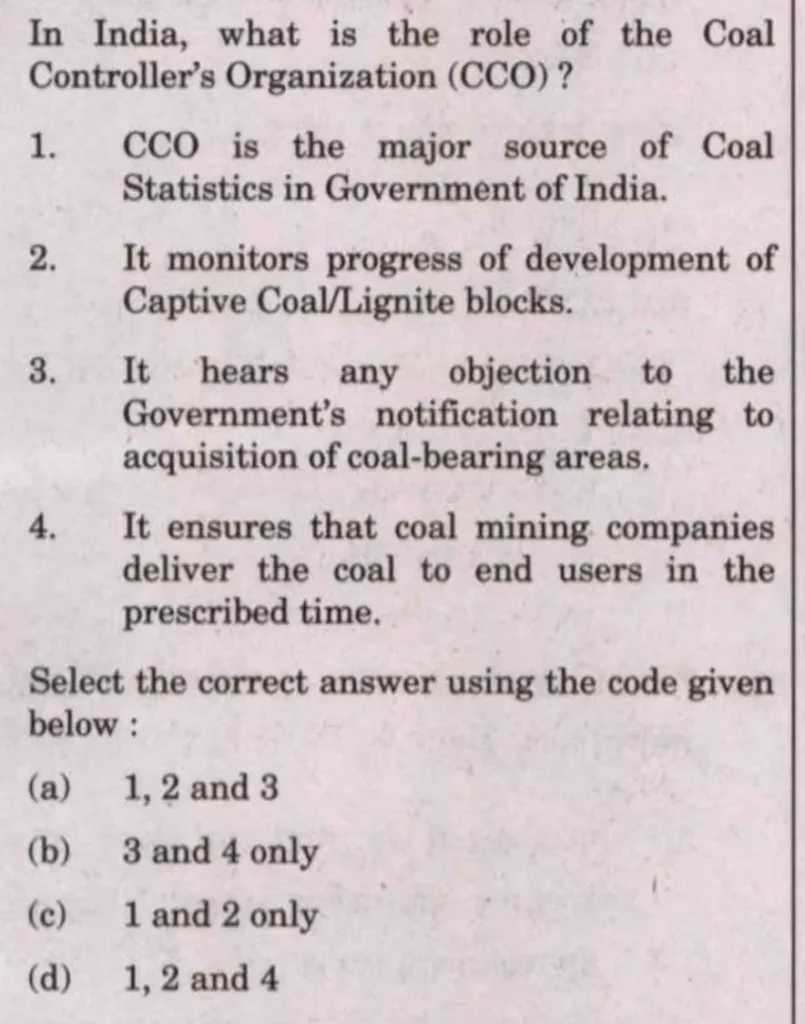
Coal Controller Organisation

Status

  • Non-statutory office under the Ministry of Coal.

Functions of Coal Controller Organisation

  • Coal statistics
  • Coal grading
  • Quality surveillance
  • Monitoring captive coal / lignite blocks
  • Regulation of Coal Exchanges

Legal Framework

MMDR Act, 1957

  • Principal law governing mining.
  • States auction most onshore mineral blocks and grant leases.
  • Centre notifies minerals and frames rules.

Coal Mines Special Provisions Act, 2015

  • Introduced auction-based allocation of coal blocks.

Coal Sector Reforms Timeline

Private Mining
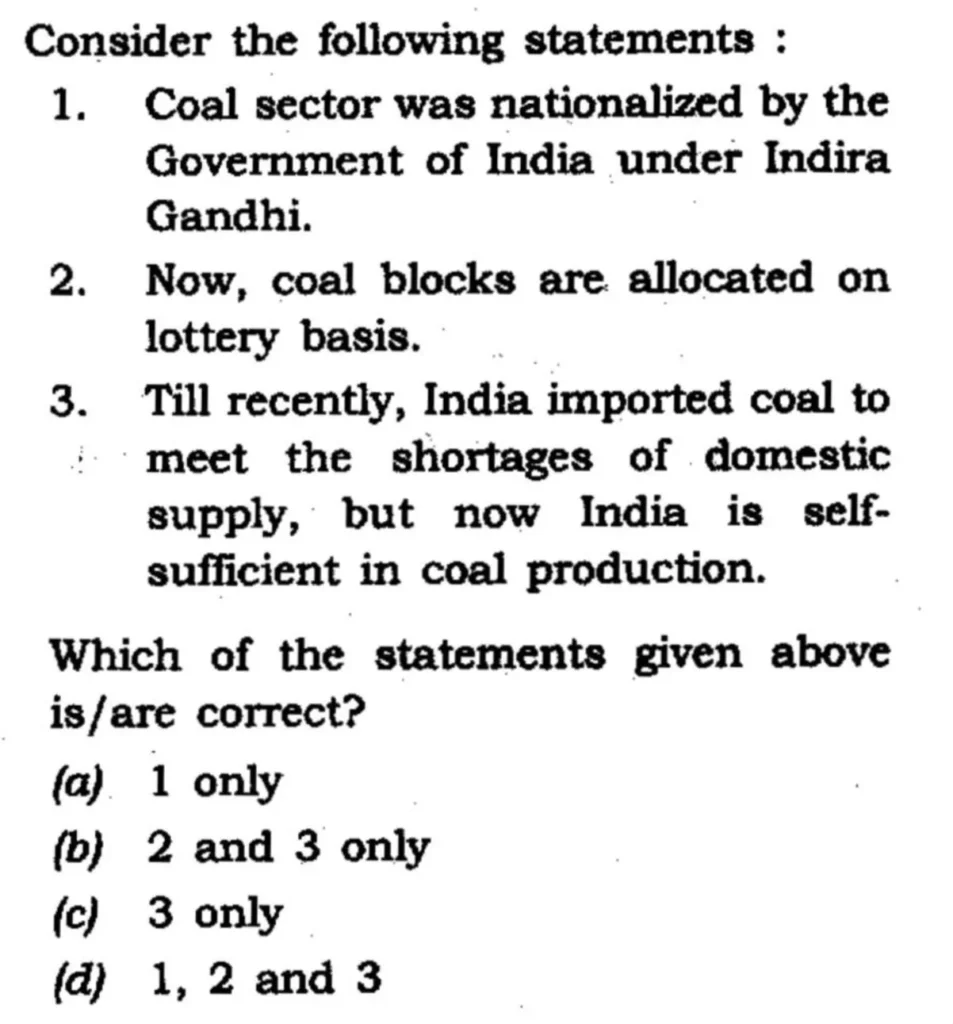
→ Nationalisation
Coal India Limited, 1975
→ Coal Block Auctions, 2015
→ Commercial Coal Mining, 2020
→ Coal Exchanges, 2026

Nationalisation of Coal

Coking Coal Mines Nationalisation Act, 1972

Coal Mines Nationalisation Act, 1973

Prelims Facts

  • China is the world’s largest producer and consumer of coal.
  • India ranks 2nd in coal production and consumption.
  • USA has the world’s largest coal reserves.
  • India ranks 5th in coal reserves, around 401 billion tonnes.
  • India’s annual coal production has crossed 1 billion tonnes.
  • Coal India Limited contributes about 75% of domestic coal production.
  • Coal-based thermal power plants generate nearly 75% of India’s electricity.
  • India imports coal mainly for coking coal used in the steel industry.

Coal Quality Sequence

Anthracite → Bituminous → Lignite → Peat

This is the decreasing order of carbon content and calorific value.
Coal Exchanges in India

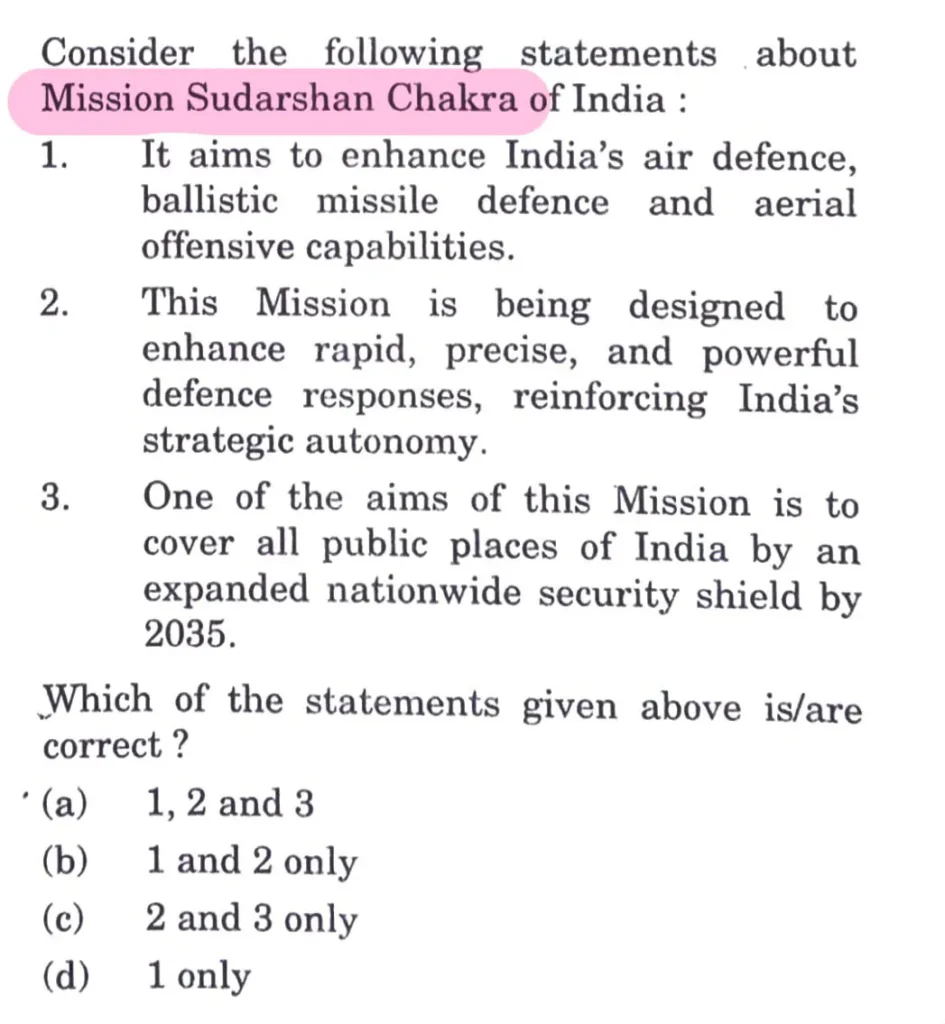
Project Kusha: India’s Long-Range Air Defence System and Mission Sudarshan Chakra for UPSC

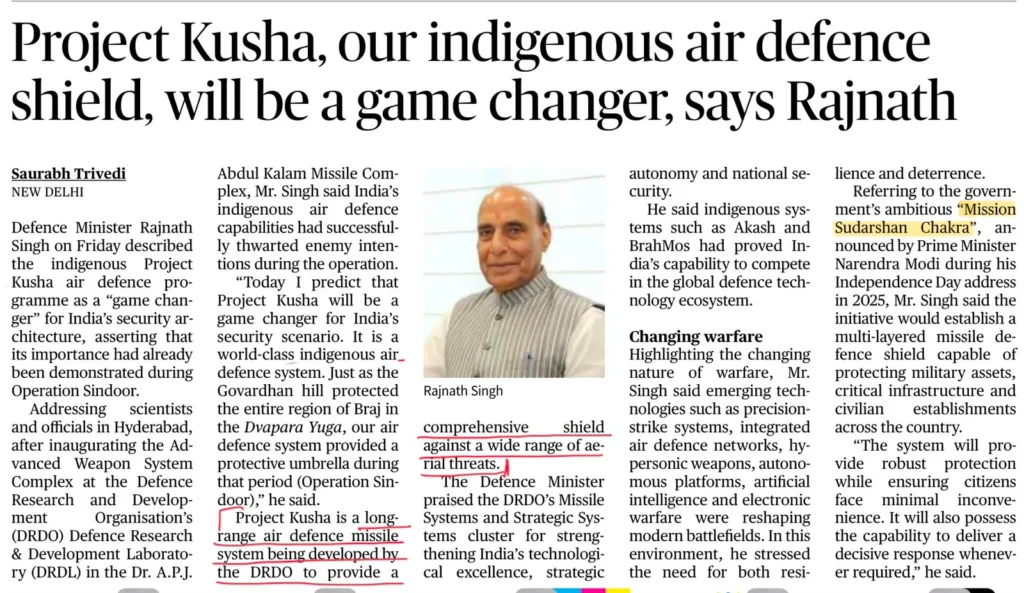
Context: Project Kusha
Defence Minister Rajnath Singh highlighted the importance of Project Kusha, India’s indigenous long-range air defence programme developed by the Defence Research and Development Organisation.

Project Kusha

Project Kusha is an indigenous Long-Range Surface-to-Air Missile system.

It is designed to intercept:

  • Aircraft
  • Stealth fighters
  • Unmanned Aerial Vehicles
  • Cruise missiles
  • Ballistic missiles

Development Status

  • Received Acceptance of Necessity from the Defence Acquisition Council in 2023.
  • Induction expected around 2028–29.

Key Features

  • Three-layer interceptor system.
  • Engagement ranges of about:
    • 150 km
    • 250 km
    • 350 km
  • Intended to provide capabilities comparable in role to advanced systems such as S-400 Triumf.

Mission Sudarshan Chakra

Mission Sudarshan Chakra is a national initiative launched in 2025 to establish a country-wide multi-layered air and missile defence shield by 2035.

Objective

To protect:

  • Major cities
  • Military installations
  • Nuclear assets
  • Critical infrastructure

Project Kusha vs Mission Sudarshan Chakra

Project Kusha

  • Specific long-range interceptor missile system.
  • Weapon system.

Mission Sudarshan Chakra

  • Overall national air-defence architecture.
  • Integrated defence network.

Relationship Between Both

Project Kusha will form one of the major layers within Mission Sudarshan Chakra.

Project Kusha
Project Kusha

Minimum Universal Disability Pension Floor Rate: Disability Rights, Article 14 & Social Security for UPSC

Context: Minimum Universal Disability Pension Floor Rate
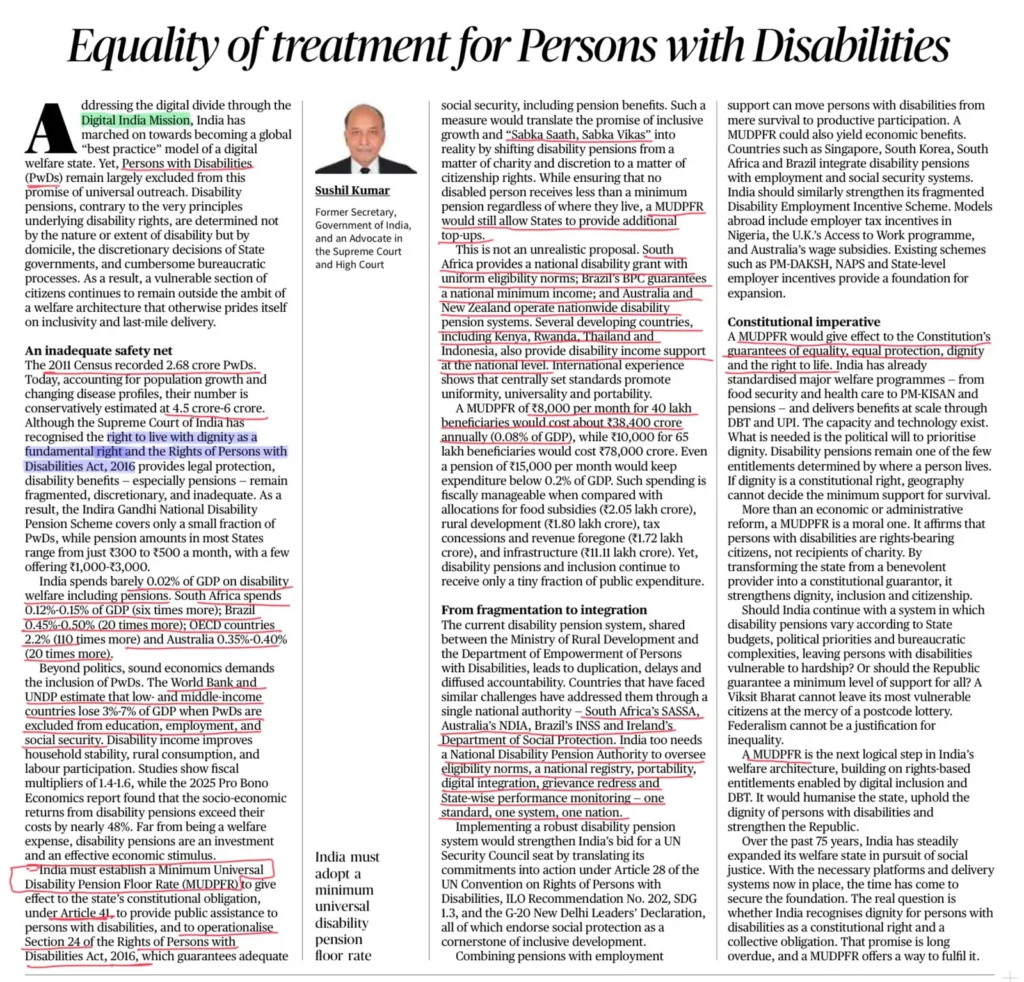
The article argues for a Minimum Universal Disability Pension Floor Rate so that every Person with Disability receives a nationally guaranteed minimum pension, ensuring equality, dignity and social security across India.

Minimum Universal Disability Pension Floor Rate

It means a nationally guaranteed minimum disability pension amount below which no eligible person with disability should receive pension.

States may provide additional top-ups above this floor rate.

Why is it Needed?

  • Disability pensions vary widely across States.
  • 2011 Census recorded 2.68 crore Persons with Disabilities.
  • Current estimates place PwDs at around 4.5–6 crore.
  • India spends only 0.02% of GDP on disability welfare.
  • Exclusion of PwDs from education, employment and social security may cost economies 3–7% of GDP.
  • A pension floor of ₹8,000 per month would cost only about 0.08% of GDP.

Legal Basis

Article 14

Article 21

  • Right to life with dignity.

Important cases:

  • Francis Coralie Mullin, 1981
  • Bandhua Mukti Morcha, 1984

Article 41

  • Public assistance in cases of disability.
  • Directive Principle of State Policy.

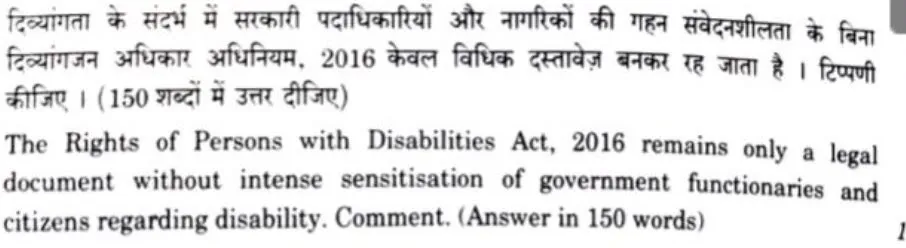
Rights of Persons with Disabilities Act, 2016

  • Expanded recognised disabilities from 7 to 21.
  • Section 24 mandates social security support.

Way Forward

  • Introduce national disability pension floor with State top-ups.
  • Create National Disability Pension Authority.
  • Ensure portability of benefits.
  • Ensure uniform eligibility criteria.
  • Establish grievance redressal mechanism.
  • Move from fragmented schemes to an integrated national disability support system.

Global Examples

Similar nationwide disability income support exists in:

Prelims Fact

India is a signatory to the United Nations Convention on the Rights of Persons with Disabilities.

Minimum Universal Disability Pension Floor Rate

Retail Inflation in India Rises to 3.9%: CPI vs WPI, RBI Inflation Target & UPSC Notes

Context: Retail Inflation in India
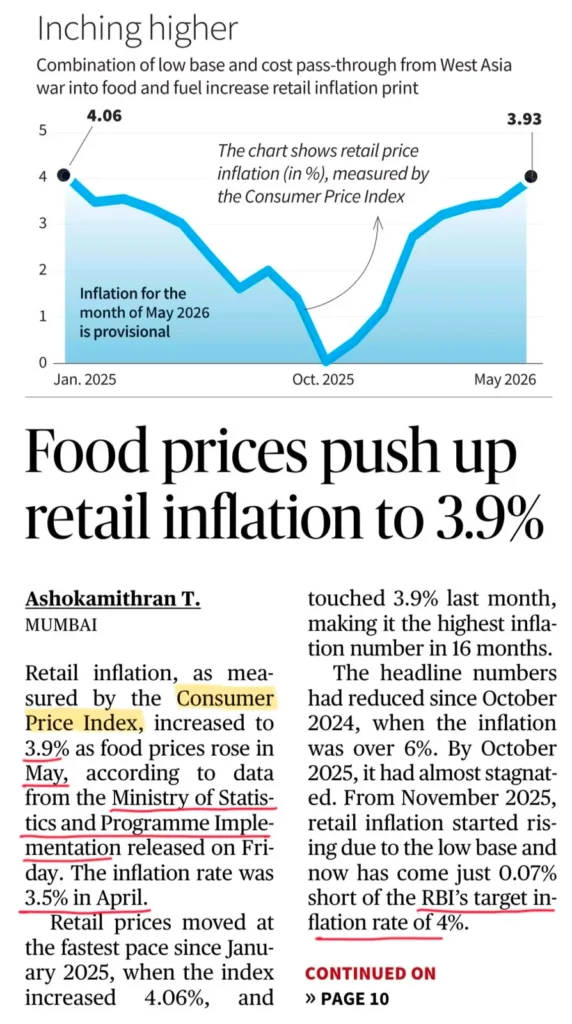
Retail inflation, measured by the Consumer Price Index, increased from 3.5% in April 2026 to 3.9% in May 2026 due to rising food prices. Inflation remains within the Reserve Bank of India target range.

Consumer Price Index

CPI

Wholesale Price Index

WPI

CPI vs WPI

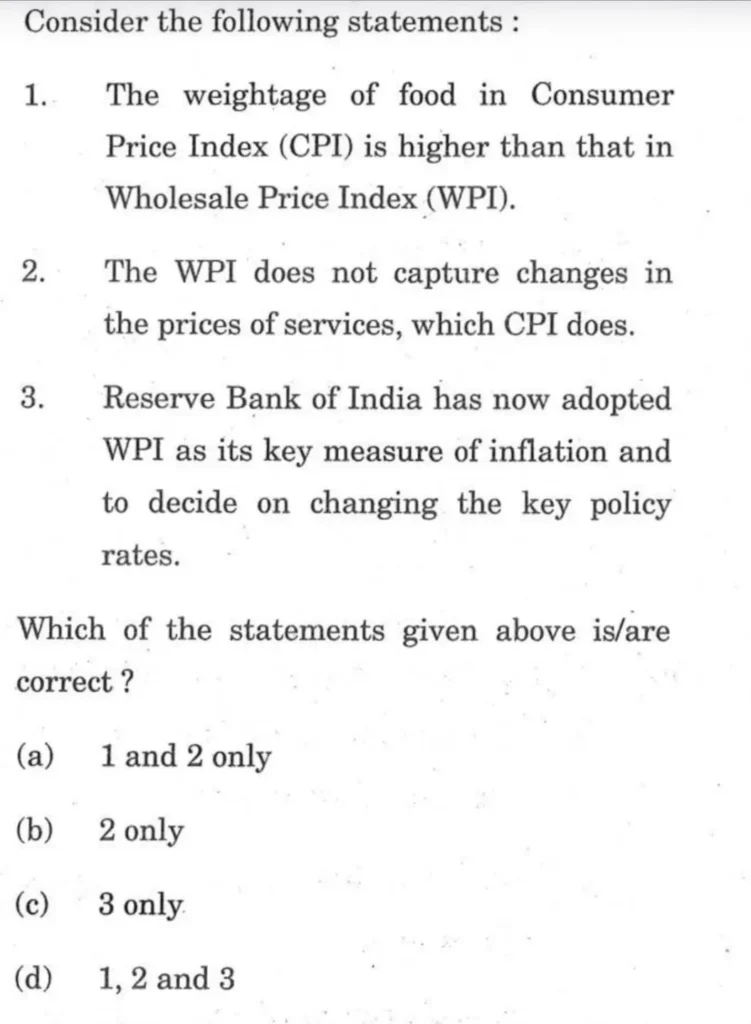
Food Weight

  • CPI: 45.86%
  • WPI Food Articles: 22.62%

So, food weight is higher in CPI than WPI.

Services

  • CPI includes services.
  • WPI excludes services.

RBI Target

  • RBI targets CPI inflation, not WPI inflation.

Prelims Facts

CPI Base Year

  • Earlier: 2012
  • Revised: 2024

WPI Base Year

  • Earlier: 2011–12
  • Revised: 2022–23

GDP Base Year

  • Earlier: 2011–12
  • Revised: 2022–23

Index of Industrial Production Base Year

  • Earlier: 2011–12
  • Revised: 2022–23

RBI Inflation Target

  • 4% ± 2%
  • Target range: 2% to 6%

Monetary Policy Committee

  • 6 members.
  • 3 from RBI.
  • 3 nominated by Central Government.
  • RBI Governor has a casting vote.
Retail Inflation in India

Free Education from KG to PG in Odisha: NEP 2020, Article 21A and Inclusive Development for UPSC

Context: Free Education from KG to PG
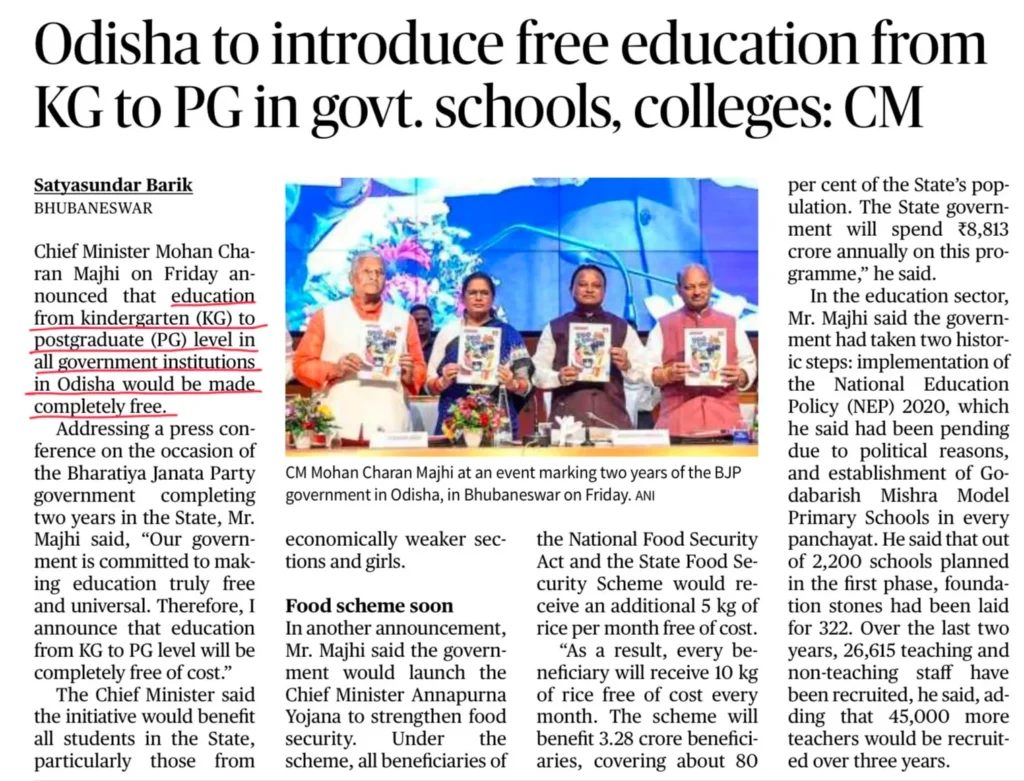
Odisha Government announced free education from Kindergarten to Postgraduate level in all government educational institutions to improve access, affordability and educational inclusion.

Key Idea

Education from KG to PG in government institutions will be made completely free.

Significance

  • Improves educational access.
  • Reduces financial burden on poor families.
  • Promotes inclusion of girls and economically weaker sections.
  • Supports human capital formation.
  • Strengthens productivity and demographic dividend.
  • Can improve labour-force participation, especially among women.

Constitutional and Policy Linkages

Article 21A

  • Right to Education for children aged 6–14 years.

Article 45

  • Early Childhood Care and Education.

National Education Policy, 2020

  • Advocates universal access from pre-school to higher education.

Sustainable Development Goal 4

  • Inclusive and equitable quality education for all.

Mains Value Addition

This can be cited as an example of:

  • Welfare-state approach to education.
  • Inclusive development.
  • Social justice.
  • Human resource development.
  • State-led investment in human capital.
Free Education from KG to PG

PCPNDT Act 1994: Supreme Court on Male Child Preference, Gender Justice & Female Foeticide for UPSC

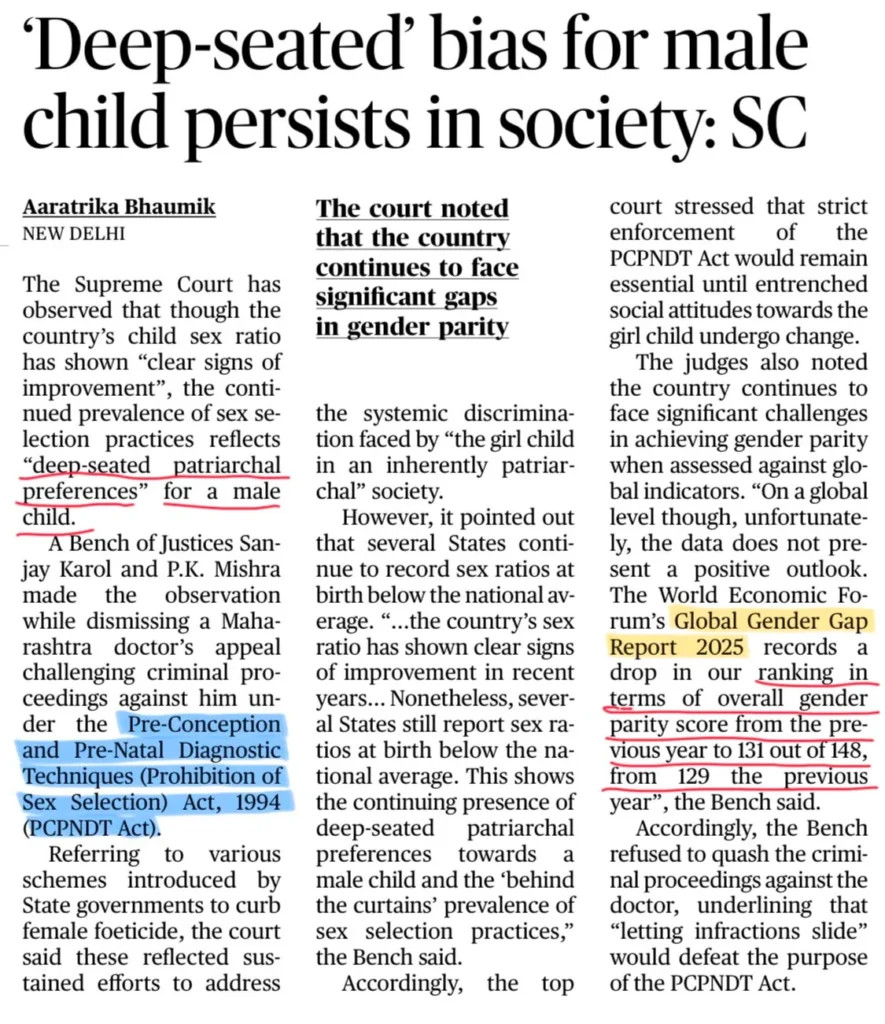
Context: PCPNDT Act 1994
Odisha Government announced free education from Kindergarten to Postgraduate level in all government educational institutions to improve access, affordability and educational inclusion.

Key Idea

Education from KG to PG in government institutions will be made completely free.

Significance

  • Improves educational access.
  • Reduces financial burden on poor families.
  • Promotes inclusion of girls and economically weaker sections.
  • Supports human capital formation.
  • Strengthens productivity and demographic dividend.
  • Can improve labour-force participation, especially among women.

Constitutional and Policy Linkages

Article 21A

  • Right to Education for children aged 6–14 years.

Article 45

  • Early Childhood Care and Education.

National Education Policy, 2020

  • Advocates universal access from pre-school to higher education.

Sustainable Development Goal 4

  • Inclusive and equitable quality education for all.

Mains Value Addition

This can be cited as an example of:

  • Welfare-state approach to education.
  • Inclusive development.
  • Social justice.
  • Human resource development.
  • State-led investment in human capital.
PCPNDT Act 1994
PCPNDT Act 1994
About the UPSC Civil Services Examination (UPSC CSE)

The UPSC Civil Services Examination (CSE) is one of the most competitive and esteemed examinations in India, conducted by the Union Public Service Commission to recruit officers for services such as the Indian Administrative Service (IAS), Indian Police Service (IPS), Indian Foreign Service (IFS), and others. The exam comprises three stages — Prelims, Mains, and the Personality Test (Interview) — designed to test a candidate’s knowledge, aptitude, decision-making, and leadership skills.


How to Prepare Effectively for UPSC CSE

Cracking the UPSC CSE requires a deep understanding of the syllabus, consistent revision, structured answer writing, and smart test-taking strategies. The Prelims test analytical and conceptual clarity, the Mains focuses on critical thinking, articulation, and subject mastery, while the Interview assesses presence of mind, ethical judgment, and personality traits relevant to public service.

At UnderStand UPSC, we empower aspirants with a personalized and focused approach to each stage of the exam.


Why Choose UnderStand UPSC?

UnderStand UPSC is a mentorship-driven platform offering a clear, clutter-free strategy to tackle the Civil Services Examination. Our programs like Transform (for beginners and intermediate learners) and Conquer (for advanced mains preparation) provide structured study plans, syllabus-wise video content, interactive live sessions, and answer writing support.

We emphasize:

  • Concept clarity through topic-wise lectures

  • Test series designed around real UPSC standards

  • Personalized mentorship in small groups

  • Regular performance tracking and peer benchmarking

  • Doubt-clearing sessions, current affairs analysis, and monthly magazines


Join the UnderStand UPSC Learning Community

Our mission is to make UPSC preparation less overwhelming and more strategic. We combine mentorship, discipline, and academic rigor to help you clear CSE with confidence. Whether you’re preparing from Delhi, Mumbai, Bangalore, or a remote village — our online-first model ensures quality guidance reaches every corner of India.

Join the thousands of aspirants who trust UnderStand UPSC to guide their journey toward becoming civil servants.

Stay connected with us through our Telegram, YouTube, and Instagram channels for daily tips, strategies, and updates.

Copyright © 2026 USARAMBHA EDUCATION (UnderStand UPSC). All Rights Reserved.

Start Your
UPSC Journey

Our team will reach out to you soon