Asiatic Lion Second Habitat: Need for Long-Term Conservation
Context: Asiatic lion second habitat
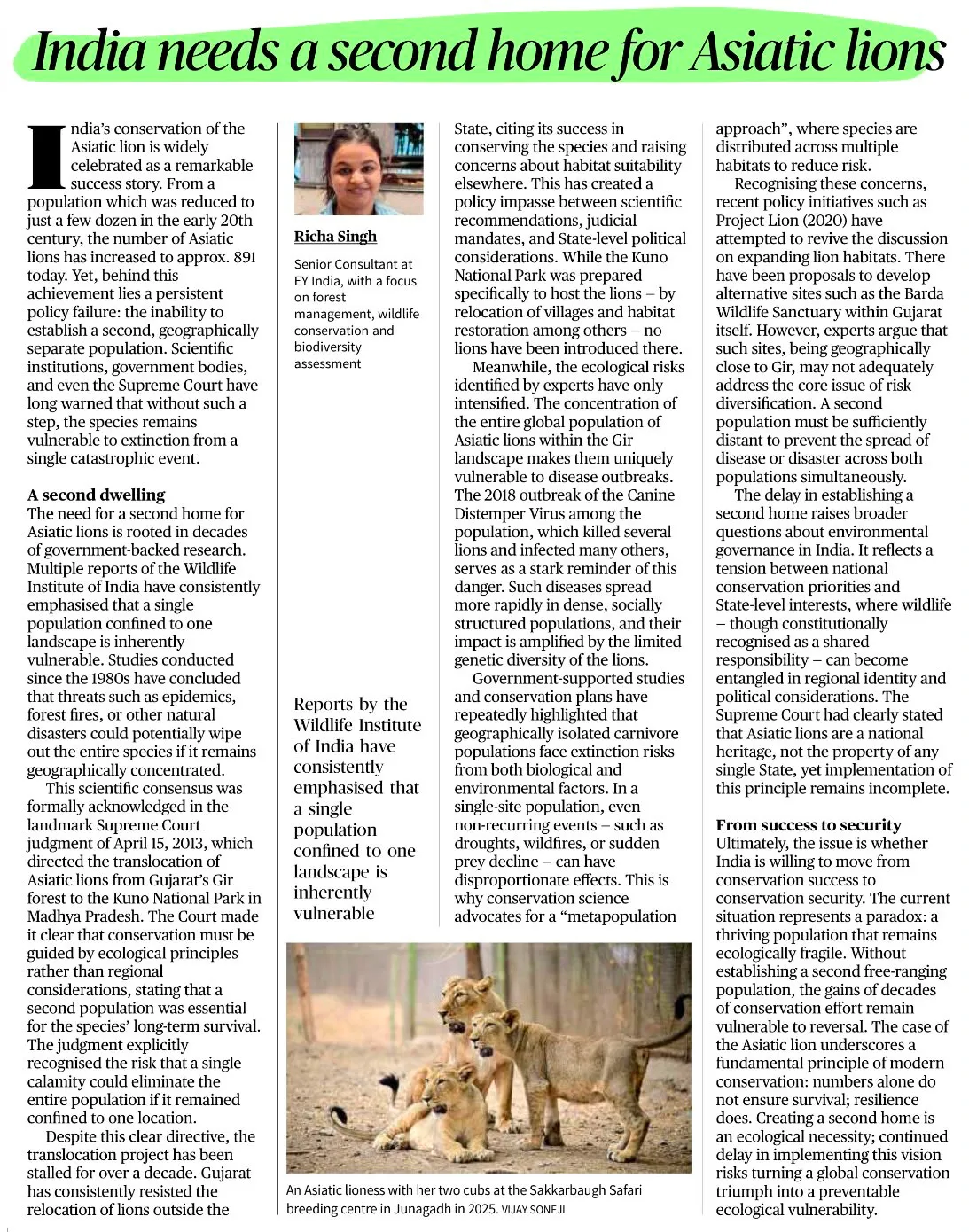
India’s successful conservation of the Asiatic lion has revived the need to establish a second free-ranging population outside Gujarat to ensure long-term species survival.
Current Status
2025 Lion Census
- 891 Asiatic lions
Present Habitat
Asiatic lions are confined to the Greater Gir Landscape in Saurashtra, Gujarat.
This includes:
- Gir National Park
- Gir Wildlife Sanctuary
- Girnar Wildlife Sanctuary
- Mitiyala Wildlife Sanctuary
- Barda Wildlife Sanctuary
- Adjoining reserve forests
- Revenue lands
Why a Second Habitat Is Needed
A single confined population is vulnerable to:
- Disease outbreaks
- Natural disasters
- Climate change
- Habitat pressure
- Genetic bottlenecks
- Inbreeding risk
Metapopulation Conservation
Metapopulation conservation means maintaining geographically separated but ecologically connected populations of a species.
For Asiatic lions, a second habitat can:
- Reduce extinction risk
- Improve genetic diversity
- Ensure long-term survival
- Prevent dependence on a single landscape
Conservation Initiatives
Supreme Court, 2013
The Supreme Court directed translocation of Asiatic lions to Kuno National Park, Madhya Pradesh.
Project Lion, 2020
Focuses on:
- Habitat expansion
- Corridor management
- Long-term conservation
- Disease surveillance
- Human-wildlife coexistence
UPSC Value Addition
Scientific Name
- Panthera leo persica
IUCN Status
- Endangered
Wildlife Protection Act, 1972
- Schedule I
PYQ Link
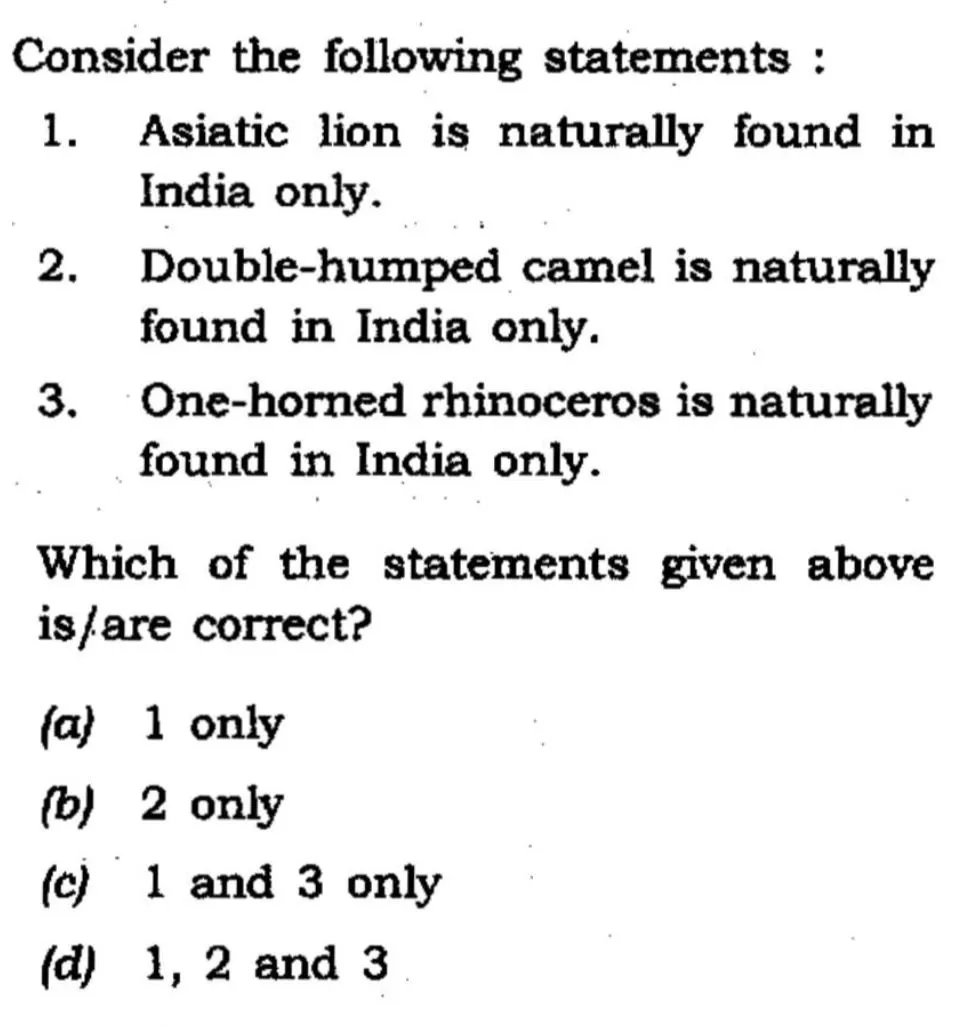
Asiatic lion is naturally found in India only.
Double-humped camel and one-horned rhinoceros are not naturally found only in India.
Key Takeaway
Asiatic lion conservation cannot depend on one landscape alone. A second free-ranging population is essential for ecological security, genetic resilience and long-term species survival.