9 April 2026 | Daily Current Affairs

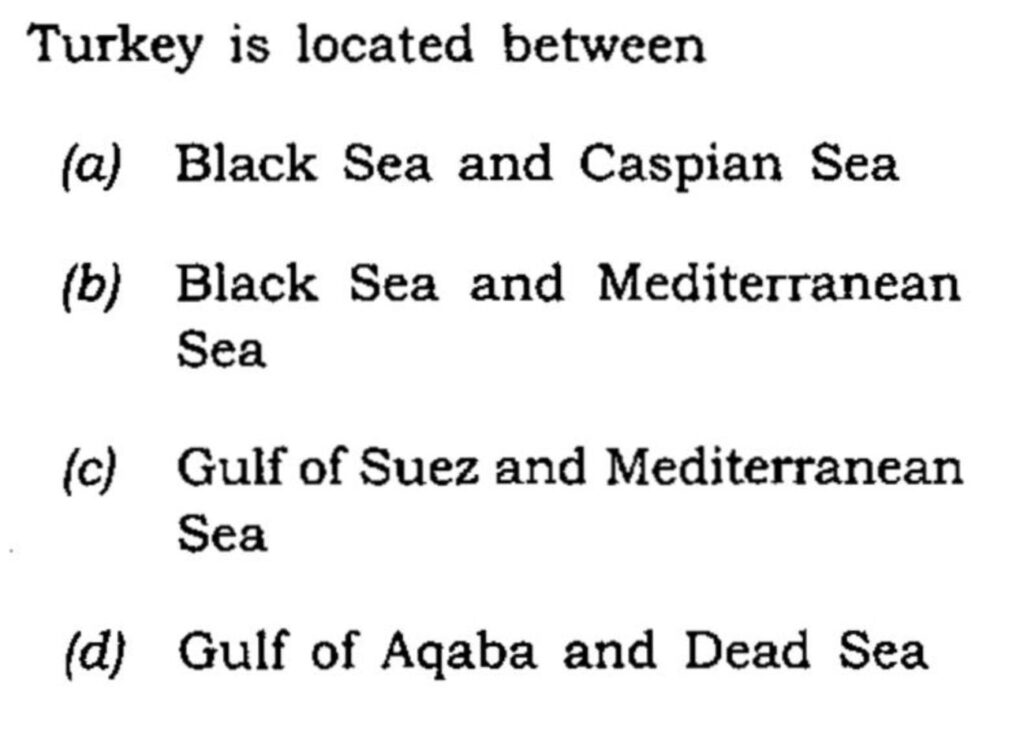
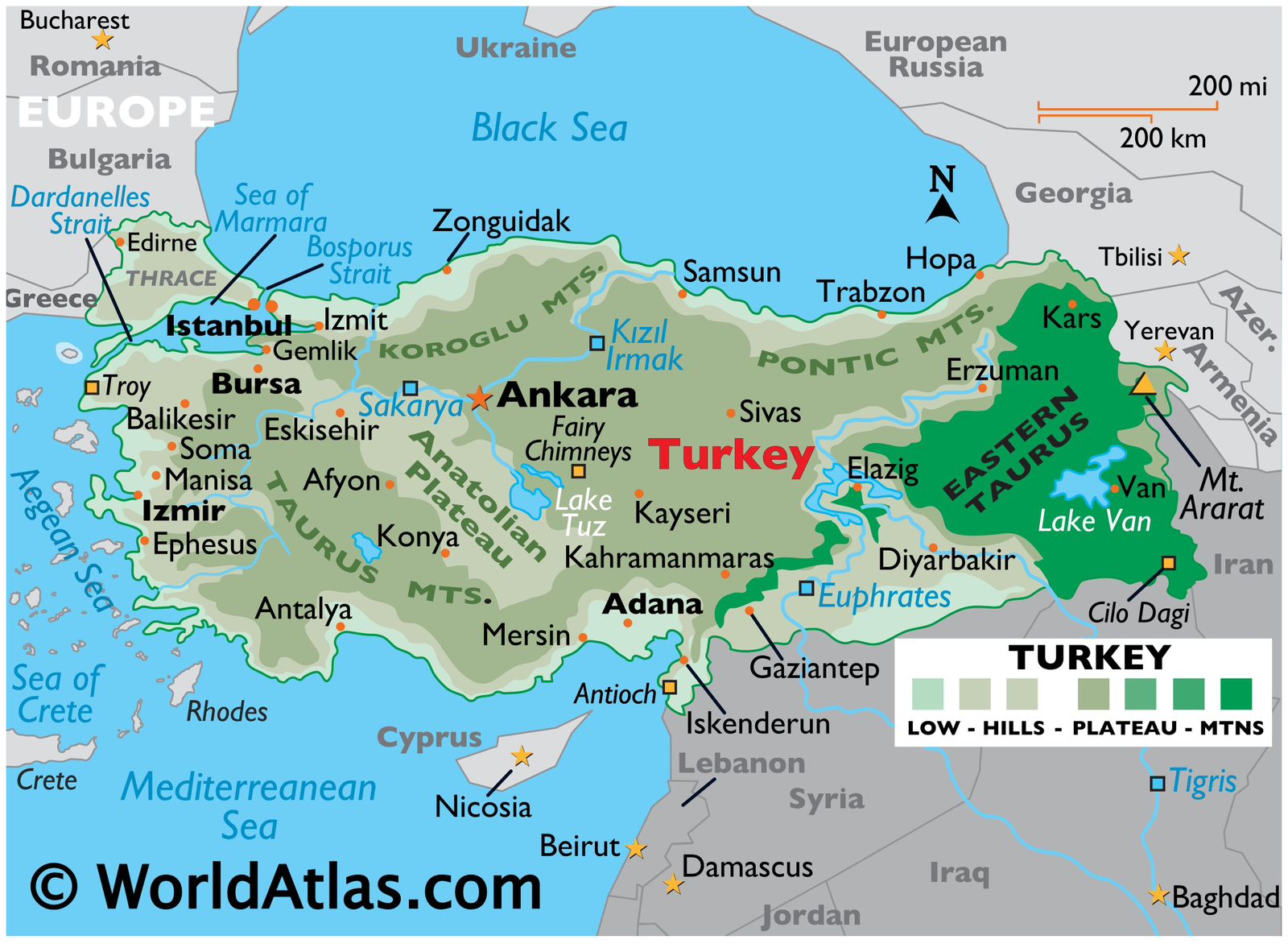
India–Türkiye Relations: Diplomatic Talks Signal Possible Reset

Context: India–Türkiye Relations

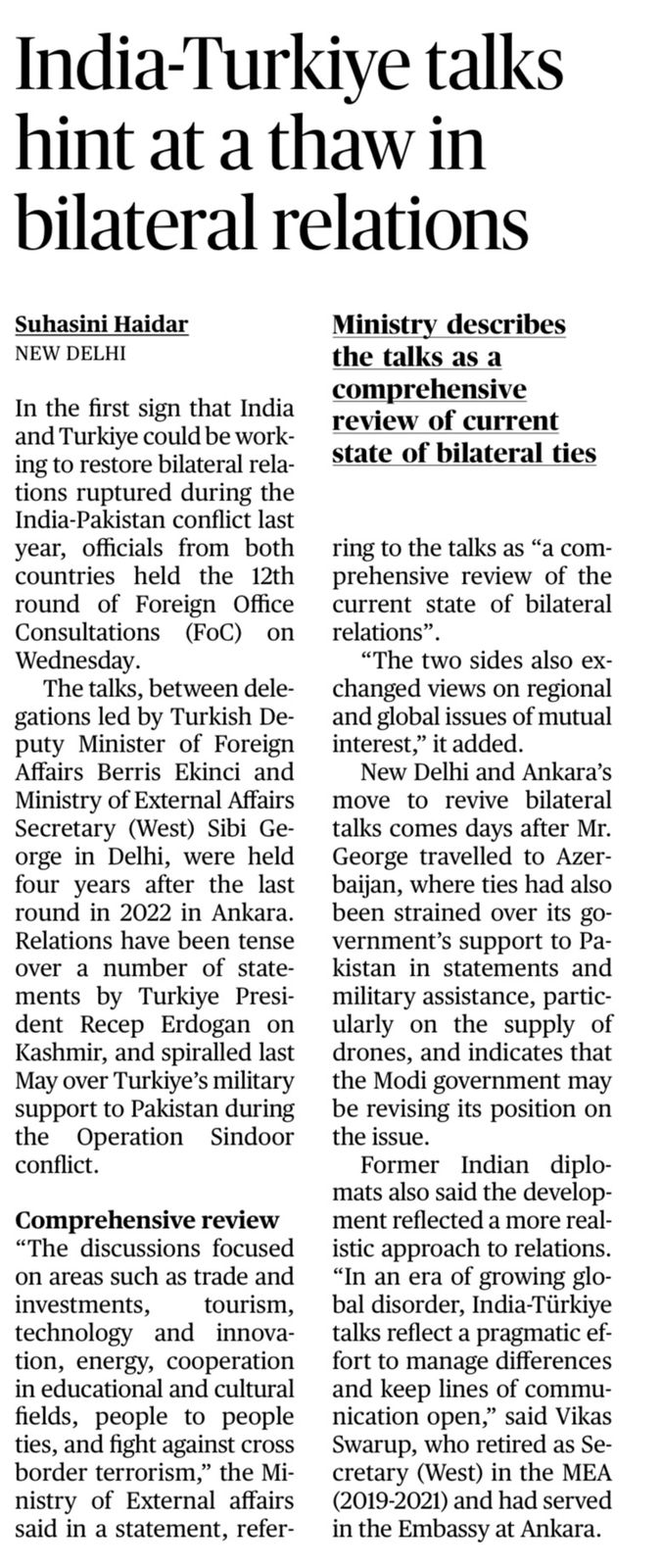
India and Türkiye held the 12th round of Foreign Office Consultations (FoC: structured diplomatic dialogue between foreign ministries) after ~4 years, signalling a possible reset in strained bilateral ties.

India–Türkiye Relations: Historical Evolution

  1. Pre-independence linkages
    • Ottoman–Indian connect; Khilafat Movement (1919–24) support from India
  2. Post-1947 phase
    • Formal diplomatic ties established; limited engagement
  3. Cold War divergence
    • Türkiye → NATO member (Western bloc)
    • India → Non-Aligned Movement (NAM)
    → Strategic distance emerges
  4. Post-1991 phase
    • Growth in trade, tourism, aviation links
    • Gradual engagement but not strategic
  5. Recent phase (2010s–2020s)
    • Relations deteriorate due to geopolitical and ideological differences

Core Differences in Relations

  1. Kashmir issue
    • Türkiye repeatedly raises Kashmir at United Nations platforms
    • India views it as violation of sovereignty
  2. Türkiye–Pakistan alignment
    • Defence ties: drones, military cooperation
    • Diplomatic support to Pakistan on India-related issues
  3. Strategic–ideological positioning
    • Türkiye’s pan-Islamic outreach
    • India’s territorial integrity & non-interference principle
  4. Multilateral friction
    • Divergence in global forums and narratives

Operation Dost

  1. Launched: 2023 (Türkiye–Syria earthquake)
  2. India’s assistance:
    National Disaster Response Force teams
    • Field hospitals, rescue operations
PYQ – 2014, Ans – B

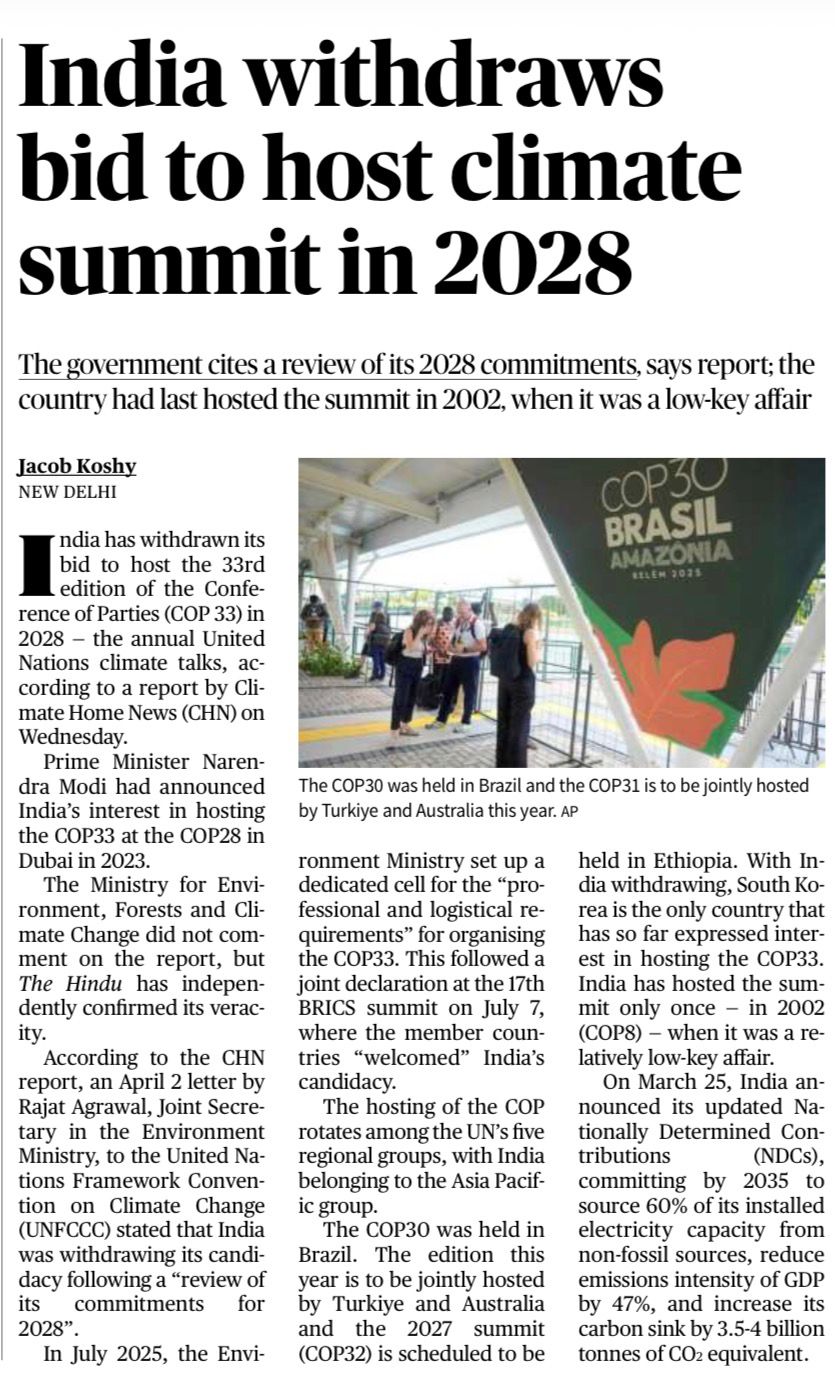
COP33 Summit: India Withdraws Bid to Host 2028 Climate Meet

Context: COP33 Summit

India has withdrawn its bid to host COP33 (2028) under UNFCCC, citing a review of its climate commitments.

Integrated Notes

  1. COP Basics
    • Conference of Parties (COP) → annual UN climate summit under UNFCCC (1992)
    • Decides targets, finance, mitigation, adaptation
  2. Timeline + Decision
    • 2002 → India hosted COP8 (New Delhi)
    • 2023 (COP28, Dubai) → India announced bid for COP33
    • 2025 → BRICS supported candidature
    • April 2026 → India withdrew (review of 2028 commitments)
  3. Hosting Mechanism
    • Rotates among 5 UN regional groups
    • India → Asia-Pacific group
    • After withdrawal → South Korea main contender
  4. Current COP Sequence
    • COP30 → Brazil
    COP31 → Türkiye + Australia
    • COP32 → Ethiopia
    • COP33 → undecided
  5. India’s Climate Targets
    • 60% power capacity from non-fossil sources (by 2035)
    • 47% reduction in emissions intensity of GDP
    • Carbon sink: 3.5–4 billion tonnes CO₂
  6. Core Reason
    • Implementation priority > hosting burden
    • Focus on meeting NDC targets + resource optimisation
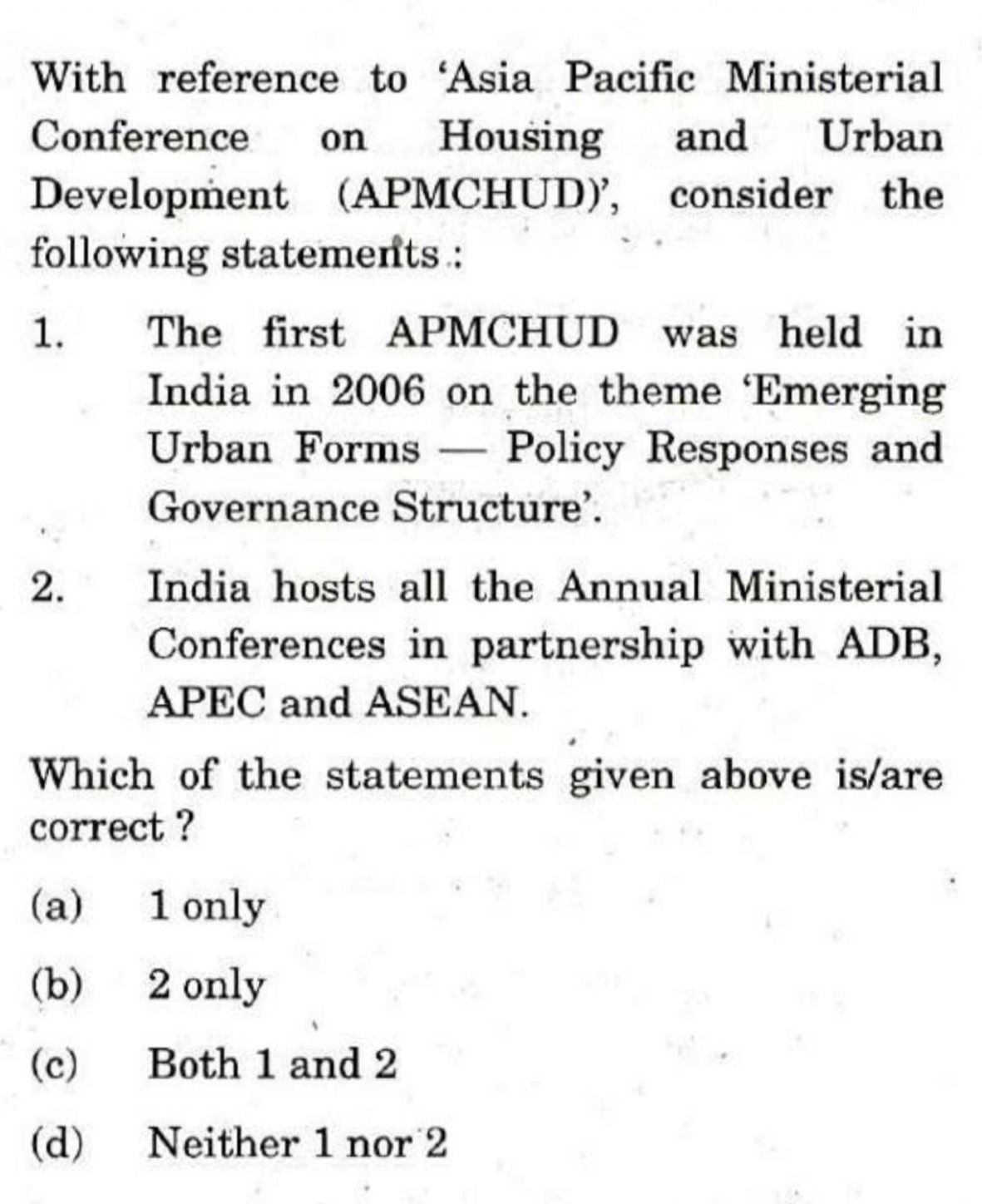
PYQ – 2017, Ans – D

Rooftop Solar Scheme: Govt Plans Incentives for States

Context: Rooftop Solar Scheme

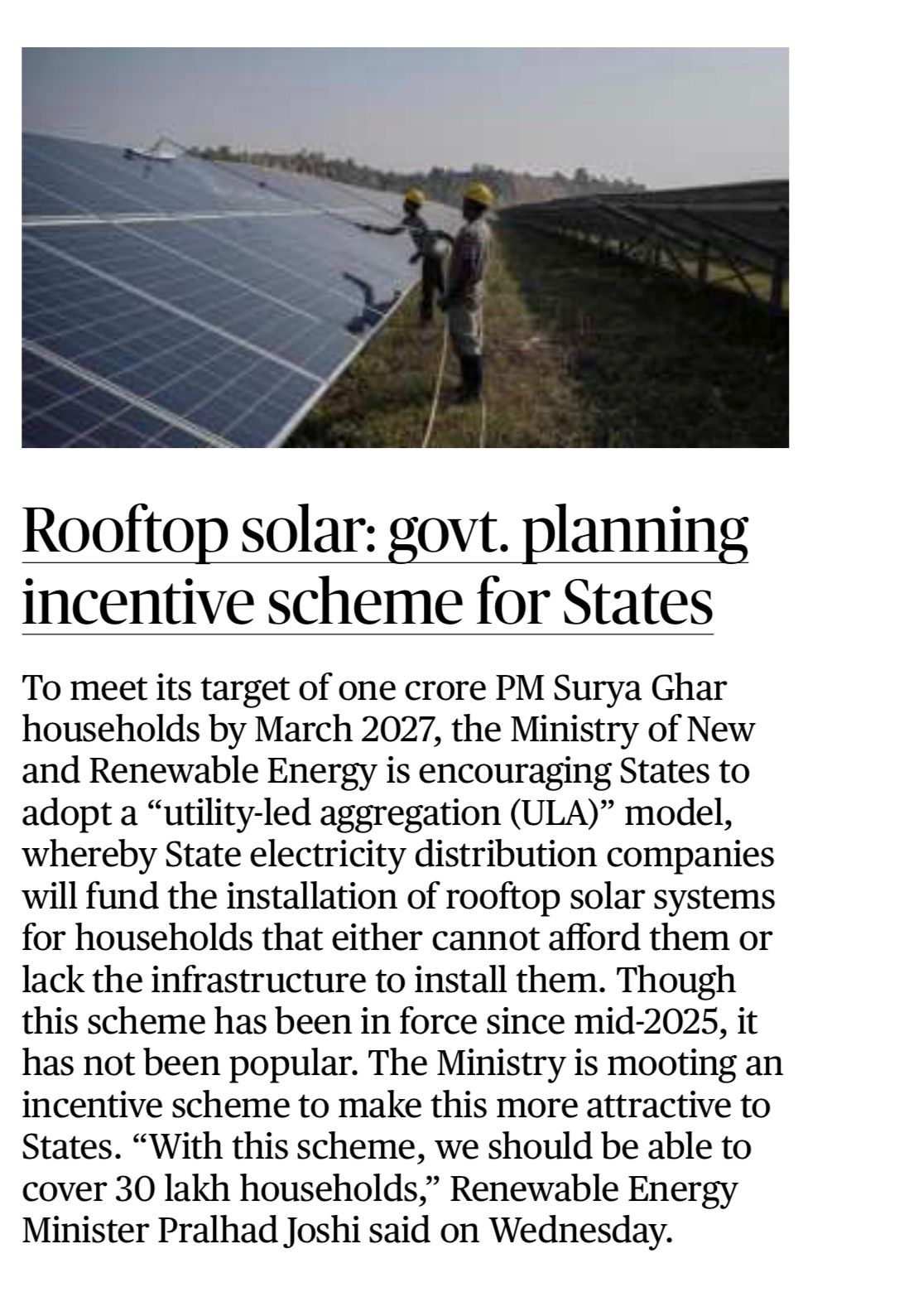
To meet the target of 1 crore households under PM Surya Ghar by March 2027, the government is planning incentives for States to promote the Utility-Led Aggregation (ULA) model, which has seen low adoption.

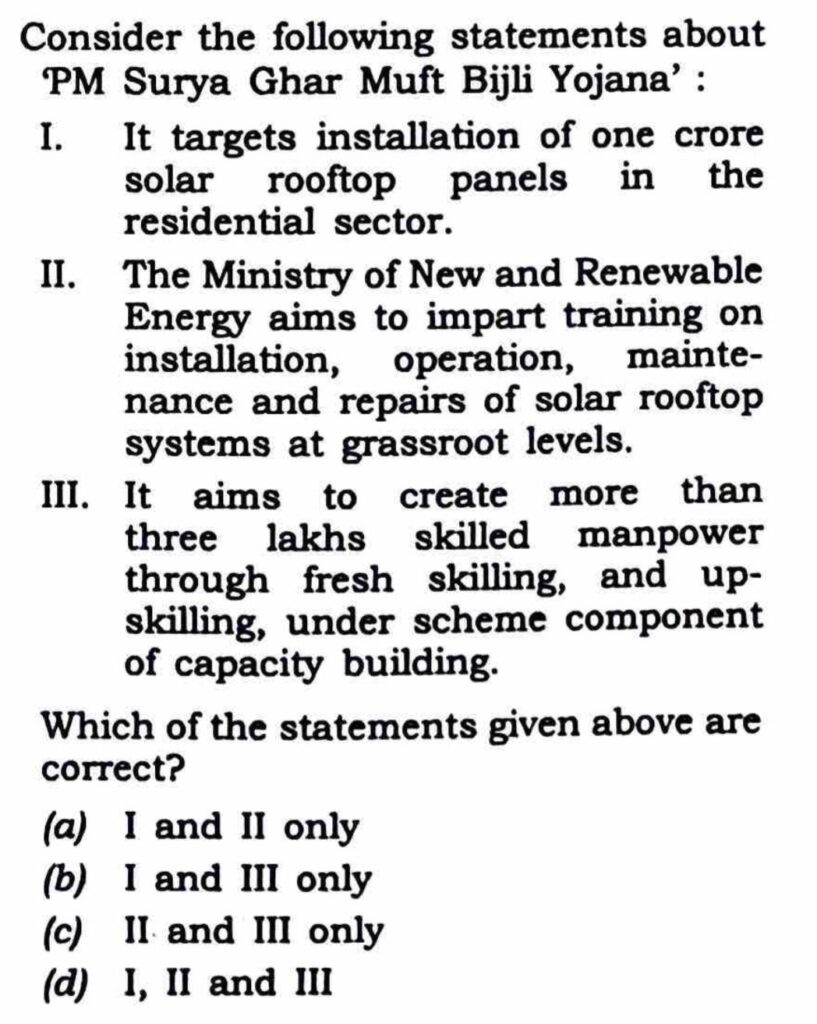
PM Surya Ghar: Muft Bijli Yojana

  1. Launch → February 2024
  2. Ministry → Ministry of New and Renewable Energy (MNRE)
  3. Outlay → ~₹75,000 crore
  4. Target → 1 crore households (rooftop solar)

Objective
• Provide up to 300 units free electricity/month
• Reduce electricity bills + carbon emissions
• Promote decentralised solar energy

Key Features

  1. Subsidy → up to 60% (≤2 kW), 40% (2–3 kW)
  2. DBT → subsidy directly to beneficiary
  3. Collateral-free loans available
  4. Net metering → sell surplus power
  5. National portal-based implementation

Utility-Led Aggregation (ULA) Model

  1. DISCOM installs rooftop solar for households
  2. Targets:
    • Poor households
    • Those lacking capital/infrastructure
  3. Initial ownership with DISCOM → later transfer to household
  4. Solves high upfront cost barrier
PYQ – 2025, Ans – D

RBI Repo Rate: Held at 5.25%, GDP Growth Seen at 6.9%

Context: RBI Repo Rate

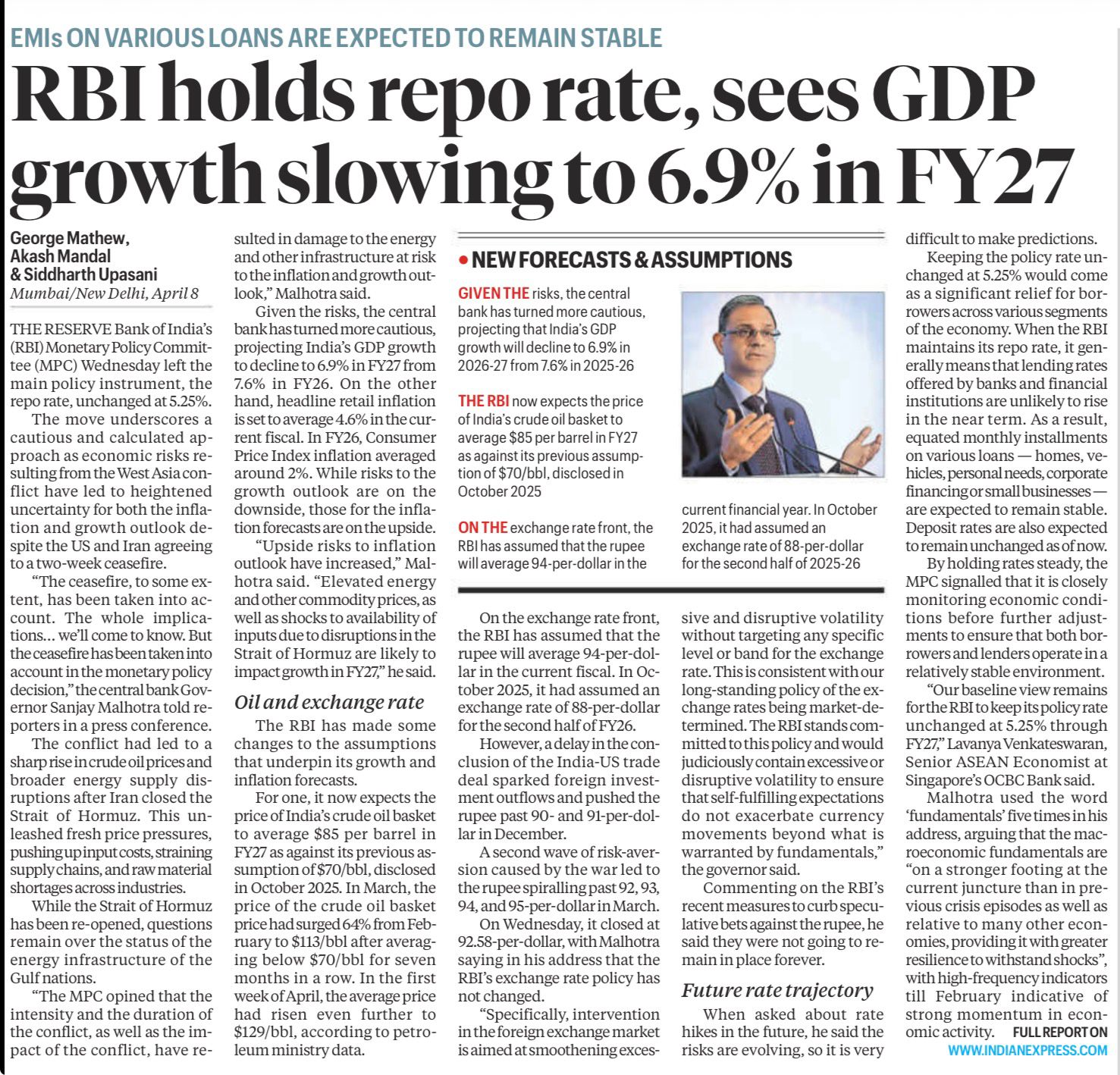
The RBI Monetary Policy Committee (MPC) kept the repo rate unchanged at 5.25%, while revising GDP growth for FY27 to 6.9%, reflecting a cautious stance amid global uncertainties.

Key Data

  1. Repo rate → 5.25% (unchanged)
  2. GDP growth (FY27) → 6.9% (earlier ~7.6%)

Reasons for Keeping Repo Rate Unchanged

  1. Global uncertainty (West Asia conflict)
    • Risk to oil supply (Strait of Hormuz)
    • Leads to imported inflation
  2. Rising crude oil prices
    • Direct impact on inflation + fiscal burden
  3. Inflation risks on upside
    • Energy + commodity shocks may increase prices
  4. Growth risks on downside
    • GDP forecast reduced → need to support growth
  5. Transmission of past rate changes
    • RBI waiting to see full impact of earlier policy actions
  6. Exchange rate pressure
    • Rupee volatility due to global instability

Implication

  1. EMIs → stable
  2. Borrowing cost → no immediate increase
  3. Policy stance → wait-and-watch / balanced approach
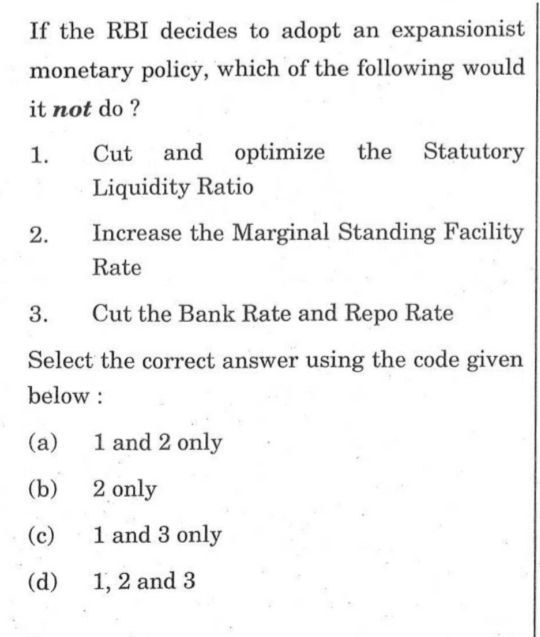
PYQ – 2020, Ans – B

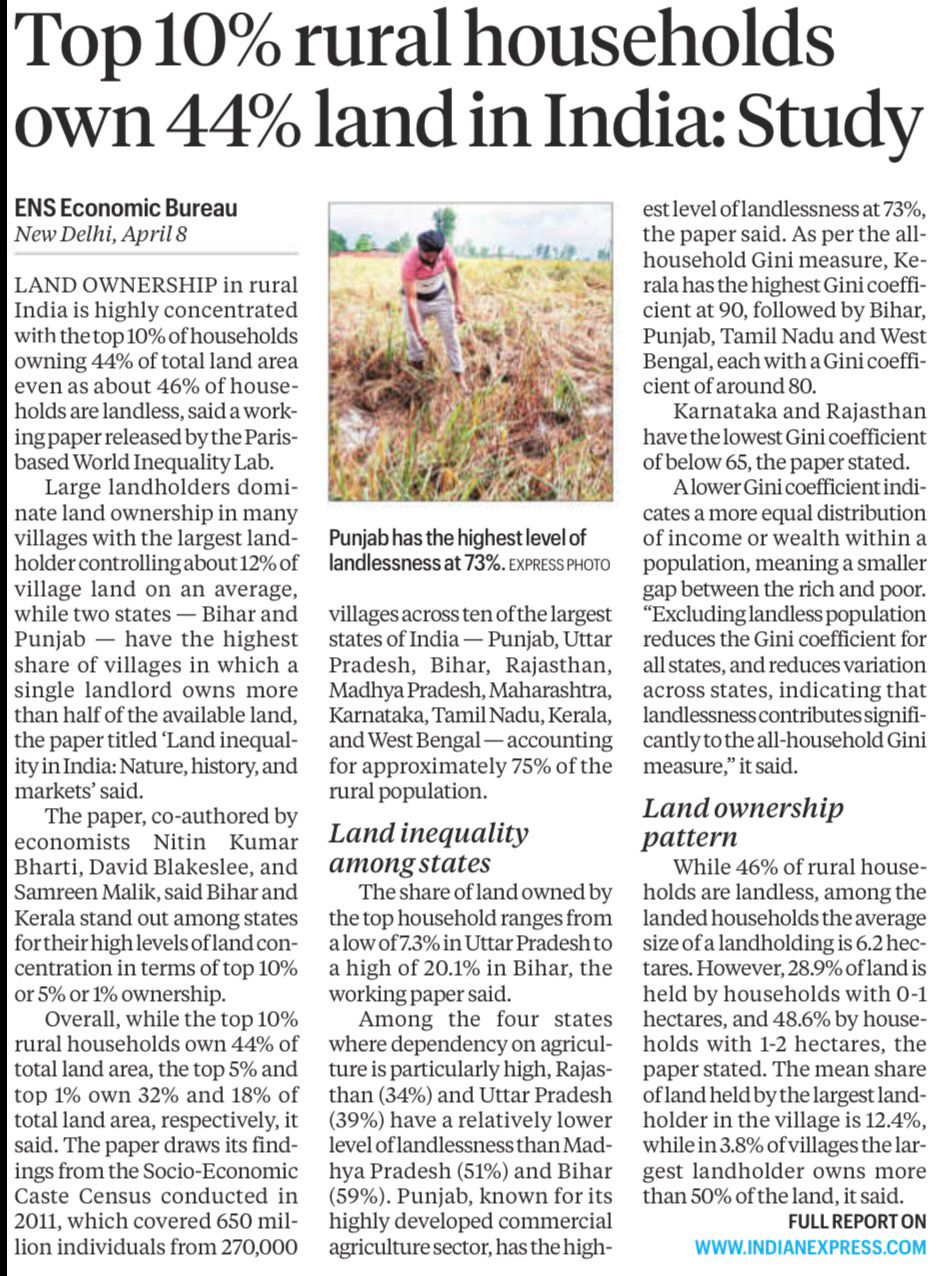
Land Inequality in India: Top 10% Own 44% Rural Land

Context: Land Inequality in India

World Inequality Lab study, based on Socio-Economic and Caste Census (SECC), 2011, shows high land inequality in rural India.

Key Data

• Top 10% → 44% land
• Top 5% → 32% land
• Top 1% → 18% land
• Landless households → ~46%
• Punjab → 73% landlessness
• Largest landholder → 12.4% village land
• 13.8% villages → one owns >50% land
• Highest inequality → Kerala (~90 Gini)
• Lowest → Karnataka, Rajasthan (<65)

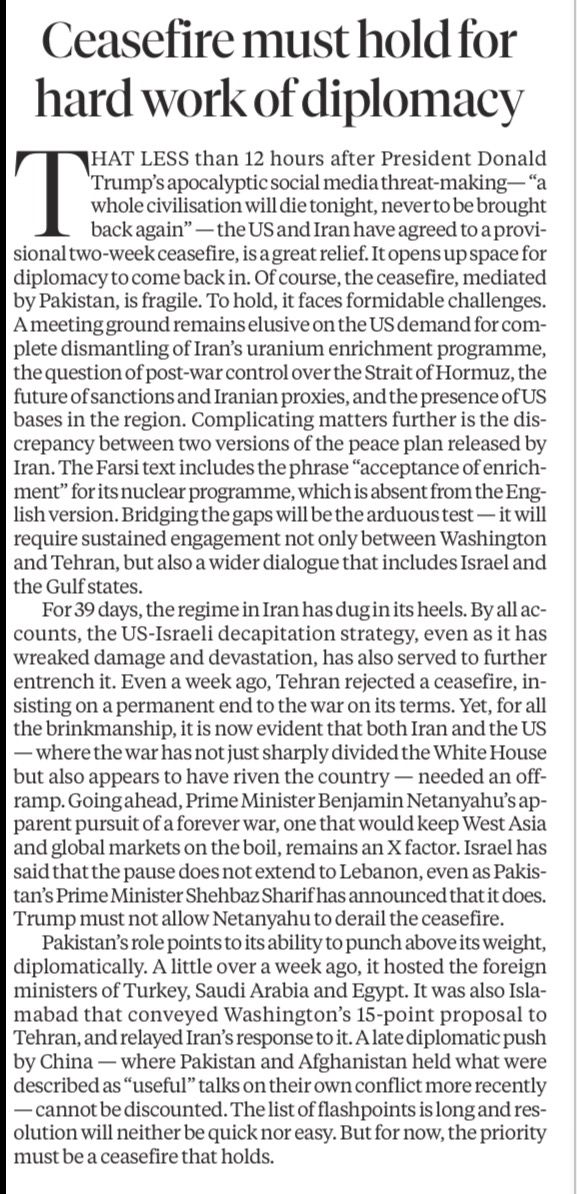
West Asia Ceasefire: Temporary Truce Amid Ongoing Conflict

Context: West Asia Ceasefire

After 39 days of intense conflict involving the U.S.–Israel side and Iran, both sides agreed to a temporary two-week ceasefire mediated by Pakistan. This pause is aimed at creating space for negotiations, but it remains fragile and uncertain.

Key Points

  1. Nature of ceasefire
    • Short-term pause, not a final peace agreement
  2. Core issues
    • Iran’s nuclear (uranium enrichment) programme
    • Sanctions on Iran
    • Strategic control (Strait of Hormuz)
  3. Trust deficit
    • Differences in interpretation of peace terms → lack of clarity
  4. Multiple stakeholders
    • Involvement of Israel, Gulf countries makes resolution complex
  5. Risk factors
    • Israel’s continued actions
    • Regional tensions → ceasefire can collapse anytime
  6. Editorial insight
    • Ceasefire is only an opportunity for diplomacy
    • Long-term peace requires continuous, multi-country engagement

Copyright © 2026 USARAMBHA EDUCATION (UnderStand UPSC). All Rights Reserved.

Inquiry form for
Takshila Residential Program