March 2, 2026
Source: The Hindu, Tags: 2 March 2026, GS2, IR Core Thesis
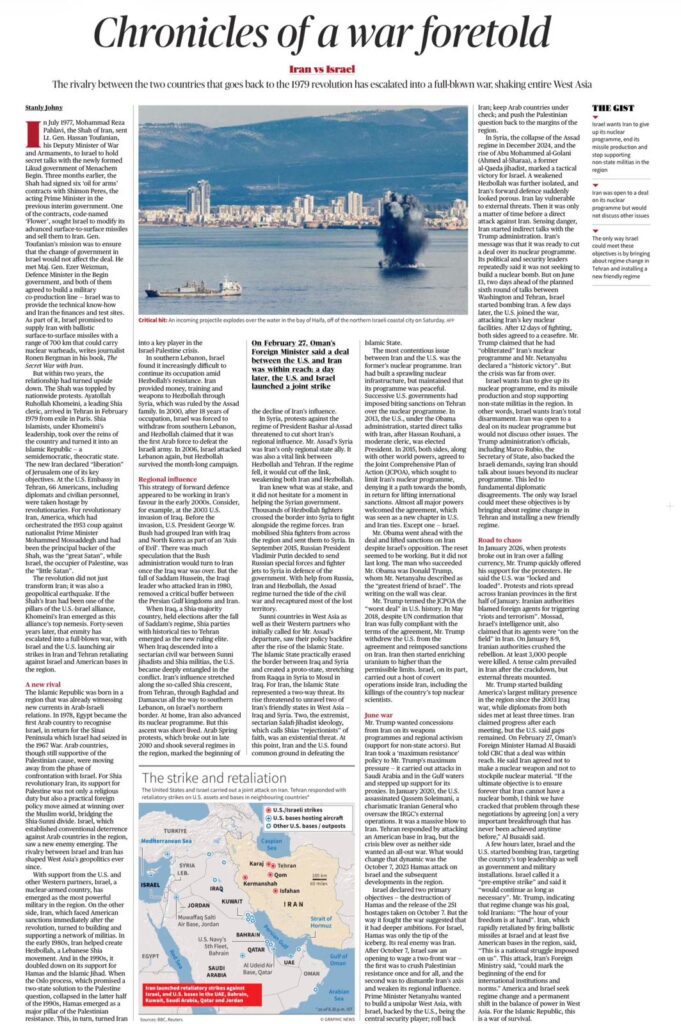
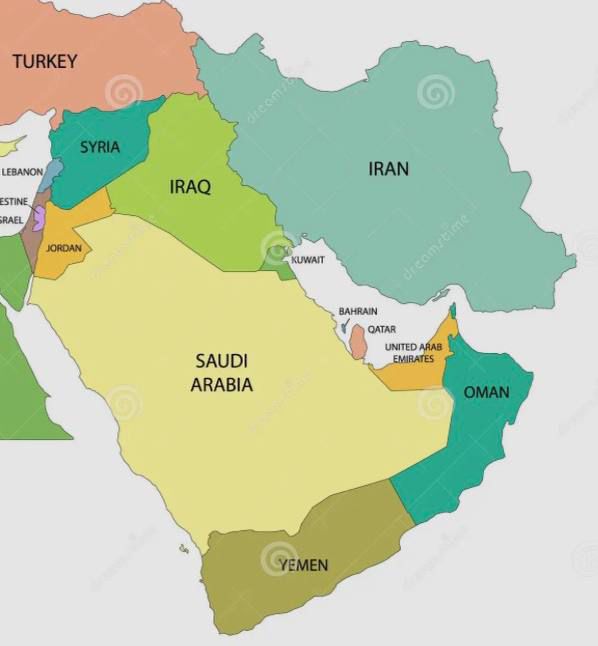
The Iran–Israel war is not sudden. It is the culmination of decades of ideological hostility, proxy conflict, failed nuclear diplomacy and recent regional destabilisation.
Historical Evolution
- Pre-1979: Iran (Shah era) had working ties with Israel and the U.S.
- 1979 Islamic Revolution: Iran became ideologically anti-Israel and anti-U.S.
- Israel began treating Iran as a long-term existential threat.
Proxy War Phase
For decades, confrontation remained indirect:
Iran:
- Built regional network (Hezbollah, Hamas, allied militias)
- Used proxies to pressure Israel
Israel:
- Airstrikes in Syria
- Targeted Iranian assets
- Prevented Iranian entrenchment near borders
Nuclear Trigger
- Iran expanded uranium enrichment
- 2015 nuclear deal collapsed after U.S. withdrawal
- Israel considers nuclear-capable Iran unacceptable
Immediate Escalation (2025–26)
- Gaza war reshaped Israeli security thinking
- Syrian instability exposed Iranian networks
- Oman mediation failed
- Israel launched pre-emptive strikes
- Iran retaliated with direct missile attacks
Shift: Proxy war → Open confrontation
Strategic Objectives
Israel:
- Degrade nuclear capability
- Dismantle militia infrastructure
- Restore deterrence
Iran:
- Preserve regime
- Maintain regional influence
- Avoid strategic humiliation
Wider Implications
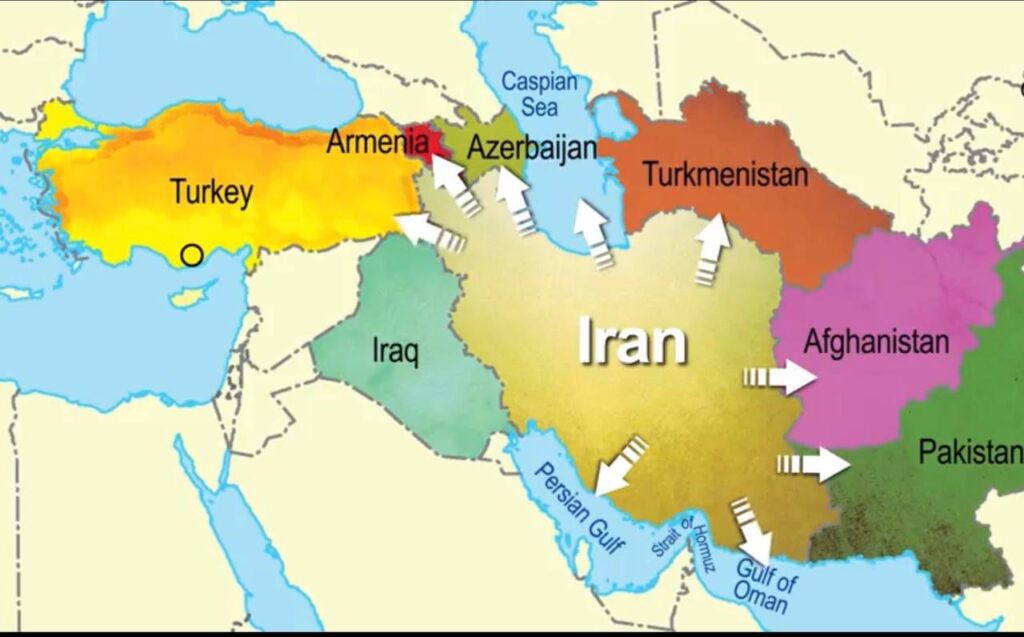
- Strait of Hormuz risk
- U.S. involvement deepening
- Gulf states cautious
- Long-term regional instability