12 August 2026 | UPSC Daily Current Affairs

12 August 2026 | UPSC Daily Current Affairs

BRICS payment systems link: RBI talks on CBDCs for UPSC

Context: BRICS payment systems link
RBI is working with BRICS countries to make cross-border payments faster, cheaper and more efficient through payment-system linkages, local currencies and CBDCs.

Central Bank Digital Currency

  • CBDC is the digital form of sovereign currency issued by a central bank.
  • India’s CBDC is the Digital Rupee, issued by the RBI.
  • CBDC is different from UPI.
  • CBDC is digital money, while Unified Payments Interface is the payment system used to transfer money.
  • Interoperable CBDCs can enable faster and cheaper cross-border settlement with fewer intermediaries.

BRICS Framework

At the 17th BRICS Summit in Rio de Janeiro in 2025, the Rio de Janeiro Declaration called for continued work on the BRICS Cross-Border Payments Initiative and greater interoperability of national payment systems.

The RBI is participating in discussions on payment-system linkages and possible CBDC use through the BRICS Payment Task Force.

India’s Approach

The RBI is promoting trade settlement in local currencies, including the rupee.

Local-currency arrangements already exist with:

  • United Arab Emirates
  • Mauritius
  • Maldives
  • Indonesia

However, volumes remain small.

Strategic Significance

This can reduce dependence on traditional correspondent banking and dominant international currencies.

It can also lower transaction costs and make international payments more efficient.

Key Takeaway

BRICS payment-system linkages and CBDC discussions are part of a wider attempt to make cross-border payments faster, cheaper and less dependent on traditional international payment channels.

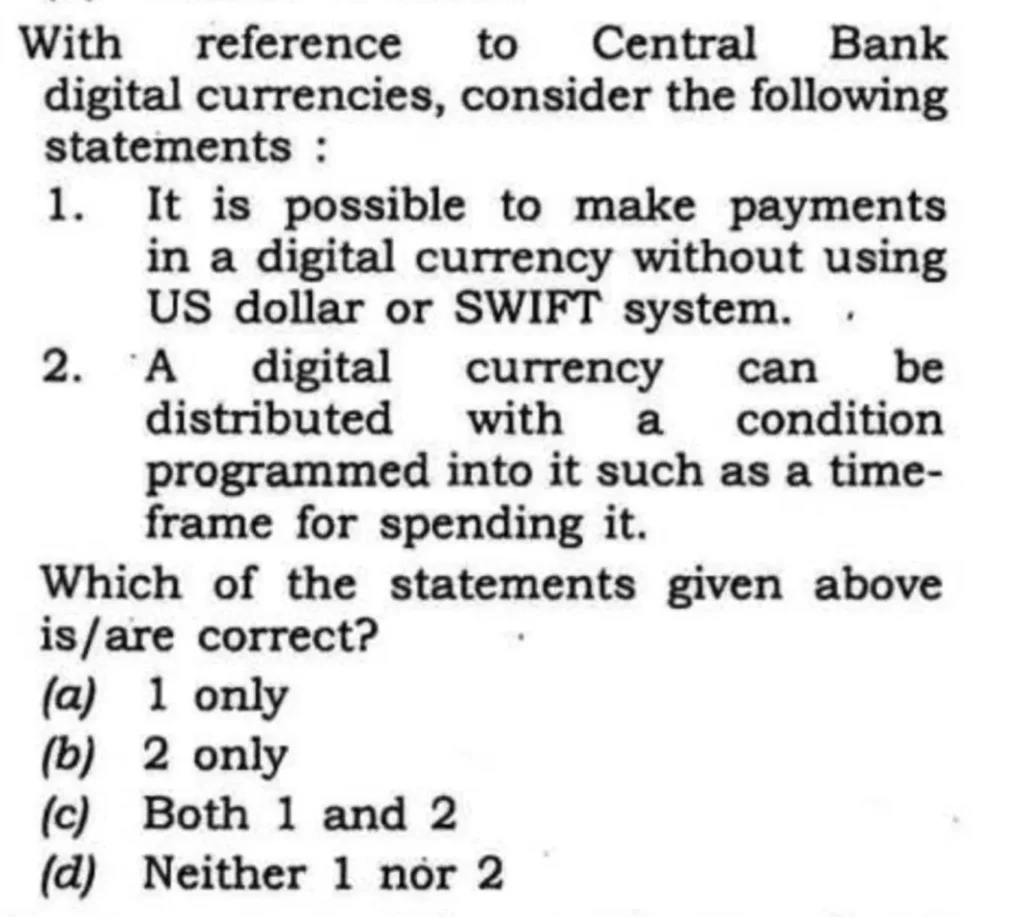
BRICS payment systems link

No Path to Peace: UPSC analysis of global conflicts

Context: No Path to Peace
The Gaza conflict remains unresolved amid disputes over Hamas’s disarmament, Israeli military withdrawal, humanitarian access and post-war governance, despite a U.S.-backed 15-point roadmap.

Current Situation

Around 65% of Gaza remains under access restrictions or direct Israeli control, according to United Nations humanitarian reporting.

The humanitarian crisis continues due to:

  • Large-scale displacement
  • Damaged health infrastructure
  • Damaged education infrastructure
  • Damaged water and sanitation systems
  • Restricted humanitarian access

Israel and Hamas remain divided over the sequencing of disarmament, withdrawal and governance of Gaza.

15-Point Peace Roadmap

The roadmap envisages phased disarmament of Hamas and other armed groups.

Disarmament is linked with gradual or full Israeli military withdrawal from Gaza.

The framework also envisages Palestinian technocratic administration and international involvement in stabilisation and reconstruction.

Current Obstacle

Israeli Prime Minister Benjamin Netanyahu has rejected the 15-point document.

He has maintained that Israeli withdrawal should follow complete Hamas disarmament.

What Sustainable Peace Requires

Security

A credible mechanism is needed for disarmament, demilitarisation and security guarantees for both Israelis and Palestinians.

Political Settlement

There should be a legitimate Palestinian representative governance structure with a credible pathway towards self-determination.

Territorial Settlement

A clearly agreed framework is needed for Israeli withdrawal, borders and security arrangements.

Humanitarian Recovery

Unrestricted humanitarian access should be followed by reconstruction of housing, health, education, water and essential infrastructure.

Economic Revival

Livelihoods, employment, trade and basic services need to be restored to prevent prolonged humanitarian dependence.

International Guarantees

UN, regional or international monitoring and enforcement mechanisms are needed to ensure compliance by all parties.

Key Takeaway

The Gaza conflict requires more than a ceasefire proposal. Sustainable peace needs security guarantees, political settlement, humanitarian recovery, economic revival and international monitoring.

No Path to Peace
No Path to Peace

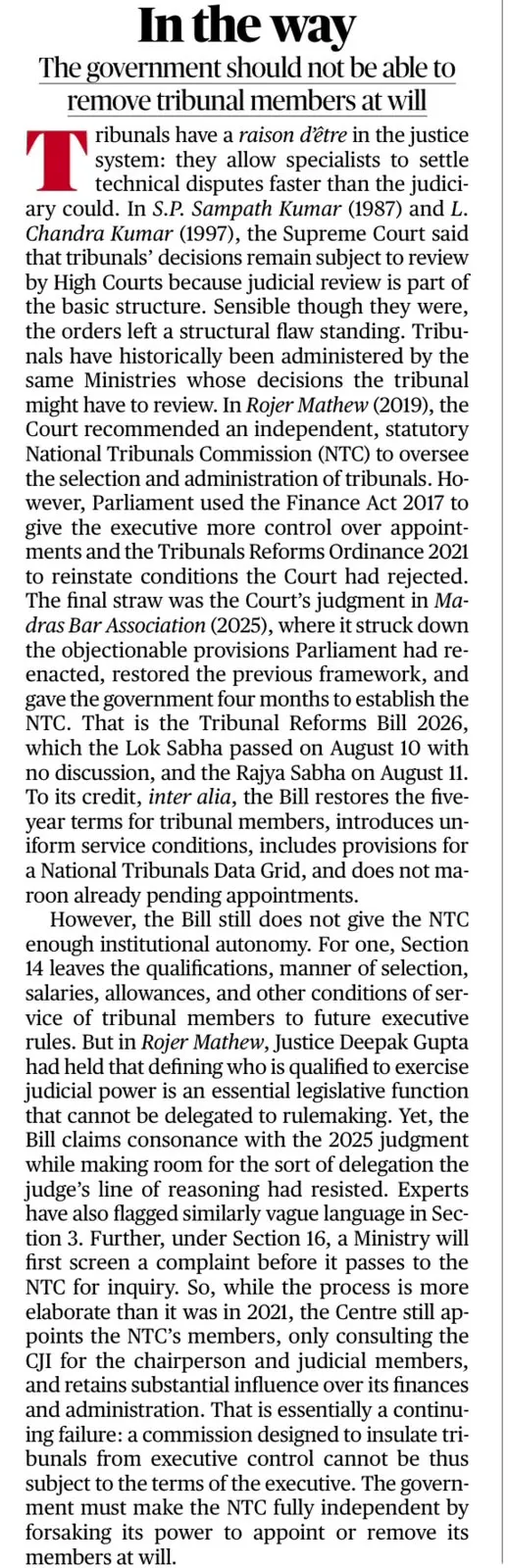
Tribunals Reforms Bill 2026: Key UPSC points for UPSC

Context: Tribunals Reforms Bill 2026
The Tribunals Reforms Bill, 2026, passed by Parliament on 10–11 August 2026, seeks to establish a National Tribunals Commission to improve the efficiency, transparency, uniformity and administration of tribunals.

Constitutional and Judicial Framework

Articles 323A and 323B

Articles 323A and 323B provide the constitutional basis for Administrative Tribunals and tribunals dealing with specified matters such as taxation and industrial disputes.

Judicial Review

Under Articles 226–227, High Courts can review tribunal decisions.

In L. Chandra Kumar, 1997, the Supreme Court held that this power is part of the basic structure.

Judicial Evolution

Rojer Mathew, 2019 and the Madras Bar Association judgment, 2025 stressed the need for greater institutional independence in tribunal administration.

Key Provisions of the Bill

National Tribunals Commission

The Bill creates a central institutional mechanism for:

  • Appointments
  • Administration
  • Performance review
  • Complaints concerning tribunals

Five-Year Tenure

The Bill restores a five-year term for tribunal Chairpersons and Members, subject to prescribed age limits.

National Tribunals Data Grid

The Bill creates a common data system to improve monitoring, transparency and evidence-based administration.

16 Tribunals and Appellate Bodies

The framework seeks common standards across the covered tribunals and appellate bodies.

Core Concern: Institutional Independence

Executive Control

The Central Government retains important powers relating to appointments, service conditions and removal.

This can affect the perceived independence of tribunals.

Removal Power

Members can be removed on specified grounds, including:

  • Misconduct
  • Incapacity
  • Abuse of position
  • Incompetence
  • Inefficiency

Therefore, safeguards in the inquiry process become important.

Financial Autonomy

If administration and finances remain substantially dependent on the executive, an institution intended to provide independent adjudication may remain vulnerable to executive influence.

What Effective Tribunal Reform Requires

Independence

Appointment, tenure, removal and financial arrangements should provide sufficient institutional insulation from the executive.

Efficiency

Vacancies should be filled quickly.

Infrastructure should be strengthened.

The National Tribunals Data Grid should be used for monitoring pendency and performance.

Accountability

Independence must be accompanied by transparent selection, performance standards and grievance mechanisms.

Constitutional Balance

Tribunalisation should supplement, not weaken:

  • High Court judicial review
  • Separation of powers
  • Access to justice

Key Takeaway

The Tribunals Reforms Bill aims to improve tribunal administration through the National Tribunals Commission, but effective reform depends on protecting institutional independence along with efficiency and accountability.

Tribunals Reforms Bill 2026

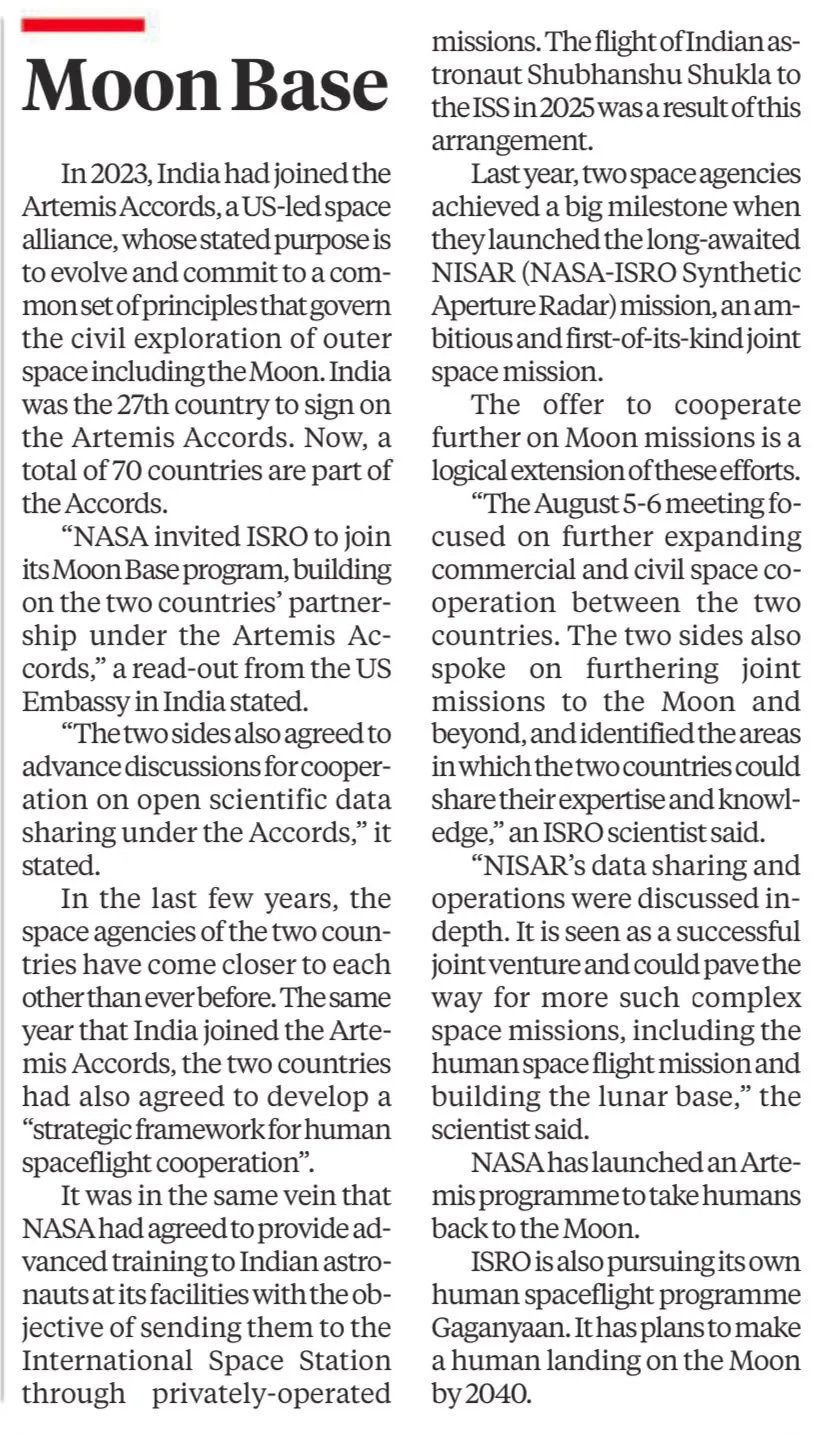
NASA ISRO Moon Base: New space cooperation for UPSC

Context: NASA ISRO Moon Base
At the 9th India–U.S. Civil Space Joint Working Group meeting in Bengaluru on 5–6 August 2026, NASA invited ISRO to join its Moon Base programme, deepening cooperation in lunar exploration, human spaceflight and commercial space.

India–U.S. Space Cooperation

Artemis Accords

India joined the U.S.-led Artemis Accords in 2023 as the 27th signatory.

There are now 70 signatories.

The Artemis Accords provide principles for peaceful and sustainable exploration of the Moon and beyond.

Moon Base

NASA’s programme aims at sustained human presence on the Moon.

ISRO’s participation can expand Indian capabilities in lunar technology and human spaceflight.

Human Spaceflight

India–U.S. cooperation has already included astronaut training and support for Shubhanshu Shukla’s 2025 International Space Station mission.

NISAR: Key Joint Mission

NISAR stands for NASA–ISRO Synthetic Aperture Radar.

It was launched on 30 July 2025 by ISRO’s GSLV-F16.

It is the first joint NASA–ISRO Earth-observation satellite.

It is also the first spaceborne mission combining L-band and S-band Synthetic Aperture Radar.

Uses of NISAR

NISAR provides all-weather observations for:

  • Natural-disaster monitoring
  • Agriculture
  • Glaciers and ice sheets
  • Soil moisture
  • Ecosystem changes
  • Land deformation

Coverage

NISAR provides global observations approximately every 12 days.

It has a wide imaging swath of about 240 km.

Way Forward in Cooperation

Both sides agreed to advance open scientific-data sharing under the Artemis framework.

Cooperation can extend from NISAR and lunar missions to:

  • Human spaceflight
  • Advanced space technologies
  • Commercial space

India’s Goal

ISRO aims for a human lunar landing by 2040.

This makes deeper international cooperation strategically relevant.

Key Takeaway

NASA’s invitation to ISRO for the Moon Base programme reflects deepening India–U.S. space cooperation in lunar exploration, human spaceflight, scientific data sharing and commercial space.

NASA ISRO Moon Base
NASA ISRO Moon Base
NASA ISRO Moon Base
NASA ISRO Moon Base
NASA ISRO Moon Base
NASA ISRO Moon Base

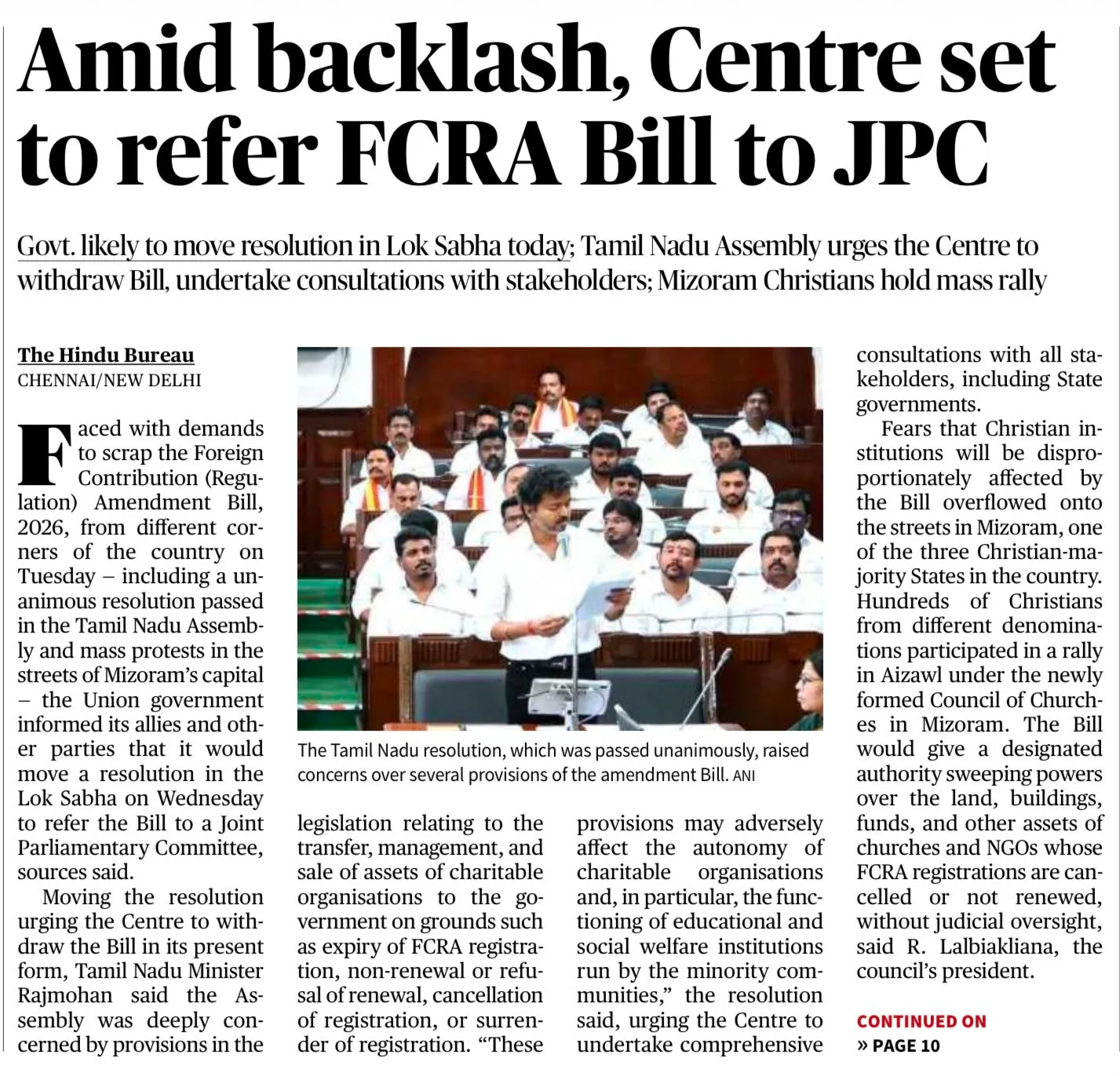
FCRA Amendment Bill 2026: Key UPSC points for UPSC

Context: FCRA Amendment Bill 2026
The Foreign Contribution (Regulation) Amendment Bill, 2026, introduced in Lok Sabha on 25 March 2026, has faced Opposition objections over its asset-vesting provisions.

The Government is now considering referring it to a Joint Parliamentary Committee for detailed scrutiny and wider consensus.

Concerns Raised by the Opposition

Asset Vesting

Opposition parties and civil-society or Christian organisations are concerned that assets created partly or wholly through foreign contributions could come under government control when FCRA registration ends.

Mixed Funding

Where an institution uses both foreign and domestic donations, critics fear that the entire asset could be affected even though only part was created from foreign funds.

Civil-Society Space

Concerns have been raised that wider government powers could adversely affect:

  • Non-Governmental Organisations
  • Schools
  • Hospitals
  • Charitable institutions dependent on foreign contributions

Due Process

Concerns also centre on the consequences of non-renewal of FCRA registration, particularly safeguards available to organisations against such decisions.

Joint Parliamentary Committee

Nature

A Joint Parliamentary Committee is an ad hoc parliamentary committee.

It is not a permanent committee.

It is created for a specific Bill or issue and dissolves after submitting its report.

Composition

Members are drawn from both Lok Sabha and Rajya Sabha.

The composition broadly reflects the strength of political parties.

Function

A JPC undertakes detailed scrutiny.

It examines stakeholders and evidence.

It submits recommendations to Parliament.

Recommendation

The report of a JPC is not binding.

Parliament takes the final decision.

Key Takeaway

The FCRA Amendment Bill, 2026 raises concerns over asset vesting, mixed funding, civil-society space and due process. Referring it to a JPC can allow detailed scrutiny, stakeholder consultation and wider consensus.

FCRA Amendment Bill 2026

Copyright © 2026 USARAMBHA EDUCATION (UnderStand UPSC). All Rights Reserved.

Inquiry form for
Takshila Residential Program