7 May 2026 | Daily Current Affairs

International Big Cat Alliance Summit 2026 and New Delhi Declaration Explained for UPSC

Context: International Big Cat Alliance

India will host the first International Big Cat Alliance (IBCA) Summit in New Delhi (June 1–3, 2026) with participation from 95 big cat range countries. The summit is expected to adopt the proposed “New Delhi Declaration” on global big cat conservation.
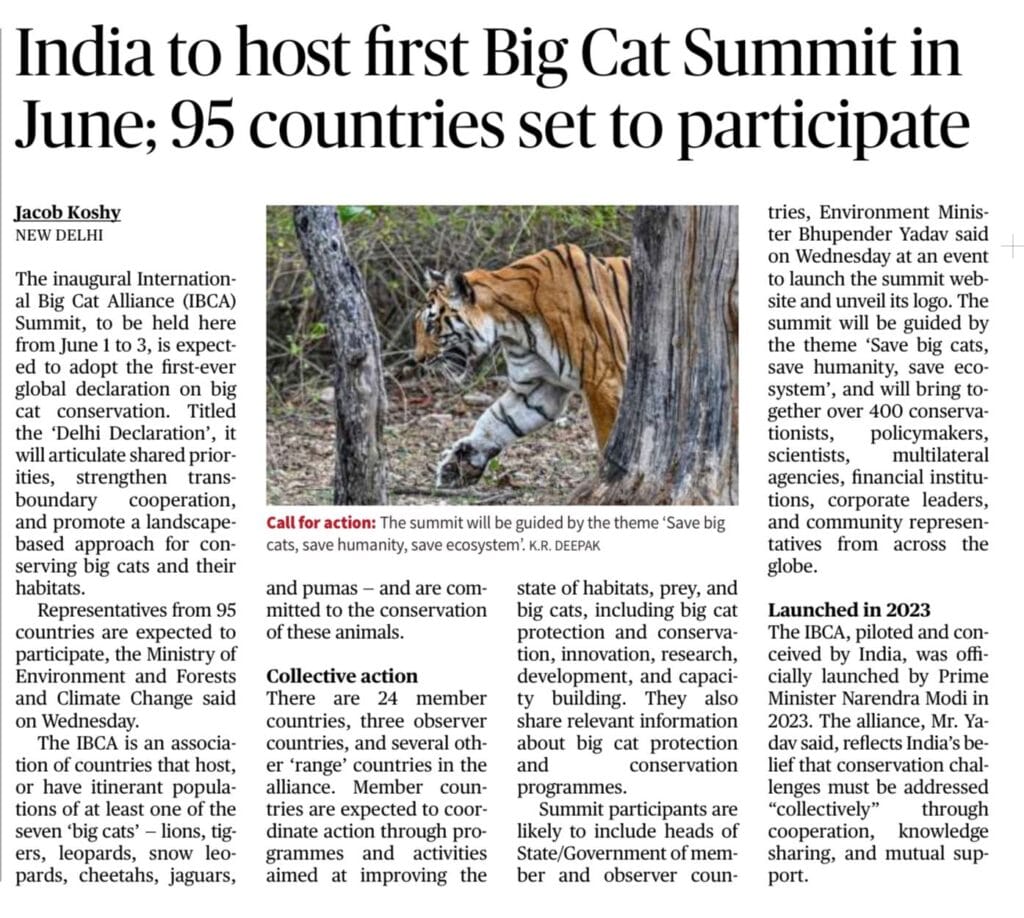
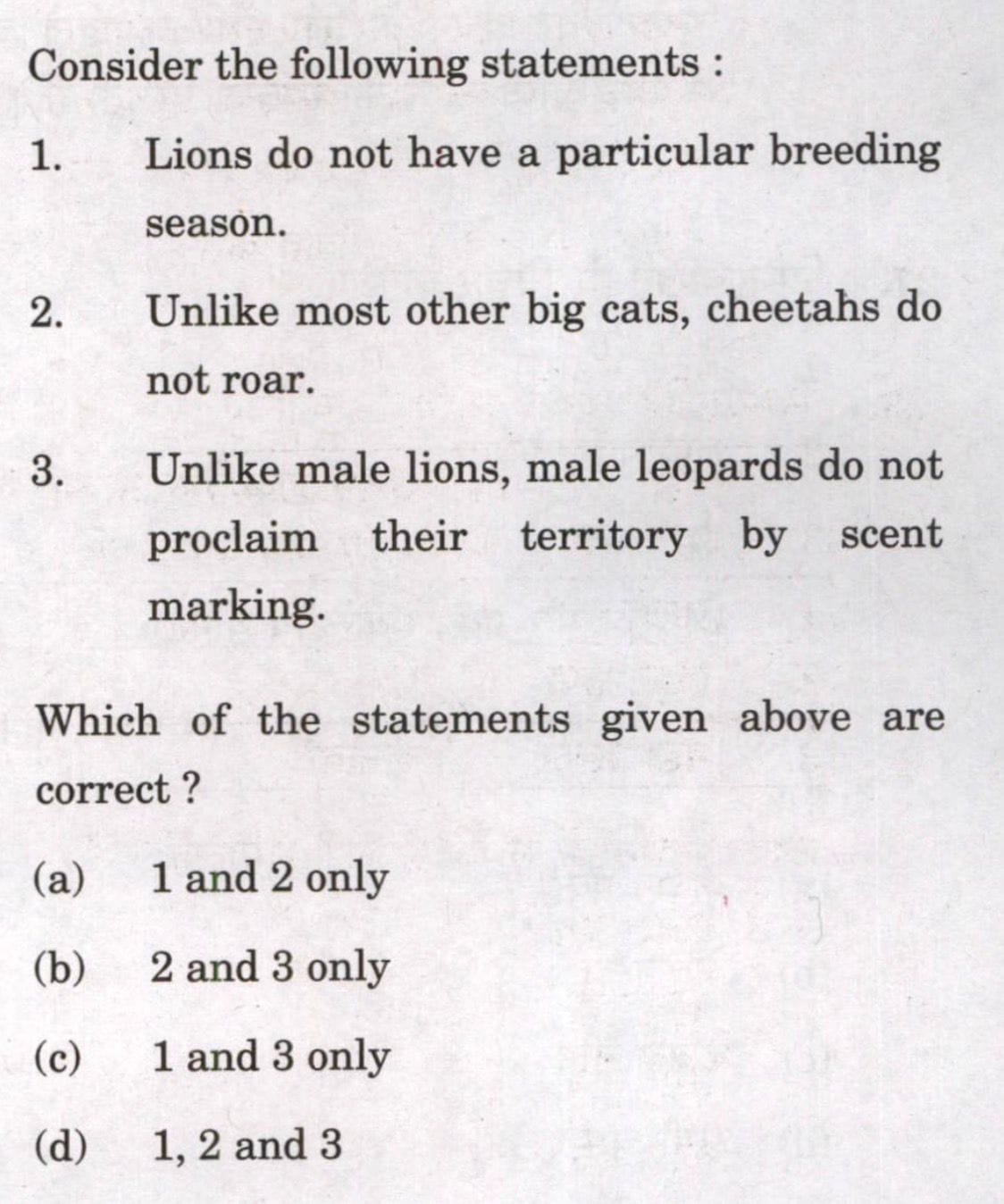
International Big Cat Alliance
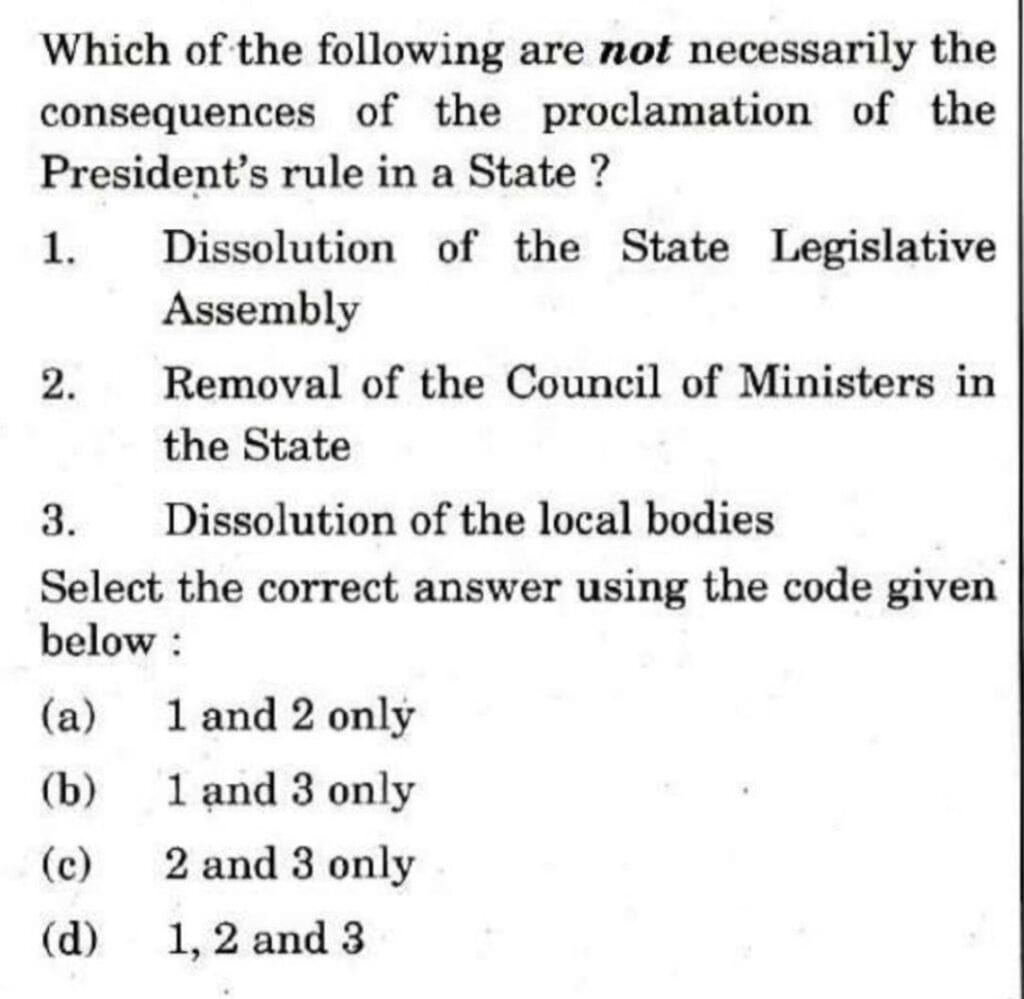
PYQ – 2024, Ans – A

International Big Cat Alliance (IBCA)

  • Launched by India — 2023 (50 years of Project Tiger)
  • Headquarters — New Delhi
  • Covers 7 big cats — Tiger, Lion, Leopard, Snow Leopard, Cheetah, Jaguar & Puma
  • Focus — habitat protection, anti-poaching cooperation, funding, research & transboundary conservation

Summit & New Delhi Declaration

  • Theme — “Save Big Cats, Save Humanity, Save Ecosystem”
  • Participants — Heads of State, scientists, conservationists & multilateral agencies

New Delhi Declaration

  1. First global declaration exclusively on big cat conservation
  2. Focus — wildlife corridors, anti-poaching, ecosystem conservation, funding & global cooperation
  3. Proposed — April 2026; likely adoption during summit

India & Big Cat Conservation

  • India hosts ~75% of world’s wild tigers.
  • Home to Asiatic Lion, Bengal Tiger, Snow Leopard & large leopard population.

Conservation Timeline

Significance

  1. Strengthens India’s wildlife diplomacy
  2. Enhances cooperation among 95 range countries
  3. Supports biodiversity & climate-resilient conservation
Constitutional Position of Chief Minister and Resignation Rules Explained for UPSC

Context: Constitutional Position of Chief Minister

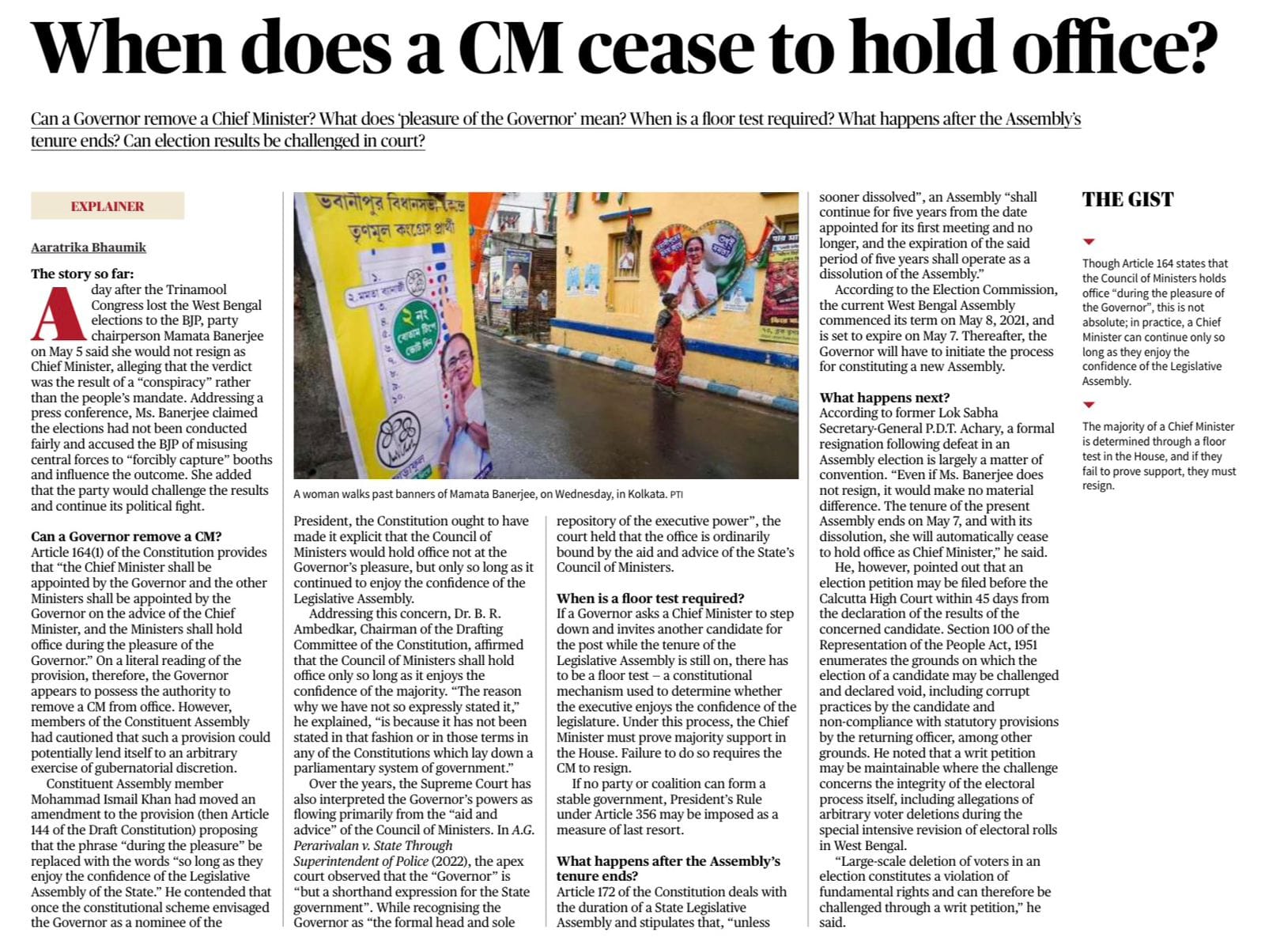
After the 2026 West Bengal Assembly election results, CM Mamata Banerjee said she would not resign, reviving debate on when a Chief Minister ceases to hold office.

Constitutional Position of Chief Minister
PYQ – 2017, Ans – B

Constitutional Position of CM

  • Article 164(1) — CM appointed by Governor
  • CM and Council of Ministers hold office “during the pleasure of Governor”
  • In practice, CM remains in office only while enjoying majority support in Assembly

If CM Resigns

  • CM submits resignation to Governor
  • Entire Council of Ministers resigns automatically

Governor may:

  1. Invite another leader with majority support
  2. Continue outgoing CM as caretaker till new government formed

If CM Does Not Resign

  • Governor can order a Floor Test to check majority
  • If CM fails floor test → must resign
  • Supreme Court: majority should be tested on floor of House

Important Cases

  • S.R. Bommai v. Union of India — Floor test principle
  • Nabam Rebia v. Deputy Speaker — Governor’s powers not absolute

After Assembly Tenure Ends

  • Article 172 — Assembly term = 5 years unless dissolved earlier
  • CM continues as caretaker till formation of new government

If No Party Gets Majority

Governor may invite:

  1. Largest party
  2. Coalition with majority support

NCRB Crime in India Report 2024 Key Findings on Cybercrime and Suicides for UPSC

Context: NCRB Crime in India Report 2024

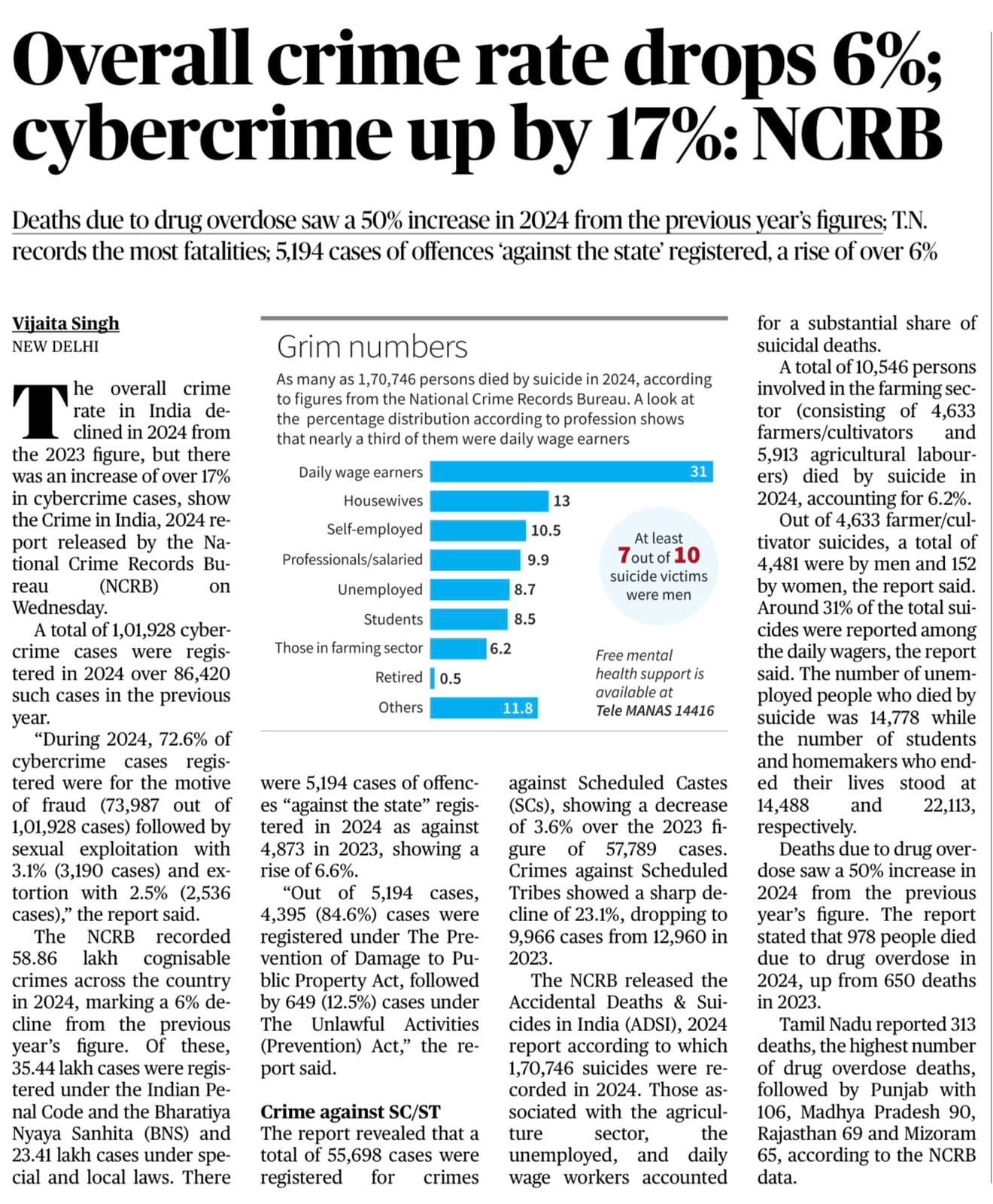
NCRB released the Crime in India 2024 and Accidental Deaths & Suicides in India (ADSI) 2024 reports. While overall crime declined in 2024, cybercrime, crimes against the State and drug-overdose deaths recorded significant rise.

NCRB Crime in India Report 2024

NCRB Basics

  • National Crime Records Bureau (NCRB) — established in 1986
  • Ministry — Ministry of Home Affairs

Major reports

  • Crime in India
  • ADSI Report
  • Prison Statistics India

Key Crime Data (2024)

Overall Crime

  • Total cognisable crimes — 58.86 lakh
  • Decline from 2023 — 6%

Cybercrime

  • Total cybercrime cases — 1,01,928
  • Increase from 2023 — 17%
  • Fraud-related cases — 73,987 (72.6%)
  • Sexual exploitation — 3,190 cases (3.1%)
  • Cyber extortion — 2,536 cases (2.5%)

Crimes Against the State

  • Total cases — 5,194
  • Increase — 6.6%
  • Prevention of Damage to Public Property Act — 4,395 cases (84.6%)
  • UAPA cases — 649

Crimes Against SC/ST

  • Crimes against SCs — 55,698
  • Crimes against STs — 9,966
  • Both categories recorded decline from 2023

Suicide & Drug Overdose Data

Suicides

  • Total suicides — 1,70,746
  • Around 70% victims were men
  • Daily wage earners formed largest share — 31%

Farming Sector

  • Farming-sector suicides — 10,546

Drug Overdose

  • Drug-overdose deaths — 978
  • Increase from 2023 — 50%
  • Tamil Nadu recorded highest deaths — 313

India Vietnam Strategic Partnership and 13 MoUs Explained for UPSC

Context: India Vietnam Strategic Partnership

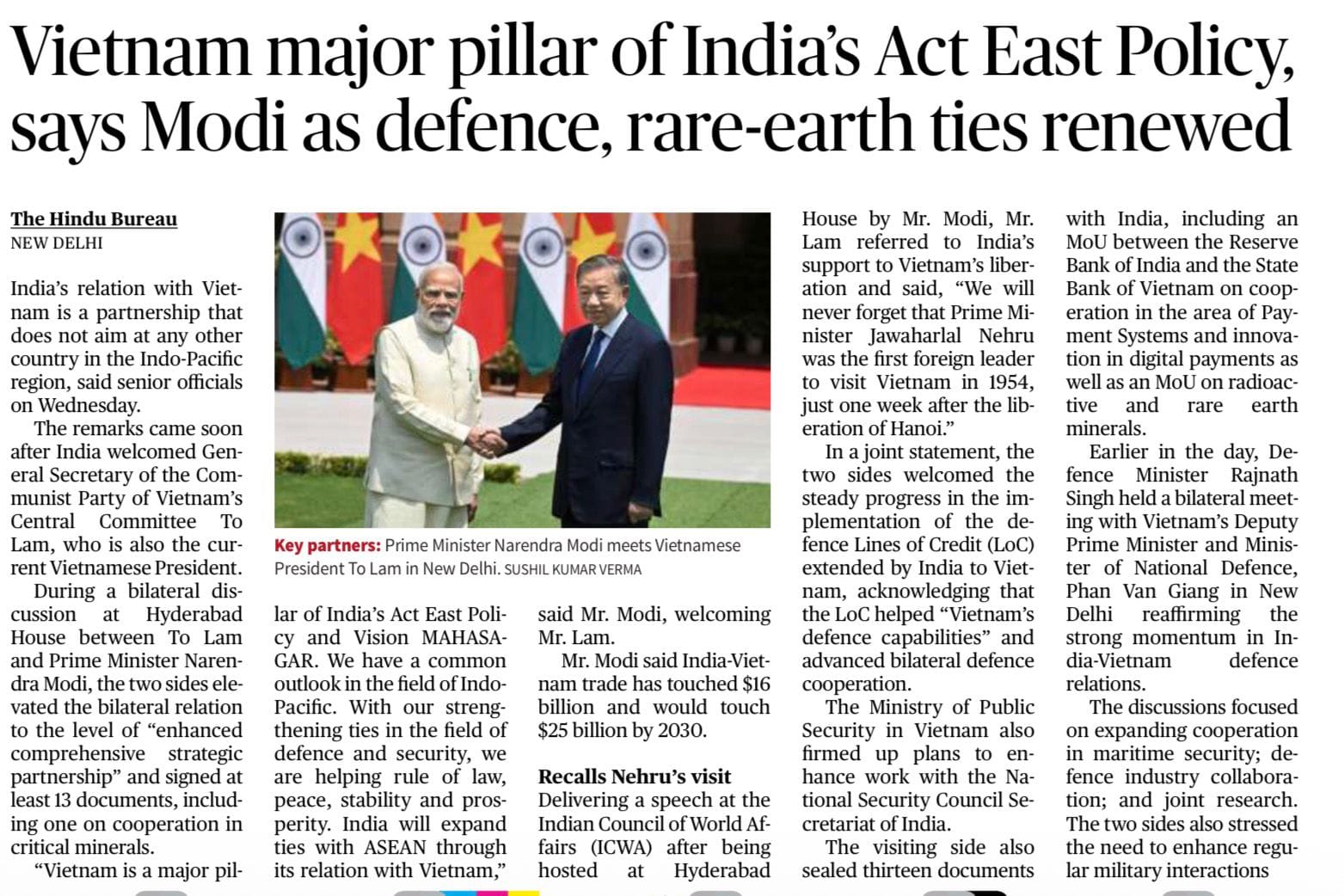
During the visit of To Lam to India, both countries upgraded ties to an Enhanced Comprehensive Strategic Partnership and signed 13 MoUs/agreements in defence, critical minerals, maritime security and digital connectivity.

India Vietnam Strategic Partnership

Important India–Vietnam Facts

  • Comprehensive Strategic Partnership — 2016
  • Vietnam is among India’s top ASEAN trading partners

Key pillar of

India supports

  • ASEAN centrality
  • UNCLOS 1982
  • Free & open Indo-Pacific

Key Agreements/MoUs Signed (13)

  1. Rare-earth & critical minerals cooperation
  2. RBI–State Bank of Vietnam MoU on digital payments
  3. Radioactive minerals cooperation
  4. Security cooperation between Vietnam’s Ministry of Public Security & India’s NSCS
  5. Defence & maritime cooperation
  6. Science & technology cooperation

Major Outcomes of the Visit

Defence & Maritime Cooperation

Expansion of:

  • Maritime security cooperation
  • Defence industry partnership
  • Military training & capacity building
  • Progress reviewed in India’s defence Lines of Credit (LoC) to Vietnam

Economic & Strategic Cooperation

  • Bilateral trade — $16 billion
  • Trade target — $25 billion by 2030

Cooperation expanded in:

  • Supply-chain resilience
  • Critical minerals
  • Digital connectivity

Indo-Pacific Dimension

Reaffirmed commitment to:

  • Freedom of navigation
  • Rule-based Indo-Pacific order
  • ASEAN-led regional architecture

School Management Committee Guidelines 2026 and Key Features for UPSC

Context: School Management Committee Guidelines 2026

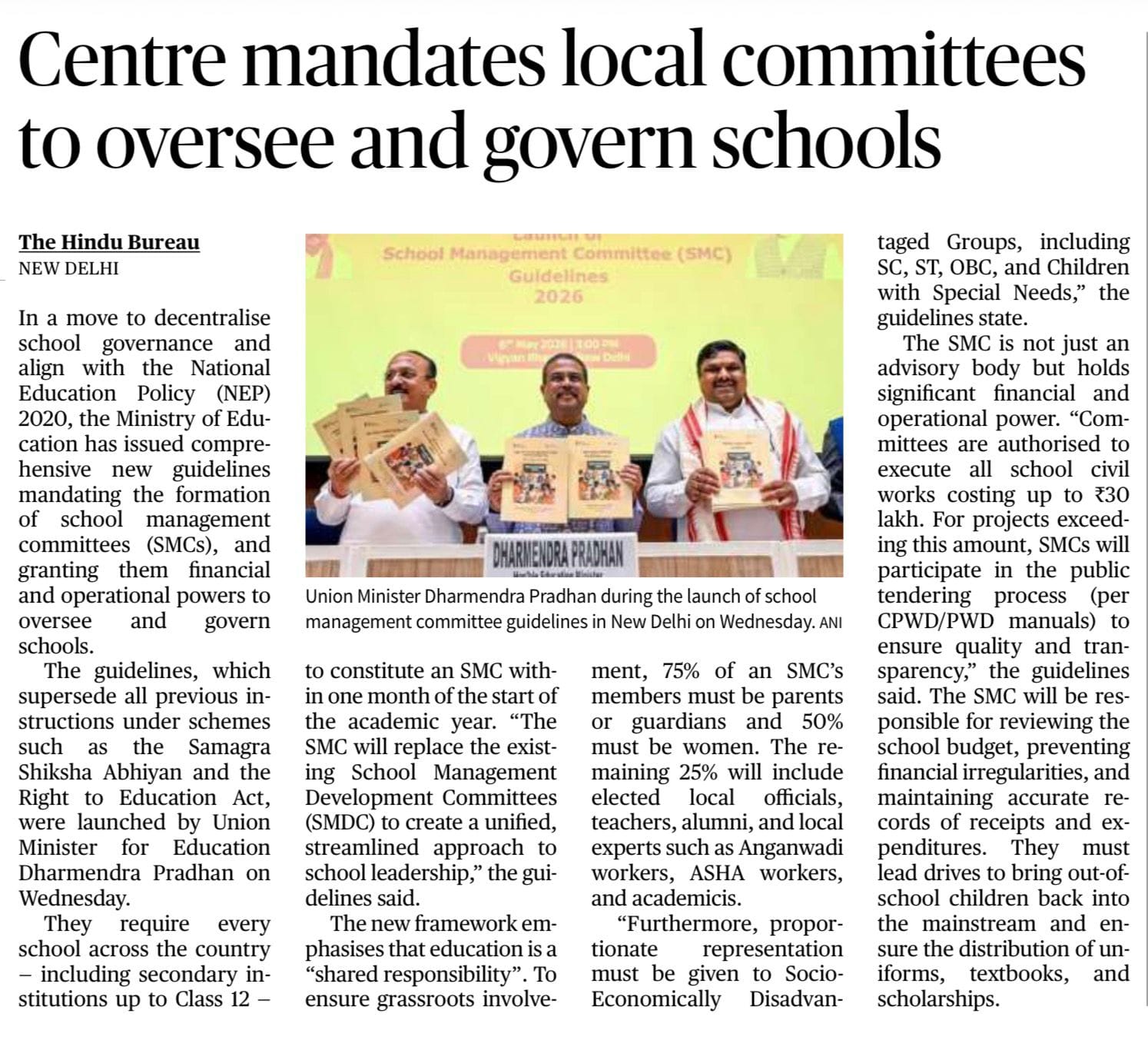
The Ministry of Education released the School Management Committee (SMC) Guidelines, 2026 to decentralise school governance in line with NEP 2020 and give local committees financial and operational powers over schools.

School Management Committee Guidelines 2026

What are School Management Committees (SMCs)?

Community-based school governance bodies under:

  • Right to Education (RTE) Act, 2009
  • Samagra Shiksha

Aim

Improve local participation, accountability and monitoring of schools

Key Features of New Guidelines

  1. Mandatory SMCs in schools up to Class 12
  2. SMCs replace School Management Development Committees (SMDCs)
  3. 75% members must be parents/guardians
  4. 50% representation for women
  5. Representation for SC, ST, OBC & Children with Special Needs
  6. SMCs can execute school civil works up to ₹30 lakh

Issues Faced by Schools

  1. Teacher shortages — over 10 lakh teacher posts vacant across school education sector — UDISE+/Parliament data
  2. Poor infrastructure — ~11% schools without electricity; ~30% without internet — UDISE+ 2023-24
  3. High dropout rates — Secondary dropout rate ~14%; higher among girls in some States — UDISE+ 2023-24
  4. Learning gaps — ASER 2024: many Class V students unable to read Class II-level text
  5. Digital divide — computer availability limited in many rural government schools — UDISE+

Importance

  1. Strengthens decentralised school governance
  2. Enhances transparency and local accountability
  3. Increases parent/community participation
  4. Improves implementation of NEP 2020
  5. Helps monitor utilisation of school funds
About the UPSC Civil Services Examination (UPSC CSE)

The UPSC Civil Services Examination (CSE) is one of the most competitive and esteemed examinations in India, conducted by the Union Public Service Commission to recruit officers for services such as the Indian Administrative Service (IAS), Indian Police Service (IPS), Indian Foreign Service (IFS), and others. The exam comprises three stages — Prelims, Mains, and the Personality Test (Interview) — designed to test a candidate’s knowledge, aptitude, decision-making, and leadership skills.


How to Prepare Effectively for UPSC CSE

Cracking the UPSC CSE requires a deep understanding of the syllabus, consistent revision, structured answer writing, and smart test-taking strategies. The Prelims test analytical and conceptual clarity, the Mains focuses on critical thinking, articulation, and subject mastery, while the Interview assesses presence of mind, ethical judgment, and personality traits relevant to public service.

At UnderStand UPSC, we empower aspirants with a personalized and focused approach to each stage of the exam.


Why Choose UnderStand UPSC?

UnderStand UPSC is a mentorship-driven platform offering a clear, clutter-free strategy to tackle the Civil Services Examination. Our programs like Transform (for beginners and intermediate learners) and Conquer (for advanced mains preparation) provide structured study plans, syllabus-wise video content, interactive live sessions, and answer writing support.

We emphasize:

  • Concept clarity through topic-wise lectures

  • Test series designed around real UPSC standards

  • Personalized mentorship in small groups

  • Regular performance tracking and peer benchmarking

  • Doubt-clearing sessions, current affairs analysis, and monthly magazines


Join the UnderStand UPSC Learning Community

Our mission is to make UPSC preparation less overwhelming and more strategic. We combine mentorship, discipline, and academic rigor to help you clear CSE with confidence. Whether you’re preparing from Delhi, Mumbai, Bangalore, or a remote village — our online-first model ensures quality guidance reaches every corner of India.

Join the thousands of aspirants who trust UnderStand UPSC to guide their journey toward becoming civil servants.

Stay connected with us through our Telegram, YouTube, and Instagram channels for daily tips, strategies, and updates.

Copyright © 2026 USARAMBHA EDUCATION (UnderStand UPSC). All Rights Reserved.

Join the Success Journey!


Talk to Our Mentor
Fill the form & we’ll get back to you


Talk to Our Mentor
Fill the form & we’ll get back to you